Beta Lactamases
&
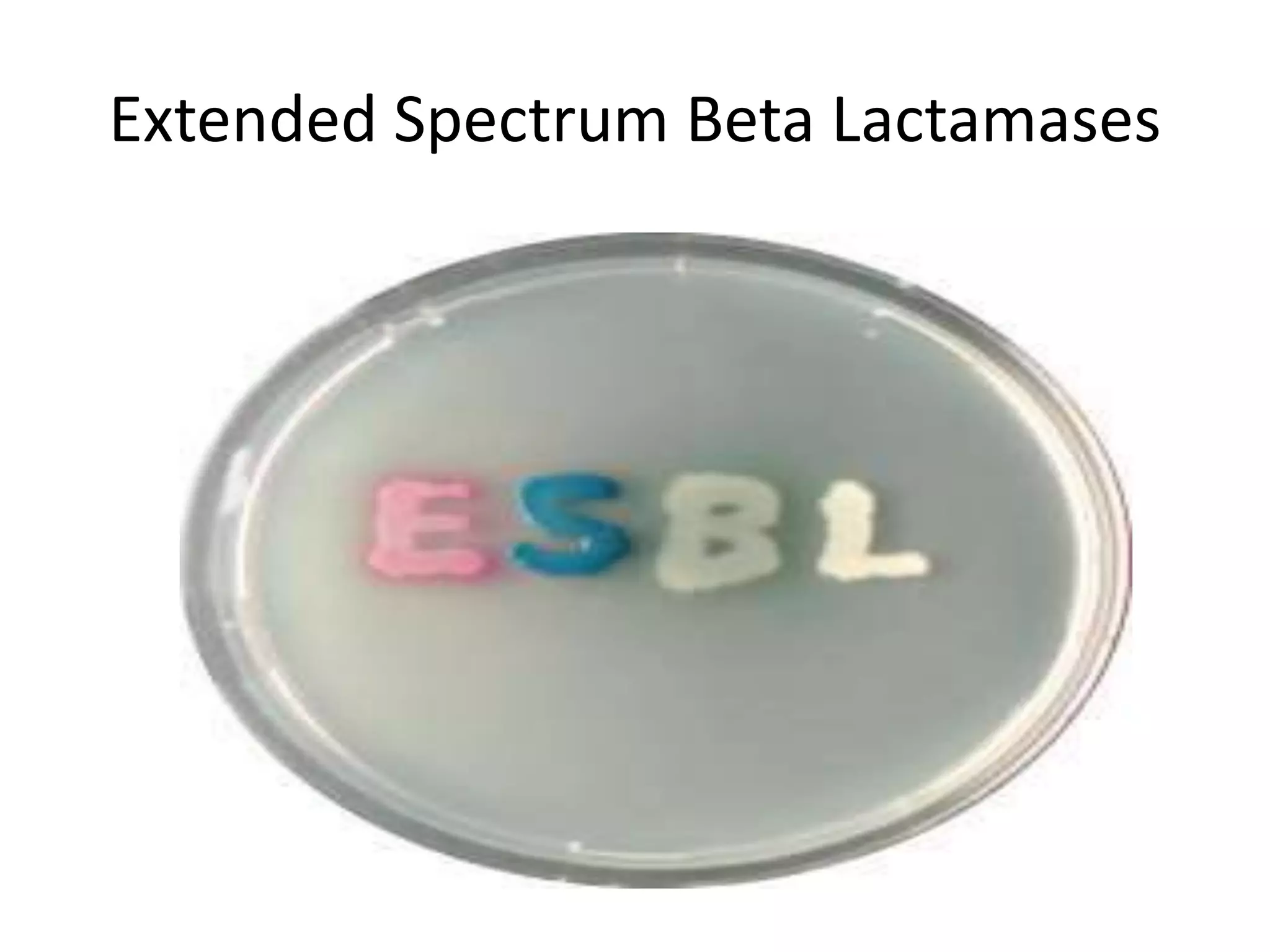
Extended Spectrum Beta Lactamases
Dr.M.Malathi
Contents
• Introduction
• Beta Lactam antibiotics
• Beta Lactamases
• Classification
• Methods of detection of Beta Lactamases
• Treatment
• Extended Spectrum Beta Lactamases
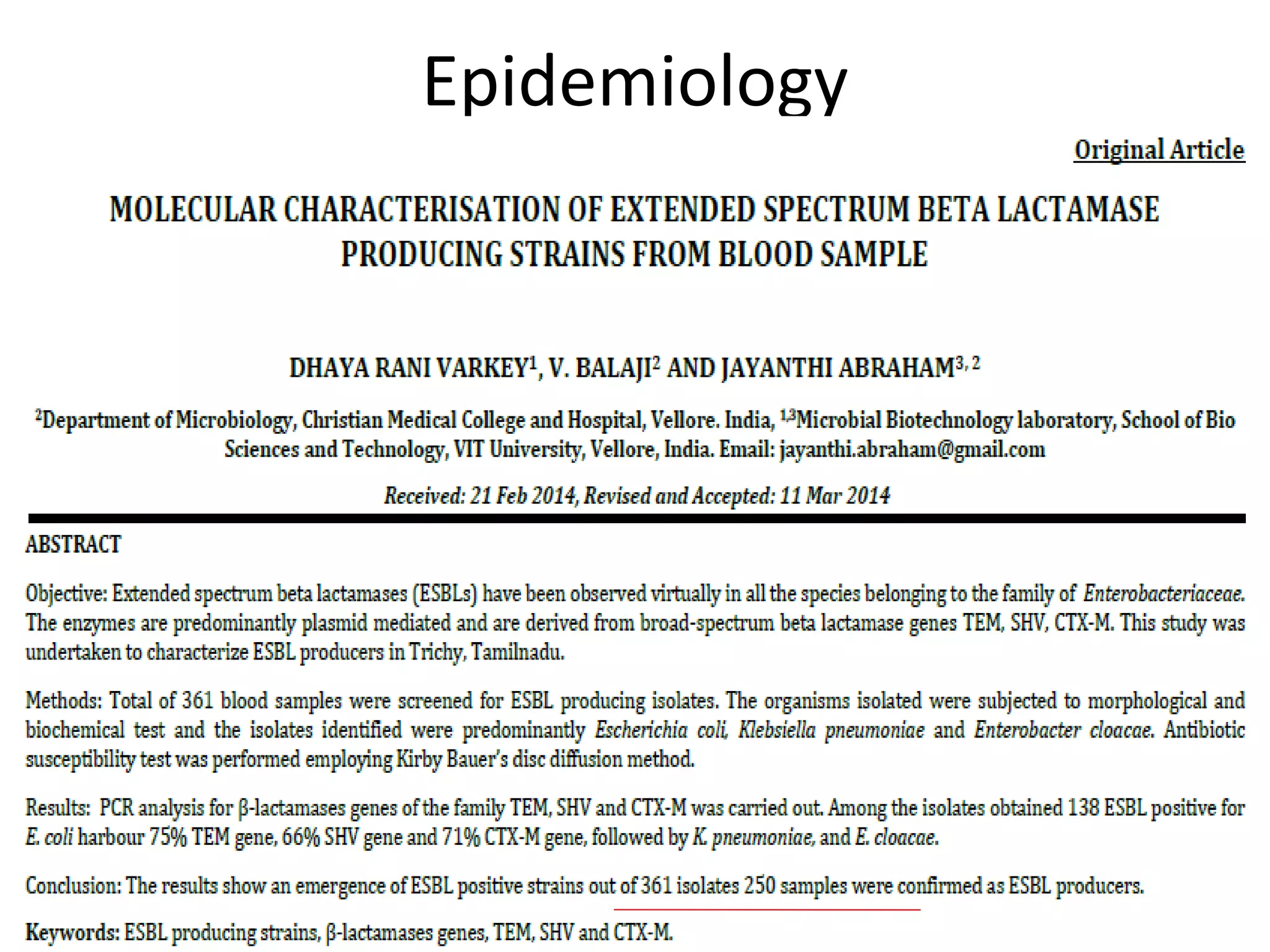
• Epidemiology in India
• Resistance patterns
• Methods of detection of ESBL
• Treatment
• Conclusion
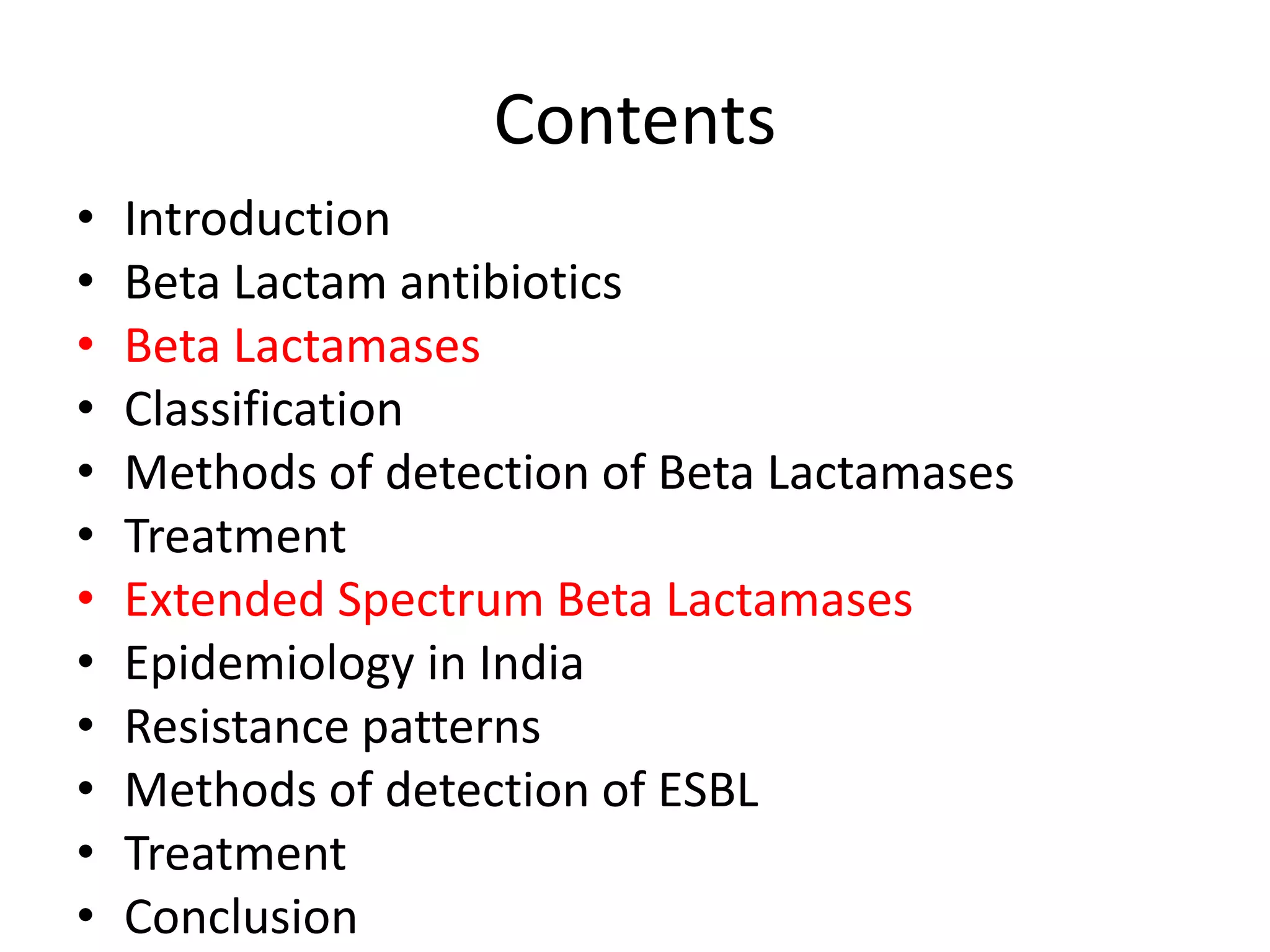
Introduction
• The resistance to beta lactam antibiotics is a
great concern worldwide .
• Beta lactamases production is the most
common mechanism of drug resistance .
• Continuous mutations in due course have lead
to extended profile of resistance – Extended
spectrum beta lactamases, AmpC beta
lactamases and Metallo beta lactamases.
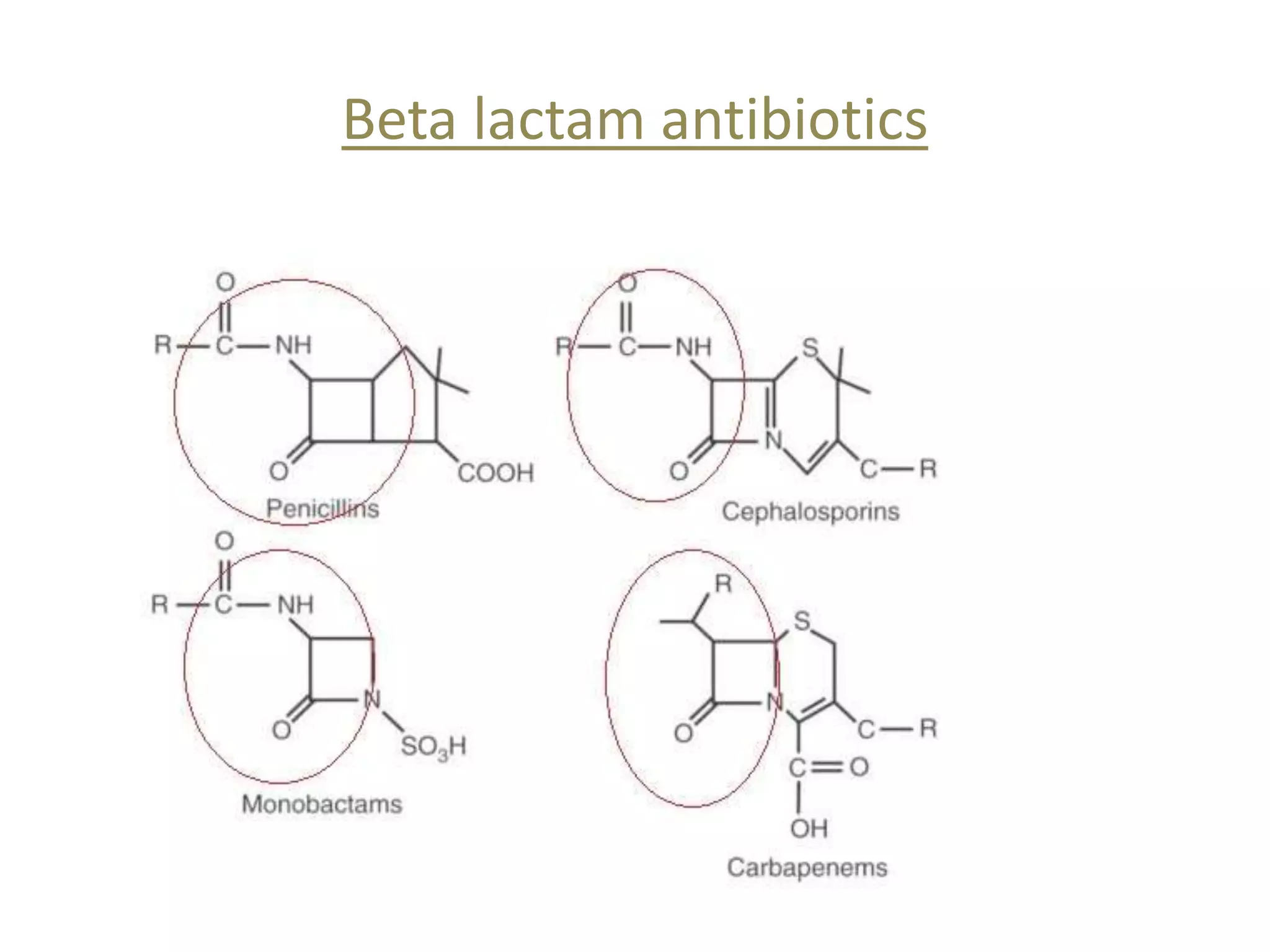
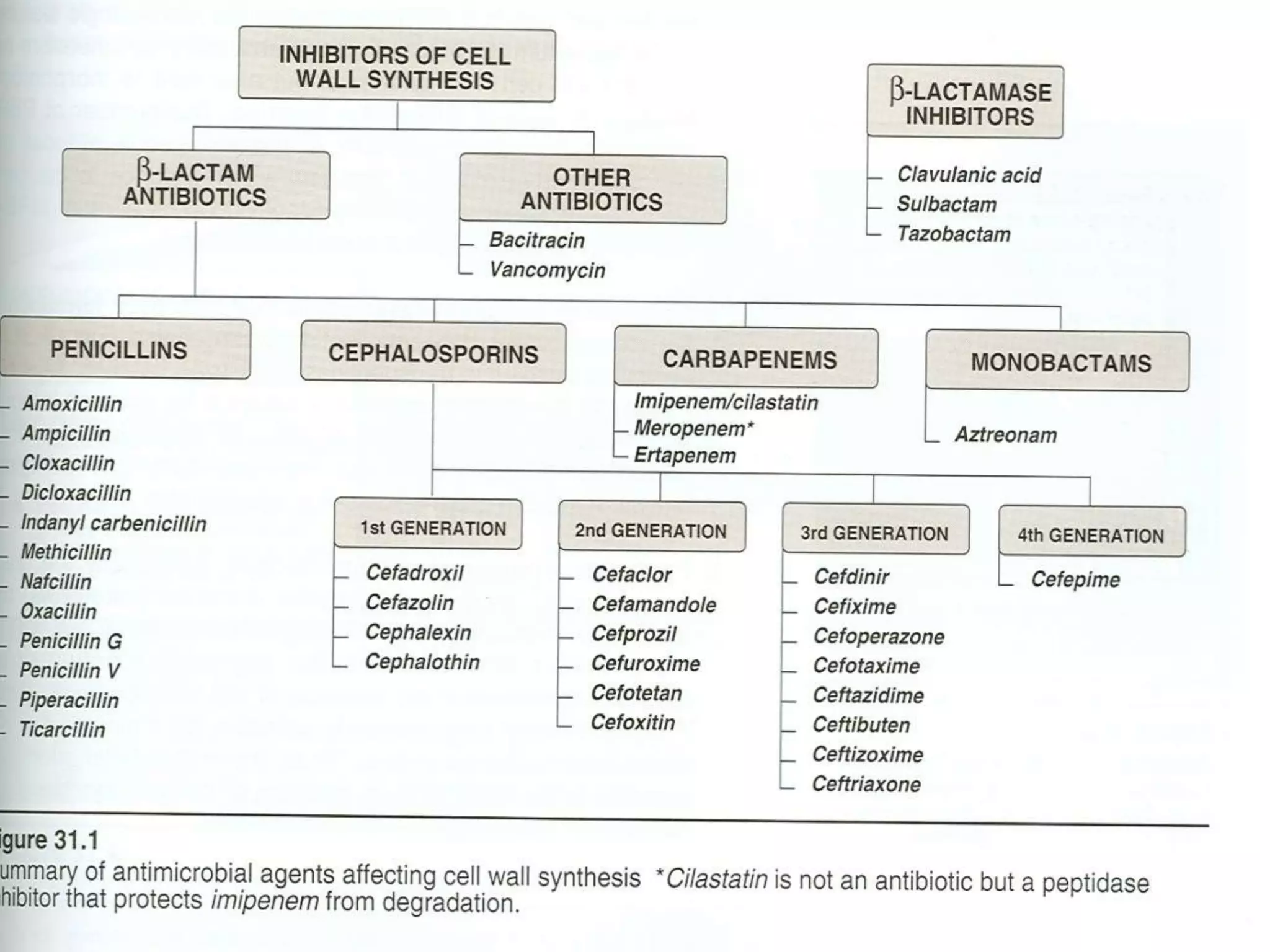
Beta lactam antibiotics
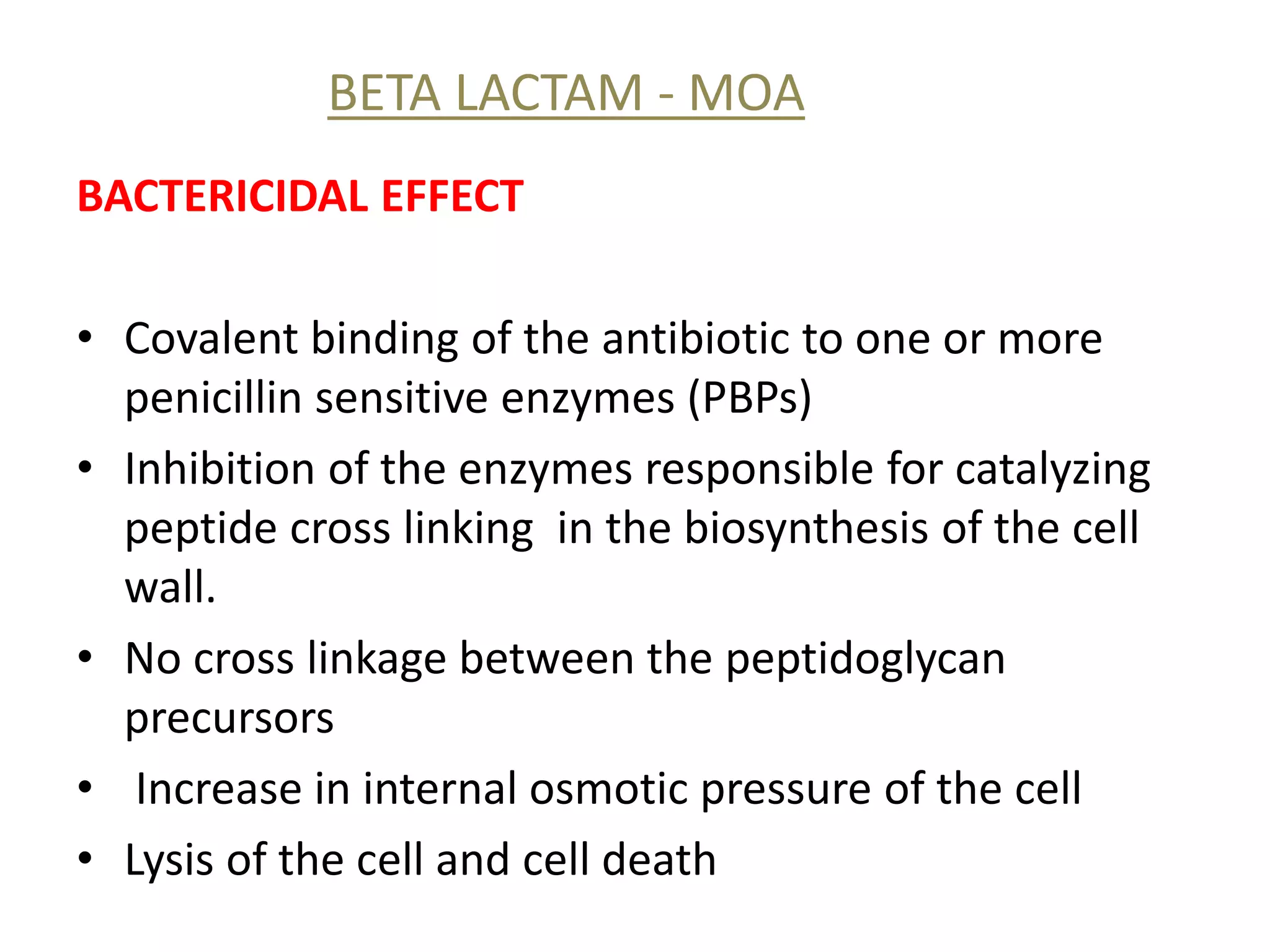
BETA LACTAM - MOA
BACTERICIDAL EFFECT
• Covalent binding of the antibiotic to one or more
penicillin sensitive enzymes (PBPs)
• Inhibition of the enzymes responsible for catalyzing
peptide cross linking in the biosynthesis of the cell
wall.
• No cross linkage between the peptidoglycan
precursors
• Increase in internal osmotic pressure of the cell
• Lysis of the cell and cell death
Mechanism of action
BETA LACTAM RESISTANCE
• Inactivation of the penicillin through B-lactamase-
or penicillinase-mediated hydrolysis of the B-lactam
ring of the antibiotic.
• Alteration of the target- intrinsic resistance
involving a lowering of the affinity or the amount of
the PBPs
• Tolerance to the bactericidal effect of B-lactam
antibiotics
BETA LACTAMASE
• Kirby first demonstrated that penicillin was
inactivated by penicillin-resistant strains of S.
aureus .
• Genes that encode beta lactamase production
can be seen in plasmids, chromosomes or in
transposons.
• Beta lactamase in S.aureus is an extracellular
enzyme - Plasmid mediated.
• The beta lactamase responsible for ampicillin
resistance in Klebsiella pneumoniae is in
chromosome.
Types
• Inducible – turned off without drug – plasmid
mediated - Eg: Staph aureus
• Constitutive – SHV – 1 chromosomal enzyme
of Kleb pneumoniae - responsible for
ampicillin resistance
Mechanism of resistance
Regulation of resistance
Organisms tested for beta lactamase
• Staphylococcus aureus
• CONS
• Enterococci sp.,
• Neisseria gonorrhea
• Hemophilus influenzae
• Moraxella catarrrhalis
Methods of detection
Phenotypic method:
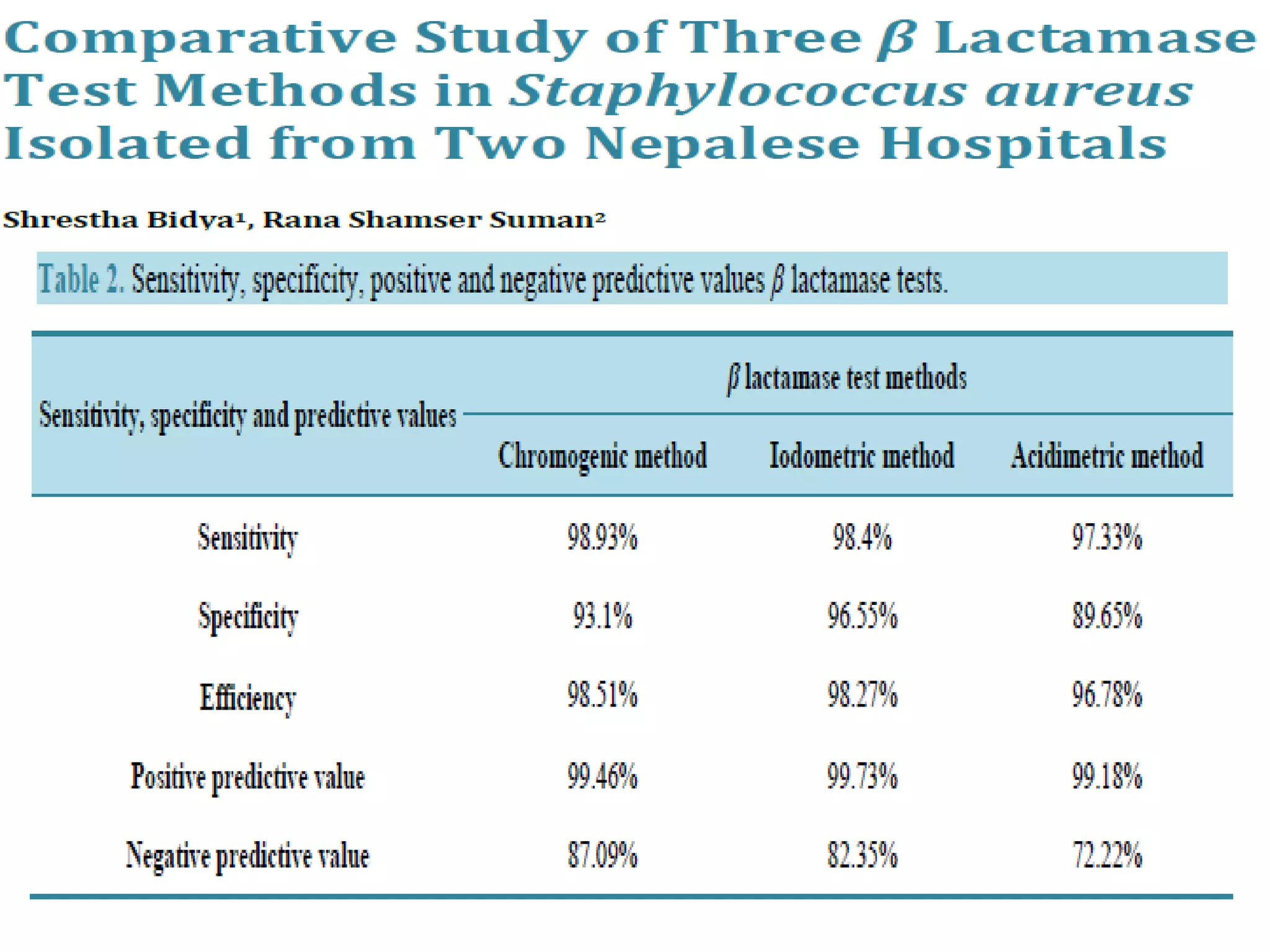
• Acidometric method
• Iodometric method
• Nitrocefin method
• penicillin disc diffusion test
• Penicillin broth microdilution test
• Penicillin zone edge test
Genotypic test:
• PCR for blaZ gene
DETECTION OF BETALACTAMASE
• Difficult to demonstrate the manifestation in vitro
• The bacterial concentration needs to be high(>106
cells/ml). Enzyme must be induced
• Problems with agar diffusion method and breakpoint
testing
• Only feasible method is detection of enzyme
production with biochemical tests
• Acidometric method
• Iodometric method
• Nitrocefin method
Acidometric method
Filter paper impregnated with penicillin and indicator
dye
Bacterial growth applied to the paper
Alteration in the colour of the indicator seen in positive
enzyme production
Iodometric method
Heavy suspension of test org is made in phosphate bufferwith 6g/l
of penicillin from overnight culture
0.1ml into microtitre well-37degrees for 1 hr
2 drops of starch solution
One drop of iodine
Loss of blue colour
Positive test
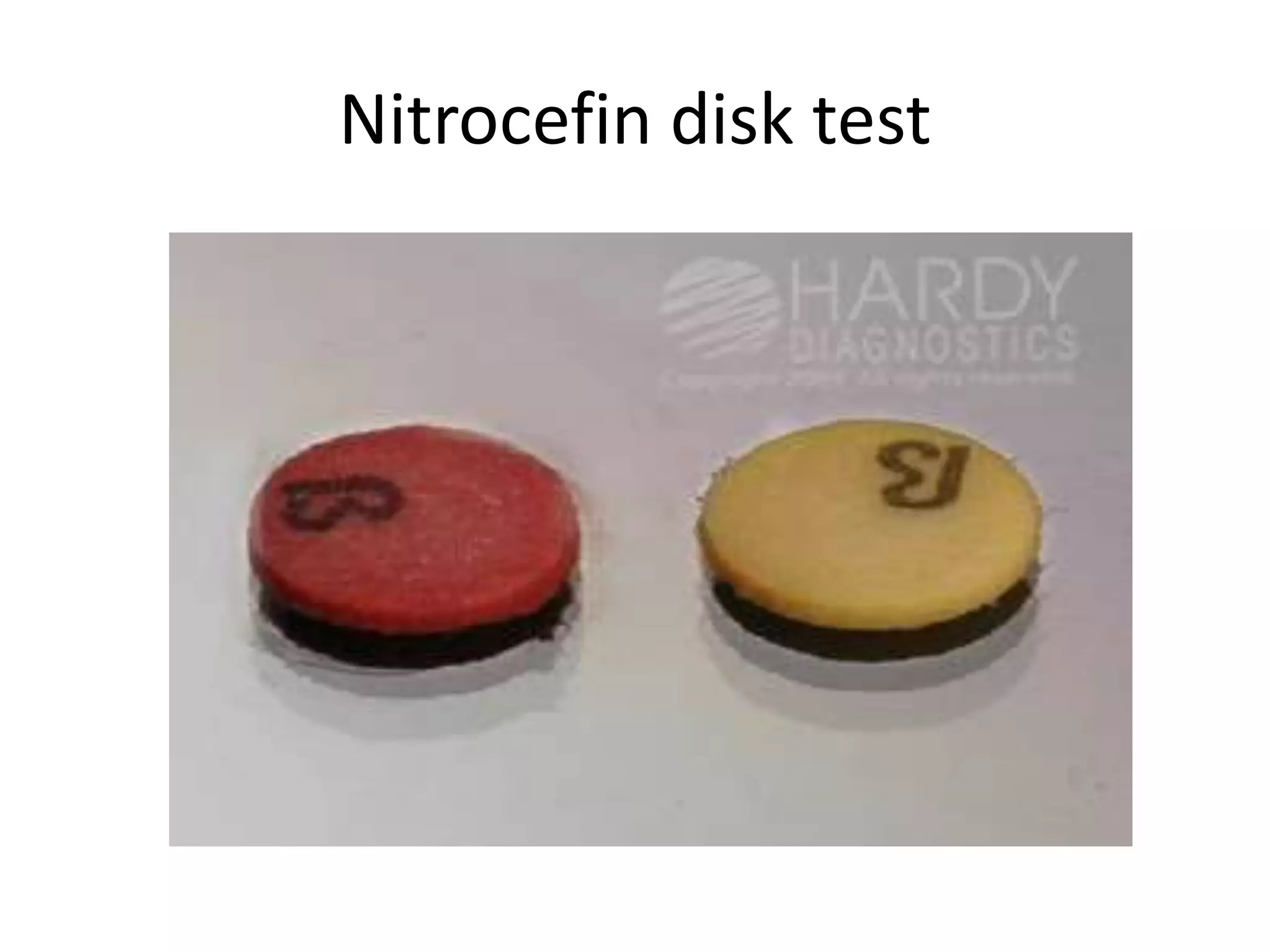
Nitrocefin method
• Nitrocefin is a chromogenic cephalosporin
which changes from yellow to read when the
amide bond in beta-lactam ring is hydrolyzed
by beta-lactamase. It is sensitive to
hydrolysis by all known lactamases produced
by Gram-positive and Gram-negative bacteria.
Nitrocefin disk test
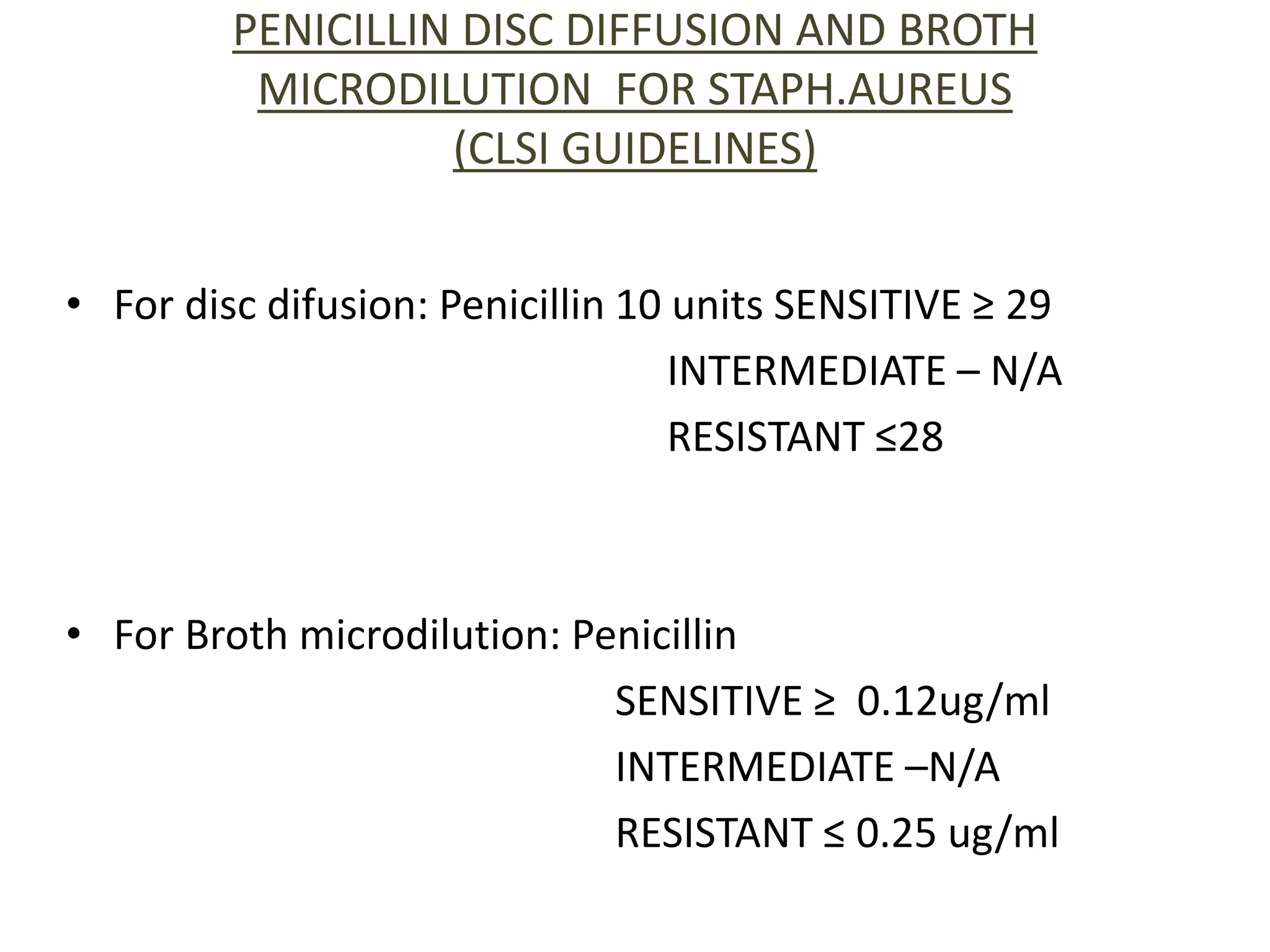
PENICILLIN DISC DIFFUSION AND BROTH
MICRODILUTION FOR STAPH.AUREUS
(CLSI GUIDELINES)
• For disc difusion: Penicillin 10 units SENSITIVE ≥ 29
INTERMEDIATE – N/A
RESISTANT ≤28
• For Broth microdilution: Penicillin
SENSITIVE ≥ 0.12ug/ml
INTERMEDIATE –N/A
RESISTANT ≤ 0.25 ug/ml
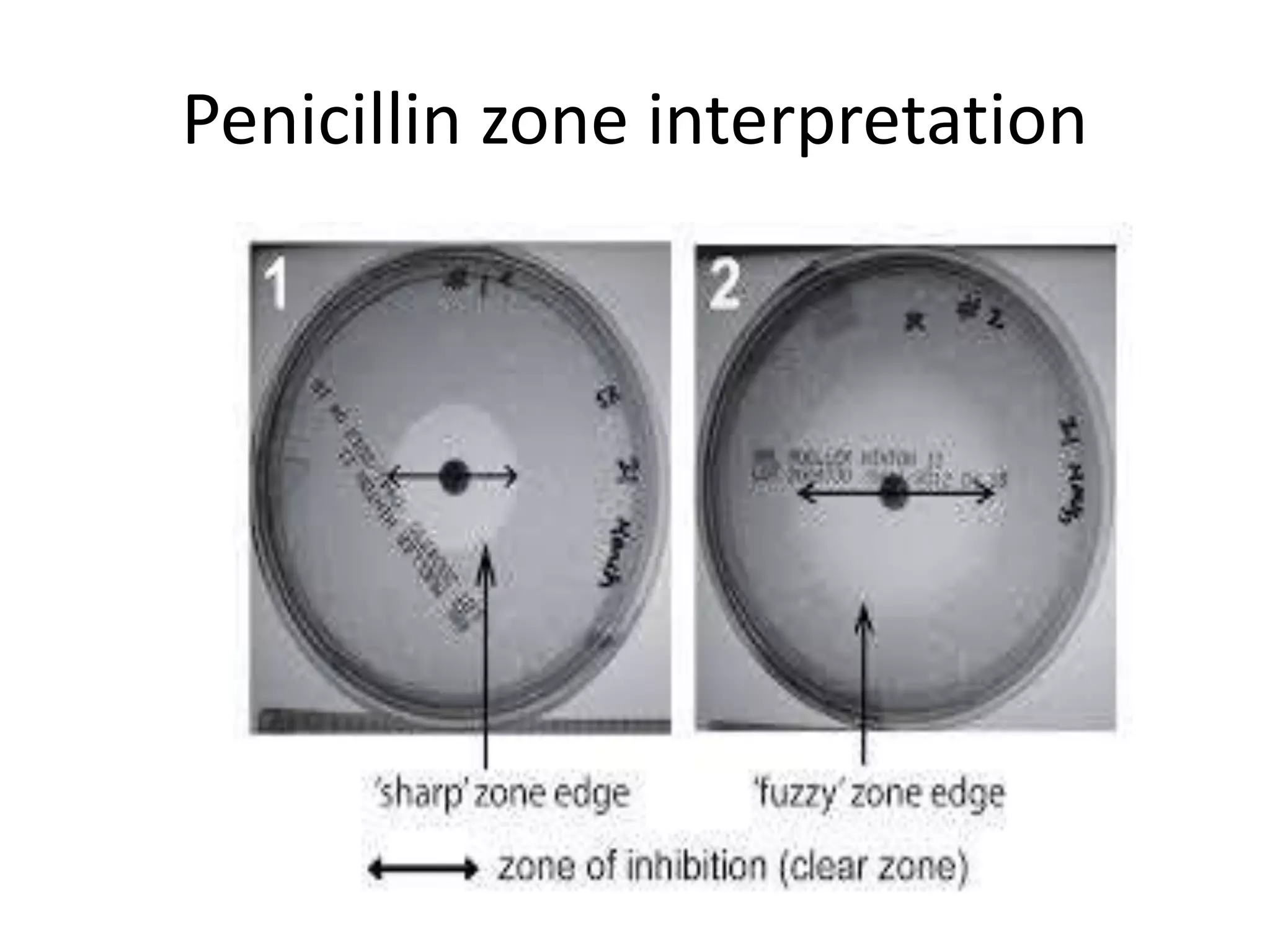
Penicillin disc zone edge test
• Penicillin disc diffusion zone edge test:10U disc
• Sharp zone /cliff edge– β lactamase positive
• Fuzzy zone / beach edge- β lactamase negative
• Indication- Negative nitrocephin test
Resistant in disc diffusion or broth microdilution
methods
Penicillin zone interpretation
CLSI SAYS…
• The penicillin disk diffusion zone-edge test was shown to be more
sensitive than nitrocefin-based tests for detection of β-lactamase
production in S. aureus.
• “The penicillin zone-edge test is recommended if only one test is
used for β-lactamase detection. However, some laboratories may
choose to perform a nitrocefin-based test first and, if this test is
positive, report the results as positive for β-lactamase (or
penicillin resistant). If the nitrocefin test is negative, the penicillin
zone-edge test should be performed before reporting the isolate
as penicillin susceptible in cases where penicillin may be used for
therapy .eg:endocarditis”
• β-lactamase–positive staphylococci are resistant to penicillin,
amino-, carboxy-, and ureidopenicillins.
Interpretation
• A positive beta lactamase production means that
the test organism is resistant to following
antibiotics:
1. Penicillin
2. Amoxycillin
3. Ampicillin
4. Piperacillin
5. Mezlocillin
6. Carbenicillin
TREATMENT
• Beta lactamase resistant semisynthetic penicillin(
methicillin, nafcillin, cloxacillin,dicloxacillin)
• Beta lactam – betalactamase inhibitor combinations (
eg: amoxicillin clavulunate, Ampicillin sulbactam,
Piperacillin tazobactam)
Extended Spectrum Beta Lactamases
Definition
ESBLs are beta lactamases capable of
conferring bacterial resistance to the
penicillins, first-, second-, and third-
generation cephalosporins and aztreonam
(but not the cephamycins or carbapenems) by
hydrolysis of these antibiotics, and which are
inhibited by beta lactamase inhibitors such as
clavulanic acid
Epidemiology
Diversity of ESBL types
• SHV
• TEM
• CTX – M
• Toho beta lactamases
• PER
SHV
• This type of ESBL is the most frequently
isolated one
• SHV - Sulfhydryl variable
• 1983, Klebsiella ozaenae isolated from
Germany – possesed a beta lactamase which
efficiently hydrolysed cefotaxime and to lesser
extent ceftazidime – Different from SHV –
named as SHV -2
TEM
• TEM 1 – first reported in 1965 – Escherichia
coli – from a patient named Temoneira
• TEM 1 – hydrolyse ampicillin at a greater rate
than carbenicillin, oxacillin or cephalothin and
has negligible activity against extended
spectrum cephalosporins.
• TEM 1 and TEM 2 has same hydrolytic profile
but differs in isoelectric point
• In 1987, a novel plasmid mediated beta
lactamase coined as CTX-1, because of its
enhanced activity against cefotaxime – now
renamed as TEM-3
• Now, over 100 TEM types have been
described.
• Interesting mutants of TEM – hydrolyze 3rd
generation cephalosporins, but also
demonstrate inhibitor resistance – complex
mutants of TEM – TEM AQ.
CTX –M
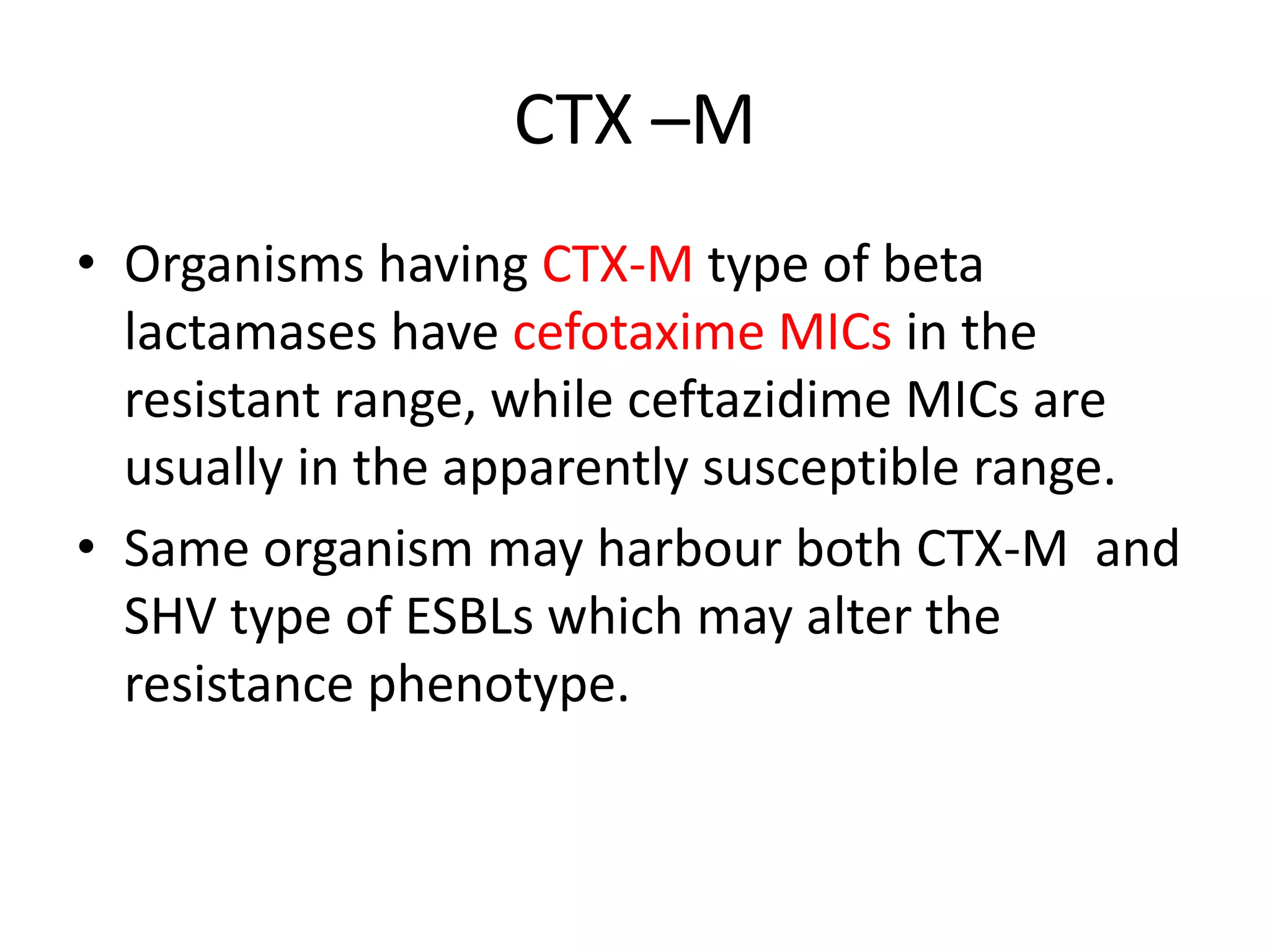
• Organisms having CTX-M type of beta
lactamases have cefotaxime MICs in the
resistant range, while ceftazidime MICs are
usually in the apparently susceptible range.
• Same organism may harbour both CTX-M and
SHV type of ESBLs which may alter the
resistance phenotype.
Toho β lactamases
• Structurally related to CTX-M type β
lactamases.
• First isolated in Toho refers to the Toho
university, omoro hospital, Tokyo , where a
child was infected with Escherichia coli
infection.
• Worldwide, the most common ESBL type is
CTX-M ESBL
PER
• 25% similarity to TEM and SHV type of ESBLs.
• First detected in Pseudomonas aeruginosa and
later in Salmonella Typhimurium and
Acinetobacter isolates.
ESBL producing organisms
• Escherichia coli
• Klebsiella sp.,
• Enterobacter sp.,
• Proteus sp.,
• Salmonella sp.,
• ESBLs producing large multiresistance
plasmids are more common in Klebsiella sp.,
than Escherichia coli.
• The importance of ESBL producing Klebsiella
sp., is it survives longer than other enteric
bacteria on hands and environmental surfaces
– leads to cross infection.
• Outbreak – genotypical analysis is must to
identify the single clone of genotypically
identical organism
Risk for ESBL infection
• Seriously ill patients
• Prolonged hospital stay
• Invasive medical devices
• Cross infections
• Colonizers in medical staffs
• Immunocompromised
• Prolonged antibiotic intake
Mode of spread of ESBL
• Ultrasonography coupling gel
• Bronschoscopes
• Blood pressure cuffs
• Glass thermometers
• Patients soap
• Sink basins
• Hands of health care workers
• Cockroaches (Vector of ESBL)
ESBL detection
• Phenotyping
• Genotyping
Why we have to detect?
Detection of ESBL in samples like urine is
important as it represents an epidemiological
marker of colonisation and therefore a potential
threat of transfer to other patients
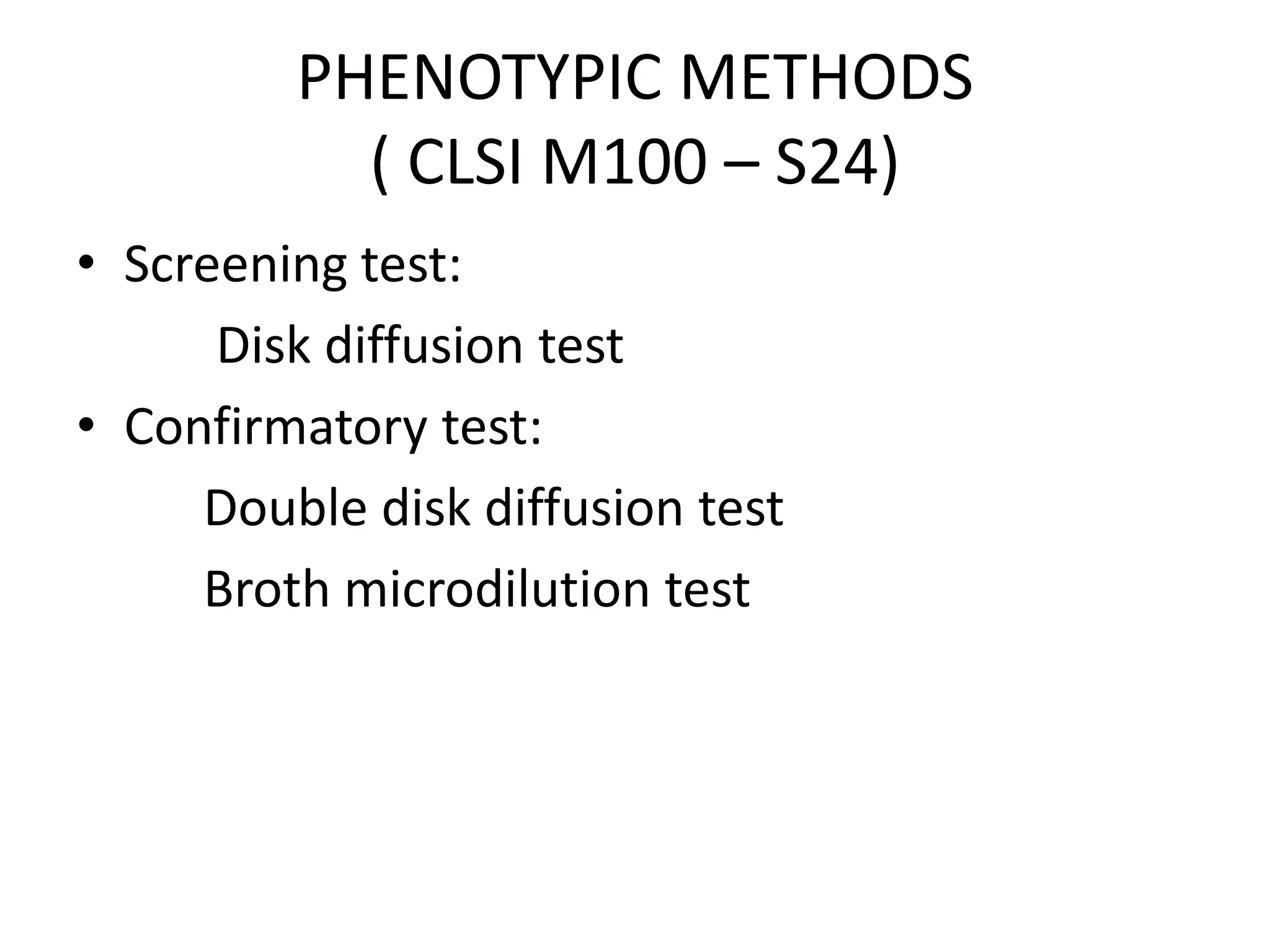
PHENOTYPIC METHODS
( CLSI M100 – S24)
• Screening test:
Disk diffusion test
• Confirmatory test:
Double disk diffusion test
Broth microdilution test
Disk diffusion screening test
• For Escherichia coli and Klebsiella sp.,:
1. Cefpodoxime (10µg) ≤17mm
2. Cefotaxime (30µg) ≤27mm
3. Ceftriaxone (30µg) ≤25mm
4. Ceftazidime (30µg) ≤22mm
5. Aztreonam (30µg) ≤27mm
• For Proteus mirabilis:
1. Cefpodoxime (10µg) ≤22mm
2. Ceftazidime (30µg) ≤22mm
3. Cefotaxime (30µg) ≤27mm
Use of more than one antimicrobial agent for
screening improves the sensitivity of ESBL
detection.
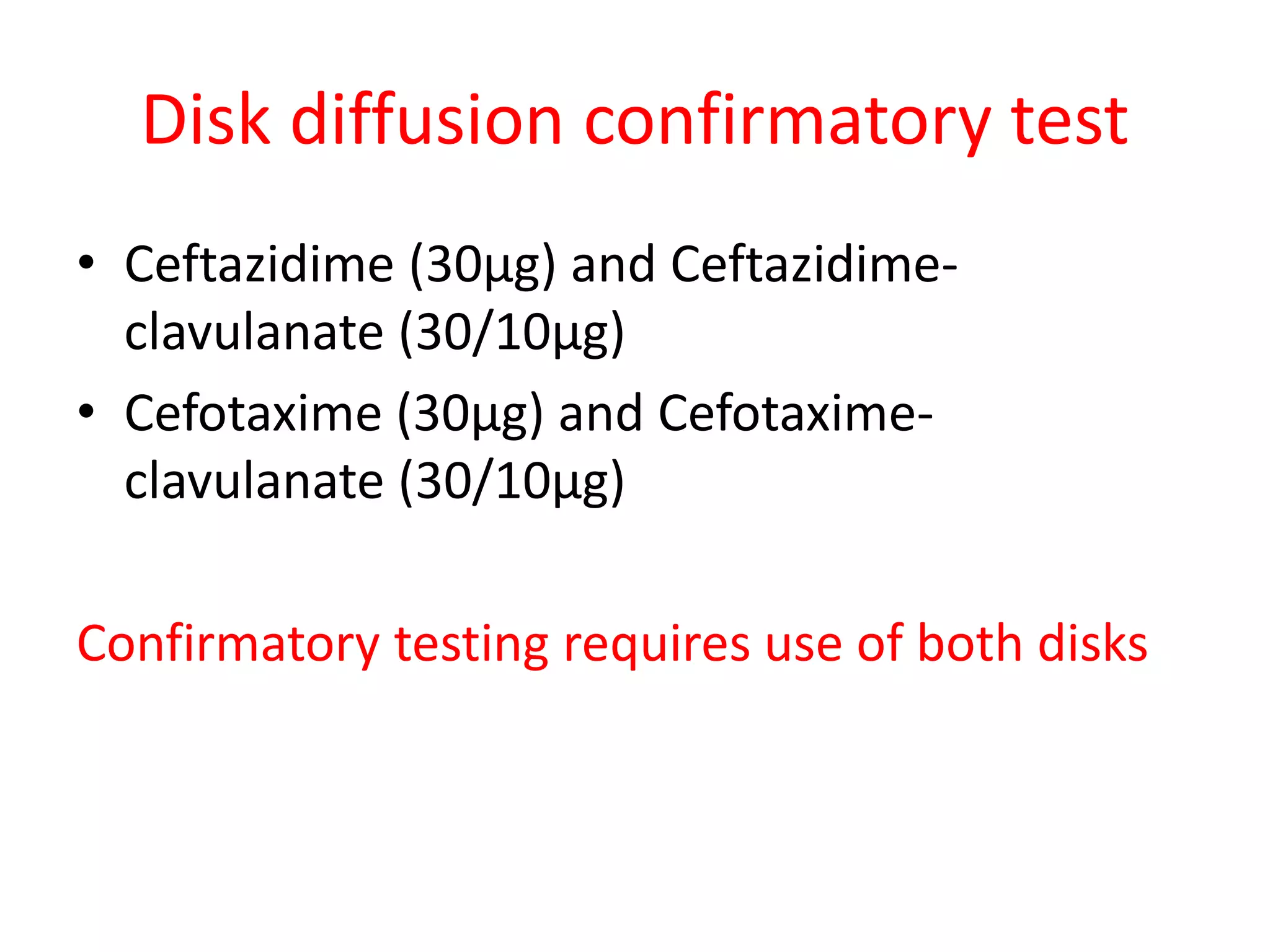
Disk diffusion confirmatory test
• Ceftazidime (30µg) and Ceftazidime-
clavulanate (30/10µg)
• Cefotaxime (30µg) and Cefotaxime-
clavulanate (30/10µg)
Confirmatory testing requires use of both disks
≥ 5 mm disk zone difference
Broth microdilution
• Ceftazidime 0.25 – 128 µg/mL and
Ceftazidime - clavulanate 0.25/4 – 128/4
µg/mL
• Cefotaxime 0.25 – 64 µg/mL and Cefotaxime -
clavulanate 0.25/4 – 64/4 µg/mL
Confirmatory testing requires use of both
dilutions
≥ 3 twofold concentration decrease in
MIC
Quality control for ESBL
• Escherichia coli ATCC 25922 - ≤ 2 mm increase
in zone diameter for antimicrobial agent
tested in combination with clavulanate vs the
zone diameter when tested alone.
• Klebsiella pneumoniae ATCC 700603 - ≥5mm
increase in zone diameter of ceftazidime-
clavulanate vs ceftazidime alone.
• ≥3mm increase in zone diameter of
cefotaxime-clavulanate vs cefotaxime alone.
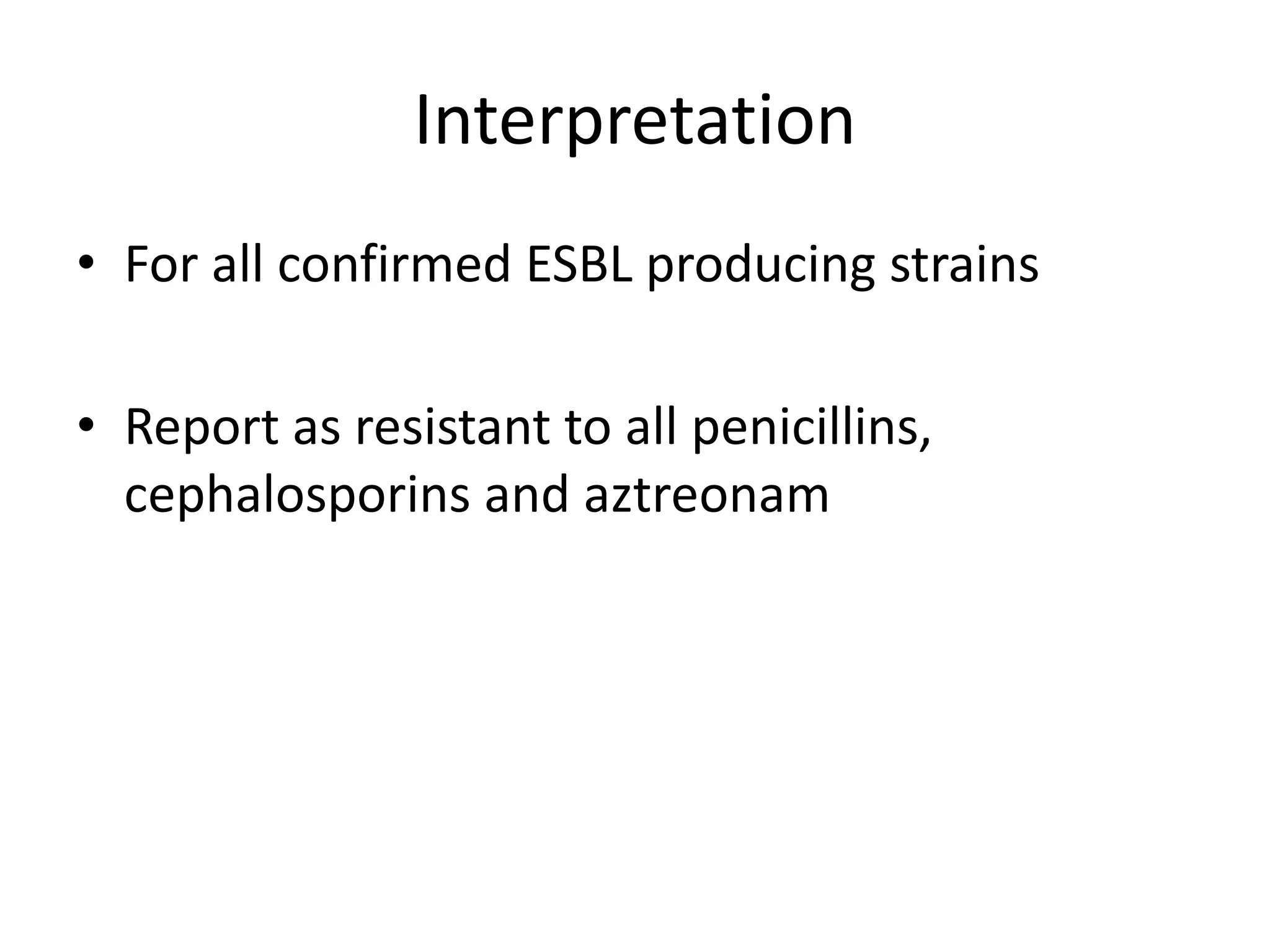
Interpretation
• For all confirmed ESBL producing strains
• Report as resistant to all penicillins,
cephalosporins and aztreonam
Other methods
• E test for ESBL
• Vitek ESBL cards
• Microscan panels
• BD Phoenix automated microbiology system
• Double disk diffusion test
• Agar supplemented with clavulanate
• Disk replacement method
• Three dimensional test
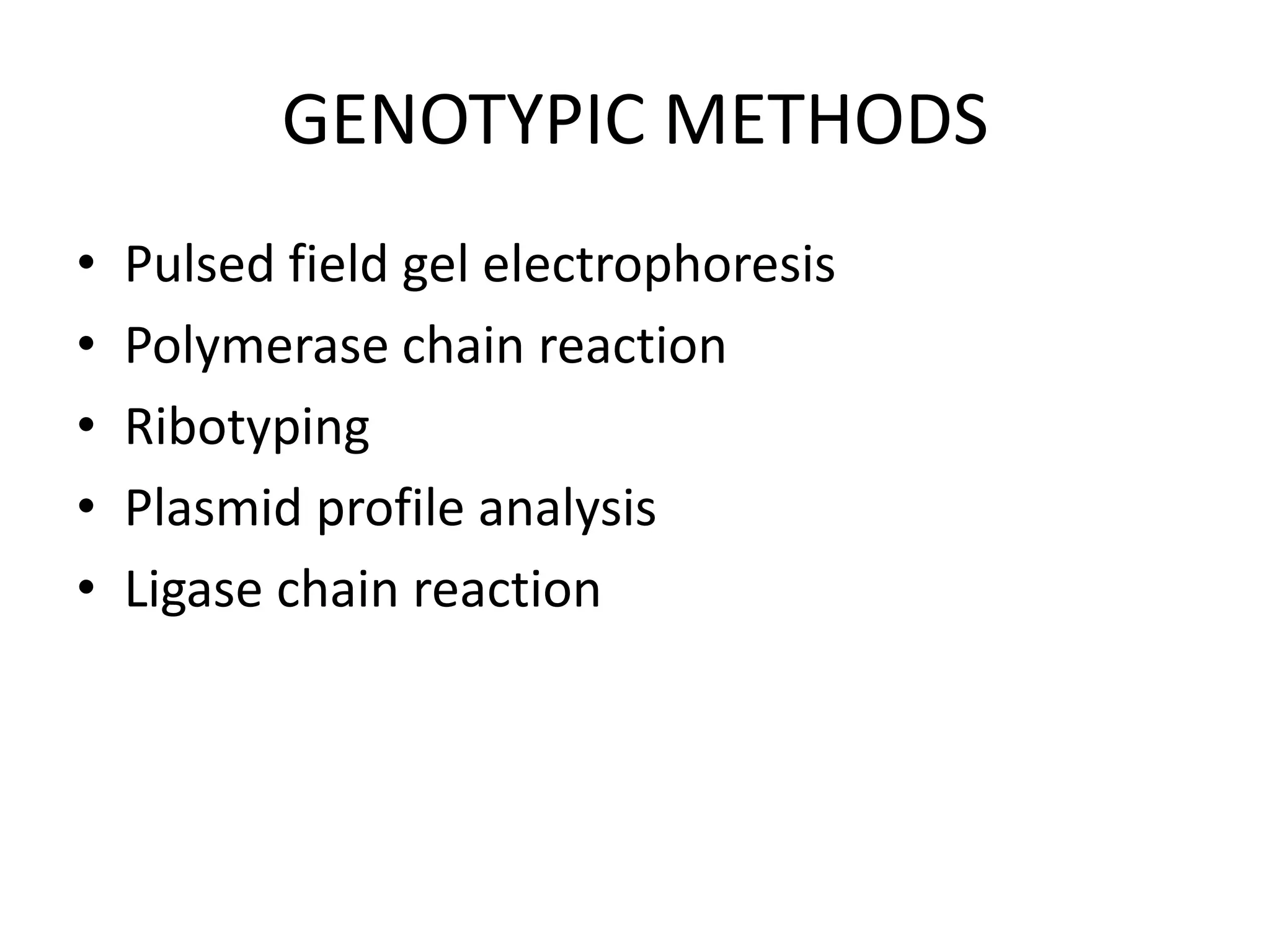
GENOTYPIC METHODS
• Pulsed field gel electrophoresis
• Polymerase chain reaction
• Ribotyping
• Plasmid profile analysis
• Ligase chain reaction
Outbreak analysis
1. Identify patients infected with ESBL
producing organisms by the use of
appropriate detection methods .
2. Identify colonized patients by use of rectal
swabs plated onto selective media.
3. Perform molecular epidemiologic analysis of
strains from infected or colonized patients
4. Institute contact isolation precautions,
particularly if clonal spread is demonstrated.
5. Institute controls on antibiotic use,
particularly if numerous strain types are
demonstrated.
ESBL producers in stool
• Mac Conkey agar supplemented with
ceftazimide 4mg/litre
• Nutrient agar supplemented with ceftazidime
2mg/litre, vancomycin 5mg/litre and
amphotericin B 1667mg/litre
Management of outbreak of ESBL
• Contact isolation with use of gloves and
gowns when contacting the patient.
• Digestive decontamination by quinolones,
colistin, neomycin and tobramycin.
• Nasal spray with povidone iodine as a means
of decolonizing the upper respiratory tract.
• Change the infection control procedures.
• Change the empirical treatment.
Summary
• For detection of β lactamases – Penicillin zone
edge test with 10 U
• For detection of ESBL – Disk diffusion test with
Ceftazidime (30µg) and Ceftazidime-
clavulanate (30/10µg) ; Cefotaxime (30µg) and
Cefotaxime-clavulanate (30/10µg)
References
• Mackie and McCarntney Practical
microbiology – 14th edition
• David L.Paterson et al.,(2005), Extended
spectrum beta lactamases: a clinical update,
clinical microbiology review, ASM,
oct2005,p657-686
• Performance standards for antimicrobial
susceptibility testing: 24th informational
supplement – M100-S24

beta lactamases

  • 1.
    Beta Lactamases & Extended SpectrumBeta Lactamases Dr.M.Malathi
  • 2.
    Contents • Introduction • BetaLactam antibiotics • Beta Lactamases • Classification • Methods of detection of Beta Lactamases • Treatment • Extended Spectrum Beta Lactamases • Epidemiology in India • Resistance patterns • Methods of detection of ESBL • Treatment • Conclusion
  • 3.
    Introduction • The resistanceto beta lactam antibiotics is a great concern worldwide . • Beta lactamases production is the most common mechanism of drug resistance . • Continuous mutations in due course have lead to extended profile of resistance – Extended spectrum beta lactamases, AmpC beta lactamases and Metallo beta lactamases.
  • 4.
  • 7.
    BETA LACTAM -MOA BACTERICIDAL EFFECT • Covalent binding of the antibiotic to one or more penicillin sensitive enzymes (PBPs) • Inhibition of the enzymes responsible for catalyzing peptide cross linking in the biosynthesis of the cell wall. • No cross linkage between the peptidoglycan precursors • Increase in internal osmotic pressure of the cell • Lysis of the cell and cell death
  • 8.
  • 9.
    BETA LACTAM RESISTANCE •Inactivation of the penicillin through B-lactamase- or penicillinase-mediated hydrolysis of the B-lactam ring of the antibiotic. • Alteration of the target- intrinsic resistance involving a lowering of the affinity or the amount of the PBPs • Tolerance to the bactericidal effect of B-lactam antibiotics
  • 10.
    BETA LACTAMASE • Kirbyfirst demonstrated that penicillin was inactivated by penicillin-resistant strains of S. aureus . • Genes that encode beta lactamase production can be seen in plasmids, chromosomes or in transposons. • Beta lactamase in S.aureus is an extracellular enzyme - Plasmid mediated. • The beta lactamase responsible for ampicillin resistance in Klebsiella pneumoniae is in chromosome.
  • 11.
    Types • Inducible –turned off without drug – plasmid mediated - Eg: Staph aureus • Constitutive – SHV – 1 chromosomal enzyme of Kleb pneumoniae - responsible for ampicillin resistance
  • 12.
  • 13.
  • 14.
    Organisms tested forbeta lactamase • Staphylococcus aureus • CONS • Enterococci sp., • Neisseria gonorrhea • Hemophilus influenzae • Moraxella catarrrhalis
  • 15.
    Methods of detection Phenotypicmethod: • Acidometric method • Iodometric method • Nitrocefin method • penicillin disc diffusion test • Penicillin broth microdilution test • Penicillin zone edge test Genotypic test: • PCR for blaZ gene
  • 16.
    DETECTION OF BETALACTAMASE •Difficult to demonstrate the manifestation in vitro • The bacterial concentration needs to be high(>106 cells/ml). Enzyme must be induced • Problems with agar diffusion method and breakpoint testing • Only feasible method is detection of enzyme production with biochemical tests • Acidometric method • Iodometric method • Nitrocefin method
  • 17.
    Acidometric method Filter paperimpregnated with penicillin and indicator dye Bacterial growth applied to the paper Alteration in the colour of the indicator seen in positive enzyme production
  • 18.
    Iodometric method Heavy suspensionof test org is made in phosphate bufferwith 6g/l of penicillin from overnight culture 0.1ml into microtitre well-37degrees for 1 hr 2 drops of starch solution One drop of iodine Loss of blue colour Positive test
  • 19.
    Nitrocefin method • Nitrocefinis a chromogenic cephalosporin which changes from yellow to read when the amide bond in beta-lactam ring is hydrolyzed by beta-lactamase. It is sensitive to hydrolysis by all known lactamases produced by Gram-positive and Gram-negative bacteria.
  • 20.
  • 22.
    PENICILLIN DISC DIFFUSIONAND BROTH MICRODILUTION FOR STAPH.AUREUS (CLSI GUIDELINES) • For disc difusion: Penicillin 10 units SENSITIVE ≥ 29 INTERMEDIATE – N/A RESISTANT ≤28 • For Broth microdilution: Penicillin SENSITIVE ≥ 0.12ug/ml INTERMEDIATE –N/A RESISTANT ≤ 0.25 ug/ml
  • 23.
    Penicillin disc zoneedge test • Penicillin disc diffusion zone edge test:10U disc • Sharp zone /cliff edge– β lactamase positive • Fuzzy zone / beach edge- β lactamase negative • Indication- Negative nitrocephin test Resistant in disc diffusion or broth microdilution methods
  • 24.
  • 25.
    CLSI SAYS… • Thepenicillin disk diffusion zone-edge test was shown to be more sensitive than nitrocefin-based tests for detection of β-lactamase production in S. aureus. • “The penicillin zone-edge test is recommended if only one test is used for β-lactamase detection. However, some laboratories may choose to perform a nitrocefin-based test first and, if this test is positive, report the results as positive for β-lactamase (or penicillin resistant). If the nitrocefin test is negative, the penicillin zone-edge test should be performed before reporting the isolate as penicillin susceptible in cases where penicillin may be used for therapy .eg:endocarditis” • β-lactamase–positive staphylococci are resistant to penicillin, amino-, carboxy-, and ureidopenicillins.
  • 26.
    Interpretation • A positivebeta lactamase production means that the test organism is resistant to following antibiotics: 1. Penicillin 2. Amoxycillin 3. Ampicillin 4. Piperacillin 5. Mezlocillin 6. Carbenicillin
  • 27.
    TREATMENT • Beta lactamaseresistant semisynthetic penicillin( methicillin, nafcillin, cloxacillin,dicloxacillin) • Beta lactam – betalactamase inhibitor combinations ( eg: amoxicillin clavulunate, Ampicillin sulbactam, Piperacillin tazobactam)
  • 28.
  • 29.
    Definition ESBLs are betalactamases capable of conferring bacterial resistance to the penicillins, first-, second-, and third- generation cephalosporins and aztreonam (but not the cephamycins or carbapenems) by hydrolysis of these antibiotics, and which are inhibited by beta lactamase inhibitors such as clavulanic acid
  • 30.
  • 32.
    Diversity of ESBLtypes • SHV • TEM • CTX – M • Toho beta lactamases • PER
  • 33.
    SHV • This typeof ESBL is the most frequently isolated one • SHV - Sulfhydryl variable • 1983, Klebsiella ozaenae isolated from Germany – possesed a beta lactamase which efficiently hydrolysed cefotaxime and to lesser extent ceftazidime – Different from SHV – named as SHV -2
  • 34.
    TEM • TEM 1– first reported in 1965 – Escherichia coli – from a patient named Temoneira • TEM 1 – hydrolyse ampicillin at a greater rate than carbenicillin, oxacillin or cephalothin and has negligible activity against extended spectrum cephalosporins. • TEM 1 and TEM 2 has same hydrolytic profile but differs in isoelectric point
  • 35.
    • In 1987,a novel plasmid mediated beta lactamase coined as CTX-1, because of its enhanced activity against cefotaxime – now renamed as TEM-3 • Now, over 100 TEM types have been described. • Interesting mutants of TEM – hydrolyze 3rd generation cephalosporins, but also demonstrate inhibitor resistance – complex mutants of TEM – TEM AQ.
  • 36.
    CTX –M • Organismshaving CTX-M type of beta lactamases have cefotaxime MICs in the resistant range, while ceftazidime MICs are usually in the apparently susceptible range. • Same organism may harbour both CTX-M and SHV type of ESBLs which may alter the resistance phenotype.
  • 37.
    Toho β lactamases •Structurally related to CTX-M type β lactamases. • First isolated in Toho refers to the Toho university, omoro hospital, Tokyo , where a child was infected with Escherichia coli infection. • Worldwide, the most common ESBL type is CTX-M ESBL
  • 38.
    PER • 25% similarityto TEM and SHV type of ESBLs. • First detected in Pseudomonas aeruginosa and later in Salmonella Typhimurium and Acinetobacter isolates.
  • 39.
    ESBL producing organisms •Escherichia coli • Klebsiella sp., • Enterobacter sp., • Proteus sp., • Salmonella sp.,
  • 40.
    • ESBLs producinglarge multiresistance plasmids are more common in Klebsiella sp., than Escherichia coli. • The importance of ESBL producing Klebsiella sp., is it survives longer than other enteric bacteria on hands and environmental surfaces – leads to cross infection. • Outbreak – genotypical analysis is must to identify the single clone of genotypically identical organism
  • 41.
    Risk for ESBLinfection • Seriously ill patients • Prolonged hospital stay • Invasive medical devices • Cross infections • Colonizers in medical staffs • Immunocompromised • Prolonged antibiotic intake
  • 42.
    Mode of spreadof ESBL • Ultrasonography coupling gel • Bronschoscopes • Blood pressure cuffs • Glass thermometers • Patients soap • Sink basins • Hands of health care workers • Cockroaches (Vector of ESBL)
  • 43.
    ESBL detection • Phenotyping •Genotyping Why we have to detect? Detection of ESBL in samples like urine is important as it represents an epidemiological marker of colonisation and therefore a potential threat of transfer to other patients
  • 44.
    PHENOTYPIC METHODS ( CLSIM100 – S24) • Screening test: Disk diffusion test • Confirmatory test: Double disk diffusion test Broth microdilution test
  • 45.
    Disk diffusion screeningtest • For Escherichia coli and Klebsiella sp.,: 1. Cefpodoxime (10µg) ≤17mm 2. Cefotaxime (30µg) ≤27mm 3. Ceftriaxone (30µg) ≤25mm 4. Ceftazidime (30µg) ≤22mm 5. Aztreonam (30µg) ≤27mm
  • 46.
    • For Proteusmirabilis: 1. Cefpodoxime (10µg) ≤22mm 2. Ceftazidime (30µg) ≤22mm 3. Cefotaxime (30µg) ≤27mm Use of more than one antimicrobial agent for screening improves the sensitivity of ESBL detection.
  • 47.
    Disk diffusion confirmatorytest • Ceftazidime (30µg) and Ceftazidime- clavulanate (30/10µg) • Cefotaxime (30µg) and Cefotaxime- clavulanate (30/10µg) Confirmatory testing requires use of both disks
  • 48.
    ≥ 5 mmdisk zone difference
  • 49.
    Broth microdilution • Ceftazidime0.25 – 128 µg/mL and Ceftazidime - clavulanate 0.25/4 – 128/4 µg/mL • Cefotaxime 0.25 – 64 µg/mL and Cefotaxime - clavulanate 0.25/4 – 64/4 µg/mL Confirmatory testing requires use of both dilutions
  • 50.
    ≥ 3 twofoldconcentration decrease in MIC
  • 51.
    Quality control forESBL • Escherichia coli ATCC 25922 - ≤ 2 mm increase in zone diameter for antimicrobial agent tested in combination with clavulanate vs the zone diameter when tested alone. • Klebsiella pneumoniae ATCC 700603 - ≥5mm increase in zone diameter of ceftazidime- clavulanate vs ceftazidime alone. • ≥3mm increase in zone diameter of cefotaxime-clavulanate vs cefotaxime alone.
  • 52.
    Interpretation • For allconfirmed ESBL producing strains • Report as resistant to all penicillins, cephalosporins and aztreonam
  • 53.
    Other methods • Etest for ESBL • Vitek ESBL cards • Microscan panels • BD Phoenix automated microbiology system • Double disk diffusion test • Agar supplemented with clavulanate • Disk replacement method • Three dimensional test
  • 54.
    GENOTYPIC METHODS • Pulsedfield gel electrophoresis • Polymerase chain reaction • Ribotyping • Plasmid profile analysis • Ligase chain reaction
  • 55.
    Outbreak analysis 1. Identifypatients infected with ESBL producing organisms by the use of appropriate detection methods . 2. Identify colonized patients by use of rectal swabs plated onto selective media. 3. Perform molecular epidemiologic analysis of strains from infected or colonized patients
  • 56.
    4. Institute contactisolation precautions, particularly if clonal spread is demonstrated. 5. Institute controls on antibiotic use, particularly if numerous strain types are demonstrated.
  • 57.
    ESBL producers instool • Mac Conkey agar supplemented with ceftazimide 4mg/litre • Nutrient agar supplemented with ceftazidime 2mg/litre, vancomycin 5mg/litre and amphotericin B 1667mg/litre
  • 58.
    Management of outbreakof ESBL • Contact isolation with use of gloves and gowns when contacting the patient. • Digestive decontamination by quinolones, colistin, neomycin and tobramycin. • Nasal spray with povidone iodine as a means of decolonizing the upper respiratory tract. • Change the infection control procedures. • Change the empirical treatment.
  • 59.
    Summary • For detectionof β lactamases – Penicillin zone edge test with 10 U • For detection of ESBL – Disk diffusion test with Ceftazidime (30µg) and Ceftazidime- clavulanate (30/10µg) ; Cefotaxime (30µg) and Cefotaxime-clavulanate (30/10µg)
  • 60.
    References • Mackie andMcCarntney Practical microbiology – 14th edition • David L.Paterson et al.,(2005), Extended spectrum beta lactamases: a clinical update, clinical microbiology review, ASM, oct2005,p657-686 • Performance standards for antimicrobial susceptibility testing: 24th informational supplement – M100-S24

Editor's Notes

  • #8 PBP are membrane bound enzymes involved in cross linking of the peptide chains in the cell wall synthesis. Beta lactam binds to the pbp cos of their chemical structure similarity to the peptitoglycan precursors
  • #11 This pattern of resistance, first emerging in hospitals and then spreading to the community, is now a well-established pattern that recurs with each new wave of antimicrobial resistance (13
  • #14 The DNA-binding protein BlaI binds to the operator region, thus repressing RNA transcription from both blaZ and blaR1- blaI. In the absence of penicillin, β-lactamase is expressed at low levels. II. Binding of penicillin to the transmembrane sensor-transducer BlaR1 stimulates BlaR1 autocatalytic activation. III–IV. Active BlaR1 either directly or indirectly (via a second protein, BlaR2) cleaves BlaI into inactive fragments, allowing transcription of both blaZ and blaR1-blaI to commence. V–VII. β-Lactamase, the extracellular enzyme encoded by blaZ (V), hydrolyzes the β-lactam ring of penicillin (VI), thereby rendering it inactive Mechanism of S. aureus resistance to methicillin. Synthesis of PBP2a proceeds in a fashion similar to that described for β-lactamase. Exposure of MecR1 to a β-lactam antibiotic induces MecR1 synthesis. MecR1 inactivates MecI, allowing synthesis of PBP2a. MecI and BlaI have coregulatory effects on the expression of PBP2a and β-lactamase
  • #17 Agar diffusion- insufficient amt of enzyme produced before the inhibitory concentration has diffused from the drug Breakpoint testing- the conc of antibiotic in the plate inhibits the bacterial growth
  • #20 Normal colour is yellow, turns red on beta lactamase prodn n breakage of ring For many beta lactamases nitocefin is the only substrate tat is easily hydrolysed