








MADE BY: BHAGYASHREE BHANAGE, ANKITA
GAITONDE,HETAL GANDHI, ASHVINI INGLE.
1
ICH: Is International Conference of Harmonization of technical
requirements for registration of pharmaceuticals for human use.
Aim : It is a unique project that brings together the regulatory
authorities of Europe, Japan & U.S. and experts from the
pharmaceutical industries to discuss the scientific and technical
aspects of the product registration.
2
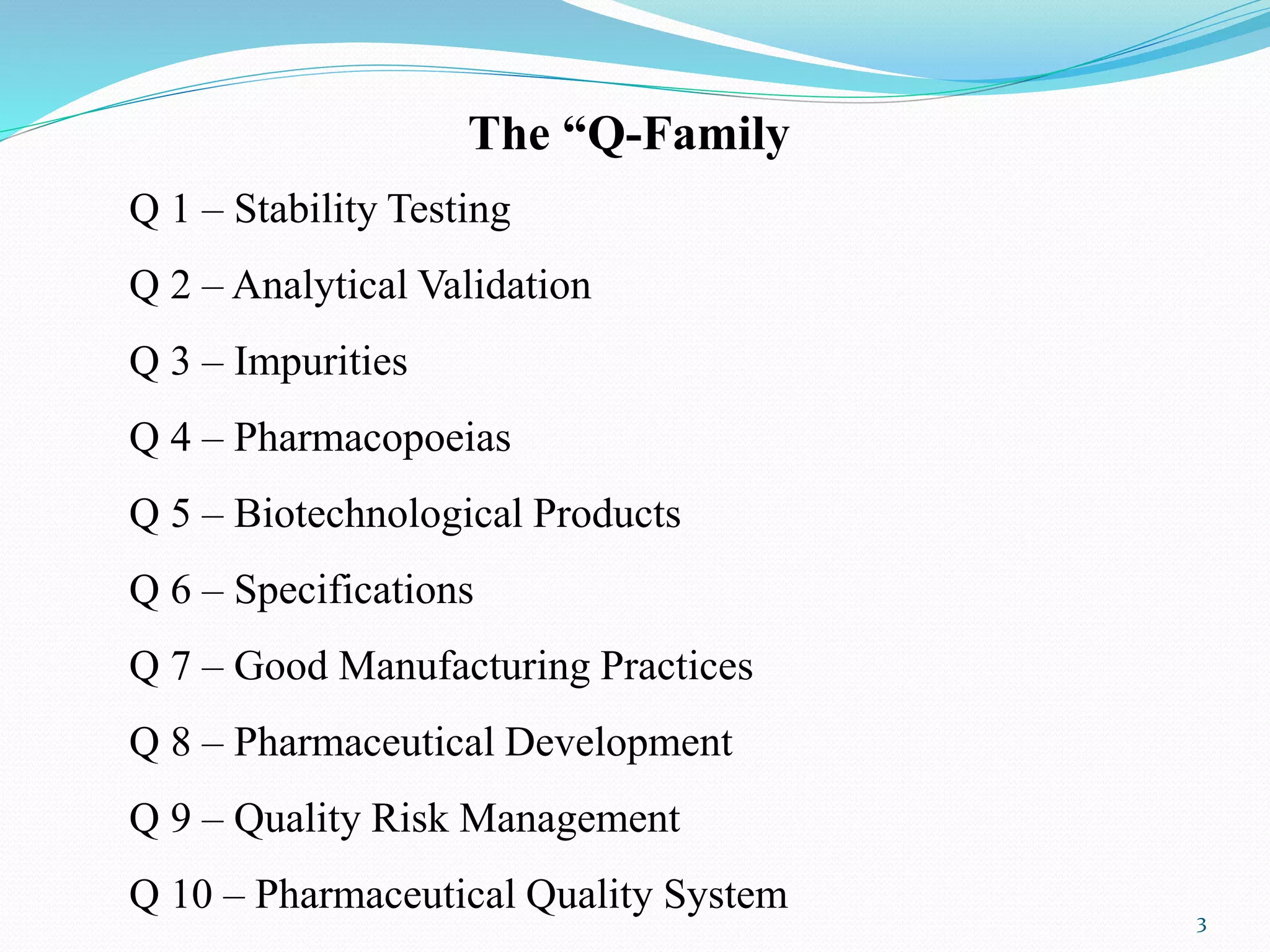
The “Q-Family
Q 1 – Stability Testing
Q 2 – Analytical Validation
Q 3 – Impurities
Q 4 – Pharmacopoeias
Q 5 – Biotechnological Products
Q 6 – Specifications
Q 7 – Good Manufacturing Practices
Q 8 – Pharmaceutical Development
Q 9 – Quality Risk Management
Q 10 – Pharmaceutical Quality System 3
Q1A(R)
 STABILITY TESTING
OF NEW DRUG
SUBSTANCES AND
PRODUCTS.
4
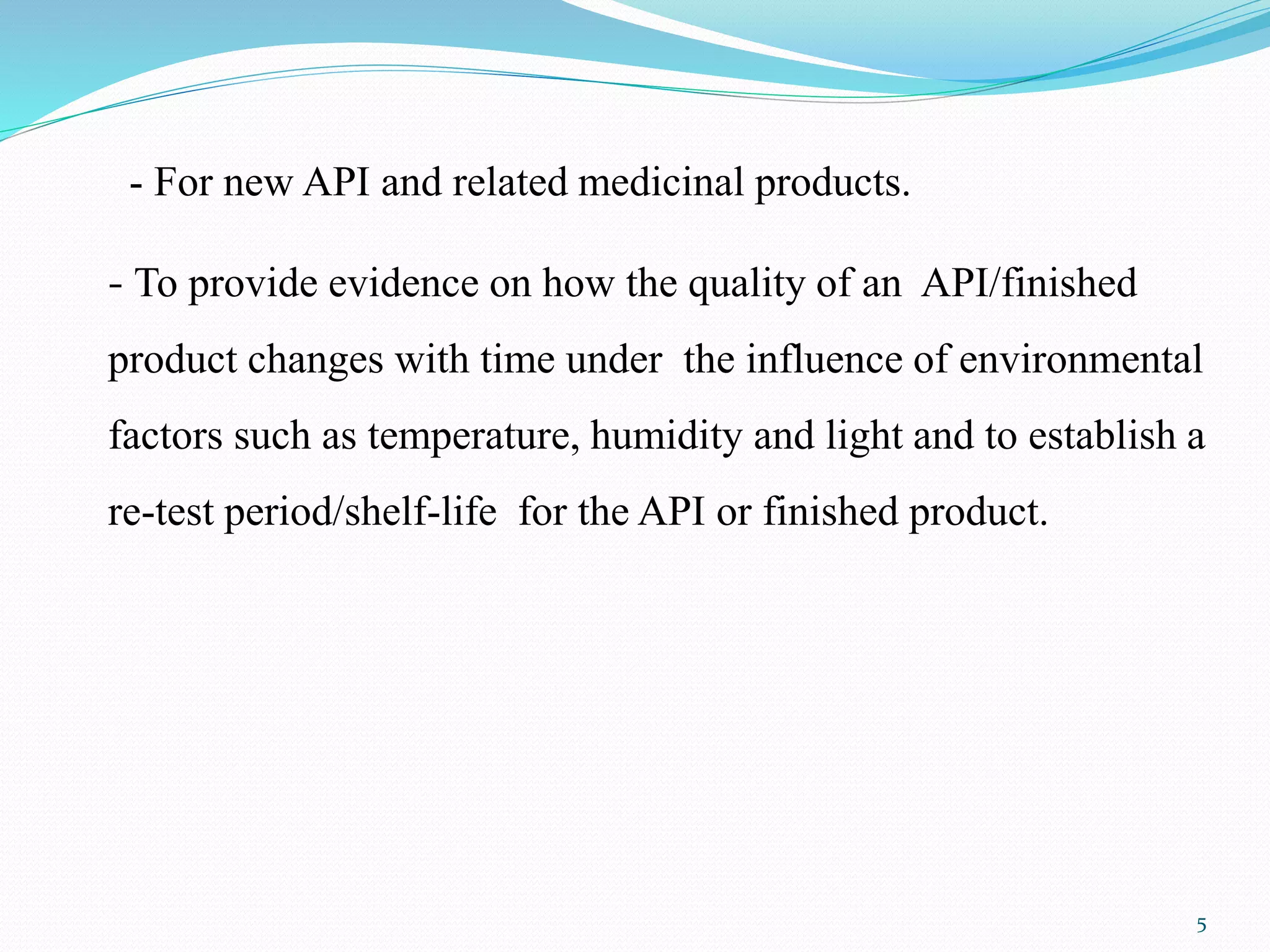
- For new API and related medicinal products.
- To provide evidence on how the quality of an API/finished
product changes with time under the influence of environmental
factors such as temperature, humidity and light and to establish a
re-test period/shelf-life for the API or finished product.
5
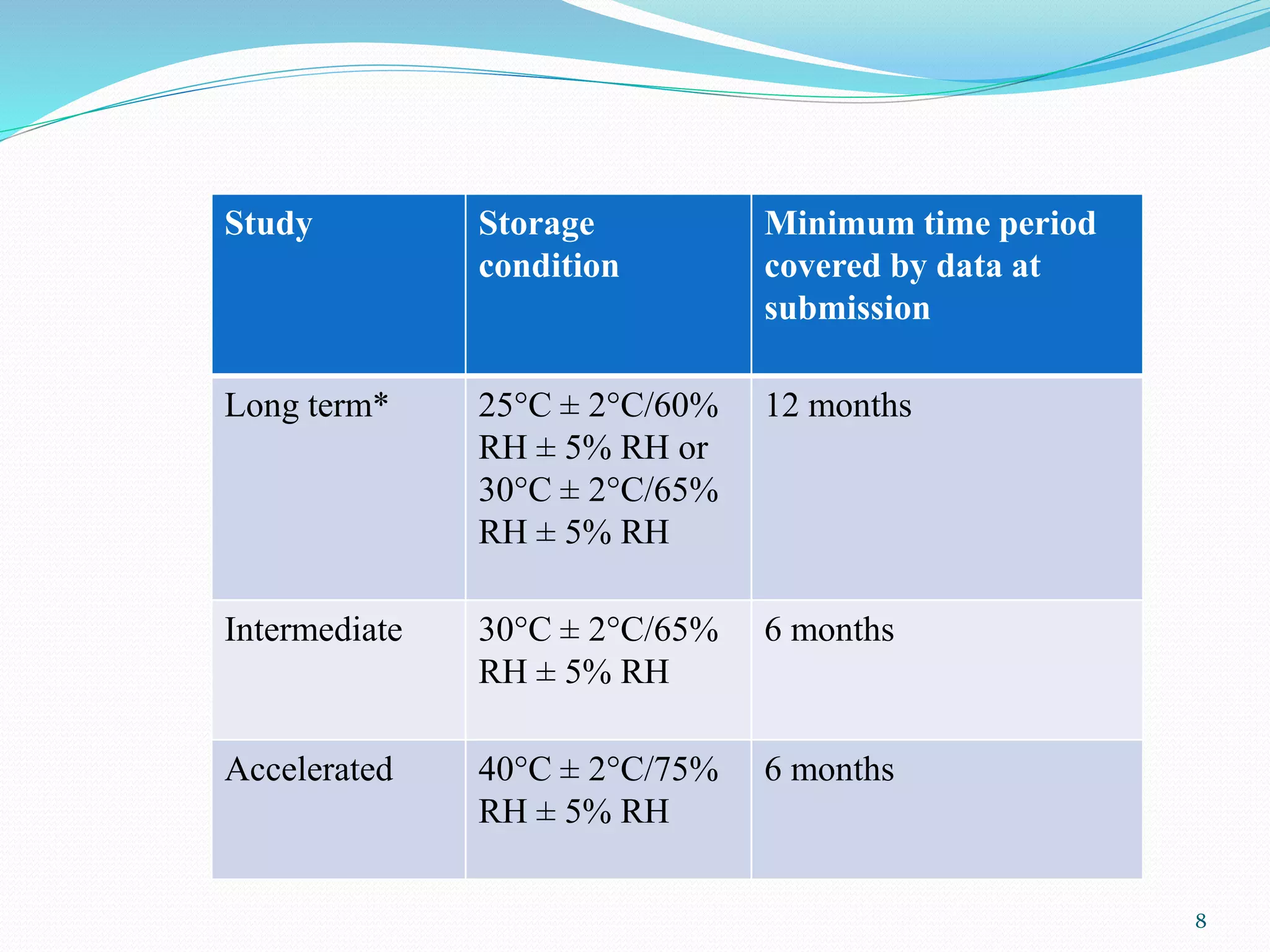
- Stress testing required for API
- Long-term and accelerated testing required for API and
product, where necessary intermediate testing.
- Minimum of three representative batches.
- Testing over a minimum of 12 months at LT and 6
months at accelerated conditions (with defined testing
frequency)
6
- Storage conditions for the “general case”, aqueous products
in semi-permeable containers, products to be stored in a
refrigerator and a freezer.
- Stability commitment.
7
Study Storage
condition
Minimum time period
covered by data at
submission
Long term* 25°C ± 2°C/60%
RH ± 5% RH or
30°C ± 2°C/65%
RH ± 5% RH
12 months
Intermediate 30°C ± 2°C/65%
RH ± 5% RH
6 months
Accelerated 40°C ± 2°C/75%
RH ± 5% RH
6 months
8
Q1B
 STABILITY TESTING:
PHOTOSTABILITY
TESTING OF NEW
DRUG SUBSTANCES
AND PRODUCTS.
9
- Describes requirements on photostability testing and defines
light exposure to be applied.
- To be tested on API – if not photosensitive, no further testing
required.
- If photosensitive, to be continued on exposed finished
product and product in primary package, product in
marketing package, where relevant.
- Where necessary, impact of light during manufacturing
process to be evaluated.
- Confirmatory testing required, where applicable.
10
Q1C
 STABILITY TESTING
FOR NEW DOSAGE
FORMS
11
GENERAL
This document is an annex to the ICH parent stability
guideline and addresses the recommendations on what
should be submitted regarding stability of new dosage forms
by the owner of the original application, after the original
submission for new drug substances and products.
NEW DOSAGE FORMS
A new dosage form is defined as a drug product which is a
different pharmaceutical product type, but contains the same
active substance as included in the existing drug product
approved by the pertinent regulatory authority.
12
Q1D
 BRACKETING AND
MATRIXING DESIGNS
FOR STABILITY
TESTING OF NEW
DRUG SUBSTANCES
AND PRODUCTS
13
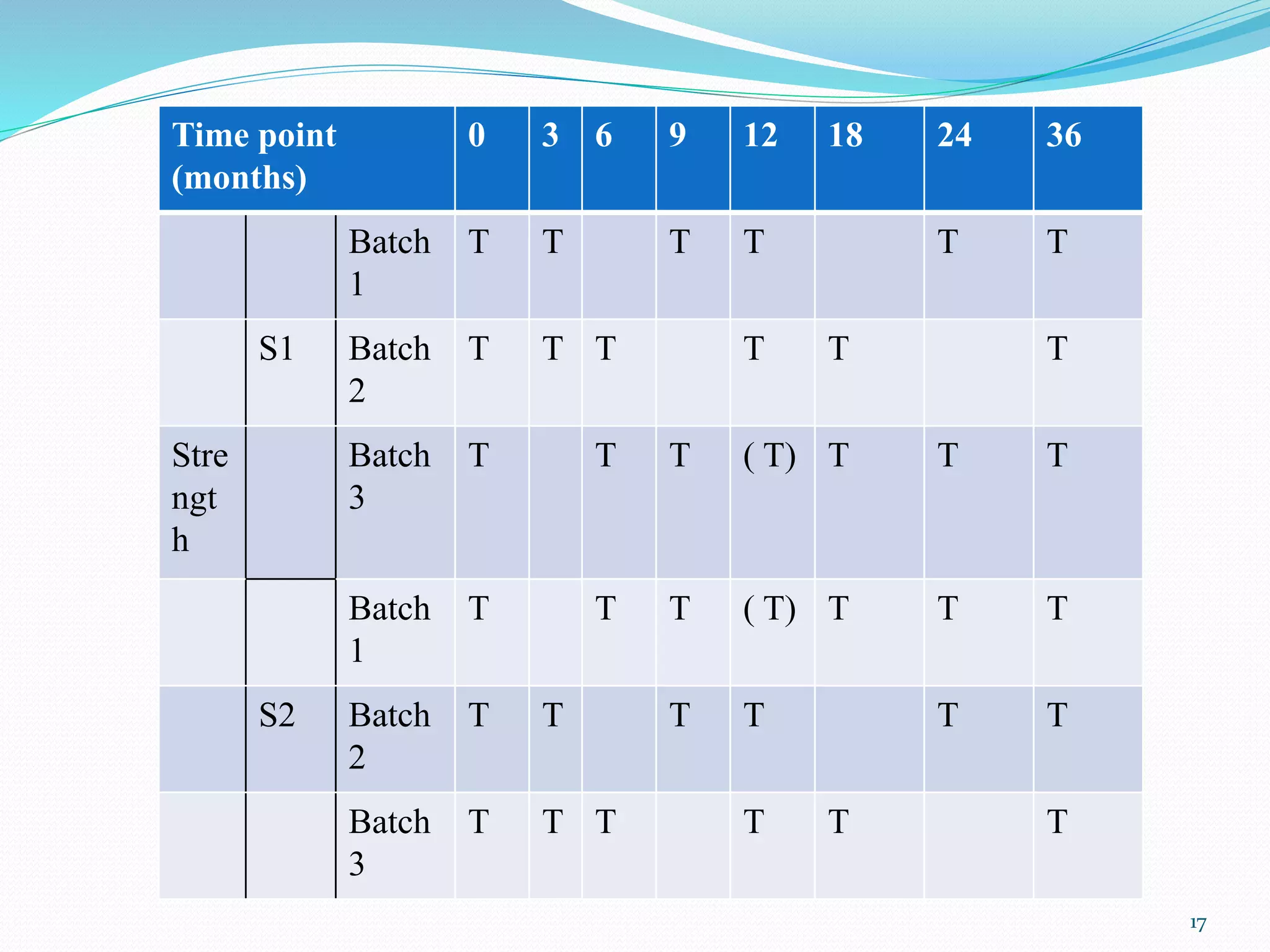
- Describes possibilities to apply reduced test designs, i.e.
bracketing and matrixing.
- Defines situations where reduced testing can be applied
without additional justification, with justification or where it is
not applicable.
- Bracketing: testing of extremes only.
- Matrixing: testing of a different samples of factor
combinations at different time points during the study.
- Provides example designs.
14
Bracketing
bracketing is the design of a stability schedule such that only
samples on the extremes of certain design factors (e.g.,
strength, container size and/or fill) are tested at all time points
as in a full design. The design assumes that the stability of any
intermediate levels is represented by the stability of the
extremes tested.
Matrixing is the design of a stability schedule such that a
selected subset of the total number of possible samples for all
factor combinations would be tested at a specified time point.
Matrixing
Each storage condition should be treated separately under
its own matrixing design.
15
Strength 50 mg 75
mg
100 mg
Batch 1 2 3 1 2 3 1 2 3
Container
size
15ml T T T T T T
100ml
500ml T T T T T T
Bracketing on strength and container size
T: Sample tested; (T): Sample tested if full shelf life data will not be
available before approval.
16
Time point
(months)
0 3 6 9 12 18 24 36
Batch
1
T T T T T T
S1 Batch
2
T T T T T T
Stre
ngt
h
Batch
3
T T T ( T) T T T
Batch
1
T T T ( T) T T T
S2 Batch
2
T T T T T T
Batch
3
T T T T T T
17
Q1E
 EVALUATION FOR
STABILITY DATA
18
Objectives of the Guideline
This guideline is intended to provide recommendations on
how to use stability data generated in accordance with the
principles detailed in the ICH guideline “Q1A(R) Stability
Testing of New Drug Substances and Products” (hereafter
referred to as the parent guideline) to propose a retest period or
shelf life in a registration application.
19
Q1F
 WITHDRAWN
20
Q2(R1)
 VALIDATION OF
ANALYTICAL
PROCEDURES: TEXT
AND METHODOLOGY
21
Typical validation characteristics which should be
considered are listed below:
Accuracy
Precision
Repeatability
Intermediate Precision
Specificity
Detection Limit
Quantitation Limit
Linearity
Range 22
Revalidation may be necessary in the following circumstances:
- changes in the synthesis of the drug substance;
- changes in the composition of the finished product;
- changes in the analytical procedure.
The degree of revalidation required depends on the nature of
the changes. Certain other changes may require validation as
well.
23
Q3A
 Impurities in New Drug
Substances
24
INTRODUCTION
This document is intended to provide guidance for registration
applications on the content and qualification of impurities in
new drug substances produced by chemical syntheses and not
previously registered in a region or member state. Impurities in
new drug substances are addressed from two perspectives :
Chemistry aspects include classification and identification of
impurities, report generation, listing of impurities in
specifications, and a brief discussion of analytical procedures
Safety aspects include specific guidance for qualifying those
impurities that were not present, or were present at substantially
lower levels, in batches of a new drug substance used in safety
and clinical studies.
25
Q3B(R2)
 IMPURITIES IN NEW
DRUG PRODUCTS
26
Objective of the guideline
This document provides guidance for registration applications
on the content and qualification of impurities in new drug
products produced from chemically synthesised new drug
substances not previously registered in a region or member
state.
Scope of the guideline
This guideline addresses only those impurities in new drug
products classified as degradation products of the drug
substance or reaction products of the drug substance with an
excipient and/or immediate container closure system
(collectively referred to as “degradation products” in this
guideline).
27
Q3C(R5)
 IMPURITIES:
GUIDELINE FOR
RESIDUAL SOLVENTS
28
Objective
The objective of this guideline is to recommend acceptable
amounts for residual solvents in pharmaceuticals for the
safety of the patient.
Since there is no therapeutic benefit from residual solvents,
all residual solvents should be removed to the extent possible
to meet product specifications, good manufacturing practices,
or other quality-based requirements.
Scope of the guideline
Residual solvents in drug substances, excipients, and in
drug products are within the scope of this guideline.
29
GENERAL PRINCIPLES
Class 1 solvents: Solvents to be avoided
Known human carcinogens, strongly suspected human
carcinogens, and environmental hazards.
Class 2 solvents: Solvents to be limited
Non-genotoxic animal carcinogens or possible causative
agents of other irreversible toxicity such as neurotoxicity or
teratogenicity.
Solvents suspected of other significant but reversible toxicities
Class 3 solvents: Solvents with low toxic potential
Solvents with low toxic potential to man; no health-based
exposure limit is needed. Class 3 solvents have PDEs of 50
mg or more per day.
30
Q3D
 Impurities: Guideline for
Metal Impurities
31
It is proposed that a new harmonised tripartite guideline
be developed to provide a globalpolicy for limiting metal
impurities qualitatively and quantitatively in drug products
and ingredients.
32
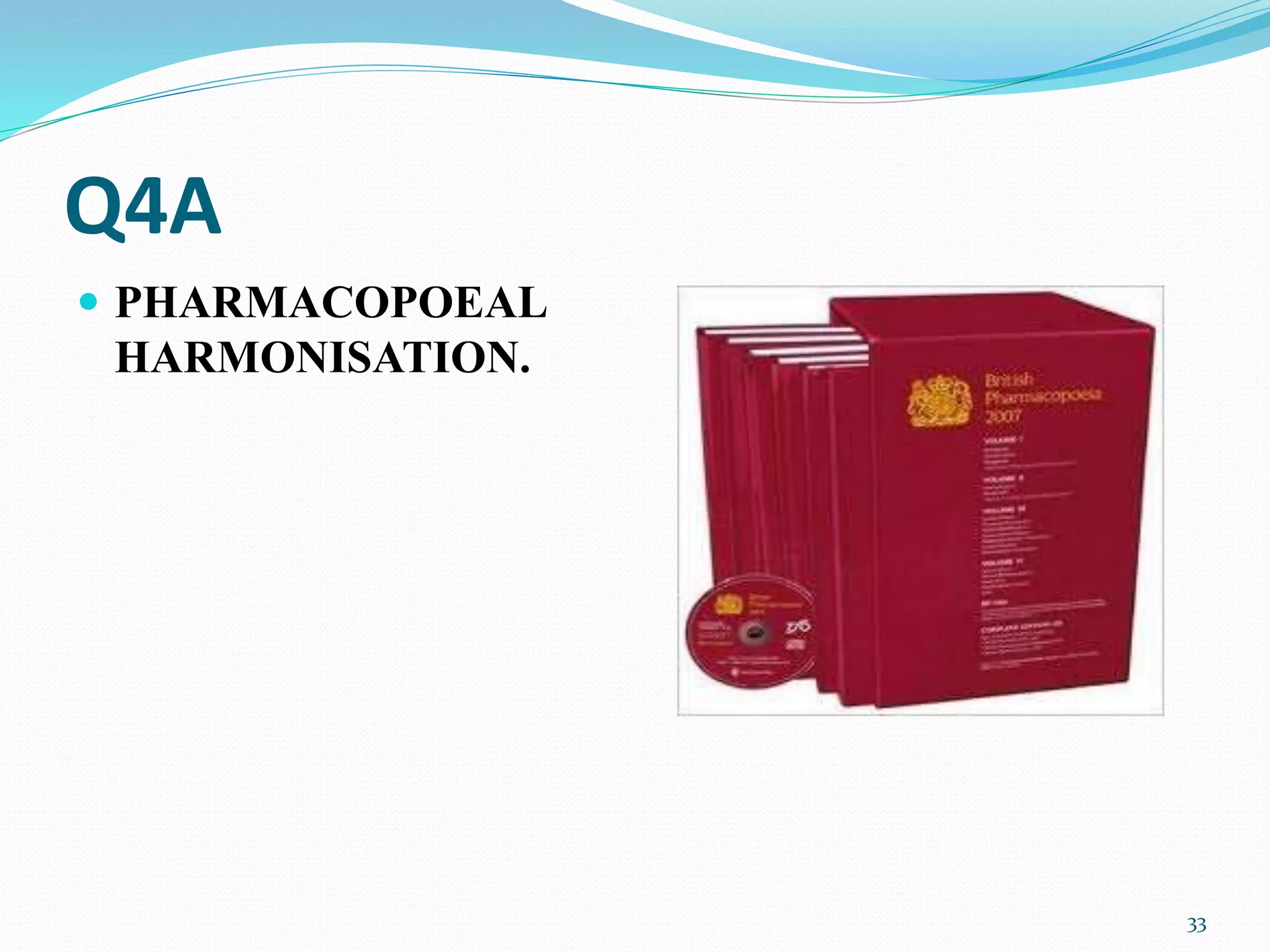
Q4A
 PHARMACOPOEAL
HARMONISATION.
33
Q4B ANNEX 1(R1)
 EVALUATION AND
RECOMMENDATION OF
PHARMACOPOEIAL
TEXTS FOR USE IN THE
ICH REGIONS ON
RESIDUE ON
IGNITION/SULPHATED
ASH GENERAL
CHAPTER.
 This annex is the result of
the Q4B process for Residue
on Ignition/Sulphated Ash.
34
Q4B ANNEX 2(R1)
 TEST FOR
EXTRACTABLE
VOLUME OF
PARENTERAL
PREPARATIONS
GENERAL CHAPTER
 This annex is the result of
the Q4B process for the Test
for Extractable Volume of
Parenteral Preparations
General Chapter.
35
Q4B ANNEX 3(R1)
 TEST FOR
PARTICULATE
CONTAMINATION: SUB-
VISIBLE PARTICLES
GENERAL CHAPTER
 This annex is the result of
the Q4B process for Test for
Particulate Contamination:
Sub-Visible Particles.
36
Q4B ANNEX 4A(R1)
 MICROBIOLOGICAL
EXAMINATION OF
NON-STERILE
PRODUCTS:
MICROBIAL
ENUMERATIONS TESTS
GENERAL CHAPTER
37
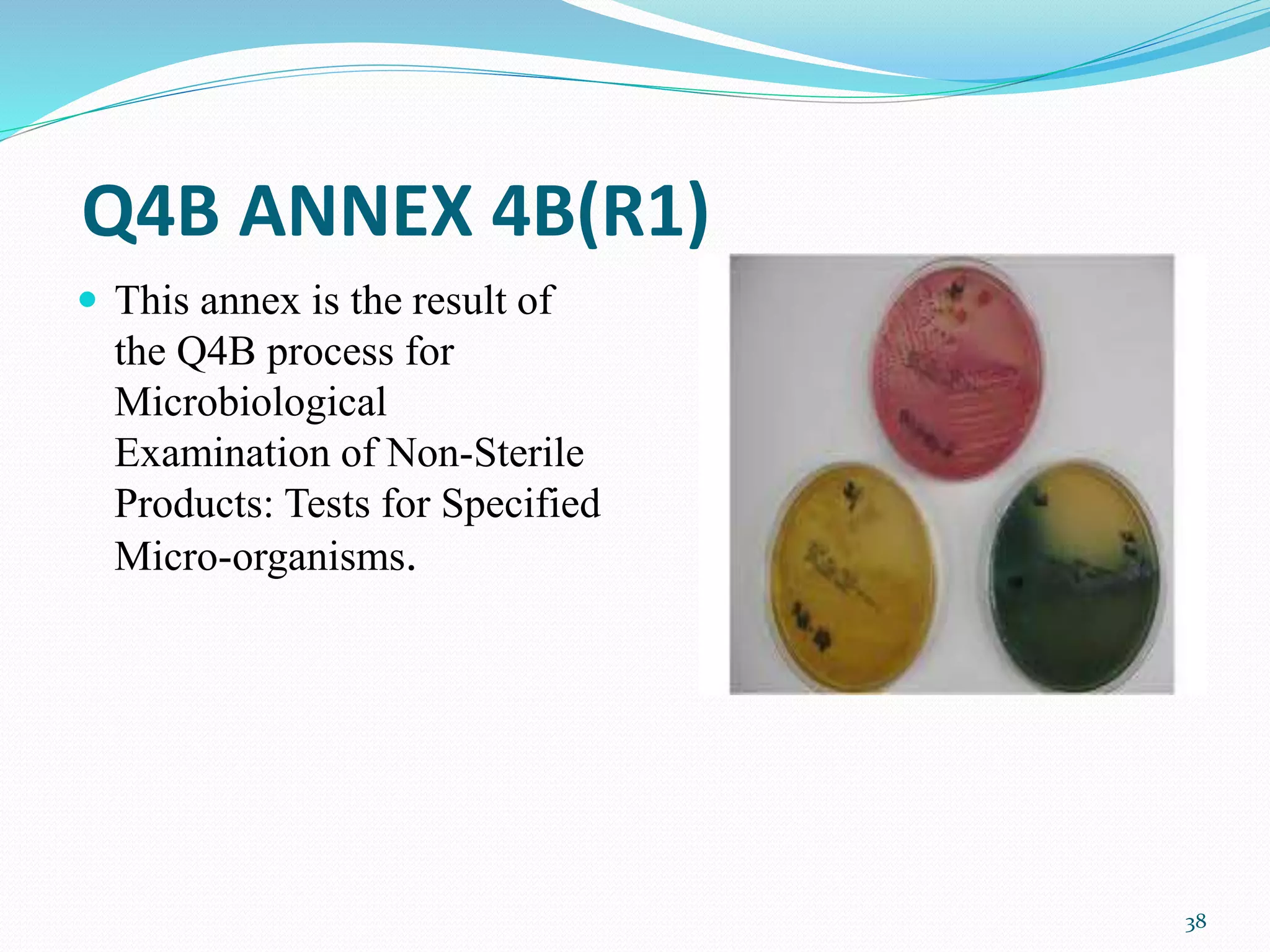
Q4B ANNEX 4B(R1)
 This annex is the result of
the Q4B process for
Microbiological
Examination of Non-Sterile
Products: Tests for Specified
Micro-organisms.
38
Q4B ANNEX 4C(R1)
 MICROBIOLOGICAL
EXAMINATION OF
NON-STERILE
PRODUCTS:
ACCEPTANCE
CRITERIA FOR
PHARMACEUTICAL
PREPARATIONS AND
SUBSTANCES FOR
PHARMACEUTICAL
USE.
39
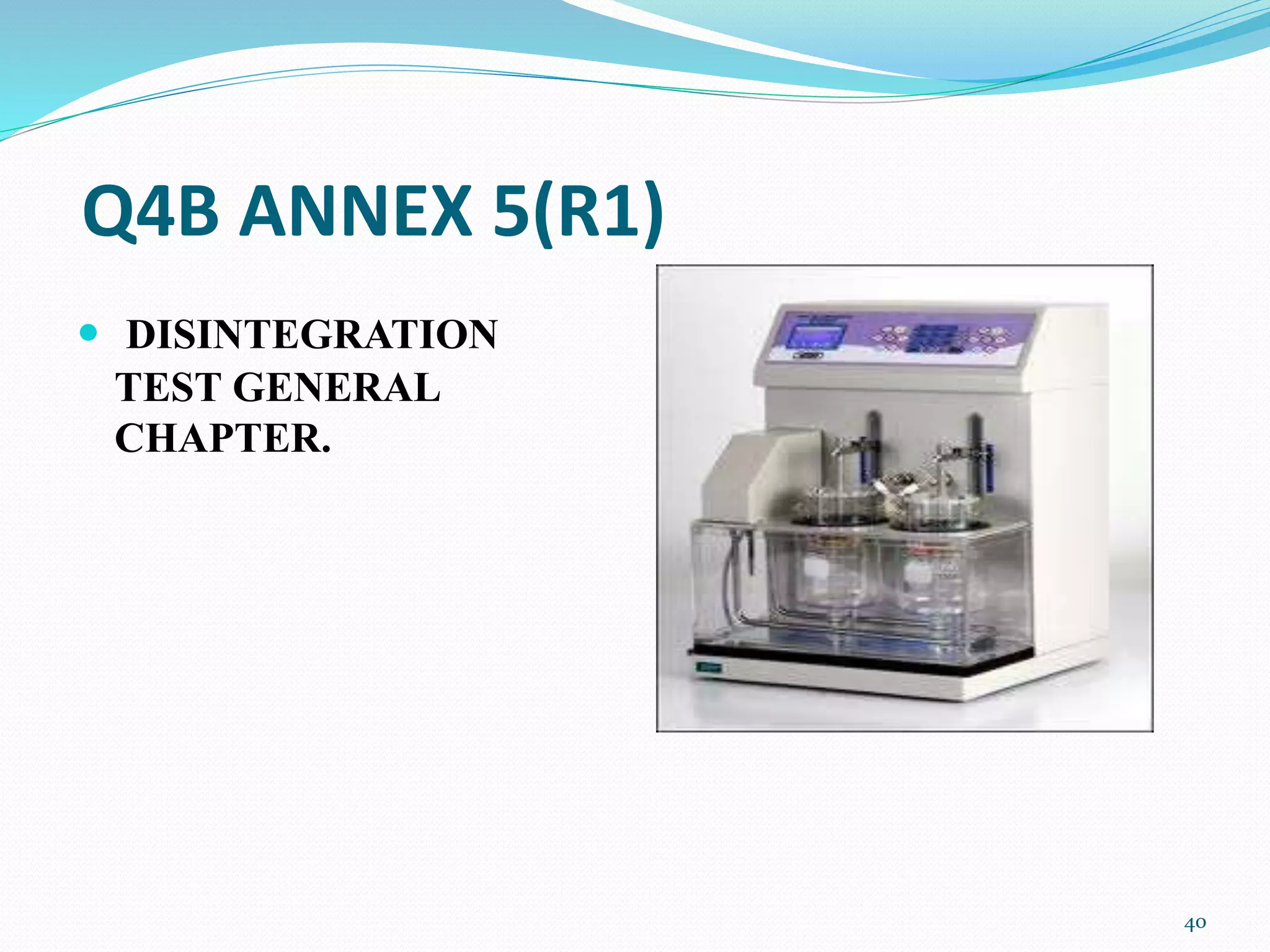
Q4B ANNEX 5(R1)
 DISINTEGRATION
TEST GENERAL
CHAPTER.
40
Q4B ANNEX 6(R1)
 UNIFORMITY OF
DOSAGE UNITS
GENERAL CHAPTER.
41
Q4B ANNEX 7(R2)
 DISSOLUTION TEST
GENERAL CHAPTER.
42
Q5A(R1)
 VIRAL SAFETY
EVALUATION OF
BIOTECHNOLOGY
PRODUCTS DERIVED
FROM CELL LINES OF
HUMAN OR ANIMAL
ORIGIN.
43
INTRODUCTION
This document is concerned with testing and evaluation of
the viral safety of biotechnology products derived from
characterised cell lines of human or animal origin (i.e.,
mammalian, avian, insect) and outlines data that should be
submitted in the marketing application/registration package.
The scope of the document covers products derived from
cell cultures initiated from characterised cell banks. It covers
products derived from in vitro cell culture, such as
interferons, monoclonal antibodies and recombinant DNA-
derived products including recombinant subunit vaccines,
and also includes products derived from hybridoma cells
grown in vivo as ascites
44
Three principal, complementary approaches have evolved
to control the potential viral contamination of biotechnology
products:
a) selecting and testing cell lines and other raw materials,
including media components, for the absence of undesirable
viruses which may be infectious and/or pathogenic for
humans;
b) assessing the capacity of the production processes to
clear infectious viruses;
c) testing the product at appropriate steps of production for
absence of contaminating infectious viruses.
45
Q5B
 QUALITY OF
BIOTECHNOLOGICAL
PRODUCTS:
ANALYSIS OF THE
EXPRESSION
CONSTRUCT
IN CELLS USED FOR
PRODUCTION OF
R-DNA DERIVED
PROTEIN PRODUCTS
46
Q5C
 STABILITY TESTING
OF
BIOTECHNOLOGICAL/
BIOLOGICAL
PRODUCTS .
47
SCOPE
The guidance stated in this annex applies to well-
characterised proteins and polypeptides, their derivatives and
products of which they are components, and which are
isolated from tissues, body fluids, cell cultures, or produced
using rDNA technology. Thus, the document covers the
generation and submission of stability data for products such
as cytokines (interferons, interleukins, colony-stimulating
factors, tumour necrosis factors), erythropoietins, plasminogen
activators, blood, plasma factors, growth hormones and
growth factors, insulins, monoclonal antibodies, and vaccines
consisting of well-characterised proteins or polypeptides.
48
Q5D
 DERIVATION AND
CHARACTERISATION
OF CELL SUBSTRATES
USED FOR
PRODUCTION OF
BIOTECHNOLOGICAL/
BIOLOGICAL
PRODUCTS.
49
SCOPE
This guideline covers cell substrates having a cell
banking system. In this document, “cell substrate” refers to
microbial cells or cell lines derived from human or animal
sources that possess the full potential for generation of the
desired biotechnological/biological products for human in
vivo or ex vivo use.
50
Q5E
 COMPARABILITY OF
BIOTECHNOLOGICAL/
BIOLOGICAL
PRODUCTS SUBJECT
TO CHANGES IN THEIR
MANUFACTURING
PROCESS.
51
The goal of the comparability exercise is to ensure the
quality, safety and efficacy of drug product produced by a
changed manufacturing process, through collection and
evaluation of the relevant data to determine whether there
might be any adverse impact on the drug product due to the
manufacturing process changes.
52
53

ICH Guidelines Q1 - Q10

  • 1.
    MADE BY: BHAGYASHREEBHANAGE, ANKITA GAITONDE,HETAL GANDHI, ASHVINI INGLE. 1
  • 2.
    ICH: Is InternationalConference of Harmonization of technical requirements for registration of pharmaceuticals for human use. Aim : It is a unique project that brings together the regulatory authorities of Europe, Japan & U.S. and experts from the pharmaceutical industries to discuss the scientific and technical aspects of the product registration. 2
  • 3.
    The “Q-Family Q 1– Stability Testing Q 2 – Analytical Validation Q 3 – Impurities Q 4 – Pharmacopoeias Q 5 – Biotechnological Products Q 6 – Specifications Q 7 – Good Manufacturing Practices Q 8 – Pharmaceutical Development Q 9 – Quality Risk Management Q 10 – Pharmaceutical Quality System 3
  • 4.
    Q1A(R)  STABILITY TESTING OFNEW DRUG SUBSTANCES AND PRODUCTS. 4
  • 5.
    - For newAPI and related medicinal products. - To provide evidence on how the quality of an API/finished product changes with time under the influence of environmental factors such as temperature, humidity and light and to establish a re-test period/shelf-life for the API or finished product. 5
  • 6.
    - Stress testingrequired for API - Long-term and accelerated testing required for API and product, where necessary intermediate testing. - Minimum of three representative batches. - Testing over a minimum of 12 months at LT and 6 months at accelerated conditions (with defined testing frequency) 6
  • 7.
    - Storage conditionsfor the “general case”, aqueous products in semi-permeable containers, products to be stored in a refrigerator and a freezer. - Stability commitment. 7
  • 8.
    Study Storage condition Minimum timeperiod covered by data at submission Long term* 25°C ± 2°C/60% RH ± 5% RH or 30°C ± 2°C/65% RH ± 5% RH 12 months Intermediate 30°C ± 2°C/65% RH ± 5% RH 6 months Accelerated 40°C ± 2°C/75% RH ± 5% RH 6 months 8
  • 9.
    Q1B  STABILITY TESTING: PHOTOSTABILITY TESTINGOF NEW DRUG SUBSTANCES AND PRODUCTS. 9
  • 10.
    - Describes requirementson photostability testing and defines light exposure to be applied. - To be tested on API – if not photosensitive, no further testing required. - If photosensitive, to be continued on exposed finished product and product in primary package, product in marketing package, where relevant. - Where necessary, impact of light during manufacturing process to be evaluated. - Confirmatory testing required, where applicable. 10
  • 11.
    Q1C  STABILITY TESTING FORNEW DOSAGE FORMS 11
  • 12.
    GENERAL This document isan annex to the ICH parent stability guideline and addresses the recommendations on what should be submitted regarding stability of new dosage forms by the owner of the original application, after the original submission for new drug substances and products. NEW DOSAGE FORMS A new dosage form is defined as a drug product which is a different pharmaceutical product type, but contains the same active substance as included in the existing drug product approved by the pertinent regulatory authority. 12
  • 13.
    Q1D  BRACKETING AND MATRIXINGDESIGNS FOR STABILITY TESTING OF NEW DRUG SUBSTANCES AND PRODUCTS 13
  • 14.
    - Describes possibilitiesto apply reduced test designs, i.e. bracketing and matrixing. - Defines situations where reduced testing can be applied without additional justification, with justification or where it is not applicable. - Bracketing: testing of extremes only. - Matrixing: testing of a different samples of factor combinations at different time points during the study. - Provides example designs. 14
  • 15.
    Bracketing bracketing is thedesign of a stability schedule such that only samples on the extremes of certain design factors (e.g., strength, container size and/or fill) are tested at all time points as in a full design. The design assumes that the stability of any intermediate levels is represented by the stability of the extremes tested. Matrixing is the design of a stability schedule such that a selected subset of the total number of possible samples for all factor combinations would be tested at a specified time point. Matrixing Each storage condition should be treated separately under its own matrixing design. 15
  • 16.
    Strength 50 mg75 mg 100 mg Batch 1 2 3 1 2 3 1 2 3 Container size 15ml T T T T T T 100ml 500ml T T T T T T Bracketing on strength and container size T: Sample tested; (T): Sample tested if full shelf life data will not be available before approval. 16
  • 17.
    Time point (months) 0 36 9 12 18 24 36 Batch 1 T T T T T T S1 Batch 2 T T T T T T Stre ngt h Batch 3 T T T ( T) T T T Batch 1 T T T ( T) T T T S2 Batch 2 T T T T T T Batch 3 T T T T T T 17
  • 18.
  • 19.
    Objectives of theGuideline This guideline is intended to provide recommendations on how to use stability data generated in accordance with the principles detailed in the ICH guideline “Q1A(R) Stability Testing of New Drug Substances and Products” (hereafter referred to as the parent guideline) to propose a retest period or shelf life in a registration application. 19
  • 20.
  • 21.
  • 22.
    Typical validation characteristicswhich should be considered are listed below: Accuracy Precision Repeatability Intermediate Precision Specificity Detection Limit Quantitation Limit Linearity Range 22
  • 23.
    Revalidation may benecessary in the following circumstances: - changes in the synthesis of the drug substance; - changes in the composition of the finished product; - changes in the analytical procedure. The degree of revalidation required depends on the nature of the changes. Certain other changes may require validation as well. 23
  • 24.
    Q3A  Impurities inNew Drug Substances 24
  • 25.
    INTRODUCTION This document isintended to provide guidance for registration applications on the content and qualification of impurities in new drug substances produced by chemical syntheses and not previously registered in a region or member state. Impurities in new drug substances are addressed from two perspectives : Chemistry aspects include classification and identification of impurities, report generation, listing of impurities in specifications, and a brief discussion of analytical procedures Safety aspects include specific guidance for qualifying those impurities that were not present, or were present at substantially lower levels, in batches of a new drug substance used in safety and clinical studies. 25
  • 26.
    Q3B(R2)  IMPURITIES INNEW DRUG PRODUCTS 26
  • 27.
    Objective of theguideline This document provides guidance for registration applications on the content and qualification of impurities in new drug products produced from chemically synthesised new drug substances not previously registered in a region or member state. Scope of the guideline This guideline addresses only those impurities in new drug products classified as degradation products of the drug substance or reaction products of the drug substance with an excipient and/or immediate container closure system (collectively referred to as “degradation products” in this guideline). 27
  • 28.
  • 29.
    Objective The objective ofthis guideline is to recommend acceptable amounts for residual solvents in pharmaceuticals for the safety of the patient. Since there is no therapeutic benefit from residual solvents, all residual solvents should be removed to the extent possible to meet product specifications, good manufacturing practices, or other quality-based requirements. Scope of the guideline Residual solvents in drug substances, excipients, and in drug products are within the scope of this guideline. 29
  • 30.
    GENERAL PRINCIPLES Class 1solvents: Solvents to be avoided Known human carcinogens, strongly suspected human carcinogens, and environmental hazards. Class 2 solvents: Solvents to be limited Non-genotoxic animal carcinogens or possible causative agents of other irreversible toxicity such as neurotoxicity or teratogenicity. Solvents suspected of other significant but reversible toxicities Class 3 solvents: Solvents with low toxic potential Solvents with low toxic potential to man; no health-based exposure limit is needed. Class 3 solvents have PDEs of 50 mg or more per day. 30
  • 31.
    Q3D  Impurities: Guidelinefor Metal Impurities 31
  • 32.
    It is proposedthat a new harmonised tripartite guideline be developed to provide a globalpolicy for limiting metal impurities qualitatively and quantitatively in drug products and ingredients. 32
  • 33.
  • 34.
    Q4B ANNEX 1(R1) EVALUATION AND RECOMMENDATION OF PHARMACOPOEIAL TEXTS FOR USE IN THE ICH REGIONS ON RESIDUE ON IGNITION/SULPHATED ASH GENERAL CHAPTER.  This annex is the result of the Q4B process for Residue on Ignition/Sulphated Ash. 34
  • 35.
    Q4B ANNEX 2(R1) TEST FOR EXTRACTABLE VOLUME OF PARENTERAL PREPARATIONS GENERAL CHAPTER  This annex is the result of the Q4B process for the Test for Extractable Volume of Parenteral Preparations General Chapter. 35
  • 36.
    Q4B ANNEX 3(R1) TEST FOR PARTICULATE CONTAMINATION: SUB- VISIBLE PARTICLES GENERAL CHAPTER  This annex is the result of the Q4B process for Test for Particulate Contamination: Sub-Visible Particles. 36
  • 37.
    Q4B ANNEX 4A(R1) MICROBIOLOGICAL EXAMINATION OF NON-STERILE PRODUCTS: MICROBIAL ENUMERATIONS TESTS GENERAL CHAPTER 37
  • 38.
    Q4B ANNEX 4B(R1) This annex is the result of the Q4B process for Microbiological Examination of Non-Sterile Products: Tests for Specified Micro-organisms. 38
  • 39.
    Q4B ANNEX 4C(R1) MICROBIOLOGICAL EXAMINATION OF NON-STERILE PRODUCTS: ACCEPTANCE CRITERIA FOR PHARMACEUTICAL PREPARATIONS AND SUBSTANCES FOR PHARMACEUTICAL USE. 39
  • 40.
    Q4B ANNEX 5(R1) DISINTEGRATION TEST GENERAL CHAPTER. 40
  • 41.
    Q4B ANNEX 6(R1) UNIFORMITY OF DOSAGE UNITS GENERAL CHAPTER. 41
  • 42.
    Q4B ANNEX 7(R2) DISSOLUTION TEST GENERAL CHAPTER. 42
  • 43.
    Q5A(R1)  VIRAL SAFETY EVALUATIONOF BIOTECHNOLOGY PRODUCTS DERIVED FROM CELL LINES OF HUMAN OR ANIMAL ORIGIN. 43
  • 44.
    INTRODUCTION This document isconcerned with testing and evaluation of the viral safety of biotechnology products derived from characterised cell lines of human or animal origin (i.e., mammalian, avian, insect) and outlines data that should be submitted in the marketing application/registration package. The scope of the document covers products derived from cell cultures initiated from characterised cell banks. It covers products derived from in vitro cell culture, such as interferons, monoclonal antibodies and recombinant DNA- derived products including recombinant subunit vaccines, and also includes products derived from hybridoma cells grown in vivo as ascites 44
  • 45.
    Three principal, complementaryapproaches have evolved to control the potential viral contamination of biotechnology products: a) selecting and testing cell lines and other raw materials, including media components, for the absence of undesirable viruses which may be infectious and/or pathogenic for humans; b) assessing the capacity of the production processes to clear infectious viruses; c) testing the product at appropriate steps of production for absence of contaminating infectious viruses. 45
  • 46.
    Q5B  QUALITY OF BIOTECHNOLOGICAL PRODUCTS: ANALYSISOF THE EXPRESSION CONSTRUCT IN CELLS USED FOR PRODUCTION OF R-DNA DERIVED PROTEIN PRODUCTS 46
  • 47.
  • 48.
    SCOPE The guidance statedin this annex applies to well- characterised proteins and polypeptides, their derivatives and products of which they are components, and which are isolated from tissues, body fluids, cell cultures, or produced using rDNA technology. Thus, the document covers the generation and submission of stability data for products such as cytokines (interferons, interleukins, colony-stimulating factors, tumour necrosis factors), erythropoietins, plasminogen activators, blood, plasma factors, growth hormones and growth factors, insulins, monoclonal antibodies, and vaccines consisting of well-characterised proteins or polypeptides. 48
  • 49.
    Q5D  DERIVATION AND CHARACTERISATION OFCELL SUBSTRATES USED FOR PRODUCTION OF BIOTECHNOLOGICAL/ BIOLOGICAL PRODUCTS. 49
  • 50.
    SCOPE This guideline coverscell substrates having a cell banking system. In this document, “cell substrate” refers to microbial cells or cell lines derived from human or animal sources that possess the full potential for generation of the desired biotechnological/biological products for human in vivo or ex vivo use. 50
  • 51.
    Q5E  COMPARABILITY OF BIOTECHNOLOGICAL/ BIOLOGICAL PRODUCTSSUBJECT TO CHANGES IN THEIR MANUFACTURING PROCESS. 51
  • 52.
    The goal ofthe comparability exercise is to ensure the quality, safety and efficacy of drug product produced by a changed manufacturing process, through collection and evaluation of the relevant data to determine whether there might be any adverse impact on the drug product due to the manufacturing process changes. 52
  • 53.