Cultivating Learning Design Thinking
with ePortfolios in a Masters course
Andrew Deacon & Cheryl Hodgkinson-Williams
Centre for Educational Technology,
University of Cape Town, South Africa
ICEL 2013
27 June 2013, Cape Town
Macro-level
questions
Meso-level
questions
Micro-level
questions
Learning Design
Education - Technology
Gap
Learning, Co
gnition and
Technology
ICTs in
Education:
Issues and
Debates
Educational
ICTs for
Developing
Context
Online
Learning
Design
Minor
Dissertation
& Advanced
Research
Design
1 2 3 4
Learning Design Thinking
A complex, iterative process
of problem-defining and problem-solving
of ill-defined learning needs
that requires a creative and analytic
approach through iterative prototyping
based on formative feedback
Types of Content
Analytic Synthetic
More concerned
with finding or
discovering
More concerned
with making and
inventing
Types of Process
Symbolic
Real
abstract, symbolic world
real world;
artefacts for managing
the physical
environment
Types of Thinking Processes
Owen (2007); Razzouk & Shute (2012)
Diverse Contexts
58 students, 2009 – 2012
Kenya 3
Mozambique 1
Cameroon 1
Namibia 3
Nigeria 7
Uganda 6
Zambia 3
Zimbabwe 8
Canada 1 Austria 2
Swaziland 1
South Africa 22
Home Languages
Afrikaans
4%
Eng & Afr
5%
English
52%
German
3%
Isixhosa
12%
Oshiwambo
2%
Other
3%
Shona
7%
Siswati
2% Unknown
10%
Higher Education
lecturer
Systems Engineer
E-Learning
Manager
Backgrounds
Educational NGO
Ubiquitous Tools Differ
Students using
technology
Personal
learning
environments
Supporting learning
environments
Technology for
teaching
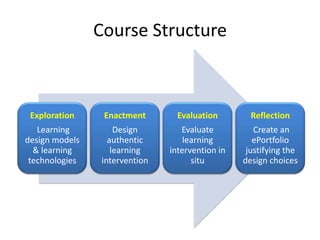
Course Structure
Exploration
Learning
design models
& learning
technologies
Enactment
Design
authentic
learning
intervention
Evaluation
Evaluate
learning
intervention in
situ
Reflection
Create an
ePortfolio
justifying the
design choices
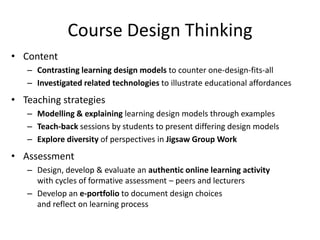
Course Design Thinking
• Content
– Contrasting learning design models to counter one-design-fits-all
– Investigated related technologies to illustrate educational affordances
• Teaching strategies
– Modelling & explaining learning design models through examples
– Teach-back sessions by students to present differing design models
– Explore diversity of perspectives in Jigsaw Group Work
• Assessment
– Design, develop & evaluate an authentic online learning activity
with cycles of formative assessment – peers and lecturers
– Develop an e-portfolio to document design choices
and reflect on learning process
Students’ Prior Experience
- Educational Theory
- Educational Technology
+ Educational Theory
- Educational Technology
- Educational Theory
+ Educational Technology
+ Educational Theory
+ Educational Technology
A B
C D
Our Naïve Assumptions
- Educational Theory
- Educational Technology
+ Educational Theory
- Educational Technology
- Educational Theory
+ Educational Technology
+ Educational Theory
+ Educational Technology
A B
C D
Technology
support
More on Education
context & Technology
Little support
required
Educational theory
support
How students performed
• Over 4 years
– 58 students
• ‘A’
– mean: 66%
• ‘B’, ‘C’ & ‘D’
– mean: 71% - 72%
• Only a few students
with no educational
theory or technology
experience were at
greater risk of struggling
A: Alice’s reflections
“I have learnt that that it is very important
to first understand the context of the
users, the problem to be addressed, the
affordance requirements of the task to be
prescribed as well as the underlying
principles and pedagogies in order to
effectively provide an intervention”
B: Bem’s reflections
“Sometimes I got confused and
wondered whether I was really on the
right track especially when it can to
certain sections of the e-portfolio and the
prototype WebQuest intervention”
C: Chris’ reflections
“I suspect that if and when I develop
more online activities, this might shift.
Hopefully this will mean activities that
are more creative than I have at present.
But in this online activity it was definitely
a case of using the known to venture into
the unknown”
D: Dina’s reflections
“The lecturer adjusts according to the
students’ ability, interest, time, need
and the extent to which he/she
intends to delve in the subject matter
and may not necessary follow any
systematic pattern”
Course Redesign Cycle
Exploration Enactment Evaluation Reflection
Course re-design for following year
Assessments &
own reflections
A B
C D
A B
C D
A B
C D
A B
C D
Conclusion
• Pedagogic strategies to surface learning design thinking
– Explore technology affordances
– Develop an authentic learning task
– Provide specific and iterative formative feedback,
e.g., for ePortfolios
• Diverse backgrounds
– Cannot assume prior qualifications equates to common
learning design thinking
– Adapt pedagogical strategies to be responsive to diversity
• Analytical frameworks to reflect on our own design
thinking, pedagogies and course design

Cultivating Learning Design Thinking with ePortfolios in a Masters course

  • 1.
    Cultivating Learning DesignThinking with ePortfolios in a Masters course Andrew Deacon & Cheryl Hodgkinson-Williams Centre for Educational Technology, University of Cape Town, South Africa ICEL 2013 27 June 2013, Cape Town
  • 2.
  • 3.
    Learning, Co gnition and Technology ICTsin Education: Issues and Debates Educational ICTs for Developing Context Online Learning Design Minor Dissertation & Advanced Research Design 1 2 3 4
  • 5.
    Learning Design Thinking Acomplex, iterative process of problem-defining and problem-solving of ill-defined learning needs that requires a creative and analytic approach through iterative prototyping based on formative feedback
  • 6.
    Types of Content AnalyticSynthetic More concerned with finding or discovering More concerned with making and inventing
  • 7.
    Types of Process Symbolic Real abstract,symbolic world real world; artefacts for managing the physical environment
  • 8.
    Types of ThinkingProcesses Owen (2007); Razzouk & Shute (2012)
  • 9.
    Diverse Contexts 58 students,2009 – 2012 Kenya 3 Mozambique 1 Cameroon 1 Namibia 3 Nigeria 7 Uganda 6 Zambia 3 Zimbabwe 8 Canada 1 Austria 2 Swaziland 1 South Africa 22
  • 10.
    Home Languages Afrikaans 4% Eng &Afr 5% English 52% German 3% Isixhosa 12% Oshiwambo 2% Other 3% Shona 7% Siswati 2% Unknown 10%
  • 11.
  • 12.
    Ubiquitous Tools Differ Studentsusing technology Personal learning environments Supporting learning environments Technology for teaching
  • 13.
    Course Structure Exploration Learning design models &learning technologies Enactment Design authentic learning intervention Evaluation Evaluate learning intervention in situ Reflection Create an ePortfolio justifying the design choices
  • 14.
    Course Design Thinking •Content – Contrasting learning design models to counter one-design-fits-all – Investigated related technologies to illustrate educational affordances • Teaching strategies – Modelling & explaining learning design models through examples – Teach-back sessions by students to present differing design models – Explore diversity of perspectives in Jigsaw Group Work • Assessment – Design, develop & evaluate an authentic online learning activity with cycles of formative assessment – peers and lecturers – Develop an e-portfolio to document design choices and reflect on learning process
  • 15.
    Students’ Prior Experience -Educational Theory - Educational Technology + Educational Theory - Educational Technology - Educational Theory + Educational Technology + Educational Theory + Educational Technology A B C D
  • 16.
    Our Naïve Assumptions -Educational Theory - Educational Technology + Educational Theory - Educational Technology - Educational Theory + Educational Technology + Educational Theory + Educational Technology A B C D Technology support More on Education context & Technology Little support required Educational theory support
  • 17.
    How students performed •Over 4 years – 58 students • ‘A’ – mean: 66% • ‘B’, ‘C’ & ‘D’ – mean: 71% - 72% • Only a few students with no educational theory or technology experience were at greater risk of struggling
  • 18.
    A: Alice’s reflections “Ihave learnt that that it is very important to first understand the context of the users, the problem to be addressed, the affordance requirements of the task to be prescribed as well as the underlying principles and pedagogies in order to effectively provide an intervention”
  • 19.
    B: Bem’s reflections “SometimesI got confused and wondered whether I was really on the right track especially when it can to certain sections of the e-portfolio and the prototype WebQuest intervention”
  • 20.
    C: Chris’ reflections “Isuspect that if and when I develop more online activities, this might shift. Hopefully this will mean activities that are more creative than I have at present. But in this online activity it was definitely a case of using the known to venture into the unknown”
  • 21.
    D: Dina’s reflections “Thelecturer adjusts according to the students’ ability, interest, time, need and the extent to which he/she intends to delve in the subject matter and may not necessary follow any systematic pattern”
  • 22.
    Course Redesign Cycle ExplorationEnactment Evaluation Reflection Course re-design for following year Assessments & own reflections A B C D A B C D A B C D A B C D
  • 23.
    Conclusion • Pedagogic strategiesto surface learning design thinking – Explore technology affordances – Develop an authentic learning task – Provide specific and iterative formative feedback, e.g., for ePortfolios • Diverse backgrounds – Cannot assume prior qualifications equates to common learning design thinking – Adapt pedagogical strategies to be responsive to diversity • Analytical frameworks to reflect on our own design thinking, pedagogies and course design