Andrew Deacon
Centre for Educational Technology, University of Cape Town
Janet Small & Nicola Pallitt
Centre for Open Learning, University of Cape Town
Global Citizenship Badges
using gamification to recognize
non-formal learning in a university context
Outline
• Global Citizenship programme at UCT
• Reimaging after 4 years
• Badging and gamification
• Designs as Enhancement vs Problem-centric
• Discovery – Dream – Design – Delivery
• Towards digital portfolios
• Conclusions
UCT Global Citizenship Programme
Global Citizenship: Leading for Social Justice
– Three short courses:
Continuing Education
certificate
– Each year involves
over 200 students
from all faculties
– Students becoming
citizens rather than
simply learners
Goals of Global Citizenship Programme
1. Knowledge: Exposing students to global
citizenship and social justice issues beyond degree
and discipline
2. Skills: Developing capacity for leadership on
contemporary social justice issues by improving
active listening and critical thinking
3. Values: Promoting awareness of themselves as
future global citizens motivated to work for social
justice through community service
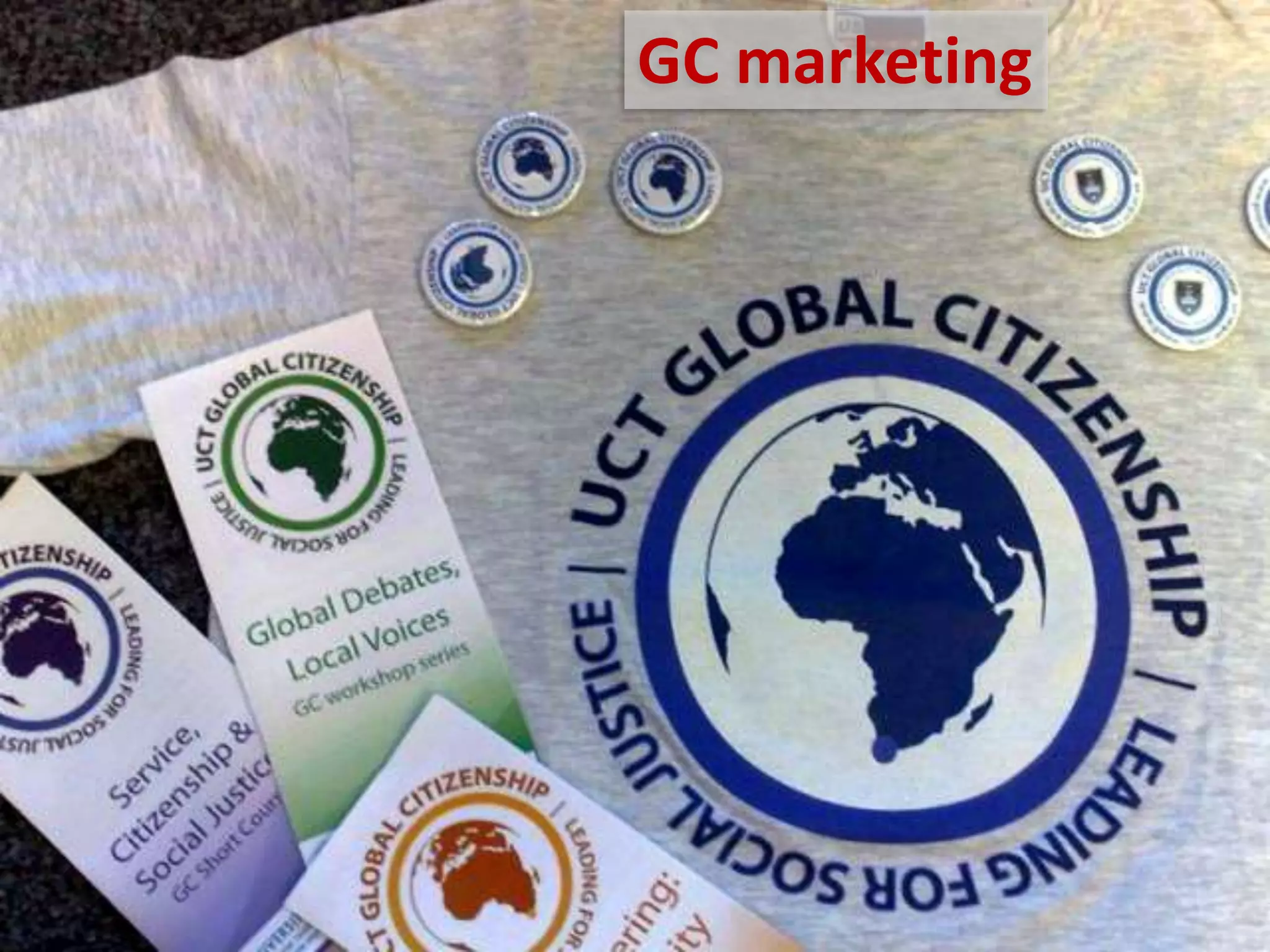
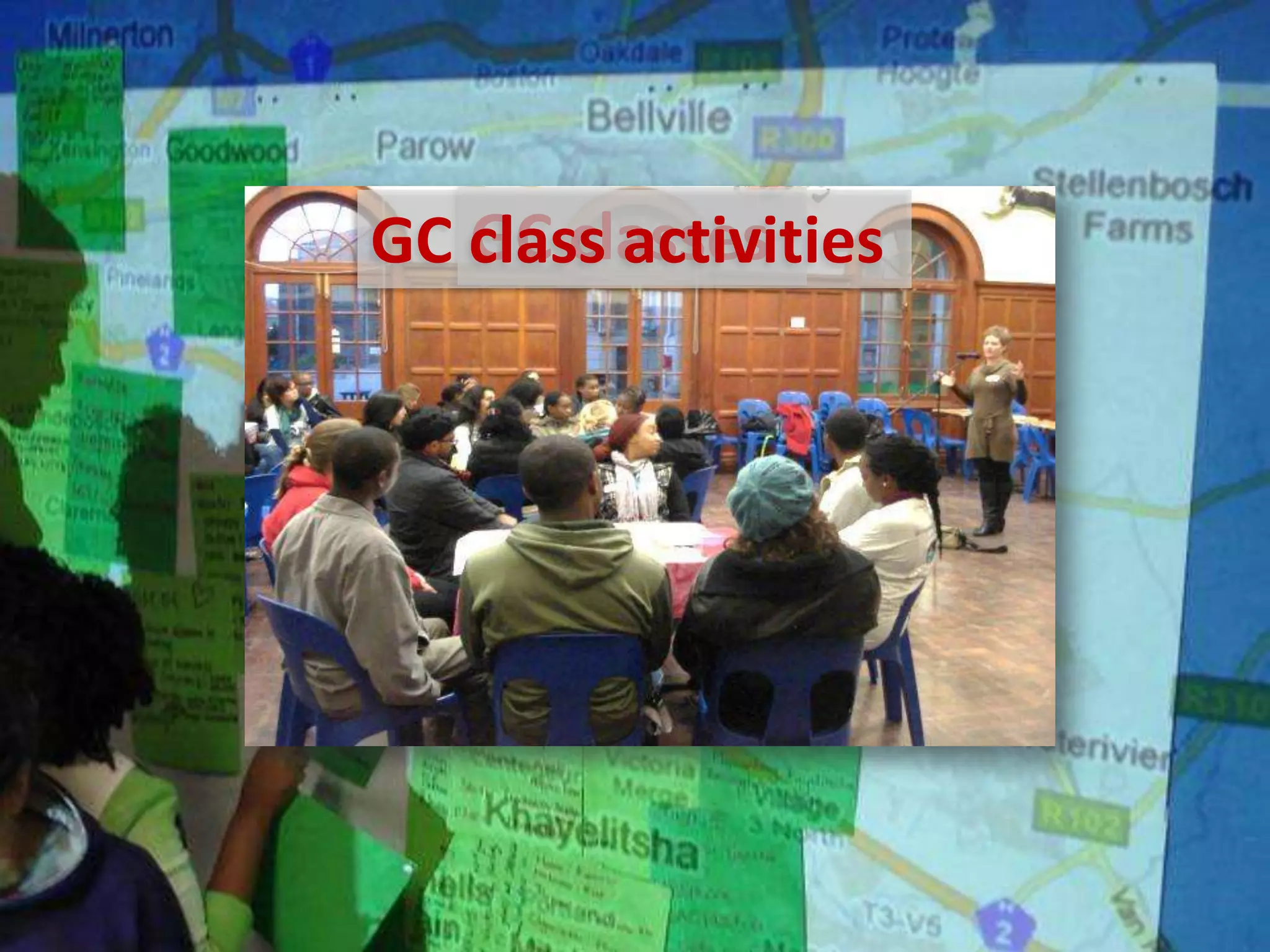
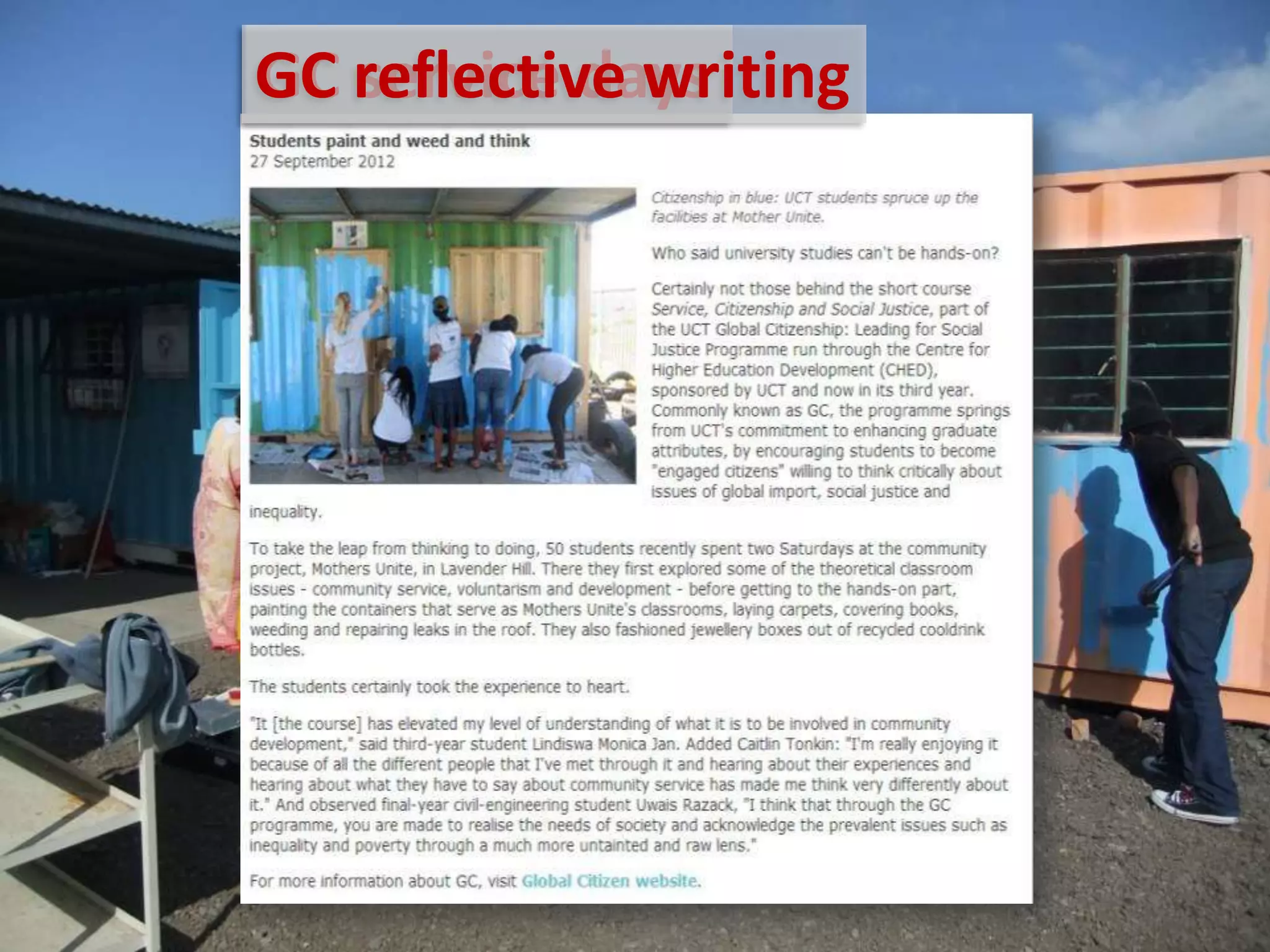
GC Media and Branding
GC marketing
GC classesGC class activities
GC service daysGC reflective writing
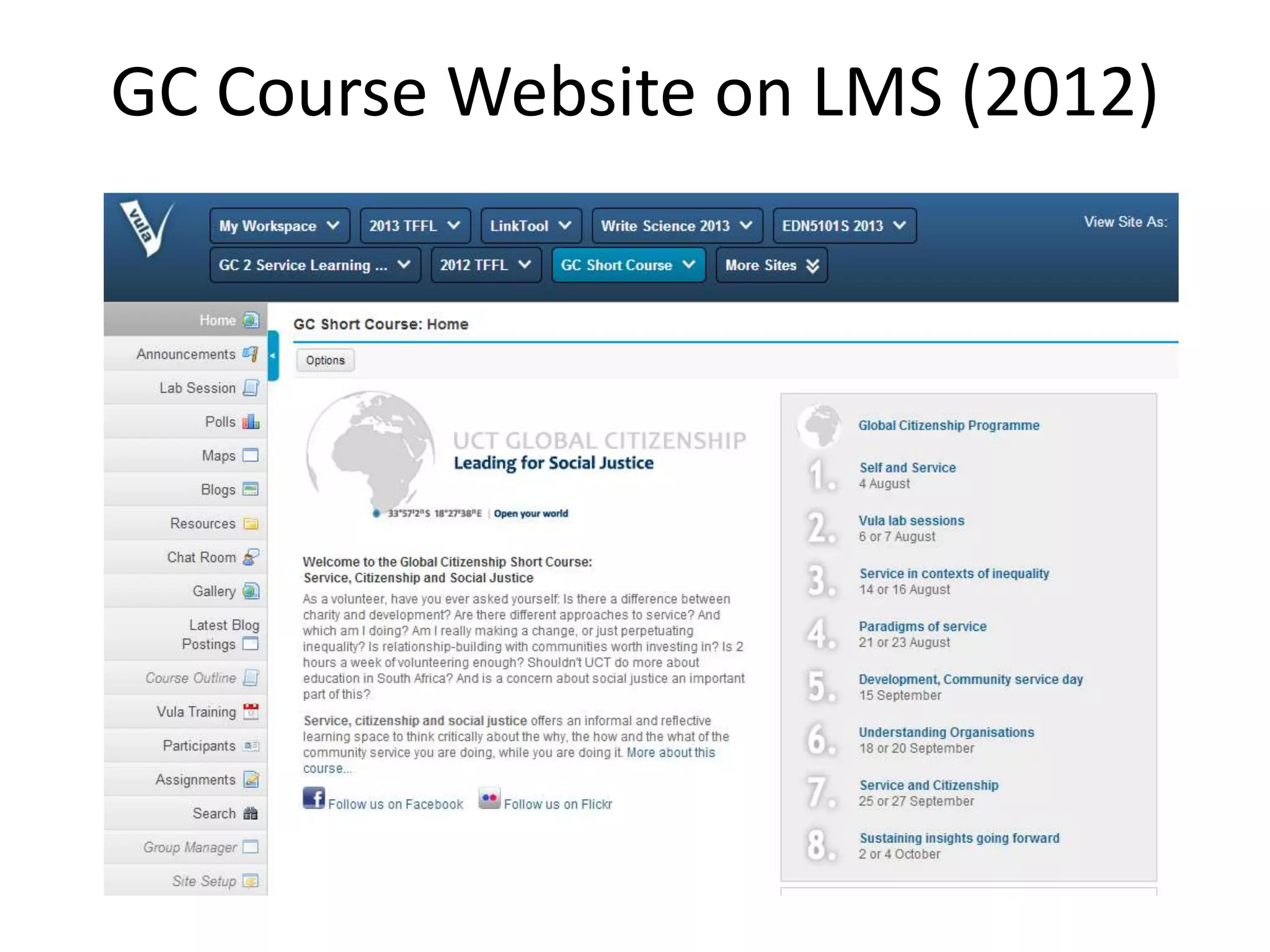
GC Course Website on LMS (2012)
Reimagining GC course site (2013)
After four years:
• Redesign to be more student-centred
• Actively promote course completion
• Draw on tutors to inform the redesign
• Imagine new possibilities:
– Supporting badges and gamification elements
– Creating portfolios of reflective writing
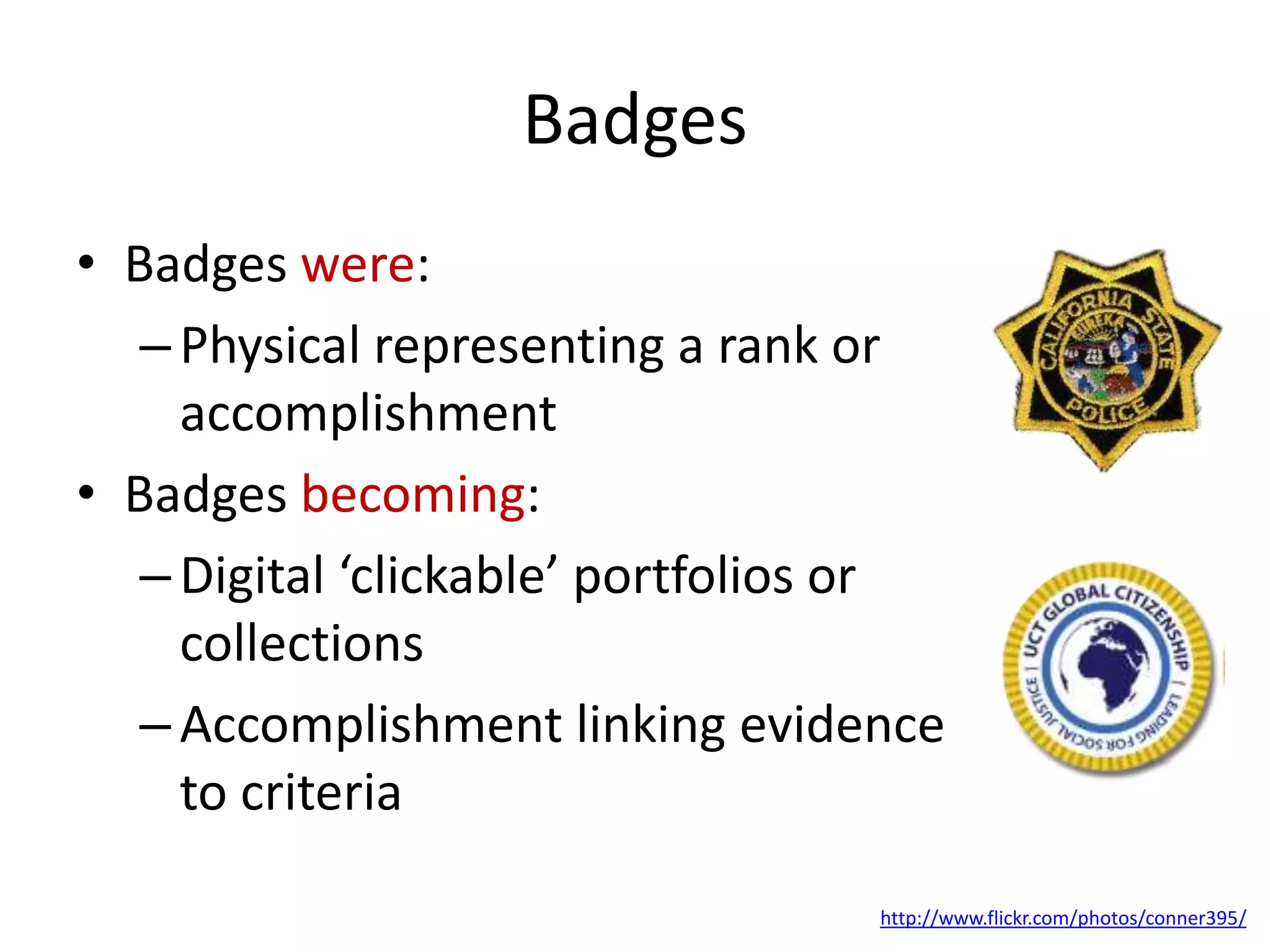
Badges: Physical vs Digital
• Badges in the physical world:
–Physical representing a rank or
accomplishment
• Badges in the digital world:
–Digital ‘clickable’ portfolios or
collections
–Accomplishment linking evidence
to criteria
http://www.flickr.com/photos/conner395/
Gamification: Not games
Using game-thinking and game mechanics
in a non-game context
to engage people and solve problems
- Sebastian Deterding (2011)
Gamification of education?
• Do universities use game elements?
– Students get “points” for completing assignments
– Points translate to “badges” for passing courses
– Students performing well “level up” at year end
– Best performs get on the Dean’s “leaderboard”
• Not really…
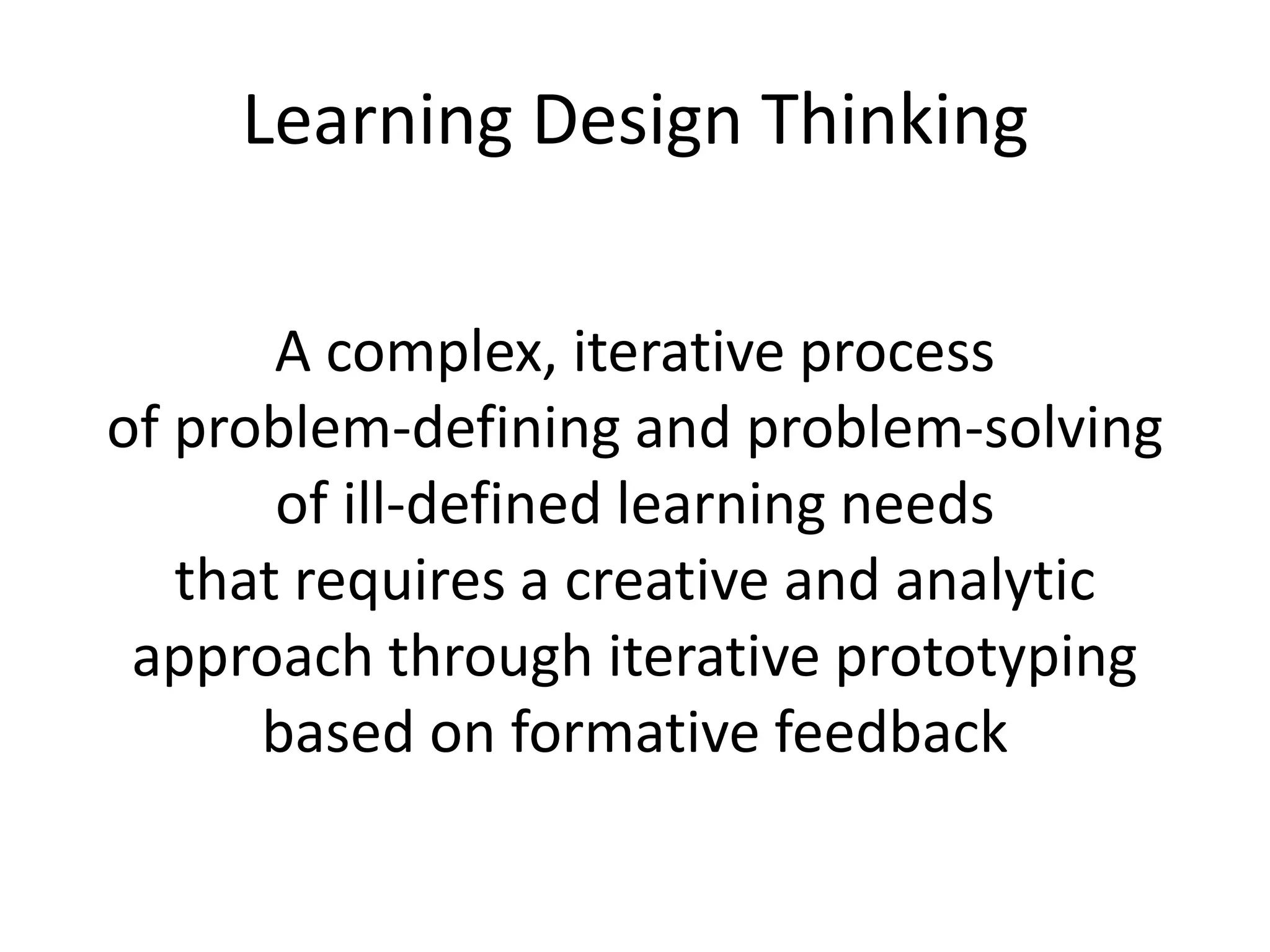
Learning Design Thinking
A complex, iterative process
of problem-defining and problem-solving
of ill-defined learning needs
that requires a creative and analytic
approach through iterative prototyping
based on formative feedback
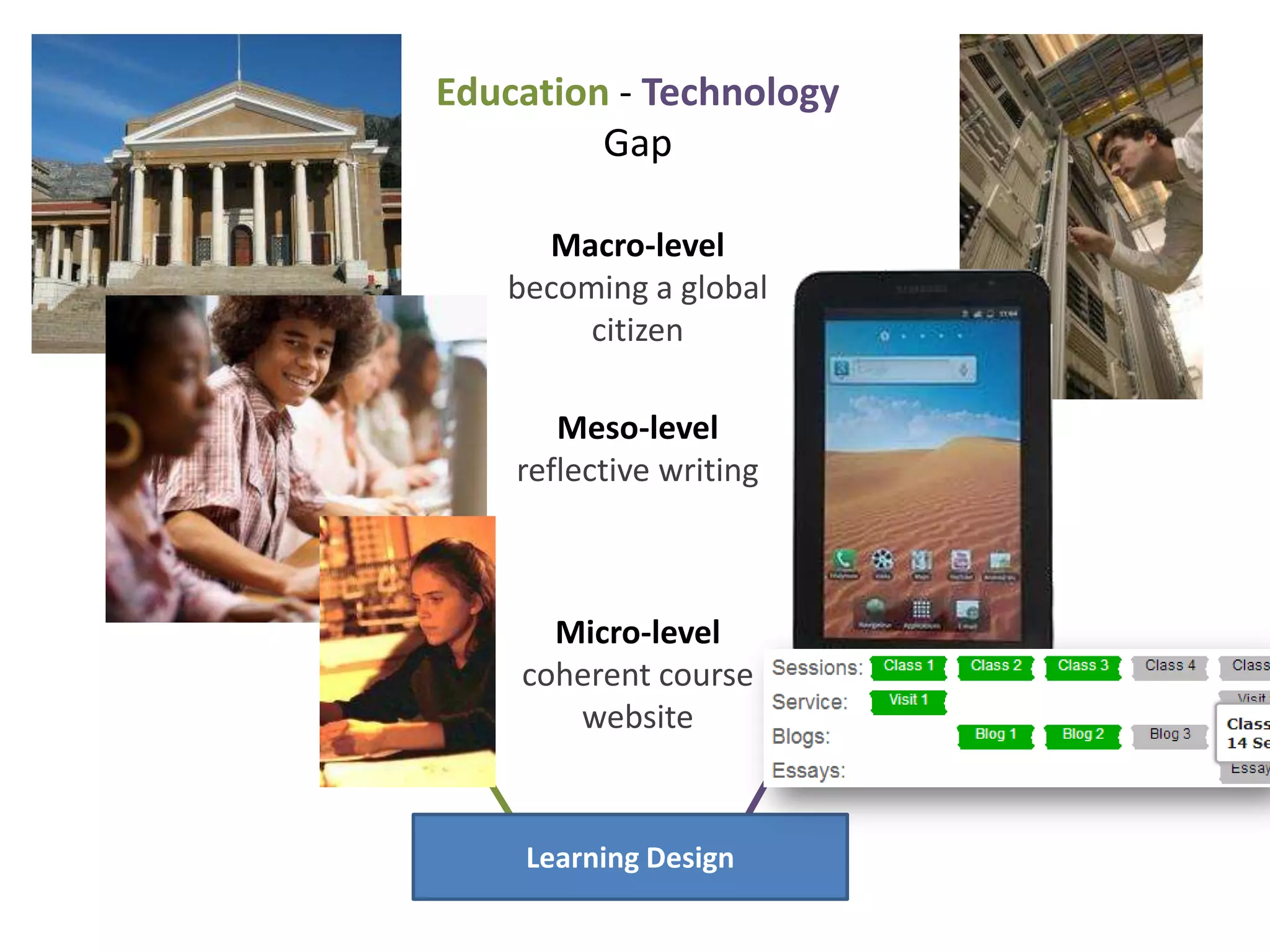
Macro-level
becoming a global
citizen
Meso-level
reflective writing
Micro-level
coherent course
website
Learning Design
Education - Technology
Gap
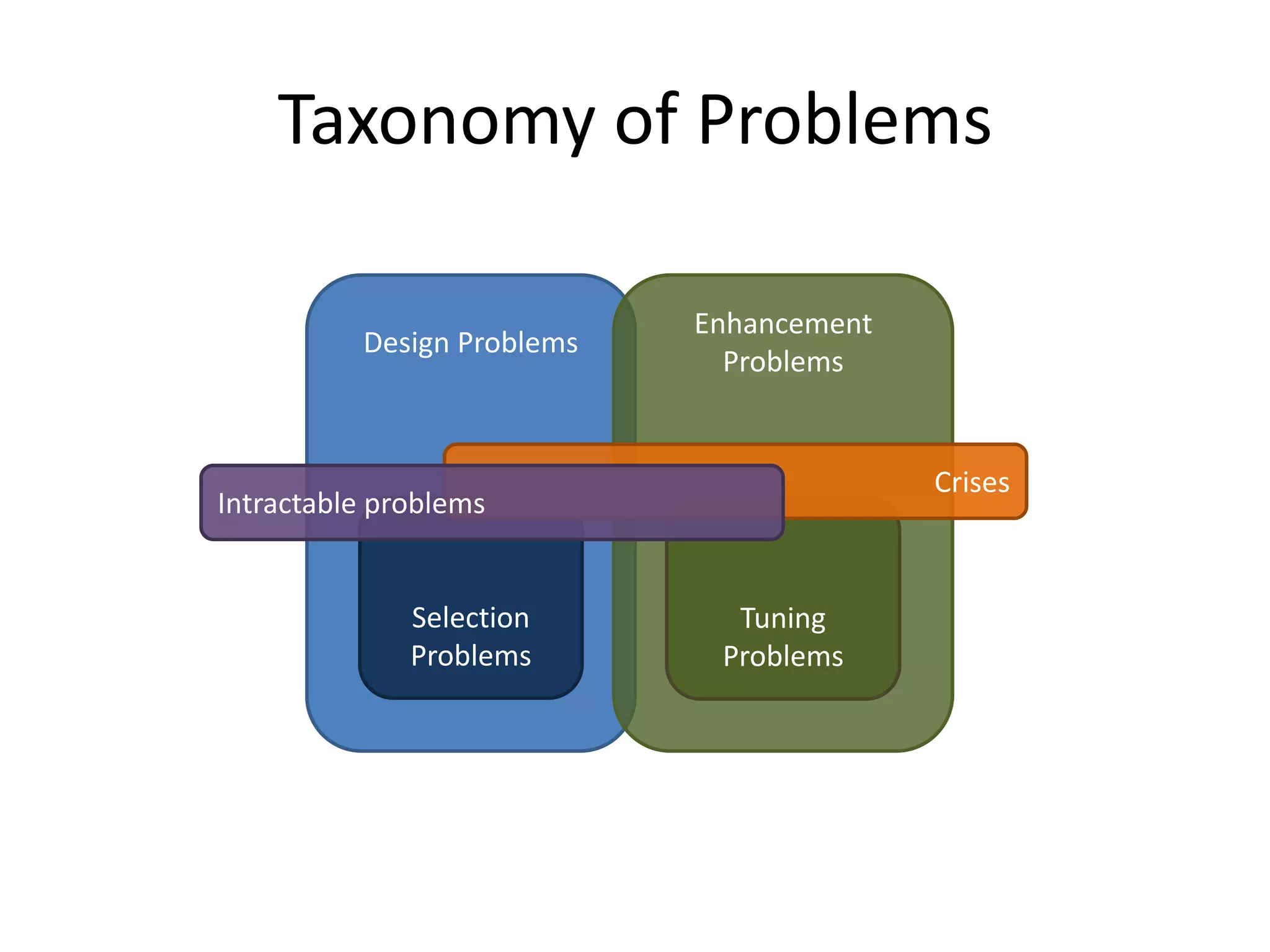
Taxonomy of Design Problems
New Design
Problems
Enhancement
Problems
Selection
Problems
Tuning
Problems
Crises
Intractable problems
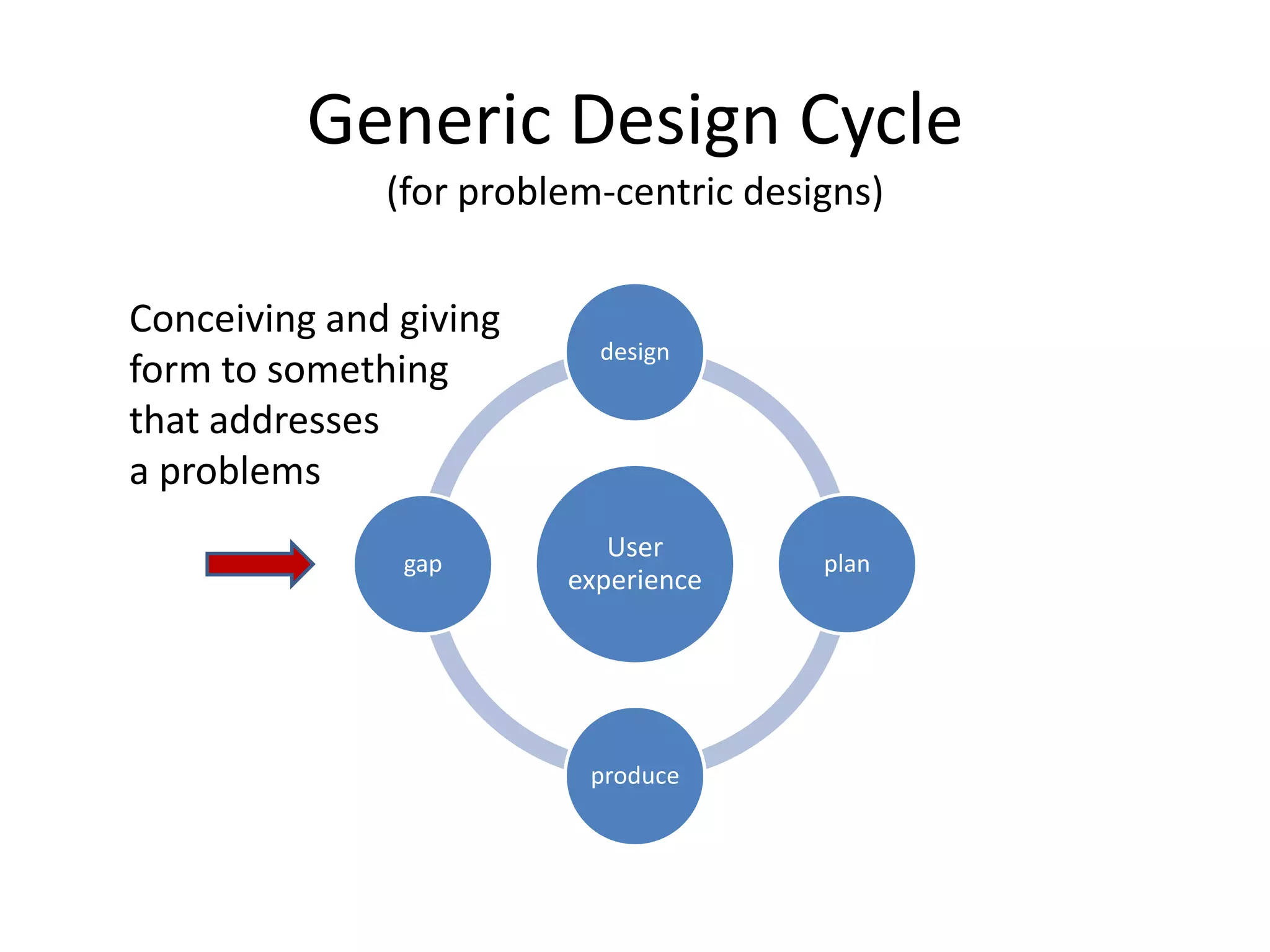
Generic Design Cycle
Conceiving and giving
form to something
that addresses
a problems
User
experience
design
plan
produce
gap
(for problem-centric designs)
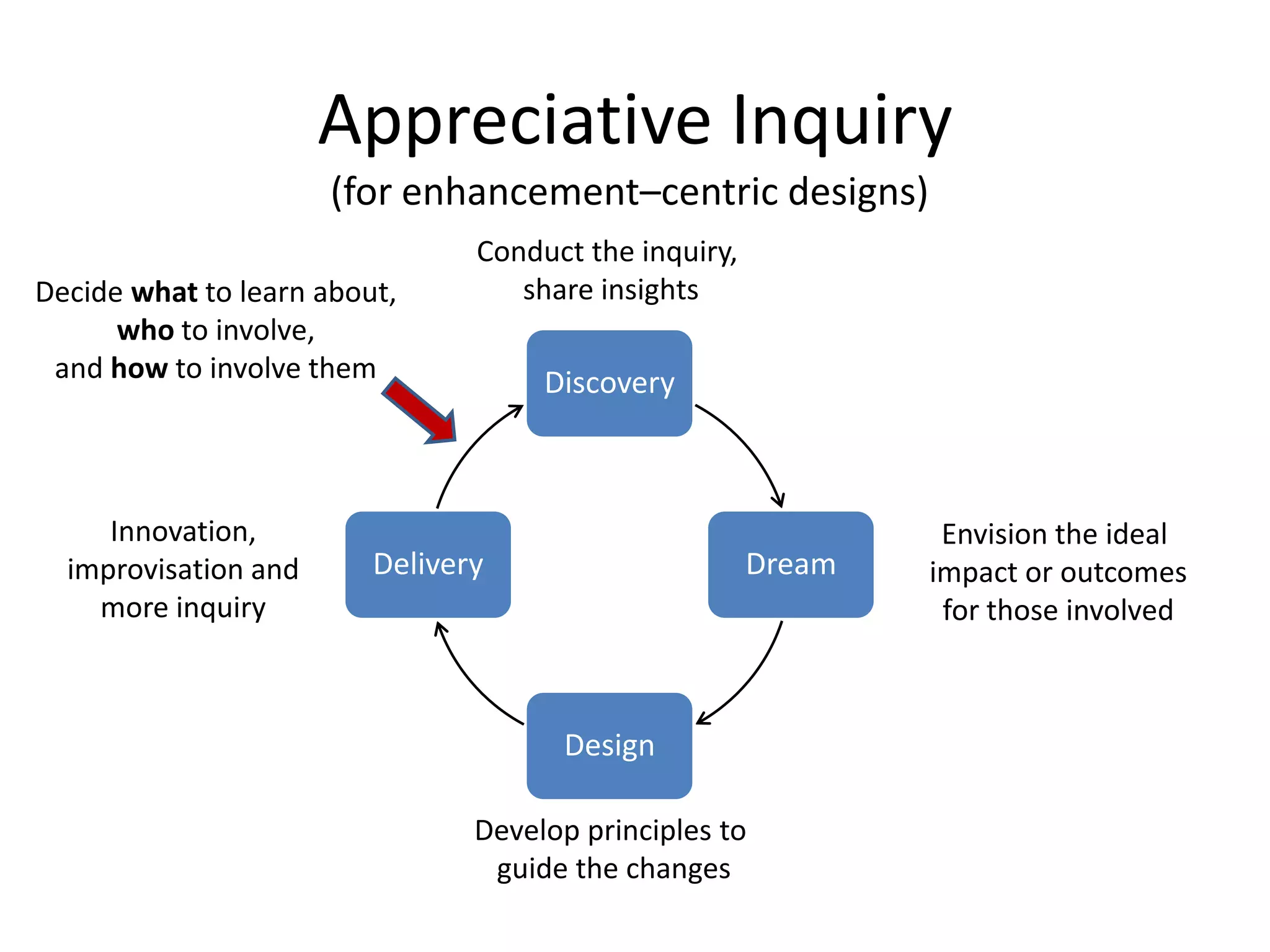
Discovery
Dream
Design
Delivery
Decide what to learn about,
who to involve,
and how to involve them
Conduct the inquiry,
share insights
Envision the ideal
impact or outcomes
for those involved
Develop principles to
guide the changes
Innovation,
improvisation and
more inquiry
Appreciative Inquiry
(for enhancement–centric designs)
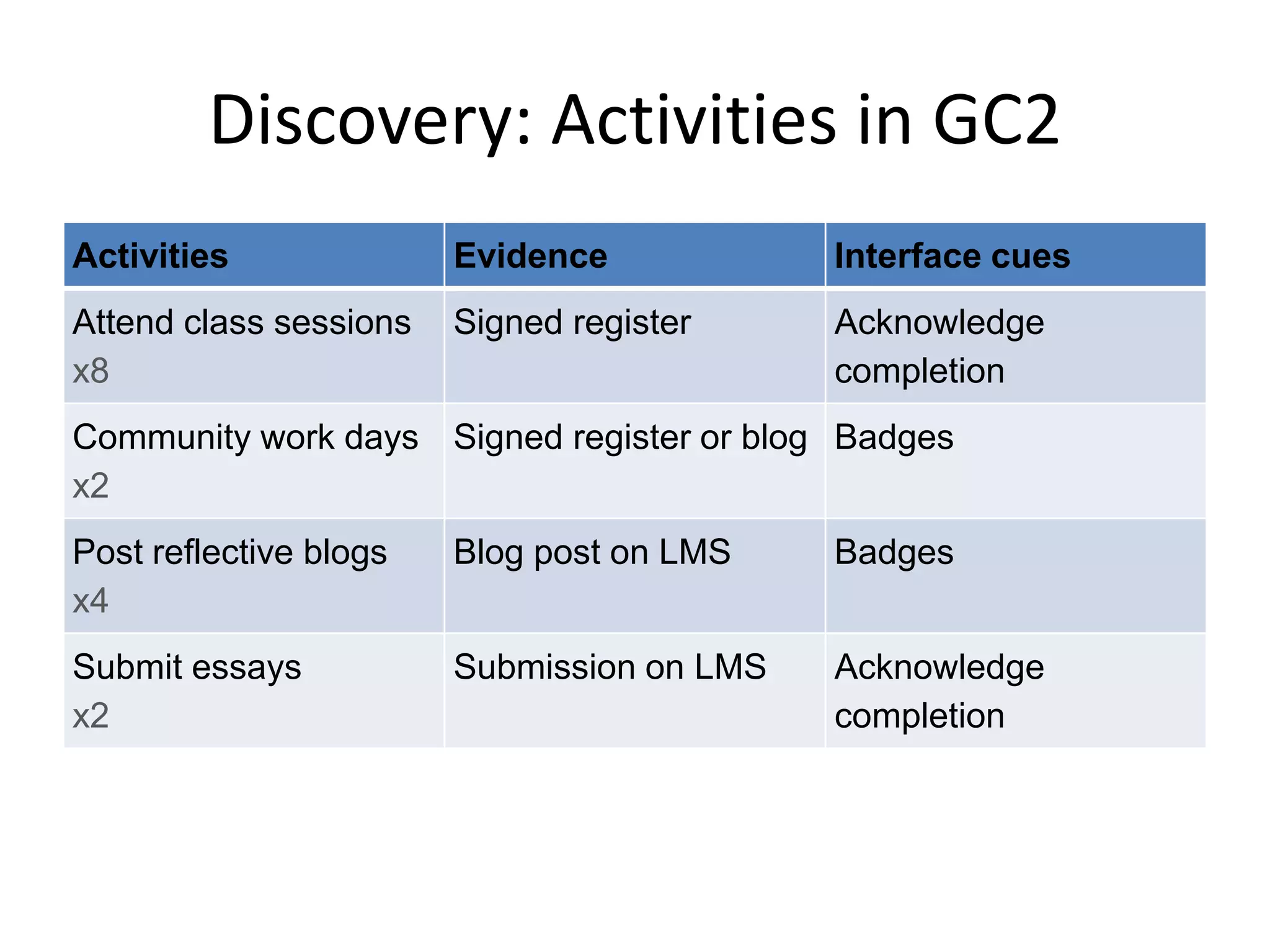
Discovery: Activities in GC2
Activities Evidence Interface cues
Attend class sessions
x8
Signed register Acknowledge
completion
Community work days
x2
Signed register or blog Badges
Post reflective blogs
x4
Blog post on LMS Badges
Submit essays
x2
Submission on LMS Acknowledge
completion
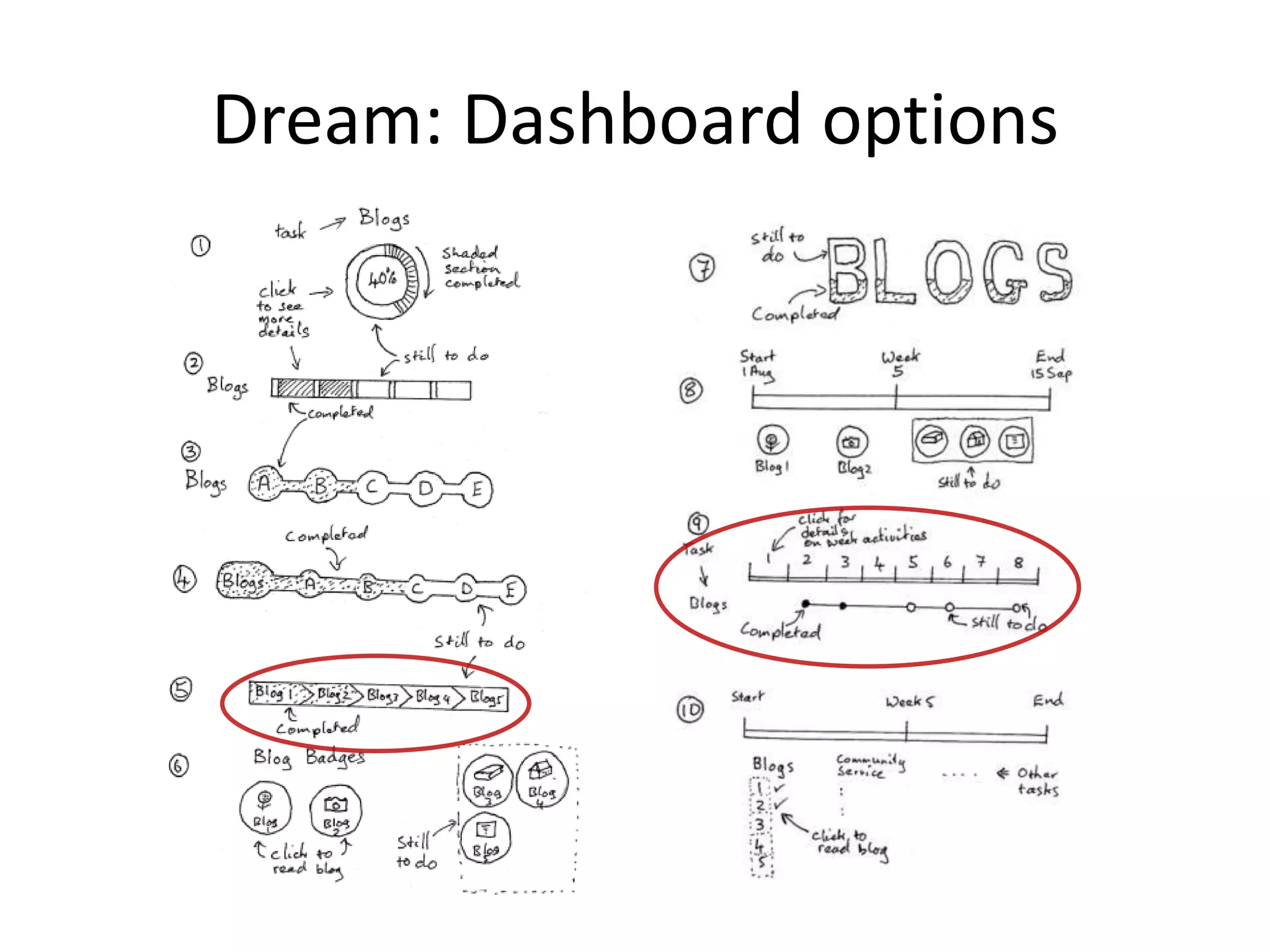
Dream: Dashboard options
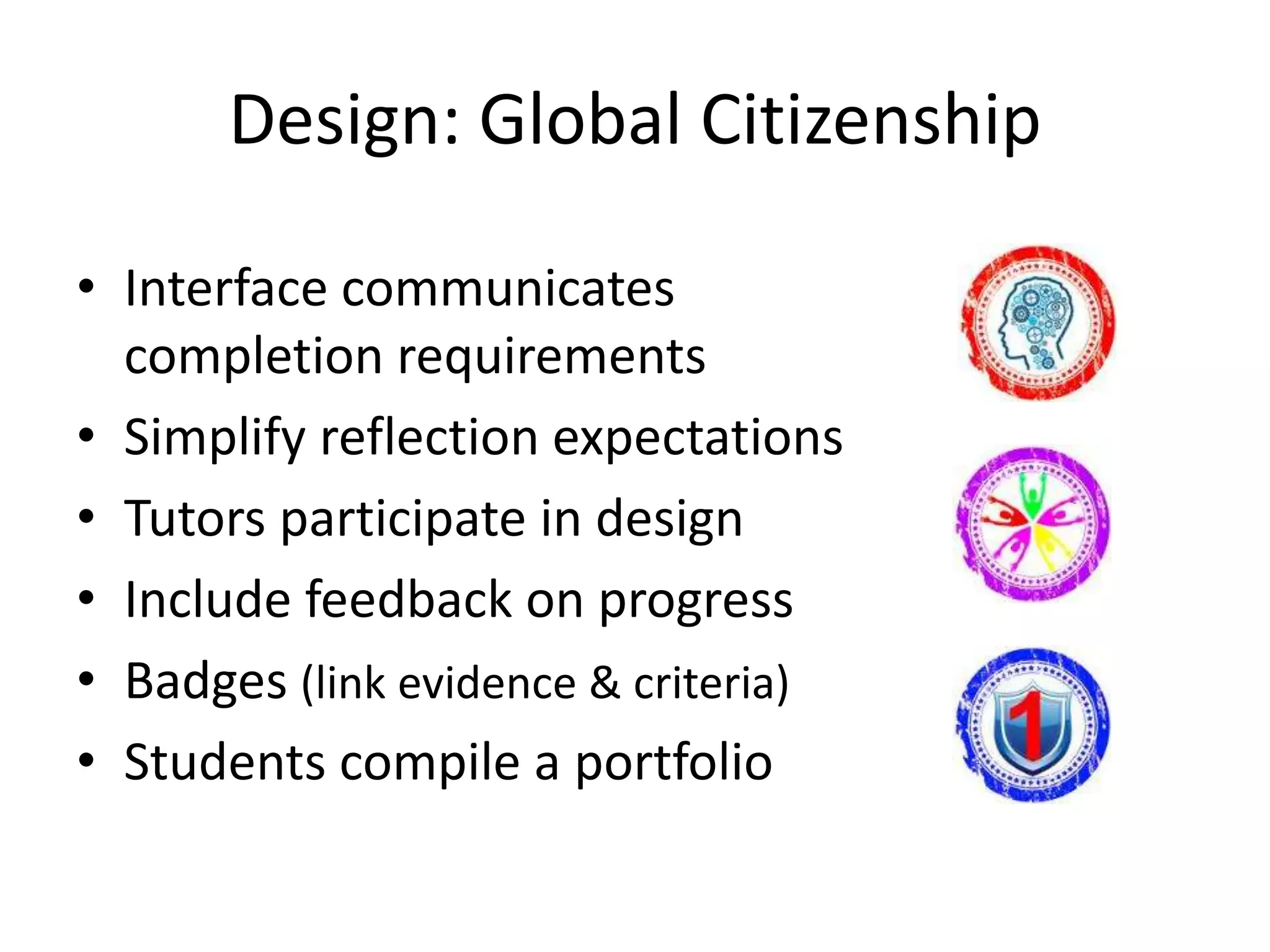
Design: GC2 choices made
• Interface communicates
completion requirements
• Simplify reflection expectations
• Tutors participate in design
• Include feedback on progress
• Badges (link evidence & criteria)
• Students compile a portfolio
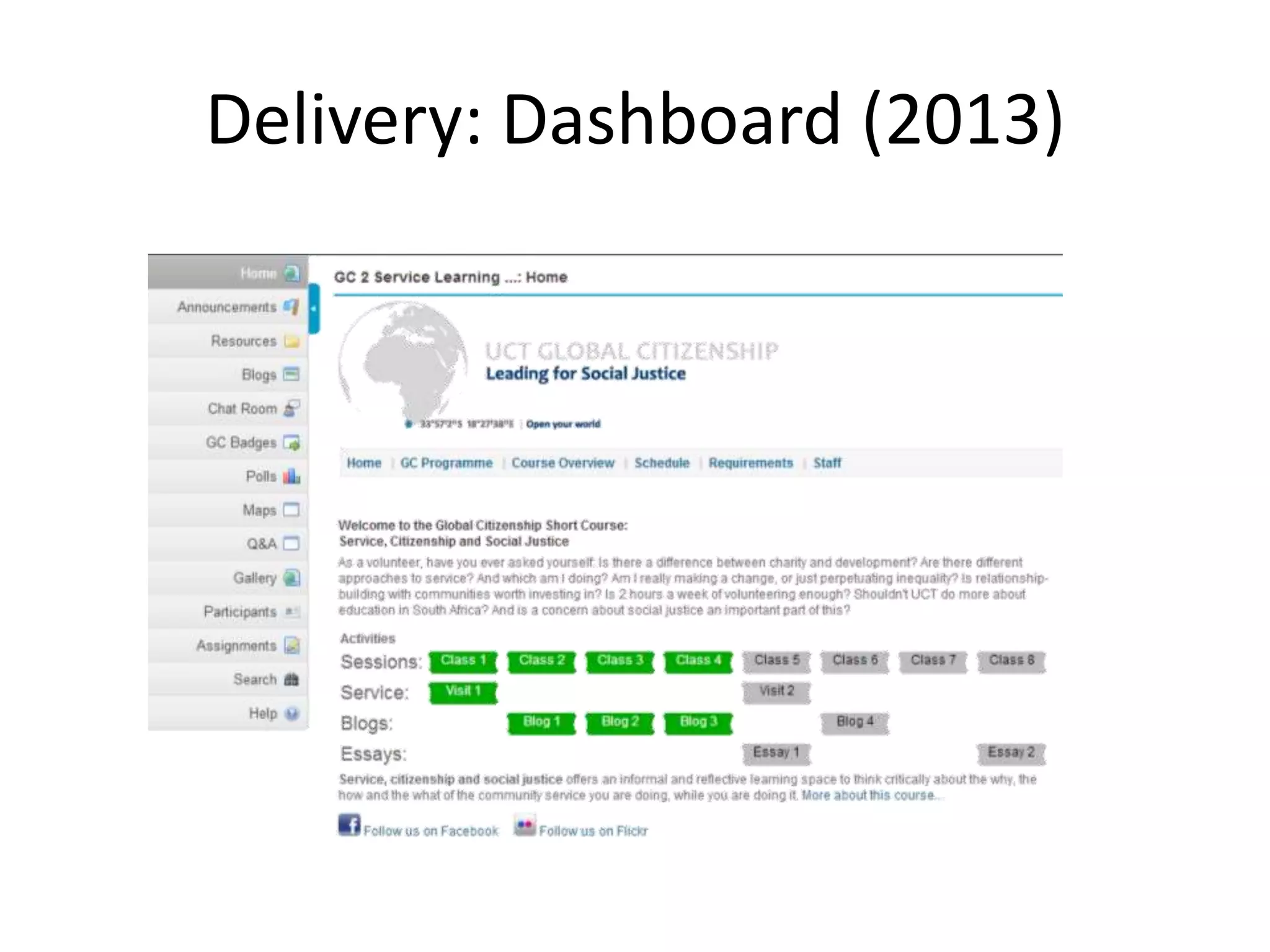
Delivery: GC2 Dashboard (2013)
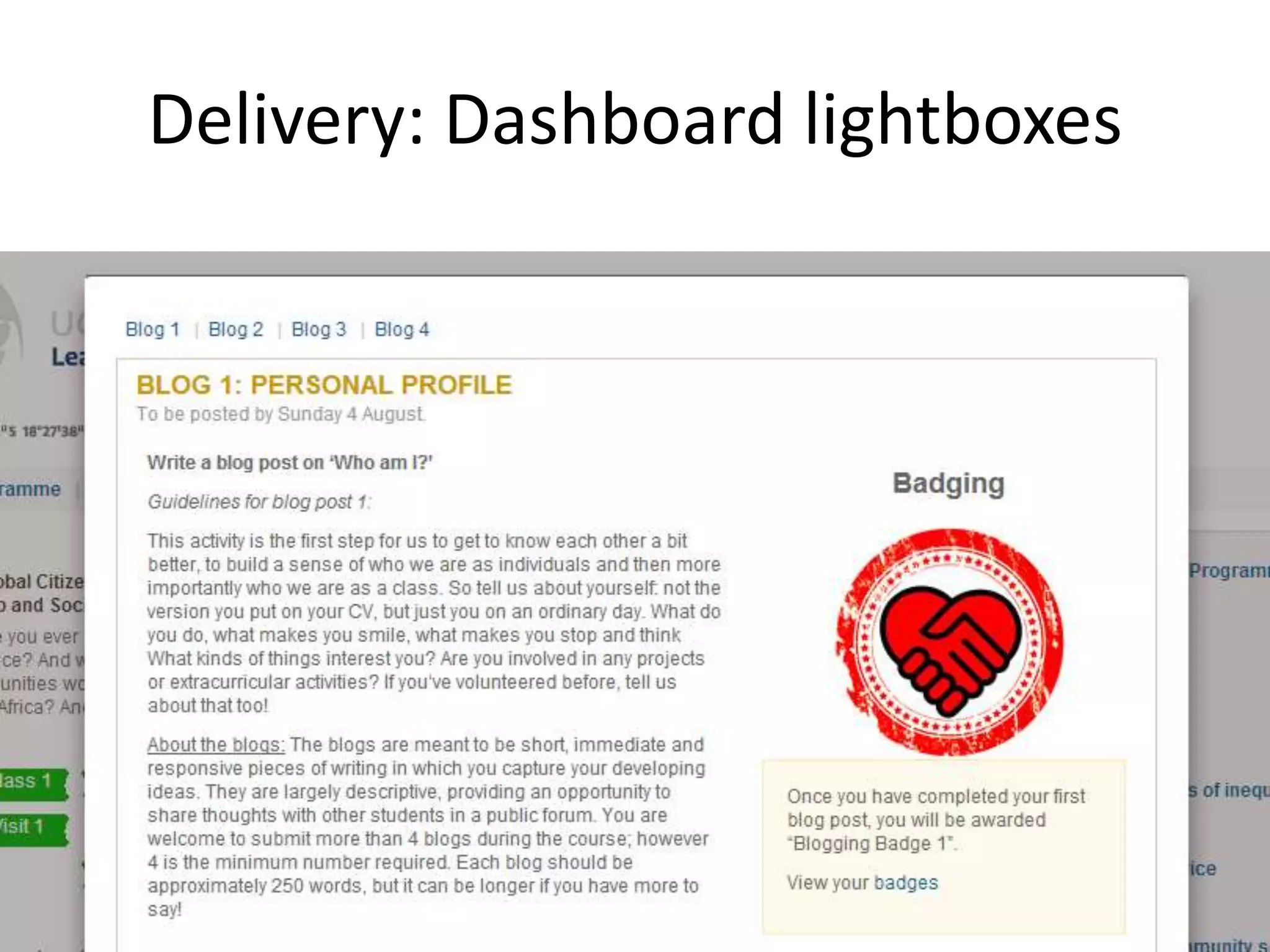
Delivery: Dashboard lightboxes
0
2
4
6
8
10
12
14
16
29-Jul
30-Jul
31-Jul
1-Aug
2-Aug
3-Aug
4-Aug
5-Aug
6-Aug
7-Aug
8-Aug
9-Aug
10-Aug
11-Aug
12-Aug
13-Aug
14-Aug
15-Aug
16-Aug
17-Aug
18-Aug
19-Aug
20-Aug
21-Aug
22-Aug
23-Aug
24-Aug
25-Aug
26-Aug
27-Aug
28-Aug
29-Aug
30-Aug
31-Aug
1-Sep
2-Sep
3-Sep
4-Sep
5-Sep
6-Sep
7-Sep
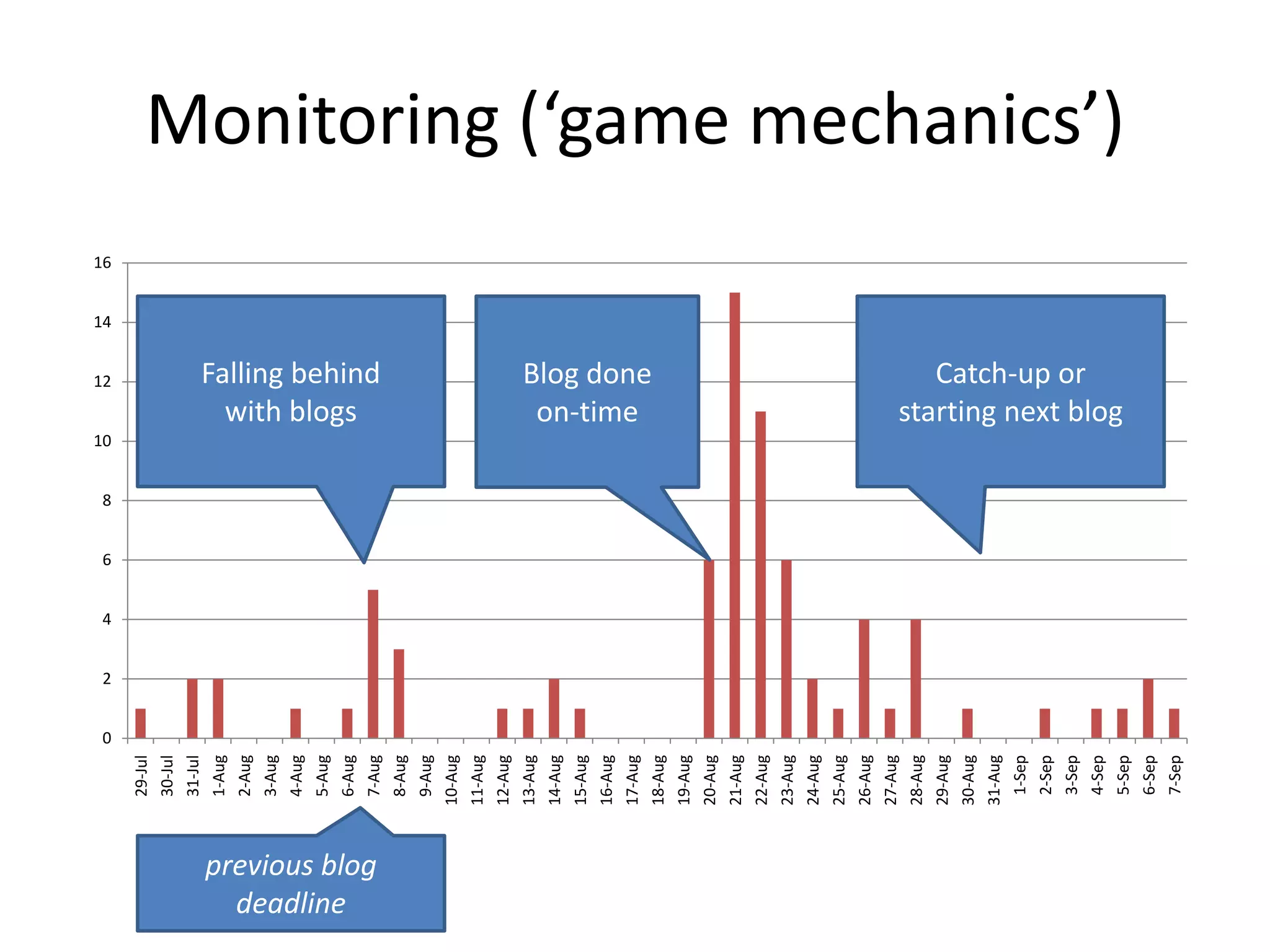
Monitoring (‘game mechanics’)
Falling behind
with blogs
Catch-up or
starting next blog
Blog done
on-time
previous blog
deadline
Digital Portfolios
• Broad interest to
– Enable students to create portfolios
– Develop reflective writing skills
– Repurpose for others courses, CVs, …
• Practical challenges
– Difficult to anticipate student future needs
– Difficult to curate and manage
Mozilla OpenBadges
• Mozilla Foundation project
– Provides infrastructure for hosting badges
– Control rests with badge recipient
– Shares success stories
• OpenBadges
– Criteria: URL with description and name of issuer
– Evidence: URL to digital artefact meeting criteria
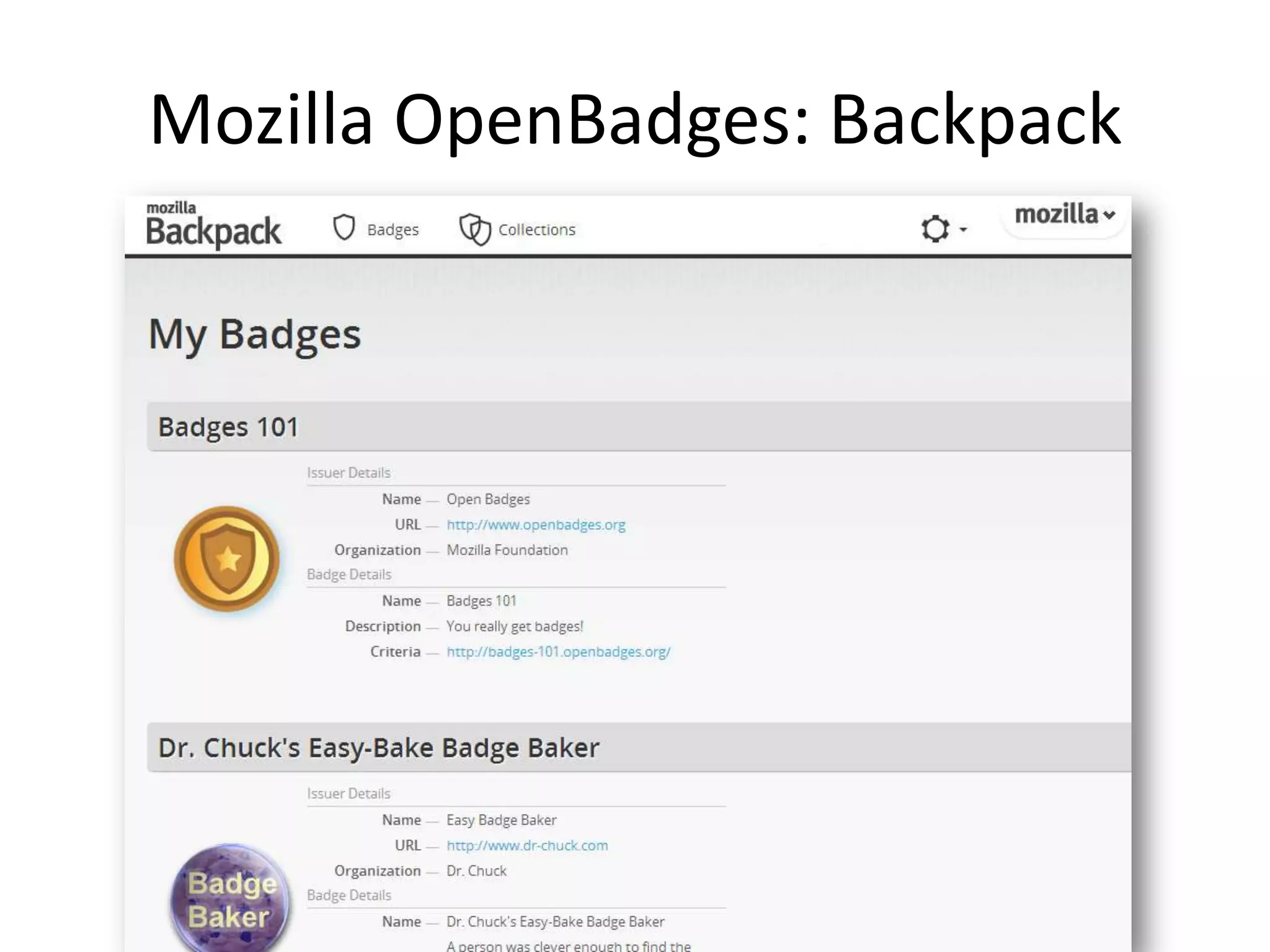
Mozilla OpenBadges: Backpack
Portfolio collection title
Evidence (with URL)
Criteria (with URL)
Conclusions
• Appropriateness of badges
– If not in Global Citizenship, then where?
– Fun and appreciated by students
– Help align more formal structuring of reflection
– Feedback on progress
– Link criteria and evidence
– Moving towards digital portfolios
• Of course, designs should be mindful of
– Appreciating what is working well
– Side effects and social contracts

Global Citizenship badges: Using gamification to recognize non-formal learning in a university context

  • 1.
    Andrew Deacon Centre forEducational Technology, University of Cape Town Janet Small & Nicola Pallitt Centre for Open Learning, University of Cape Town Global Citizenship Badges using gamification to recognize non-formal learning in a university context
  • 2.
    Outline • Global Citizenshipprogramme at UCT • Reimaging after 4 years • Badging and gamification • Designs as Enhancement vs Problem-centric • Discovery – Dream – Design – Delivery • Towards digital portfolios • Conclusions
  • 3.
    UCT Global CitizenshipProgramme Global Citizenship: Leading for Social Justice – Three short courses: Continuing Education certificate – Each year involves over 200 students from all faculties – Students becoming citizens rather than simply learners
  • 4.
    Goals of GlobalCitizenship Programme 1. Knowledge: Exposing students to global citizenship and social justice issues beyond degree and discipline 2. Skills: Developing capacity for leadership on contemporary social justice issues by improving active listening and critical thinking 3. Values: Promoting awareness of themselves as future global citizens motivated to work for social justice through community service
  • 5.
    GC Media andBranding GC marketing
  • 6.
  • 7.
    GC service daysGCreflective writing
  • 8.
    GC Course Websiteon LMS (2012)
  • 9.
    Reimagining GC coursesite (2013) After four years: • Redesign to be more student-centred • Actively promote course completion • Draw on tutors to inform the redesign • Imagine new possibilities: – Supporting badges and gamification elements – Creating portfolios of reflective writing
  • 10.
    Badges: Physical vsDigital • Badges in the physical world: –Physical representing a rank or accomplishment • Badges in the digital world: –Digital ‘clickable’ portfolios or collections –Accomplishment linking evidence to criteria http://www.flickr.com/photos/conner395/
  • 11.
    Gamification: Not games Usinggame-thinking and game mechanics in a non-game context to engage people and solve problems - Sebastian Deterding (2011)
  • 12.
    Gamification of education? •Do universities use game elements? – Students get “points” for completing assignments – Points translate to “badges” for passing courses – Students performing well “level up” at year end – Best performs get on the Dean’s “leaderboard” • Not really…
  • 13.
    Learning Design Thinking Acomplex, iterative process of problem-defining and problem-solving of ill-defined learning needs that requires a creative and analytic approach through iterative prototyping based on formative feedback
  • 14.
    Macro-level becoming a global citizen Meso-level reflectivewriting Micro-level coherent course website Learning Design Education - Technology Gap
  • 15.
    Taxonomy of DesignProblems New Design Problems Enhancement Problems Selection Problems Tuning Problems Crises Intractable problems
  • 16.
    Generic Design Cycle Conceivingand giving form to something that addresses a problems User experience design plan produce gap (for problem-centric designs)
  • 17.
    Discovery Dream Design Delivery Decide what tolearn about, who to involve, and how to involve them Conduct the inquiry, share insights Envision the ideal impact or outcomes for those involved Develop principles to guide the changes Innovation, improvisation and more inquiry Appreciative Inquiry (for enhancement–centric designs)
  • 18.
    Discovery: Activities inGC2 Activities Evidence Interface cues Attend class sessions x8 Signed register Acknowledge completion Community work days x2 Signed register or blog Badges Post reflective blogs x4 Blog post on LMS Badges Submit essays x2 Submission on LMS Acknowledge completion
  • 19.
  • 20.
    Design: GC2 choicesmade • Interface communicates completion requirements • Simplify reflection expectations • Tutors participate in design • Include feedback on progress • Badges (link evidence & criteria) • Students compile a portfolio
  • 21.
  • 22.
  • 23.
  • 24.
    Digital Portfolios • Broadinterest to – Enable students to create portfolios – Develop reflective writing skills – Repurpose for others courses, CVs, … • Practical challenges – Difficult to anticipate student future needs – Difficult to curate and manage
  • 25.
    Mozilla OpenBadges • MozillaFoundation project – Provides infrastructure for hosting badges – Control rests with badge recipient – Shares success stories • OpenBadges – Criteria: URL with description and name of issuer – Evidence: URL to digital artefact meeting criteria
  • 26.
    Mozilla OpenBadges: Backpack Portfoliocollection title Evidence (with URL) Criteria (with URL)
  • 27.
    Conclusions • Appropriateness ofbadges – If not in Global Citizenship, then where? – Fun and appreciated by students – Help align more formal structuring of reflection – Feedback on progress – Link criteria and evidence – Moving towards digital portfolios • Of course, designs should be mindful of – Appreciating what is working well – Side effects and social contracts