

Transport Layer
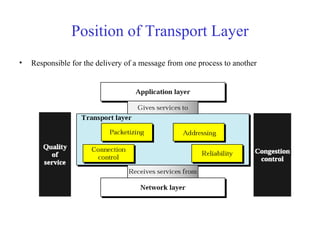
Position of Transport Layer 
• Responsible for the delivery of a message from one process to another
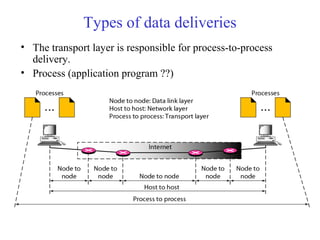
Types of data deliveries 
• The transport layer is responsible for process-to-process 
delivery. 
• Process (application program ??)
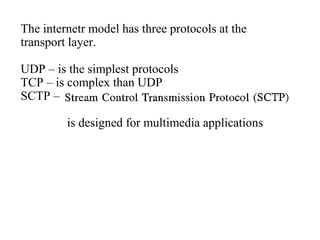
The internetr model has three protocols at the 
transport layer. 
UDP – is the simplest protocols 
TCP – is complex than UDP 
SCTP – 
is designed for multimedia applications
Client-Server Paradigm
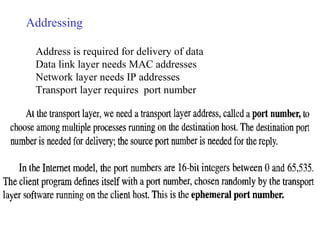
Addressing 
Address is required for delivery of data 
Data link layer needs MAC addresses 
Network layer needs IP addresses 
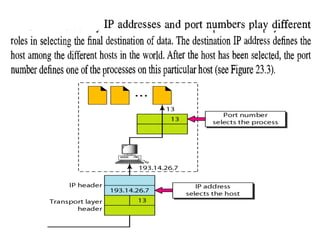
Transport layer requires port number
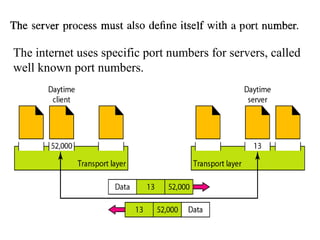
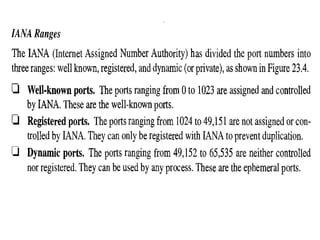
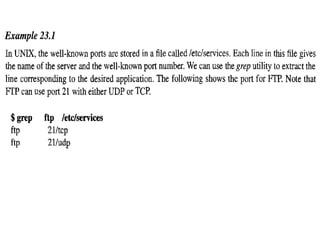
The internet uses specific port numbers for servers, called 
well known port numbers.
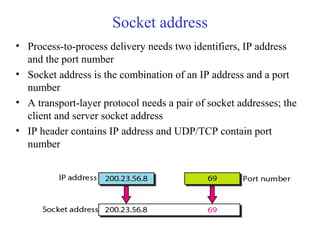
Socket address 
• Process-to-process delivery needs two identifiers, IP address 
and the port number 
• Socket address is the combination of an IP address and a port 
number 
• A transport-layer protocol needs a pair of socket addresses; the 
client and server socket address 
• IP header contains IP address and UDP/TCP contain port 
number
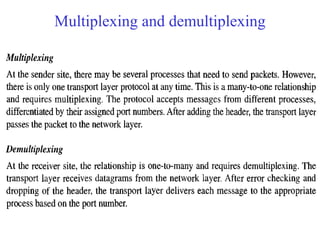
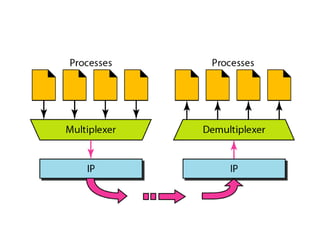
Multiplexing and demultiplexing
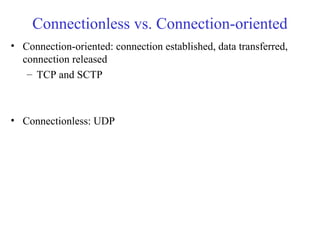
Connectionless vs. Connection-oriented 
• Connection-oriented: connection established, data transferred, 
connection released 
– TCP and SCTP 
• Connectionless: UDP
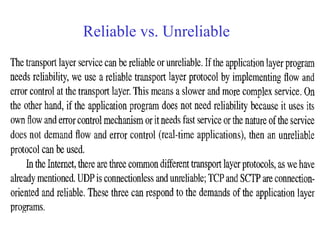
Reliable vs. Unreliable
Reliability at the data link layer is between two nodes, 
whereas Reliability at the transport layer is between two 
ends
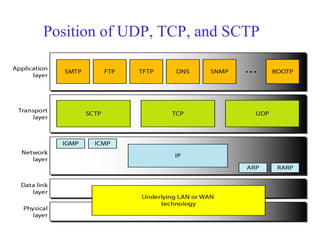
Position of UDP, TCP, and SCTP
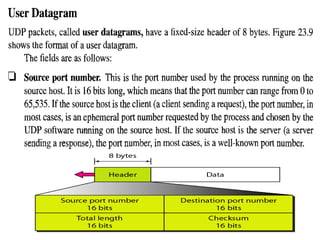
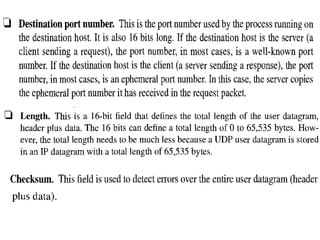
UDP
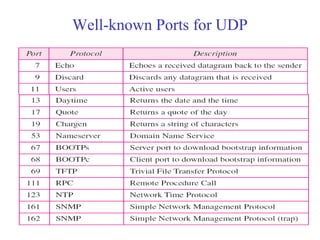
Well-known Ports for UDP
UDP Operation 
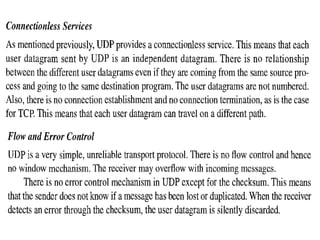
• Connectionless services 
• Flow and error control 
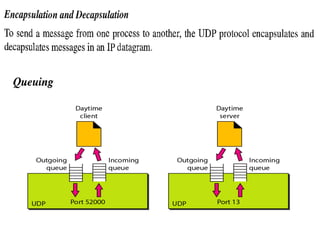
• Encapsulation and decapsulation 
• Queuing
Use of UDP 
• Suitable for a process that requires simple request-response 
communication with little concern for flow and error control, 
not suitable for FTP which sends a bulk of data. 
• Suitable for a process with internal flow and error control 
mechanisms such as TFTP( ) 
• Suitable for multicasting. Multicasting is available in UDP but 
not in TCP. 
• Used for management processes such as SNMP 
• Used for some route updating protocols such as RIP

New udp

  • 1.
  • 2.
    Position of TransportLayer • Responsible for the delivery of a message from one process to another
  • 3.
    Types of datadeliveries • The transport layer is responsible for process-to-process delivery. • Process (application program ??)
  • 4.
    The internetr modelhas three protocols at the transport layer. UDP – is the simplest protocols TCP – is complex than UDP SCTP – is designed for multimedia applications
  • 5.
  • 6.
    Addressing Address isrequired for delivery of data Data link layer needs MAC addresses Network layer needs IP addresses Transport layer requires port number
  • 7.
    The internet usesspecific port numbers for servers, called well known port numbers.
  • 10.
    Socket address •Process-to-process delivery needs two identifiers, IP address and the port number • Socket address is the combination of an IP address and a port number • A transport-layer protocol needs a pair of socket addresses; the client and server socket address • IP header contains IP address and UDP/TCP contain port number
  • 11.
  • 13.
    Connectionless vs. Connection-oriented • Connection-oriented: connection established, data transferred, connection released – TCP and SCTP • Connectionless: UDP
  • 14.
  • 15.
    Reliability at thedata link layer is between two nodes, whereas Reliability at the transport layer is between two ends
  • 16.
    Position of UDP,TCP, and SCTP
  • 17.
  • 18.
  • 22.
    UDP Operation •Connectionless services • Flow and error control • Encapsulation and decapsulation • Queuing
  • 25.
    Use of UDP • Suitable for a process that requires simple request-response communication with little concern for flow and error control, not suitable for FTP which sends a bulk of data. • Suitable for a process with internal flow and error control mechanisms such as TFTP( ) • Suitable for multicasting. Multicasting is available in UDP but not in TCP. • Used for management processes such as SNMP • Used for some route updating protocols such as RIP