Hypochloremia
Hypochloremia occurs as a result of an increase in the loss of
electrolyte in intestinal tract in acute intestinal obstruction,
dilatation and impaction and torsion of the abomasums and
enteritis(fig.2.4). Normally a large amount of HCL is secreted in the
abomasums by mucosal cells in exchange for sodium bicarbonate
which into the plasma. The hydrogen, chloride and potassium ions
of gastric juice are normally absorbed by small intestine. Failure of
abomasal emptying and obstruction of proximal part of small
intestine will result in the sequestration of large quantities of
chloride, hydrogen and potassium ions which leads to a
Hypochloremia, hypokalemic alkalosis. A severe Hypochloremia can
be experimentally produced in calves by feeding them a low
chloride a daily removal of abomasal content.
Clinical findings
1- Anorexia
2- Weight loss
3- Lethargy
4- Mild polydipsia
5- Polyuria
6- A marked metabolic alkalosis occurs with hypokalemia,
hypontremia,azotemia and death.
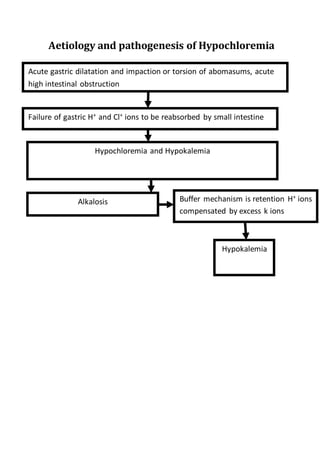
Aetiology and pathogenesis of Hypochloremia
ac
Acute gastric dilatation and impaction or torsion of abomasums, acute
high intestinal obstruction
Failure of gastric H+
and Cl+
ions to be reabsorbed by small intestine
Alkalosis
Hypochloremia and Hypokalemia
Buffer mechanism is retention H+
ions
compensated by excess k ions
excretion
Hypokalemia

Hypochloremia

  • 1.
    Hypochloremia Hypochloremia occurs asa result of an increase in the loss of electrolyte in intestinal tract in acute intestinal obstruction, dilatation and impaction and torsion of the abomasums and enteritis(fig.2.4). Normally a large amount of HCL is secreted in the abomasums by mucosal cells in exchange for sodium bicarbonate which into the plasma. The hydrogen, chloride and potassium ions of gastric juice are normally absorbed by small intestine. Failure of abomasal emptying and obstruction of proximal part of small intestine will result in the sequestration of large quantities of chloride, hydrogen and potassium ions which leads to a Hypochloremia, hypokalemic alkalosis. A severe Hypochloremia can be experimentally produced in calves by feeding them a low chloride a daily removal of abomasal content. Clinical findings 1- Anorexia 2- Weight loss 3- Lethargy 4- Mild polydipsia 5- Polyuria 6- A marked metabolic alkalosis occurs with hypokalemia, hypontremia,azotemia and death.
  • 2.
    Aetiology and pathogenesisof Hypochloremia ac Acute gastric dilatation and impaction or torsion of abomasums, acute high intestinal obstruction Failure of gastric H+ and Cl+ ions to be reabsorbed by small intestine Alkalosis Hypochloremia and Hypokalemia Buffer mechanism is retention H+ ions compensated by excess k ions excretion Hypokalemia