Dumping
Syndrome
MR Assignment Friday, 06/01/2023
Dumping Syndrome
Dumping syndrome occurs when food, especially sugar, moves too fast from the stomach
to the duodenum, the first part of the small intestine, and the upper gastrointestinal (GI)
tract. This condition is also called rapid gastric emptying.
Dumping syndrome has two forms, based on when symptoms occur:
•early dumping syndrome—occurs 10 to 30 minutes after a meal
• results from rapid movement of fluid into the intestine following a sudden addition
of a large amount of food from the stomach.
•late dumping syndrome—occurs 2 to 3 hours after a meal
•results from rapid movement of sugar into the intestine, which raises the body’s
blood glucose level and causes the pancreas to increase its release of the hormone
insulin. The increased release of insulin causes a rapid drop in blood glucose levels, a
condition known as hypoglycemia, or low blood sugar.
2
Sign and Symptoms
4
The symptoms of late dumping
syndrome may include :
•hypoglycemia
•sweating
•weakness
•rapid or irregular heartbeat
•flushing
•dizziness
Early dumping syndrome symptoms may
include
•nausea
•vomiting
•abdominal pain and cramping
•diarrhea
•feeling uncomfortably full or bloated after a
meal
•sweating
•weakness
•dizziness
•flushing, or blushing of the face or skin
5
Pathophysiology
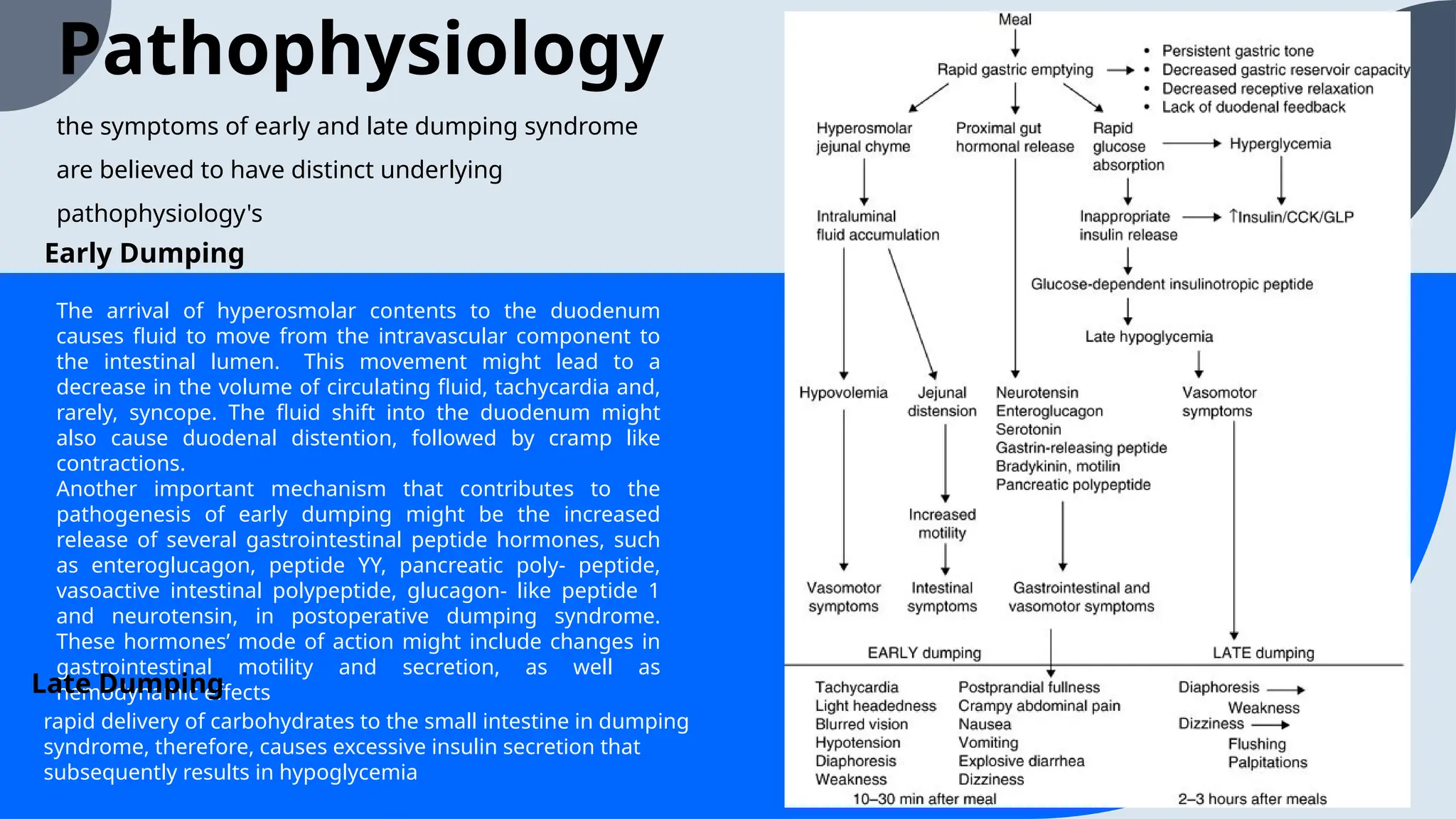
the symptoms of early and late dumping syndrome
are believed to have distinct underlying
pathophysiology's
The arrival of hyperosmolar contents to the duodenum
causes fluid to move from the intravascular component to
the intestinal lumen. This movement might lead to a
decrease in the volume of circulating fluid, tachycardia and,
rarely, syncope. The fluid shift into the duodenum might
also cause duodenal distention, followed by cramp like
contractions.
Another important mechanism that contributes to the
pathogenesis of early dumping might be the increased
release of several gastrointestinal peptide hormones, such
as enteroglucagon, peptide YY, pancreatic poly- peptide,
vasoactive intestinal polypeptide, glucagon- like peptide 1
and neurotensin, in postoperative dumping syndrome.
These hormones’ mode of action might include changes in
gastrointestinal motility and secretion, as well as
hemodynamic effects
Early Dumping
Late Dumping
rapid delivery of carbohydrates to the small intestine in dumping
syndrome, therefore, causes excessive insulin secretion that
subsequently results in hypoglycemia
10/20/2024 6
Diagnosis modified oral glucose tolerance
test
gastric emptying
scintigraphy
measure blood glucose concentration, hematocrit
—the amount of red blood cells in the blood—
pulse rate, and blood pressure before the test
begins. After the initial measurements, the person
drinks a glucose solution. The health care provider
repeats the initial measurements immediately and
at 30-minute intervals for up to 180 minutes. A
health care provider often confirms dumping
syndrome in people with
• low blood sugar between 120 and 180 minutes
after drinking the solution
• an increase in hematocrit of more than 3 percent
at 30 minutes
• a rise in pulse rate of more than
10 beats per minute after 30 minutes
bland meal that contains a small amount of radioactive
material.
Scoring
upper GI endoscopy and upper GI series
For examine the structure of the esophagus, stomach,
and upper small intestine
10/20/2024 7
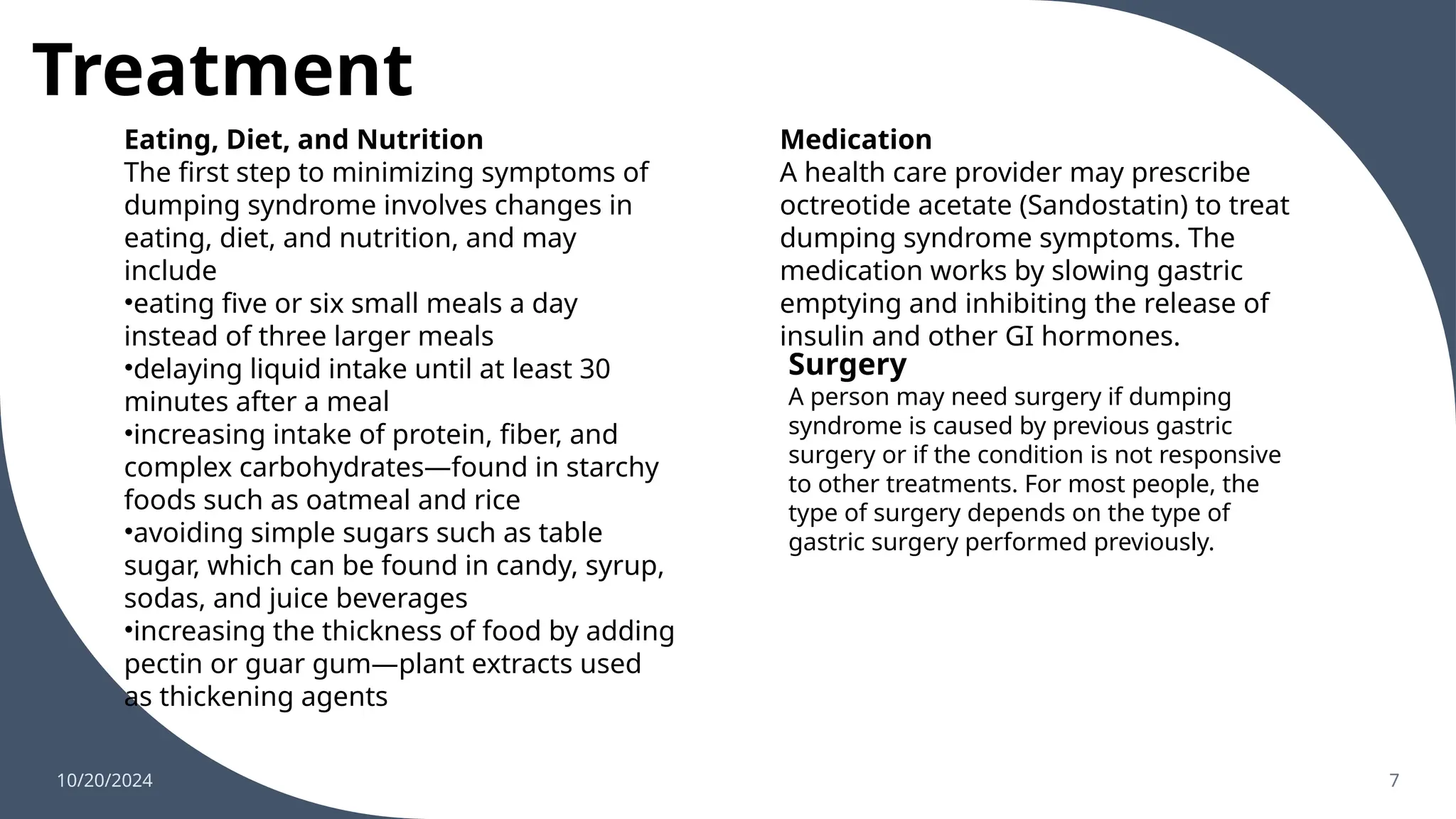
Treatment
Eating, Diet, and Nutrition
The first step to minimizing symptoms of
dumping syndrome involves changes in
eating, diet, and nutrition, and may
include
•eating five or six small meals a day
instead of three larger meals
•delaying liquid intake until at least 30
minutes after a meal
•increasing intake of protein, fiber, and
complex carbohydrates—found in starchy
foods such as oatmeal and rice
•avoiding simple sugars such as table
sugar, which can be found in candy, syrup,
sodas, and juice beverages
•increasing the thickness of food by adding
pectin or guar gum—plant extracts used
as thickening agents
Medication
A health care provider may prescribe
octreotide acetate (Sandostatin) to treat
dumping syndrome symptoms. The
medication works by slowing gastric
emptying and inhibiting the release of
insulin and other GI hormones.
Surgery
A person may need surgery if dumping
syndrome is caused by previous gastric
surgery or if the condition is not responsive
to other treatments. For most people, the
type of surgery depends on the type of
gastric surgery performed previously.
Thank you

Dumping Syndrome dumping syndrome 123.pptx

  • 1.
  • 2.
    Dumping Syndrome Dumping syndromeoccurs when food, especially sugar, moves too fast from the stomach to the duodenum, the first part of the small intestine, and the upper gastrointestinal (GI) tract. This condition is also called rapid gastric emptying. Dumping syndrome has two forms, based on when symptoms occur: •early dumping syndrome—occurs 10 to 30 minutes after a meal • results from rapid movement of fluid into the intestine following a sudden addition of a large amount of food from the stomach. •late dumping syndrome—occurs 2 to 3 hours after a meal •results from rapid movement of sugar into the intestine, which raises the body’s blood glucose level and causes the pancreas to increase its release of the hormone insulin. The increased release of insulin causes a rapid drop in blood glucose levels, a condition known as hypoglycemia, or low blood sugar. 2
  • 4.
    Sign and Symptoms 4 Thesymptoms of late dumping syndrome may include : •hypoglycemia •sweating •weakness •rapid or irregular heartbeat •flushing •dizziness Early dumping syndrome symptoms may include •nausea •vomiting •abdominal pain and cramping •diarrhea •feeling uncomfortably full or bloated after a meal •sweating •weakness •dizziness •flushing, or blushing of the face or skin
  • 5.
    5 Pathophysiology the symptoms ofearly and late dumping syndrome are believed to have distinct underlying pathophysiology's The arrival of hyperosmolar contents to the duodenum causes fluid to move from the intravascular component to the intestinal lumen. This movement might lead to a decrease in the volume of circulating fluid, tachycardia and, rarely, syncope. The fluid shift into the duodenum might also cause duodenal distention, followed by cramp like contractions. Another important mechanism that contributes to the pathogenesis of early dumping might be the increased release of several gastrointestinal peptide hormones, such as enteroglucagon, peptide YY, pancreatic poly- peptide, vasoactive intestinal polypeptide, glucagon- like peptide 1 and neurotensin, in postoperative dumping syndrome. These hormones’ mode of action might include changes in gastrointestinal motility and secretion, as well as hemodynamic effects Early Dumping Late Dumping rapid delivery of carbohydrates to the small intestine in dumping syndrome, therefore, causes excessive insulin secretion that subsequently results in hypoglycemia
  • 6.
    10/20/2024 6 Diagnosis modifiedoral glucose tolerance test gastric emptying scintigraphy measure blood glucose concentration, hematocrit —the amount of red blood cells in the blood— pulse rate, and blood pressure before the test begins. After the initial measurements, the person drinks a glucose solution. The health care provider repeats the initial measurements immediately and at 30-minute intervals for up to 180 minutes. A health care provider often confirms dumping syndrome in people with • low blood sugar between 120 and 180 minutes after drinking the solution • an increase in hematocrit of more than 3 percent at 30 minutes • a rise in pulse rate of more than 10 beats per minute after 30 minutes bland meal that contains a small amount of radioactive material. Scoring upper GI endoscopy and upper GI series For examine the structure of the esophagus, stomach, and upper small intestine
  • 7.
    10/20/2024 7 Treatment Eating, Diet,and Nutrition The first step to minimizing symptoms of dumping syndrome involves changes in eating, diet, and nutrition, and may include •eating five or six small meals a day instead of three larger meals •delaying liquid intake until at least 30 minutes after a meal •increasing intake of protein, fiber, and complex carbohydrates—found in starchy foods such as oatmeal and rice •avoiding simple sugars such as table sugar, which can be found in candy, syrup, sodas, and juice beverages •increasing the thickness of food by adding pectin or guar gum—plant extracts used as thickening agents Medication A health care provider may prescribe octreotide acetate (Sandostatin) to treat dumping syndrome symptoms. The medication works by slowing gastric emptying and inhibiting the release of insulin and other GI hormones. Surgery A person may need surgery if dumping syndrome is caused by previous gastric surgery or if the condition is not responsive to other treatments. For most people, the type of surgery depends on the type of gastric surgery performed previously.
  • 8.