Dr. Kwemboi Jacob
Mbale Regional Referral Hospital, Uganda
24th Aug 2021
CME
Content Outline
1. Definition
2. Epidemiology
3. Pathogenesis
4. Classifications
5. Clinical features
6. West Haven criteria
7. Diagnosis
8. Differential diagnosis
9. Investigations
10. Management
11. Complications
12. Prognosis
13. Prevention
Definition
Hepatic encephalopathy is a brain
dysfunction caused by liver insufficiency,
and/or portosystemic shunt; it manifests as a
wide spectrum of neurological or psychiatric
abnormalities ranging from subclinical
alterations to coma.
(AASLD Guidelines 2014)
Epidemiology of Hepatic Encephalopathy
 Among patients with cirrhosis, the prevalence of subclinical
HE (ie, Minimal hepatic encephalopathy or covert HE)
ranges between 20% and 80%.
 In cirrhosis, the 1-, 5-, and 10- year cumulative incidence of
HE ranges between 0% to 21%, 5% to 25%, and 7% to 42%,
respectively.
 Major risk factors for overt HE include MHE, prior history of
overt HE, hyponatremia, epilepsy, T2DM, higher creatinine
levels, higher bilirubin, higher Child-Pugh score.
 The development of either covert or overt HE is associated
with poor survival of cirrhotic patients.
Pathogenesis
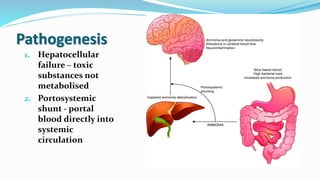
1. Hepatocellular
failure – toxic
substances not
metabolised
2. Portosystemic
shunt - portal
blood directly into
systemic
circulation
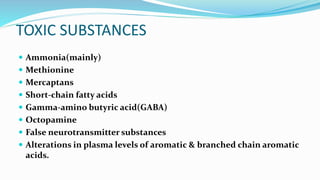
TOXIC SUBSTANCES
 Ammonia(mainly)
 Methionine
 Mercaptans
 Short-chain fatty acids
 Gamma-amino butyric acid(GABA)
 Octopamine
 False neurotransmitter substances
 Alterations in plasma levels of aromatic & branched chain aromatic
acids.
Source of Ammonia
 As part of the normal physiologic process;
 Colonic bacteria and gut mucosal enzymes break down
dietary proteins, which results in the release of
ammonia from the gut into the portal circulation.
 Normally, the ammonia is converted to urea in the
liver. In many persons with liver failure or
portosystemic shunting, the ammonia released into
the portal circulation does not get adequately
eliminated by the liver and it accumulates at high
levels in the systemic circulation.
Raised ammonia levels in the brain
 The circulating ammonia results in substantial levels
of ammonia crossing the blood brain barrier.
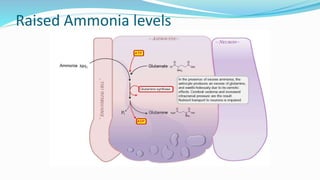
 Where rapid conversion to glutamine occurs by
astrocytes; in the brain, astrocytes are the only cells
that convert ammonia to glutamine.
 Within astrocytes, glutamine levels accumulate, acting
as an osmolyte to draw water inside the cell, which
causes astrocyte swelling. The end result of the high
circulating levels of ammonia is cerebral edema and
intracranial hypertension.
Raised Ammonia levels
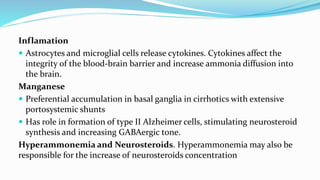
Inflamation
 Astrocytes and microglial cells release cytokines. Cytokines affect the
integrity of the blood-brain barrier and increase ammonia diffusion into
the brain.
Manganese
 Preferential accumulation in basal ganglia in cirrhotics with extensive
portosystemic shunts
 Has role in formation of type II Alzheimer cells, stimulating neurosteroid
synthesis and increasing GABAergic tone.
Hyperammonemia and Neurosteroids. Hyperammonemia may also be
responsible for the increase of neurosteroids concentration
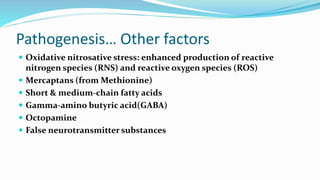
Pathogenesis… Other factors
 Oxidative nitrosative stress: enhanced production of reactive
nitrogen species (RNS) and reactive oxygen species (ROS)
 Mercaptans (from Methionine)
 Short & medium-chain fatty acids
 Gamma-amino butyric acid(GABA)
 Octopamine
 False neurotransmitter substances
Causes
Chronic parenchymal liver disease:
 Chronic hepatitis.
 Cirrhosis.
Fulminating hepatic failure:
 Acute viral hepatitis.
 Drugs. E.g Paracetamol overdose
 Toxins e.g. Wilson’s Disease.
Surgical Portal-systemic anastomoses
 Portacaval shunts, or Transjugular intrahepatic portal-systemic shunting [TIPS]).
Classification
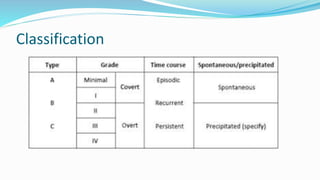
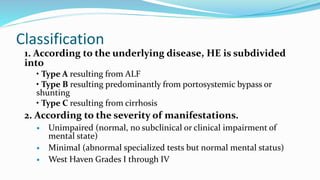
Classification
1. According to the underlying disease, HE is subdivided
into
• Type A resulting from ALF
• Type B resulting predominantly from portosystemic bypass or
shunting
• Type C resulting from cirrhosis
2. According to the severity of manifestations.
 Unimpaired (normal, no subclinical or clinical impairment of
mental state)
 Minimal (abnormal specialized tests but normal mental status)
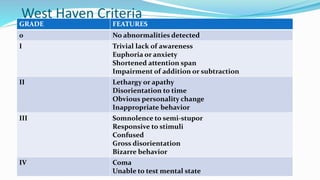
 West Haven Grades I through IV
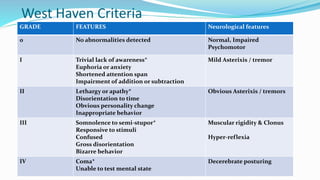
West Haven Criteria
GRADE FEATURES
0 No abnormalities detected
I Trivial lack of awareness
Euphoria or anxiety
Shortened attention span
Impairment of addition or subtraction
II Lethargy or apathy
Disorientation to time
Obvious personality change
Inappropriate behavior
III Somnolence to semi-stupor
Responsive to stimuli
Confused
Gross disorientation
Bizarre behavior
IV Coma
Unable to test mental state
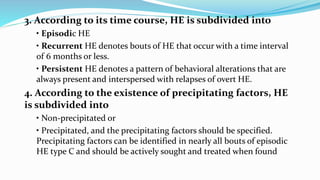
3. According to its time course, HE is subdivided into
• Episodic HE
• Recurrent HE denotes bouts of HE that occur with a time interval
of 6 months or less.
• Persistent HE denotes a pattern of behavioral alterations that are
always present and interspersed with relapses of overt HE.
4. According to the existence of precipitating factors, HE
is subdivided into
• Non-precipitated or
• Precipitated, and the precipitating factors should be specified.
Precipitating factors can be identified in nearly all bouts of episodic
HE type C and should be actively sought and treated when found
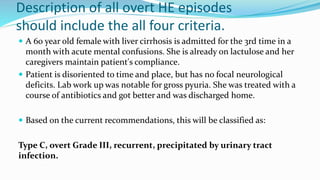
Description of all overt HE episodes
should include the all four criteria.
 A 60 year old female with liver cirrhosis is admitted for the 3rd time in a
month with acute mental confusions. She is already on lactulose and her
caregivers maintain patient's compliance.
 Patient is disoriented to time and place, but has no focal neurological
deficits. Lab work up was notable for gross pyuria. She was treated with a
course of antibiotics and got better and was discharged home.
 Based on the current recommendations, this will be classified as:
Type C, overt Grade III, recurrent, precipitated by urinary tract
infection.
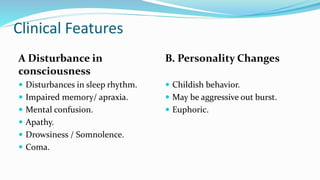
Clinical Features
A Disturbance in
consciousness
 Disturbances in sleep rhythm.
 Impaired memory/ apraxia.
 Mental confusion.
 Apathy.
 Drowsiness / Somnolence.
 Coma.
B. Personality Changes
 Childish behavior.
 May be aggressive out burst.
 Euphoric.
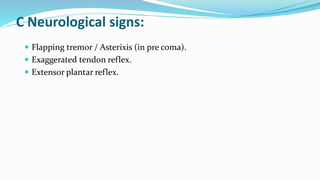
C Neurological signs:
 Flapping tremor / Asterixis (in pre coma).
 Exaggerated tendon reflex.
 Extensor plantar reflex.
West Haven Criteria
GRADE FEATURES Neurological features
0 No abnormalities detected Normal, Impaired
Psychomotor
I Trivial lack of awareness*
Euphoria or anxiety
Shortened attention span
Impairment of addition or subtraction
Mild Asterixis / tremor
II Lethargy or apathy*
Disorientation to time
Obvious personality change
Inappropriate behavior
Obvious Asterixis / tremors
III Somnolence to semi-stupor*
Responsive to stimuli
Confused
Gross disorientation
Bizarre behavior
Muscular rigidity & Clonus
Hyper-reflexia
IV Coma*
Unable to test mental state
Decerebrate posturing
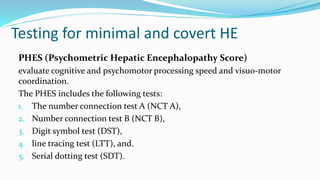
Testing for minimal and covert HE
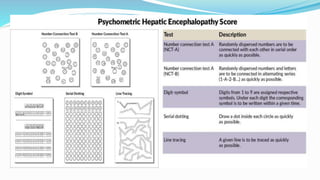
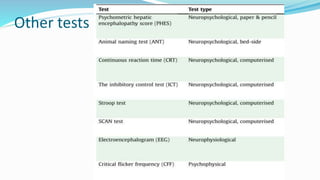
PHES (Psychometric Hepatic Encephalopathy Score)
evaluate cognitive and psychomotor processing speed and visuo-motor
coordination.
The PHES includes the following tests:
1. The number connection test A (NCT A),
2. Number connection test B (NCT B),
3. Digit symbol test (DST),
4. line tracing test (LTT), and.
5. Serial dotting test (SDT).
Other tests
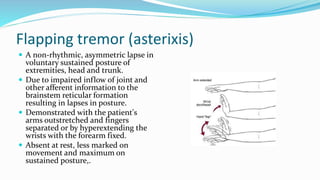
Flapping tremor (asterixis)
 A non-rhythmic, asymmetric lapse in
voluntary sustained posture of
extremities, head and trunk.
 Due to impaired inflow of joint and
other afferent information to the
brainstem reticular formation
resulting in lapses in posture.
 Demonstrated with the patient's
arms outstretched and fingers
separated or by hyperextending the
wrists with the forearm fixed.
 Absent at rest, less marked on
movement and maximum on
sustained posture,.
Fetor hepaticus
 This is a sour, musty odour in the breath, due to volatile
substances normally formed in the stool by bacteria.
 These mercaptans if not removed by the liver are excreted
through the lungs and appear in the breath.
 Fetor hepaticus does not correlate with the degree or duration
of encephalopathy and its absence does not exclude HE.
Diagnosis
Is a diagnosis of Exclusion
1. Confirm that the patient has significant liver failure
and/or portal-systemic shunting, and
2. Exclude other causes of neurological and psychiatric
dysfunction, which may explain the entire set of
abnormalities.
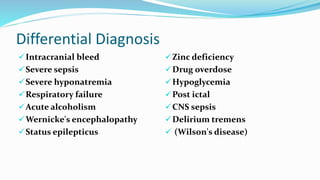
Differential Diagnosis
Intracranial bleed
Severe sepsis
Severe hyponatremia
Respiratory failure
Acute alcoholism
Wernicke's encephalopathy
Status epilepticus
Zinc deficiency
Drug overdose
Hypoglycemia
Post ictal
CNS sepsis
Delirium tremens
 (Wilson's disease)
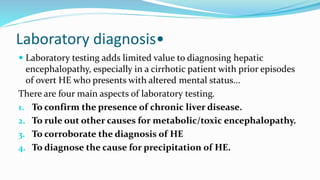
Laboratory diagnosis•
 Laboratory testing adds limited value to diagnosing hepatic
encephalopathy, especially in a cirrhotic patient with prior episodes
of overt HE who presents with altered mental status...
There are four main aspects of laboratory testing.
1. To confirm the presence of chronic liver disease.
2. To rule out other causes for metabolic/toxic encephalopathy.
3. To corroborate the diagnosis of HE
4. To diagnose the cause for precipitation of HE.
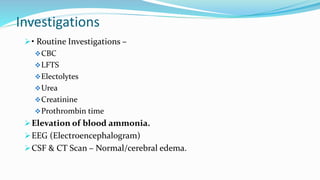
Investigations
• Routine Investigations –
CBC
LFTS
Electolytes
Urea
Creatinine
Prothrombin time
Elevation of blood ammonia.
EEG (Electroencephalogram)
CSF & CT Scan – Normal/cerebral edema.
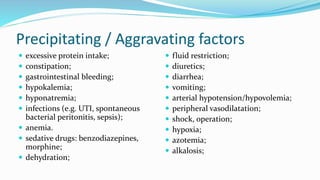
Precipitating / Aggravating factors
 excessive protein intake;
 constipation;
 gastrointestinal bleeding;
 hypokalemia;
 hyponatremia;
 infections (e.g. UTI, spontaneous
bacterial peritonitis, sepsis);
 anemia.
 sedative drugs: benzodiazepines,
morphine;
 dehydration;
 fluid restriction;
 diuretics;
 diarrhea;
 vomiting;
 arterial hypotension/hypovolemia;
 peripheral vasodilatation;
 shock, operation;
 hypoxia;
 azotemia;
 alkalosis;
Management
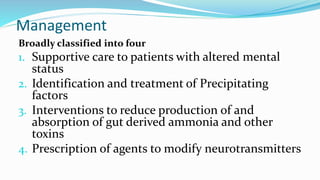
Broadly classified into four
1. Supportive care to patients with altered mental
status
2. Identification and treatment of Precipitating
factors
3. Interventions to reduce production of and
absorption of gut derived ammonia and other
toxins
4. Prescription of agents to modify neurotransmitters
Management
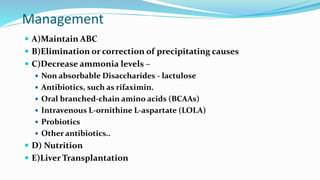
 A)Maintain ABC
 B)Elimination or correction of precipitating causes
 C)Decrease ammonia levels –
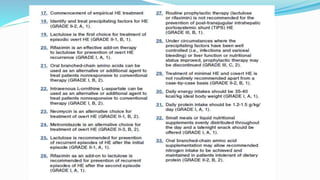
 Non absorbable Disaccharides - lactulose
 Antibiotics, such as rifaximin.
 Oral branched-chain amino acids (BCAAs)
 Intravenous L-ornithine L-aspartate (LOLA)
 Probiotics
 Other antibiotics..
 D) Nutrition
 E)Liver Transplantation
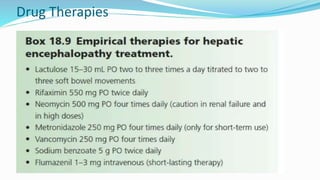
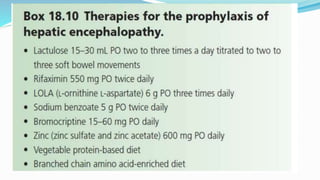
Drug Therapies
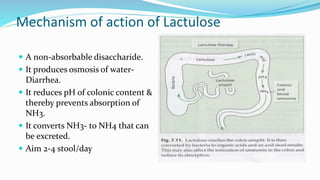
Mechanism of action of Lactulose
 A non-absorbable disaccharide.
 It produces osmosis of water-
Diarrhea.
 It reduces pH of colonic content &
thereby prevents absorption of
NH3.
 It converts NH3- to NH4 that can
be excreted.
 Aim 2-4 stool/day
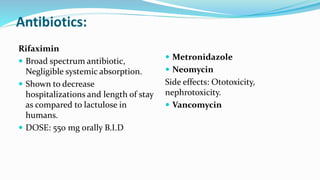
Antibiotics:
Rifaximin
 Broad spectrum antibiotic,
Negligible systemic absorption.
 Shown to decrease
hospitalizations and length of stay
as compared to lactulose in
humans.
 DOSE: 550 mg orally B.I.D
 Metronidazole
 Neomycin
Side effects: Ototoxicity,
nephrotoxicity.
 Vancomycin
Diet
 With held dietary protein during acute episode if patient cannot eat.
 Oral intake should be 60 - 80 g/day as tolerated.
 Vegetable protein is better tolerated than meat protein.
 G.I.T bleeding should be controlled
 120ml of magnesium citrate by mouth or NG tube every 3 - 4 hours until
stool free of blood
Stimulation of metabolic ammonia metabolism
 Sodium benzoate 5 g orally twice a day.
 LOLA (L-ornithine-L-aspartate) 9 g orally thrice a day.
 L-acyl-carnitine aspartate 4 g orally daily.
 Zinc sulphate 600mg/day in divided doses.
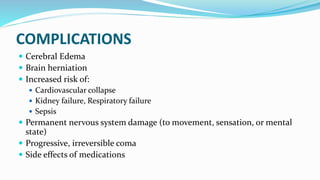
COMPLICATIONS
 Cerebral Edema
 Brain herniation
 Increased risk of:
 Cardiovascular collapse
 Kidney failure, Respiratory failure
 Sepsis
 Permanent nervous system damage (to movement, sensation, or mental
state)
 Progressive, irreversible coma
 Side effects of medications
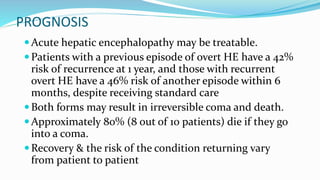
PROGNOSIS
Acute hepatic encephalopathy may be treatable.
Patients with a previous episode of overt HE have a 42%
risk of recurrence at 1 year, and those with recurrent
overt HE have a 46% risk of another episode within 6
months, despite receiving standard care
Both forms may result in irreversible coma and death.
Approximately 80% (8 out of 10 patients) die if they go
into a coma.
Recovery & the risk of the condition returning vary
from patient to patient
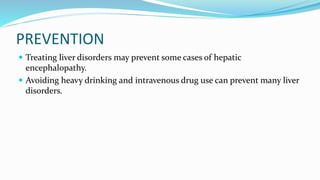
PREVENTION
 Treating liver disorders may prevent some cases of hepatic
encephalopathy.
 Avoiding heavy drinking and intravenous drug use can prevent many liver
disorders.
Referencess
 Hepatic Encephalopathy in Chronic Liver Disease: 2014 Practice Guideline
by © 2014 The American Association for the Study of Liver Diseases and EASL
 Articles
 Rudler, M., Weiss, (2021). Diagnosis and Management of Hepatic Encephalopathy.
Clinics in Liver Disease, 25(2), 393–417.
 Rose, C. F., Amodio. (2020). Hepatic encephalopathy: Novel insights into
classification, pathophysiology and therapy. Journal of Hepatology
 Dharel, N., & Bajaj, J. S. (2015). Definition and Nomenclature of Hepatic
Encephalopathy. Journal of Clinical and Experimental Hepatology
 Elsaid, M. I., & Rustgi, V. K. (2020). Epidemiology of Hepatic Encephalopathy.
Clinics in Liver Disease, 24(2), 157–174
THANK YOU

Hepatic encephalopathy

  • 1.
    Dr. Kwemboi Jacob MbaleRegional Referral Hospital, Uganda 24th Aug 2021 CME
  • 2.
    Content Outline 1. Definition 2.Epidemiology 3. Pathogenesis 4. Classifications 5. Clinical features 6. West Haven criteria 7. Diagnosis 8. Differential diagnosis 9. Investigations 10. Management 11. Complications 12. Prognosis 13. Prevention
  • 3.
    Definition Hepatic encephalopathy isa brain dysfunction caused by liver insufficiency, and/or portosystemic shunt; it manifests as a wide spectrum of neurological or psychiatric abnormalities ranging from subclinical alterations to coma. (AASLD Guidelines 2014)
  • 4.
    Epidemiology of HepaticEncephalopathy  Among patients with cirrhosis, the prevalence of subclinical HE (ie, Minimal hepatic encephalopathy or covert HE) ranges between 20% and 80%.  In cirrhosis, the 1-, 5-, and 10- year cumulative incidence of HE ranges between 0% to 21%, 5% to 25%, and 7% to 42%, respectively.  Major risk factors for overt HE include MHE, prior history of overt HE, hyponatremia, epilepsy, T2DM, higher creatinine levels, higher bilirubin, higher Child-Pugh score.  The development of either covert or overt HE is associated with poor survival of cirrhotic patients.
  • 5.
    Pathogenesis 1. Hepatocellular failure –toxic substances not metabolised 2. Portosystemic shunt - portal blood directly into systemic circulation
  • 6.
    TOXIC SUBSTANCES  Ammonia(mainly) Methionine  Mercaptans  Short-chain fatty acids  Gamma-amino butyric acid(GABA)  Octopamine  False neurotransmitter substances  Alterations in plasma levels of aromatic & branched chain aromatic acids.
  • 7.
    Source of Ammonia As part of the normal physiologic process;  Colonic bacteria and gut mucosal enzymes break down dietary proteins, which results in the release of ammonia from the gut into the portal circulation.  Normally, the ammonia is converted to urea in the liver. In many persons with liver failure or portosystemic shunting, the ammonia released into the portal circulation does not get adequately eliminated by the liver and it accumulates at high levels in the systemic circulation.
  • 8.
    Raised ammonia levelsin the brain  The circulating ammonia results in substantial levels of ammonia crossing the blood brain barrier.  Where rapid conversion to glutamine occurs by astrocytes; in the brain, astrocytes are the only cells that convert ammonia to glutamine.  Within astrocytes, glutamine levels accumulate, acting as an osmolyte to draw water inside the cell, which causes astrocyte swelling. The end result of the high circulating levels of ammonia is cerebral edema and intracranial hypertension.
  • 9.
  • 10.
    Inflamation  Astrocytes andmicroglial cells release cytokines. Cytokines affect the integrity of the blood-brain barrier and increase ammonia diffusion into the brain. Manganese  Preferential accumulation in basal ganglia in cirrhotics with extensive portosystemic shunts  Has role in formation of type II Alzheimer cells, stimulating neurosteroid synthesis and increasing GABAergic tone. Hyperammonemia and Neurosteroids. Hyperammonemia may also be responsible for the increase of neurosteroids concentration
  • 11.
    Pathogenesis… Other factors Oxidative nitrosative stress: enhanced production of reactive nitrogen species (RNS) and reactive oxygen species (ROS)  Mercaptans (from Methionine)  Short & medium-chain fatty acids  Gamma-amino butyric acid(GABA)  Octopamine  False neurotransmitter substances
  • 12.
    Causes Chronic parenchymal liverdisease:  Chronic hepatitis.  Cirrhosis. Fulminating hepatic failure:  Acute viral hepatitis.  Drugs. E.g Paracetamol overdose  Toxins e.g. Wilson’s Disease. Surgical Portal-systemic anastomoses  Portacaval shunts, or Transjugular intrahepatic portal-systemic shunting [TIPS]).
  • 13.
  • 14.
    Classification 1. According tothe underlying disease, HE is subdivided into • Type A resulting from ALF • Type B resulting predominantly from portosystemic bypass or shunting • Type C resulting from cirrhosis 2. According to the severity of manifestations.  Unimpaired (normal, no subclinical or clinical impairment of mental state)  Minimal (abnormal specialized tests but normal mental status)  West Haven Grades I through IV
  • 15.
    West Haven Criteria GRADEFEATURES 0 No abnormalities detected I Trivial lack of awareness Euphoria or anxiety Shortened attention span Impairment of addition or subtraction II Lethargy or apathy Disorientation to time Obvious personality change Inappropriate behavior III Somnolence to semi-stupor Responsive to stimuli Confused Gross disorientation Bizarre behavior IV Coma Unable to test mental state
  • 16.
    3. According toits time course, HE is subdivided into • Episodic HE • Recurrent HE denotes bouts of HE that occur with a time interval of 6 months or less. • Persistent HE denotes a pattern of behavioral alterations that are always present and interspersed with relapses of overt HE. 4. According to the existence of precipitating factors, HE is subdivided into • Non-precipitated or • Precipitated, and the precipitating factors should be specified. Precipitating factors can be identified in nearly all bouts of episodic HE type C and should be actively sought and treated when found
  • 17.
    Description of allovert HE episodes should include the all four criteria.  A 60 year old female with liver cirrhosis is admitted for the 3rd time in a month with acute mental confusions. She is already on lactulose and her caregivers maintain patient's compliance.  Patient is disoriented to time and place, but has no focal neurological deficits. Lab work up was notable for gross pyuria. She was treated with a course of antibiotics and got better and was discharged home.  Based on the current recommendations, this will be classified as: Type C, overt Grade III, recurrent, precipitated by urinary tract infection.
  • 18.
    Clinical Features A Disturbancein consciousness  Disturbances in sleep rhythm.  Impaired memory/ apraxia.  Mental confusion.  Apathy.  Drowsiness / Somnolence.  Coma. B. Personality Changes  Childish behavior.  May be aggressive out burst.  Euphoric.
  • 19.
    C Neurological signs: Flapping tremor / Asterixis (in pre coma).  Exaggerated tendon reflex.  Extensor plantar reflex.
  • 20.
    West Haven Criteria GRADEFEATURES Neurological features 0 No abnormalities detected Normal, Impaired Psychomotor I Trivial lack of awareness* Euphoria or anxiety Shortened attention span Impairment of addition or subtraction Mild Asterixis / tremor II Lethargy or apathy* Disorientation to time Obvious personality change Inappropriate behavior Obvious Asterixis / tremors III Somnolence to semi-stupor* Responsive to stimuli Confused Gross disorientation Bizarre behavior Muscular rigidity & Clonus Hyper-reflexia IV Coma* Unable to test mental state Decerebrate posturing
  • 21.
    Testing for minimaland covert HE PHES (Psychometric Hepatic Encephalopathy Score) evaluate cognitive and psychomotor processing speed and visuo-motor coordination. The PHES includes the following tests: 1. The number connection test A (NCT A), 2. Number connection test B (NCT B), 3. Digit symbol test (DST), 4. line tracing test (LTT), and. 5. Serial dotting test (SDT).
  • 23.
  • 24.
    Flapping tremor (asterixis) A non-rhythmic, asymmetric lapse in voluntary sustained posture of extremities, head and trunk.  Due to impaired inflow of joint and other afferent information to the brainstem reticular formation resulting in lapses in posture.  Demonstrated with the patient's arms outstretched and fingers separated or by hyperextending the wrists with the forearm fixed.  Absent at rest, less marked on movement and maximum on sustained posture,.
  • 25.
    Fetor hepaticus  Thisis a sour, musty odour in the breath, due to volatile substances normally formed in the stool by bacteria.  These mercaptans if not removed by the liver are excreted through the lungs and appear in the breath.  Fetor hepaticus does not correlate with the degree or duration of encephalopathy and its absence does not exclude HE.
  • 26.
    Diagnosis Is a diagnosisof Exclusion 1. Confirm that the patient has significant liver failure and/or portal-systemic shunting, and 2. Exclude other causes of neurological and psychiatric dysfunction, which may explain the entire set of abnormalities.
  • 27.
    Differential Diagnosis Intracranial bleed Severesepsis Severe hyponatremia Respiratory failure Acute alcoholism Wernicke's encephalopathy Status epilepticus Zinc deficiency Drug overdose Hypoglycemia Post ictal CNS sepsis Delirium tremens  (Wilson's disease)
  • 28.
    Laboratory diagnosis•  Laboratorytesting adds limited value to diagnosing hepatic encephalopathy, especially in a cirrhotic patient with prior episodes of overt HE who presents with altered mental status... There are four main aspects of laboratory testing. 1. To confirm the presence of chronic liver disease. 2. To rule out other causes for metabolic/toxic encephalopathy. 3. To corroborate the diagnosis of HE 4. To diagnose the cause for precipitation of HE.
  • 29.
    Investigations • Routine Investigations– CBC LFTS Electolytes Urea Creatinine Prothrombin time Elevation of blood ammonia. EEG (Electroencephalogram) CSF & CT Scan – Normal/cerebral edema.
  • 30.
    Precipitating / Aggravatingfactors  excessive protein intake;  constipation;  gastrointestinal bleeding;  hypokalemia;  hyponatremia;  infections (e.g. UTI, spontaneous bacterial peritonitis, sepsis);  anemia.  sedative drugs: benzodiazepines, morphine;  dehydration;  fluid restriction;  diuretics;  diarrhea;  vomiting;  arterial hypotension/hypovolemia;  peripheral vasodilatation;  shock, operation;  hypoxia;  azotemia;  alkalosis;
  • 31.
    Management Broadly classified intofour 1. Supportive care to patients with altered mental status 2. Identification and treatment of Precipitating factors 3. Interventions to reduce production of and absorption of gut derived ammonia and other toxins 4. Prescription of agents to modify neurotransmitters
  • 32.
    Management  A)Maintain ABC B)Elimination or correction of precipitating causes  C)Decrease ammonia levels –  Non absorbable Disaccharides - lactulose  Antibiotics, such as rifaximin.  Oral branched-chain amino acids (BCAAs)  Intravenous L-ornithine L-aspartate (LOLA)  Probiotics  Other antibiotics..  D) Nutrition  E)Liver Transplantation
  • 33.
  • 35.
    Mechanism of actionof Lactulose  A non-absorbable disaccharide.  It produces osmosis of water- Diarrhea.  It reduces pH of colonic content & thereby prevents absorption of NH3.  It converts NH3- to NH4 that can be excreted.  Aim 2-4 stool/day
  • 36.
    Antibiotics: Rifaximin  Broad spectrumantibiotic, Negligible systemic absorption.  Shown to decrease hospitalizations and length of stay as compared to lactulose in humans.  DOSE: 550 mg orally B.I.D  Metronidazole  Neomycin Side effects: Ototoxicity, nephrotoxicity.  Vancomycin
  • 37.
    Diet  With helddietary protein during acute episode if patient cannot eat.  Oral intake should be 60 - 80 g/day as tolerated.  Vegetable protein is better tolerated than meat protein.  G.I.T bleeding should be controlled  120ml of magnesium citrate by mouth or NG tube every 3 - 4 hours until stool free of blood
  • 38.
    Stimulation of metabolicammonia metabolism  Sodium benzoate 5 g orally twice a day.  LOLA (L-ornithine-L-aspartate) 9 g orally thrice a day.  L-acyl-carnitine aspartate 4 g orally daily.  Zinc sulphate 600mg/day in divided doses.
  • 39.
    COMPLICATIONS  Cerebral Edema Brain herniation  Increased risk of:  Cardiovascular collapse  Kidney failure, Respiratory failure  Sepsis  Permanent nervous system damage (to movement, sensation, or mental state)  Progressive, irreversible coma  Side effects of medications
  • 40.
    PROGNOSIS Acute hepatic encephalopathymay be treatable. Patients with a previous episode of overt HE have a 42% risk of recurrence at 1 year, and those with recurrent overt HE have a 46% risk of another episode within 6 months, despite receiving standard care Both forms may result in irreversible coma and death. Approximately 80% (8 out of 10 patients) die if they go into a coma. Recovery & the risk of the condition returning vary from patient to patient
  • 41.
    PREVENTION  Treating liverdisorders may prevent some cases of hepatic encephalopathy.  Avoiding heavy drinking and intravenous drug use can prevent many liver disorders.
  • 44.
    Referencess  Hepatic Encephalopathyin Chronic Liver Disease: 2014 Practice Guideline by © 2014 The American Association for the Study of Liver Diseases and EASL  Articles  Rudler, M., Weiss, (2021). Diagnosis and Management of Hepatic Encephalopathy. Clinics in Liver Disease, 25(2), 393–417.  Rose, C. F., Amodio. (2020). Hepatic encephalopathy: Novel insights into classification, pathophysiology and therapy. Journal of Hepatology  Dharel, N., & Bajaj, J. S. (2015). Definition and Nomenclature of Hepatic Encephalopathy. Journal of Clinical and Experimental Hepatology  Elsaid, M. I., & Rustgi, V. K. (2020). Epidemiology of Hepatic Encephalopathy. Clinics in Liver Disease, 24(2), 157–174
  • 45.

Editor's Notes

  • #5 HE results in utilisation of more healthcare resources compared to other complications of liver disease.
  • #6 Shunts due to increased portal pressure- extrinsic compression - Pancreatic disease – Lymphadenopathy - Biliary tract tumours Intrahepatic – Cirrhosis - Schistosomiasis Posthepatic-Budd-Chiari syndrome - Constrictive pericarditis Medical shunts Absolute - Primary prevention of variceal bleeding - Severe congestive heart failure - Tricuspid regurgitation - Multiple hepatic cysts Uncontrolled systemic infection or sepsis Unrelieved biliary obstruction Severe pulmonary hypertension Relative Hepatoma, particularly if centralObstruction of all hepatic veinsHepatic encephalopathySignificant portal vein thrombosisSevere uncorrectable coagulopathy (INR> 5)Thrombocytopenia (< 20,000 platelets/mm³)Moderate pulmonary hypertension
  • #7 The precise molecular mechanisms responsible for the pathogenesis of hepatic encephalopathy still remain largely unknown.. The agreed principle for the cause of HE is primarily due to gut-derived toxins.. This concept has largely stemmed from the observation that gut lavage and catharsis leads to the resolution of overt HE.. In addition, bouts of overt HE have been observed when ammonia-containing resins have been introduced into the gut
  • #8 Ammonia is produced by enterocytes from glutamine and by colonic bacterial catabolism of nitrogenous sources (such as blood after GI bleeding) The intact liver clears almost all of the portal vein ammonia, converting it into glutamine and preventing entry into the systemic circulation.
  • #9 the enzyme glutamine synthetase (present in the endoplasmic reticulum of astrocytes) is responsible for the conversion of equimolar concentra tions of glutamate and ammonia to glutamine. Other factors, such as oxidative stress, neurosteroids, systemic inflammation, increased bile acids, impaired lactate metabolism, and altered blood- brain barrier permeability likely contribute in the process of hepatic encephalopathy.
  • #10 Astrocyte These large star-shaped cells are essential to the functioning of the CNS because they help maintain the proper composition of the fluid surrounding the neurons.• The only cerebral cell capable of metabolizing ammonia.• In patients with HE, they adopt a characteristic morphologic feature known as 'Alzheimer type Il astrocytosis. • Seizures and florid cerebral edema are seen in acute liver failure with ammonia levels above established thresholds (over 200 mol/L) Astrocyte dysfunction.• Oxidative / nitrosative stress can promote covalent modification of tyrosine residues in astrocyte proteins. This protein tyrosine nitration, interfere with protein function and intracellular signal transduction.
  • #11 TNF-α and IL-1, 6 proinflammatory cytokines the peripheral immune system communicates with the brain in response to infection and inflammation. astrocytes and microgial cells release cytokines in response to injury or inflammation. The elevated neurosteroids level stimulating the GABA-A receptors may be responsible for increased GABA-ergic tone observed in HE Recent studies have identified other factors, such as inflammatory cytokines, manganese, benzodiazepine-like com- pounds, mercaptans, aromatic amino acids, and microbiota to be involved in the pathophysiology of HE
  • #12 Infection is a well-known precipitant of HE, but the mechanisms involved are incompletely understood [27]. Patients with cirrhosis are known to be functionally immunosuppressed and prone to developing infections. Whether
  • #14 HE occurs in the setting of ALF, portal-systemic shunting without liver disease and most commonly in cirrhosis.
  • #16 Any person with evidence of any disorientation or asterixis will have grade II HE, with significant impact on their quality of life and will require treatment whereas covert HE.
  • #17 Knowledge of the clinical course and progress in the context of time may be useful in determining prognosis, setting goals of long term care, allocations of resources and treatments, both for the care givers and care providers.
  • #18 No patient present this week
  • #19 Wide spectrum of neurological and psychiatric changes Level of consciousness Personality Neurological signs
  • #21 Any person with evidence of any disorientation or asterixis will have grade II HE, with significant impact on their quality of life and will require treatment whereas covert HE.
  • #22 This test battery was devised by Weissenborn, Schomerus et al. based on the findings from the Hamster study. Computerised psychomotor tests Inhibitory control tests Control flicker fussion tests
  • #23 Number Connection Test A Psychomotor speed; visual scanning efficiency, sequencing, attention, concentration Number Connection Test B Attention set shifting ability, psychomotor speed, visual scanning efficiency, sequencing, attention, concentration Figure Connection Test [19] Visual perception, visual search, visual scanning efficiency, psychomotor speed, attention, concentration, working memory Digit Symbol Test Associative learning; graphomotor speed, cognitive processing speed, visual perception, working memory Serial Dotting Test Motor speed Line Tracing Test Motor speed and accuracy
  • #25 Asterixis is a type of negative myoclonus characterized by irregular lapses of posture of various body parts The sensory cortex relays the command to motor cortex. Then the motor cortex commands the effector organs to obey the command to outstretch the hands and cerebellum is directed to maintain the outstretched hands. As the relay system between the cerebellum and cerebrum is under the toxic effect of neurotoxins the cerebellum fails to maintain the coordination and there is a fall, the repetition of this process results in the phenomenon called Flapping Tremors. The rapid flexion-extension movements at the metacarpophalangeal and wrist joints are often accompanied by lateral movements of the digits. Usually bilateral, although not bilaterally synchronous, and one side may be affected more than the other. In coma the tremor disappears. Asterixis could be elicited at other places are tongue protrusion, dorsiflexion of the foot, fist clenching, and forced eye closure.• The pathogenesis of asterixis is thought to be due to the abnormal function of the supraspinal motor centers.
  • #26 The compound dimethyl sulfide has been associated with it
  • #30 Raise in CSF Glutamine 2 folds • Blood should be collected from a stasis-free vein. Avoid clenching of fist or application of tourniquet, which can elevate ammonia levels due to release from skeletal muscle A lithium-or sodium heparin-containing vacutainer (green top vacutainer) should be used to collect blood. Heparin inhibits the release of ammonia from red cells Sample should be stored and transported in an ice bath within 20 minutes for assay
  • #32 1. Initiation of care for altered consciousness, which includes securing the airway, haemodynamic stabilisation, and ensuring patient safety to prevent physical injury. Patients with HE III or higher or Glasgow Coma Score (GCS) <−8 should be intubated in order to prevent aspiration, but this is not possible in many hospitals. In these environments, careful attention to airway protection and close monitoring should be instituted 2. Evaluation of alternative causes of altered mental status, including a CT scan of the head for first time presentation of HE and if there is a history of seizures, headache, fall, or neurological evaluation reveals a focal deficit 3 Identification and correction of precipitating events, such as, infection, gastrointestinal bleed, constipation, dehydration, sedatives, alcohol intoxication or electrolyte disturbances.
  • #33 In cirrhosis, plasma levels of branched-chain amino acids (BCAAs: leucine, isoleucine, valine) are decreased as part of a general amino acid dyshomeostasis. The effect is rather ammonia detoxification outside the liver via effects on skeletal muscle protein synthesis. Ammonia decreases protein synthesis by impairing the mTOR signaling, an effect counteracted by BCAAs
  • #34 Flumazenil It is reasonable that this drug may play two roles: produce a transient improvement in severe OHE, to allow the administration of treatment by mouth; revert an unrecognized intake of benzodiazepines. Thought to be a reduction in the activity of the neuro inhibitory GABA/benzodiazepine receptor complex, countering the overall neural inhibition in HE
  • #36 their laxative effect, which increases the elimination of ammonia, the acidification of the intestinal contents via the production of lactic and acetic acid by the gut microbiota, which reduces ammonia absorption, and their prebiotic action, as they favor the growth of saccharo lytic bacteria such as Bifido bacterium and Lactobacillus instead of proteolytic ones, thus reducing ammoniagenesis and increasing ammonia clearance
  • #37 The mechanism of action is based on the modulation of both the composition and the function of the gut microbiota, and possibly also on its anti-inflammatory and eubiotic effects Non ureic nitrogen scavengers •Sodium benzoate provides an alternative pathway for the disposal of waste nitrogen and has been used to treat patients with urea cycle defects and, to a lesser extent, patients with HE. While the results of one,
  • #38 Vegetable based protein is better tolerated by patients with cirrhosis than meat based protein. Vegetable based protein foods have a high fiber content, which increases intestinal transit time and colonic motility and Enhances intestinal nitrogen clearance. vegetable protein also reduces colonic pH, which prevents ammonia from being absorbed in the gut.
  • #39 Sodium benzoate (Non ureic nitrogen scavengers) provides an alternative pathway for the disposal of waste nitrogen and has been used to treat patients with urea cycle defects and, to a lesser extent, patients with HE. LOLAA preparation of L-ornithine and L aspartate (LOLA) LOLA represents a substrate for the urea cycle and can increase urea production in peri-portal hepatocytes. It also activates glutamine production by activating glutamine synthetase in perivenous hepatocytes and the skeletal muscle. Also stimulating glutamine synthesis in the skeletal muscle and, consequently, lowering ammonia. Alternatively, stimulating ammonia clearance can be targeted via residual hepatocytes (ureagenesis and glutamine synthesis) and/or muscle (glutamine synthesis) with L-Ornithine L-Aspartate is used to increase the generation of urea through the urea cycle, a metabolic pathway that removes ammonia by turning it into the neutral substance urea. It may be combined with lactulose and/or rifaximin if these alone are ineffective at controlling symptoms. ZINC Ammonia is converted to urea by ornithyl transcarbamylase in the liver and is combined with glutamate by glutamine synthetase in the skeletal muscle to form glutamine. Both ammonia-reduction pathways are impaired by zinc deficiency. Treatment with zinc has been found to enhance the formation of urea from ammonia and amino acids.