Downloaded 415 times


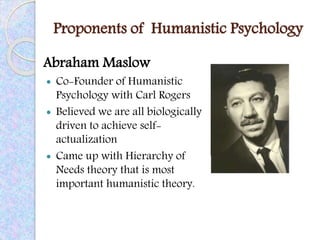

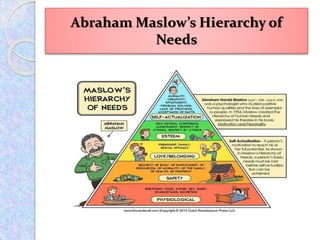


Humanistic psychology developed in the 1960s-70s as a response to behaviorism and cognitivism. It emphasizes studying the whole person from their perspective and considers humans as inherently driven towards self-actualization. The founders, Abraham Maslow and Carl Rogers, contributed significantly through Maslow's hierarchy of needs theory and Rogers' person-centered therapy approach. Humanistic psychology views individuals as unique and believes psychology should understand individual cases rather than average group performances. It aims to promote self-direction, responsibility, creativity, curiosity, and interest in arts through education.


