Dexter M. Descotido
Educ 122 TTH 2:30 – 4:00 PM
History
Clayton Paul Alderfer (born September 1,
1940) is an American psychologist who
further developed Maslow’s Hierarchy of
Needs by categorizing the hierarchy into
his ERG theory (Existence,
Relatedness, and Growth).
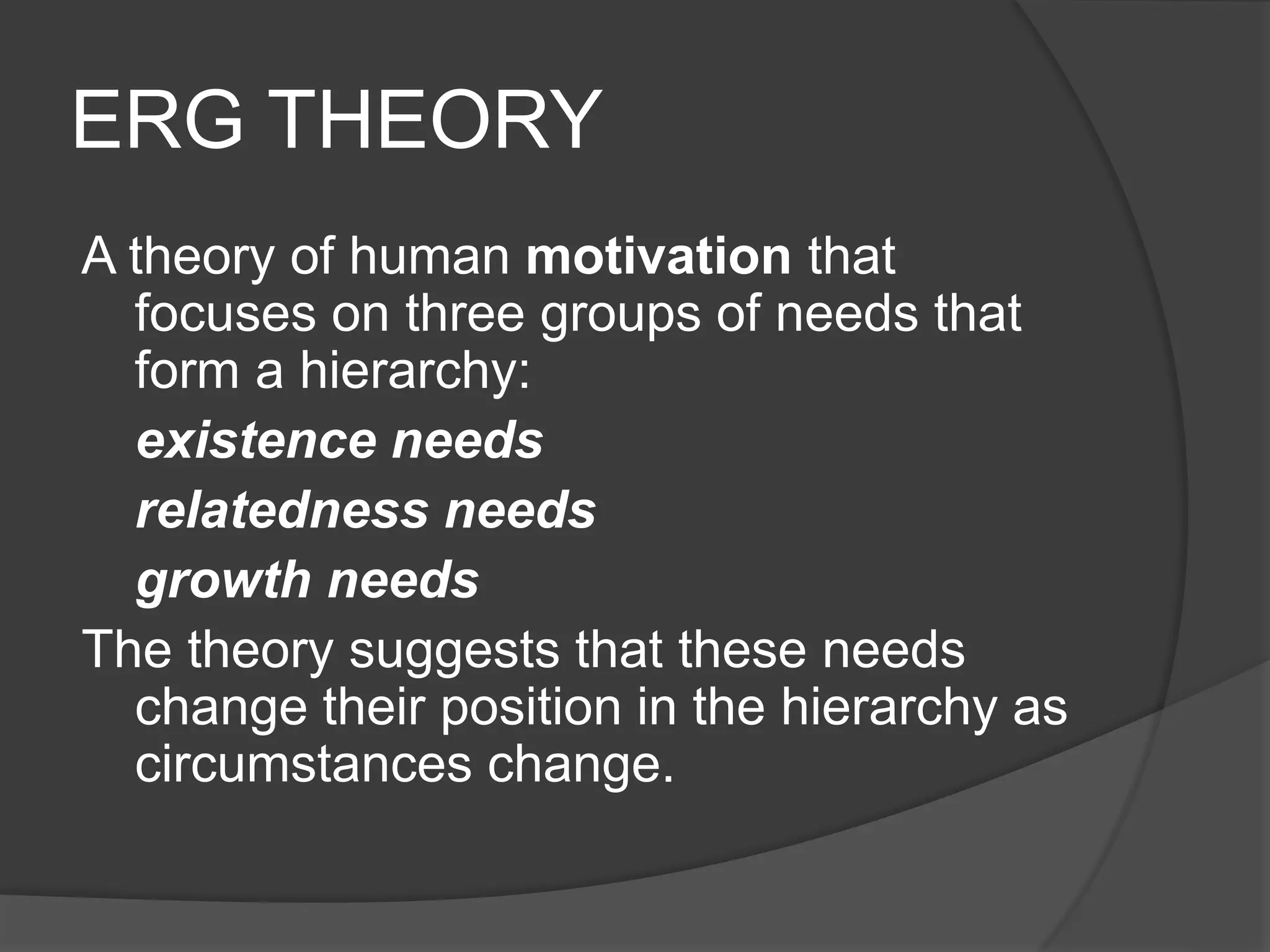
ERG THEORY
A theory of human motivation that
focuses on three groups of needs that
form a hierarchy:
existence needs
relatedness needs
growth needs
The theory suggests that these needs
change their position in the hierarchy as
circumstances change.
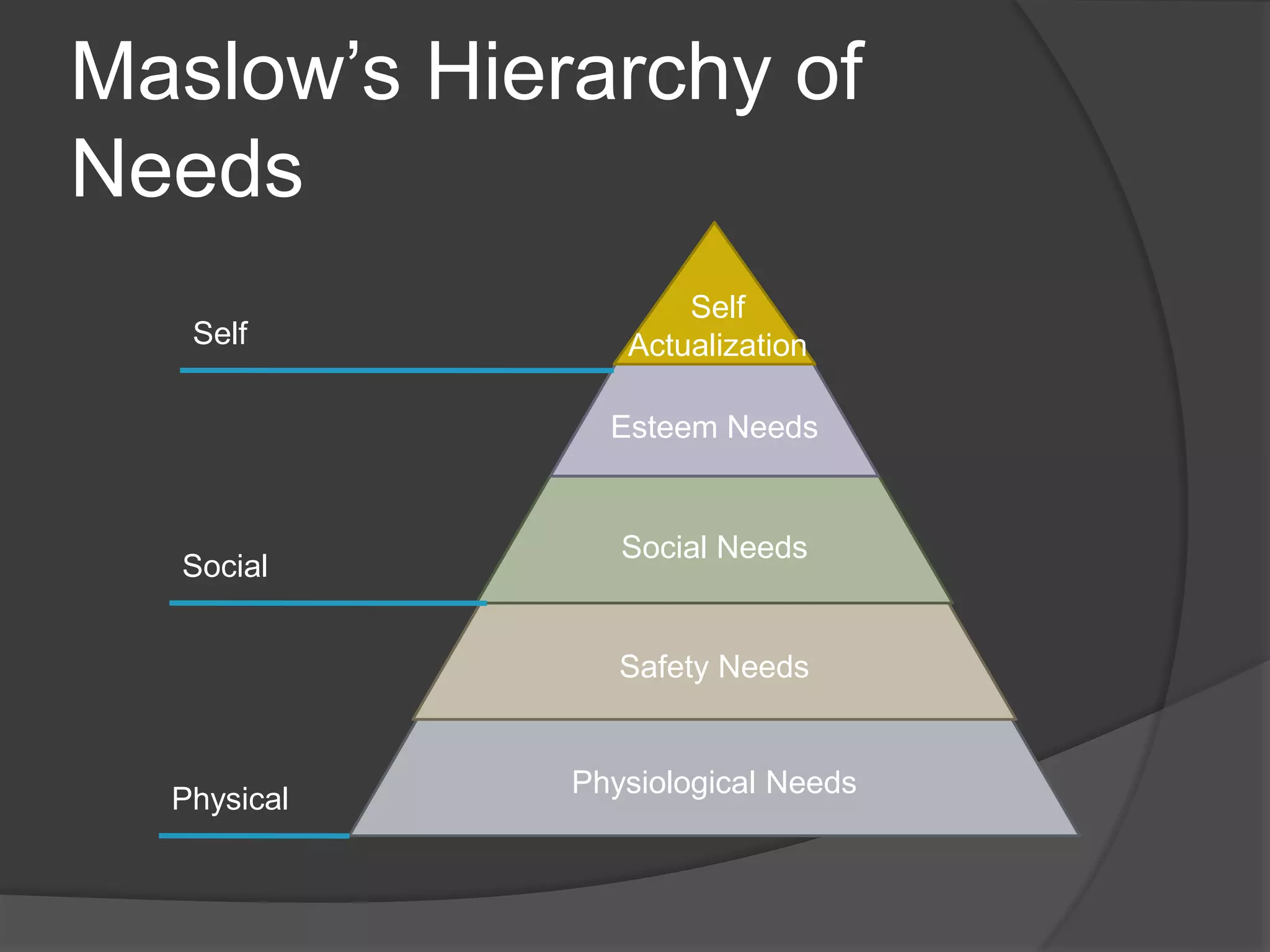
Maslow’s Hierarchy of
Needs
Physiological Needs
Safety Needs
Social Needs
Esteem Needs
Self
ActualizationSelf
Social
Physical
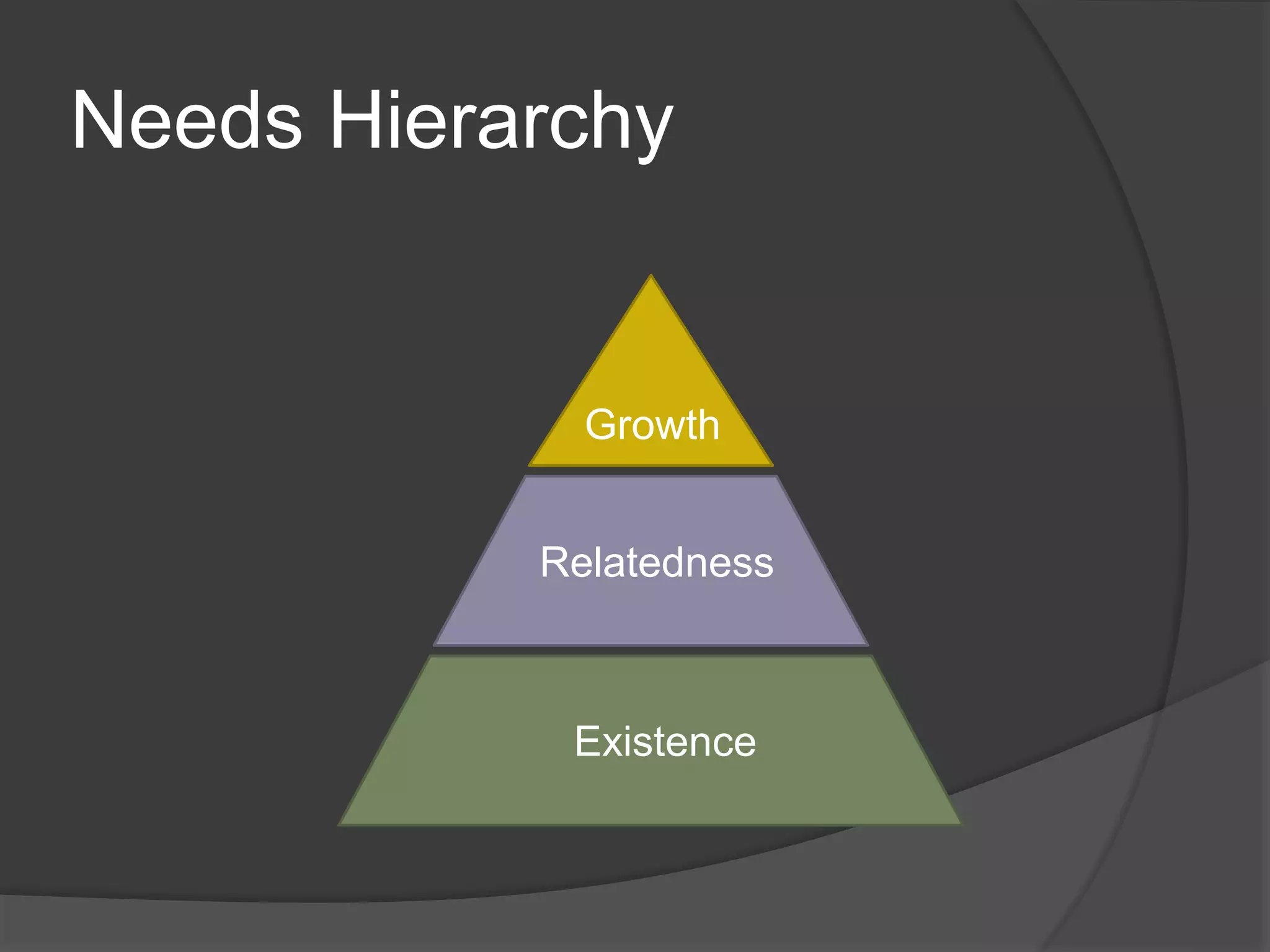
Needs Hierarchy
Growth
Relatedness
Existence
Existence Needs
 This group of needs is concerned with
providing the basic requirements for
material existence, such as
physiological and safety needs.
 In a work context this need is satisfied
by money earned in a job for the
purchase of food, shelter, clothing, etc.
Relatedness Needs
 This group of needs focuses on the desire
to establish and maintain interpersonal
relationships with family, friends, co-
workers and employers.
 Interact with other people, receive public
recognition, and feel secure around people.
 The amount of time most people spend at
work this need is normally satisfied to
some extent by their relationships with
colleagues and managers.
Growth Needs
 These needs are about the fulfilment of
desires to be creative, productive and to
complete meaningful tasks.
 These needs are all about by personal
development. In a work context a
person’s job, career, or profession can
provide a significant satisfaction of
growth needs.
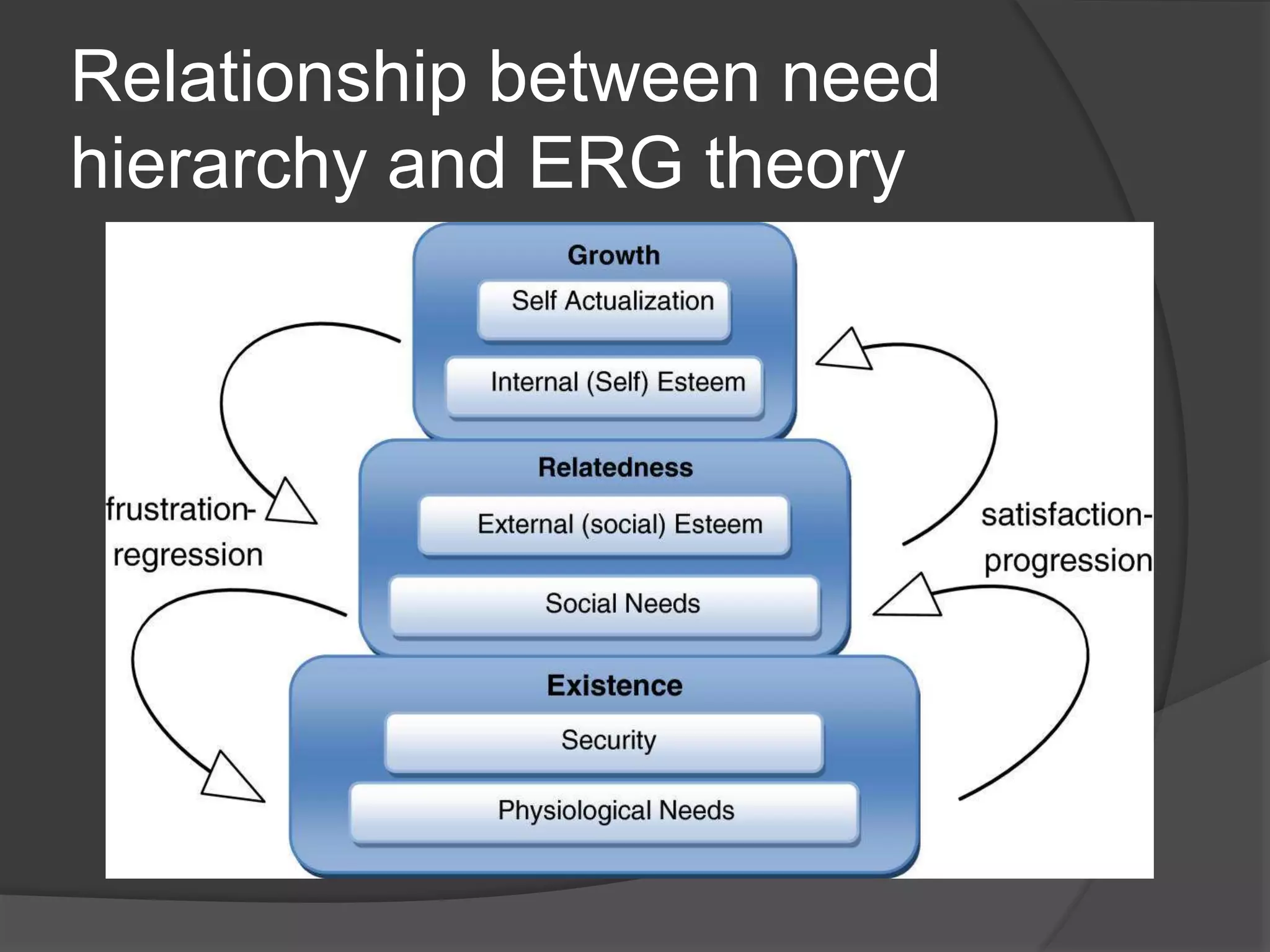
Relation Between Needs
Relationship between need
hierarchy and ERG theory
Conclusion
Clayton Alderfer extended and simplified
Maslow’s Hierarchy into a shorter set of
three needs: Existence, Relatedness
and Growth (hence ‘ERG’). Unlike
Maslow, he did not see these as being a
hierarchy, but being more of a
continuum.

Clayton alderfer's erg theory

  • 1.
    Dexter M. Descotido Educ122 TTH 2:30 – 4:00 PM
  • 2.
    History Clayton Paul Alderfer(born September 1, 1940) is an American psychologist who further developed Maslow’s Hierarchy of Needs by categorizing the hierarchy into his ERG theory (Existence, Relatedness, and Growth).
  • 3.
    ERG THEORY A theoryof human motivation that focuses on three groups of needs that form a hierarchy: existence needs relatedness needs growth needs The theory suggests that these needs change their position in the hierarchy as circumstances change.
  • 4.
    Maslow’s Hierarchy of Needs PhysiologicalNeeds Safety Needs Social Needs Esteem Needs Self ActualizationSelf Social Physical
  • 5.
  • 6.
    Existence Needs  Thisgroup of needs is concerned with providing the basic requirements for material existence, such as physiological and safety needs.  In a work context this need is satisfied by money earned in a job for the purchase of food, shelter, clothing, etc.
  • 7.
    Relatedness Needs  Thisgroup of needs focuses on the desire to establish and maintain interpersonal relationships with family, friends, co- workers and employers.  Interact with other people, receive public recognition, and feel secure around people.  The amount of time most people spend at work this need is normally satisfied to some extent by their relationships with colleagues and managers.
  • 8.
    Growth Needs  Theseneeds are about the fulfilment of desires to be creative, productive and to complete meaningful tasks.  These needs are all about by personal development. In a work context a person’s job, career, or profession can provide a significant satisfaction of growth needs.
  • 9.
  • 10.
  • 11.
    Conclusion Clayton Alderfer extendedand simplified Maslow’s Hierarchy into a shorter set of three needs: Existence, Relatedness and Growth (hence ‘ERG’). Unlike Maslow, he did not see these as being a hierarchy, but being more of a continuum.