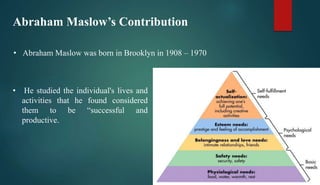
The humanistic perspective emerged in the late 1950s as a reaction against psychodynamic and behaviorist approaches, emphasizing the individual's capacity for self-determination and the importance of personal experience. Key figures include Abraham Maslow, known for his study of successful individuals, and Carl Rogers, who focused on self-actualization and client-centered therapy. Humanistic psychology is influential in education, advocating for student-centered learning, and promotes therapies that prioritize human values, free will, and personal meaning.