

HRP is process by which an organisation ensures that it has the right number & kind 
of people at the right place and at the right time , capable of effectively and efficiently 
completing those tasks that help the organisation achieve its overall objectives. 
HRP is the process of forecasting a firm’s future for, and supply of 
the right type of people in the right number. 
Growing unemployment 
Voluntary quits 
Retirement 
Death Marriages 
Technological changes 
Promotion, Transfer 
Expansion & Diversification 
Need for HRP 
Concept of HRP
Importance of HRP 
Prepare people for future 
Reservation of Talent 
Expand or Contract 
Cut costs 
Succession planning 
Expand or Contract 
International Strategies 
Increasing investment in HR 
1. Improve the utilization of 
human resources. 
2. Match human resource related 
activities and future 
organization objectives 
efficiently. 
3. Achieve economies in hiring 
new workers. 
4. Coordination between various 
hr programs such a 
employment equity plan and 
hiring needs 
5. Setting the strategic direction 
designing the human resource 
management system 
6. planning the total workforce 
generating the required 
human resource 
7. Investing in human resource 
developing and performance 
Benefits of HRP
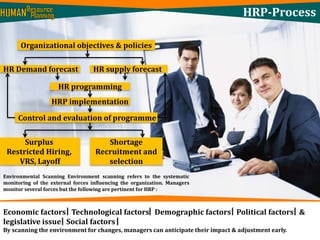
Organizational objectives & policies 
HR Demand forecast HR supply forecast 
HR programming 
HRP implementation 
Control and evaluation of programme 
Shortage 
Recruitment and 
selection 
Surplus 
Restricted Hiring, 
VRS, Layoff 
Environmental Scanning Environment scanning refers to the systematic 
monitoring of the external forces influencing the organization. Managers 
monitor several forces but the following are pertinent for HRP : 
HRP-Process 
Economic factors Technological factors Demographic factors Political factors & 
legislative issue Social factors 
By scanning the environment for changes, managers can anticipate their impact & adjustment early.
Forecast Demand 
Product demand 
Economies 
 Technology 
Financial Resources 
Attrition 
Organizational Growth 
Management Philosophy 
Techniques 
 Trend Analysis 
 Managerial Estimate 
 Delphi Technique 
Recruitment Shortage 
Full time 
Part time 
Recalls 
Reduction (Surplus) 
Termination 
Layoffs 
Demotions 
Retirement 
HRP-Model 
Supply Forecast 
Staffing Tables 
Markov Model 
Skill Inventories 
Management Inventories 
Replacement Charts 
Succession planning 
External 
Demographic Changes 
Education of Workforce 
Labour Mobility 
Government Policies 
Unemployment Rate 
Balance Demand 
And Supply 
Resistance by employer 
& Employees 
Uncertainties 
Inadequate info system 
Problem in HRP
Recruitment 
According to Edwin B. Flippo, “Recruitment is the process of 
searching the candidates for employment and stimulating them 
to apply for jobs in the organisation” 
Meaning: 
Recruitment is the activity that links the employers and the job seekers. 
A process of finding and attracting capable applicants for employment 
• Complies with government policies 
• Provides job security 
• Provides employee development opportunities 
• Flexible to accommodate changes 
• Ensures its employees long-term employment opportunities 
• Cost effective for the organization
Traditional Sources 
Internal 
1. Present Employees 
2. Retrenched Employees 
3. Dependents of Deceased 
4. Disabled & Retired Employees. 
External 
1. Campus recruitment 
2. Consultants 
3. Private Placements 
4. Public employment exchange 
5. Professional associations 
6. Trade unions 
7. Job fairs 
Modern Sources 
Internal 
1. Employee Referrals 
External 
1. Walk in 
2. Consult in 
3. Head Hunting 
4. Body Shopping 
5. M & A 
6. Online & Tele 
7. Outsourcing 
Methods of 
Recruitment
Recruitment 
Process 
•Identify vacancy 
•Prepare job 
description 
•Person specification 
•Advertising the 
vacancy 
•Managing the response 
•Short-listing 
•Arrange interviews 
• The recruitment policies, 
sources & methods have to be 
evaluated from time to time 
• Successful recruitment 
program shows 
– No. of successful placements 
– No. of offers made 
– No. of applicants 
– Cost involved 
– Time taken for filling up the 
position 
Evaluation of a 
Recruitment Program

Human Resource Planning

  • 2.
    HRP is processby which an organisation ensures that it has the right number & kind of people at the right place and at the right time , capable of effectively and efficiently completing those tasks that help the organisation achieve its overall objectives. HRP is the process of forecasting a firm’s future for, and supply of the right type of people in the right number. Growing unemployment Voluntary quits Retirement Death Marriages Technological changes Promotion, Transfer Expansion & Diversification Need for HRP Concept of HRP
  • 3.
    Importance of HRP Prepare people for future Reservation of Talent Expand or Contract Cut costs Succession planning Expand or Contract International Strategies Increasing investment in HR 1. Improve the utilization of human resources. 2. Match human resource related activities and future organization objectives efficiently. 3. Achieve economies in hiring new workers. 4. Coordination between various hr programs such a employment equity plan and hiring needs 5. Setting the strategic direction designing the human resource management system 6. planning the total workforce generating the required human resource 7. Investing in human resource developing and performance Benefits of HRP
  • 4.
    Organizational objectives &policies HR Demand forecast HR supply forecast HR programming HRP implementation Control and evaluation of programme Shortage Recruitment and selection Surplus Restricted Hiring, VRS, Layoff Environmental Scanning Environment scanning refers to the systematic monitoring of the external forces influencing the organization. Managers monitor several forces but the following are pertinent for HRP : HRP-Process Economic factors Technological factors Demographic factors Political factors & legislative issue Social factors By scanning the environment for changes, managers can anticipate their impact & adjustment early.
  • 5.
    Forecast Demand Productdemand Economies  Technology Financial Resources Attrition Organizational Growth Management Philosophy Techniques  Trend Analysis  Managerial Estimate  Delphi Technique Recruitment Shortage Full time Part time Recalls Reduction (Surplus) Termination Layoffs Demotions Retirement HRP-Model Supply Forecast Staffing Tables Markov Model Skill Inventories Management Inventories Replacement Charts Succession planning External Demographic Changes Education of Workforce Labour Mobility Government Policies Unemployment Rate Balance Demand And Supply Resistance by employer & Employees Uncertainties Inadequate info system Problem in HRP
  • 6.
    Recruitment According toEdwin B. Flippo, “Recruitment is the process of searching the candidates for employment and stimulating them to apply for jobs in the organisation” Meaning: Recruitment is the activity that links the employers and the job seekers. A process of finding and attracting capable applicants for employment • Complies with government policies • Provides job security • Provides employee development opportunities • Flexible to accommodate changes • Ensures its employees long-term employment opportunities • Cost effective for the organization
  • 7.
    Traditional Sources Internal 1. Present Employees 2. Retrenched Employees 3. Dependents of Deceased 4. Disabled & Retired Employees. External 1. Campus recruitment 2. Consultants 3. Private Placements 4. Public employment exchange 5. Professional associations 6. Trade unions 7. Job fairs Modern Sources Internal 1. Employee Referrals External 1. Walk in 2. Consult in 3. Head Hunting 4. Body Shopping 5. M & A 6. Online & Tele 7. Outsourcing Methods of Recruitment
  • 8.
    Recruitment Process •Identifyvacancy •Prepare job description •Person specification •Advertising the vacancy •Managing the response •Short-listing •Arrange interviews • The recruitment policies, sources & methods have to be evaluated from time to time • Successful recruitment program shows – No. of successful placements – No. of offers made – No. of applicants – Cost involved – Time taken for filling up the position Evaluation of a Recruitment Program