Human Organs and Organ
Systems
Grade 5 Science
Organs
• An organ is a collection
of tissues that perform a
particular function (job)
in the human body.
• The tissue is connected
and constructed as a
unit to perform its
function.
The 78 Organs of the Human Body
1. Adrenal glands
2. Anus
3. Appendix
4. Bladder (urinary)
5. Bones
6. Bone marrow (spongy part of the bone)
7. Brain
8. Bronchi (tubes in the lungs)
9. Diaphragm (muscle of breathing)
10. Ears
11. Esophagus (food pipe)
12. Eyes
13. Fallopian tubes
14. Gallbladder
15. Genitals
16. Heart
17. Hypothalamus (in the brain)
18. Joints
19. Kidneys
20. Large intestine
21. Larynx (voice box)
22. Liver
23. Lungs
24. Lymph nodes
25. Mammary glands
26. Mesentery (covering of the intestines)
The 78 Organs of the Human Body
27. Mouth
28. Nasal cavity
29. Nose
30. Ovaries
31. Pancreas
32. Pineal gland
33. Parathyroid glands
34. Pharynx
35. Pituitary gland
36. Prostate
37. Rectum
38. Salivary glands
39. Skeletal muscles
40. Skin
41. Small intestine
42. Spinal cord
43. Spleen
44. Stomach
45. Teeth
46. Thymus gland
47. Thyroid
48. Trachea
49. Tongue
50. Ureters
51. Urethra
52. Uterus
The 78 Organs of the Human Body
53. Human skeleton
54. Ligaments (connect muscles to bones)
55. Tendons (connect bones to bones)
56. Blood cells
57. Vagina
58. Hair
59. The vestibular system of the ear
60. Placenta
61. Testes
62. Nails
63. Vas deferens
64. Seminal vesicles
65. Bulbourethral glands
66. Penis
67. Scrotum
68. Parathyroid glands
69. Thoracic ducts
70. Arteries
71. Veins
72. Capillaries
73. Lymphatic vessels
74. Tonsils (Waldeyer’s ring of tissues)
75. Nerves
76. Subcutaneous tissue
77. Olfactory epithelium (nose)
78. Cerebellum
The Most Vital
Organs
1. Skin
2. Brain
3. Heart
4. Kidneys
5. Liver
6. Pancreas
7. Stomach
8. Small intestine
9. Large intestine
10. Lungs
Skin
• The skin is the largest organ in the human body.
• Its main job is to maintain the body's temperature.
• The skin contains sweat glands and oil glands. Oil released
by the skin releases helps keep the skin from drying out and
the hair from becoming brittle.
• The skin also regularly sheds cells to maintain its
effectiveness.
Brain
• The brain stores information, allows you to think and learn
and controls vital daily functions (such as digestion, heart
rate and breathing).
• The brain receives impulses from nerves, which are located
throughout the body, and responds to pain and other
stimulation.
• Even though the brain is so important, it is also very
delicate. The brain is made of soft tissue and is protected
only by the skull, therefore head injuries can be serious.
Heart
• The heart is another vital organ. In an average lifetime, the
heart beats more than 2.5 million times.
• The heart's job is to pump oxygenated blood throughout the
body and receive deoxygenated blood in return.
Kidneys
• The kidneys are located under the rib cage in the lower
back.
• The kidneys filter things, such as water and salts, out of the
blood and produce urine.
• The kidneys also produce an enzyme called rennin. This
enzyme plays a big role in regulating blood pressure.
Liver
• The liver is in the upper abdomen, slightly to the left.
• The main job of the liver is to produce bile, which it sends to
the stomach for digestion.
• The liver also filters out toxins and regulates blood sugar.
• Blood sugar is regulated by the liver, which converts and
stores sugar and releases it as needed into the bloodstream.
• The liver is also in charge of releasing cholesterol, breaking
down fats and producing blood proteins. It is the largest
internal organ.
Pancreas
• The pancreas is located behind the stomach.
• The job of the pancreas is to produce enzymes necessary for
digestion and send them to the stomach.
• The pancreas also regulates blood sugar by producing
insulin.
• The pancreas also creates glucagon that has the opposite
effect of insulin and helps to maintain blood sugar levels.
Stomach
• The stomach receives food from the esophagus and sends it
into the small intestine.
• The stomach's role in digestion is to break down food and
mix it with digestive enzymes.
Small intestine
• The job of the small intestine is to digest food.
• It does this by using chemicals, such as enzymes.
• The small intestine also absorbs nutrients and transfers
them to the blood.
• The small intestine is five meters long. The food moves from
the small intestine to the large intestine with a series of
muscle contractions.
Large intestine
• The large intestine is located in the abdomen and is 1.5
meters in length.
• The large intestine is involved in digestion. It receives
undigested food from the small intestine.
• The large intestine absorbs as much water as possible from
the food and then expels the waste and any excess fiber.
Lungs
• The lungs are located in the chest and are protected by the
rib cage.
• The lungs take in oxygen and they expel carbon dioxide. The
lungs deliver oxygenated blood to the heart where it is
pumped throughout the body and they receive
deoxygenated blood from the heart after blood travels
throughout the body.
Organ
Systems
• All organs of the body
work together to form
about a dozen organ
systems.
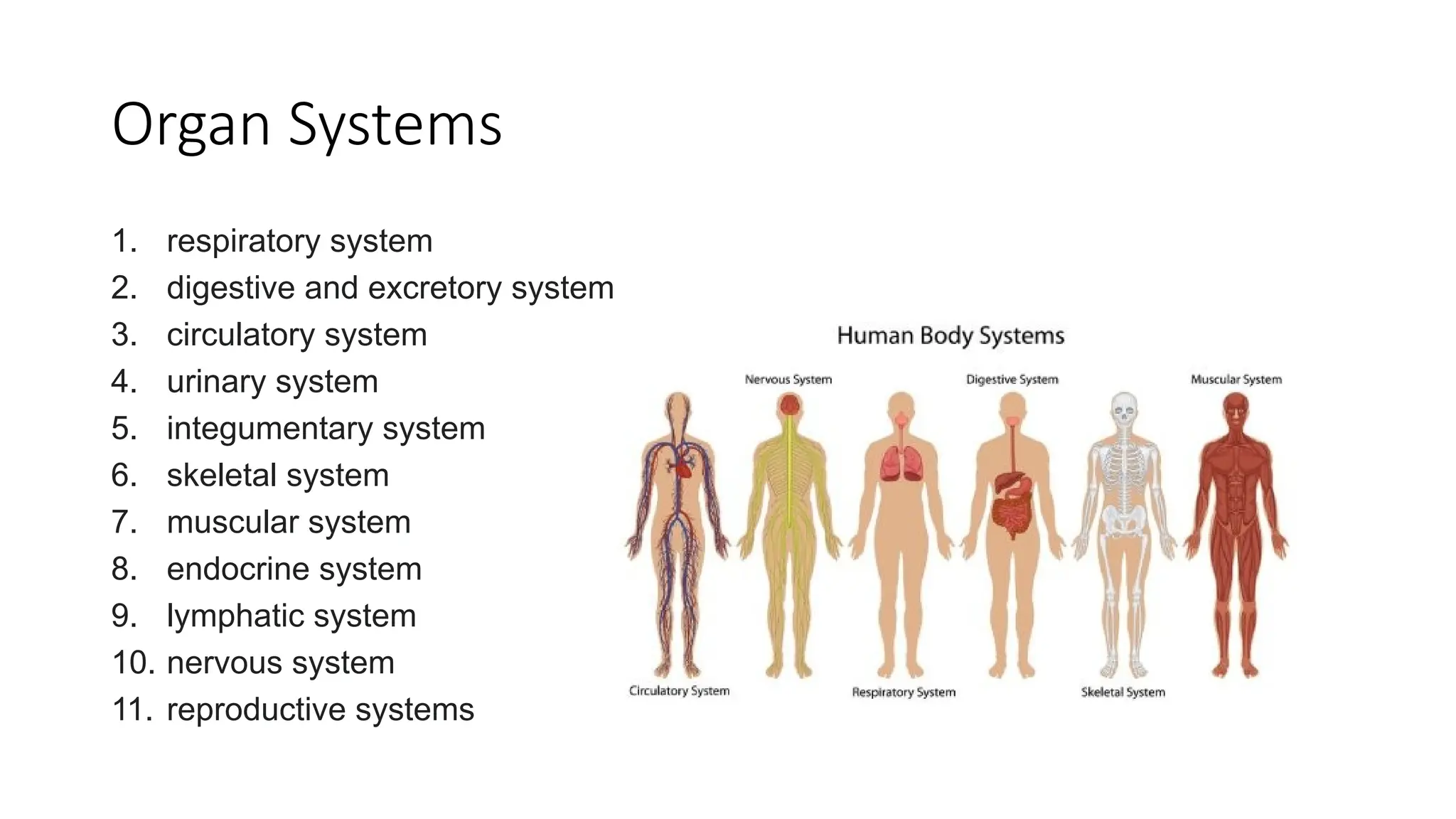
Organ Systems
1. respiratory system
2. digestive and excretory system
3. circulatory system
4. urinary system
5. integumentary system
6. skeletal system
7. muscular system
8. endocrine system
9. lymphatic system
10. nervous system
11. reproductive systems
Organ Systems
Organ system Description Component organs
Respiratory system breathing: exchange of oxygen and carbon dioxide
human nose, human mouth, paranasal sinuses, pharynx, larynx, trachea,
bronchi, lungs and thoracic diaphragm.
Digestive system /
excretory system
digestion: breakdown and absorption of nutrients, excretion of
solid wastes
human teeth, tongue, salivary glands, esophagus, stomach, liver, gallbladder
, pancreas, small intestine, large intestine, rectum and anus
Circulatory system
/cardiovascular/vascular
circulate blood in order to transport nutrients, waste,
hormones, O2, CO2, and aid in maintaining pH and temperature blood, heart, arteries, veins, capillaries
Urinary system /Renal/urinary
tract
maintain fluid and electrolyte balance, purify blood and excrete
liquid waste (urine)
kidneys, ureters, bladder and urethra
Integumentary system exterior protection of body and thermal regulation skin, hair, exocrine glands, fat, and nails
Skeletal system structural support and protection, production of blood cells bones, cartilage, ligaments and tendons.
Muscular system movement of body, production of heat skeletal muscles, smooth muscles and cardiac muscle
Endocrine system communication within the body using hormones made by
endocrine glands
hypothalamus, pituitary, pineal gland, thyroid, parathyroid and adrenal
glands, ovaries, testes
Lymphatic system
return lymph to blood stream, aid immune responses, form
white blood cells
lymph, lymph nodes, lymph vessels, tonsils, spleen, thymus
Nervous system sensing and processing information, controlling body activities
brain, spinal cord, nerves, sensory organs and the following sensory systems
(nervous sub-systems): visual system, Olfactory system, taste (
gustatory system), hearing (auditory system)
Reproductive system sex organs involved in reproduction ovaries, fallopian tubes, uterus, vagina, mammary glands, penis, testes,
vas deferens, seminal vesicles and prostate

Human Organ Systems Grade 5 Science Introduction

  • 1.
    Human Organs andOrgan Systems Grade 5 Science
  • 2.
    Organs • An organis a collection of tissues that perform a particular function (job) in the human body. • The tissue is connected and constructed as a unit to perform its function.
  • 3.
    The 78 Organsof the Human Body 1. Adrenal glands 2. Anus 3. Appendix 4. Bladder (urinary) 5. Bones 6. Bone marrow (spongy part of the bone) 7. Brain 8. Bronchi (tubes in the lungs) 9. Diaphragm (muscle of breathing) 10. Ears 11. Esophagus (food pipe) 12. Eyes 13. Fallopian tubes 14. Gallbladder 15. Genitals 16. Heart 17. Hypothalamus (in the brain) 18. Joints 19. Kidneys 20. Large intestine 21. Larynx (voice box) 22. Liver 23. Lungs 24. Lymph nodes 25. Mammary glands 26. Mesentery (covering of the intestines)
  • 4.
    The 78 Organsof the Human Body 27. Mouth 28. Nasal cavity 29. Nose 30. Ovaries 31. Pancreas 32. Pineal gland 33. Parathyroid glands 34. Pharynx 35. Pituitary gland 36. Prostate 37. Rectum 38. Salivary glands 39. Skeletal muscles 40. Skin 41. Small intestine 42. Spinal cord 43. Spleen 44. Stomach 45. Teeth 46. Thymus gland 47. Thyroid 48. Trachea 49. Tongue 50. Ureters 51. Urethra 52. Uterus
  • 5.
    The 78 Organsof the Human Body 53. Human skeleton 54. Ligaments (connect muscles to bones) 55. Tendons (connect bones to bones) 56. Blood cells 57. Vagina 58. Hair 59. The vestibular system of the ear 60. Placenta 61. Testes 62. Nails 63. Vas deferens 64. Seminal vesicles 65. Bulbourethral glands 66. Penis 67. Scrotum 68. Parathyroid glands 69. Thoracic ducts 70. Arteries 71. Veins 72. Capillaries 73. Lymphatic vessels 74. Tonsils (Waldeyer’s ring of tissues) 75. Nerves 76. Subcutaneous tissue 77. Olfactory epithelium (nose) 78. Cerebellum
  • 6.
    The Most Vital Organs 1.Skin 2. Brain 3. Heart 4. Kidneys 5. Liver 6. Pancreas 7. Stomach 8. Small intestine 9. Large intestine 10. Lungs
  • 7.
    Skin • The skinis the largest organ in the human body. • Its main job is to maintain the body's temperature. • The skin contains sweat glands and oil glands. Oil released by the skin releases helps keep the skin from drying out and the hair from becoming brittle. • The skin also regularly sheds cells to maintain its effectiveness.
  • 8.
    Brain • The brainstores information, allows you to think and learn and controls vital daily functions (such as digestion, heart rate and breathing). • The brain receives impulses from nerves, which are located throughout the body, and responds to pain and other stimulation. • Even though the brain is so important, it is also very delicate. The brain is made of soft tissue and is protected only by the skull, therefore head injuries can be serious.
  • 9.
    Heart • The heartis another vital organ. In an average lifetime, the heart beats more than 2.5 million times. • The heart's job is to pump oxygenated blood throughout the body and receive deoxygenated blood in return.
  • 10.
    Kidneys • The kidneysare located under the rib cage in the lower back. • The kidneys filter things, such as water and salts, out of the blood and produce urine. • The kidneys also produce an enzyme called rennin. This enzyme plays a big role in regulating blood pressure.
  • 11.
    Liver • The liveris in the upper abdomen, slightly to the left. • The main job of the liver is to produce bile, which it sends to the stomach for digestion. • The liver also filters out toxins and regulates blood sugar. • Blood sugar is regulated by the liver, which converts and stores sugar and releases it as needed into the bloodstream. • The liver is also in charge of releasing cholesterol, breaking down fats and producing blood proteins. It is the largest internal organ.
  • 12.
    Pancreas • The pancreasis located behind the stomach. • The job of the pancreas is to produce enzymes necessary for digestion and send them to the stomach. • The pancreas also regulates blood sugar by producing insulin. • The pancreas also creates glucagon that has the opposite effect of insulin and helps to maintain blood sugar levels.
  • 13.
    Stomach • The stomachreceives food from the esophagus and sends it into the small intestine. • The stomach's role in digestion is to break down food and mix it with digestive enzymes.
  • 14.
    Small intestine • Thejob of the small intestine is to digest food. • It does this by using chemicals, such as enzymes. • The small intestine also absorbs nutrients and transfers them to the blood. • The small intestine is five meters long. The food moves from the small intestine to the large intestine with a series of muscle contractions.
  • 15.
    Large intestine • Thelarge intestine is located in the abdomen and is 1.5 meters in length. • The large intestine is involved in digestion. It receives undigested food from the small intestine. • The large intestine absorbs as much water as possible from the food and then expels the waste and any excess fiber.
  • 16.
    Lungs • The lungsare located in the chest and are protected by the rib cage. • The lungs take in oxygen and they expel carbon dioxide. The lungs deliver oxygenated blood to the heart where it is pumped throughout the body and they receive deoxygenated blood from the heart after blood travels throughout the body.
  • 17.
    Organ Systems • All organsof the body work together to form about a dozen organ systems.
  • 18.
    Organ Systems 1. respiratorysystem 2. digestive and excretory system 3. circulatory system 4. urinary system 5. integumentary system 6. skeletal system 7. muscular system 8. endocrine system 9. lymphatic system 10. nervous system 11. reproductive systems
  • 19.
    Organ Systems Organ systemDescription Component organs Respiratory system breathing: exchange of oxygen and carbon dioxide human nose, human mouth, paranasal sinuses, pharynx, larynx, trachea, bronchi, lungs and thoracic diaphragm. Digestive system / excretory system digestion: breakdown and absorption of nutrients, excretion of solid wastes human teeth, tongue, salivary glands, esophagus, stomach, liver, gallbladder , pancreas, small intestine, large intestine, rectum and anus Circulatory system /cardiovascular/vascular circulate blood in order to transport nutrients, waste, hormones, O2, CO2, and aid in maintaining pH and temperature blood, heart, arteries, veins, capillaries Urinary system /Renal/urinary tract maintain fluid and electrolyte balance, purify blood and excrete liquid waste (urine) kidneys, ureters, bladder and urethra Integumentary system exterior protection of body and thermal regulation skin, hair, exocrine glands, fat, and nails Skeletal system structural support and protection, production of blood cells bones, cartilage, ligaments and tendons. Muscular system movement of body, production of heat skeletal muscles, smooth muscles and cardiac muscle Endocrine system communication within the body using hormones made by endocrine glands hypothalamus, pituitary, pineal gland, thyroid, parathyroid and adrenal glands, ovaries, testes Lymphatic system return lymph to blood stream, aid immune responses, form white blood cells lymph, lymph nodes, lymph vessels, tonsils, spleen, thymus Nervous system sensing and processing information, controlling body activities brain, spinal cord, nerves, sensory organs and the following sensory systems (nervous sub-systems): visual system, Olfactory system, taste ( gustatory system), hearing (auditory system) Reproductive system sex organs involved in reproduction ovaries, fallopian tubes, uterus, vagina, mammary glands, penis, testes, vas deferens, seminal vesicles and prostate