


Lifestyle Diseases
Purbangshu Chatterjee
National Training Manager
Proveda Herbals
What is Lifestyle Disease
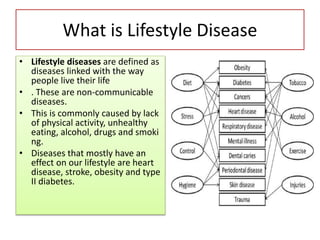
• Lifestyle diseases are defined as
diseases linked with the way
people live their life
• . These are non-communicable
diseases.
• This is commonly caused by lack
of physical activity, unhealthy
eating, alcohol, drugs and smoki
ng.
• Diseases that mostly have an
effect on our lifestyle are heart
disease, stroke, obesity and type
II diabetes.
Causes of Lifestyle Diseases
• Dehydration - Dehydration of the muscles and tendons is a primary cause
of muscle fatigue, strain, tendonitis, and other disorders of the
musculoskeletal system.
• Malnutrition - The lack of living foods in our diet along with the
overconsumption of dead foods causes chronic disease.
• Inflammation – Inflammation is a primary cause of most lifestyle-related
disorders, including heart disease and musculoskeletal disorders.
• Fatigue - Lack of sleep is associated with numerous, serious medical
illnesses including: high blood pressure, heart disease, stroke, obesity, and
mental impairment.
• Poor physical fitness - It’s widely recognized that there’s a direct
correlation between poor levels of physical fitness and increased risk of
chronic diseases.
• Poor health habits - Smoking, alcohol, drug use/abuse, sugar, fast food,
soft drinks, chocolate, artificial sweeteners, worry, and stress have a
negative impact on your health
Common Life Style Diseases
• Alzheimer's disease,
• Arthritis,
• Atherosclerosis,
• Asthma,
• Cancer,
• Chronic liver disease or
cirrhosis,
• chronic obstructive
pulmonary disease,
(COPD)
• type 2 diabetes,
• heart disease &
hypertension,
• metabolic syndrome,
• chronic kidney failure,
• osteoporosis,
• PCOD, stroke,
• depression,
• Obesity
• Vascular dementia
diseases that appear to increase in frequency as countries become
more industrialized and people live longer can include
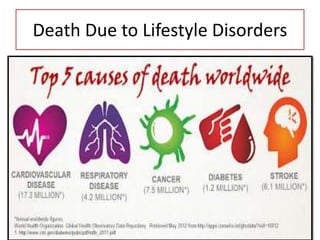
Death Due to Lifestyle Disorders
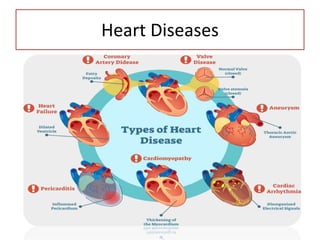
Heart Diseases
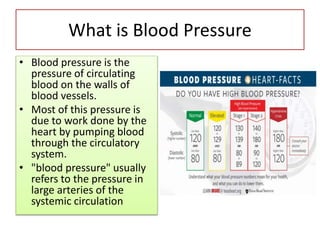
What is Blood Pressure
• Blood pressure is the
pressure of circulating
blood on the walls of
blood vessels.
• Most of this pressure is
due to work done by the
heart by pumping blood
through the circulatory
system.
• "blood pressure" usually
refers to the pressure in
large arteries of the
systemic circulation
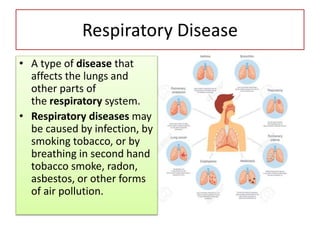
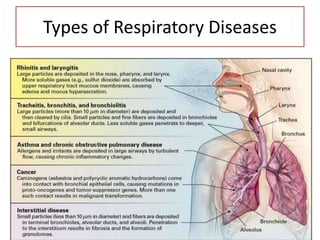
Respiratory Disease
• A type of disease that
affects the lungs and
other parts of
the respiratory system.
• Respiratory diseases may
be caused by infection, by
smoking tobacco, or by
breathing in second hand
tobacco smoke, radon,
asbestos, or other forms
of air pollution.
Types of Respiratory Diseases
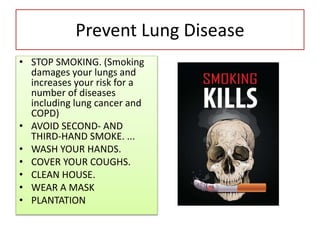
Prevent Lung Disease
• STOP SMOKING. (Smoking
damages your lungs and
increases your risk for a
number of diseases
including lung cancer and
COPD)
• AVOID SECOND- AND
THIRD-HAND SMOKE. ...
• WASH YOUR HANDS.
• COVER YOUR COUGHS.
• CLEAN HOUSE.
• WEAR A MASK
• PLANTATION
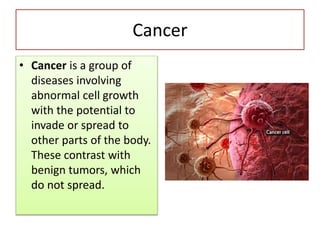
Cancer
• Cancer is a group of
diseases involving
abnormal cell growth
with the potential to
invade or spread to
other parts of the body.
These contrast with
benign tumors, which
do not spread.
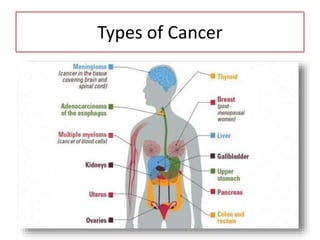
Types of Cancer
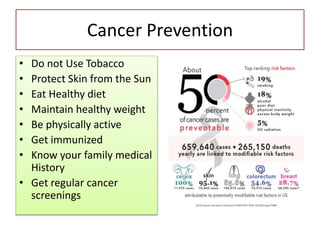
Cancer Prevention
• Do not Use Tobacco
• Protect Skin from the Sun
• Eat Healthy diet
• Maintain healthy weight
• Be physically active
• Get immunized
• Know your family medical
History
• Get regular cancer
screenings
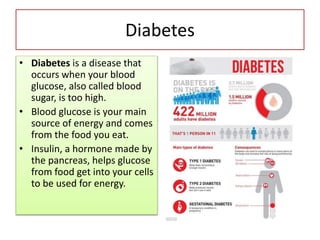
Diabetes
• Diabetes is a disease that
occurs when your blood
glucose, also called blood
sugar, is too high.
• Blood glucose is your main
source of energy and comes
from the food you eat.
• Insulin, a hormone made by
the pancreas, helps glucose
from food get into your cells
to be used for energy.
Types Of Diabetes
Type 1
• A chronic condition in which
the pancreas produces little or
no insulin.
• It typically appears in
adolescence.
• Symptoms include increased
thirst, frequent urination,
hunger, fatigue and blurred
vision.
• Treatment aims at maintaining
normal blood sugar levels
through regular monitoring,
insulin therapy, diet and
exercise
Type 2
• A chronic condition that
affects the way the body
processes blood sugar
(glucose).
• With type 2 diabetes, the body
either doesn't produce enough
insulin, or it resists insulin.
• Symptoms include increased
thirst, frequent urination,
hunger, fatigue and blurred
vision. In some cases, there
may be no symptoms.
• Treatments include diet,
exercise, medication and
insulin therapy.
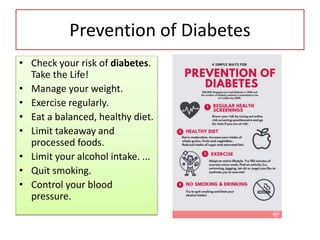
Prevention of Diabetes
• Check your risk of diabetes.
Take the Life!
• Manage your weight.
• Exercise regularly.
• Eat a balanced, healthy diet.
• Limit takeaway and
processed foods.
• Limit your alcohol intake. ...
• Quit smoking.
• Control your blood
pressure.
Stroke
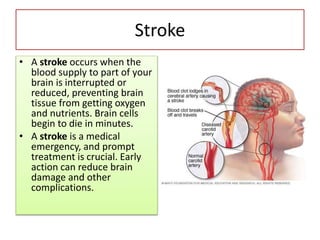
• A stroke occurs when the
blood supply to part of your
brain is interrupted or
reduced, preventing brain
tissue from getting oxygen
and nutrients. Brain cells
begin to die in minutes.
• A stroke is a medical
emergency, and prompt
treatment is crucial. Early
action can reduce brain
damage and other
complications.
The three main types of stroke
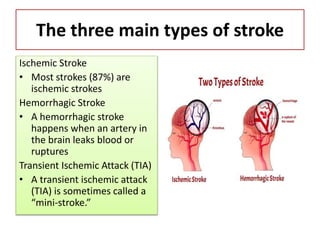
Ischemic Stroke
• Most strokes (87%) are
ischemic strokes
Hemorrhagic Stroke
• A hemorrhagic stroke
happens when an artery in
the brain leaks blood or
ruptures
Transient Ischemic Attack (TIA)
• A transient ischemic attack
(TIA) is sometimes called a
“mini-stroke.”
Prevention of Stroke
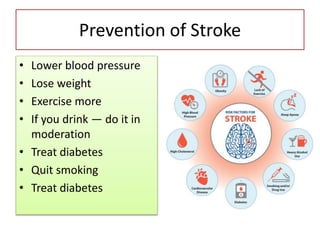
• Lower blood pressure
• Lose weight
• Exercise more
• If you drink — do it in
moderation
• Treat diabetes
• Quit smoking
• Treat diabetes
Definition : Few lifestyle diseases
• Obesity : check your BMI. If it is higher than 25, then you are in the
obese category. Unhealthy eating habits, stressful lifestyle, reduced
physical activity translates to obesity
• Arteriosclerosis: Arteriosclerosis occurs when the arterial blood
vessel walls thicken and lose elasticity.
• Chronic obstructive pulmonary disease: COPD is caused by the
permanent obstruction of the airways.
• Cirrhosis: Cirrhosis can be defined as a group of liver disorders.
Liver can be severely affected by heavy alcohol consumption and
chronic hepatitis.
• Alzheimer's disease is a progressive disorder that causes brain cells
to waste away (degenerate) and die. the most common cause of
dementia — a continuous decline in thinking
Role of Supplements to Prevent
Lifestyle Disorder
• Natural products have been known for their
therapeutic values for centuries.
• In the modern era, these substances have
been used as an immunity booster;
antidiabetic, anticancer, antimicrobial, and
gastroprotective agents; and so on.
• Therefore, these herbs could be better options
to be formulated as nutraceuticals.
Lifestyle Disorder / Diseases

Lifestyle Disorder / Diseases

  • 1.
    Lifestyle Diseases Purbangshu Chatterjee NationalTraining Manager Proveda Herbals
  • 2.
    What is LifestyleDisease • Lifestyle diseases are defined as diseases linked with the way people live their life • . These are non-communicable diseases. • This is commonly caused by lack of physical activity, unhealthy eating, alcohol, drugs and smoki ng. • Diseases that mostly have an effect on our lifestyle are heart disease, stroke, obesity and type II diabetes.
  • 3.
    Causes of LifestyleDiseases • Dehydration - Dehydration of the muscles and tendons is a primary cause of muscle fatigue, strain, tendonitis, and other disorders of the musculoskeletal system. • Malnutrition - The lack of living foods in our diet along with the overconsumption of dead foods causes chronic disease. • Inflammation – Inflammation is a primary cause of most lifestyle-related disorders, including heart disease and musculoskeletal disorders. • Fatigue - Lack of sleep is associated with numerous, serious medical illnesses including: high blood pressure, heart disease, stroke, obesity, and mental impairment. • Poor physical fitness - It’s widely recognized that there’s a direct correlation between poor levels of physical fitness and increased risk of chronic diseases. • Poor health habits - Smoking, alcohol, drug use/abuse, sugar, fast food, soft drinks, chocolate, artificial sweeteners, worry, and stress have a negative impact on your health
  • 4.
    Common Life StyleDiseases • Alzheimer's disease, • Arthritis, • Atherosclerosis, • Asthma, • Cancer, • Chronic liver disease or cirrhosis, • chronic obstructive pulmonary disease, (COPD) • type 2 diabetes, • heart disease & hypertension, • metabolic syndrome, • chronic kidney failure, • osteoporosis, • PCOD, stroke, • depression, • Obesity • Vascular dementia diseases that appear to increase in frequency as countries become more industrialized and people live longer can include
  • 5.
    Death Due toLifestyle Disorders
  • 6.
  • 7.
    What is BloodPressure • Blood pressure is the pressure of circulating blood on the walls of blood vessels. • Most of this pressure is due to work done by the heart by pumping blood through the circulatory system. • "blood pressure" usually refers to the pressure in large arteries of the systemic circulation
  • 9.
    Respiratory Disease • Atype of disease that affects the lungs and other parts of the respiratory system. • Respiratory diseases may be caused by infection, by smoking tobacco, or by breathing in second hand tobacco smoke, radon, asbestos, or other forms of air pollution.
  • 10.
  • 11.
    Prevent Lung Disease •STOP SMOKING. (Smoking damages your lungs and increases your risk for a number of diseases including lung cancer and COPD) • AVOID SECOND- AND THIRD-HAND SMOKE. ... • WASH YOUR HANDS. • COVER YOUR COUGHS. • CLEAN HOUSE. • WEAR A MASK • PLANTATION
  • 12.
    Cancer • Cancer isa group of diseases involving abnormal cell growth with the potential to invade or spread to other parts of the body. These contrast with benign tumors, which do not spread.
  • 13.
  • 14.
    Cancer Prevention • Donot Use Tobacco • Protect Skin from the Sun • Eat Healthy diet • Maintain healthy weight • Be physically active • Get immunized • Know your family medical History • Get regular cancer screenings
  • 15.
    Diabetes • Diabetes isa disease that occurs when your blood glucose, also called blood sugar, is too high. • Blood glucose is your main source of energy and comes from the food you eat. • Insulin, a hormone made by the pancreas, helps glucose from food get into your cells to be used for energy.
  • 16.
    Types Of Diabetes Type1 • A chronic condition in which the pancreas produces little or no insulin. • It typically appears in adolescence. • Symptoms include increased thirst, frequent urination, hunger, fatigue and blurred vision. • Treatment aims at maintaining normal blood sugar levels through regular monitoring, insulin therapy, diet and exercise Type 2 • A chronic condition that affects the way the body processes blood sugar (glucose). • With type 2 diabetes, the body either doesn't produce enough insulin, or it resists insulin. • Symptoms include increased thirst, frequent urination, hunger, fatigue and blurred vision. In some cases, there may be no symptoms. • Treatments include diet, exercise, medication and insulin therapy.
  • 17.
    Prevention of Diabetes •Check your risk of diabetes. Take the Life! • Manage your weight. • Exercise regularly. • Eat a balanced, healthy diet. • Limit takeaway and processed foods. • Limit your alcohol intake. ... • Quit smoking. • Control your blood pressure.
  • 18.
    Stroke • A strokeoccurs when the blood supply to part of your brain is interrupted or reduced, preventing brain tissue from getting oxygen and nutrients. Brain cells begin to die in minutes. • A stroke is a medical emergency, and prompt treatment is crucial. Early action can reduce brain damage and other complications.
  • 19.
    The three maintypes of stroke Ischemic Stroke • Most strokes (87%) are ischemic strokes Hemorrhagic Stroke • A hemorrhagic stroke happens when an artery in the brain leaks blood or ruptures Transient Ischemic Attack (TIA) • A transient ischemic attack (TIA) is sometimes called a “mini-stroke.”
  • 20.
    Prevention of Stroke •Lower blood pressure • Lose weight • Exercise more • If you drink — do it in moderation • Treat diabetes • Quit smoking • Treat diabetes
  • 21.
    Definition : Fewlifestyle diseases • Obesity : check your BMI. If it is higher than 25, then you are in the obese category. Unhealthy eating habits, stressful lifestyle, reduced physical activity translates to obesity • Arteriosclerosis: Arteriosclerosis occurs when the arterial blood vessel walls thicken and lose elasticity. • Chronic obstructive pulmonary disease: COPD is caused by the permanent obstruction of the airways. • Cirrhosis: Cirrhosis can be defined as a group of liver disorders. Liver can be severely affected by heavy alcohol consumption and chronic hepatitis. • Alzheimer's disease is a progressive disorder that causes brain cells to waste away (degenerate) and die. the most common cause of dementia — a continuous decline in thinking
  • 22.
    Role of Supplementsto Prevent Lifestyle Disorder • Natural products have been known for their therapeutic values for centuries. • In the modern era, these substances have been used as an immunity booster; antidiabetic, anticancer, antimicrobial, and gastroprotective agents; and so on. • Therefore, these herbs could be better options to be formulated as nutraceuticals.