Hazard, Vulnerability, Capacity and
Risk analysis: Tools and Techniques
Planning Aspects
 Hazard Analysis
 Vulnerability Analysis

 Resource Analysis
 Risk Analysis

Community-based Disaster Risk
Management

2
Aim of the Tools
 To assess the hazard, vulnerability and resources of the
community
 Use tools in a way that the community can participate in
an effective manner
 Ensure that the community perspective prevails in the risk
reduction process from assessment to risk reduction
planning.

3
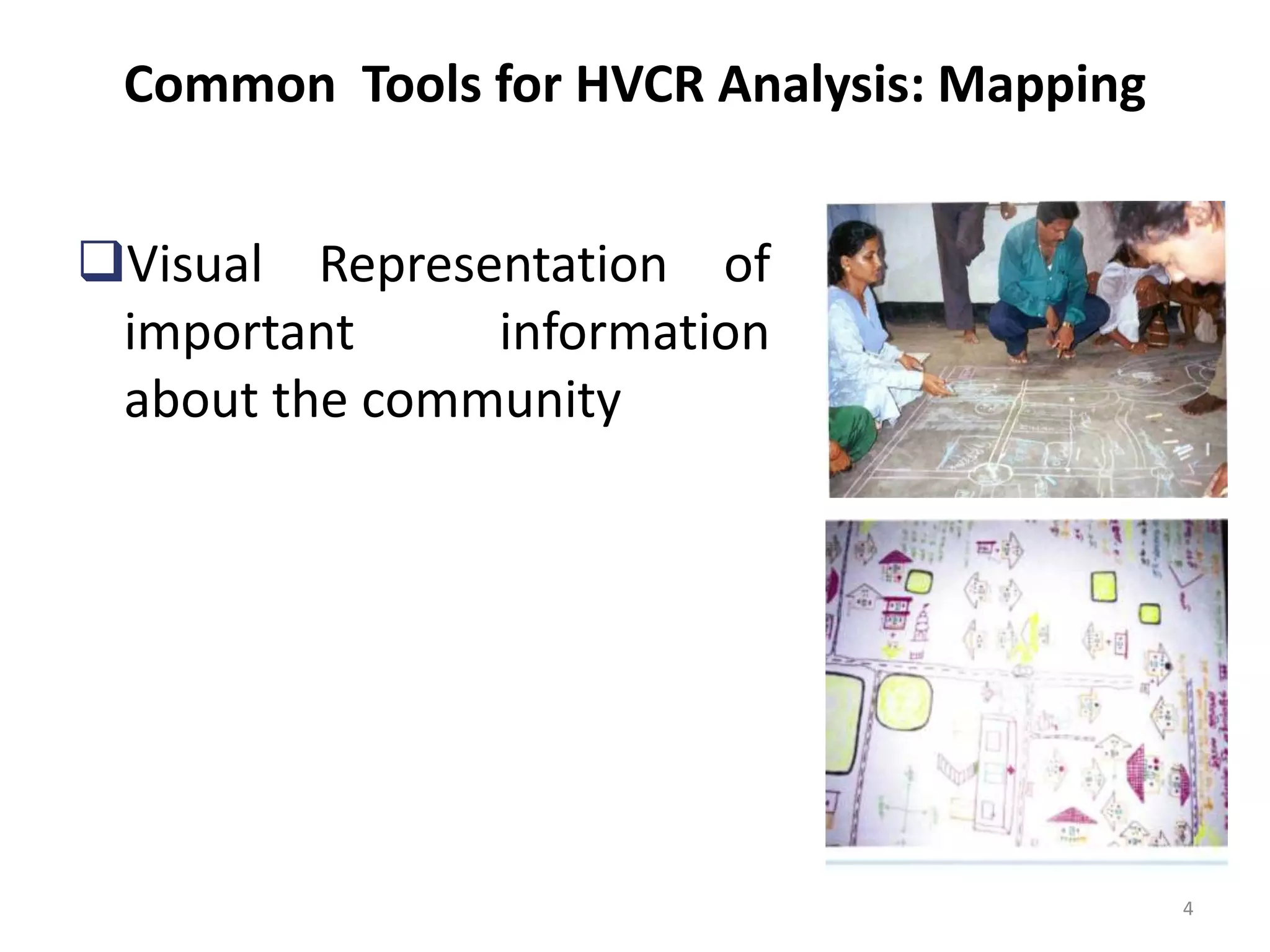
Common Tools for HVCR Analysis: Mapping
Visual Representation of
important
information
about the community

4
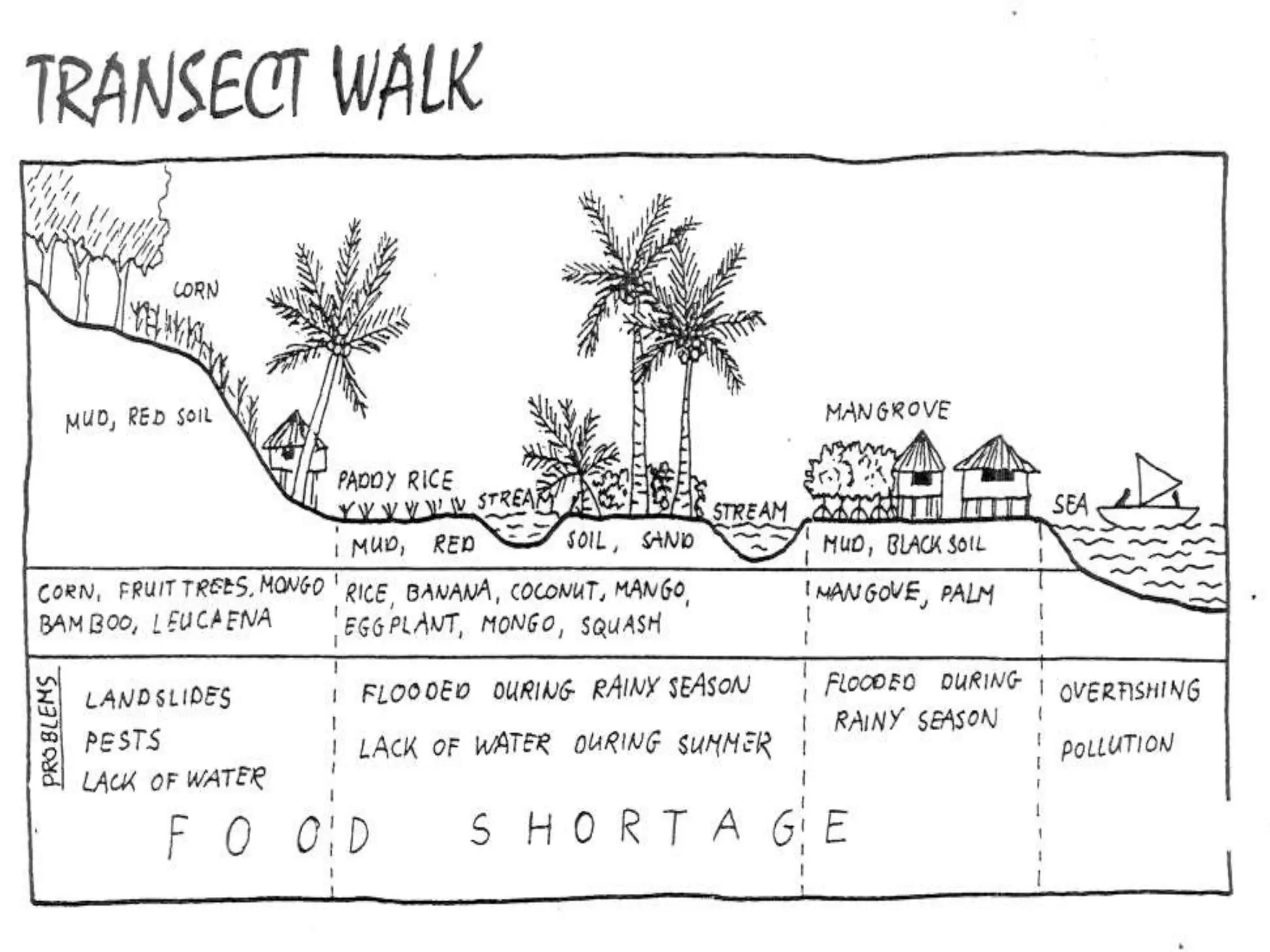
Transect Walk
• Walking systematically in the community through the
area and discussing on various aspects of that area.
• Select a transect line (more than one )
• Team with 6-10 community members
• Systematic Walk with key informants through the
community to explore spatial differences ,land use
zones by observing, asking ,listening, informal
interviews and producing a transect diagram
• Identify danger zones, vulnerable areas , evacuation
sites, local resources used during emergency, human
activities contributing to vulnerability etc
Common Techniques for HVCR Analysis
Some other tools which can be used in HVCR analysis are:
 Focus Group Discussions
 Observation
 Interviews
 Questionnaires

 Secondary Data

7
Hazard
Phenomena that pose a threat to
people, structure, or economic assets
and which may result in a disaster.
It may be natural or human made…
Tools for Hazard Analysis
• Hazard Mapping
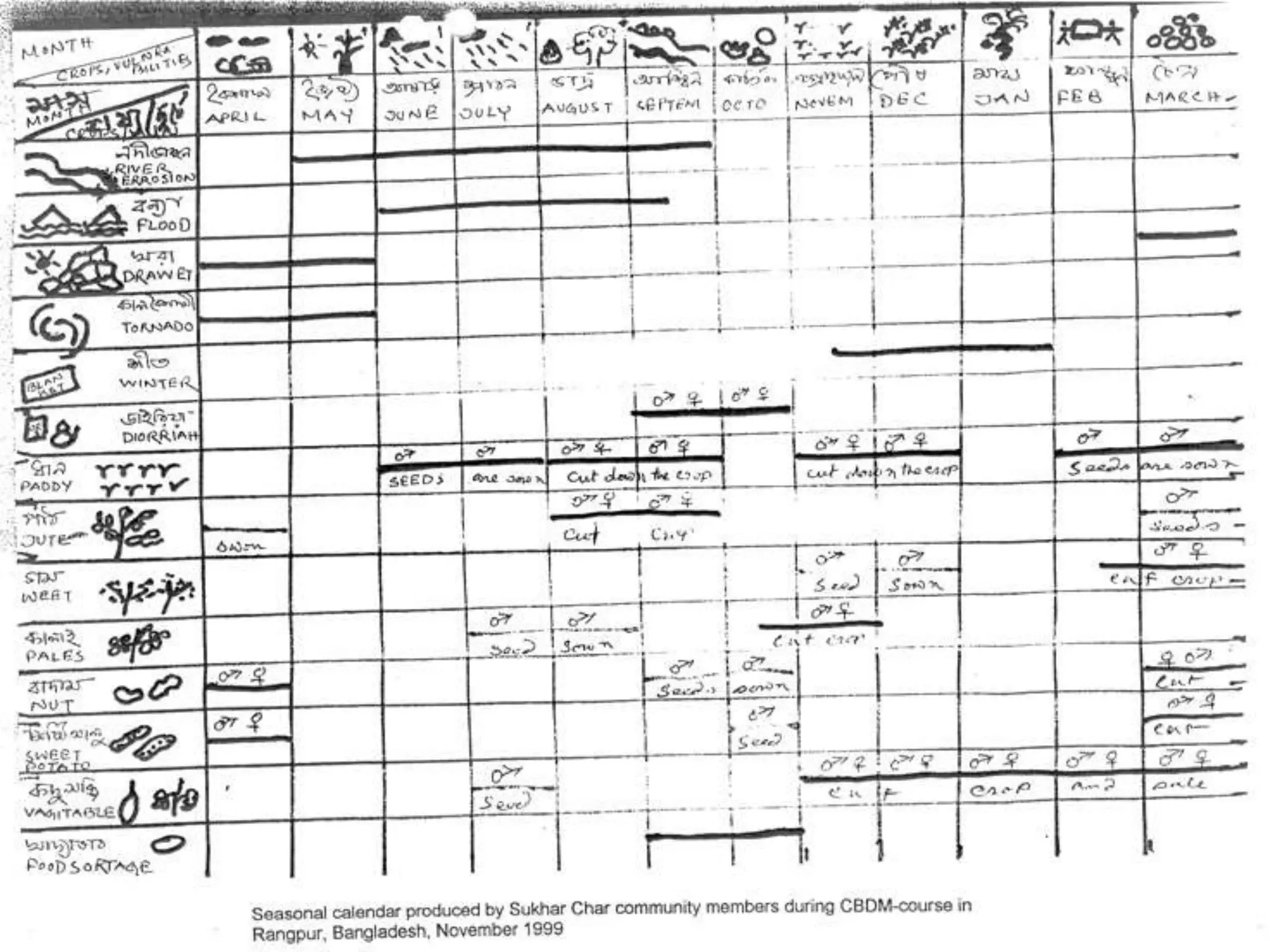
• Historical Profile or Timeline
• Seasonal Calendar
• Hazard Matrix
Vulnerability
The extent to which a community,
structure, service, or geographic area
is likely to be damaged or disrupted by
the impact of particular hazard, on
account of their nature, construction
and proximity to hazardous terrain or a
disaster prone area.
Tools for Vulnerability Assessment
•
•
•
•

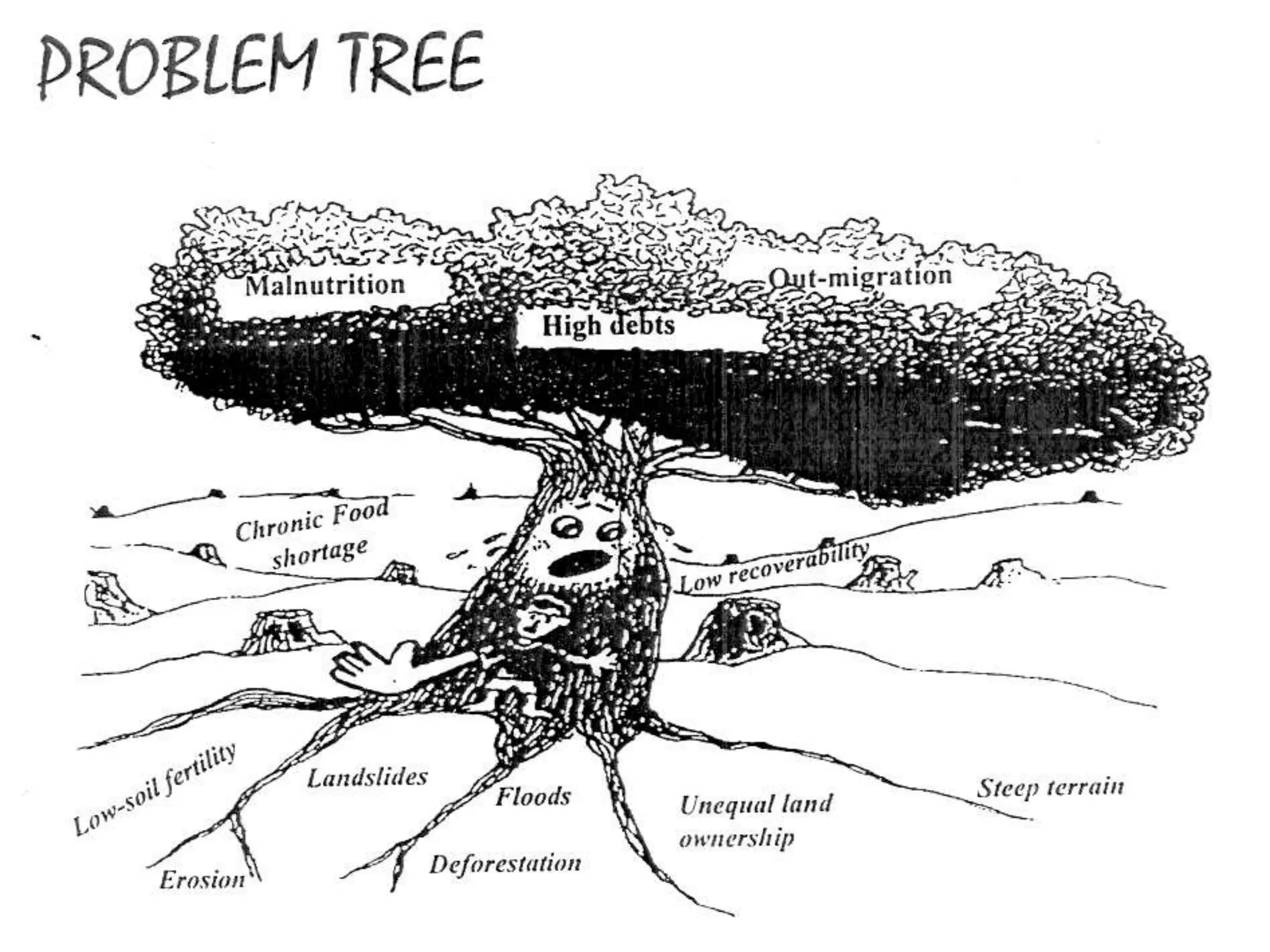
Transect Walk
Problem Tree
Livelihood Analysis
Vulnerability Assessment
Livelihood Analysis
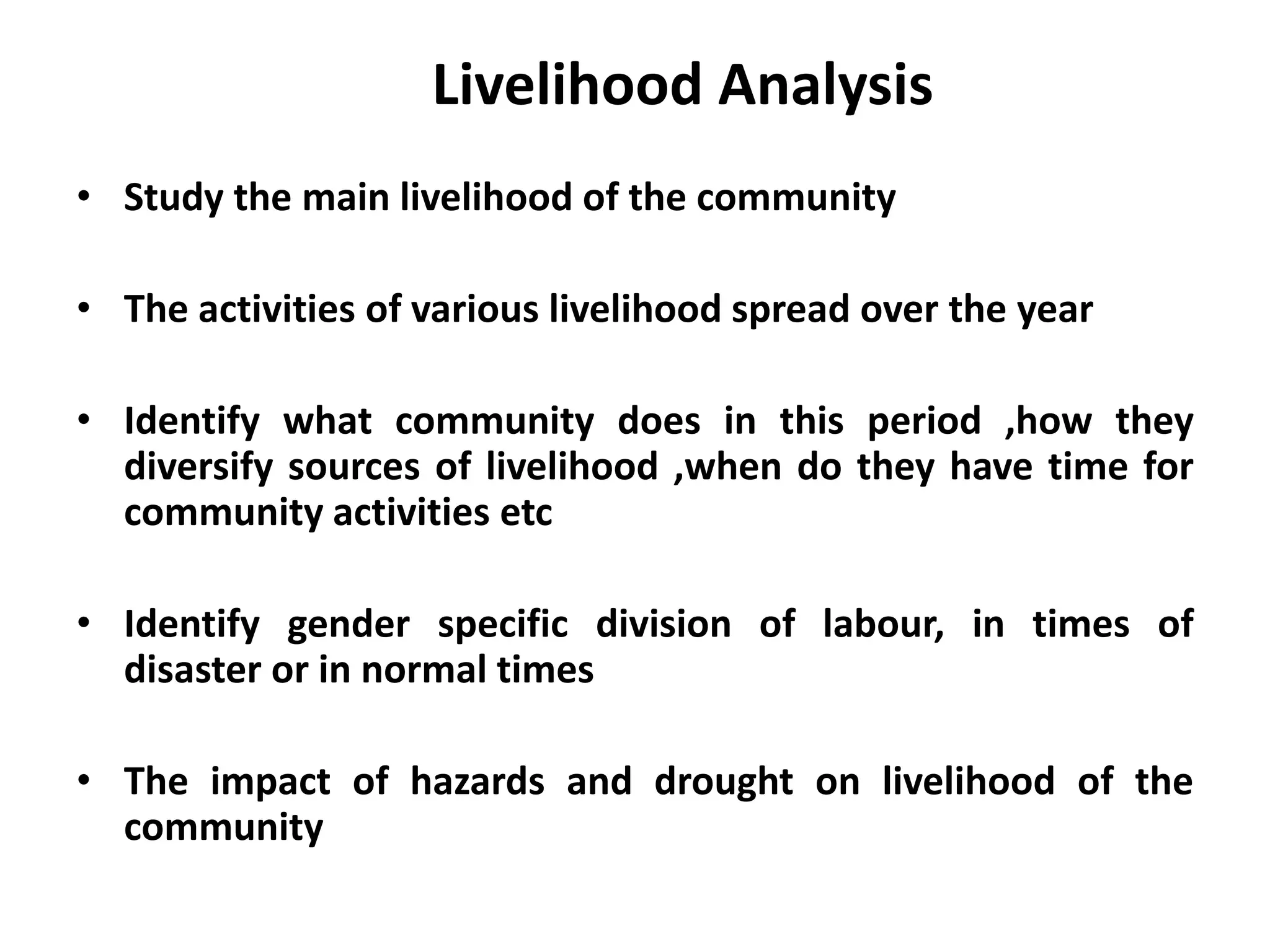
• Study the main livelihood of the community

• The activities of various livelihood spread over the year
• Identify what community does in this period ,how they
diversify sources of livelihood ,when do they have time for
community activities etc
• Identify gender specific division of labour, in times of
disaster or in normal times
• The impact of hazards and drought on livelihood of the
community
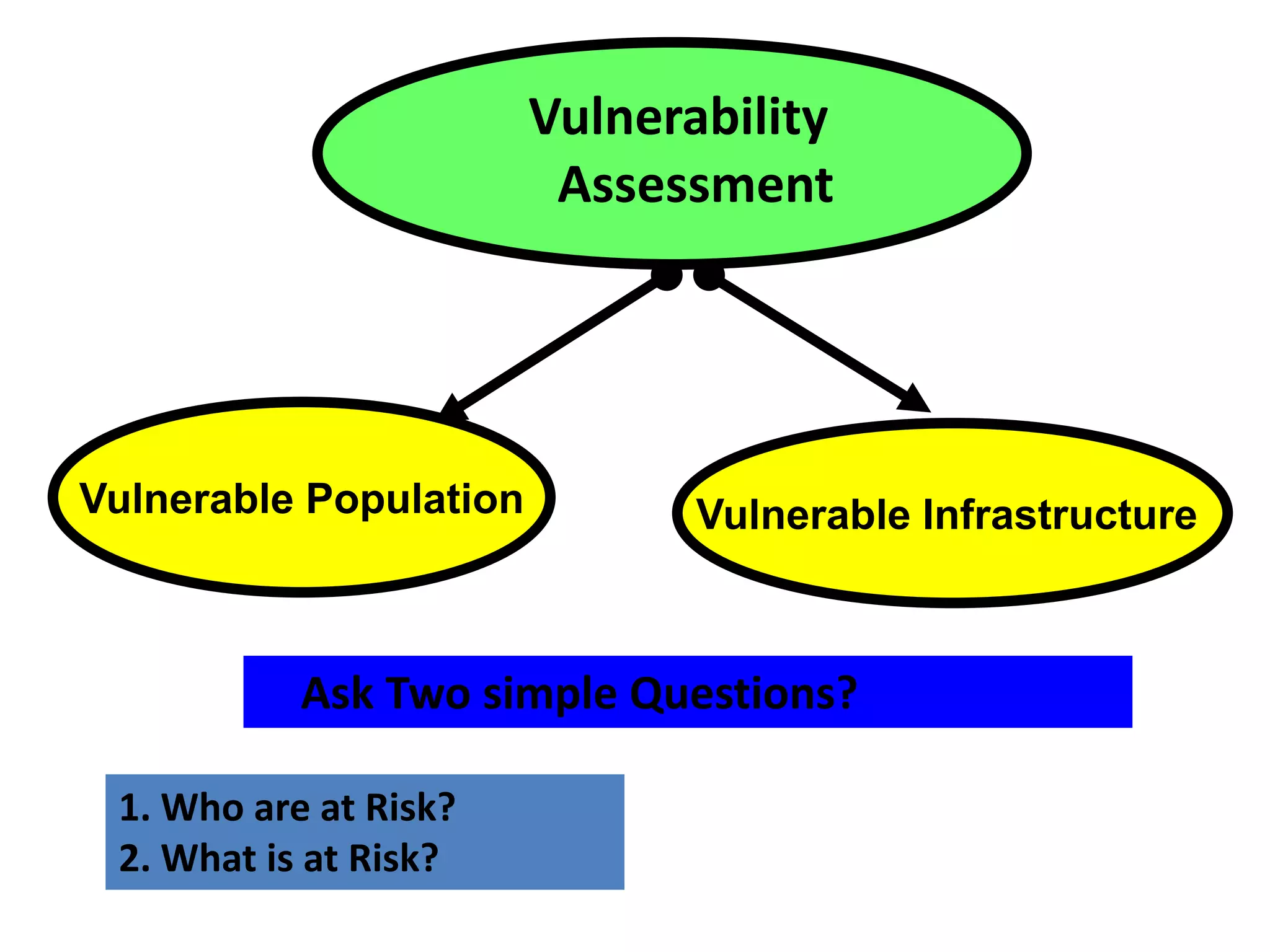
Vulnerability
Assessment

Vulnerable Population

Vulnerable Infrastructure

Ask Two simple Questions?
1. Who are at Risk?
2. What is at Risk?
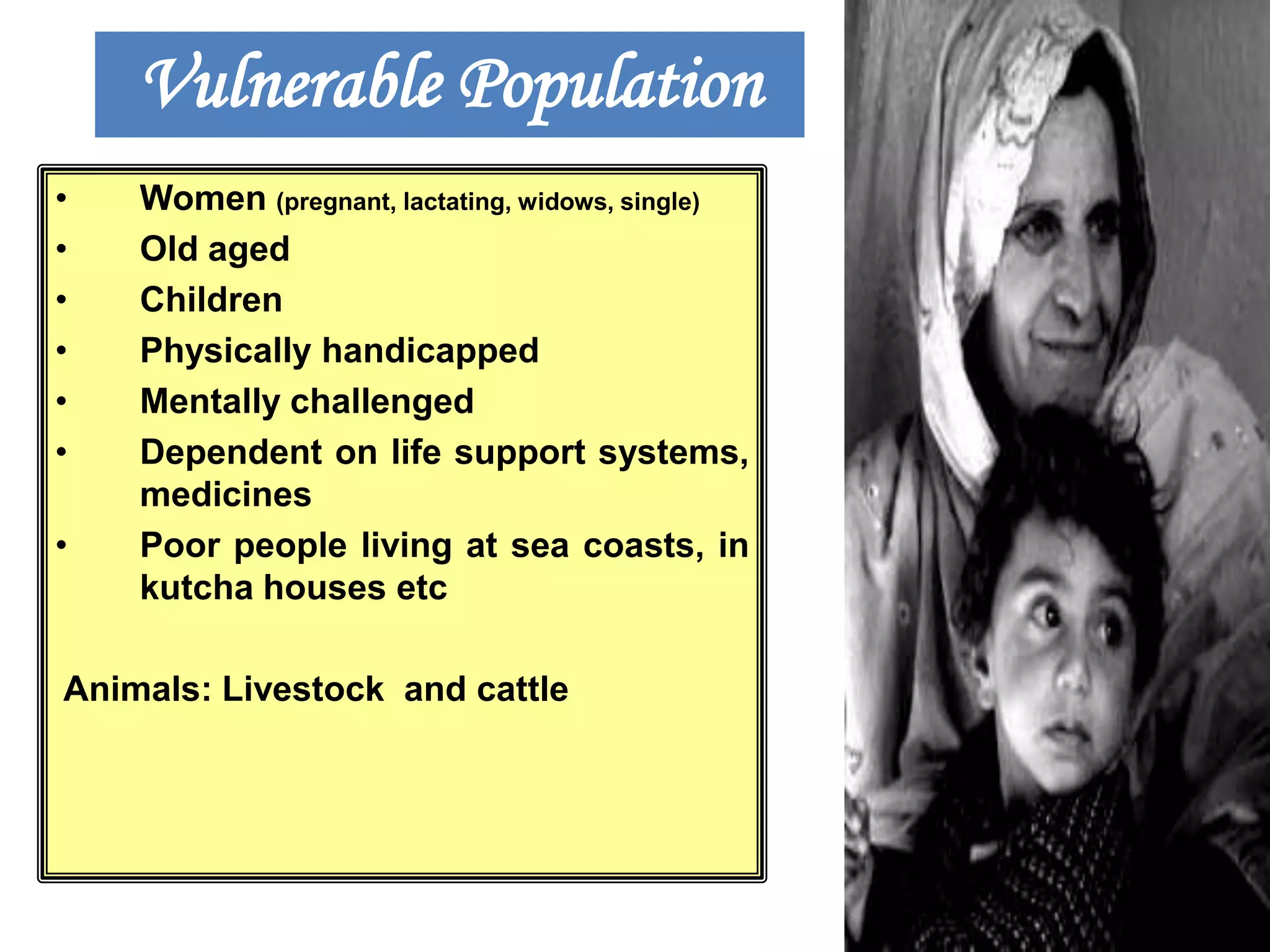
Vulnerable Population
•
•
•
•
•
•

•

Women (pregnant, lactating, widows, single)
Old aged
Children
Physically handicapped
Mentally challenged
Dependent on life support systems,
medicines
Poor people living at sea coasts, in
kutcha houses etc

Animals: Livestock and cattle
Vulnerable Infrastructure
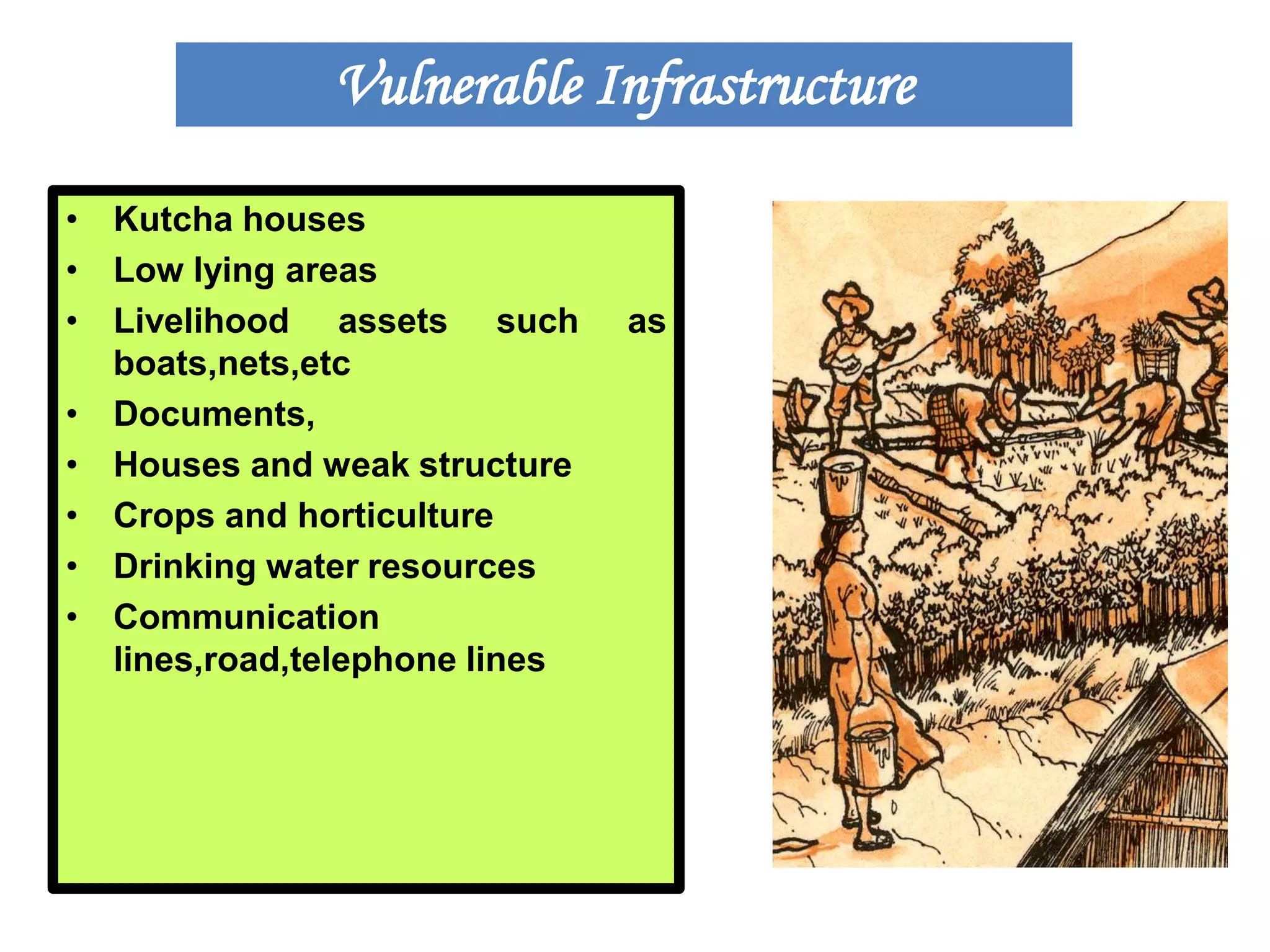
• Kutcha houses
• Low lying areas
• Livelihood assets such
boats,nets,etc
• Documents,
• Houses and weak structure
• Crops and horticulture
• Drinking water resources
• Communication
lines,road,telephone lines

as
Capacity/Resources
Capacity refers to the resources and
strengths which exist in households
and communities, and which help them
to cope with, withstand, prepare for,
prevent, mitigate, or quickly recover
form a disaster.

Helps in reducing vulnerability.
Tools for Resource Assessment
• Chapatti Diagrams
• Social and Institutional Analysis
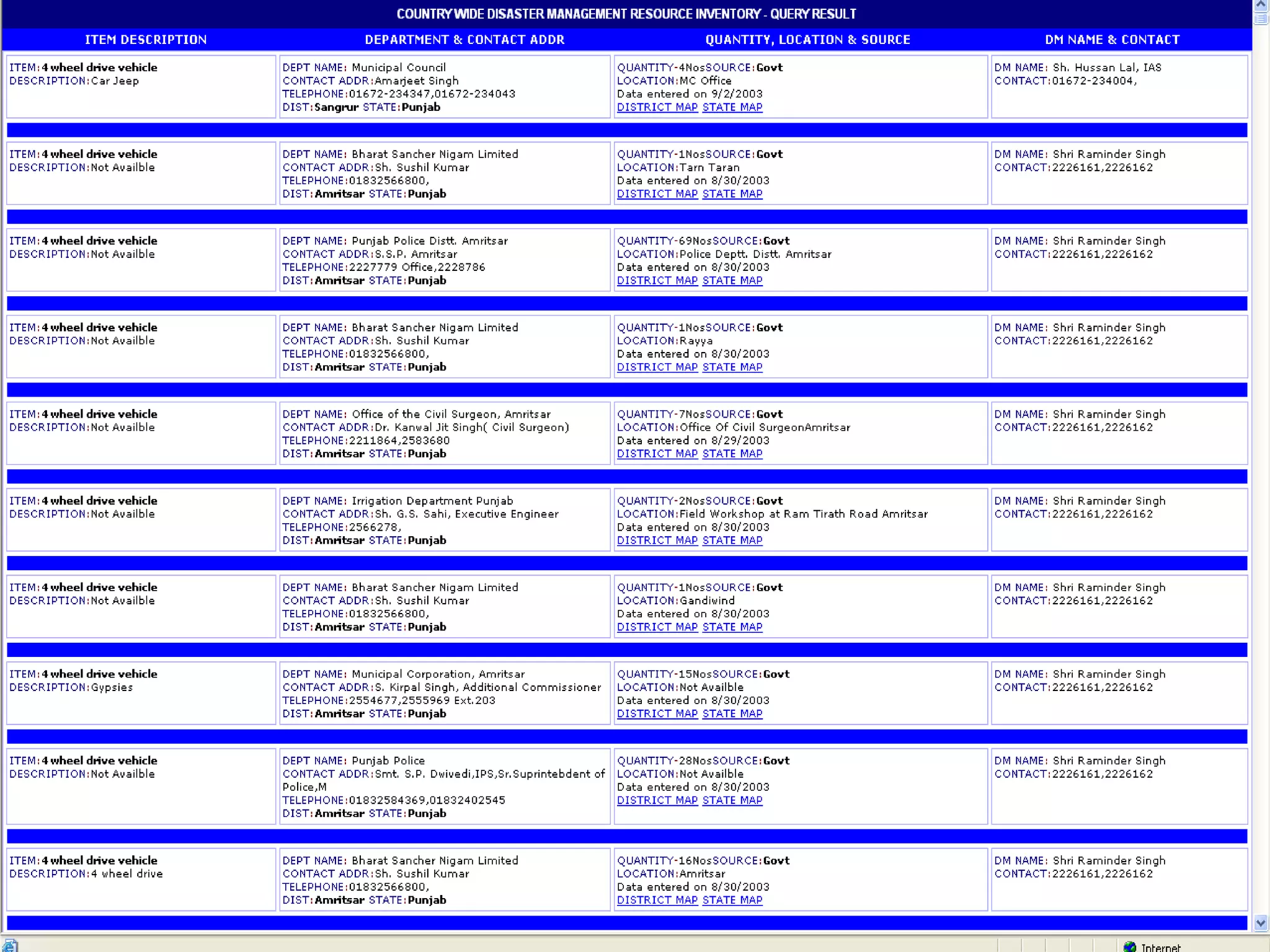
• India Disaster Resource Network (IDRN)
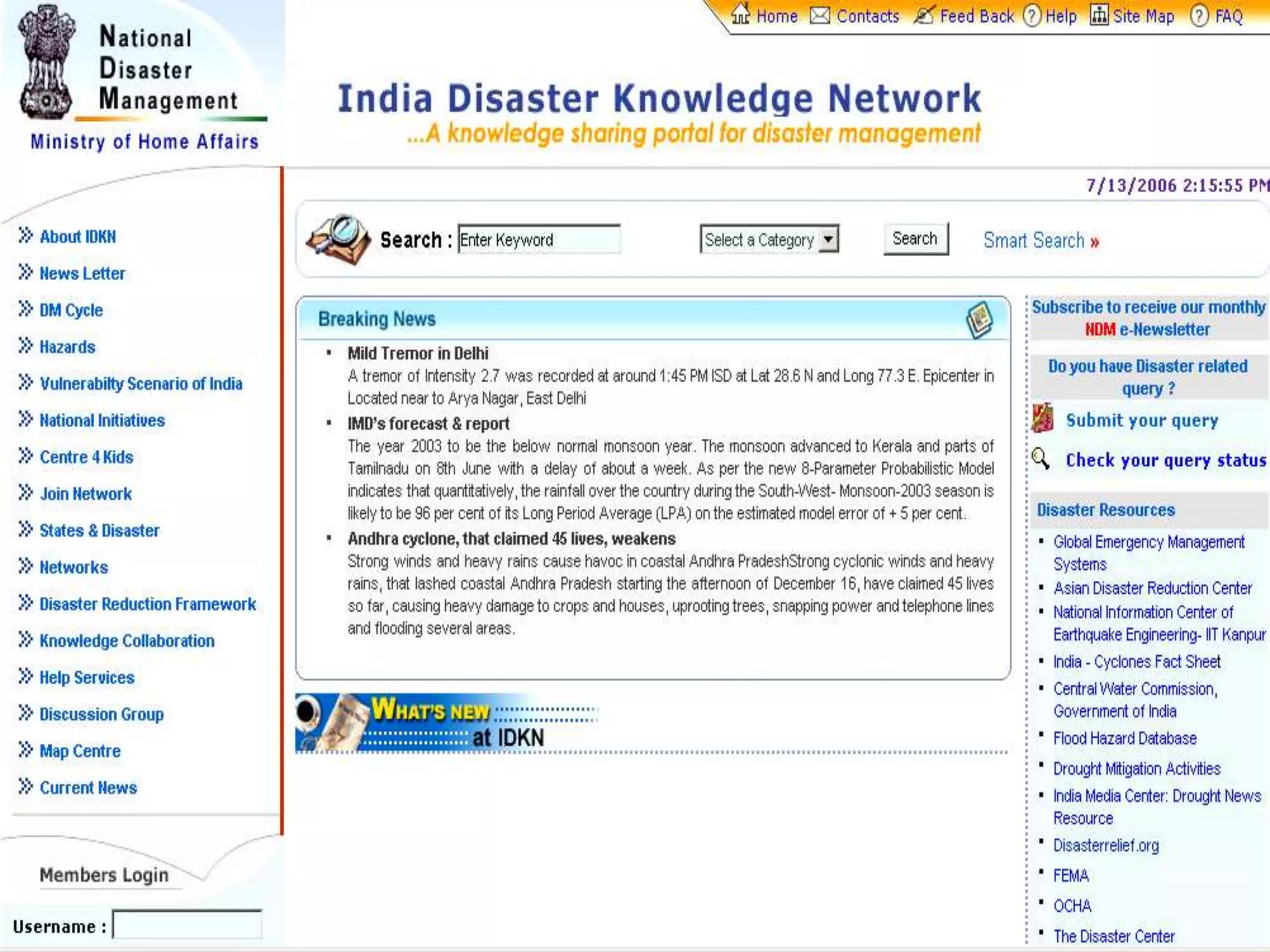
• India Disaster Knowledge Network (IDKN)
Chapatti Diagrams
Chapattis are used :
• To carry out institutional analysis that exists in
a community
• Bring out the differences in power relations
that exist.
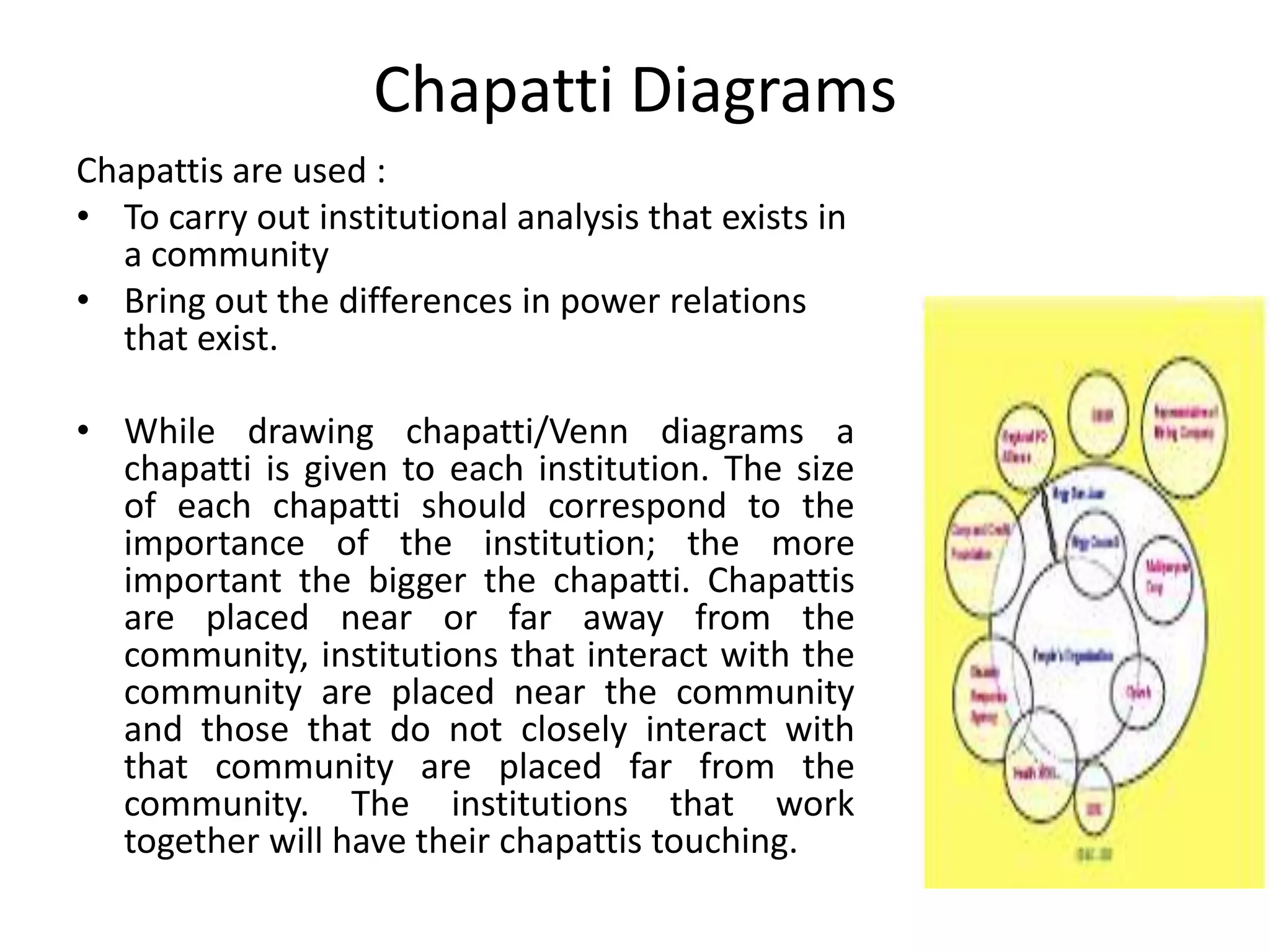
• While drawing chapatti/Venn diagrams a
chapatti is given to each institution. The size
of each chapatti should correspond to the
importance of the institution; the more
important the bigger the chapatti. Chapattis
are placed near or far away from the
community, institutions that interact with the
community are placed near the community
and those that do not closely interact with
that community are placed far from the
community. The institutions that work
together will have their chapattis touching.
Social and Institutional Analysis
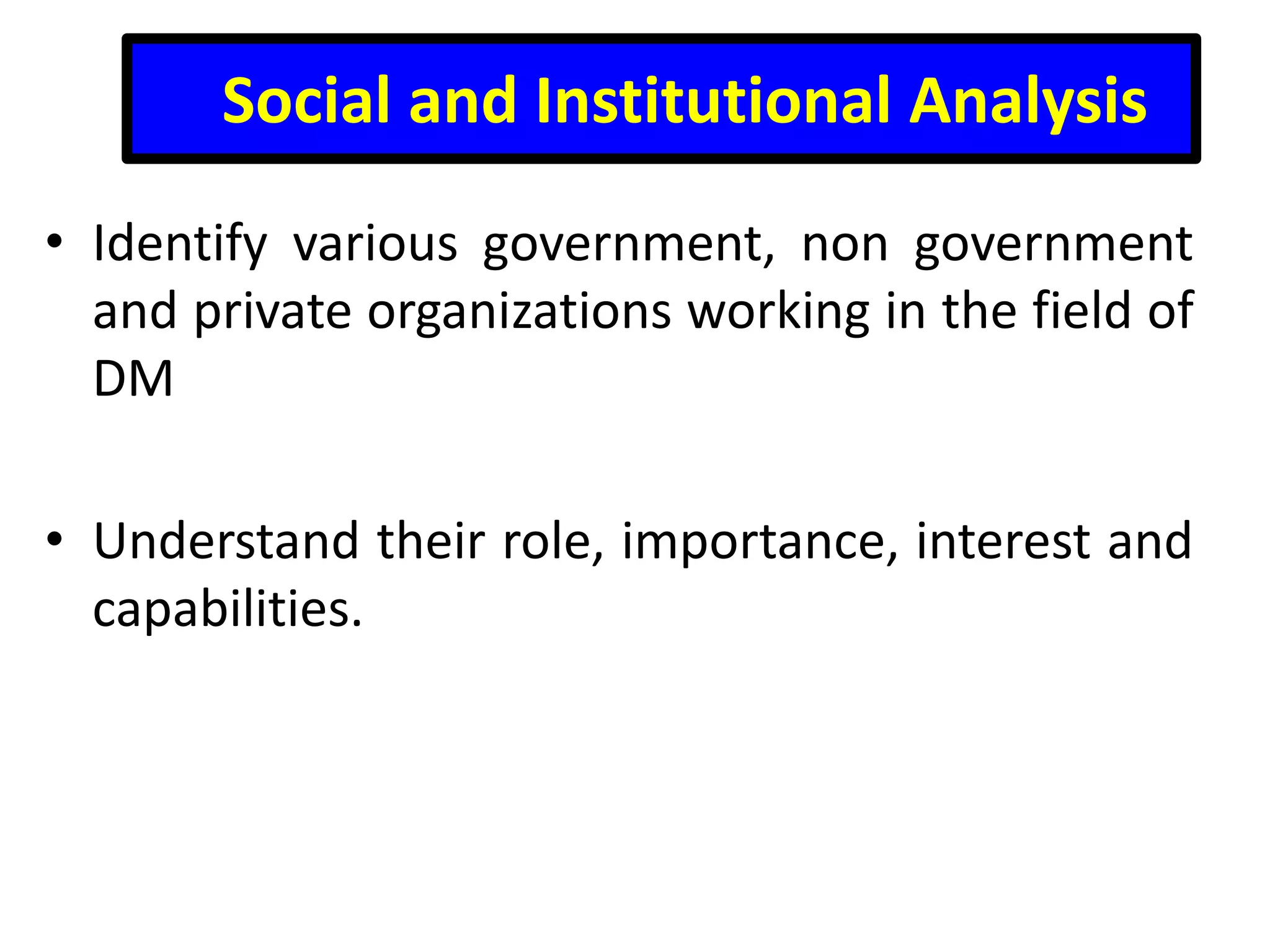
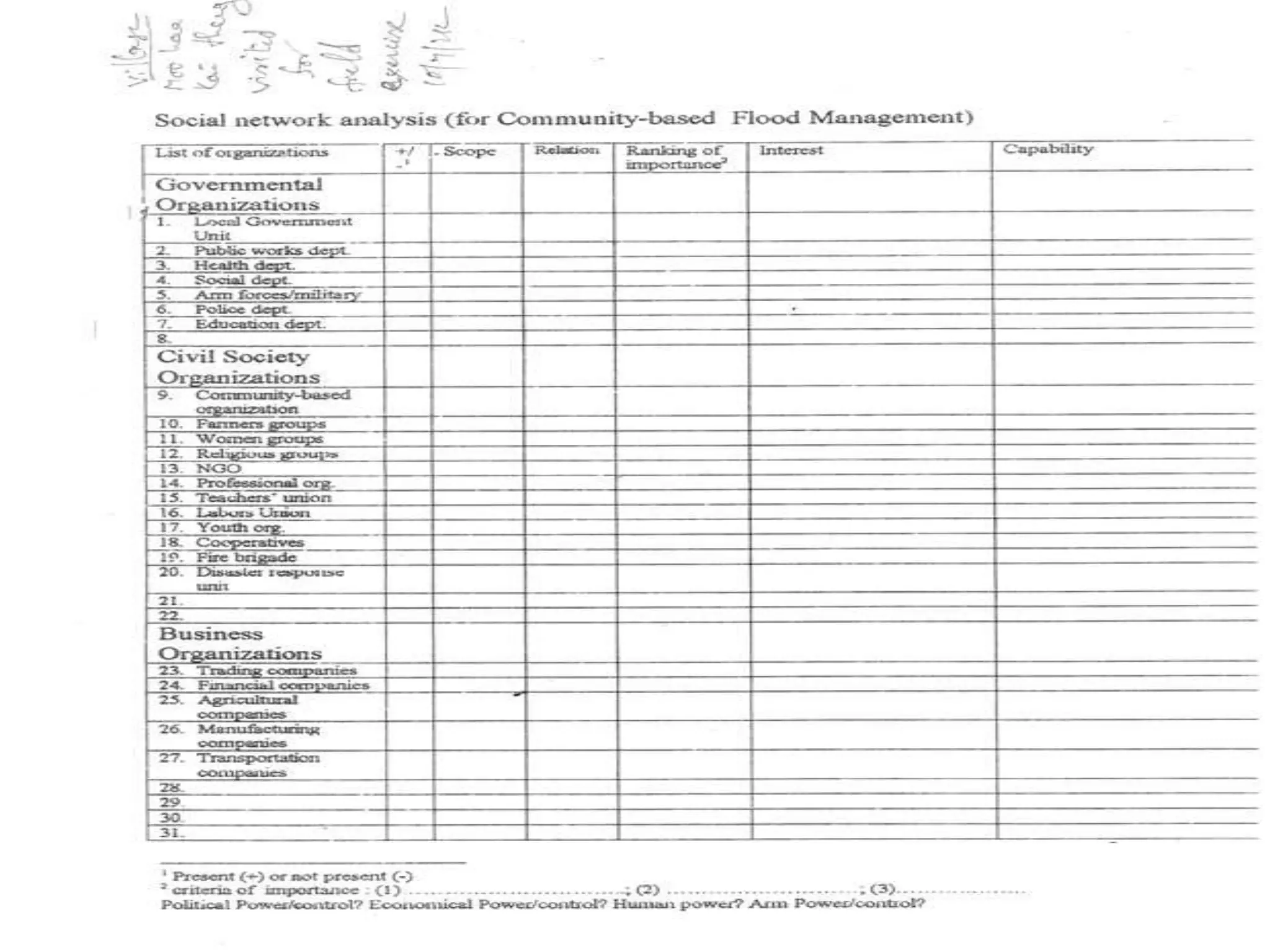
• Identify various government, non government
and private organizations working in the field of
DM

• Understand their role, importance, interest and
capabilities.
India Disaster Resource Network
(IDRN)
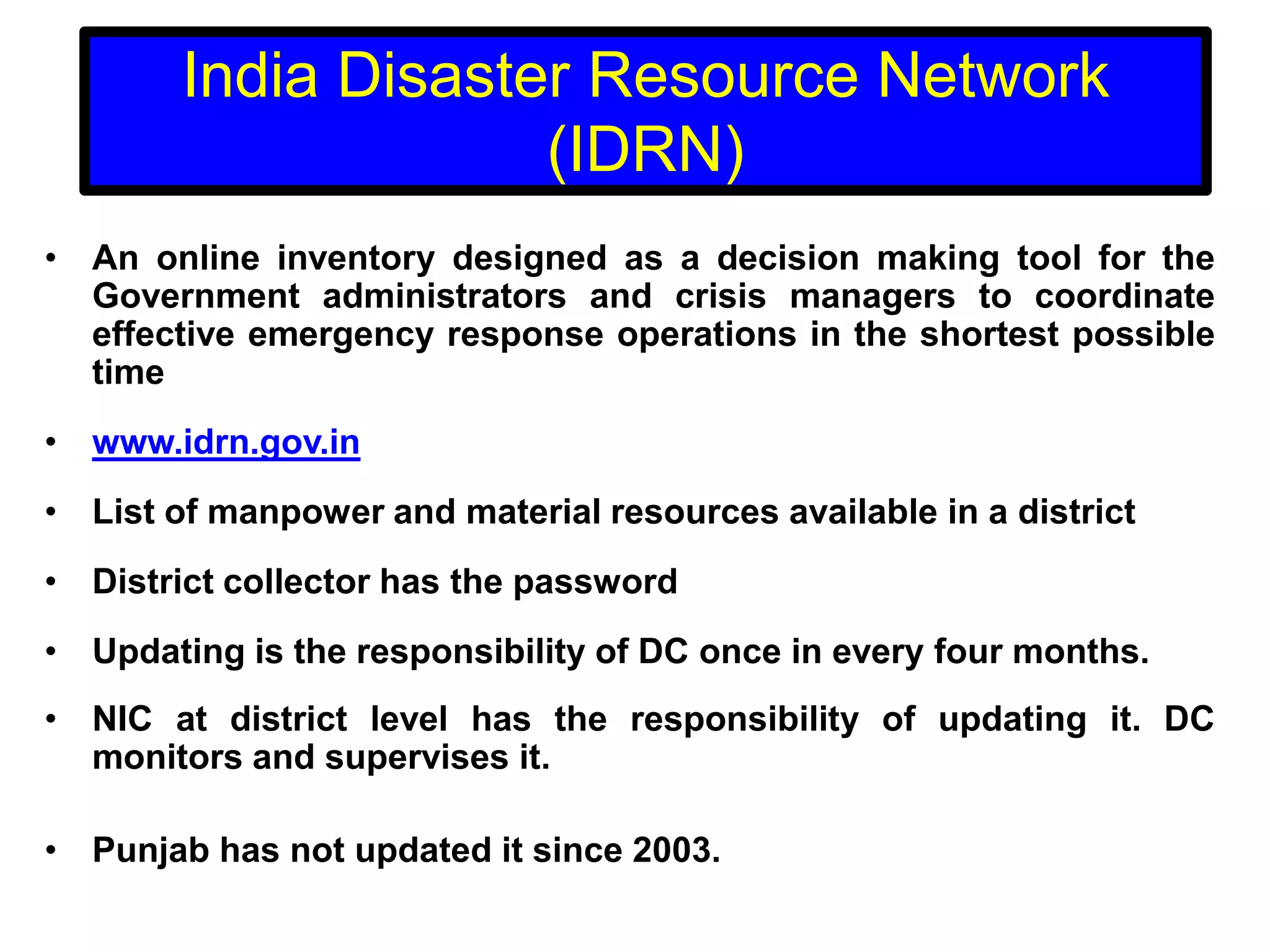
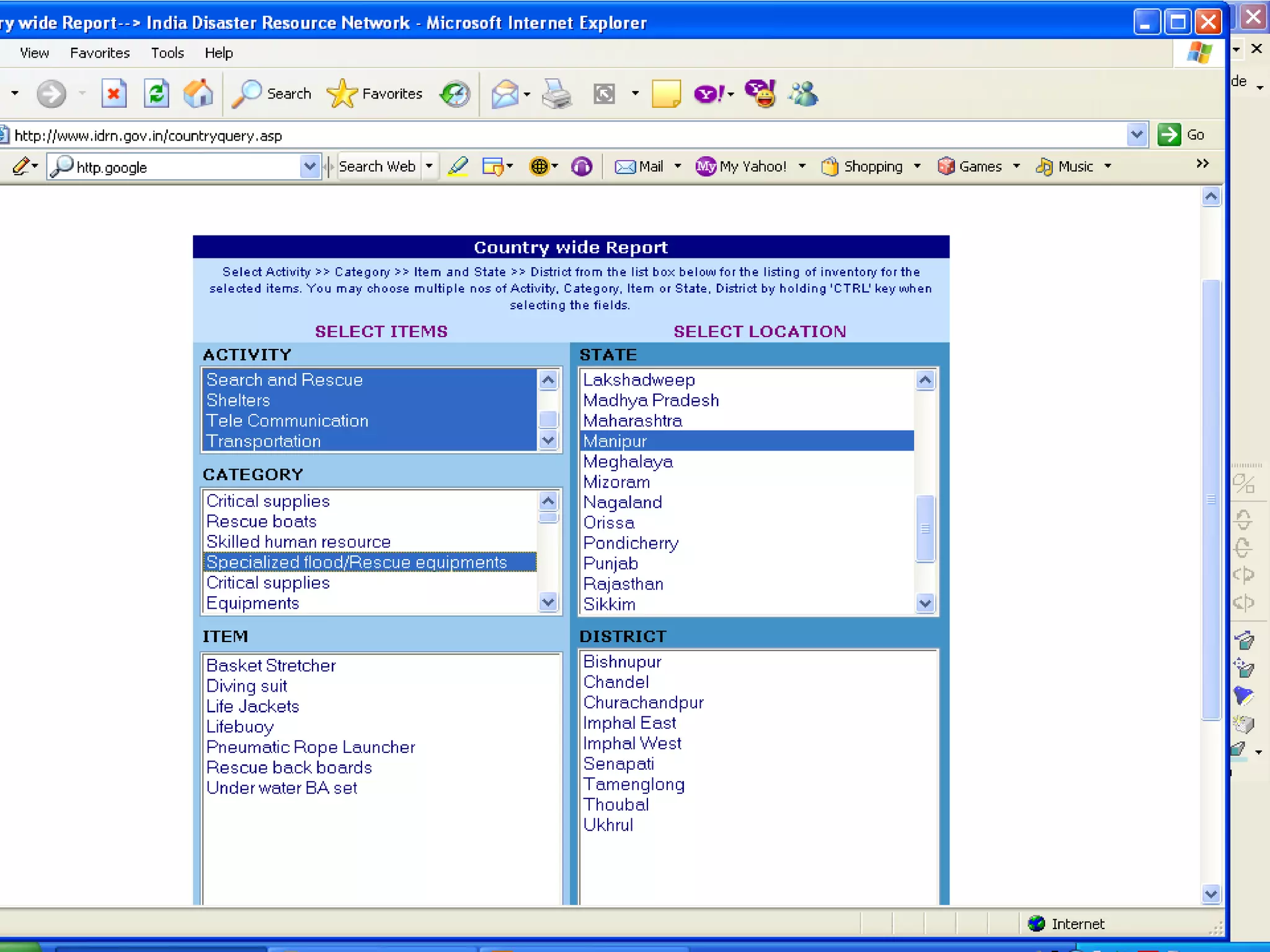
• An online inventory designed as a decision making tool for the
Government administrators and crisis managers to coordinate
effective emergency response operations in the shortest possible
time
• www.idrn.gov.in
• List of manpower and material resources available in a district
• District collector has the password
• Updating is the responsibility of DC once in every four months.
• NIC at district level has the responsibility of updating it. DC
monitors and supervises it.
• Punjab has not updated it since 2003.
India Disaster Knowledge Network
(IDKN)
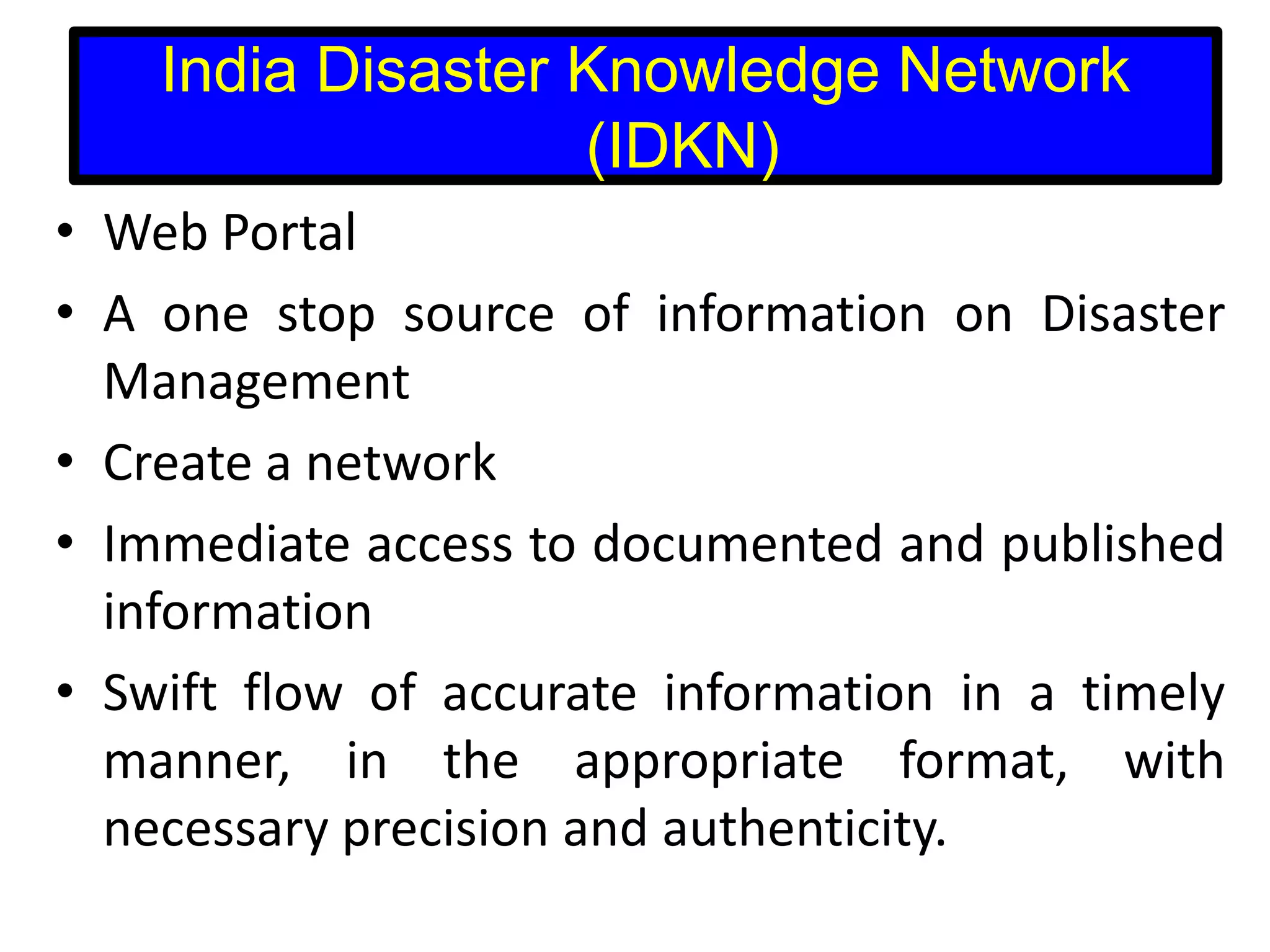
• Web Portal
• A one stop source of information on Disaster
Management
• Create a network
• Immediate access to documented and published
information
• Swift flow of accurate information in a timely
manner, in the appropriate format, with
necessary precision and authenticity.
IDKN
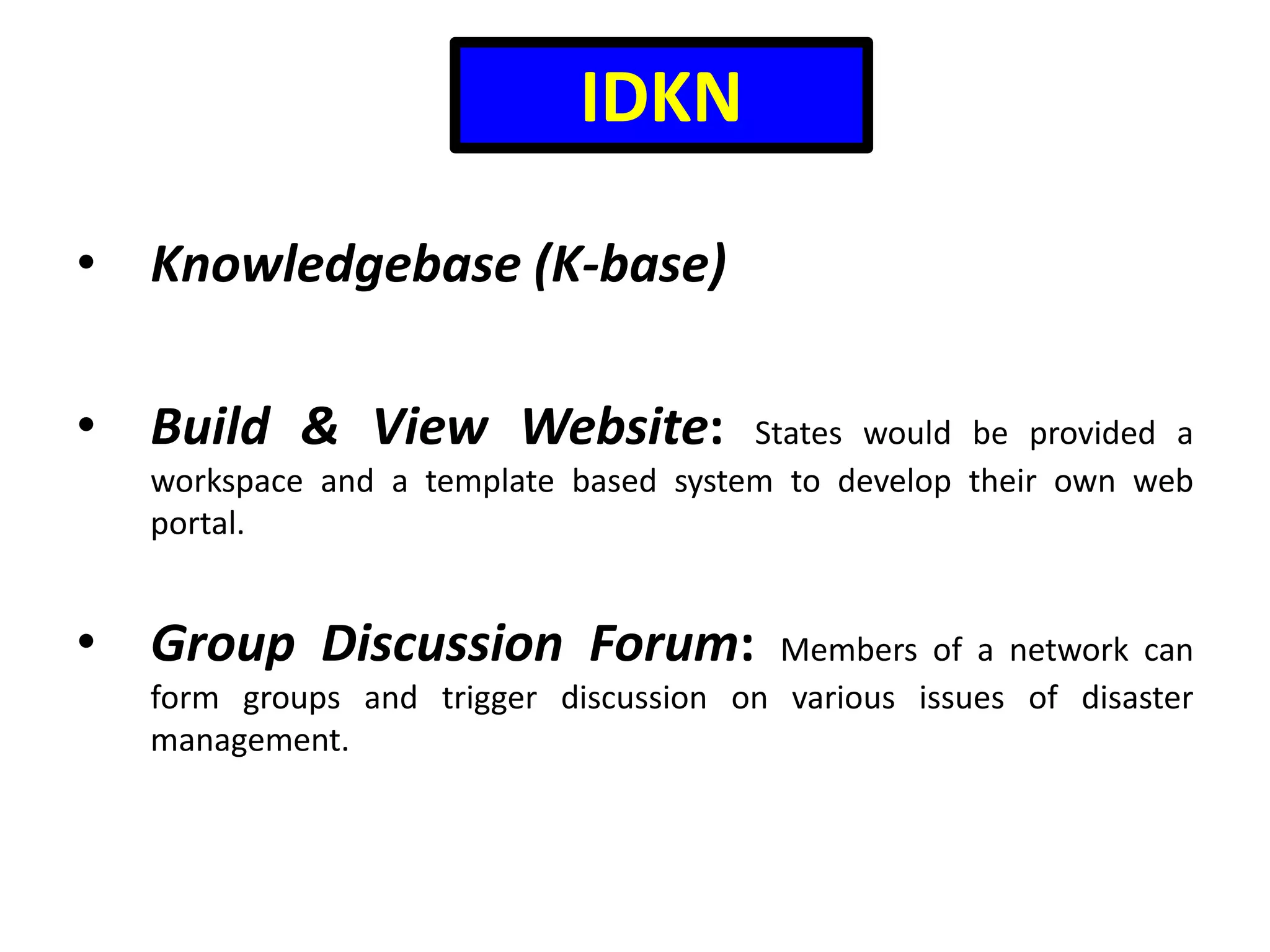
• Knowledgebase (K-base)
• Build & View Website:

States would be provided a
workspace and a template based system to develop their own web
portal.

• Group Discussion Forum:

Members of a network can
form groups and trigger discussion on various issues of disaster
management.
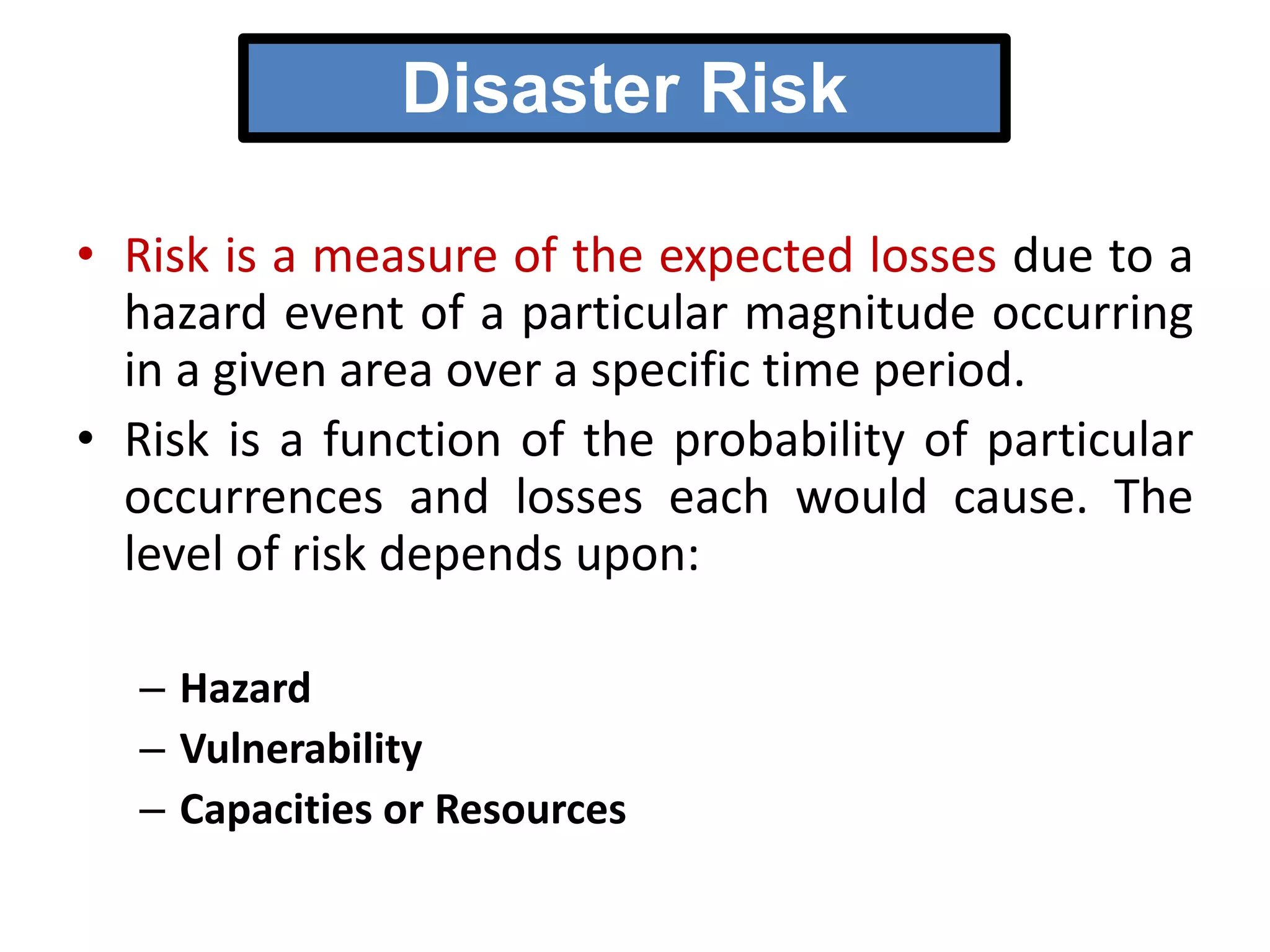
Disaster Risk
• Risk is a measure of the expected losses due to a
hazard event of a particular magnitude occurring
in a given area over a specific time period.
• Risk is a function of the probability of particular
occurrences and losses each would cause. The
level of risk depends upon:
– Hazard
– Vulnerability
– Capacities or Resources
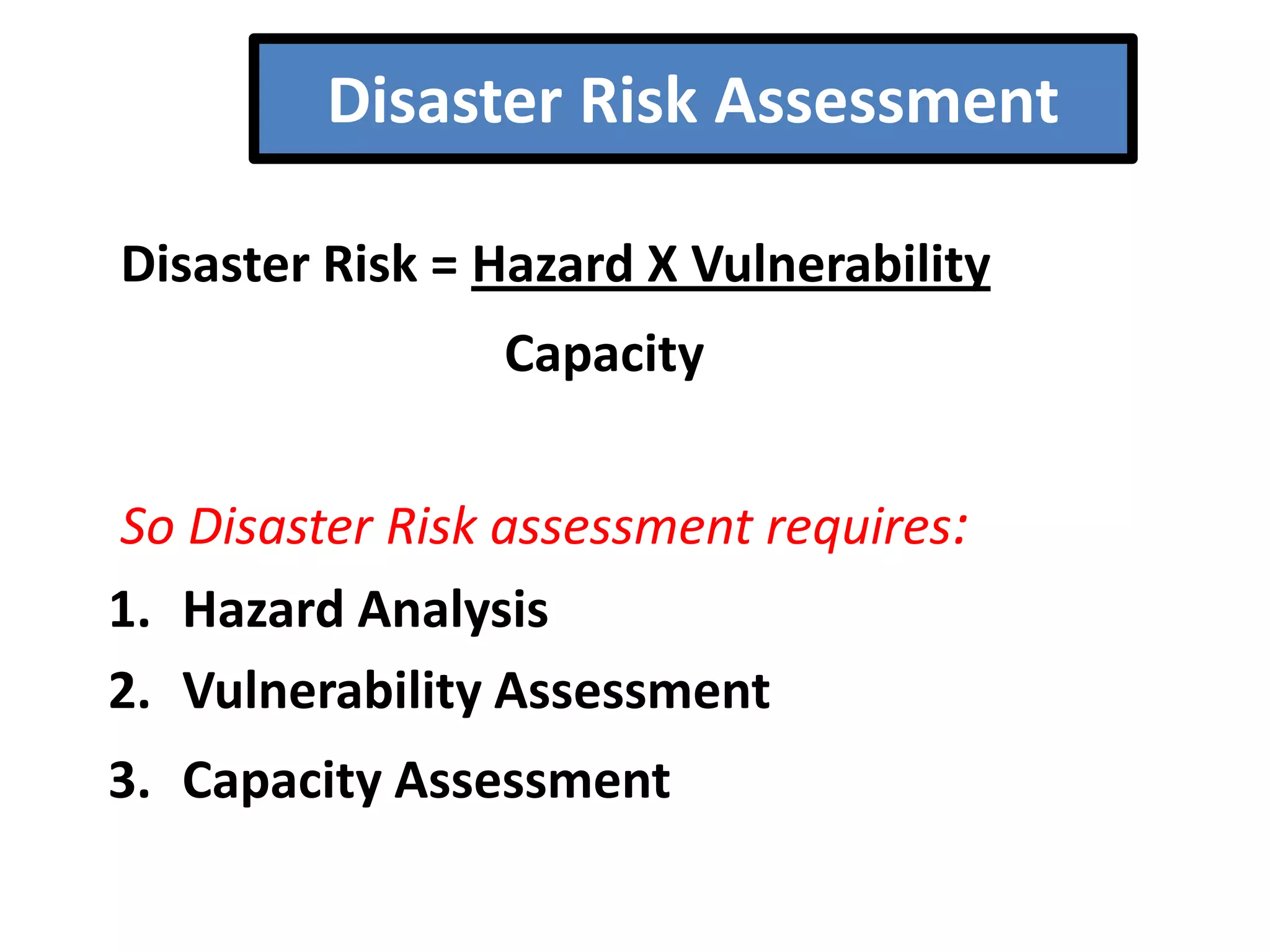
Disaster Risk Assessment
Disaster Risk = Hazard X Vulnerability

Capacity
So Disaster Risk assessment requires:
1. Hazard Analysis
2. Vulnerability Assessment

3. Capacity Assessment
Hrvc analysis tools and techniques

Hrvc analysis tools and techniques

  • 1.
    Hazard, Vulnerability, Capacityand Risk analysis: Tools and Techniques
  • 2.
    Planning Aspects  HazardAnalysis  Vulnerability Analysis  Resource Analysis  Risk Analysis Community-based Disaster Risk Management 2
  • 3.
    Aim of theTools  To assess the hazard, vulnerability and resources of the community  Use tools in a way that the community can participate in an effective manner  Ensure that the community perspective prevails in the risk reduction process from assessment to risk reduction planning. 3
  • 4.
    Common Tools forHVCR Analysis: Mapping Visual Representation of important information about the community 4
  • 5.
    Transect Walk • Walkingsystematically in the community through the area and discussing on various aspects of that area. • Select a transect line (more than one ) • Team with 6-10 community members • Systematic Walk with key informants through the community to explore spatial differences ,land use zones by observing, asking ,listening, informal interviews and producing a transect diagram • Identify danger zones, vulnerable areas , evacuation sites, local resources used during emergency, human activities contributing to vulnerability etc
  • 7.
    Common Techniques forHVCR Analysis Some other tools which can be used in HVCR analysis are:  Focus Group Discussions  Observation  Interviews  Questionnaires  Secondary Data 7
  • 8.
    Hazard Phenomena that posea threat to people, structure, or economic assets and which may result in a disaster. It may be natural or human made…
  • 9.
    Tools for HazardAnalysis • Hazard Mapping • Historical Profile or Timeline • Seasonal Calendar • Hazard Matrix
  • 10.
    Vulnerability The extent towhich a community, structure, service, or geographic area is likely to be damaged or disrupted by the impact of particular hazard, on account of their nature, construction and proximity to hazardous terrain or a disaster prone area.
  • 11.
    Tools for VulnerabilityAssessment • • • • Transect Walk Problem Tree Livelihood Analysis Vulnerability Assessment
  • 13.
    Livelihood Analysis • Studythe main livelihood of the community • The activities of various livelihood spread over the year • Identify what community does in this period ,how they diversify sources of livelihood ,when do they have time for community activities etc • Identify gender specific division of labour, in times of disaster or in normal times • The impact of hazards and drought on livelihood of the community
  • 15.
    Vulnerability Assessment Vulnerable Population Vulnerable Infrastructure AskTwo simple Questions? 1. Who are at Risk? 2. What is at Risk?
  • 16.
    Vulnerable Population • • • • • • • Women (pregnant,lactating, widows, single) Old aged Children Physically handicapped Mentally challenged Dependent on life support systems, medicines Poor people living at sea coasts, in kutcha houses etc Animals: Livestock and cattle
  • 17.
    Vulnerable Infrastructure • Kutchahouses • Low lying areas • Livelihood assets such boats,nets,etc • Documents, • Houses and weak structure • Crops and horticulture • Drinking water resources • Communication lines,road,telephone lines as
  • 18.
    Capacity/Resources Capacity refers tothe resources and strengths which exist in households and communities, and which help them to cope with, withstand, prepare for, prevent, mitigate, or quickly recover form a disaster. Helps in reducing vulnerability.
  • 19.
    Tools for ResourceAssessment • Chapatti Diagrams • Social and Institutional Analysis • India Disaster Resource Network (IDRN) • India Disaster Knowledge Network (IDKN)
  • 20.
    Chapatti Diagrams Chapattis areused : • To carry out institutional analysis that exists in a community • Bring out the differences in power relations that exist. • While drawing chapatti/Venn diagrams a chapatti is given to each institution. The size of each chapatti should correspond to the importance of the institution; the more important the bigger the chapatti. Chapattis are placed near or far away from the community, institutions that interact with the community are placed near the community and those that do not closely interact with that community are placed far from the community. The institutions that work together will have their chapattis touching.
  • 21.
    Social and InstitutionalAnalysis • Identify various government, non government and private organizations working in the field of DM • Understand their role, importance, interest and capabilities.
  • 23.
    India Disaster ResourceNetwork (IDRN) • An online inventory designed as a decision making tool for the Government administrators and crisis managers to coordinate effective emergency response operations in the shortest possible time • www.idrn.gov.in • List of manpower and material resources available in a district • District collector has the password • Updating is the responsibility of DC once in every four months. • NIC at district level has the responsibility of updating it. DC monitors and supervises it. • Punjab has not updated it since 2003.
  • 26.
    India Disaster KnowledgeNetwork (IDKN) • Web Portal • A one stop source of information on Disaster Management • Create a network • Immediate access to documented and published information • Swift flow of accurate information in a timely manner, in the appropriate format, with necessary precision and authenticity.
  • 28.
    IDKN • Knowledgebase (K-base) •Build & View Website: States would be provided a workspace and a template based system to develop their own web portal. • Group Discussion Forum: Members of a network can form groups and trigger discussion on various issues of disaster management.
  • 29.
    Disaster Risk • Riskis a measure of the expected losses due to a hazard event of a particular magnitude occurring in a given area over a specific time period. • Risk is a function of the probability of particular occurrences and losses each would cause. The level of risk depends upon: – Hazard – Vulnerability – Capacities or Resources
  • 30.
    Disaster Risk Assessment DisasterRisk = Hazard X Vulnerability Capacity So Disaster Risk assessment requires: 1. Hazard Analysis 2. Vulnerability Assessment 3. Capacity Assessment