SARVAJANIK COLLEGE OF
ENGINEERING
& TECHNOLOGY, SURAT
1
Manoj Patel (Enrollment No. 120420748004) Guided by: Prof. Bhasker Bhatt
Guided by: Prof. Anuj
Chandiwala
"MICRO-ZONING AND RISK MAPPING FOR
DISASTER PREPAREDNESS"
PLANNING FOR DISASTER MANAGEMENT
CONTENTS
2
1. Introduction
2. Mitigation and Preparedness
2.1 Disaster Mitigation
2.2 Preparedness Measures
3. Disaster Risk Assessment
4. Challenges of Seismic Hazard Evaluation
5. References
Introduction
3
For sake of clearer understanding the terms as they
are defined and accepted by the UN bodies need to
be mentioned here.
1. Disaster Management authority: the body of
policy and administrative decisions and operational
activities, which pertain to the various stages of a
disaster at all levels.
2. Risk: risk is the expected losses of lives, persons
injured, damage to property and disruption of
economic activity due to a particular hazard.
Risk is the product of hazard and vulnerability.
4
3. Vulnerability: Vulnerability is an essential part of
hazards and risk research and refers to the
susceptibility of communities or regions.
4. Mitigation: All actions taken prior to the
occurrence of a disaster including preparedness
and long term risk reduction measures.
5. Preparedness: Preparedness consists of
activities designed to minimize loss of life and
damage, organize the temporary removal of people
and property from a threatened location, and
facilitate timely and effective rescue, relief and
rehabilitation.
5
2. Mitigation and Preparedness
 DMP is a analogous to preventive health care.
whilst most efforts are directed towards post
disaster relief, reconstruction and rehabilitation
 disaster mitigation involves implementing long term
risk deduction measures. measures range from
large scale flood protection measures (eg.
Bangladesh, China) to income generation
programmes diversifying livelihood, grain
stores, etc.
 Categorized as development project, but can serve
more than one aim if planned accordingly.
6
2.1 Disaster Mitigation includes
 Policy eg. Land regulation, low income housing
schemes, environmental regulation, national food
grain securities policies, etc.
 Training eg. Policy makers, staffs, etc.
 Identification of vulnerable groups
 Public awareness rising eg. Amongst
retailers, community members, civic groups, etc.
 Information system eg. For
monitoring, documentation, dissemination
 Education:
discipline(construction, architecture, urban
planning, agriculture, etc.)
7
2.2 Preparedness Measures
 Risk assessment
 Early warning systems
 Life safeguarding eg. Hurricanes shelters
 Resources and emergency kits in anticipation of
need
 Maintain emergency rosters and evacuation plan
 Emergency information and communication
systems
 Training
 Public education and preparedness campaigns
3. Disaster Risk Assessment
1. Essentials on Risk Mapping (Map scale, grid
size, aggregation unit)
2. Requirements for Risk Mapping (Data, software
tool, equipments)
3. Thematic Mapping Approaches (Hazard/event
intensity, exposure, risk maps)
4. National Risk Atlas (Structure, map design, map
indexes)
9
3.1 Measure Vulnerability
Two innovative approaches are introduced here.
Cutter et al. (2003) have concentrated on
measuring social vulnerability, which is an integral
part of the Hazards-of-place model.
includes both social inequalities and place
equalities.
This definition includes both the social and
economic vulnerability dimensions of the Hazard’s
project
10
A second interesting model is UNDP’s Disaster
Risk Index (DRI)(2004)
which measures & compares the physical
exposure to hazards, vulnerability and risk
between countries.
Here, physical exposure refers to the number of
people located in areas where hazardous events
occur combined with the frequency of hazard
events.
11
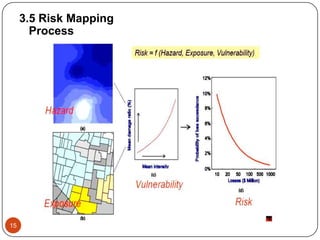
3.2 What is Risk Mapping?
 Risk mapping is the process of establishing the
spatial and temporal extent of risk (Probability &
consequences)
 Risk mapping requires combining maps of
hazards, exposure, and vulnerability
 The results of risk mapping are usually presented
in the form of maps that show the magnitude and
nature of the risk
12
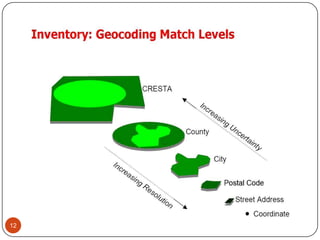
13
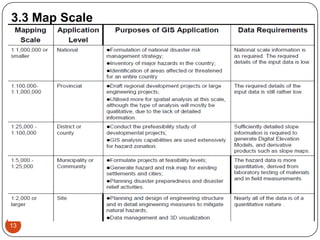
3.3 Map Scale
14
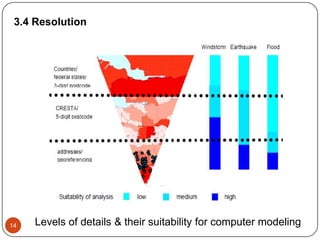
3.4 Resolution
Levels of details & their suitability for computer modeling
15
3.5 Risk Mapping
Process
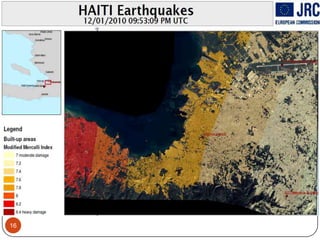
16
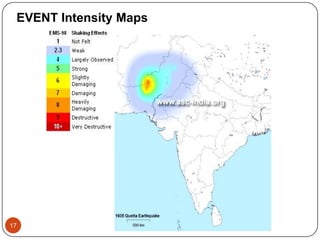
17
EVENT Intensity Maps
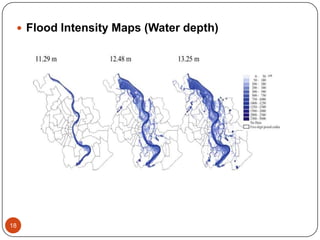
18
 Flood Intensity Maps (Water depth)
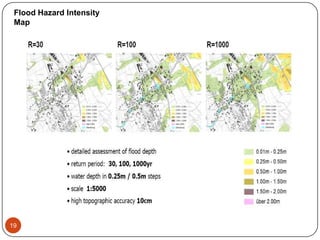
19
Flood Hazard Intensity
Map
20
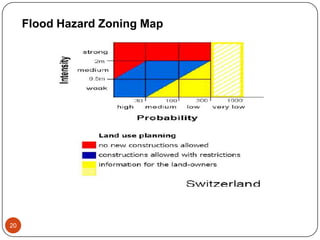
Flood Hazard Zoning Map
21
3.6 Exposure Mapping
1. Population in terms of its poverty or vulnerability
2. Buildings in terms of their structure type &
functionality (i.e. residential, commercial,
industrial, and public)
3. Livelihoods, i.e. livestock, crops, industries (the
number, location & extent of exposure)
4. Critical facilities, i.e. healthcare, educational
institutions (university, college, school, etc.),
warehouses, banks, police stations, fire stations,
etc.
5. Infrastructures, i.e. roads, bridges, airports, ports,
railways, dams, telecommunication network,
power supply, etc.
22
5. References
1. Challenges Of Seismic Hazard Evaluation, P.L. Narula
2. Disaster Risk Mapping, GRIP - Global Risk Identification
Programme, UNDP Bureau for Crisis Prevention and
Recovery
3. Natural and Technological Hazards and Risks Affecting the,
Spatial Development of European Regions, Geological
Survey of Finland, Special Paper 42, 65–74, 2006.
4. Resource material on disaster management complied by
regional centre for urban and environmental
studies(RCUES) of all India institute of local self
government(AIILSG)
23
 THANK YOU

MICRO-ZONING AND RISK MAPPING FOR DISASTER PREPAREDNESS

  • 1.
    SARVAJANIK COLLEGE OF ENGINEERING &TECHNOLOGY, SURAT 1 Manoj Patel (Enrollment No. 120420748004) Guided by: Prof. Bhasker Bhatt Guided by: Prof. Anuj Chandiwala "MICRO-ZONING AND RISK MAPPING FOR DISASTER PREPAREDNESS" PLANNING FOR DISASTER MANAGEMENT
  • 2.
    CONTENTS 2 1. Introduction 2. Mitigationand Preparedness 2.1 Disaster Mitigation 2.2 Preparedness Measures 3. Disaster Risk Assessment 4. Challenges of Seismic Hazard Evaluation 5. References
  • 3.
    Introduction 3 For sake ofclearer understanding the terms as they are defined and accepted by the UN bodies need to be mentioned here. 1. Disaster Management authority: the body of policy and administrative decisions and operational activities, which pertain to the various stages of a disaster at all levels. 2. Risk: risk is the expected losses of lives, persons injured, damage to property and disruption of economic activity due to a particular hazard. Risk is the product of hazard and vulnerability.
  • 4.
    4 3. Vulnerability: Vulnerabilityis an essential part of hazards and risk research and refers to the susceptibility of communities or regions. 4. Mitigation: All actions taken prior to the occurrence of a disaster including preparedness and long term risk reduction measures. 5. Preparedness: Preparedness consists of activities designed to minimize loss of life and damage, organize the temporary removal of people and property from a threatened location, and facilitate timely and effective rescue, relief and rehabilitation.
  • 5.
    5 2. Mitigation andPreparedness  DMP is a analogous to preventive health care. whilst most efforts are directed towards post disaster relief, reconstruction and rehabilitation  disaster mitigation involves implementing long term risk deduction measures. measures range from large scale flood protection measures (eg. Bangladesh, China) to income generation programmes diversifying livelihood, grain stores, etc.  Categorized as development project, but can serve more than one aim if planned accordingly.
  • 6.
    6 2.1 Disaster Mitigationincludes  Policy eg. Land regulation, low income housing schemes, environmental regulation, national food grain securities policies, etc.  Training eg. Policy makers, staffs, etc.  Identification of vulnerable groups  Public awareness rising eg. Amongst retailers, community members, civic groups, etc.  Information system eg. For monitoring, documentation, dissemination  Education: discipline(construction, architecture, urban planning, agriculture, etc.)
  • 7.
    7 2.2 Preparedness Measures Risk assessment  Early warning systems  Life safeguarding eg. Hurricanes shelters  Resources and emergency kits in anticipation of need  Maintain emergency rosters and evacuation plan  Emergency information and communication systems  Training  Public education and preparedness campaigns
  • 8.
    3. Disaster RiskAssessment 1. Essentials on Risk Mapping (Map scale, grid size, aggregation unit) 2. Requirements for Risk Mapping (Data, software tool, equipments) 3. Thematic Mapping Approaches (Hazard/event intensity, exposure, risk maps) 4. National Risk Atlas (Structure, map design, map indexes)
  • 9.
    9 3.1 Measure Vulnerability Twoinnovative approaches are introduced here. Cutter et al. (2003) have concentrated on measuring social vulnerability, which is an integral part of the Hazards-of-place model. includes both social inequalities and place equalities. This definition includes both the social and economic vulnerability dimensions of the Hazard’s project
  • 10.
    10 A second interestingmodel is UNDP’s Disaster Risk Index (DRI)(2004) which measures & compares the physical exposure to hazards, vulnerability and risk between countries. Here, physical exposure refers to the number of people located in areas where hazardous events occur combined with the frequency of hazard events.
  • 11.
    11 3.2 What isRisk Mapping?  Risk mapping is the process of establishing the spatial and temporal extent of risk (Probability & consequences)  Risk mapping requires combining maps of hazards, exposure, and vulnerability  The results of risk mapping are usually presented in the form of maps that show the magnitude and nature of the risk
  • 12.
  • 13.
  • 14.
    14 3.4 Resolution Levels ofdetails & their suitability for computer modeling
  • 15.
  • 16.
  • 17.
  • 18.
    18  Flood IntensityMaps (Water depth)
  • 19.
  • 20.
  • 21.
    21 3.6 Exposure Mapping 1.Population in terms of its poverty or vulnerability 2. Buildings in terms of their structure type & functionality (i.e. residential, commercial, industrial, and public) 3. Livelihoods, i.e. livestock, crops, industries (the number, location & extent of exposure) 4. Critical facilities, i.e. healthcare, educational institutions (university, college, school, etc.), warehouses, banks, police stations, fire stations, etc. 5. Infrastructures, i.e. roads, bridges, airports, ports, railways, dams, telecommunication network, power supply, etc.
  • 22.
    22 5. References 1. ChallengesOf Seismic Hazard Evaluation, P.L. Narula 2. Disaster Risk Mapping, GRIP - Global Risk Identification Programme, UNDP Bureau for Crisis Prevention and Recovery 3. Natural and Technological Hazards and Risks Affecting the, Spatial Development of European Regions, Geological Survey of Finland, Special Paper 42, 65–74, 2006. 4. Resource material on disaster management complied by regional centre for urban and environmental studies(RCUES) of all India institute of local self government(AIILSG)
  • 23.