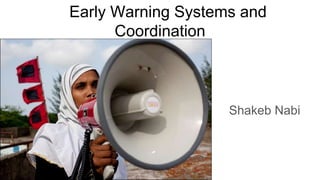

Early Warning Systems and
Coordination
Shakeb Nabi
Main Mandate of Early Warning Systems
Every year, hundreds of Bangladeshi fishermen die at sea or disappear
while fishing in the Bay of Bengal due to natural disasters.
Above 4,000 deaths from more than 500 passenger launch accidents in
last 38 years in Bangladesh.
The death is Bangladesh due to disaster has been drastically reduced
Early Warning?
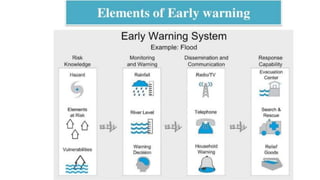
Early warning systems can be set up to avoid or reduce the impact of hazards
such as floods, landslides, storms, and forest fires. The significance of an
effective early warning system lies in the recognition of its benefits by local
people.
An Early Warning System (EWS) can be defined as a set of capacities needed to
generate and disseminate timely and meaningful warning information of the
possible extreme events or disasters (e.g. floods, drought, fire, earthquake and
tsunamis) that threatens people's lives.
Prepositioning
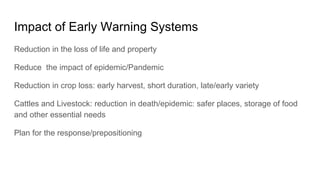
Impact of Early Warning Systems
Reduction in the loss of life and property
Reduce the impact of epidemic/Pandemic
Reduction in crop loss: early harvest, short duration, late/early variety
Cattles and Livestock: reduction in death/epidemic: safer places, storage of food
and other essential needs
Plan for the response/prepositioning
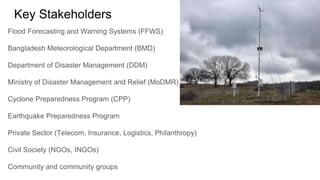
Key Stakeholders
Flood Forecasting and Warning Systems (FFWS)
Bangladesh Meteorological Department (BMD)
Department of Disaster Management (DDM)
Ministry of Disaster Management and Relief (MoDMR)
Cyclone Preparedness Program (CPP)
Earthquake Preparedness Program
Private Sector (Telecom, Insurance, Logistics, Philanthropy)
Civil Society (NGOs, INGOs)
Community and community groups
Our Role and Coordination
Strengthen the knowledge gap (innovation, research, indigenous):
Bring the private sectors on board (insurance, CSR): Crop and cattle insurance,
index based
Advocate with the government and other stakeholders for strengthening Cross
Border Early Warning Systems, Early Warning as a Right, Insurance (who pays?),
community based
Strengthen the last mile connectivity: demystification and dissemination
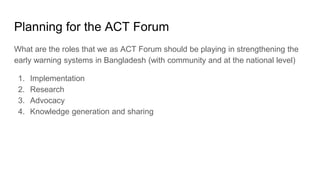
Planning for the ACT Forum
What are the roles that we as ACT Forum should be playing in strengthening the
early warning systems in Bangladesh (with community and at the national level)
1. Implementation
2. Research
3. Advocacy
4. Knowledge generation and sharing
Discussion, Queries, Comments
Thank You
nabi.shakeb@gmail.com

Early warning systems

  • 1.
    Early Warning Systemsand Coordination Shakeb Nabi
  • 2.
    Main Mandate ofEarly Warning Systems Every year, hundreds of Bangladeshi fishermen die at sea or disappear while fishing in the Bay of Bengal due to natural disasters. Above 4,000 deaths from more than 500 passenger launch accidents in last 38 years in Bangladesh. The death is Bangladesh due to disaster has been drastically reduced
  • 3.
    Early Warning? Early warningsystems can be set up to avoid or reduce the impact of hazards such as floods, landslides, storms, and forest fires. The significance of an effective early warning system lies in the recognition of its benefits by local people. An Early Warning System (EWS) can be defined as a set of capacities needed to generate and disseminate timely and meaningful warning information of the possible extreme events or disasters (e.g. floods, drought, fire, earthquake and tsunamis) that threatens people's lives. Prepositioning
  • 6.
    Impact of EarlyWarning Systems Reduction in the loss of life and property Reduce the impact of epidemic/Pandemic Reduction in crop loss: early harvest, short duration, late/early variety Cattles and Livestock: reduction in death/epidemic: safer places, storage of food and other essential needs Plan for the response/prepositioning
  • 7.
    Key Stakeholders Flood Forecastingand Warning Systems (FFWS) Bangladesh Meteorological Department (BMD) Department of Disaster Management (DDM) Ministry of Disaster Management and Relief (MoDMR) Cyclone Preparedness Program (CPP) Earthquake Preparedness Program Private Sector (Telecom, Insurance, Logistics, Philanthropy) Civil Society (NGOs, INGOs) Community and community groups
  • 8.
    Our Role andCoordination Strengthen the knowledge gap (innovation, research, indigenous): Bring the private sectors on board (insurance, CSR): Crop and cattle insurance, index based Advocate with the government and other stakeholders for strengthening Cross Border Early Warning Systems, Early Warning as a Right, Insurance (who pays?), community based Strengthen the last mile connectivity: demystification and dissemination
  • 9.
    Planning for theACT Forum What are the roles that we as ACT Forum should be playing in strengthening the early warning systems in Bangladesh (with community and at the national level) 1. Implementation 2. Research 3. Advocacy 4. Knowledge generation and sharing
  • 10.
    Discussion, Queries, Comments ThankYou nabi.shakeb@gmail.com