General  Zoology Class By: Sharnie Faye G. Buctuan Skeletal System
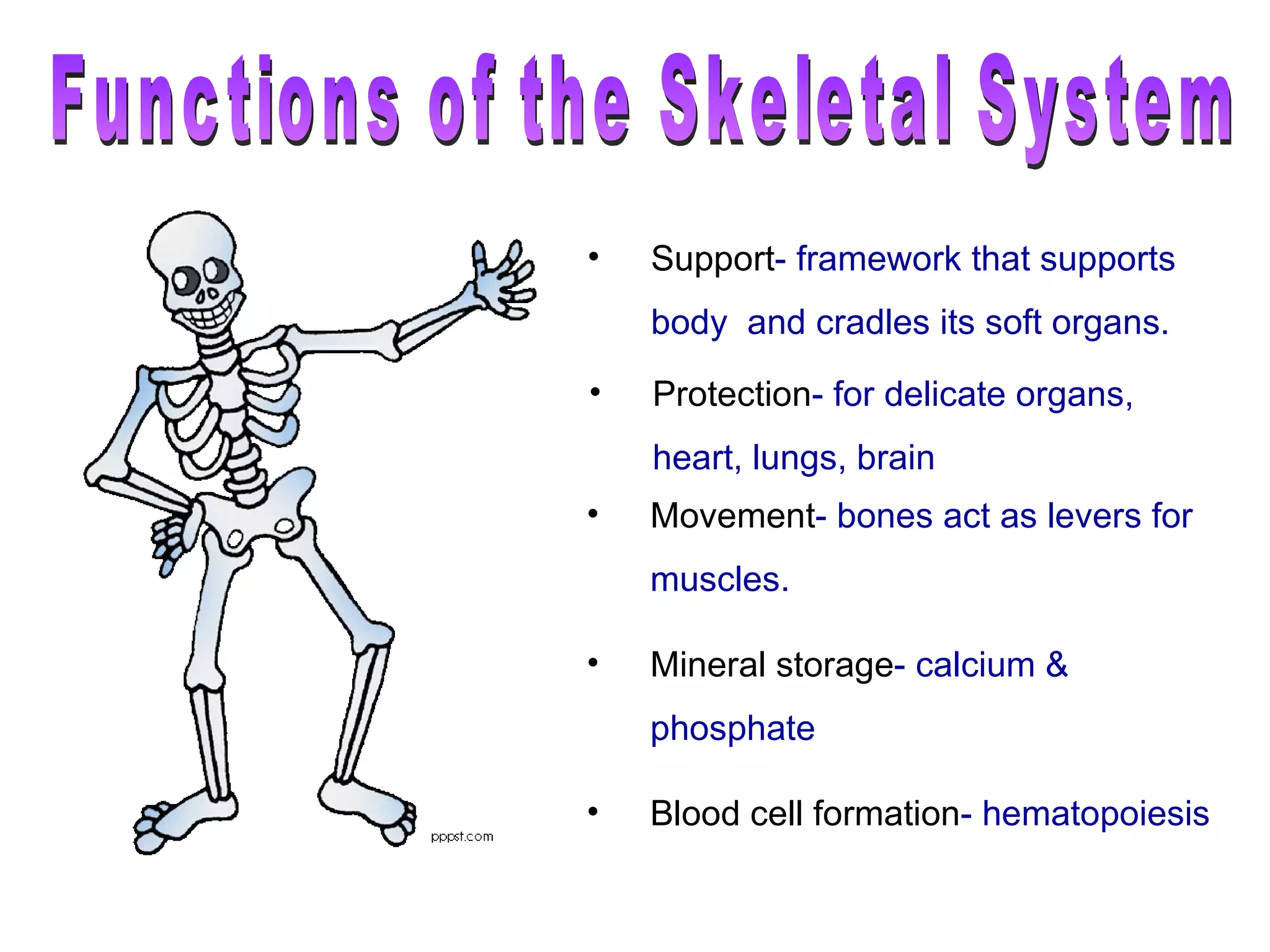
Functions of the Skeletal System Support - framework that supports body  and cradles its soft organs. Protection - for delicate organs, heart, lungs, brain Movement - bones act as levers for muscles.   Mineral storage - calcium & phosphate Blood cell formation - hematopoiesis
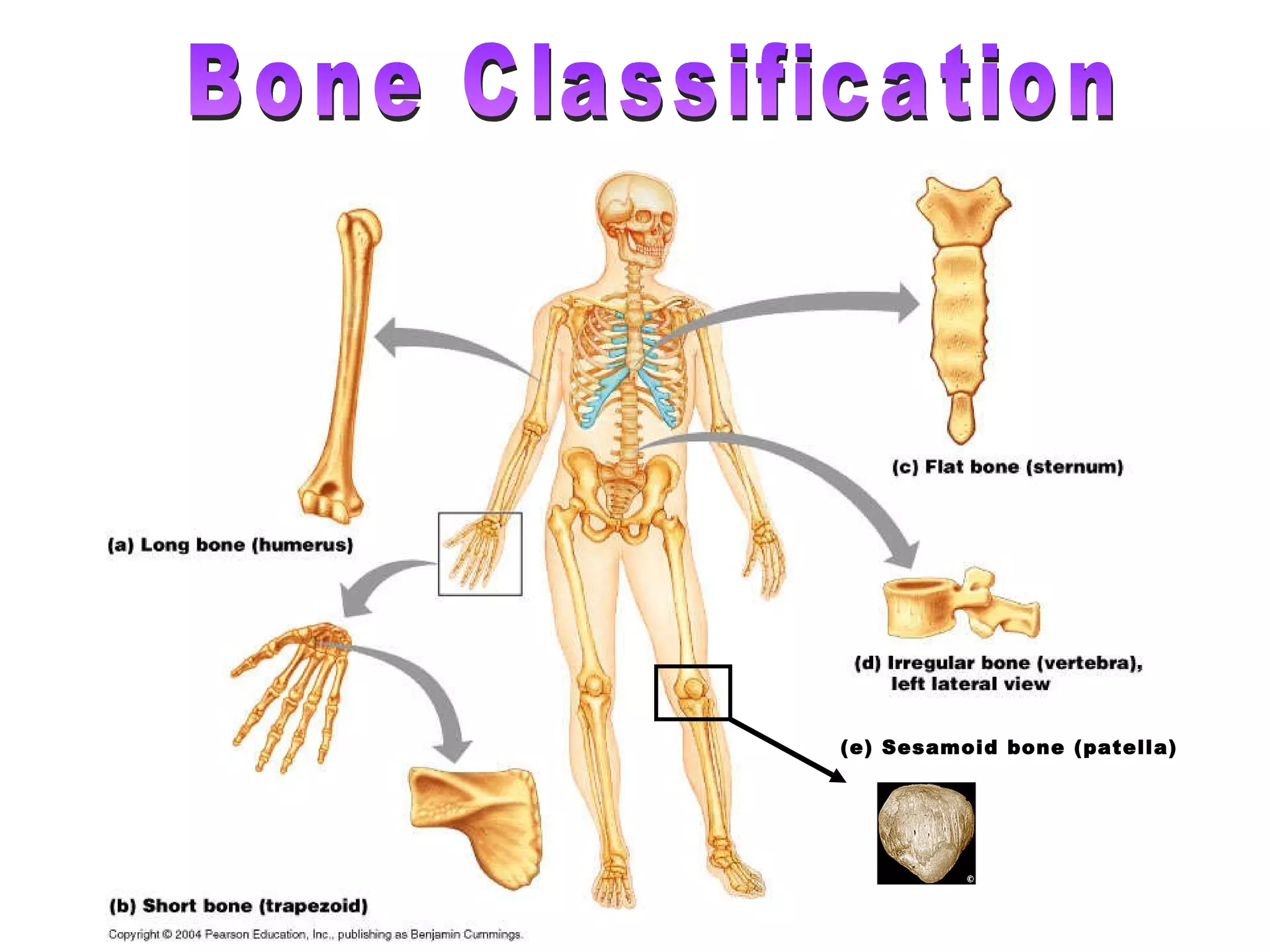
Bone Classification (e) Sesamoid bone (patella)
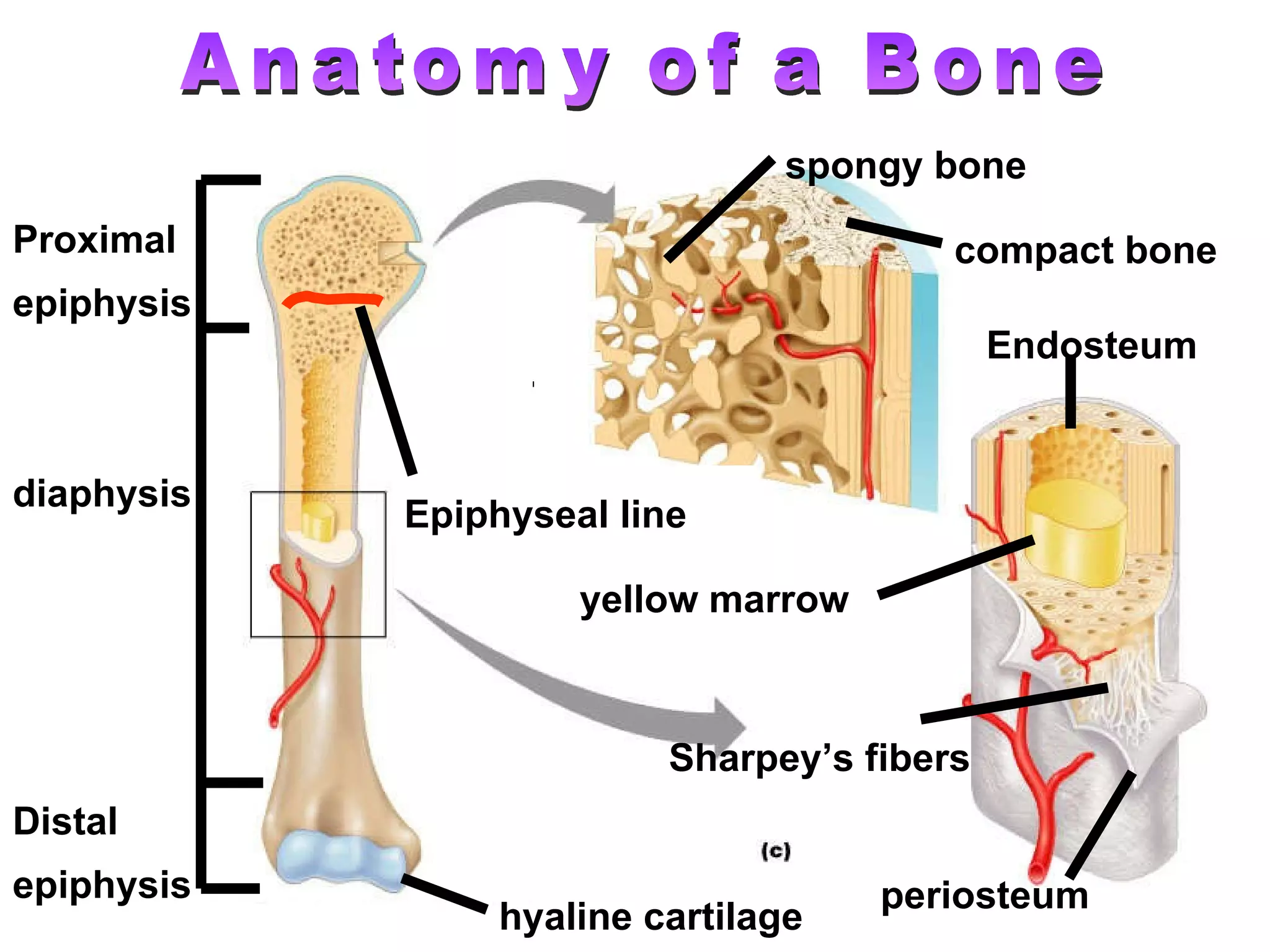
Distal epiphysis Proximal  epiphysis diaphysis yellow marrow Epiphyseal line periosteum compact bone spongy bone Endosteum hyaline cartilage Anatomy of a Bone Sharpey’s fibers
GENERAL  DIVISIONS OF THE SKELETON Skeletal system is divided into two general divisions.  Axial   &  appendicular   skeleton.
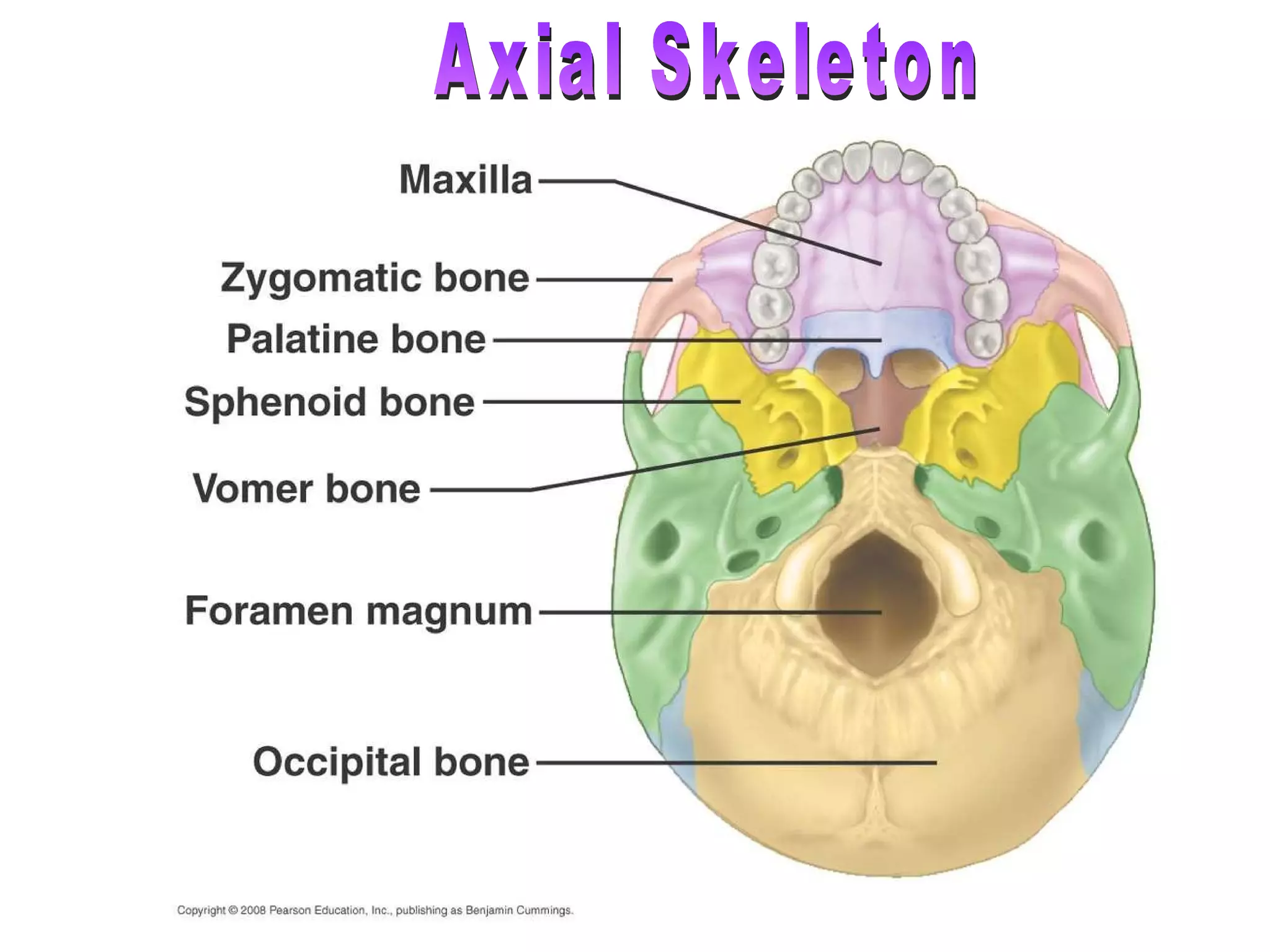
Axial Skeleton
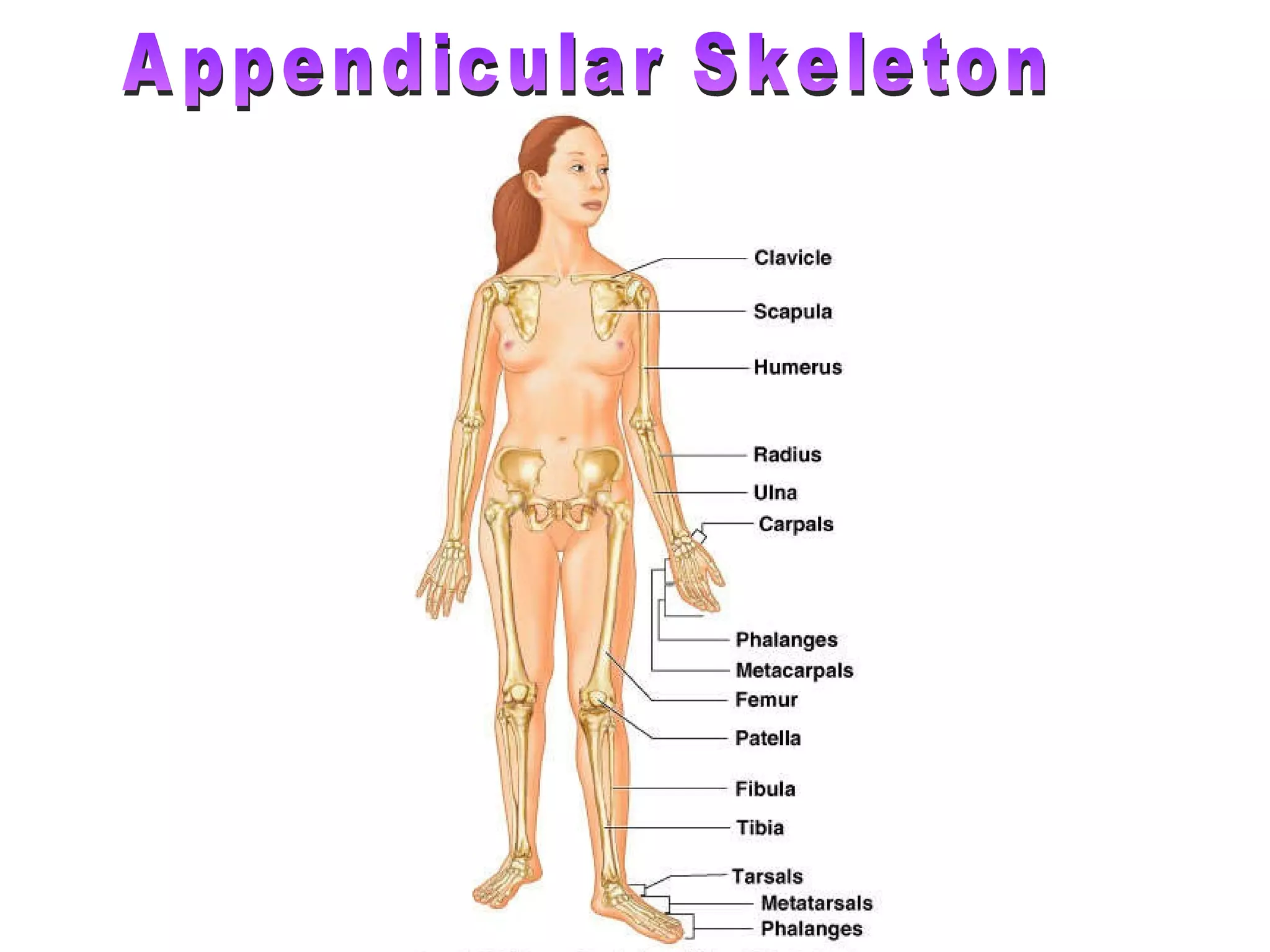
Appendicular Skeleton
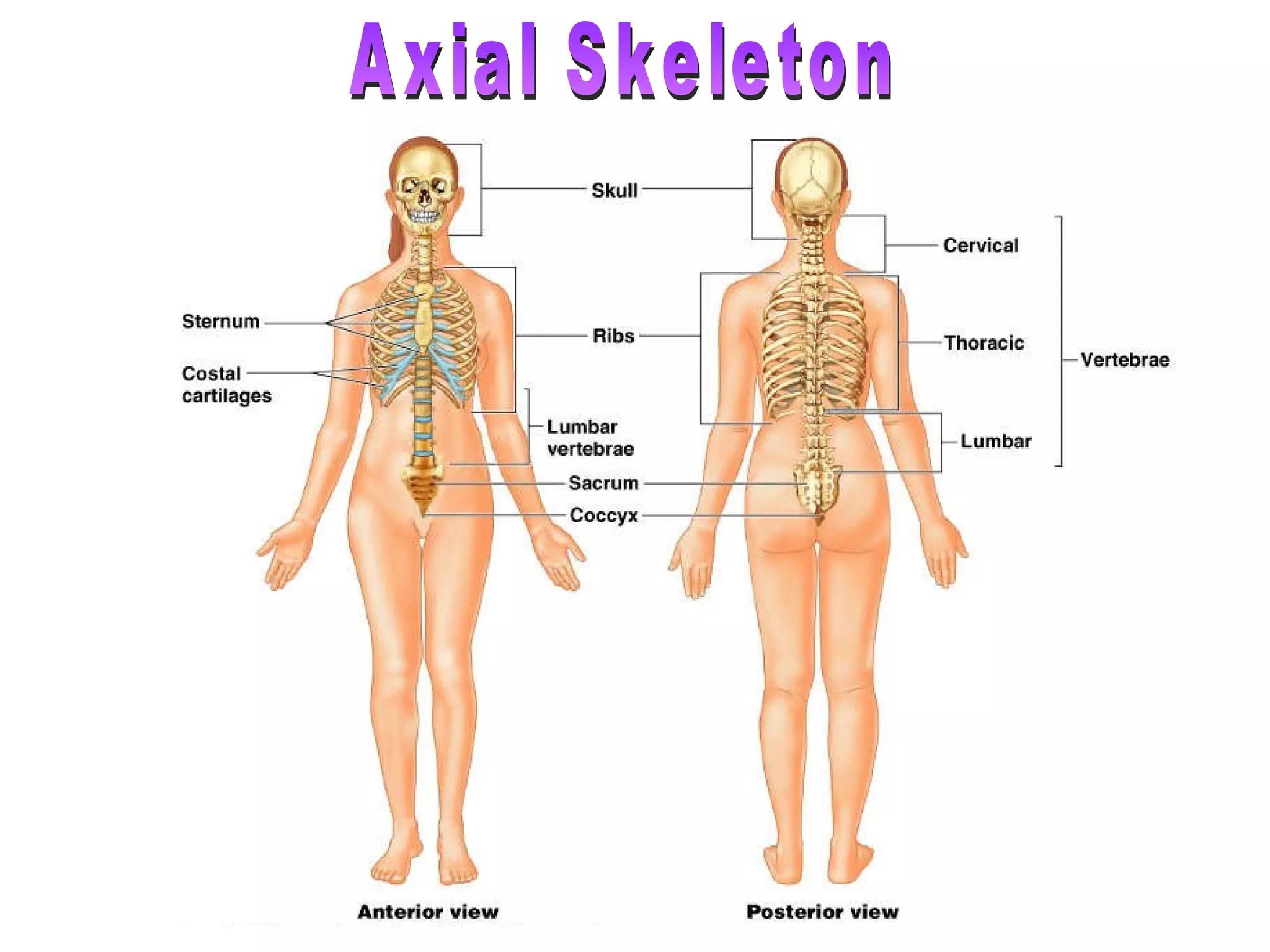
Axial Skeleton
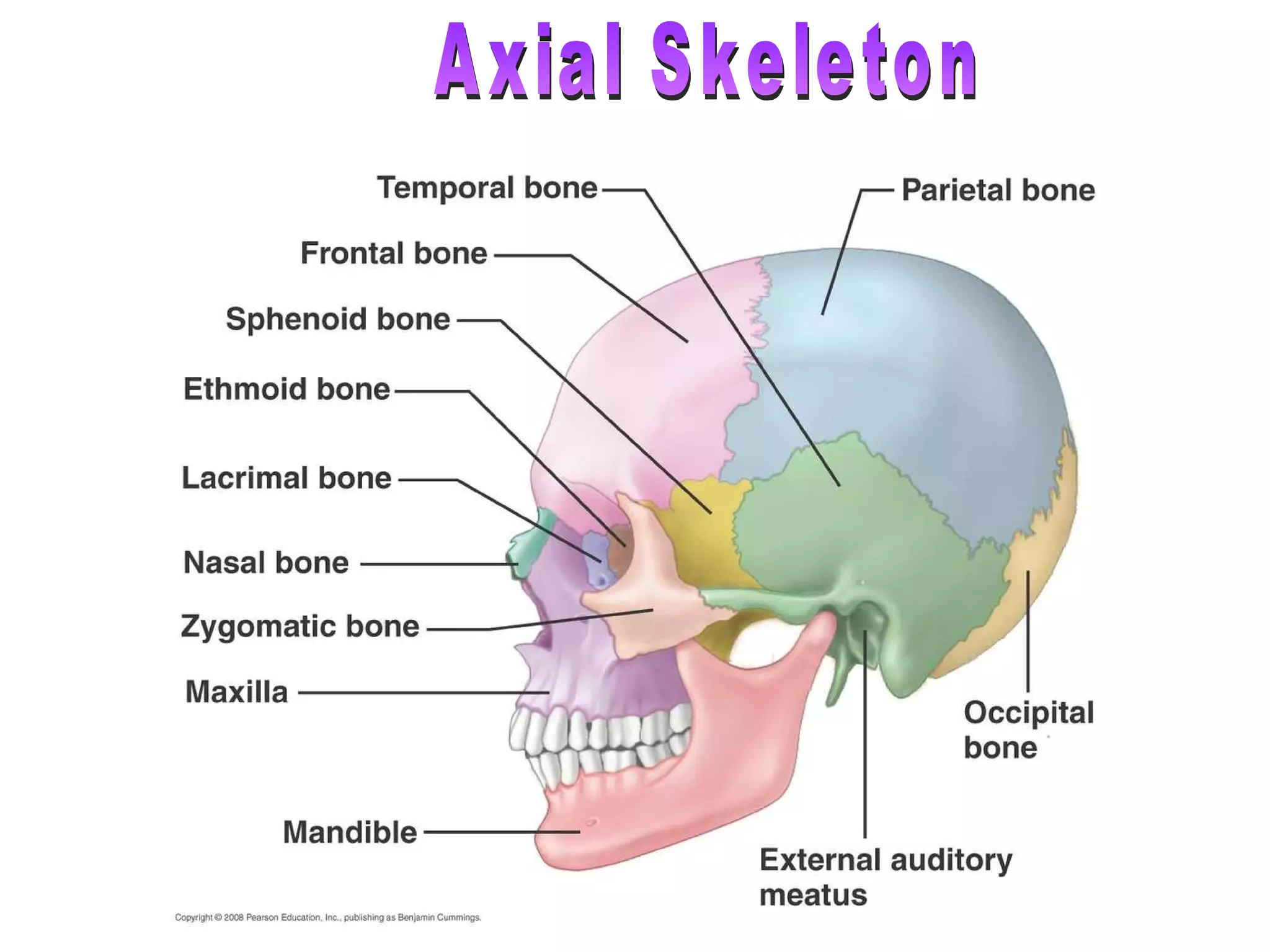
Axial Skeleton
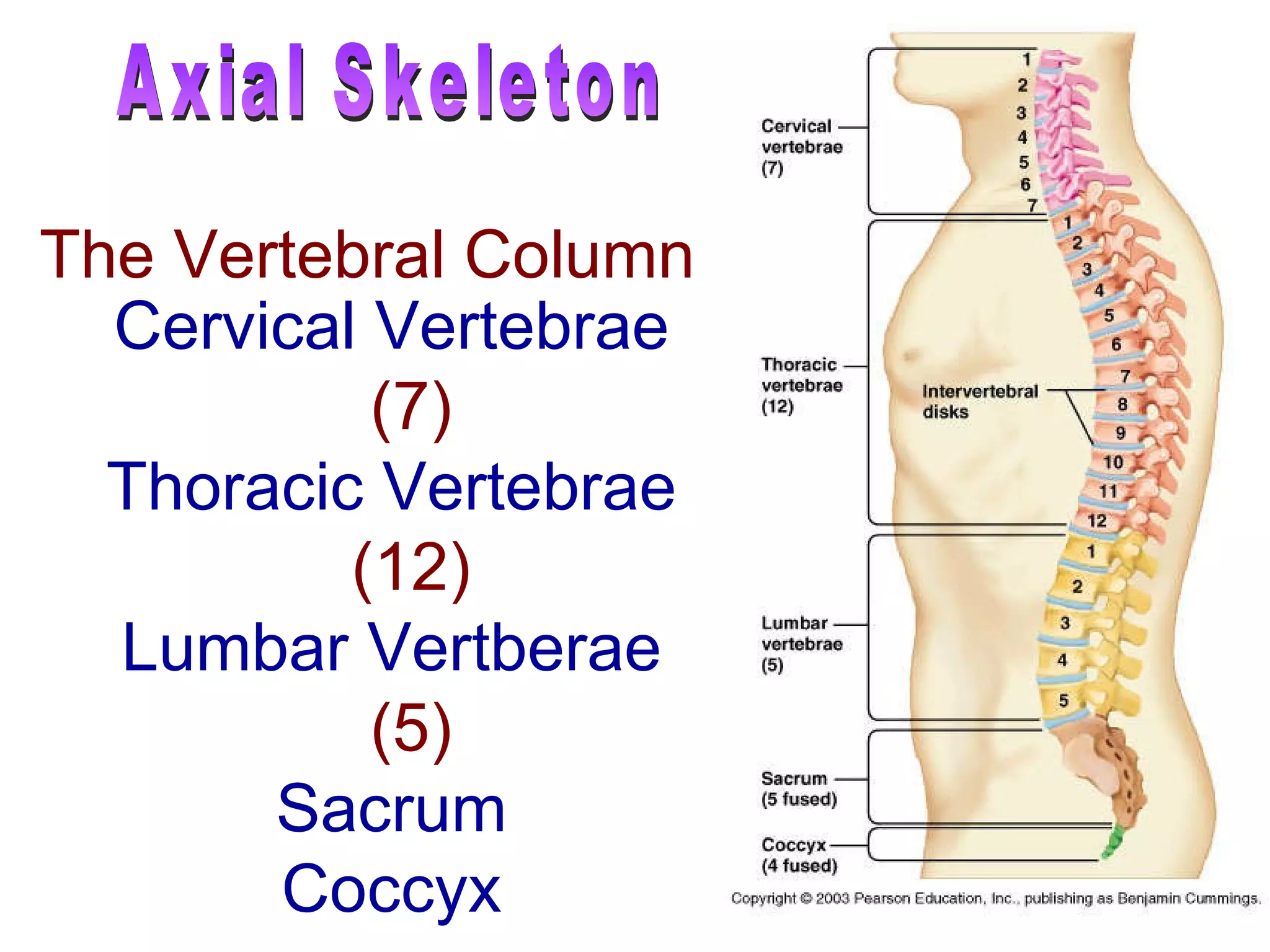
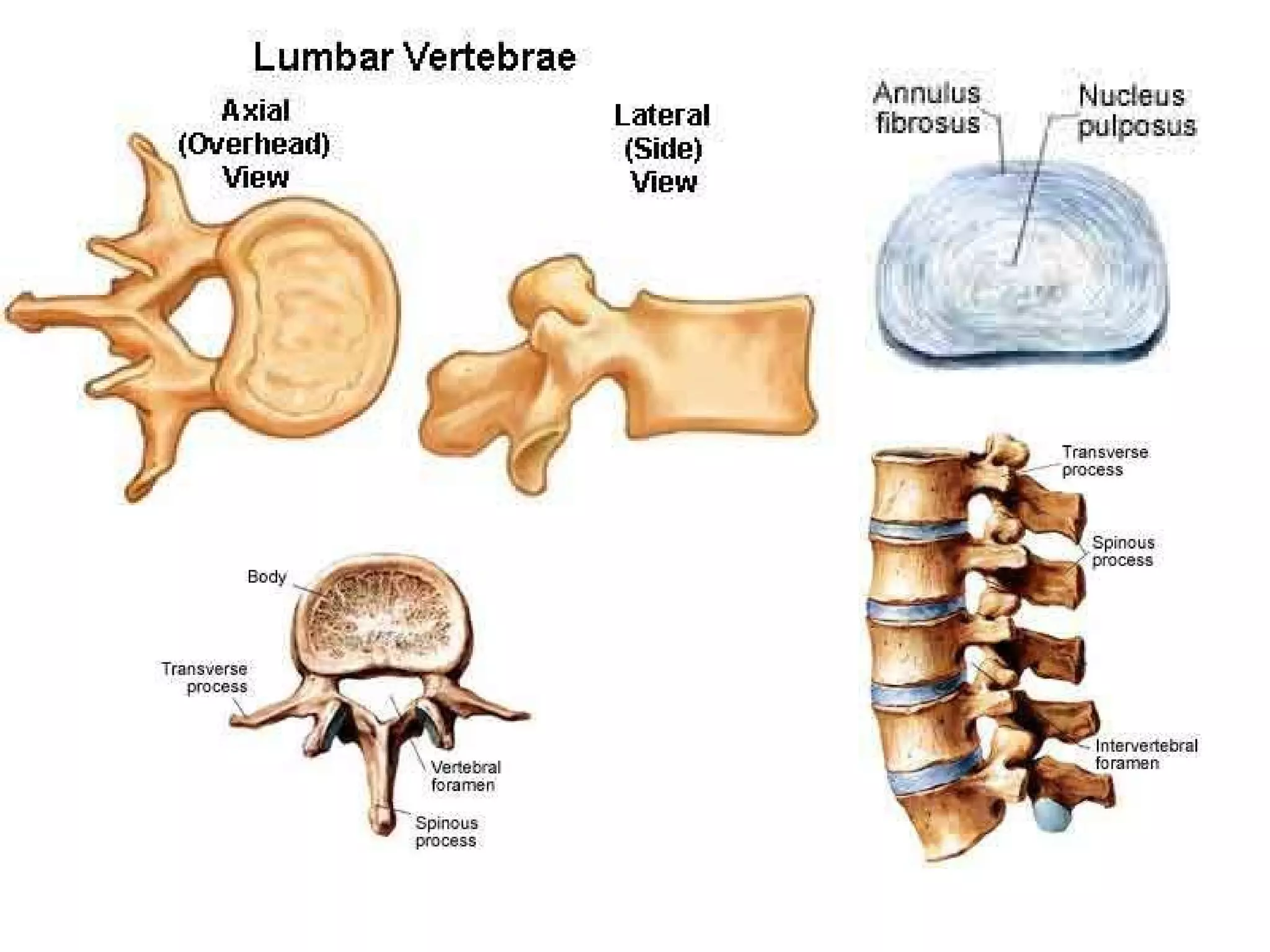
Cervical Vertebrae   (7) Thoracic Vertebrae   (12) Lumbar Vertberae   (5) Sacrum Coccyx The Vertebral Column Axial Skeleton
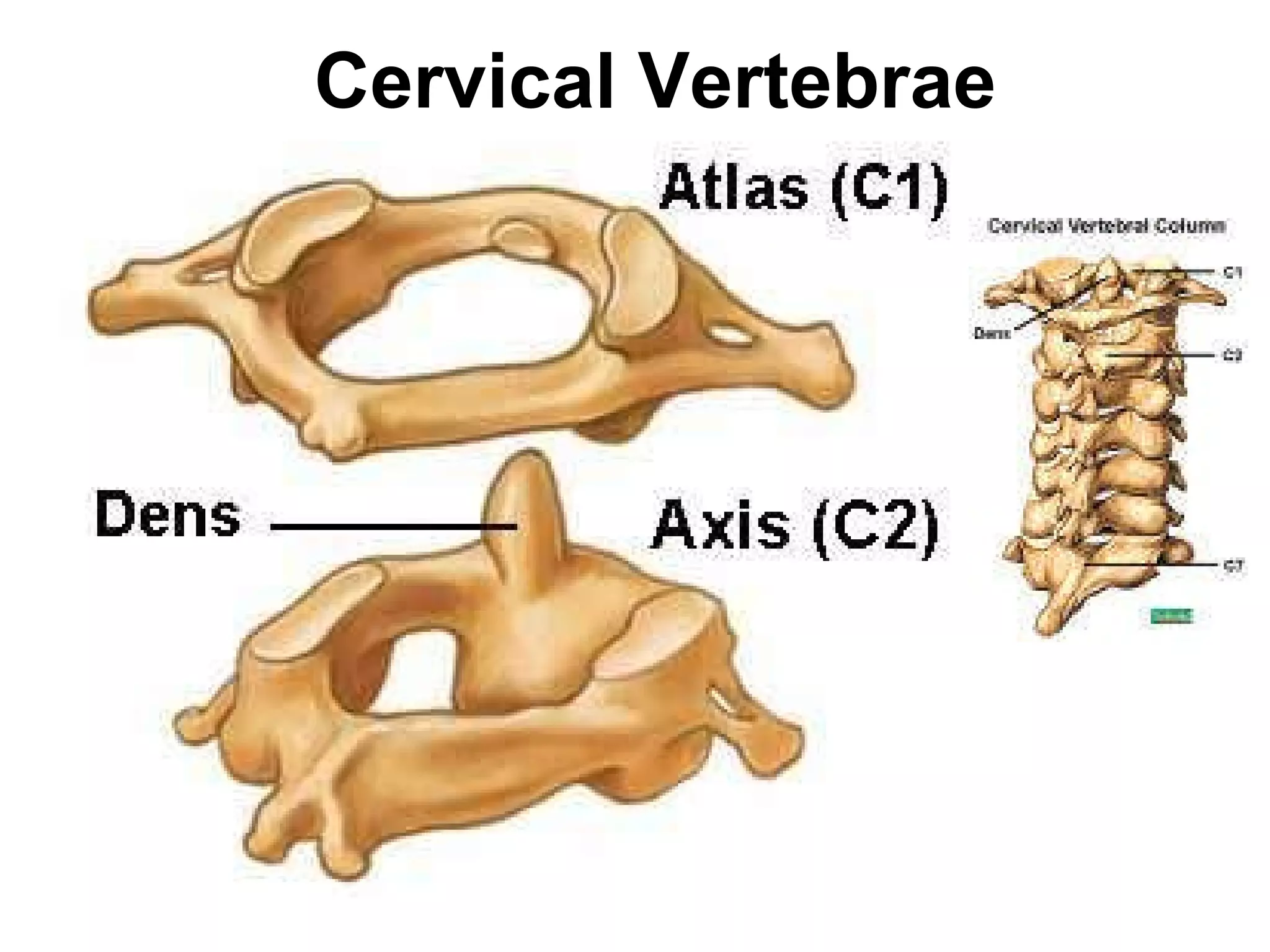
Cervical Vertebrae
 
 
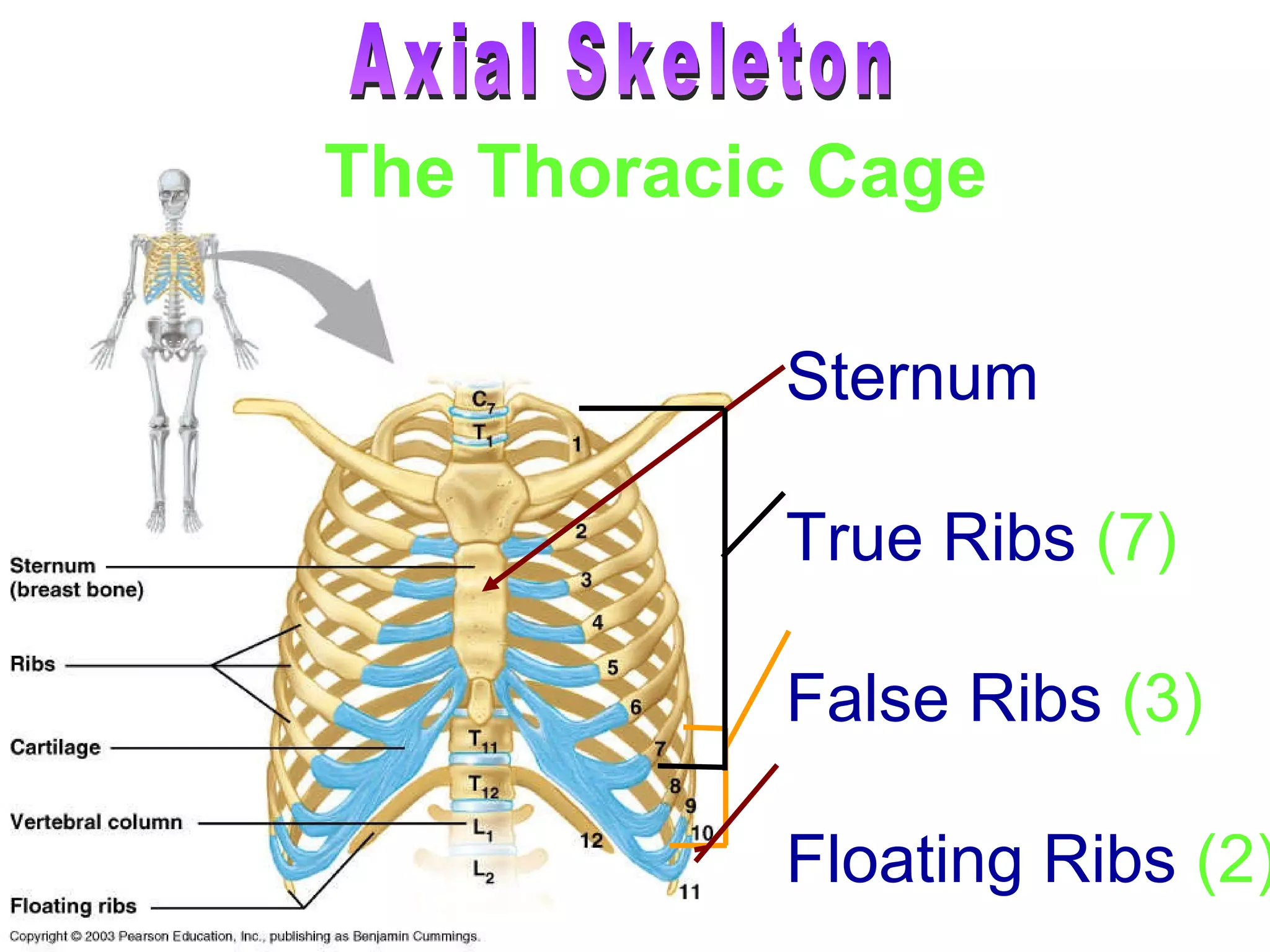
Sternum True Ribs   (7) False Ribs   (3) Floating Ribs   (2) The Thoracic Cage Axial Skeleton
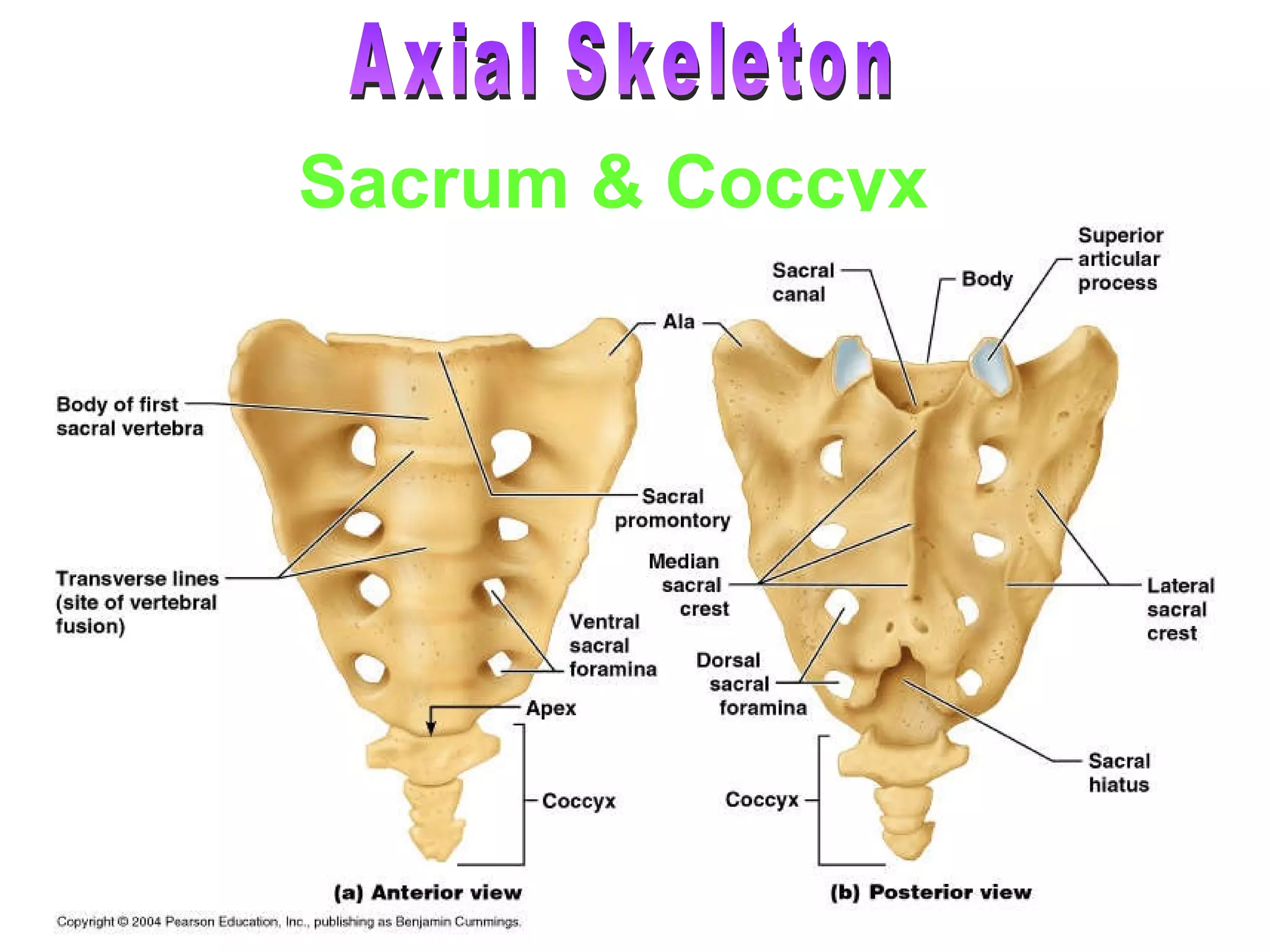
Sacrum & Coccyx Axial Skeleton
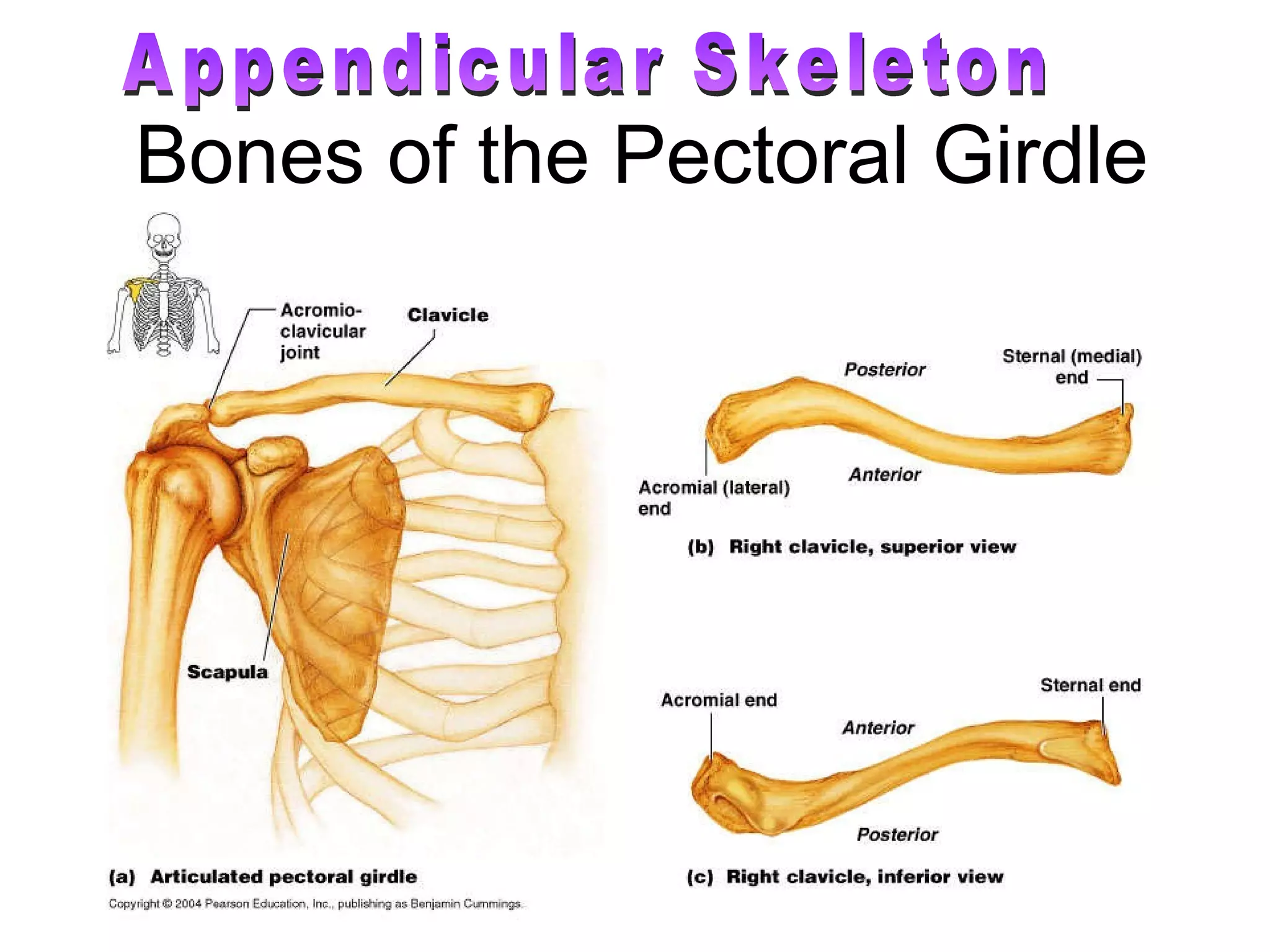
Bones of the Pectoral Girdle Appendicular Skeleton
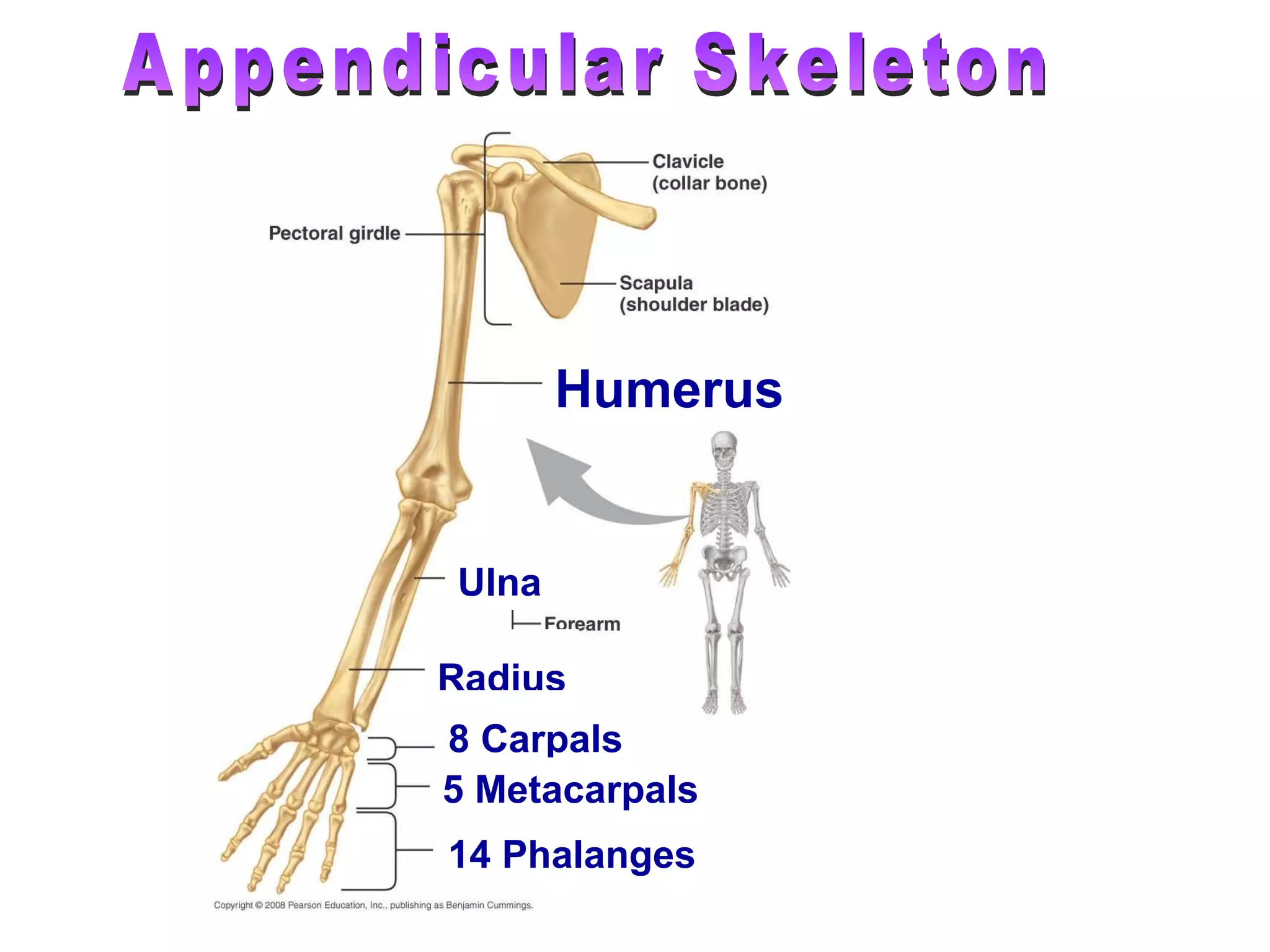
Appendicular Skeleton Humerus Ulna Radius 8 Carpals 14 Phalanges 5 Metacarpals
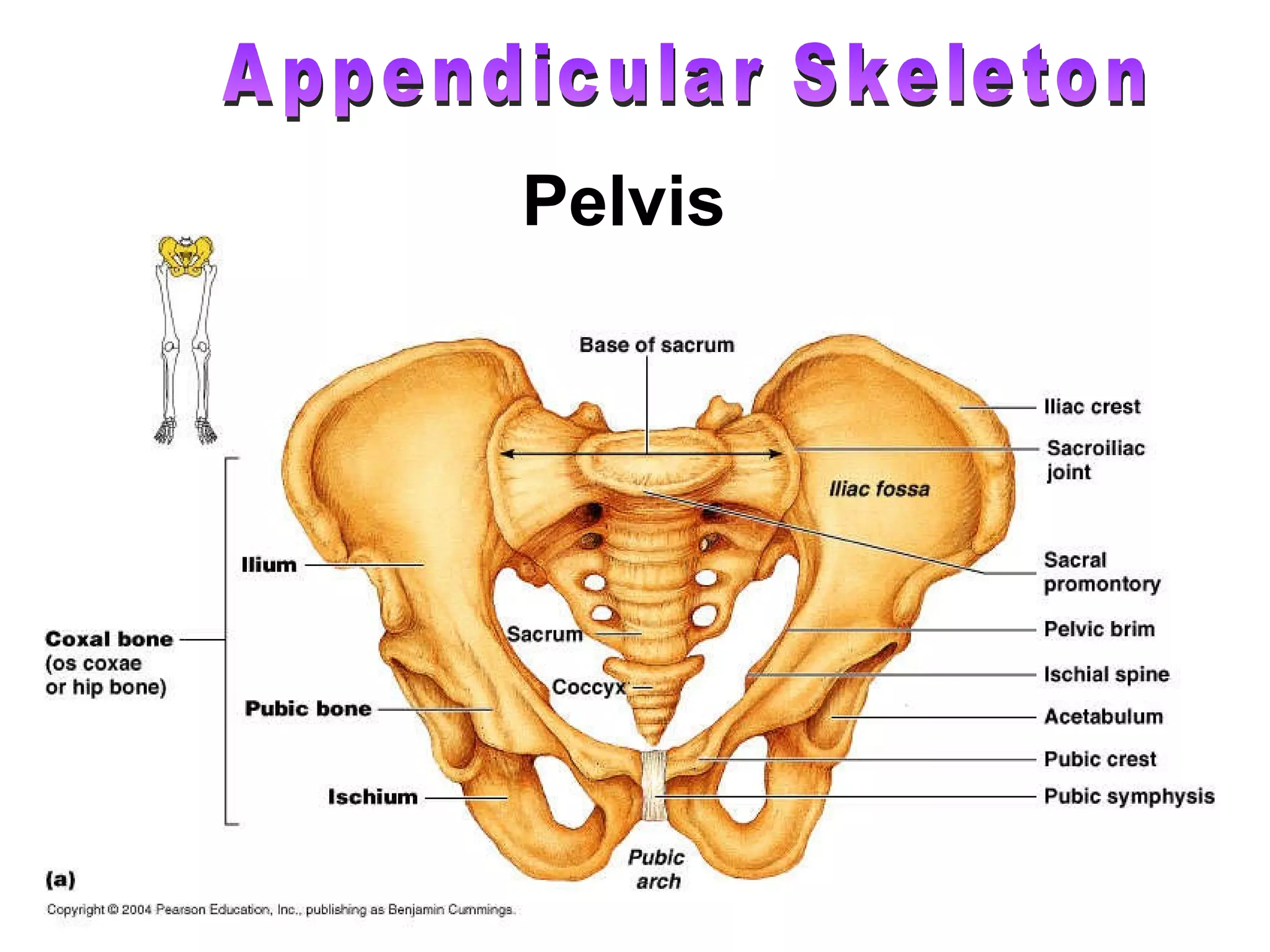
Appendicular Skeleton Pelvis
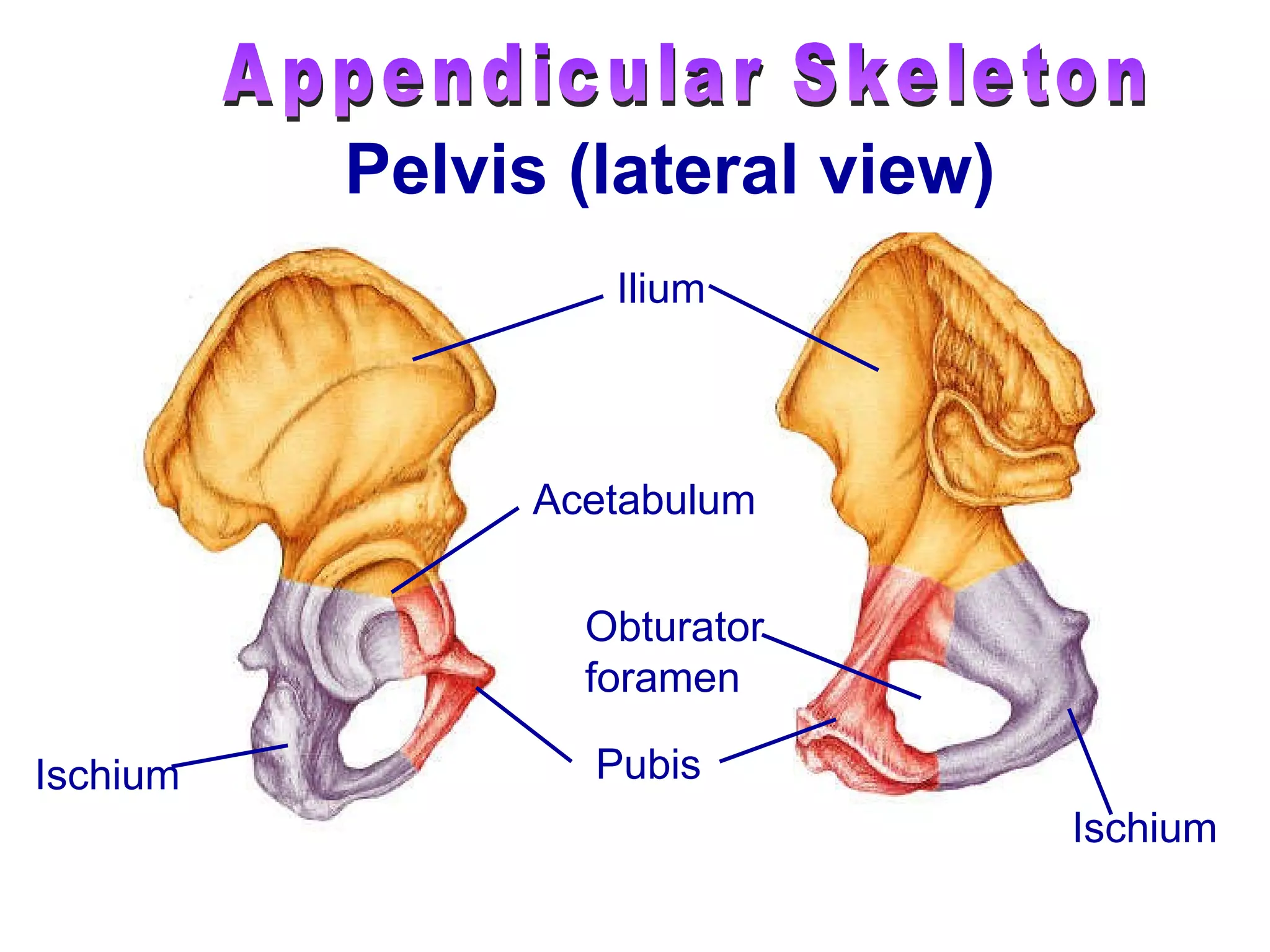
Ischium Ilium Acetabulum Pubis Ischium Obturator  foramen Appendicular Skeleton Pelvis (lateral view)
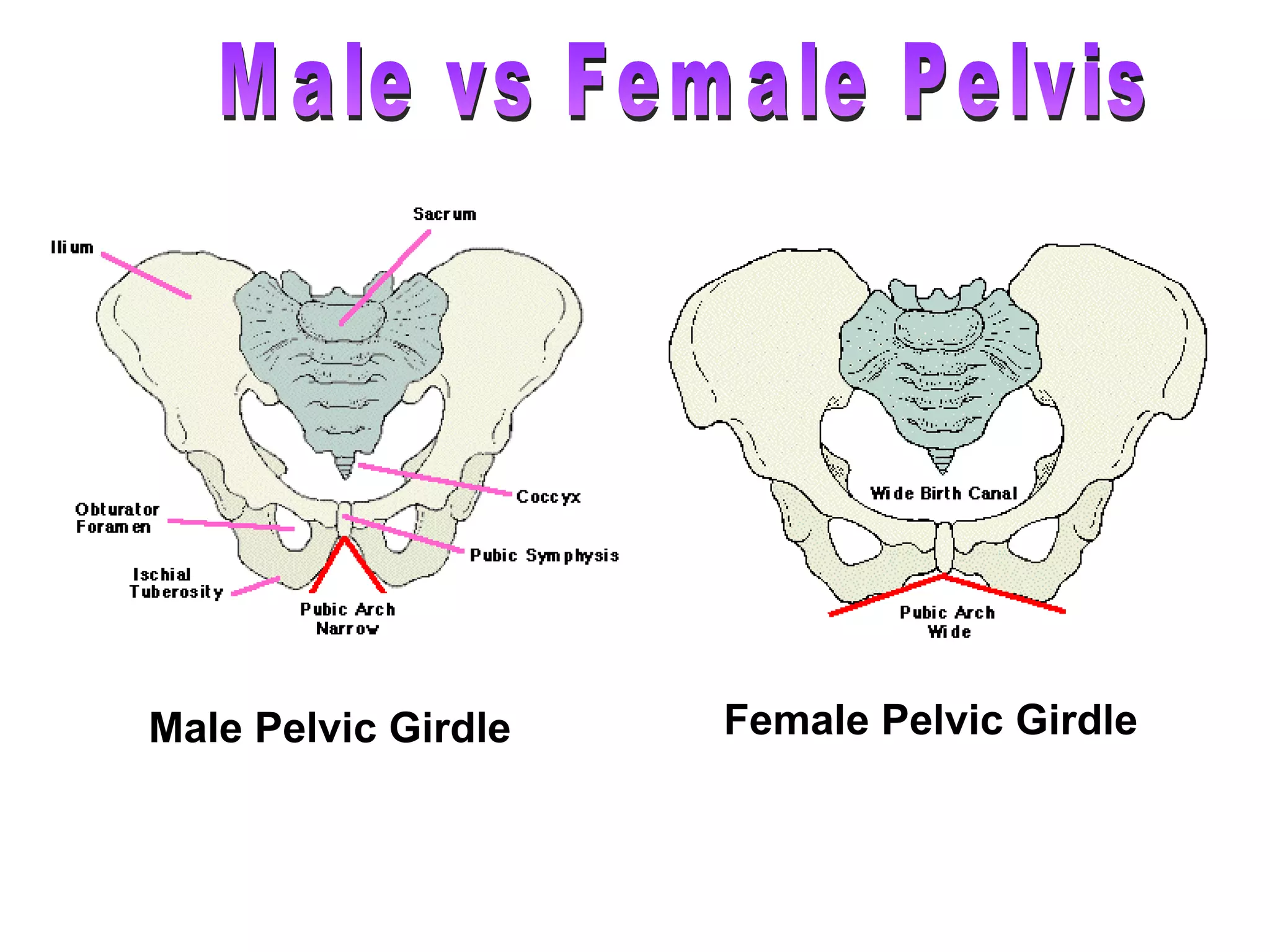
Male Pelvic Girdle                                                       Female Pelvic Girdle   Male vs Female Pelvis
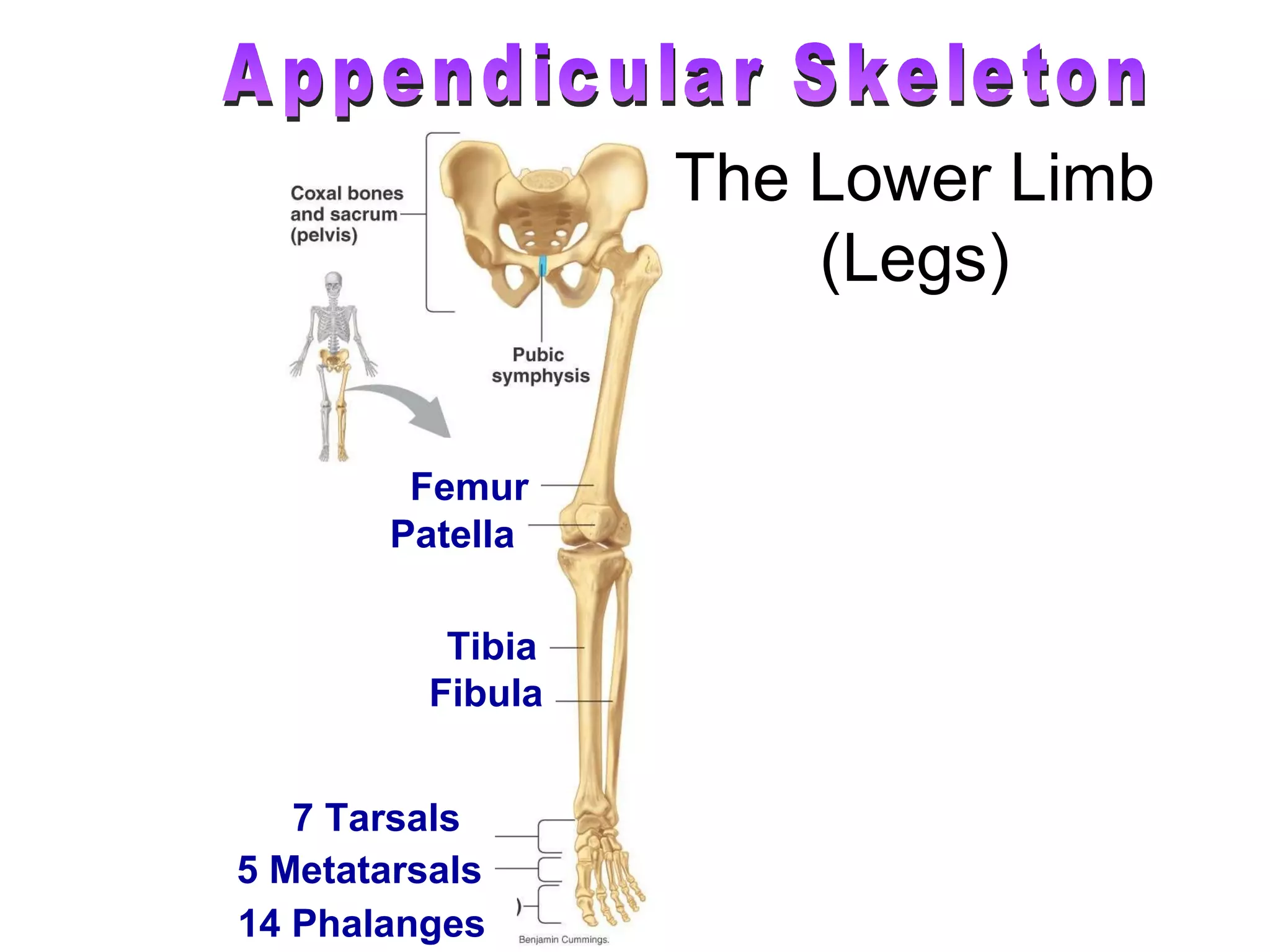
Patella The Lower Limb (Legs) Appendicular Skeleton Femur Tibia Fibula 5 Metatarsals 14 Phalanges 7 Tarsals
CLASSIFICATION OF JOINTS
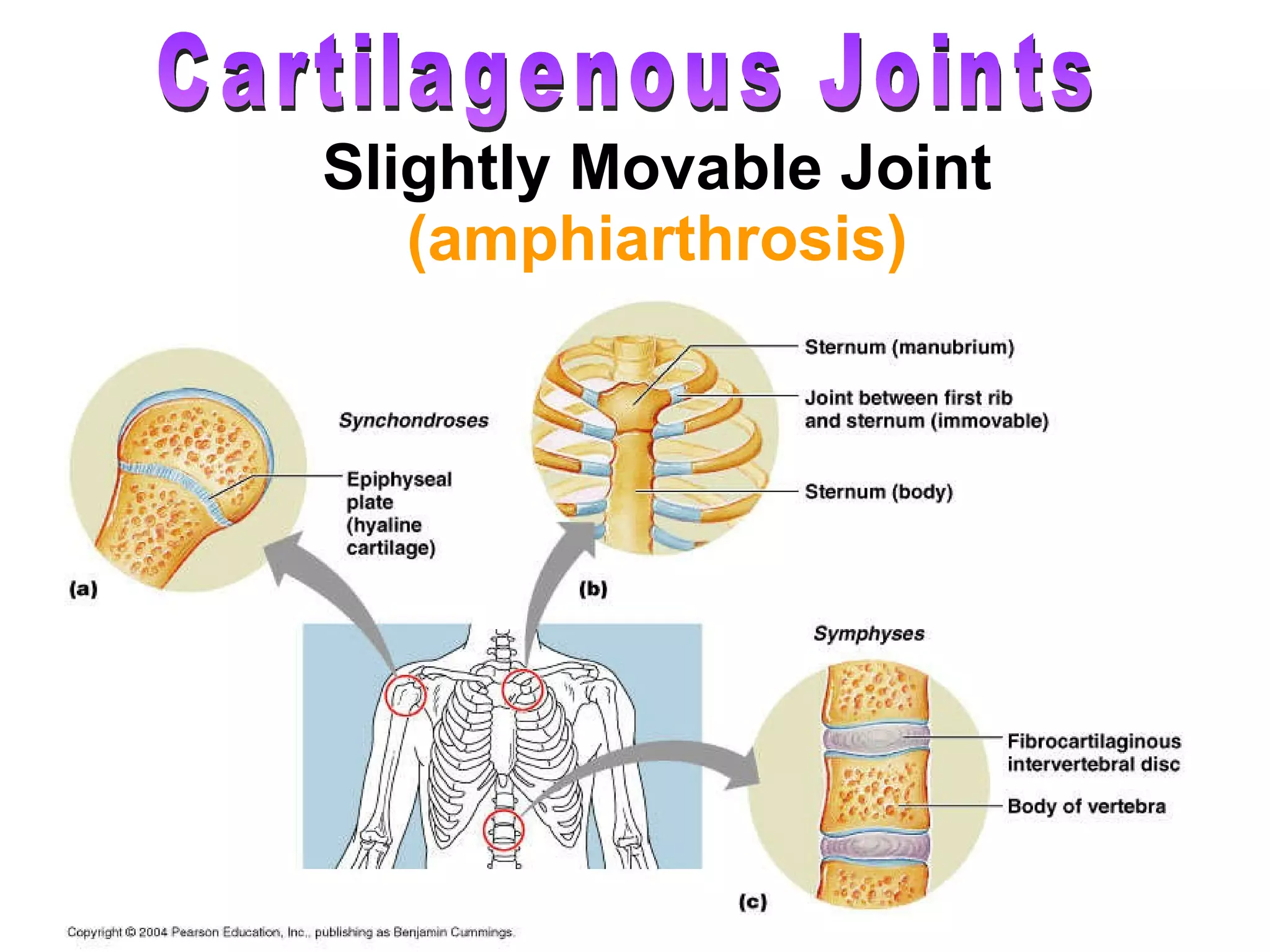
Slightly Movable Joint  (amphiarthrosis) Cartilagenous Joints
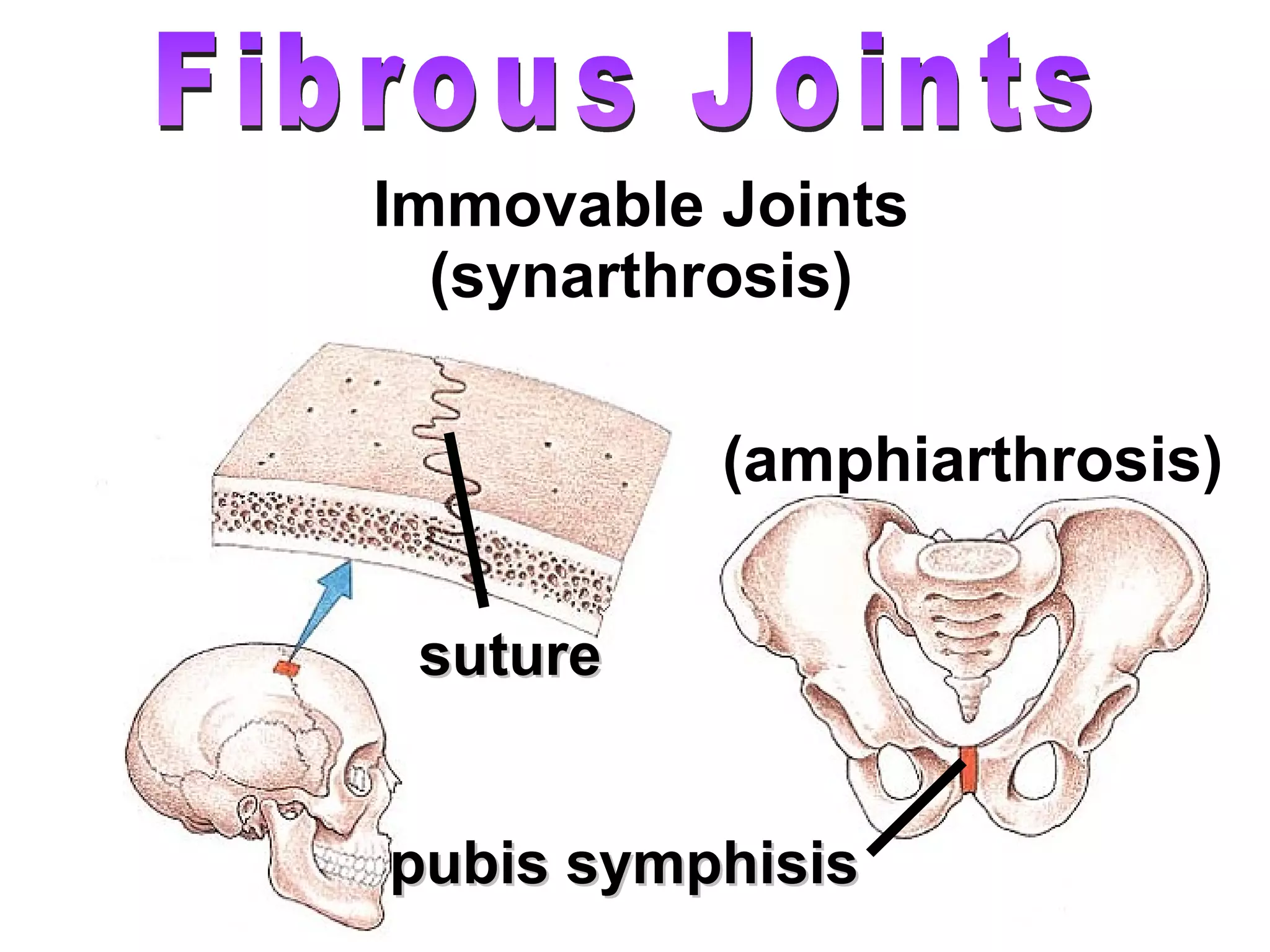
Immovable Joints (synarthrosis) Fibrous Joints (amphiarthrosis) suture pubis symphisis
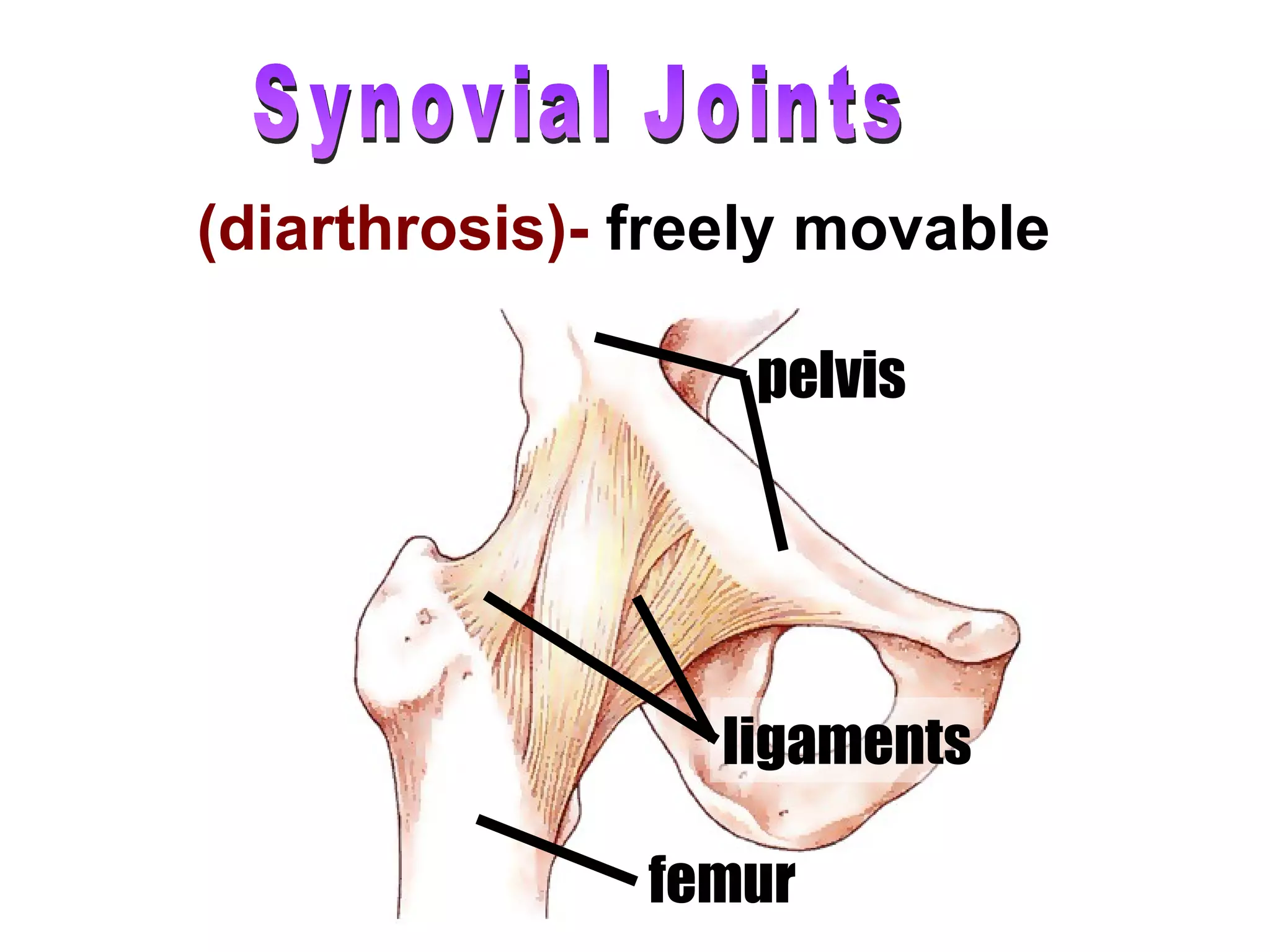
Synovial Joints (diarthrosis)-  freely movable femur ligaments pelvis
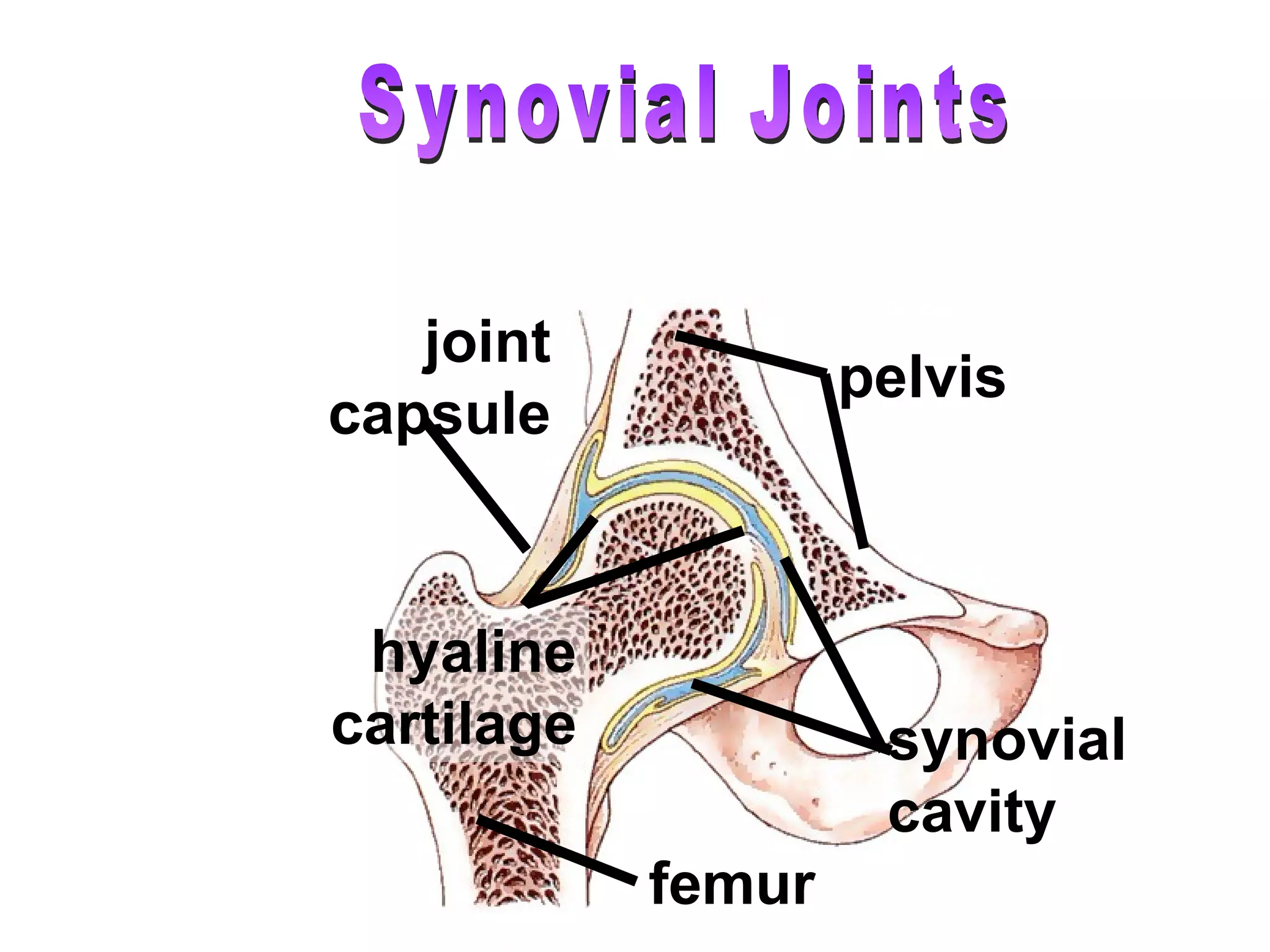
Synovial Joints femur pelvis hyaline cartilage synovial cavity joint capsule
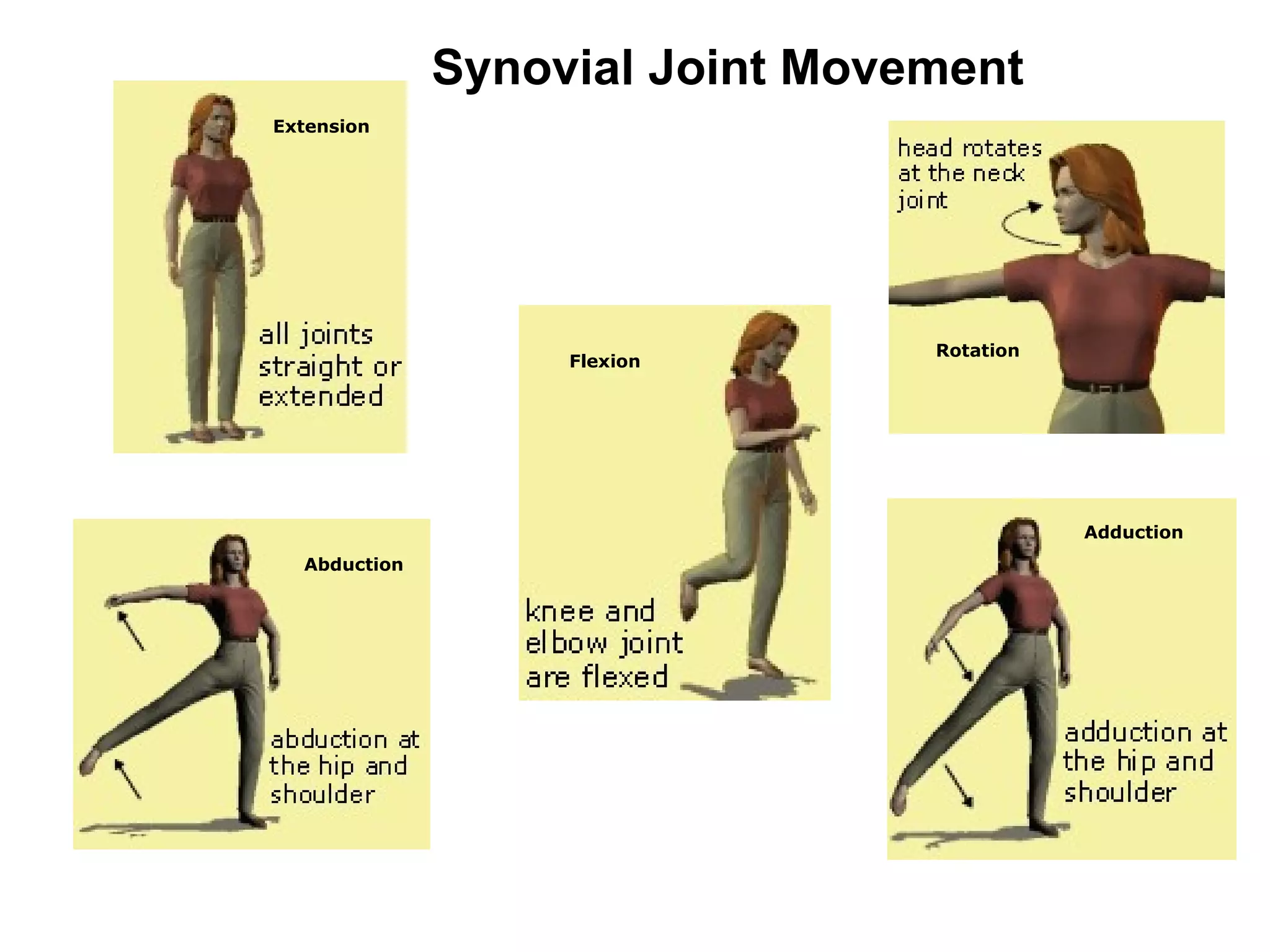
Abduction Extension Rotation Flexion Adduction Synovial Joint Movement
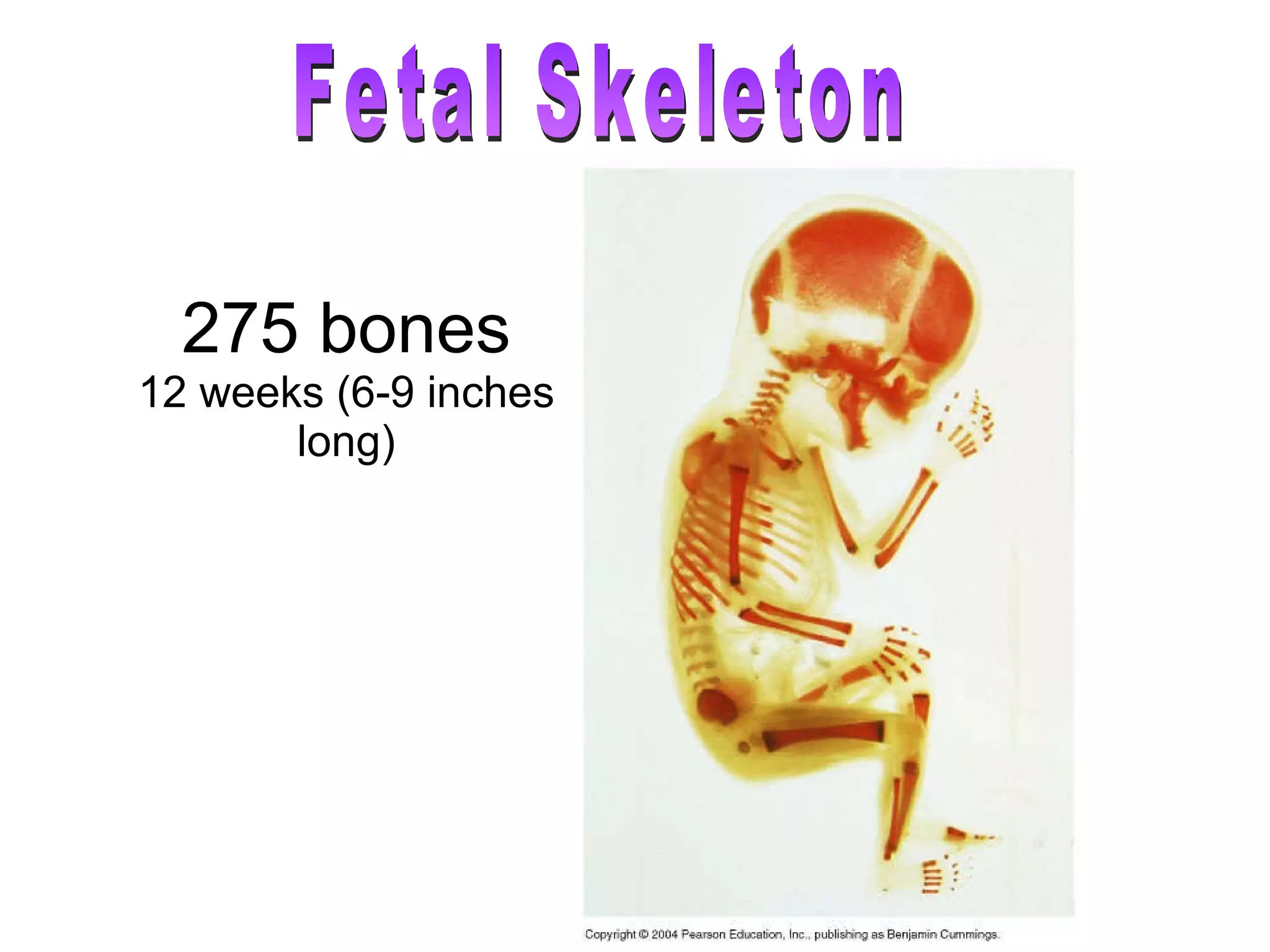
275 bones 12 weeks (6-9 inches long) Fetal Skeleton
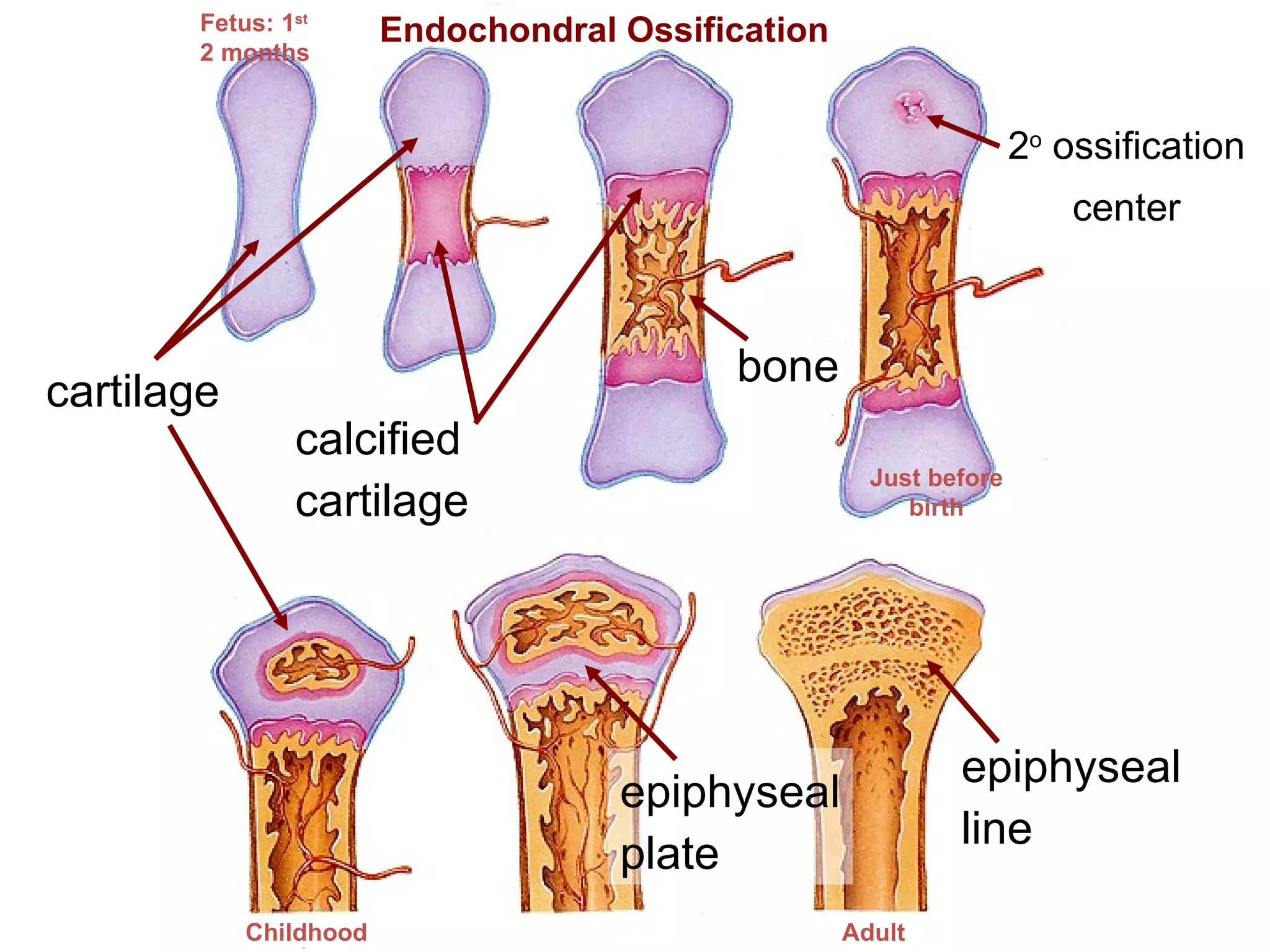
cartilage calcified cartilage bone epiphyseal plate epiphyseal line Endochondral Ossification 2 o  ossification center Fetus: 1 st  2 months Adult Childhood Just before birth
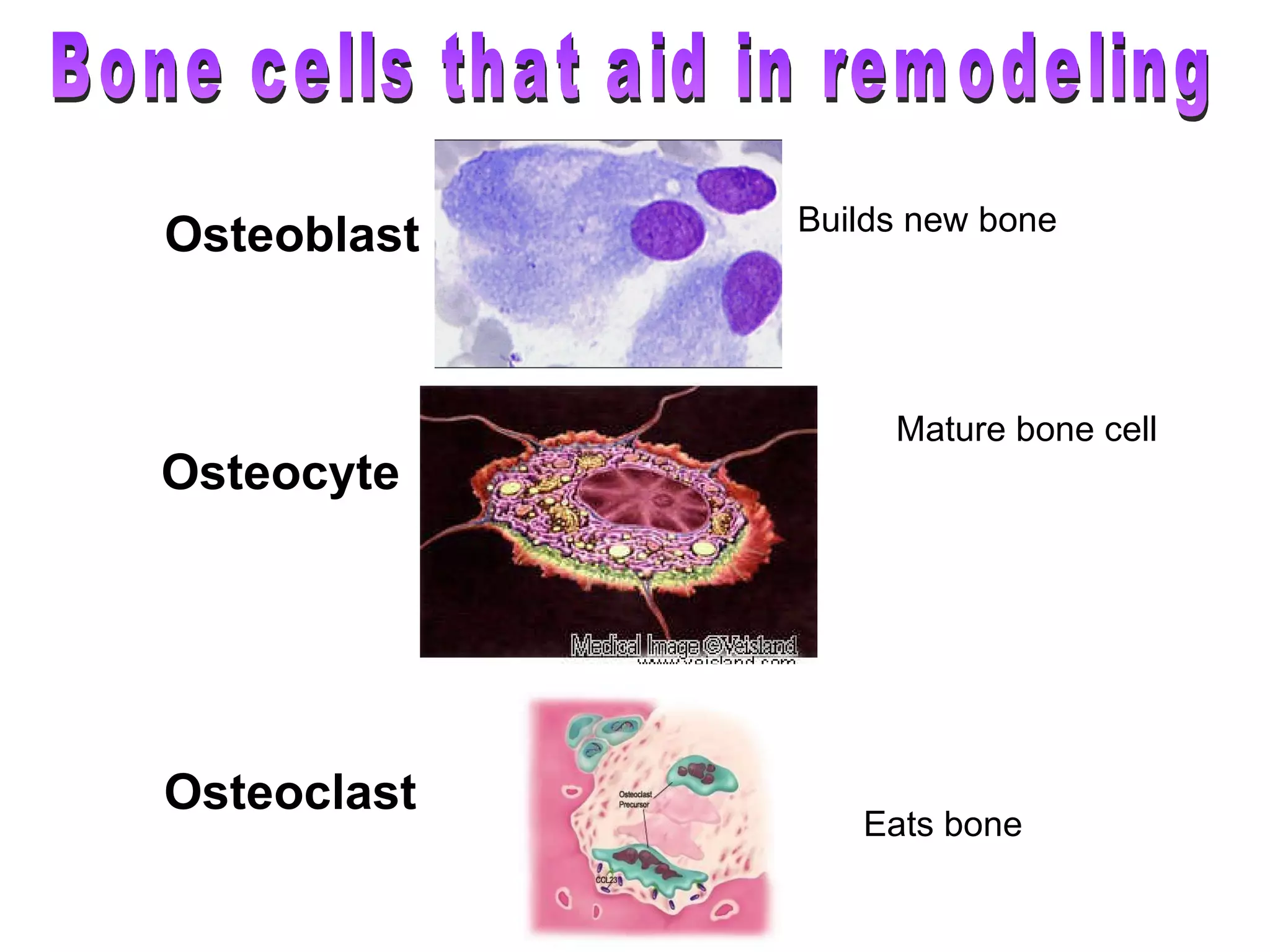
Osteoblast Osteocyte Osteoclast Eats bone Builds new bone Mature bone cell Bone cells that aid in remodeling
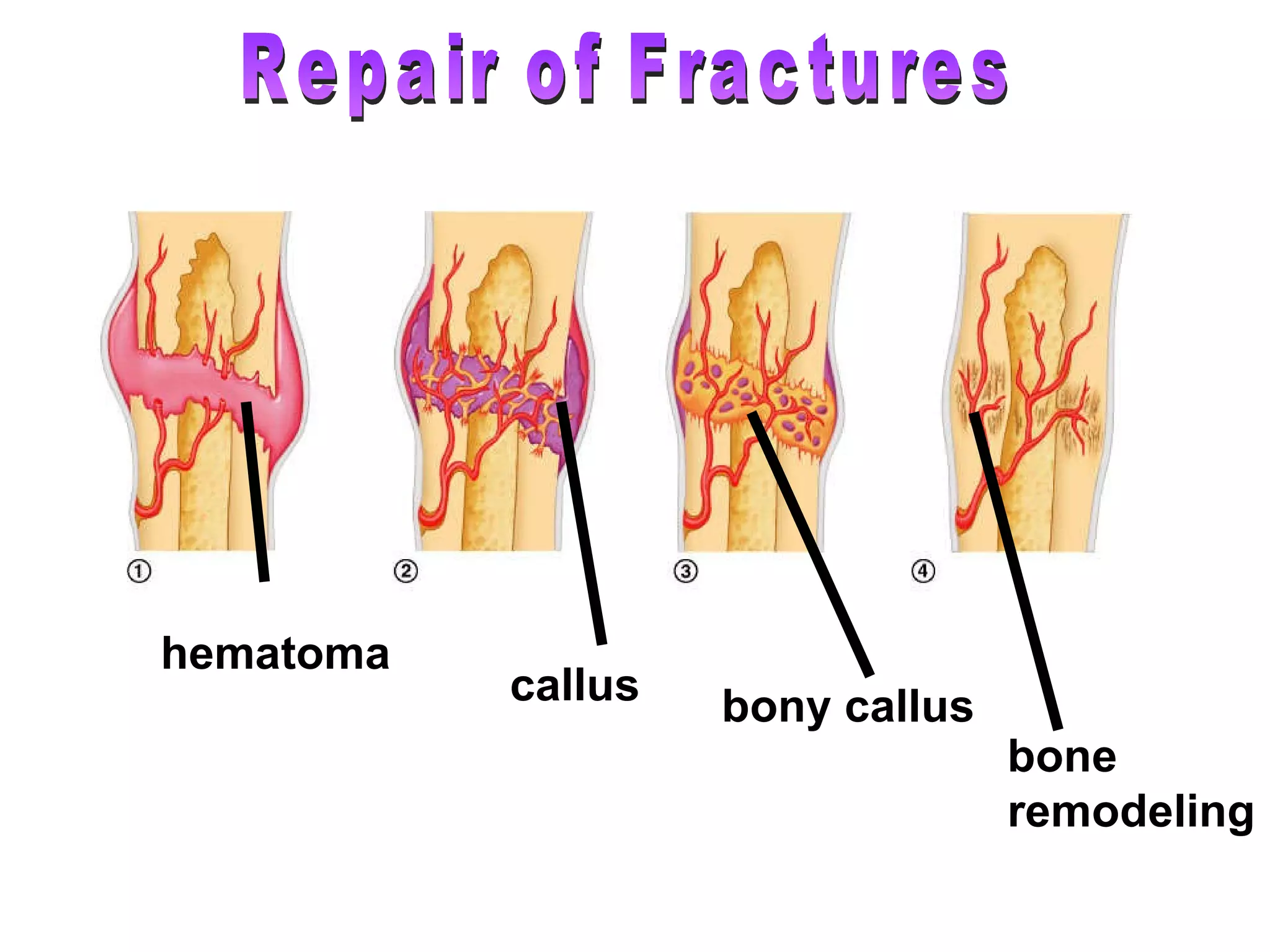
hematoma callus bony callus Repair of Fractures bone  remodeling
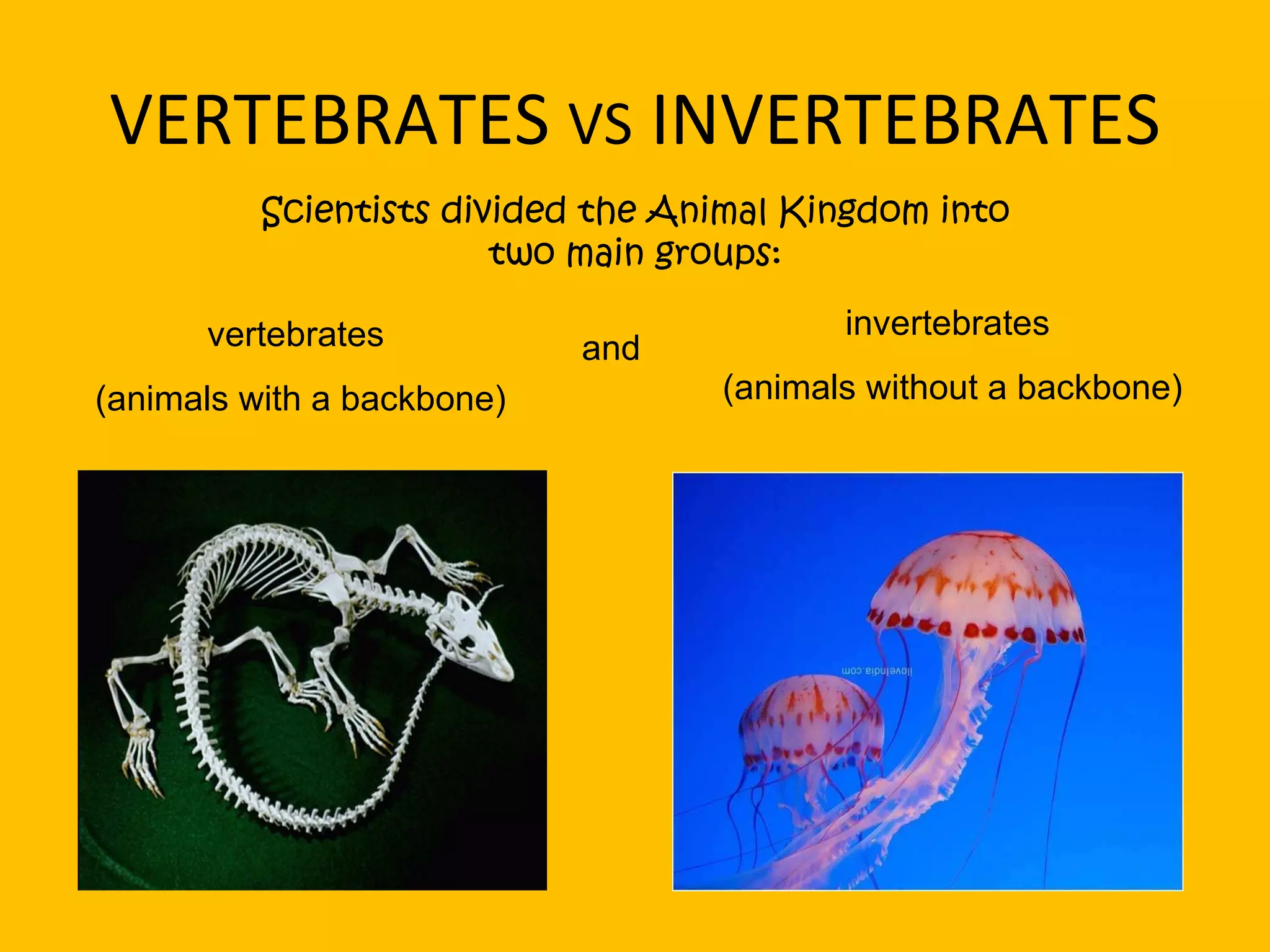
VERTEBRATES  VS  INVERTEBRATES Scientists divided the Animal Kingdom into two main groups: vertebrates  (animals with a backbone) and invertebrates  (animals without a backbone)
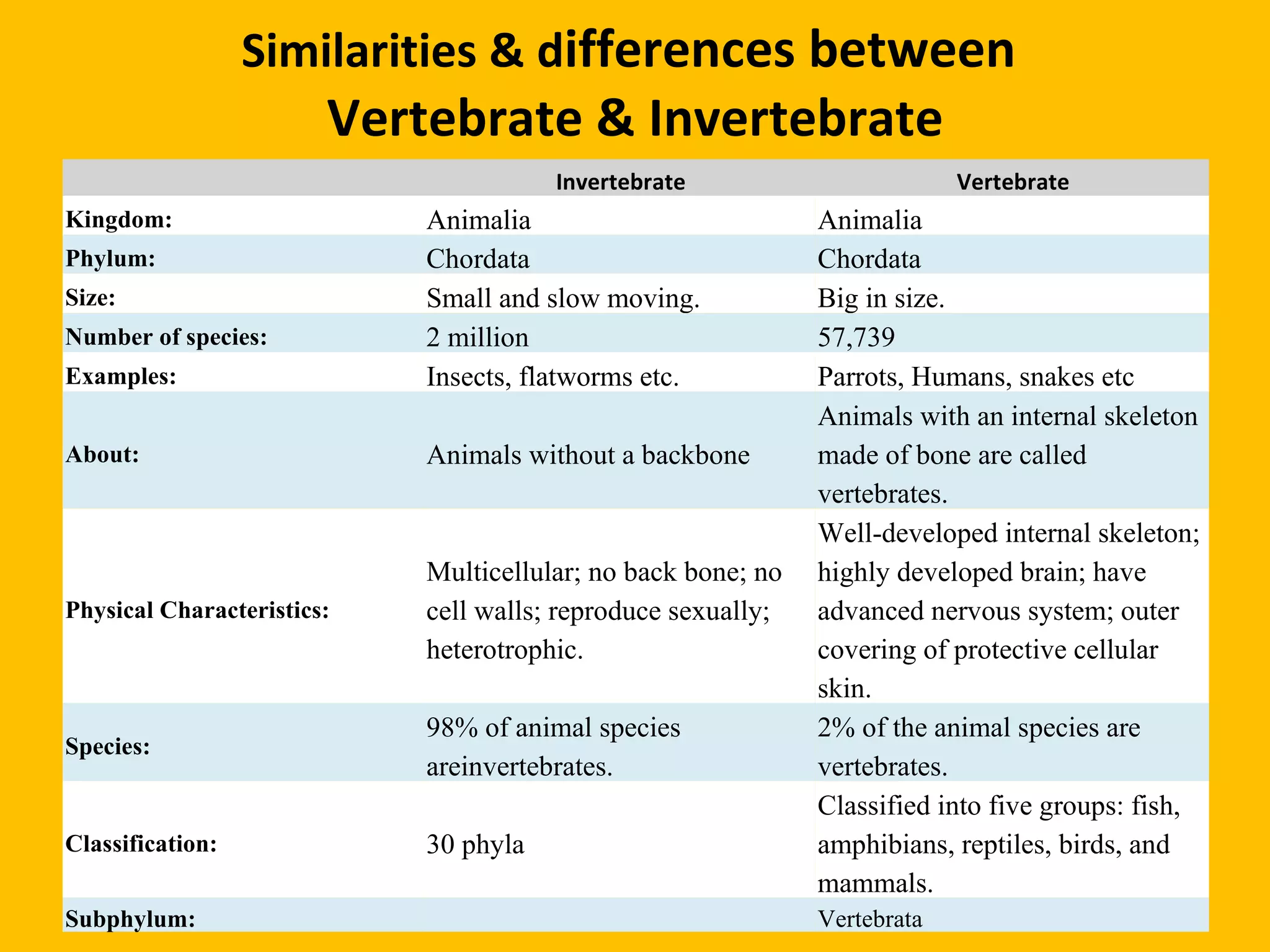
Similarities & d ifferences between  Vertebrate & Invertebrate Invertebrate Vertebrate Kingdom: Animalia Animalia Phylum: Chordata Chordata Size: Small and slow moving. Big in size. Number of species: 2 million 57,739 Examples: Insects, flatworms etc. Parrots, Humans, snakes etc About: Animals without a backbone Animals with an internal skeleton made of bone are called vertebrates. Physical Characteristics: Multicellular; no back bone; no cell walls; reproduce sexually; heterotrophic. Well-developed internal skeleton; highly developed brain; have advanced nervous system; outer covering of protective cellular skin. Species: 98% of animal species areinvertebrates. 2% of the animal species are vertebrates. Classification: 30 phyla Classified into five groups: fish, amphibians, reptiles, birds, and mammals. Subphylum: Vertebrata
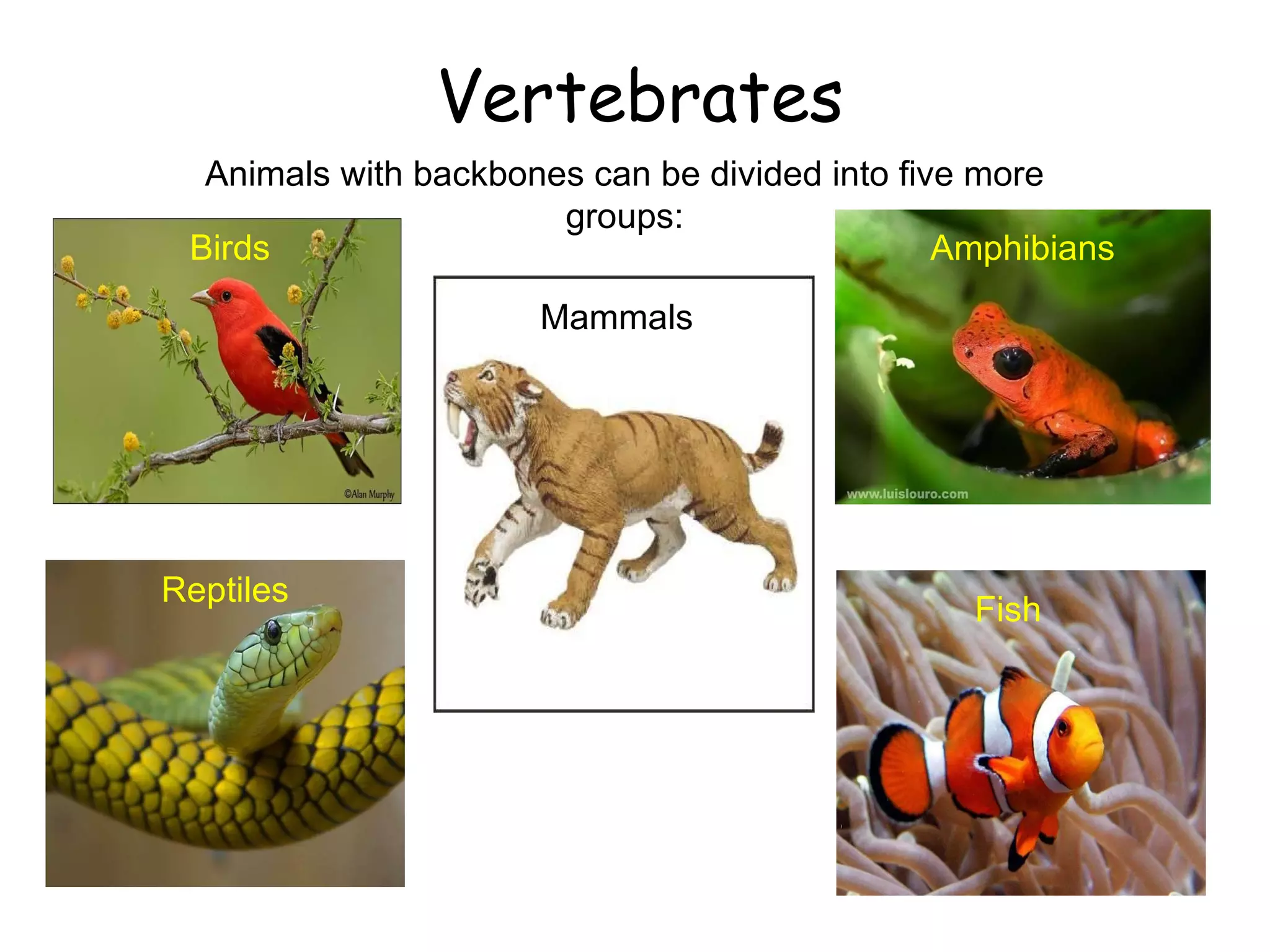
Vertebrates Animals with backbones can be divided into five more groups: Mammals Birds Amphibians Fish Reptiles
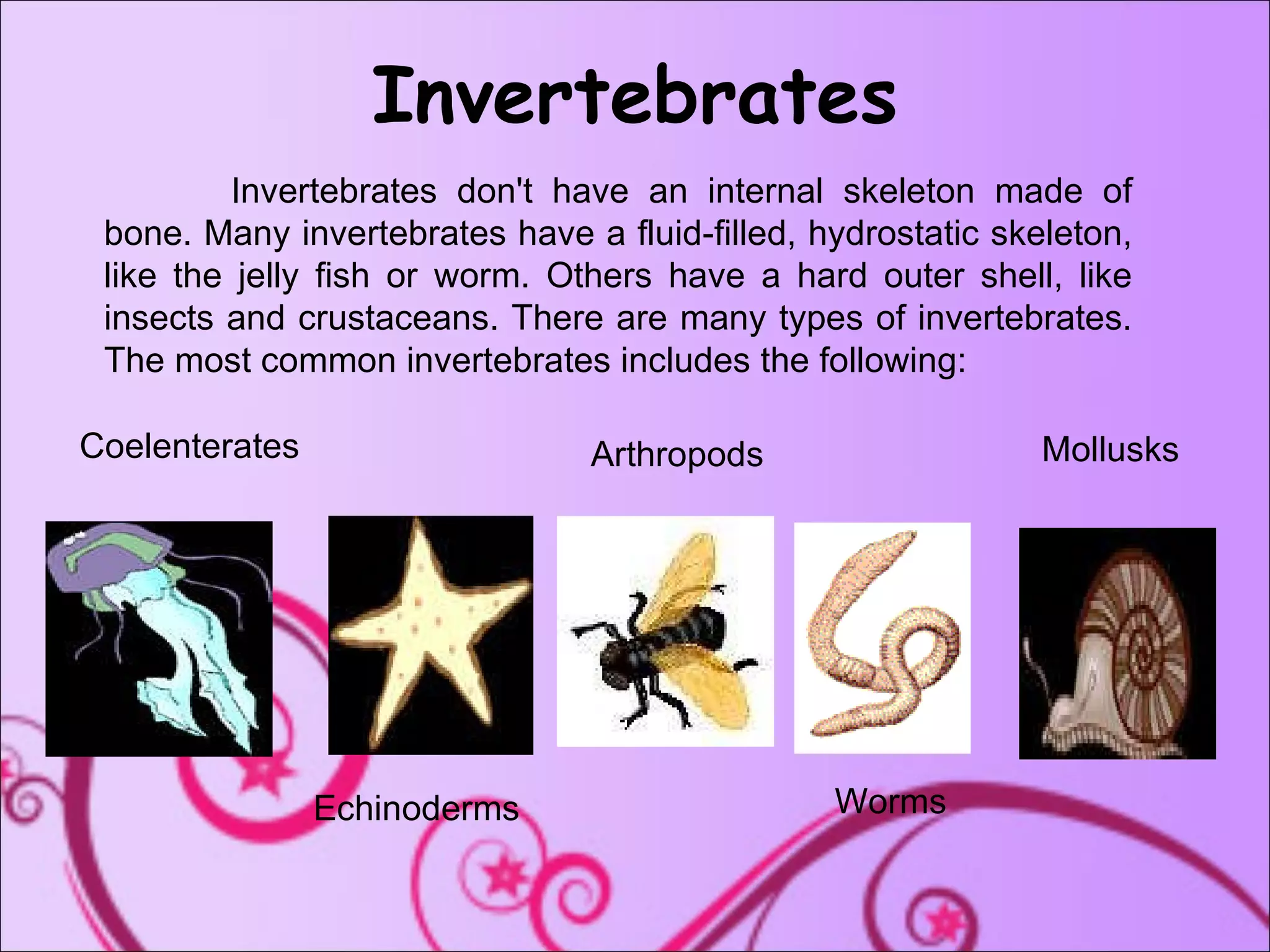
Invertebrates Invertebrates don't have an internal skeleton made of bone. Many invertebrates have a fluid-filled, hydrostatic skeleton, like the jelly fish or worm. Others have a hard outer shell, like insects and crustaceans. There are many types of invertebrates. The most common invertebrates includes the following: Coelenterates Echinoderms  Arthropods Worms Mollusks
 

Skeletal system.p2

  • 1.
    General ZoologyClass By: Sharnie Faye G. Buctuan Skeletal System
  • 2.
    Functions of theSkeletal System Support - framework that supports body and cradles its soft organs. Protection - for delicate organs, heart, lungs, brain Movement - bones act as levers for muscles. Mineral storage - calcium & phosphate Blood cell formation - hematopoiesis
  • 3.
    Bone Classification (e)Sesamoid bone (patella)
  • 4.
    Distal epiphysis Proximal epiphysis diaphysis yellow marrow Epiphyseal line periosteum compact bone spongy bone Endosteum hyaline cartilage Anatomy of a Bone Sharpey’s fibers
  • 5.
    GENERAL DIVISIONSOF THE SKELETON Skeletal system is divided into two general divisions. Axial & appendicular skeleton.
  • 6.
  • 7.
  • 8.
  • 9.
  • 10.
    Cervical Vertebrae (7) Thoracic Vertebrae (12) Lumbar Vertberae (5) Sacrum Coccyx The Vertebral Column Axial Skeleton
  • 11.
  • 12.
  • 13.
  • 14.
    Sternum True Ribs (7) False Ribs (3) Floating Ribs (2) The Thoracic Cage Axial Skeleton
  • 15.
    Sacrum & CoccyxAxial Skeleton
  • 16.
    Bones of thePectoral Girdle Appendicular Skeleton
  • 17.
    Appendicular Skeleton HumerusUlna Radius 8 Carpals 14 Phalanges 5 Metacarpals
  • 18.
  • 19.
    Ischium Ilium AcetabulumPubis Ischium Obturator foramen Appendicular Skeleton Pelvis (lateral view)
  • 20.
    Male Pelvic Girdle                                                    Female Pelvic Girdle Male vs Female Pelvis
  • 21.
    Patella The LowerLimb (Legs) Appendicular Skeleton Femur Tibia Fibula 5 Metatarsals 14 Phalanges 7 Tarsals
  • 22.
  • 23.
    Slightly Movable Joint (amphiarthrosis) Cartilagenous Joints
  • 24.
    Immovable Joints (synarthrosis)Fibrous Joints (amphiarthrosis) suture pubis symphisis
  • 25.
    Synovial Joints (diarthrosis)- freely movable femur ligaments pelvis
  • 26.
    Synovial Joints femurpelvis hyaline cartilage synovial cavity joint capsule
  • 27.
    Abduction Extension RotationFlexion Adduction Synovial Joint Movement
  • 28.
    275 bones 12weeks (6-9 inches long) Fetal Skeleton
  • 29.
    cartilage calcified cartilagebone epiphyseal plate epiphyseal line Endochondral Ossification 2 o ossification center Fetus: 1 st 2 months Adult Childhood Just before birth
  • 30.
    Osteoblast Osteocyte OsteoclastEats bone Builds new bone Mature bone cell Bone cells that aid in remodeling
  • 31.
    hematoma callus bonycallus Repair of Fractures bone remodeling
  • 32.
    VERTEBRATES VS INVERTEBRATES Scientists divided the Animal Kingdom into two main groups: vertebrates (animals with a backbone) and invertebrates (animals without a backbone)
  • 33.
    Similarities & differences between Vertebrate & Invertebrate Invertebrate Vertebrate Kingdom: Animalia Animalia Phylum: Chordata Chordata Size: Small and slow moving. Big in size. Number of species: 2 million 57,739 Examples: Insects, flatworms etc. Parrots, Humans, snakes etc About: Animals without a backbone Animals with an internal skeleton made of bone are called vertebrates. Physical Characteristics: Multicellular; no back bone; no cell walls; reproduce sexually; heterotrophic. Well-developed internal skeleton; highly developed brain; have advanced nervous system; outer covering of protective cellular skin. Species: 98% of animal species areinvertebrates. 2% of the animal species are vertebrates. Classification: 30 phyla Classified into five groups: fish, amphibians, reptiles, birds, and mammals. Subphylum: Vertebrata
  • 34.
    Vertebrates Animals withbackbones can be divided into five more groups: Mammals Birds Amphibians Fish Reptiles
  • 35.
    Invertebrates Invertebrates don'thave an internal skeleton made of bone. Many invertebrates have a fluid-filled, hydrostatic skeleton, like the jelly fish or worm. Others have a hard outer shell, like insects and crustaceans. There are many types of invertebrates. The most common invertebrates includes the following: Coelenterates Echinoderms  Arthropods Worms Mollusks
  • 36.

Editor's Notes

  • #31 Osteoblasts Osteoblasts are responsible for building new bone and lie at the centre of bone physiology. Their functions include the synthesis of collagen and the control of mineralisation. Osteoclasts Osteoclasts are specialised cells that resorb bone. They work by sealing off an area of bone surface then, when activated, they pump out hydrogen ions to produce a very acid environment, which dissolves the hydroxyapatite. Osteocytes Bone adapts to applied forces by growing stronger in order to withstand them; it is known that exercise can help to improve bone strength. Osteocytes are thought to be part of the cellular feed-back mechanism which directs bone to form in the places where it is most needed. They lie within mineralised bone and it is thought that they may detect mechanical deformation and mediate the response of the osteoblasts.