Tushar Negi
7blue
Rollno.=48
Submitted to Inderjot
mam
 Locomotion
 Types of curvature
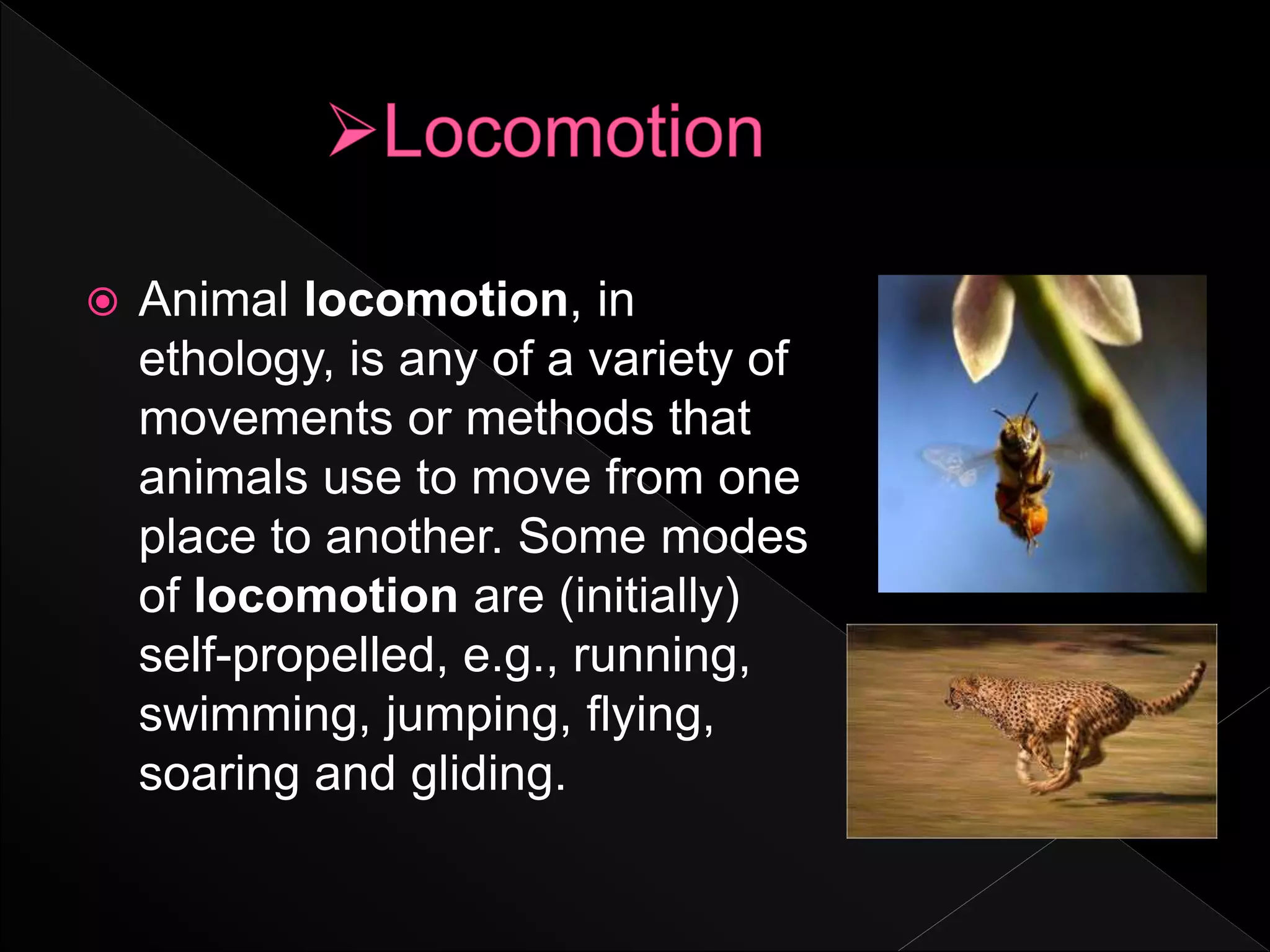
 Animal locomotion, in
ethology, is any of a variety of
movements or methods that
animals use to move from one
place to another. Some modes
of locomotion are (initially)
self-propelled, e.g., running,
swimming, jumping, flying,
soaring and gliding.
 The movements which allow organs of
plants to move in or the other direction is
called movements of curvature. These
movements are of two types i.e. mechanical
(found in non living organs of plant) and
another is vital movements (found in living
organs of plants).
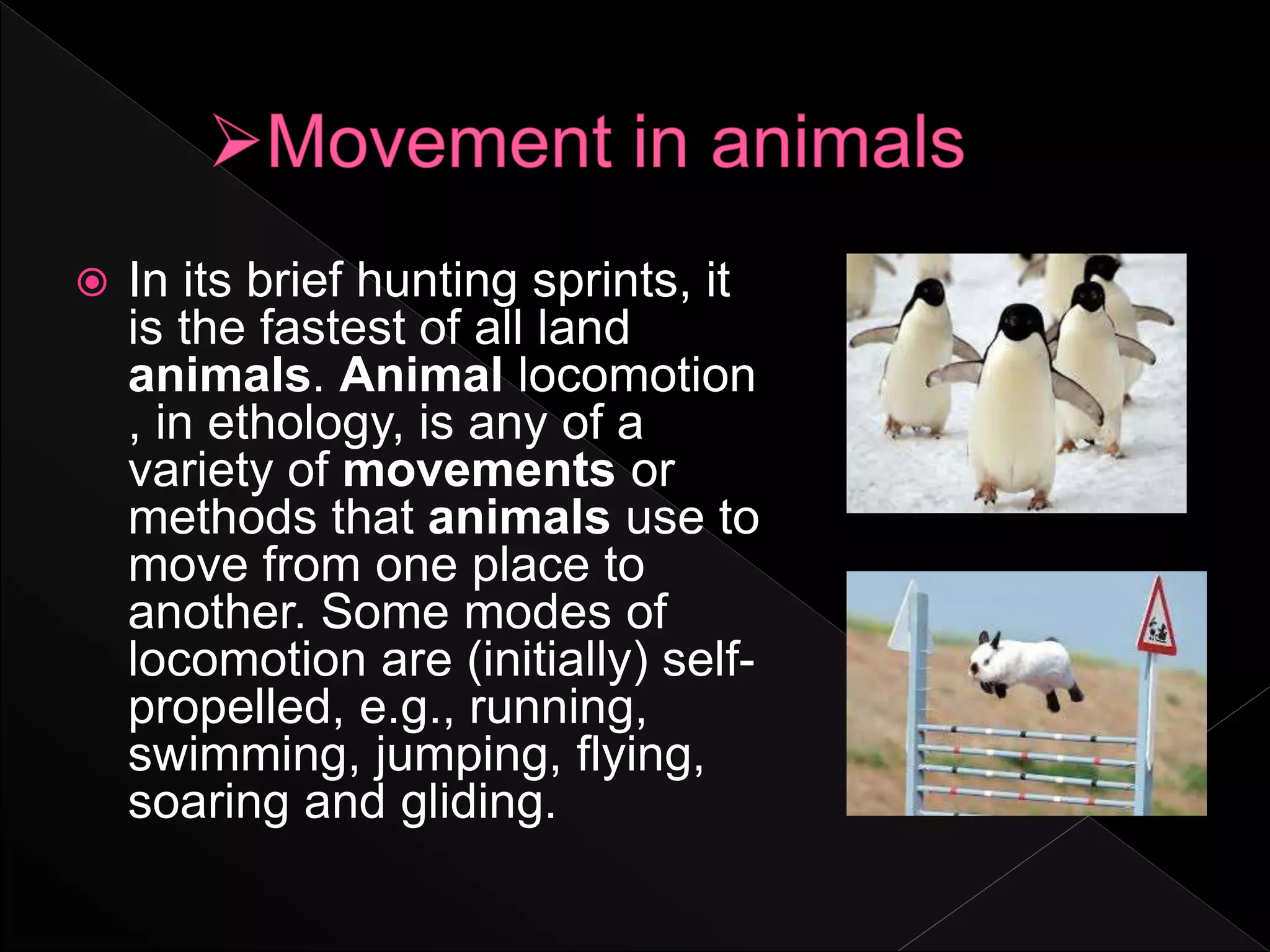
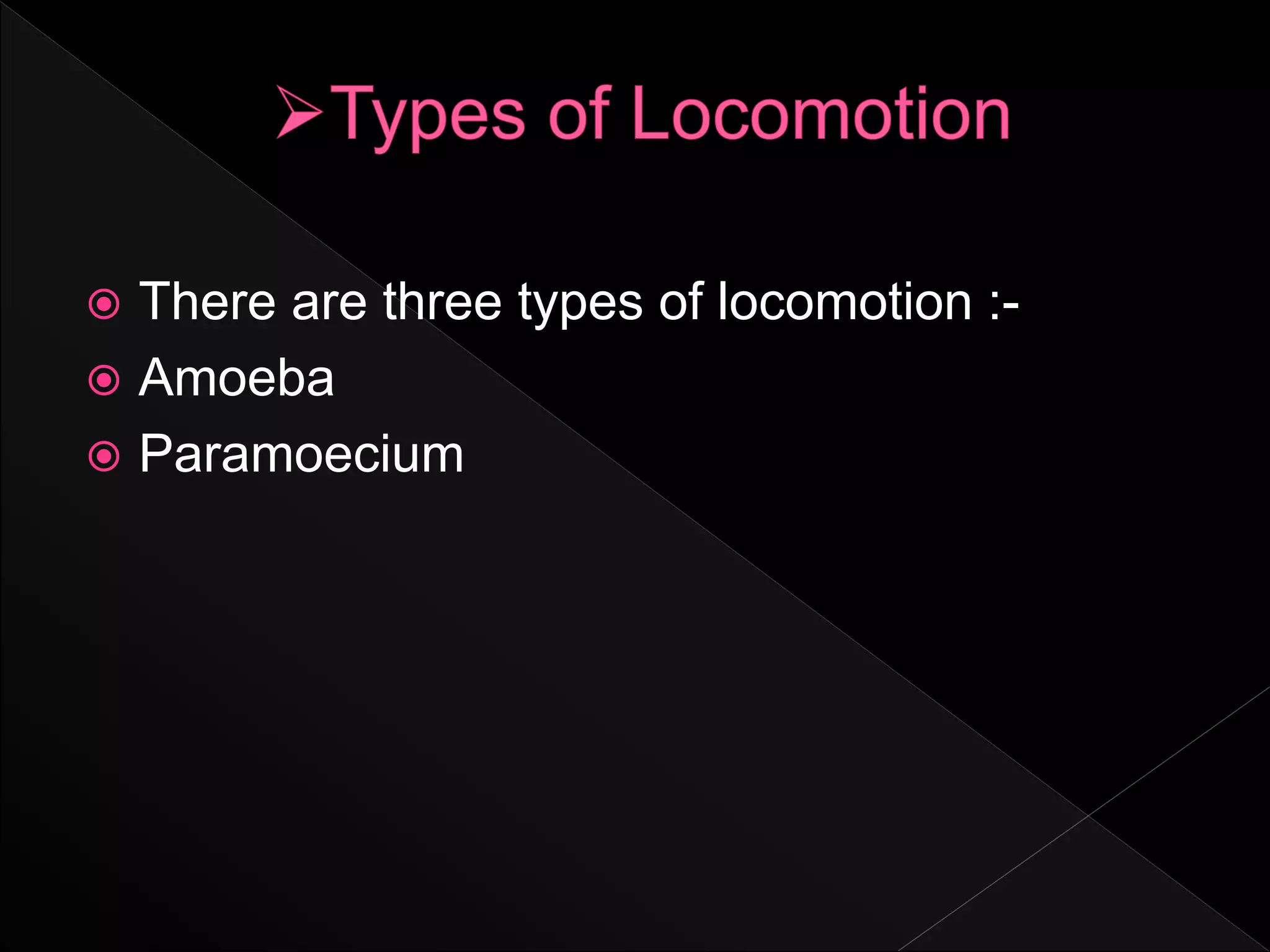
 In its brief hunting sprints, it
is the fastest of all land
animals. Animal locomotion
, in ethology, is any of a
variety of movements or
methods that animals use to
move from one place to
another. Some modes of
locomotion are (initially) self-
propelled, e.g., running,
swimming, jumping, flying,
soaring and gliding.
 There are three types of locomotion :-
 Amoeba
 Paramoecium
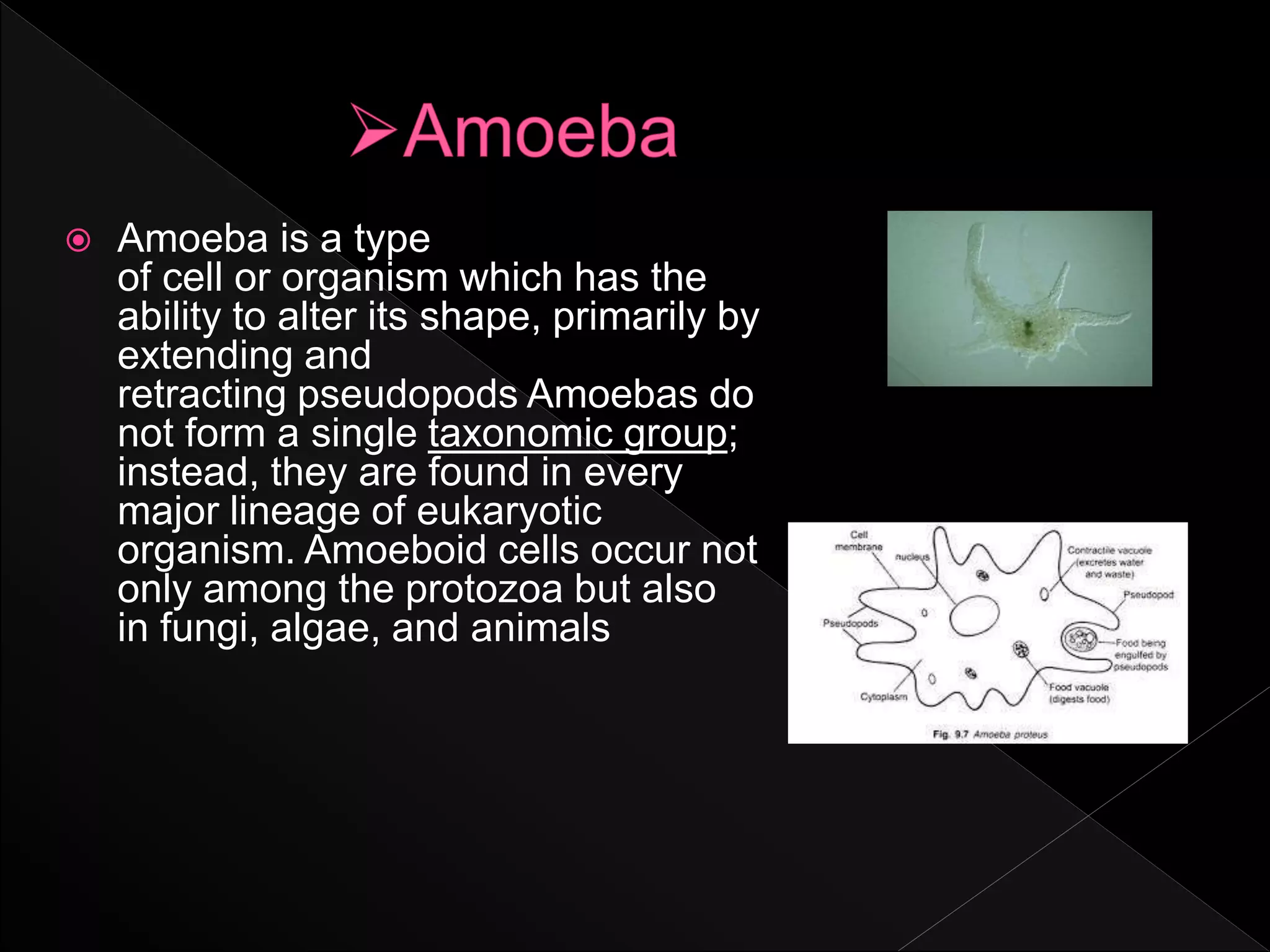
 Amoeba is a type
of cell or organism which has the
ability to alter its shape, primarily by
extending and
retracting pseudopods Amoebas do
not form a single taxonomic group;
instead, they are found in every
major lineage of eukaryotic
organism. Amoeboid cells occur not
only among the protozoa but also
in fungi, algae, and animals
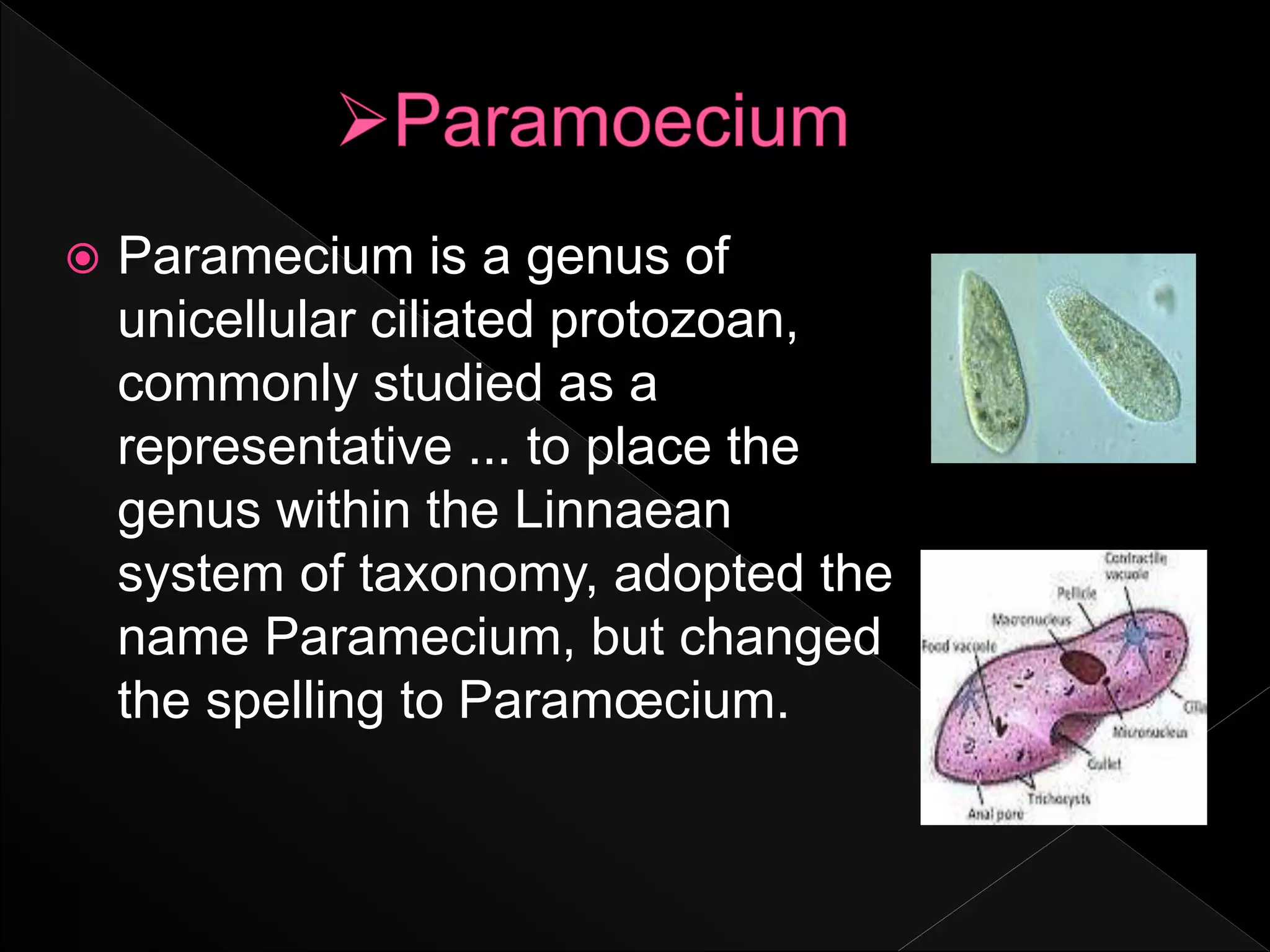
 Paramecium is a genus of
unicellular ciliated protozoan,
commonly studied as a
representative ... to place the
genus within the Linnaean
system of taxonomy, adopted the
name Paramecium, but changed
the spelling to Paramœcium.
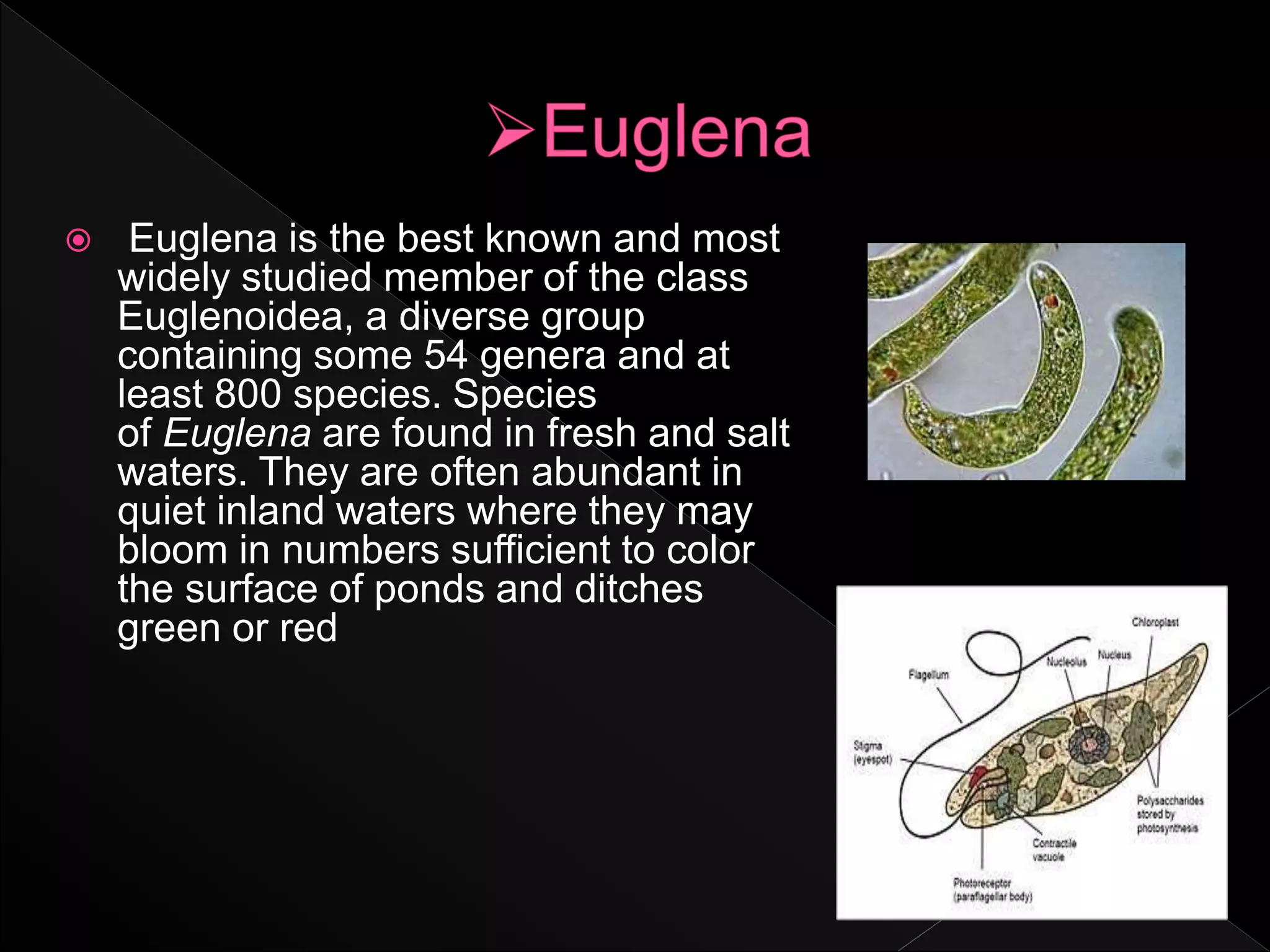
 Euglena is the best known and most
widely studied member of the class
Euglenoidea, a diverse group
containing some 54 genera and at
least 800 species. Species
of Euglena are found in fresh and salt
waters. They are often abundant in
quiet inland waters where they may
bloom in numbers sufficient to color
the surface of ponds and ditches
green or red
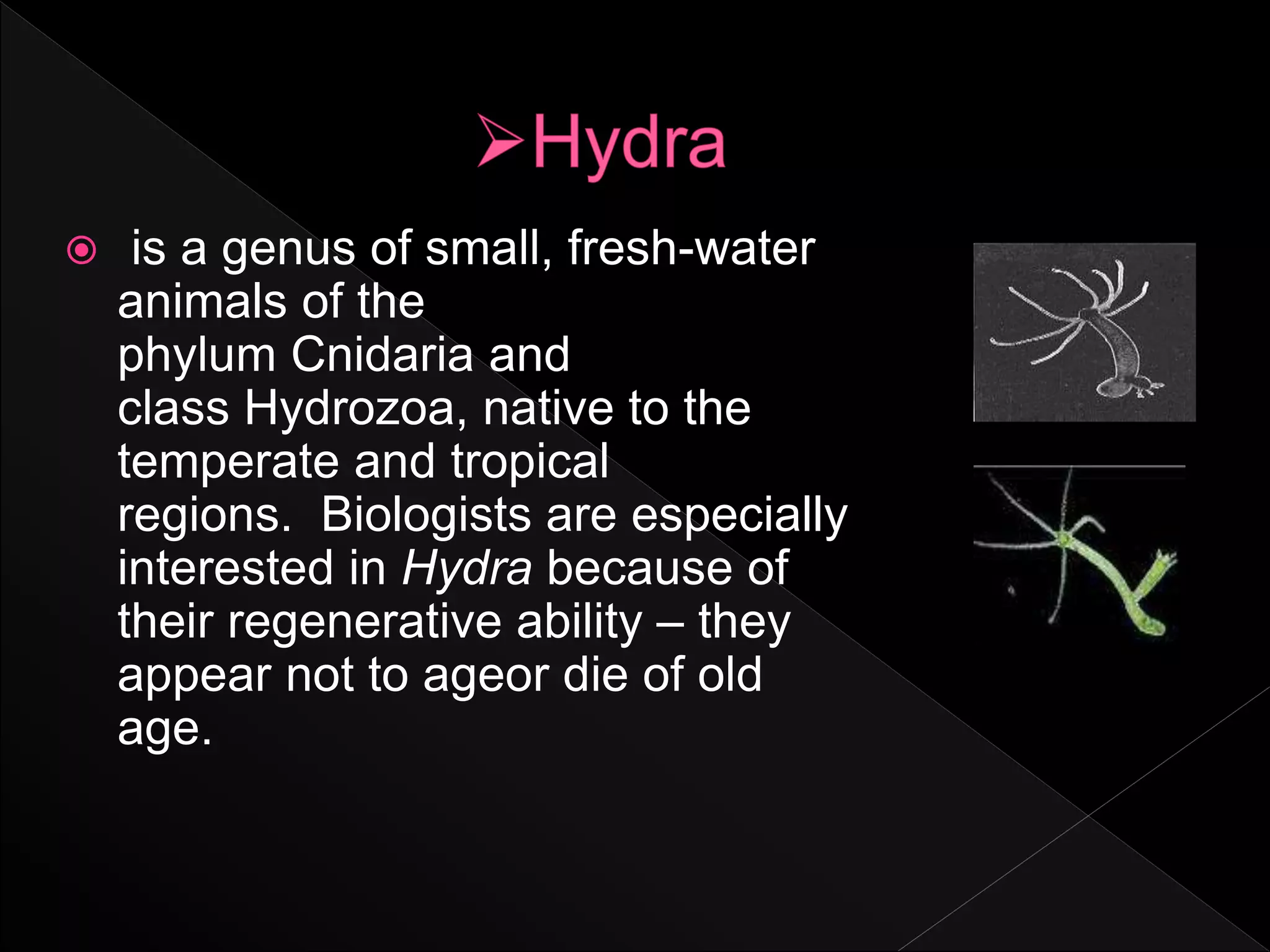
 is a genus of small, fresh-water
animals of the
phylum Cnidaria and
class Hydrozoa, native to the
temperate and tropical
regions. Biologists are especially
interested in Hydra because of
their regenerative ability – they
appear not to ageor die of old
age.
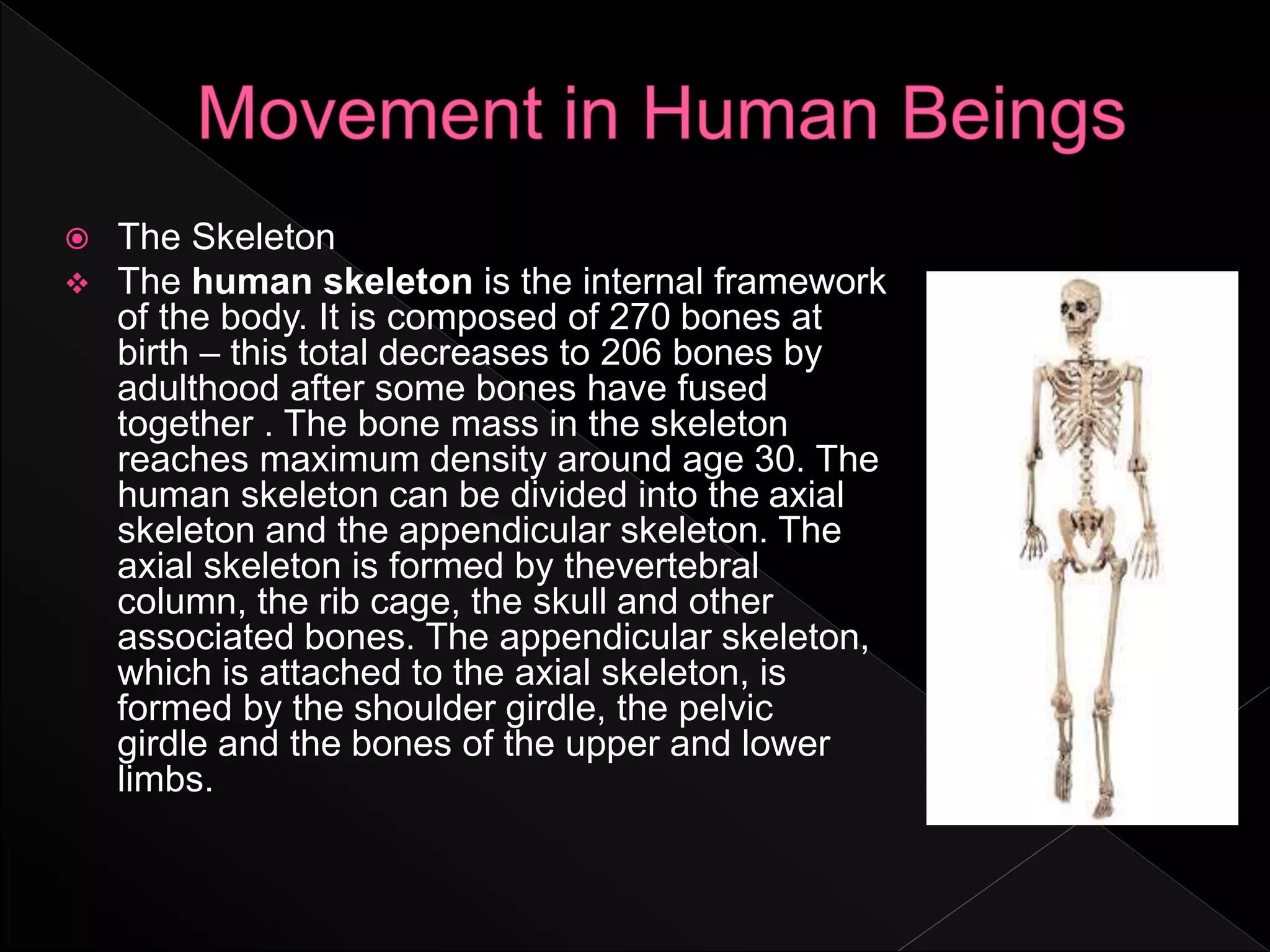
 The Skeleton
 The human skeleton is the internal framework
of the body. It is composed of 270 bones at
birth – this total decreases to 206 bones by
adulthood after some bones have fused
together . The bone mass in the skeleton
reaches maximum density around age 30. The
human skeleton can be divided into the axial
skeleton and the appendicular skeleton. The
axial skeleton is formed by thevertebral
column, the rib cage, the skull and other
associated bones. The appendicular skeleton,
which is attached to the axial skeleton, is
formed by the shoulder girdle, the pelvic
girdle and the bones of the upper and lower
limbs.
 They are of three types:-
1. Tendons
2. Ligaments
3. Cartilages
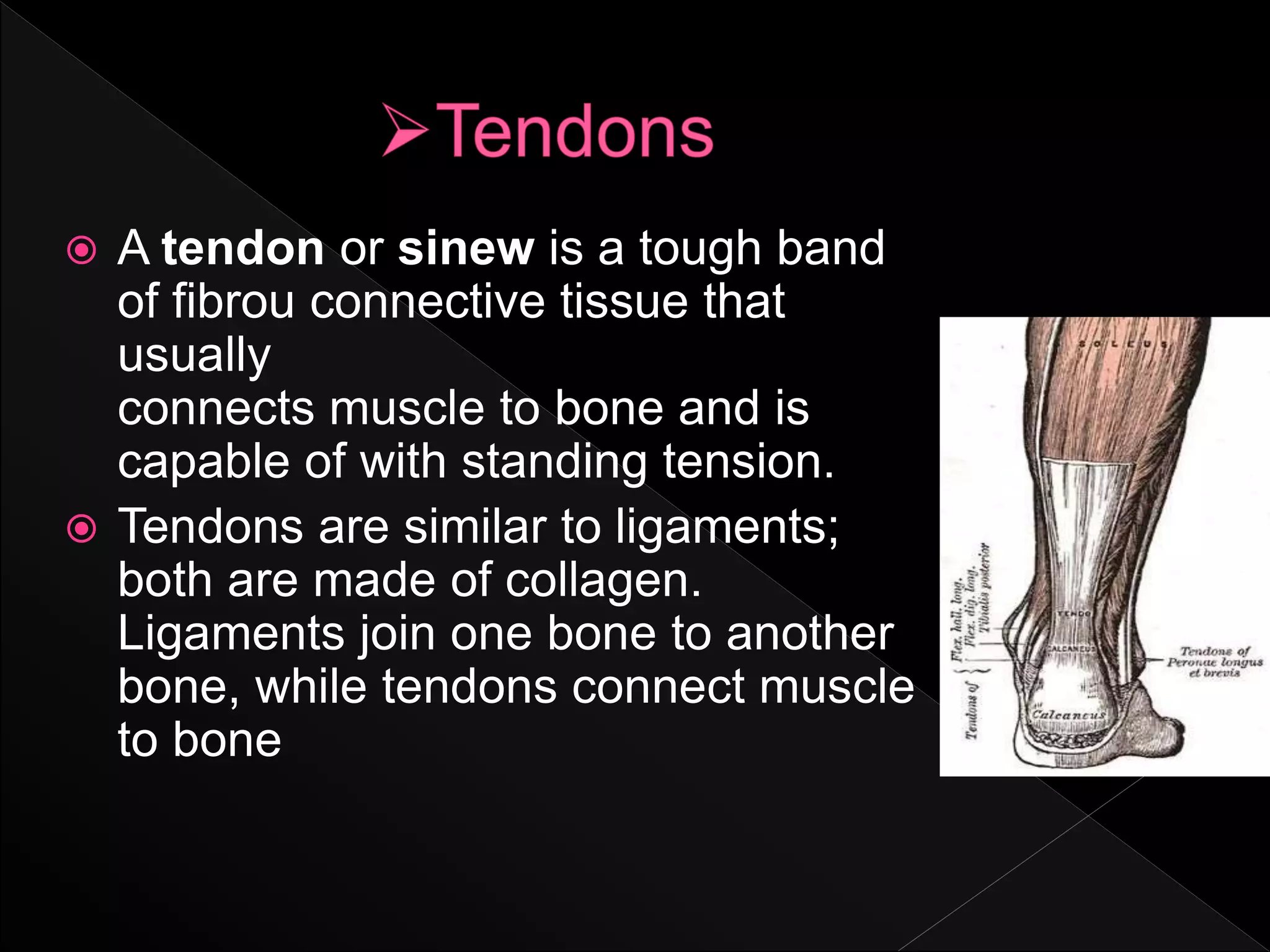
 A tendon or sinew is a tough band
of fibrou connective tissue that
usually
connects muscle to bone and is
capable of with standing tension.
 Tendons are similar to ligaments;
both are made of collagen.
Ligaments join one bone to another
bone, while tendons connect muscle
to bone
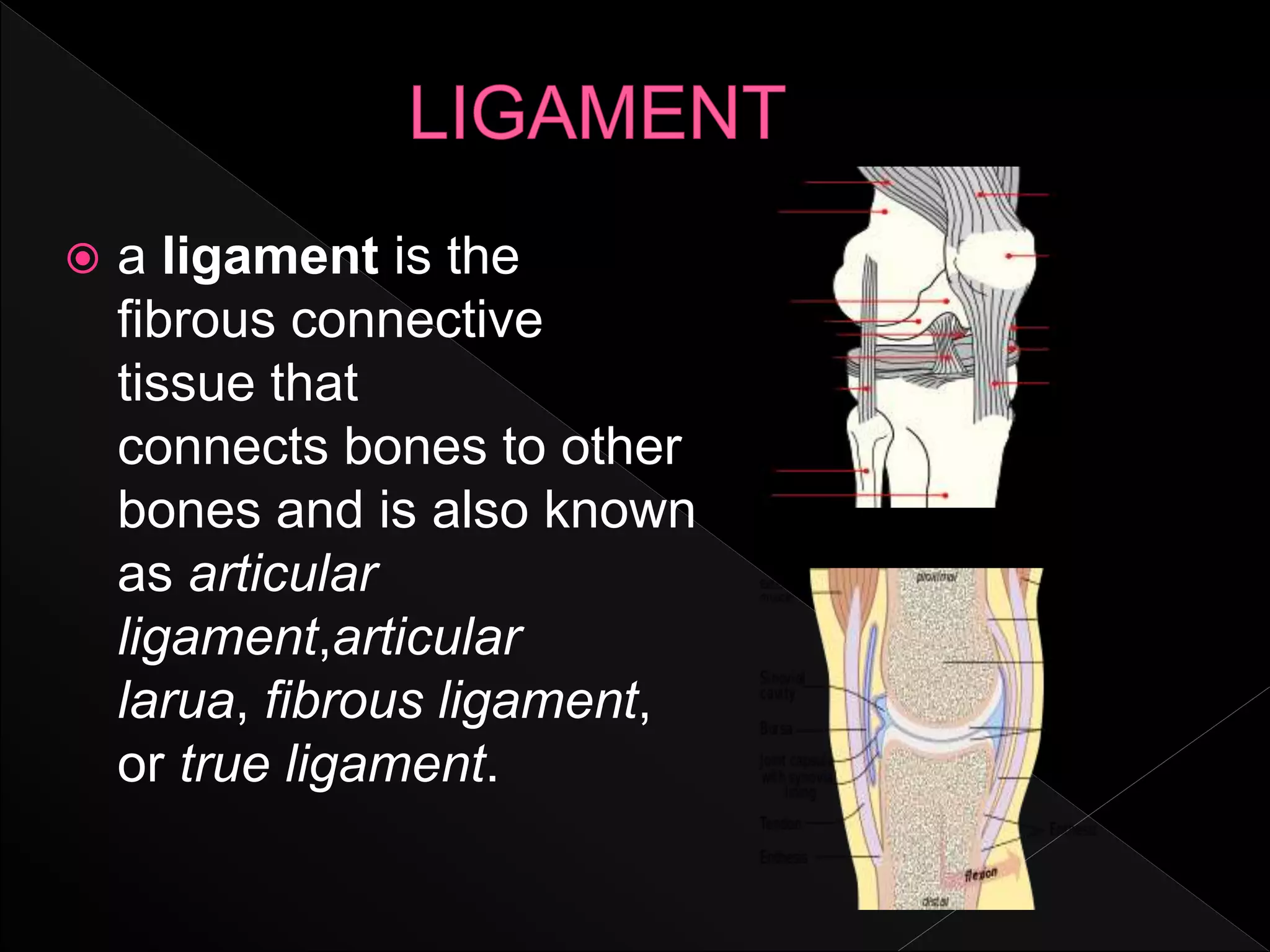
 a ligament is the
fibrous connective
tissue that
connects bones to other
bones and is also known
as articular
ligament,articular
larua, fibrous ligament,
or true ligament.
 Cartilage is a flexible elastic tissue,
connecting the joins between bones, the rib
cage, the ear, the nose, the bronchial tubes,
the intervertebral discs, and many more
other body components. It is not as hard and
rigid as bone, but it is stiffer and less flexible
than muscle.
 Because of its rigidity, cartilage often serves
the purpose of holding tubes open in the
body. Examples include the rings of the
trachea, such as the cricoid
cartilage and carina, thetorus tubarius at the
opening of the pharyngotympanic/auditory
tube, the ala of the nostrils, and
the auricle/pinna of the ear.
 They are of Two types of joints:-
1. Fixed joints
2. Movable joint
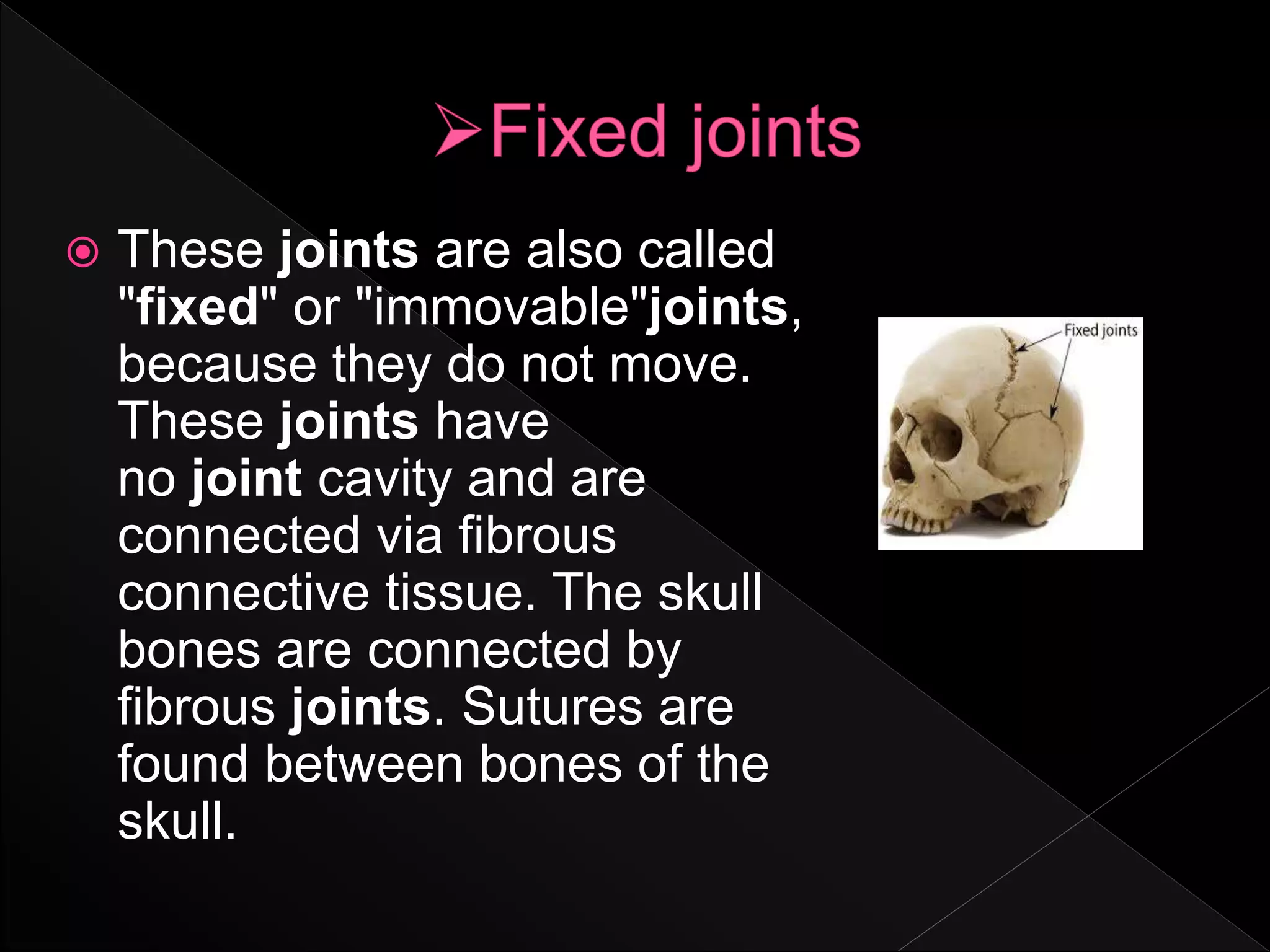
 These joints are also called
"fixed" or "immovable"joints,
because they do not move.
These joints have
no joint cavity and are
connected via fibrous
connective tissue. The skull
bones are connected by
fibrous joints. Sutures are
found between bones of the
skull.
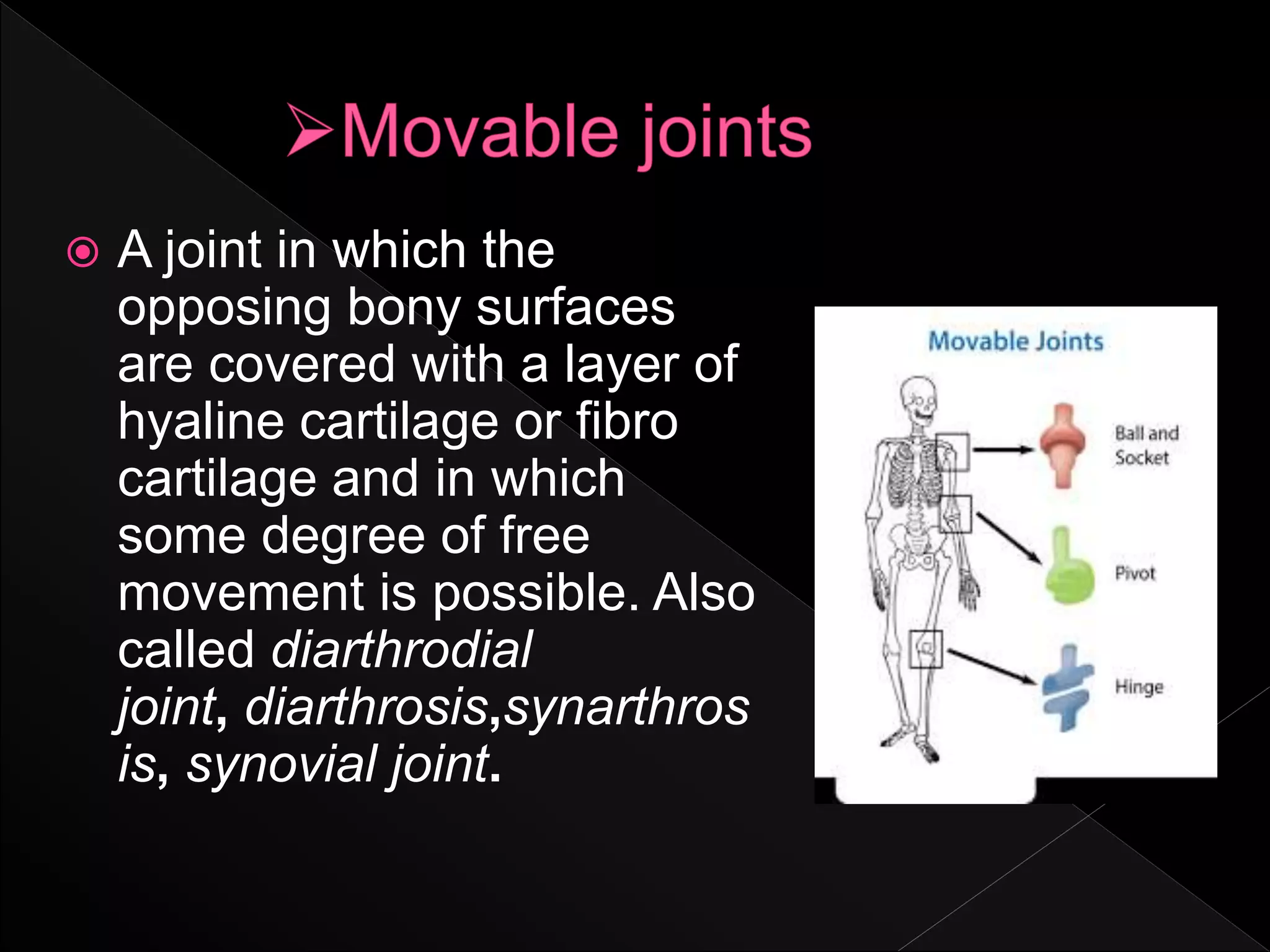
 A joint in which the
opposing bony surfaces
are covered with a layer of
hyaline cartilage or fibro
cartilage and in which
some degree of free
movement is possible. Also
called diarthrodial
joint, diarthrosis,synarthros
is, synovial joint.
 There are three types of movable joints:-
1. Pivot joint
2. Hinge joint
3. Ball and socket joint
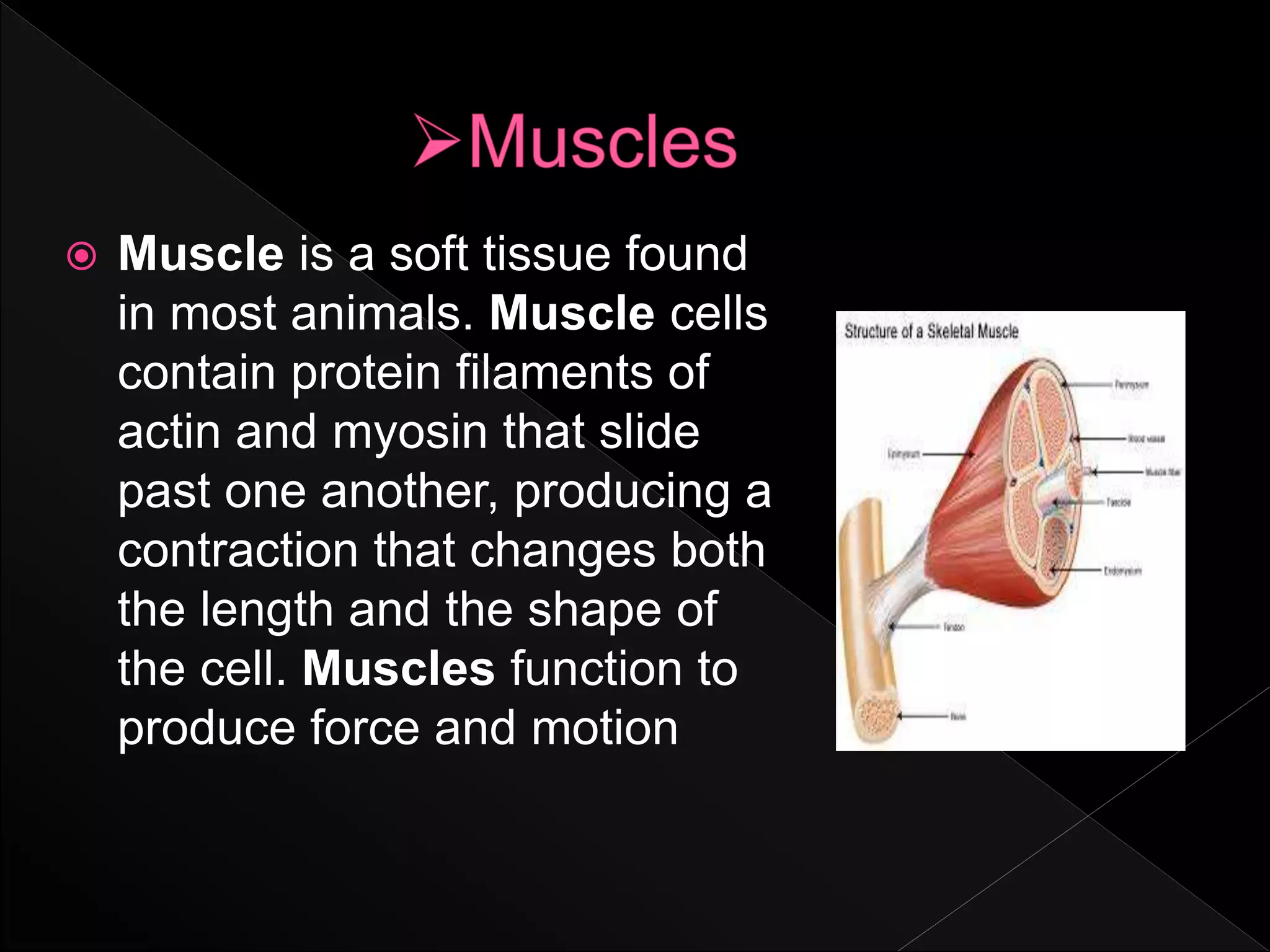
 Muscle is a soft tissue found
in most animals. Muscle cells
contain protein filaments of
actin and myosin that slide
past one another, producing a
contraction that changes both
the length and the shape of
the cell. Muscles function to
produce force and motion
 There are two types of movements in
plants:-
1. Tropic movements
2. Nastic movement
 There are four types of tropical movements:-
1. Phototropism
2. Geotropism
3. Hydrotropism
4. Thigmotropism

Movement in plants and animals

  • 1.
  • 3.
  • 4.
     Animal locomotion,in ethology, is any of a variety of movements or methods that animals use to move from one place to another. Some modes of locomotion are (initially) self-propelled, e.g., running, swimming, jumping, flying, soaring and gliding.
  • 5.
     The movementswhich allow organs of plants to move in or the other direction is called movements of curvature. These movements are of two types i.e. mechanical (found in non living organs of plant) and another is vital movements (found in living organs of plants).
  • 6.
     In itsbrief hunting sprints, it is the fastest of all land animals. Animal locomotion , in ethology, is any of a variety of movements or methods that animals use to move from one place to another. Some modes of locomotion are (initially) self- propelled, e.g., running, swimming, jumping, flying, soaring and gliding.
  • 7.
     There arethree types of locomotion :-  Amoeba  Paramoecium
  • 8.
     Amoeba isa type of cell or organism which has the ability to alter its shape, primarily by extending and retracting pseudopods Amoebas do not form a single taxonomic group; instead, they are found in every major lineage of eukaryotic organism. Amoeboid cells occur not only among the protozoa but also in fungi, algae, and animals
  • 9.
     Paramecium isa genus of unicellular ciliated protozoan, commonly studied as a representative ... to place the genus within the Linnaean system of taxonomy, adopted the name Paramecium, but changed the spelling to Paramœcium.
  • 10.
     Euglena isthe best known and most widely studied member of the class Euglenoidea, a diverse group containing some 54 genera and at least 800 species. Species of Euglena are found in fresh and salt waters. They are often abundant in quiet inland waters where they may bloom in numbers sufficient to color the surface of ponds and ditches green or red
  • 11.
     is agenus of small, fresh-water animals of the phylum Cnidaria and class Hydrozoa, native to the temperate and tropical regions. Biologists are especially interested in Hydra because of their regenerative ability – they appear not to ageor die of old age.
  • 12.
     The Skeleton The human skeleton is the internal framework of the body. It is composed of 270 bones at birth – this total decreases to 206 bones by adulthood after some bones have fused together . The bone mass in the skeleton reaches maximum density around age 30. The human skeleton can be divided into the axial skeleton and the appendicular skeleton. The axial skeleton is formed by thevertebral column, the rib cage, the skull and other associated bones. The appendicular skeleton, which is attached to the axial skeleton, is formed by the shoulder girdle, the pelvic girdle and the bones of the upper and lower limbs.
  • 13.
     They areof three types:- 1. Tendons 2. Ligaments 3. Cartilages
  • 14.
     A tendonor sinew is a tough band of fibrou connective tissue that usually connects muscle to bone and is capable of with standing tension.  Tendons are similar to ligaments; both are made of collagen. Ligaments join one bone to another bone, while tendons connect muscle to bone
  • 15.
     a ligamentis the fibrous connective tissue that connects bones to other bones and is also known as articular ligament,articular larua, fibrous ligament, or true ligament.
  • 16.
     Cartilage isa flexible elastic tissue, connecting the joins between bones, the rib cage, the ear, the nose, the bronchial tubes, the intervertebral discs, and many more other body components. It is not as hard and rigid as bone, but it is stiffer and less flexible than muscle.  Because of its rigidity, cartilage often serves the purpose of holding tubes open in the body. Examples include the rings of the trachea, such as the cricoid cartilage and carina, thetorus tubarius at the opening of the pharyngotympanic/auditory tube, the ala of the nostrils, and the auricle/pinna of the ear.
  • 17.
     They areof Two types of joints:- 1. Fixed joints 2. Movable joint
  • 18.
     These jointsare also called "fixed" or "immovable"joints, because they do not move. These joints have no joint cavity and are connected via fibrous connective tissue. The skull bones are connected by fibrous joints. Sutures are found between bones of the skull.
  • 19.
     A jointin which the opposing bony surfaces are covered with a layer of hyaline cartilage or fibro cartilage and in which some degree of free movement is possible. Also called diarthrodial joint, diarthrosis,synarthros is, synovial joint.
  • 20.
     There arethree types of movable joints:- 1. Pivot joint 2. Hinge joint 3. Ball and socket joint
  • 21.
     Muscle isa soft tissue found in most animals. Muscle cells contain protein filaments of actin and myosin that slide past one another, producing a contraction that changes both the length and the shape of the cell. Muscles function to produce force and motion
  • 22.
     There aretwo types of movements in plants:- 1. Tropic movements 2. Nastic movement
  • 23.
     There arefour types of tropical movements:- 1. Phototropism 2. Geotropism 3. Hydrotropism 4. Thigmotropism