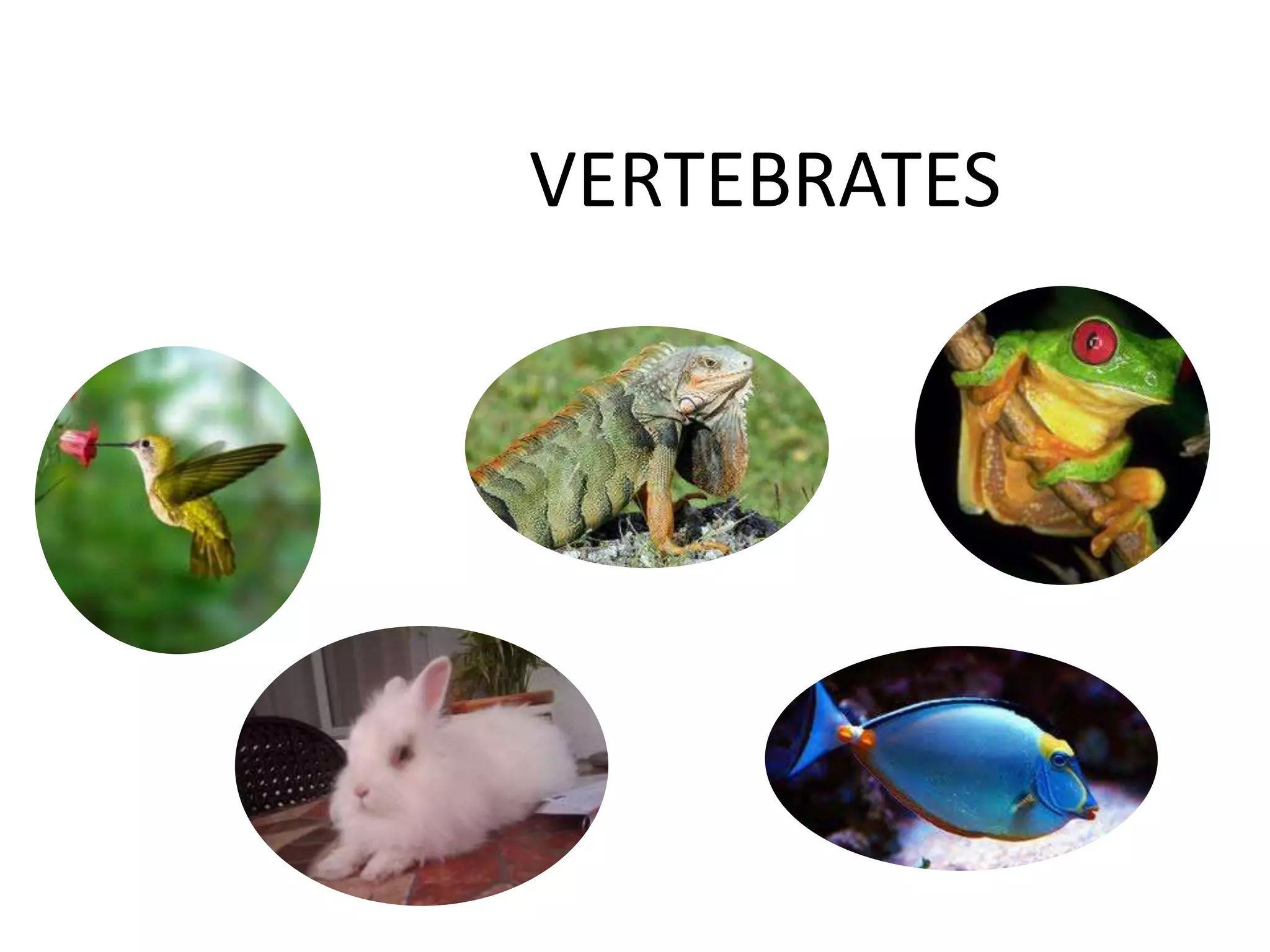
VERTEBRATES
VERTEBRATES
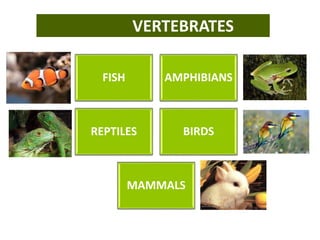
FISH AMPHIBIANS
REPTILES BIRDS
MAMMALS
1. FISH
• Fish are aquatic vertebrates that can live in salt
water and fresh water.
• They have fins.
• The body is covered by scales.
• They breathe through gills.
• They have swim bladder. It’s a sac of gas to stay
afloat.
• TYPES OF FISH:
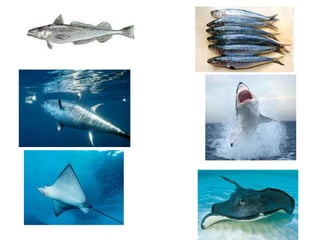
– Bony fish: They have a bony skeleton. Ex: Sardine, tuna,
hake.
– Cartilaginous fish: They have a cartilaginous skeleton.
Ex: Sharks, rays and manta rays.
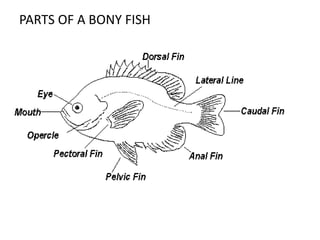
PARTS OF A BONY FISH
2. AMPHIBIANS
• Amphibians are vertebrates capable of living in terrestrial and
humid environments.
• They usually have four limbs.
• They often have webbed feet.
• They are ectotherms.
• They breathe through lungs, gills and skin.
TYPES OF AMPHIBIANS:
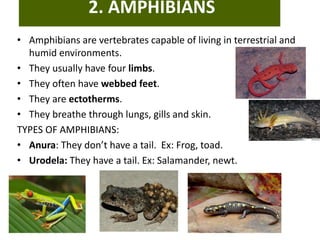
• Anura: They don’t have a tail. Ex: Frog, toad.
• Urodela: They have a tail. Ex: Salamander, newt.
3. REPTILES
• Reptiles are vertebrates animals which live on land, but some
live in water.
• They always have a tail.
• They have four limbs. (except snakes)
• The skin is covered by scales.
• They breathe through lungs.
• They are cold-blooded.
• TYPES OF REPTILES
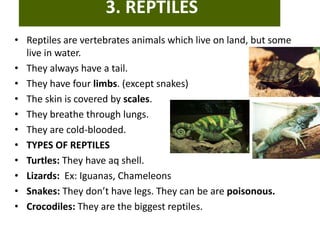
• Turtles: They have aq shell.
• Lizards: Ex: Iguanas, Chameleons
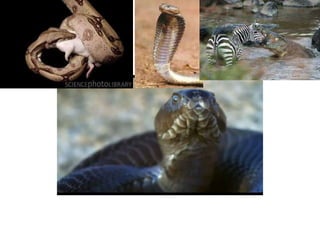
• Snakes: They don’t have legs. They can be are poisonous.
• Crocodiles: They are the biggest reptiles.
4. BIRDS
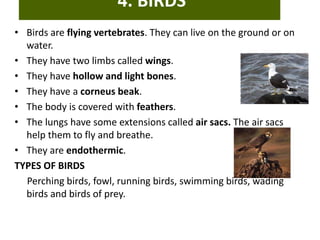
• Birds are flying vertebrates. They can live on the ground or on
water.
• They have two limbs called wings.
• They have hollow and light bones.
• They have a corneus beak.
• The body is covered with feathers.
• The lungs have some extensions called air sacs. The air sacs
help them to fly and breathe.
• They are endothermic.
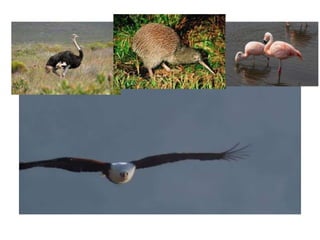
TYPES OF BIRDS
Perching birds, fowl, running birds, swimming birds, wading
birds and birds of prey.
5. MAMMALS
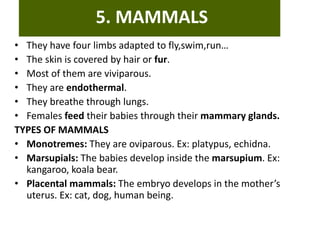
• They have four limbs adapted to fly,swim,run…
• The skin is covered by hair or fur.
• Most of them are viviparous.
• They are endothermal.
• They breathe through lungs.
• Females feed their babies through their mammary glands.
TYPES OF MAMMALS
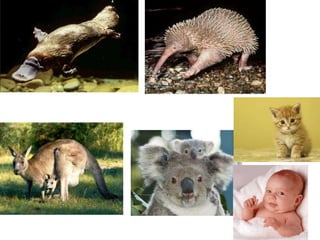
• Monotremes: They are oviparous. Ex: platypus, echidna.
• Marsupials: The babies develop inside the marsupium. Ex:
kangaroo, koala bear.
• Placental mammals: The embryo develops in the mother’s
uterus. Ex: cat, dog, human being.
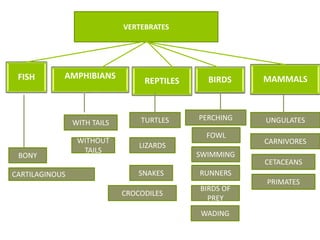
VERTEBRATES
FISH AMPHIBIANS
REPTILES BIRDS MAMMALS
BONY
CARTILAGINOUS
WITH TAILS
WITHOUT
TAILS
TURTLES
LIZARDS
SNAKES
CROCODILES
PERCHING
FOWL
UNGULATES
CARNIVORES
CETACEANS
SWIMMING
RUNNERS
BIRDS OF
PREY
WADING
PRIMATES

Vertebrates

  • 1.
  • 2.
  • 3.
    1. FISH • Fishare aquatic vertebrates that can live in salt water and fresh water. • They have fins. • The body is covered by scales. • They breathe through gills. • They have swim bladder. It’s a sac of gas to stay afloat. • TYPES OF FISH: – Bony fish: They have a bony skeleton. Ex: Sardine, tuna, hake. – Cartilaginous fish: They have a cartilaginous skeleton. Ex: Sharks, rays and manta rays.
  • 4.
    PARTS OF ABONY FISH
  • 6.
    2. AMPHIBIANS • Amphibiansare vertebrates capable of living in terrestrial and humid environments. • They usually have four limbs. • They often have webbed feet. • They are ectotherms. • They breathe through lungs, gills and skin. TYPES OF AMPHIBIANS: • Anura: They don’t have a tail. Ex: Frog, toad. • Urodela: They have a tail. Ex: Salamander, newt.
  • 7.
    3. REPTILES • Reptilesare vertebrates animals which live on land, but some live in water. • They always have a tail. • They have four limbs. (except snakes) • The skin is covered by scales. • They breathe through lungs. • They are cold-blooded. • TYPES OF REPTILES • Turtles: They have aq shell. • Lizards: Ex: Iguanas, Chameleons • Snakes: They don’t have legs. They can be are poisonous. • Crocodiles: They are the biggest reptiles.
  • 9.
    4. BIRDS • Birdsare flying vertebrates. They can live on the ground or on water. • They have two limbs called wings. • They have hollow and light bones. • They have a corneus beak. • The body is covered with feathers. • The lungs have some extensions called air sacs. The air sacs help them to fly and breathe. • They are endothermic. TYPES OF BIRDS Perching birds, fowl, running birds, swimming birds, wading birds and birds of prey.
  • 11.
    5. MAMMALS • Theyhave four limbs adapted to fly,swim,run… • The skin is covered by hair or fur. • Most of them are viviparous. • They are endothermal. • They breathe through lungs. • Females feed their babies through their mammary glands. TYPES OF MAMMALS • Monotremes: They are oviparous. Ex: platypus, echidna. • Marsupials: The babies develop inside the marsupium. Ex: kangaroo, koala bear. • Placental mammals: The embryo develops in the mother’s uterus. Ex: cat, dog, human being.
  • 13.
    VERTEBRATES FISH AMPHIBIANS REPTILES BIRDSMAMMALS BONY CARTILAGINOUS WITH TAILS WITHOUT TAILS TURTLES LIZARDS SNAKES CROCODILES PERCHING FOWL UNGULATES CARNIVORES CETACEANS SWIMMING RUNNERS BIRDS OF PREY WADING PRIMATES