Plants and their
Habitats
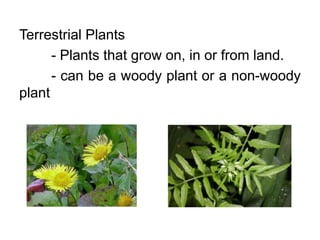
Terrestrial Plants
- Plants that grow on, in or from land.
- can be a woody plant or a non-woody
plant
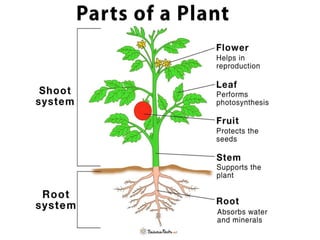
• The leaves of a terrestrial plant have tiny
openings underneath them called
stomata, which allow air to pass through.
• The roots supply the plants with water
and nutrients from the soil or from the air.
• Stems hold terrestrial plants upright so
that they can absorb plenty of sunlight.
Woody Plants
- They have hard and usually brown stems.
- They can be small plants
- They can be big plants
- They are used for making fences or
furniture, or for building houses.
- They provide good shade from the sun
during the hot, summer months.
Specialized structures:
• The inner part of their stems and branches is
wet.
• The outer part is hard and woody.
These characteristics prevent the plants from
drying out when exposed to air.
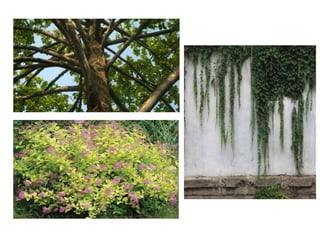
Woody plants can be classified as trees, vines,
and shrubs.
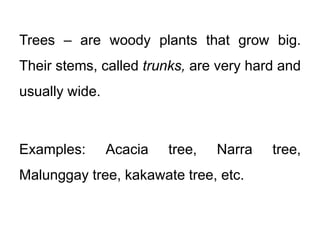
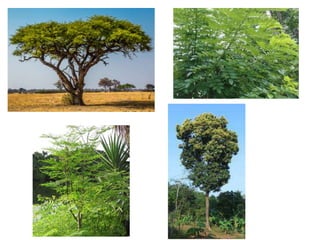
Trees – are woody plants that grow big.
Their stems, called trunks, are very hard and
usually wide.
Examples: Acacia tree, Narra tree,
Malunggay tree, kakawate tree, etc.
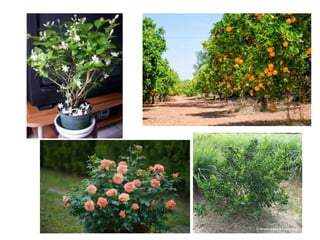
Shrubs – are small, woody plants. Their
stems are upright and they do not grow very
tall.
Examples: sampaguita, orange, kalamansi,
etc.
s
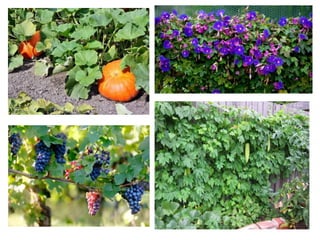
Vines – are plants climb or crawl on trellises.
- some vines have twiners, that twist
around other plants or anything that they
touch
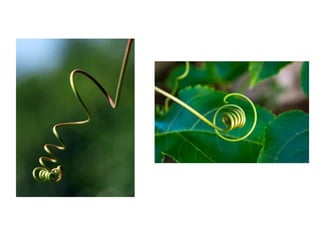
- some vines have tendrils, which
are organs that grow out of their stem and
curl around a nearby object.
Examples: squash, grapes, morning glory,
bitter gourd, etc.
Non-woody Plants
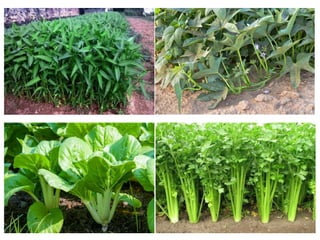
- They have soft, smooth, and usually green
stems.
- These plants are called herbaceous
plants.
Example: kangkong, pechay, kamote,
kinchay, and saluyot
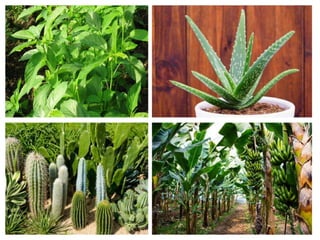
- Cactus and aloe vera, have waxy
structures.
- Banana plant, though big inn size, is also
classified as nonwoody.
Aquatic Plants
- are also called hydrophytes
Three types of Aquatic Plants:
1. Submerged
2. Floating Water Plants
3. Emergent Plants
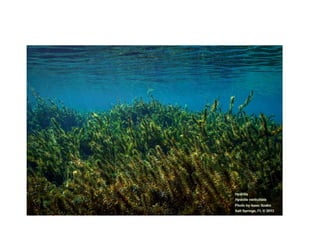
Submerged Aquatic Plants
- These are rooted plants that live
underwater.
- They have soft stems
- They receive little amount of sunlight as
water becomes deeper
Example: Hydrilla
Floating Water Plants
- Their body keeps most above the water.
- Their roots are not attached to the soil
- Their leaves are broad and firm or leathery
but flexible
- The upper part has many stomata for gas
exchange.
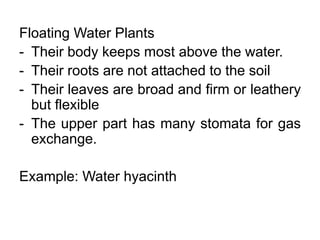
Example: Water hyacinth
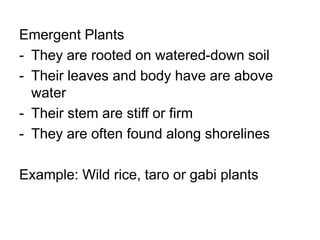
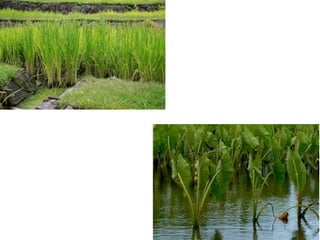
Emergent Plants
- They are rooted on watered-down soil
- Their leaves and body have are above
water
- Their stem are stiff or firm
- They are often found along shorelines
Example: Wild rice, taro or gabi plants
Plants and their habitats

Plants and their habitats

  • 1.
  • 2.
    Terrestrial Plants - Plantsthat grow on, in or from land. - can be a woody plant or a non-woody plant
  • 4.
    • The leavesof a terrestrial plant have tiny openings underneath them called stomata, which allow air to pass through. • The roots supply the plants with water and nutrients from the soil or from the air. • Stems hold terrestrial plants upright so that they can absorb plenty of sunlight.
  • 5.
    Woody Plants - Theyhave hard and usually brown stems. - They can be small plants - They can be big plants - They are used for making fences or furniture, or for building houses. - They provide good shade from the sun during the hot, summer months.
  • 7.
    Specialized structures: • Theinner part of their stems and branches is wet. • The outer part is hard and woody. These characteristics prevent the plants from drying out when exposed to air. Woody plants can be classified as trees, vines, and shrubs.
  • 8.
    Trees – arewoody plants that grow big. Their stems, called trunks, are very hard and usually wide. Examples: Acacia tree, Narra tree, Malunggay tree, kakawate tree, etc.
  • 10.
    Shrubs – aresmall, woody plants. Their stems are upright and they do not grow very tall. Examples: sampaguita, orange, kalamansi, etc.
  • 11.
  • 12.
    Vines – areplants climb or crawl on trellises. - some vines have twiners, that twist around other plants or anything that they touch - some vines have tendrils, which are organs that grow out of their stem and curl around a nearby object. Examples: squash, grapes, morning glory, bitter gourd, etc.
  • 15.
    Non-woody Plants - Theyhave soft, smooth, and usually green stems. - These plants are called herbaceous plants. Example: kangkong, pechay, kamote, kinchay, and saluyot - Cactus and aloe vera, have waxy structures. - Banana plant, though big inn size, is also classified as nonwoody.
  • 18.
    Aquatic Plants - arealso called hydrophytes Three types of Aquatic Plants: 1. Submerged 2. Floating Water Plants 3. Emergent Plants
  • 19.
    Submerged Aquatic Plants -These are rooted plants that live underwater. - They have soft stems - They receive little amount of sunlight as water becomes deeper Example: Hydrilla
  • 21.
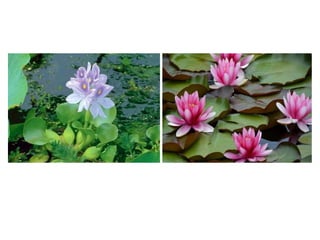
    Floating Water Plants -Their body keeps most above the water. - Their roots are not attached to the soil - Their leaves are broad and firm or leathery but flexible - The upper part has many stomata for gas exchange. Example: Water hyacinth
  • 23.
    Emergent Plants - Theyare rooted on watered-down soil - Their leaves and body have are above water - Their stem are stiff or firm - They are often found along shorelines Example: Wild rice, taro or gabi plants