å

go.nmc.org/2013-stem
å

go.nmc.org/2013-stem
The research behind the NMC Technology Outlook for STEM+ Education
2013-2018 is a collaboration between the New Media Consortium and
the Centro Superior para la Enseñanza Virtual (CSEV), Departamento
de IngenieríaEléctrica, Electrónica y de Control at The Universidad
Nacional de Educación a Distancia (UNED), and The Institute of
Electrical and Electronics Engineers Education Society (IEEE)
The project was made possible by a grant from the Centro Superior
para la Enseñanza Virtual (CSEV), whose generous support is very much
appreciated. This presentation was hosted by eMadrid.
NMC Technology Outlook for STEM+ Education 2013-2018 is a
publication of the New Media Consortium
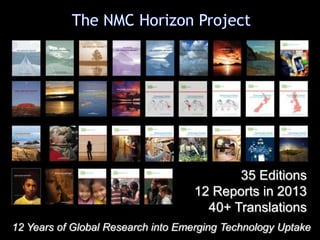
35 Editions
12 Reports in 2013
40+ Translations
12 Years of Global Research into Emerging Technology Uptake
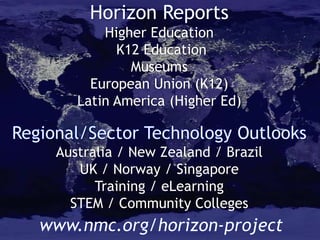
Higher Education
K12 Education
Museums
European Union (K12)
Latin America (Higher Ed)
Australia / New Zealand / Brazil
UK / Norway / Singapore
Training / eLearning
STEM / Community Colleges
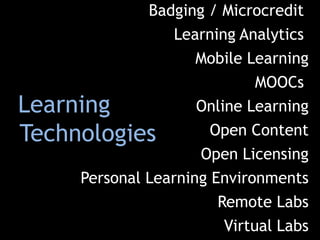
Badging / Microcredit
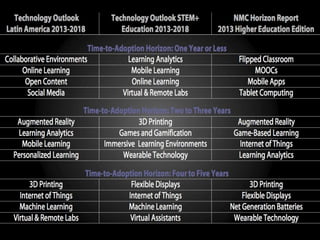
Learning Analytics
Mobile Learning
MOOCs
Online Learning
Learning
Open Content
Technologies
Open Licensing
Personal Learning Environments
Remote Labs
Virtual Labs
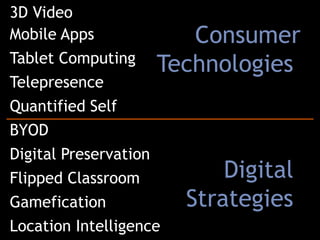
3D Video
Mobile Apps
Consumer
Tablet Computing
Technologies
Telepresence
Quantified Self
BYOD
Digital Preservation
Digital
Flipped Classroom
Strategies
Gamefication
Location Intelligence
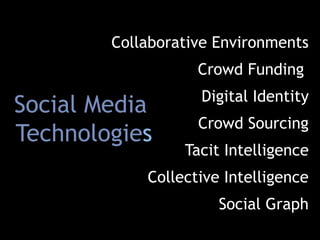
Collaborative Environments
Crowd Funding

Social Media
Technologies

Digital Identity

Crowd Sourcing
Tacit Intelligence

Collective Intelligence
Social Graph
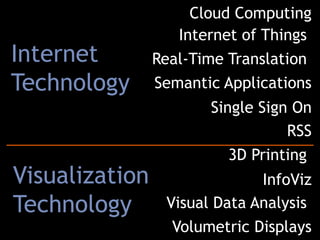
Internet
Technology

Visualization
Technology

Cloud Computing
Internet of Things
Real-Time Translation
Semantic Applications

Single Sign On
RSS
3D Printing
InfoViz
Visual Data Analysis
Volumetric Displays
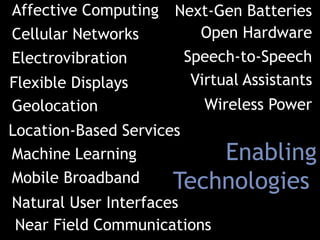
Affective Computing
Cellular Networks
Electrovibration

Flexible Displays
Geolocation

Next-Gen Batteries
Open Hardware
Speech-to-Speech
Virtual Assistants
Wireless Power

Location-Based Services
Machine Learning
Enabling
Mobile Broadband
Technologies
Natural User Interfaces
Near Field Communications
stem.wiki.nmc.org
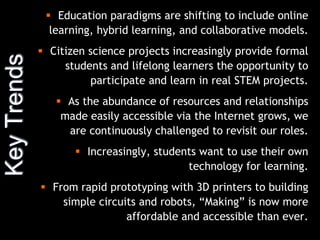
 Education paradigms are shifting to include online
learning, hybrid learning, and collaborative models.
 Citizen science projects increasingly provide formal
students and lifelong learners the opportunity to
participate and learn in real STEM projects.
 As the abundance of resources and relationships
made easily accessible via the Internet grows, we
are continuously challenged to revisit our roles.
 Increasingly, students want to use their own
technology for learning.
 From rapid prototyping with 3D printers to building
simple circuits and robots, “Making” is now more
affordable and accessible than ever.
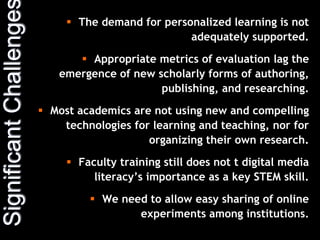
 The demand for personalized learning is not
adequately supported.

 Appropriate metrics of evaluation lag the
emergence of new scholarly forms of authoring,
publishing, and researching.
 Most academics are not using new and compelling
technologies for learning and teaching, nor for
organizing their own research.
 Faculty training still does not t digital media
literacy’s importance as a key STEM skill.
 We need to allow easy sharing of online
experiments among institutions.
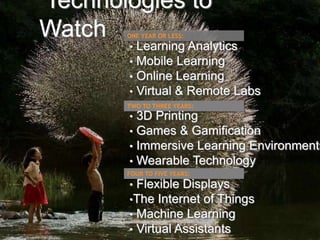
Technologies to
Watch
ONE YEAR OR LESS:

•
•
•
•

Learning Analytics
Mobile Learning
Online Learning
Virtual & Remote Labs

TWO TO THREE YEARS:

•
•
•
•

3D Printing
Games & Gamification
Immersive Learning Environments
Wearable Technology

FOUR TO FIVE YEARS:

• Flexible Displays
•The Internet of Things
• Machine Learning
• Virtual Assistants
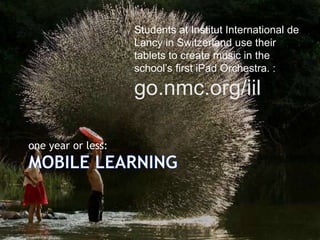
Students at Institut International de
Lancy in Switzerland use their
tablets to create music in the
school’s first iPad Orchestra. :

go.nmc.org/iil
one year or less:
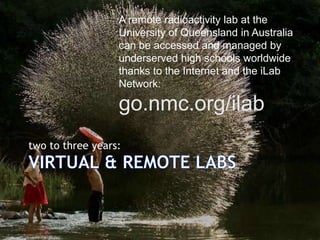
A remote radioactivity lab at the
University of Queensland in Australia
can be accessed and managed by
underserved high schools worldwide
thanks to the Internet and the iLab
Network:

go.nmc.org/ilab
two to three years:
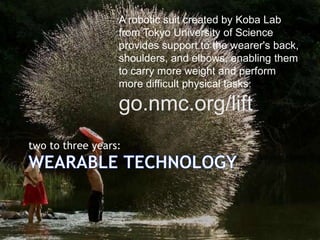
A robotic suit created by Koba Lab
from Tokyo University of Science
provides support to the wearer's back,
shoulders, and elbows, enabling them
to carry more weight and perform
more difficult physical tasks:

go.nmc.org/lift
two to three years:
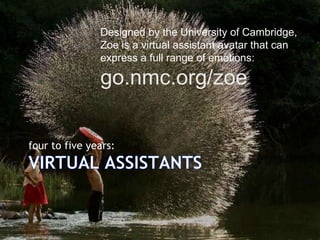
Designed by the University of Cambridge,
Zoe is a virtual assistant avatar that can
express a full range of emotions:

go.nmc.org/zoe
four to five years:
Tag Articles or Reports
Twitter: #NMCHz
Delicious.comNMCHz

Comment on the 2013 Report
Twitter: #NMCHz
Facebook: www.facebook.com/TheNMCHorizonProject

Sign up for the Advisory Board
go.nmc.org/horizon-nominate

Submit Your Projects
go.nmc.org/projects

cc licensed flickr photo by Marina Cast.: http://flickr.com/photos/marinacast/3878053449/

Horizon STEM+ 2013 Presentation

  • 2.
  • 3.
  • 4.
    The research behindthe NMC Technology Outlook for STEM+ Education 2013-2018 is a collaboration between the New Media Consortium and the Centro Superior para la Enseñanza Virtual (CSEV), Departamento de IngenieríaEléctrica, Electrónica y de Control at The Universidad Nacional de Educación a Distancia (UNED), and The Institute of Electrical and Electronics Engineers Education Society (IEEE) The project was made possible by a grant from the Centro Superior para la Enseñanza Virtual (CSEV), whose generous support is very much appreciated. This presentation was hosted by eMadrid. NMC Technology Outlook for STEM+ Education 2013-2018 is a publication of the New Media Consortium
  • 5.
    35 Editions 12 Reportsin 2013 40+ Translations 12 Years of Global Research into Emerging Technology Uptake
  • 6.
    Higher Education K12 Education Museums EuropeanUnion (K12) Latin America (Higher Ed) Australia / New Zealand / Brazil UK / Norway / Singapore Training / eLearning STEM / Community Colleges
  • 7.
    Badging / Microcredit LearningAnalytics Mobile Learning MOOCs Online Learning Learning Open Content Technologies Open Licensing Personal Learning Environments Remote Labs Virtual Labs
  • 8.
    3D Video Mobile Apps Consumer TabletComputing Technologies Telepresence Quantified Self BYOD Digital Preservation Digital Flipped Classroom Strategies Gamefication Location Intelligence
  • 9.
    Collaborative Environments Crowd Funding SocialMedia Technologies Digital Identity Crowd Sourcing Tacit Intelligence Collective Intelligence Social Graph
  • 10.
    Internet Technology Visualization Technology Cloud Computing Internet ofThings Real-Time Translation Semantic Applications Single Sign On RSS 3D Printing InfoViz Visual Data Analysis Volumetric Displays
  • 11.
    Affective Computing Cellular Networks Electrovibration FlexibleDisplays Geolocation Next-Gen Batteries Open Hardware Speech-to-Speech Virtual Assistants Wireless Power Location-Based Services Machine Learning Enabling Mobile Broadband Technologies Natural User Interfaces Near Field Communications
  • 12.
  • 15.
     Education paradigmsare shifting to include online learning, hybrid learning, and collaborative models.  Citizen science projects increasingly provide formal students and lifelong learners the opportunity to participate and learn in real STEM projects.  As the abundance of resources and relationships made easily accessible via the Internet grows, we are continuously challenged to revisit our roles.  Increasingly, students want to use their own technology for learning.  From rapid prototyping with 3D printers to building simple circuits and robots, “Making” is now more affordable and accessible than ever.
  • 16.
     The demandfor personalized learning is not adequately supported.  Appropriate metrics of evaluation lag the emergence of new scholarly forms of authoring, publishing, and researching.  Most academics are not using new and compelling technologies for learning and teaching, nor for organizing their own research.  Faculty training still does not t digital media literacy’s importance as a key STEM skill.  We need to allow easy sharing of online experiments among institutions.
  • 17.
    Technologies to Watch ONE YEAROR LESS: • • • • Learning Analytics Mobile Learning Online Learning Virtual & Remote Labs TWO TO THREE YEARS: • • • • 3D Printing Games & Gamification Immersive Learning Environments Wearable Technology FOUR TO FIVE YEARS: • Flexible Displays •The Internet of Things • Machine Learning • Virtual Assistants
  • 20.
    Students at InstitutInternational de Lancy in Switzerland use their tablets to create music in the school’s first iPad Orchestra. : go.nmc.org/iil one year or less:
  • 22.
    A remote radioactivitylab at the University of Queensland in Australia can be accessed and managed by underserved high schools worldwide thanks to the Internet and the iLab Network: go.nmc.org/ilab two to three years:
  • 23.
    A robotic suitcreated by Koba Lab from Tokyo University of Science provides support to the wearer's back, shoulders, and elbows, enabling them to carry more weight and perform more difficult physical tasks: go.nmc.org/lift two to three years:
  • 25.
    Designed by theUniversity of Cambridge, Zoe is a virtual assistant avatar that can express a full range of emotions: go.nmc.org/zoe four to five years:
  • 26.
    Tag Articles orReports Twitter: #NMCHz Delicious.comNMCHz Comment on the 2013 Report Twitter: #NMCHz Facebook: www.facebook.com/TheNMCHorizonProject Sign up for the Advisory Board go.nmc.org/horizon-nominate Submit Your Projects go.nmc.org/projects cc licensed flickr photo by Marina Cast.: http://flickr.com/photos/marinacast/3878053449/