


2016
10
Simon Priest
simonpriest.com
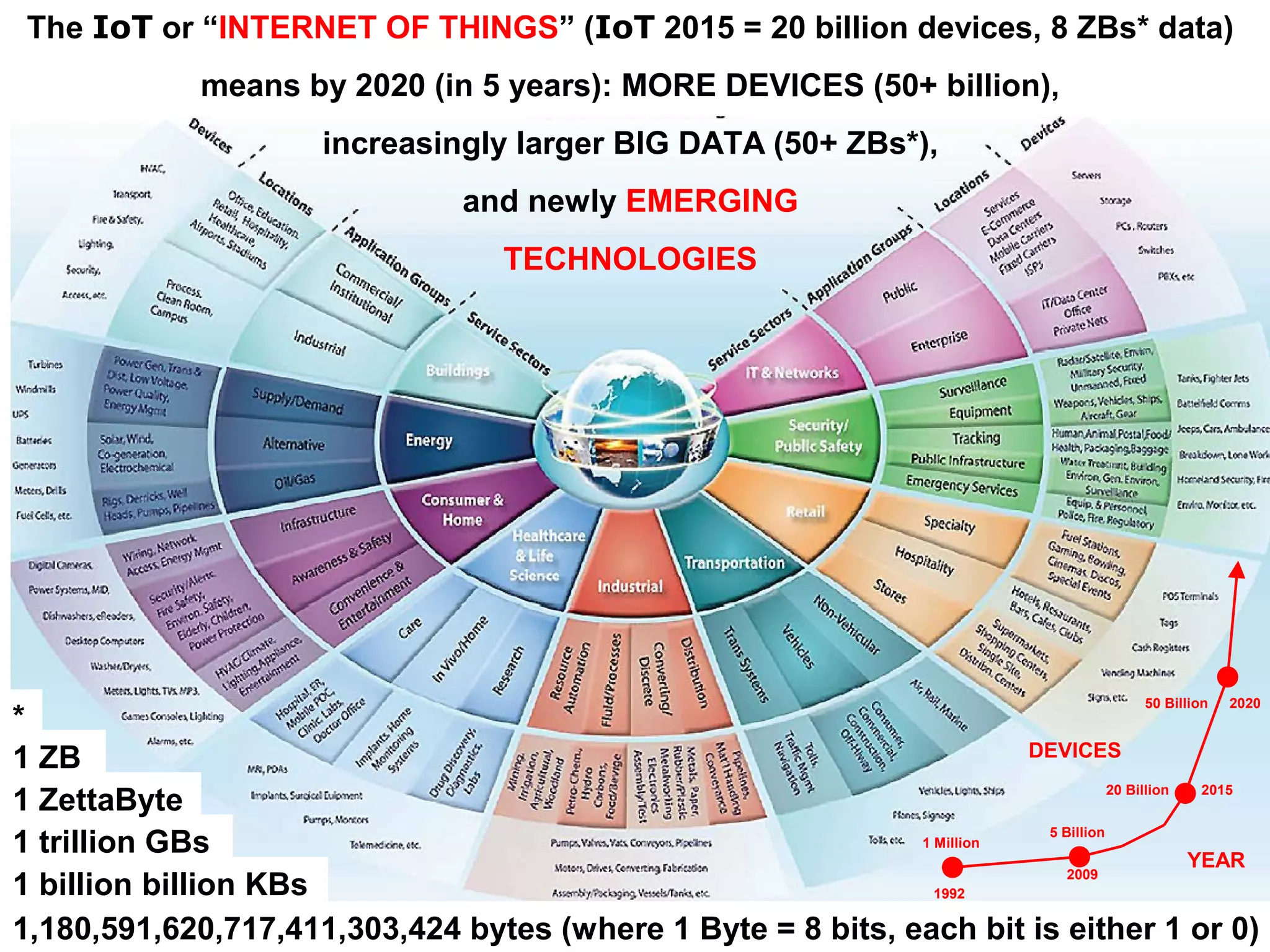
The IoT or “INTERNET OF THINGS” (IoT 2015 = 20 billion devices, 8 ZBs* data)
means by 2020 (in 5 years): MORE DEVICES (50+ billion),
increasingly larger BIG DATA (50+ ZBs*),
and newly EMERGING
TECHNOLOGIES
1,180,591,620,717,411,303,424 bytes (where 1 Byte = 8 bits, each bit is either 1 or 0)
1 billion billion KBs
1 trillion GBs
1 ZettaByte
1 ZB
2020
2009
1992
50 Billion
5 Billion
1 Million
201520 Billion
DEVICES
YEAR
*
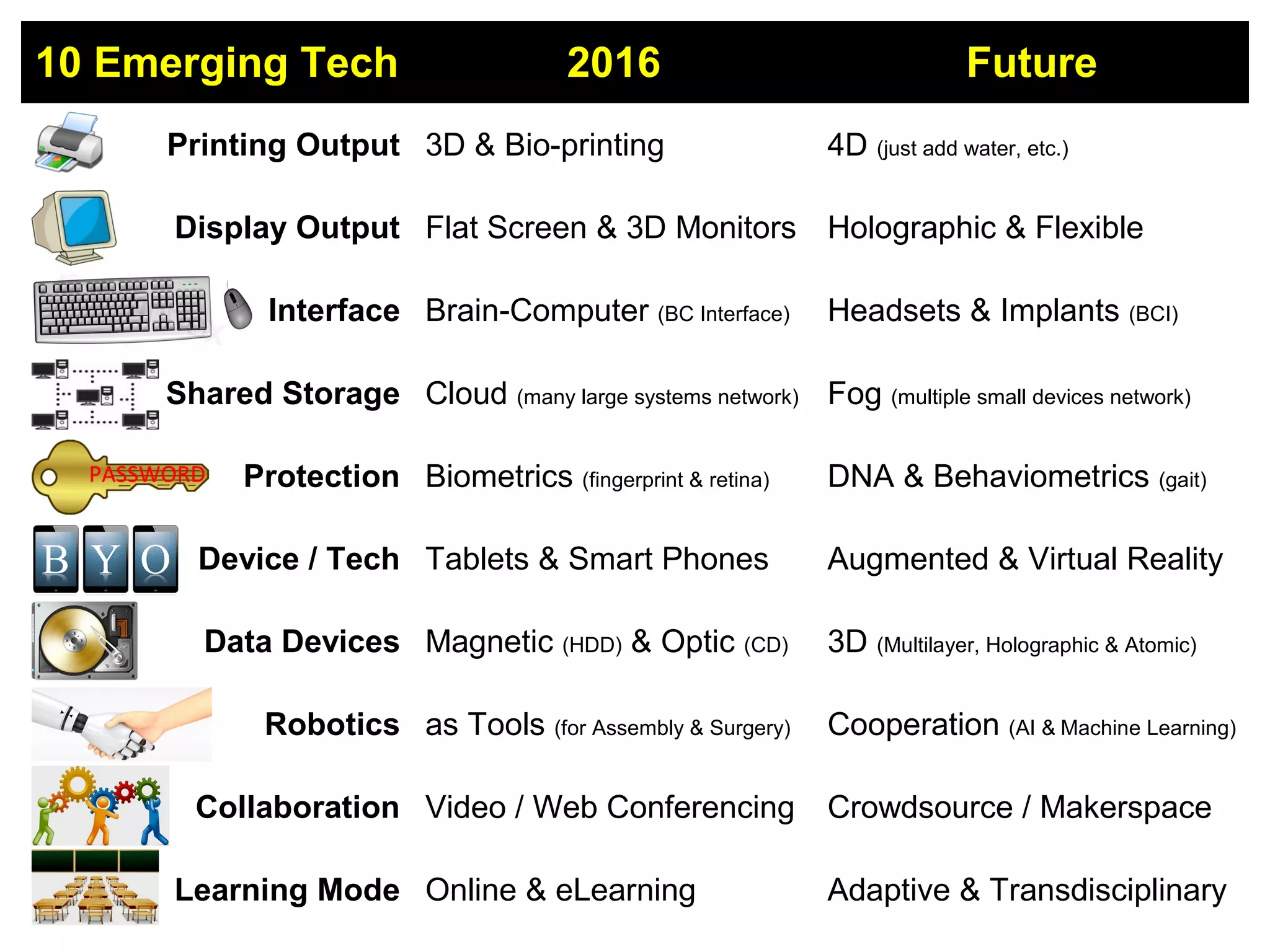
10 Emerging Tech 2016 Future
Printing Output 3D & Bio-printing 4D (just add water, etc.)
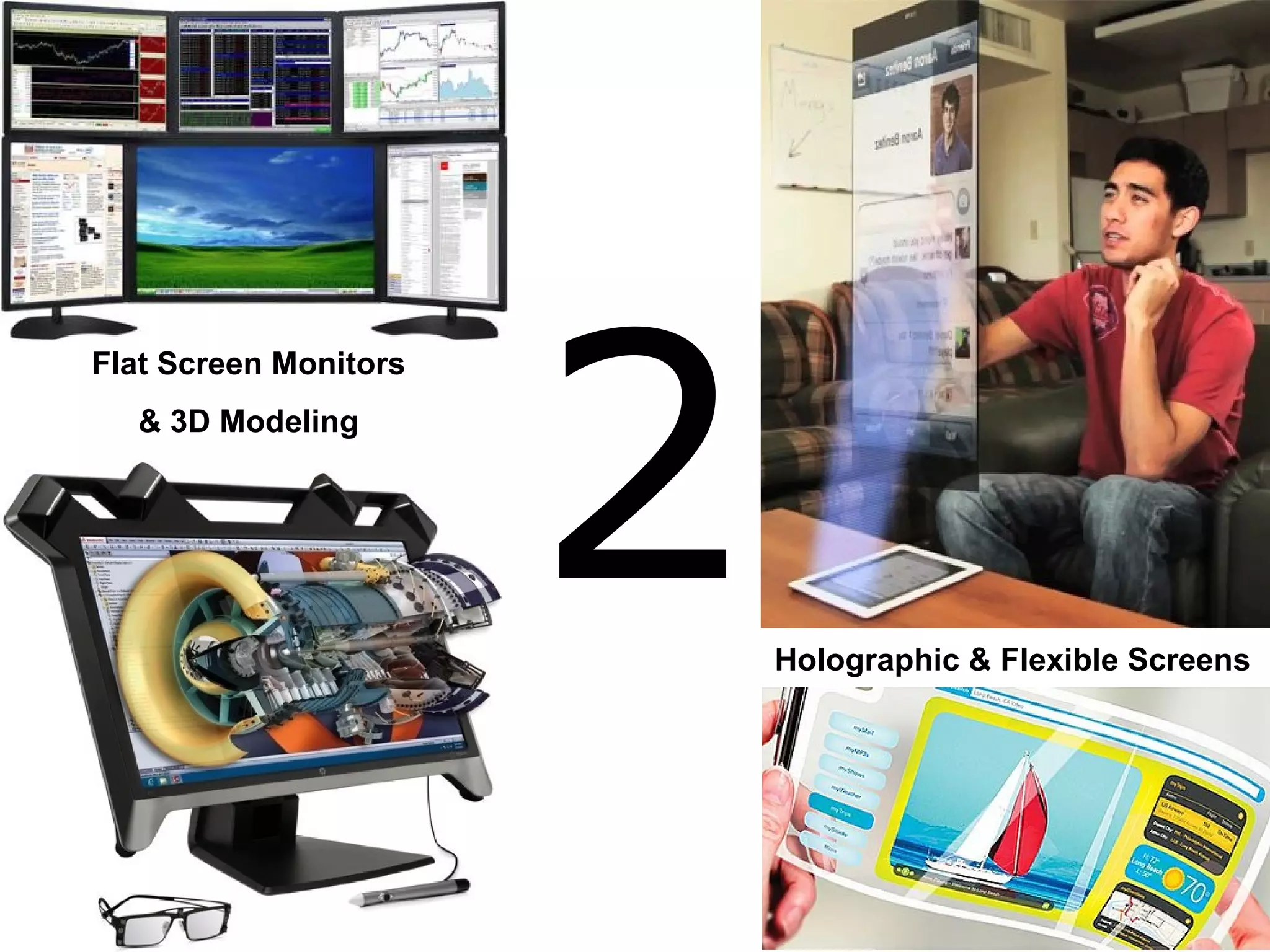
Display Output Flat Screen & 3D Monitors Holographic & Flexible
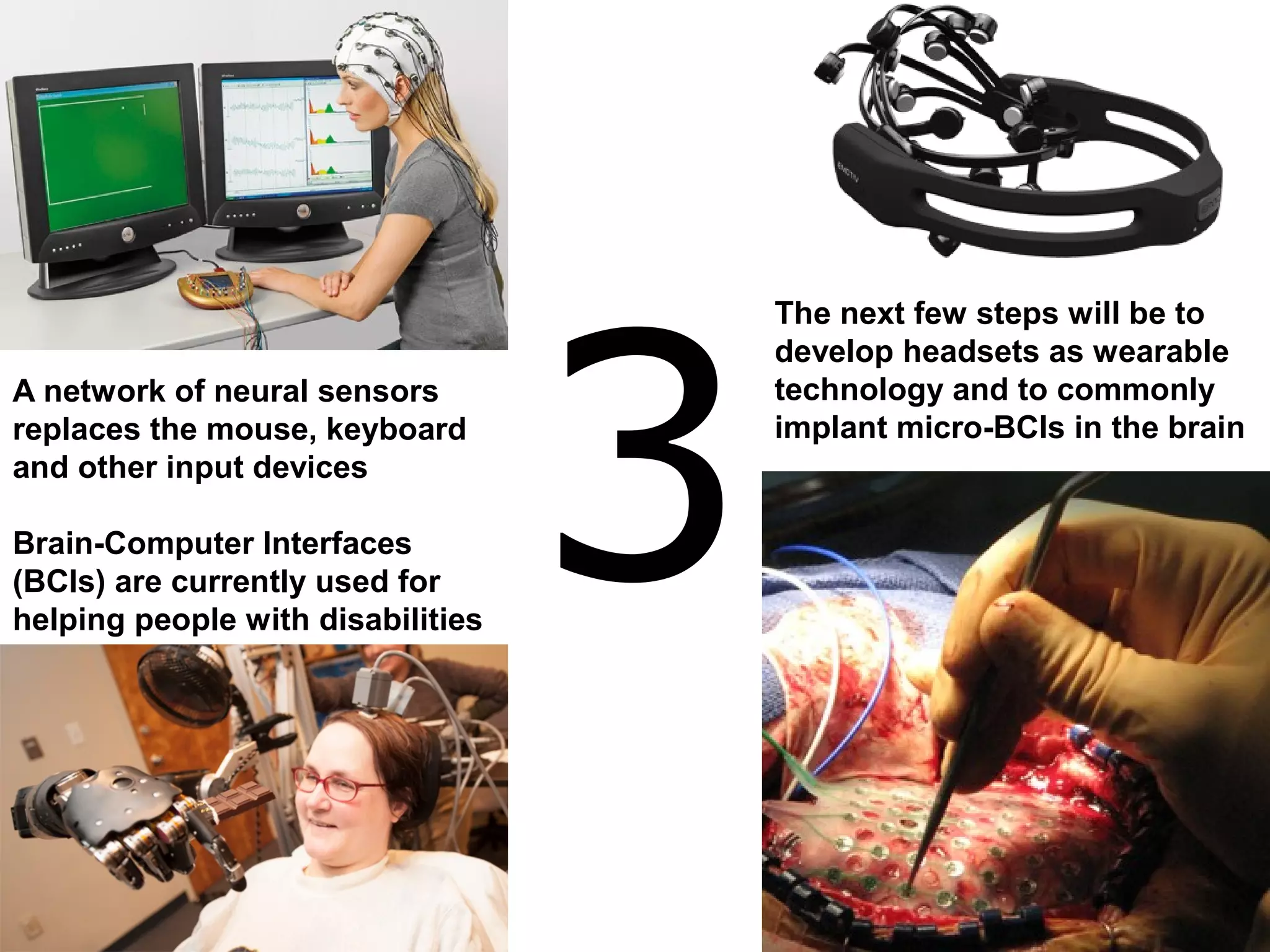
Interface Brain-Computer (BC Interface) Headsets & Implants (BCI)
Shared Storage Cloud (many large systems network) Fog (multiple small devices network)
Protection Biometrics (fingerprint & retina) DNA & Behaviometrics (gait)
Device / Tech Tablets & Smart Phones Augmented & Virtual Reality
Data Devices Magnetic (HDD) & Optic (CD) 3D (Multilayer, Holographic & Atomic)
Robotics as Tools (for Assembly & Surgery) Cooperation (AI & Machine Learning)
Collaboration Video / Web Conferencing Crowdsource / Makerspace
Learning Mode Online & eLearning Adaptive & Transdisciplinary
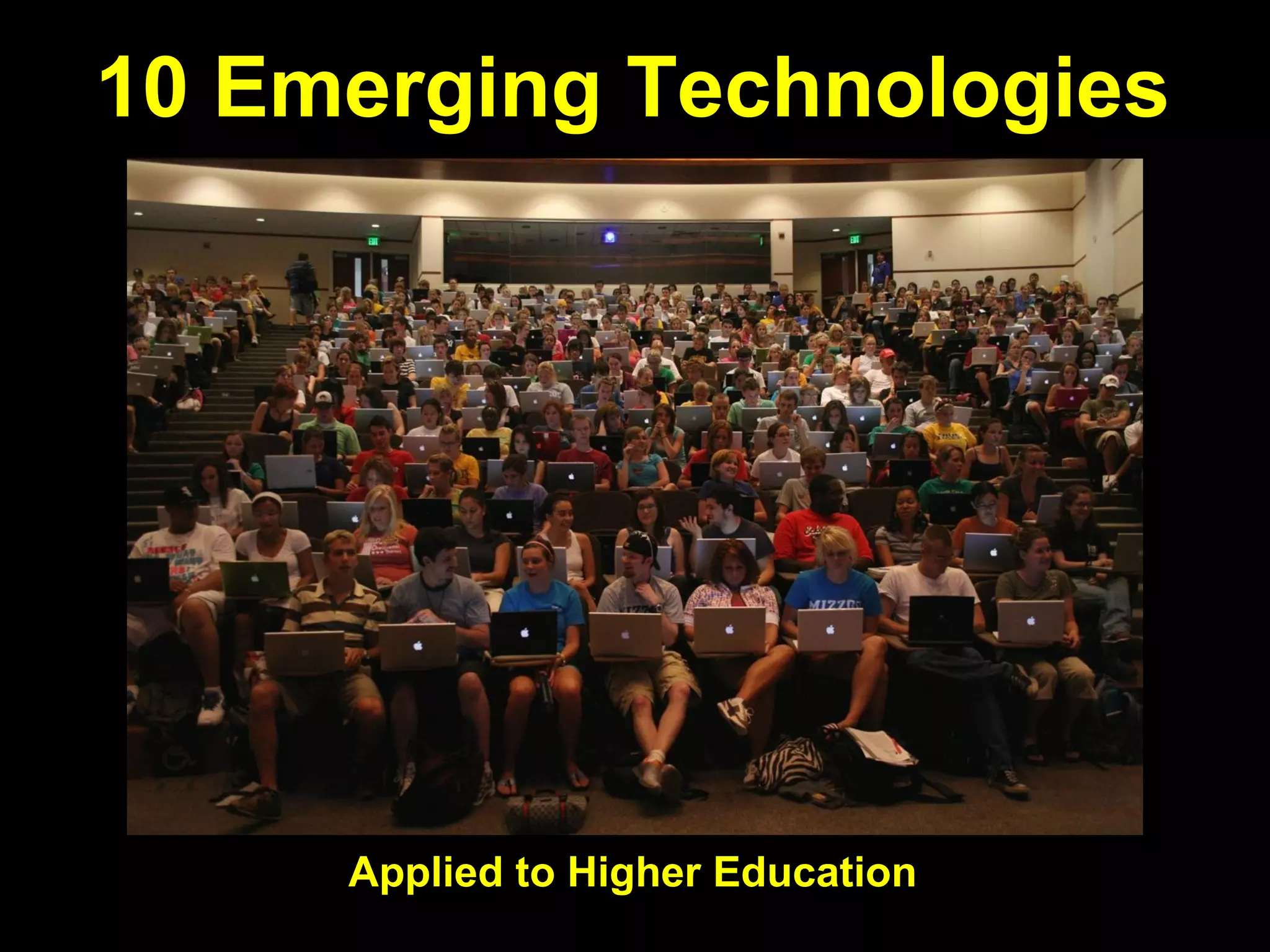
10 Emerging Technologies
Applied to Higher Education
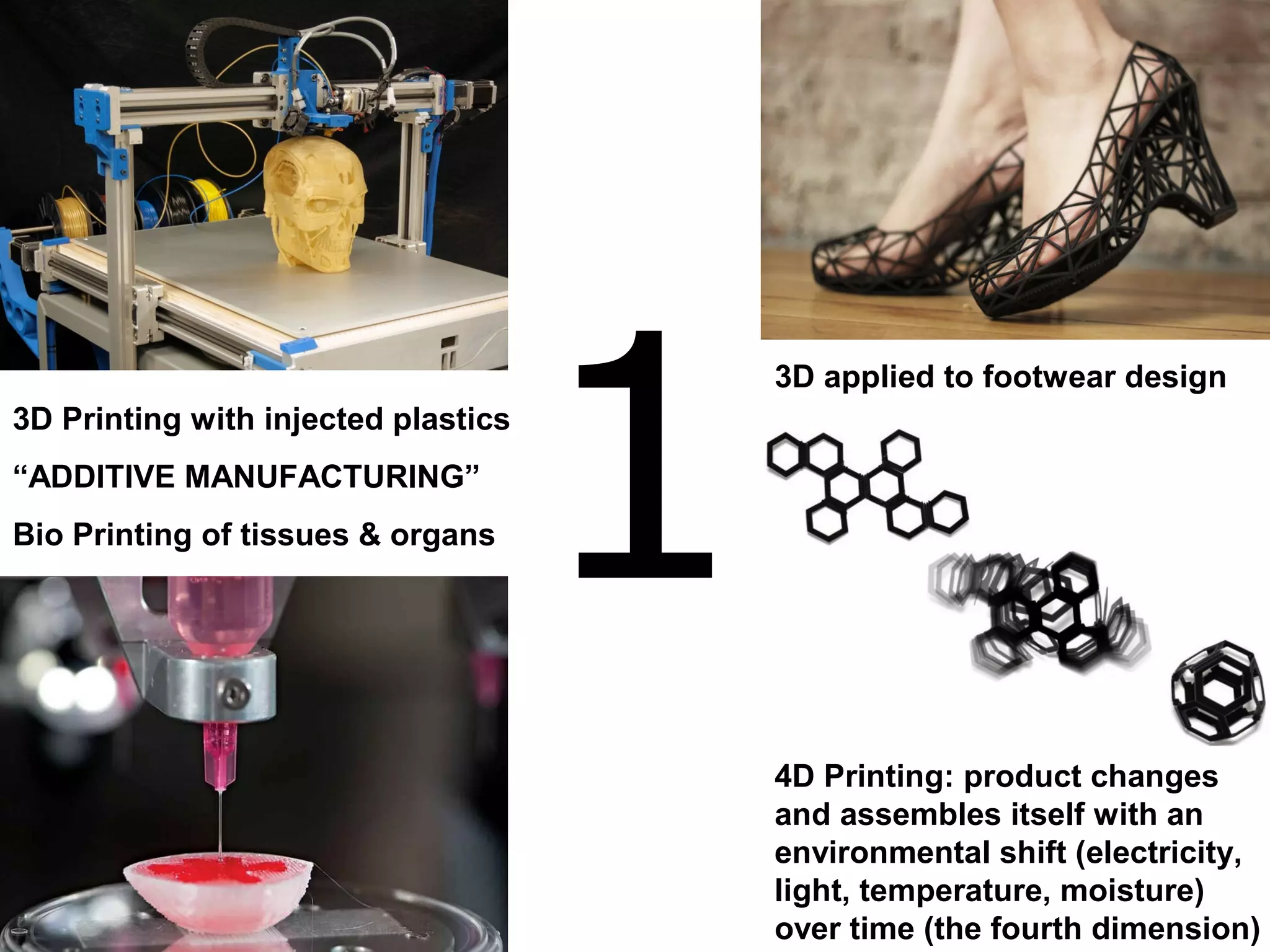
13D Printing with injected plastics
“ADDITIVE MANUFACTURING”
Bio Printing of tissues & organs
4D Printing: product changes
and assembles itself with an
environmental shift (electricity,
light, temperature, moisture)
over time (the fourth dimension)
3D applied to footwear design
VIDEO of 4D Printing in Fashion: Dress, Jewelry, etc.
SEE VIDEO ON
NEXT PAGE
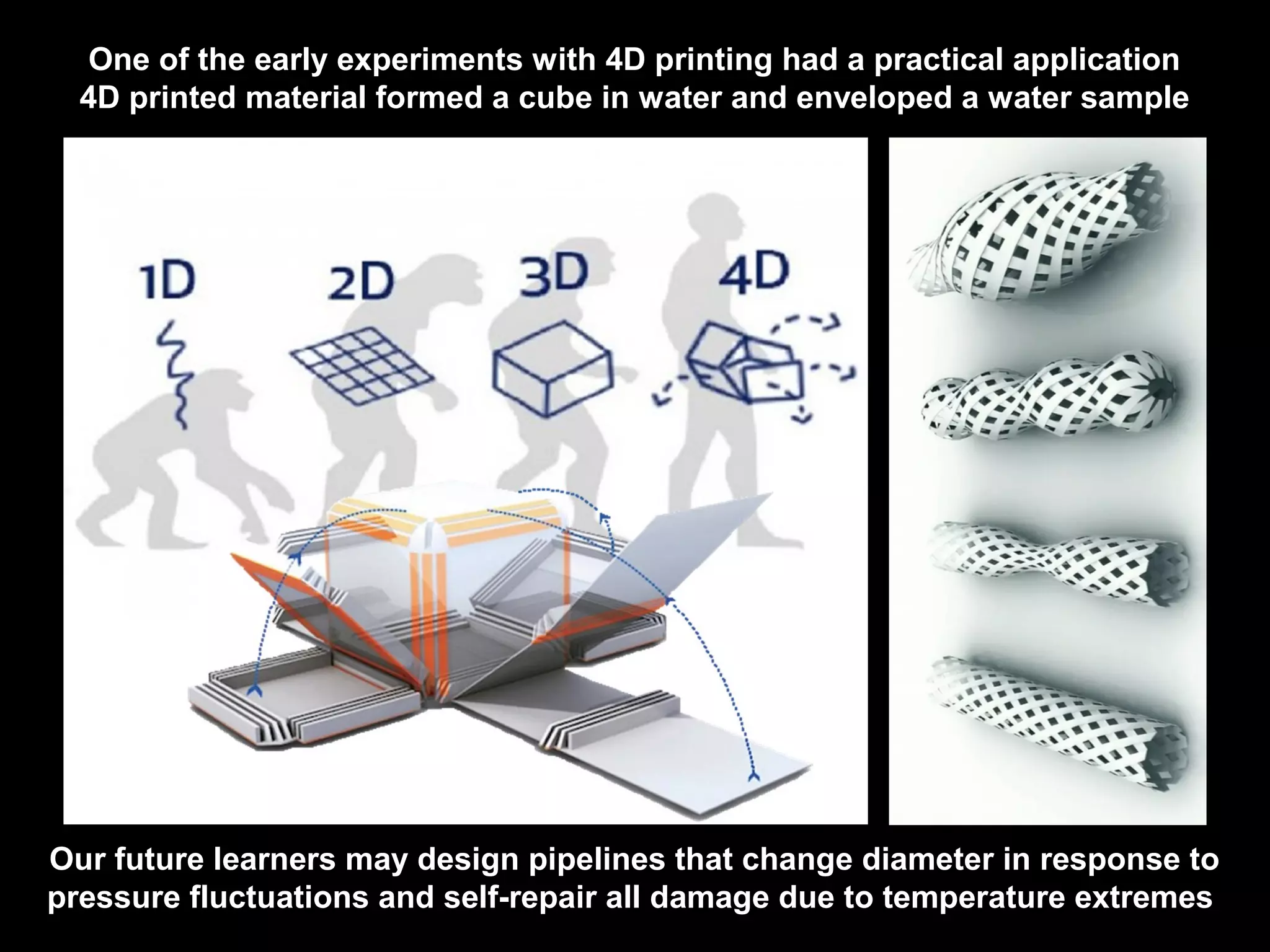
One of the early experiments with 4D printing had a practical application
4D printed material formed a cube in water and enveloped a water sample
Our future learners may design pipelines that change diameter in response to
pressure fluctuations and self-repair all damage due to temperature extremes
2
Flat Screen Monitors
& 3D Modeling
Holographic & Flexible Screens
VIDEO of Holographic Human Anatomy
SEE VIDEO ON
NEXT PAGE
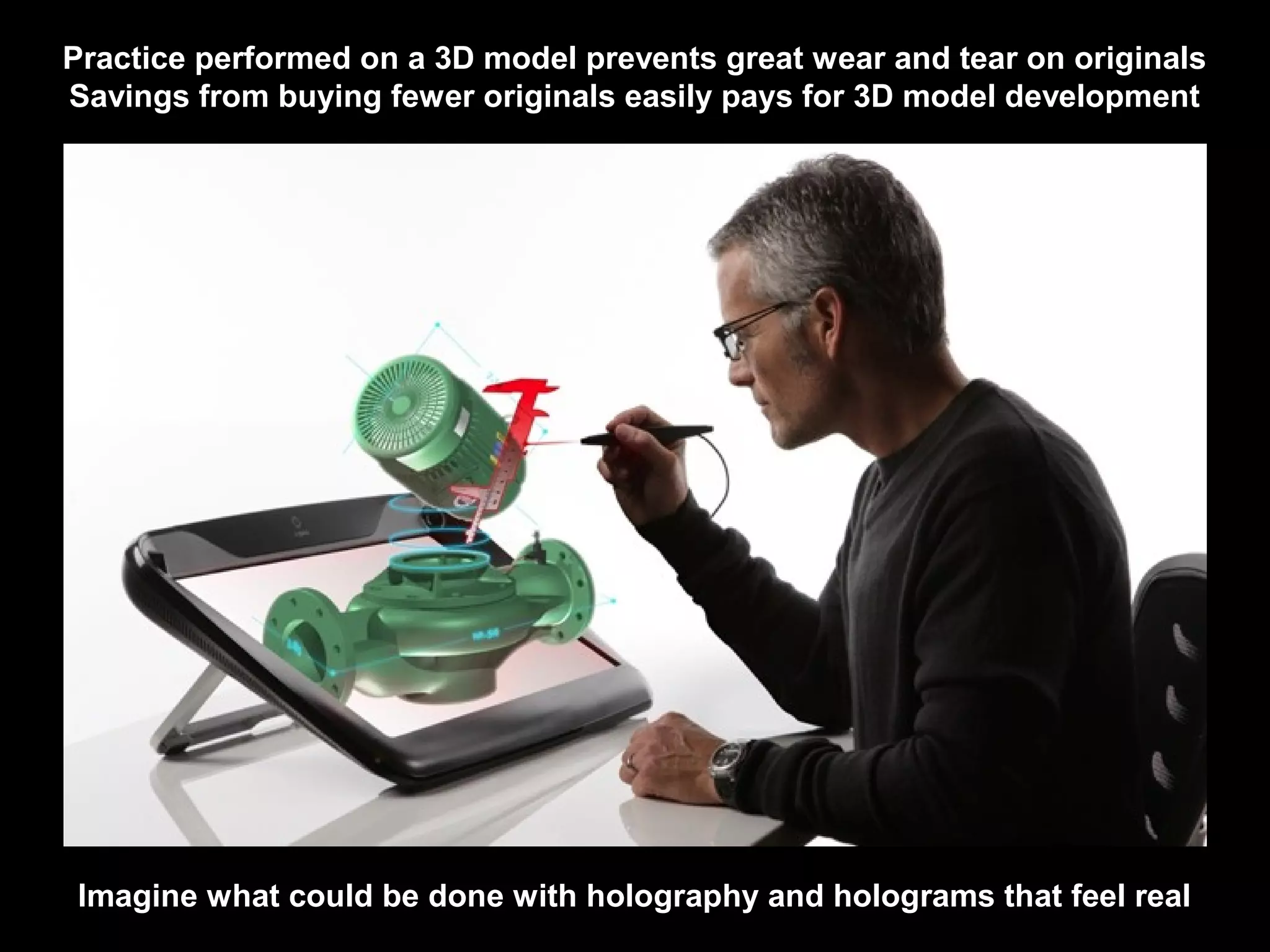
Practice performed on a 3D model prevents great wear and tear on originals
Savings from buying fewer originals easily pays for 3D model development
Imagine what could be done with holography and holograms that feel real
3
A network of neural sensors
replaces the mouse, keyboard
and other input devices
Brain-Computer Interfaces
(BCIs) are currently used for
helping people with disabilities
The next few steps will be to
develop headsets as wearable
technology and to commonly
implant micro-BCIs in the brain
VIDEO of Brain Computer Interface by Neuro-Headset
SEE VIDEO ON
NEXT PAGE
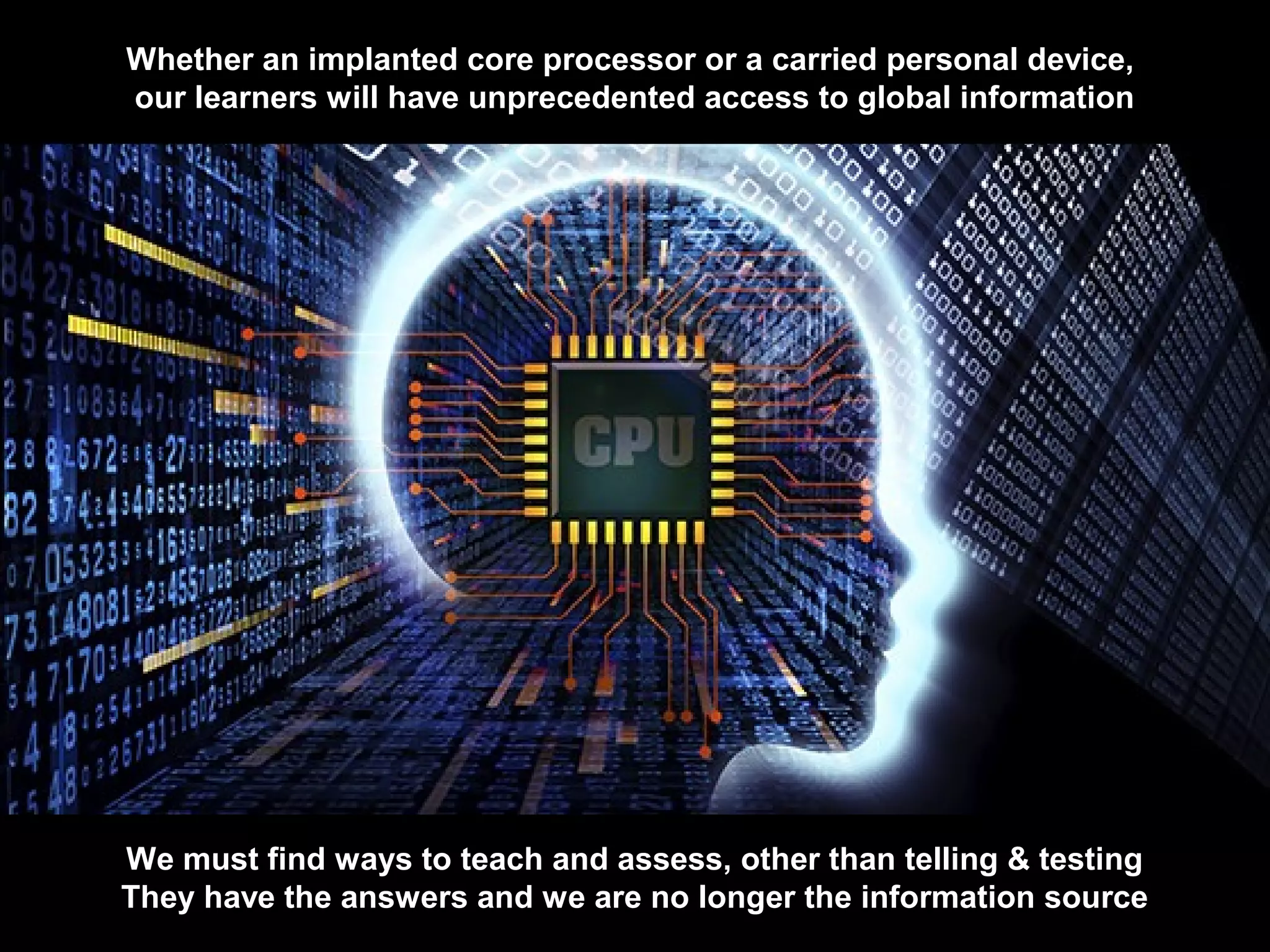
Whether an implanted core processor or a carried personal device,
our learners will have unprecedented access to global information
We must find ways to teach and assess, other than telling & testing
They have the answers and we are no longer the information source
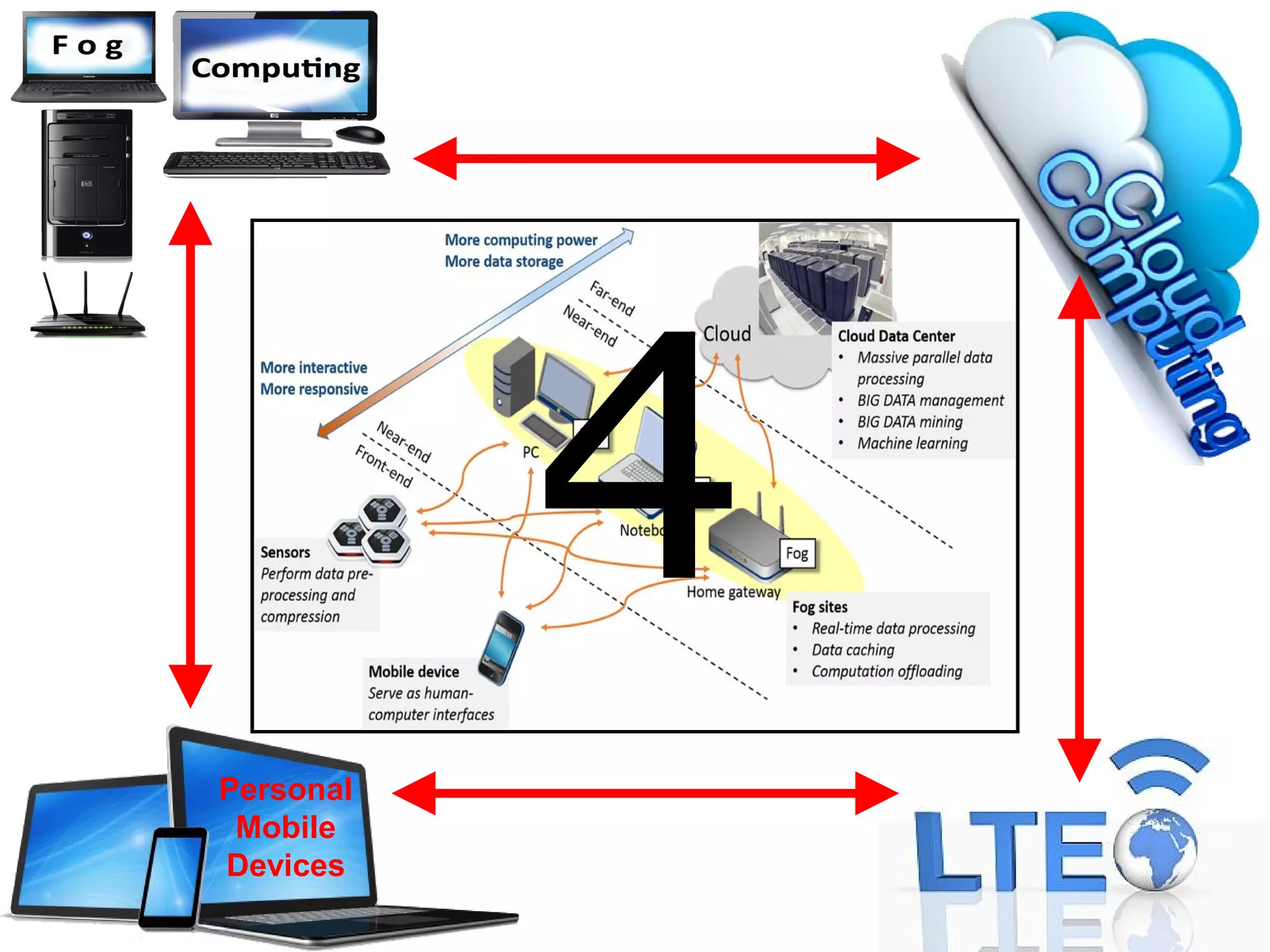
4
Personal
Mobile
Devices
VIDEO of Local Grid Fog Computing Application
SEE VIDEO ON
NEXT PAGE
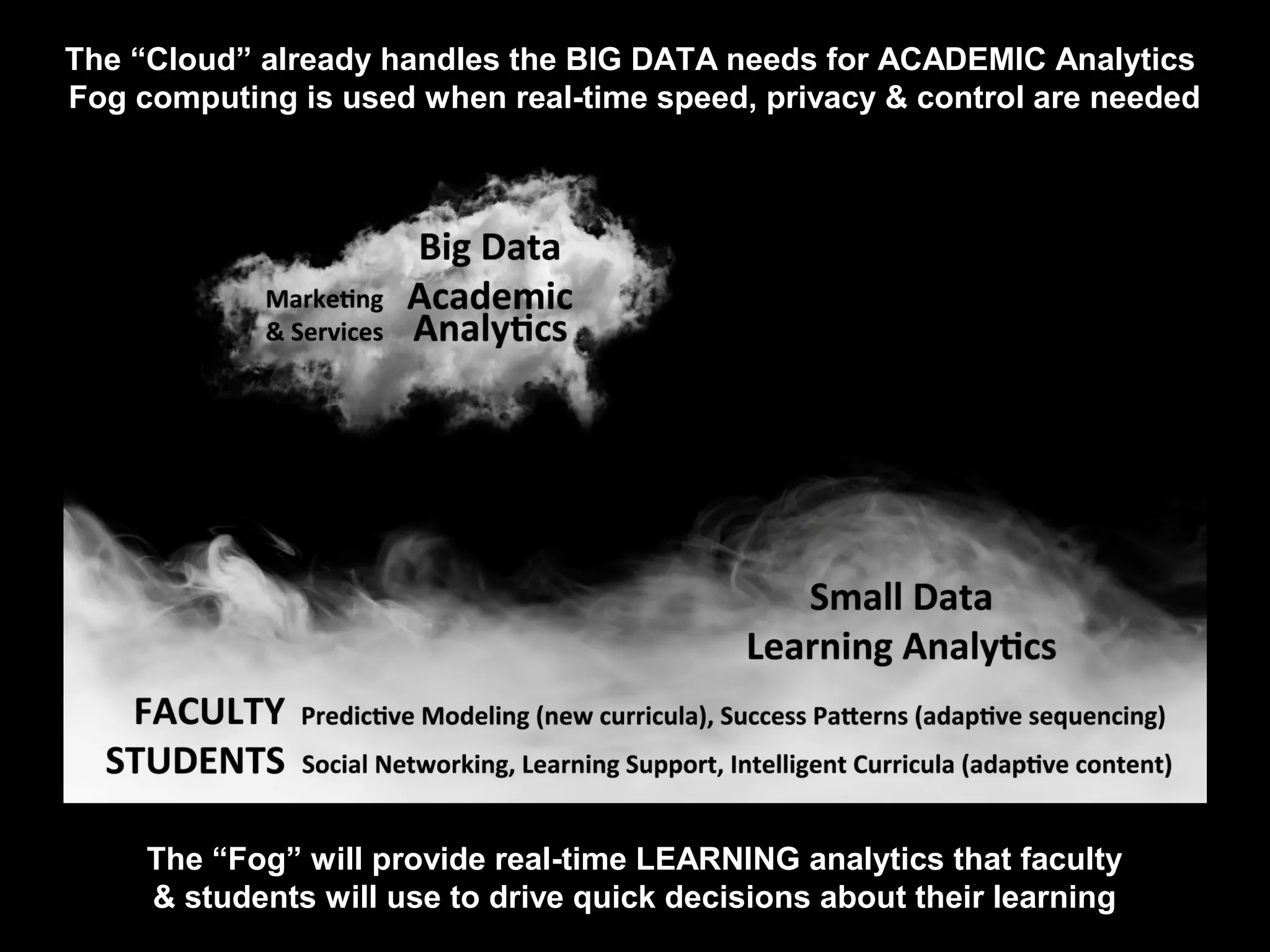
The “Cloud” already handles the BIG DATA needs for ACADEMIC Analytics
Fog computing is used when real-time speed, privacy & control are needed
The “Fog” will provide real-time LEARNING analytics that faculty
& students will use to drive quick decisions about their learning
Big Data
ACADEMIC ANALYTICS
5
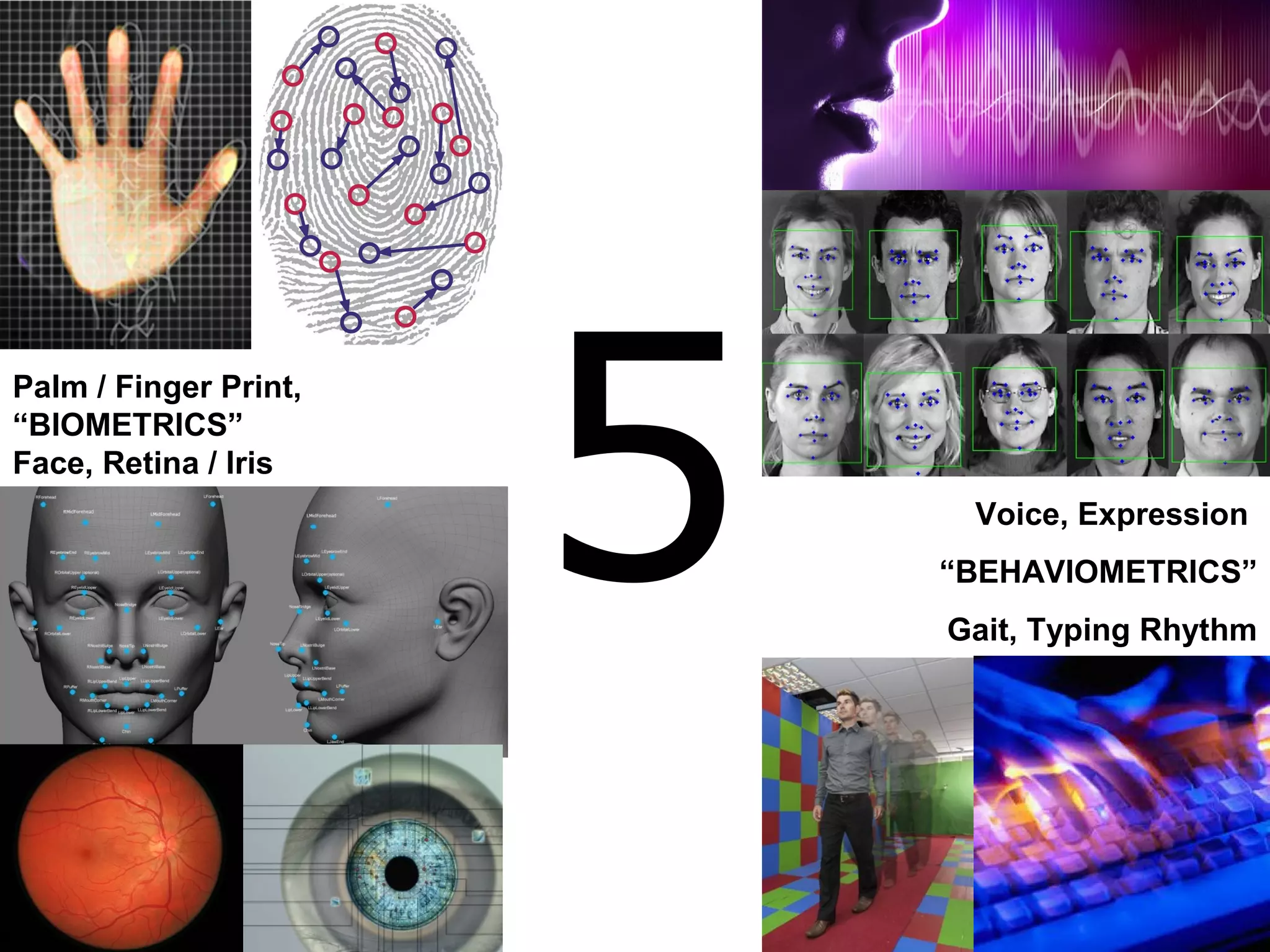
Palm / Finger Print,
“BIOMETRICS”
Face, Retina / Iris
Voice, Expression
“BEHAVIOMETRICS”
Gait, Typing Rhythm
VIDEO of DNA Sequencing from Nanopore to Laptop
SEE VIDEO ON
NEXT PAGE
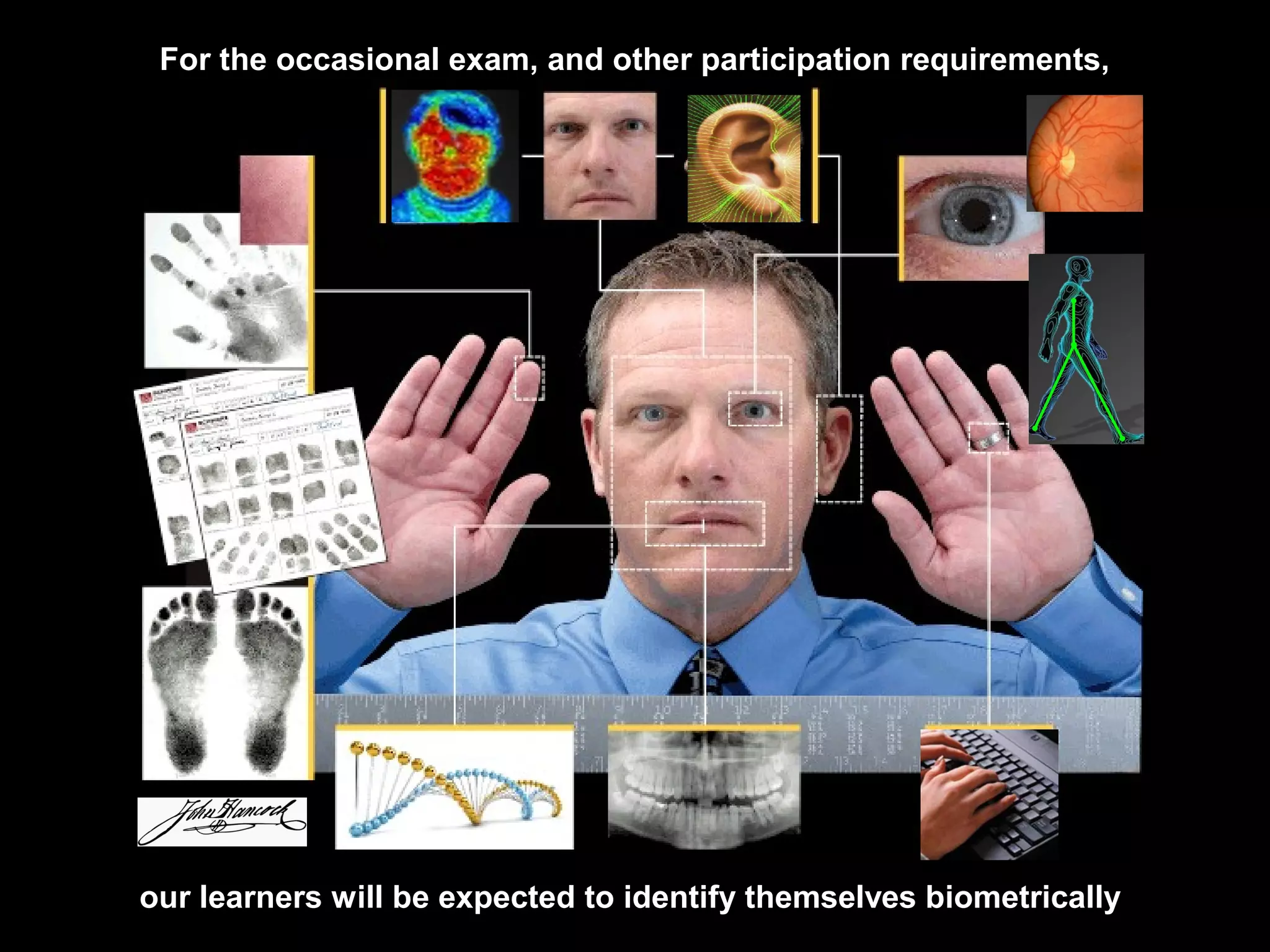
For the occasional exam, and other participation requirements,
our learners will be expected to identify themselves biometrically
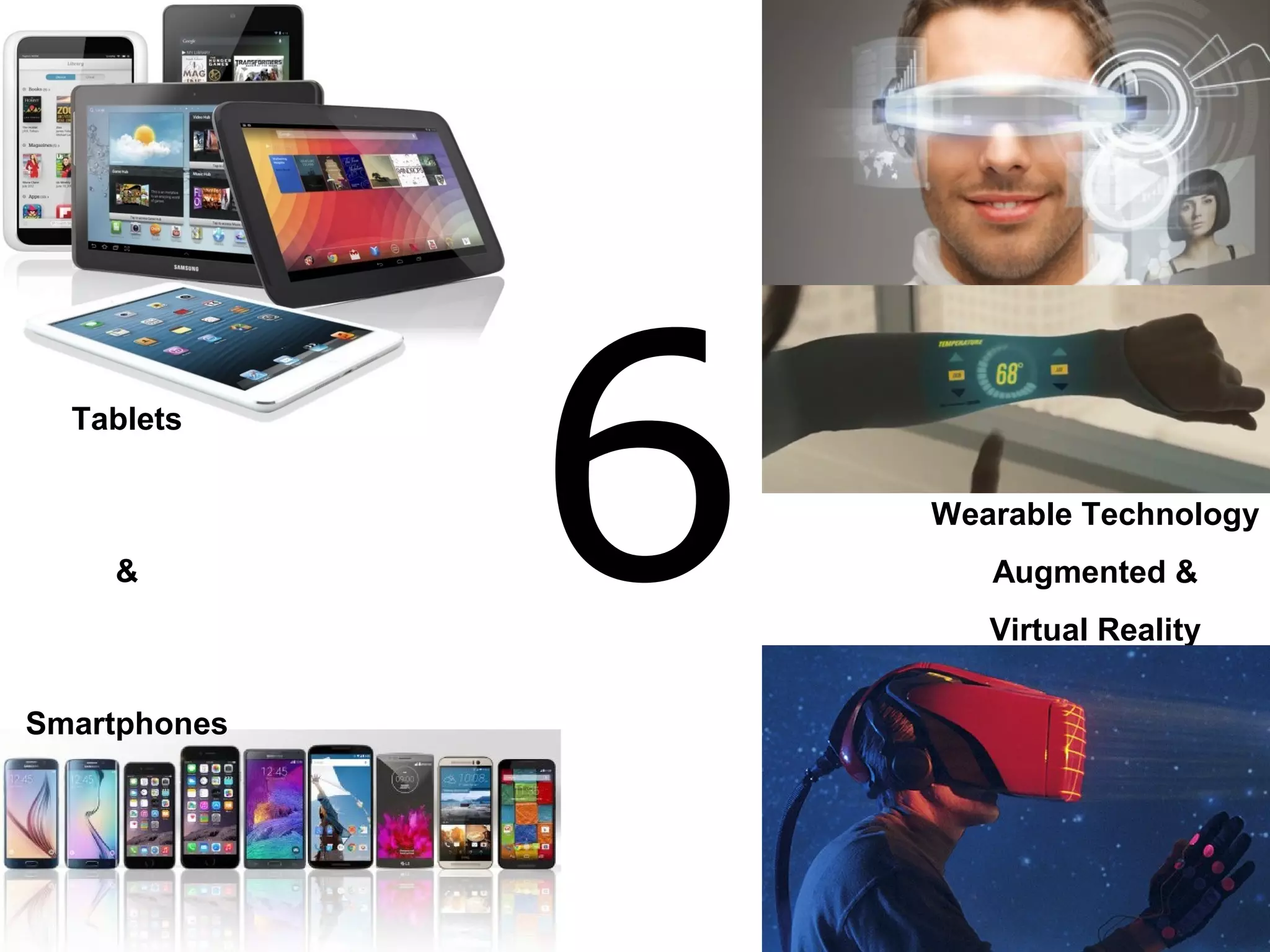
6Tablets
&
Smartphones
Wearable Technology
Augmented &
Virtual Reality
VIDEO of Augmented Reality Headset
SEE VIDEO ON
NEXT PAGE
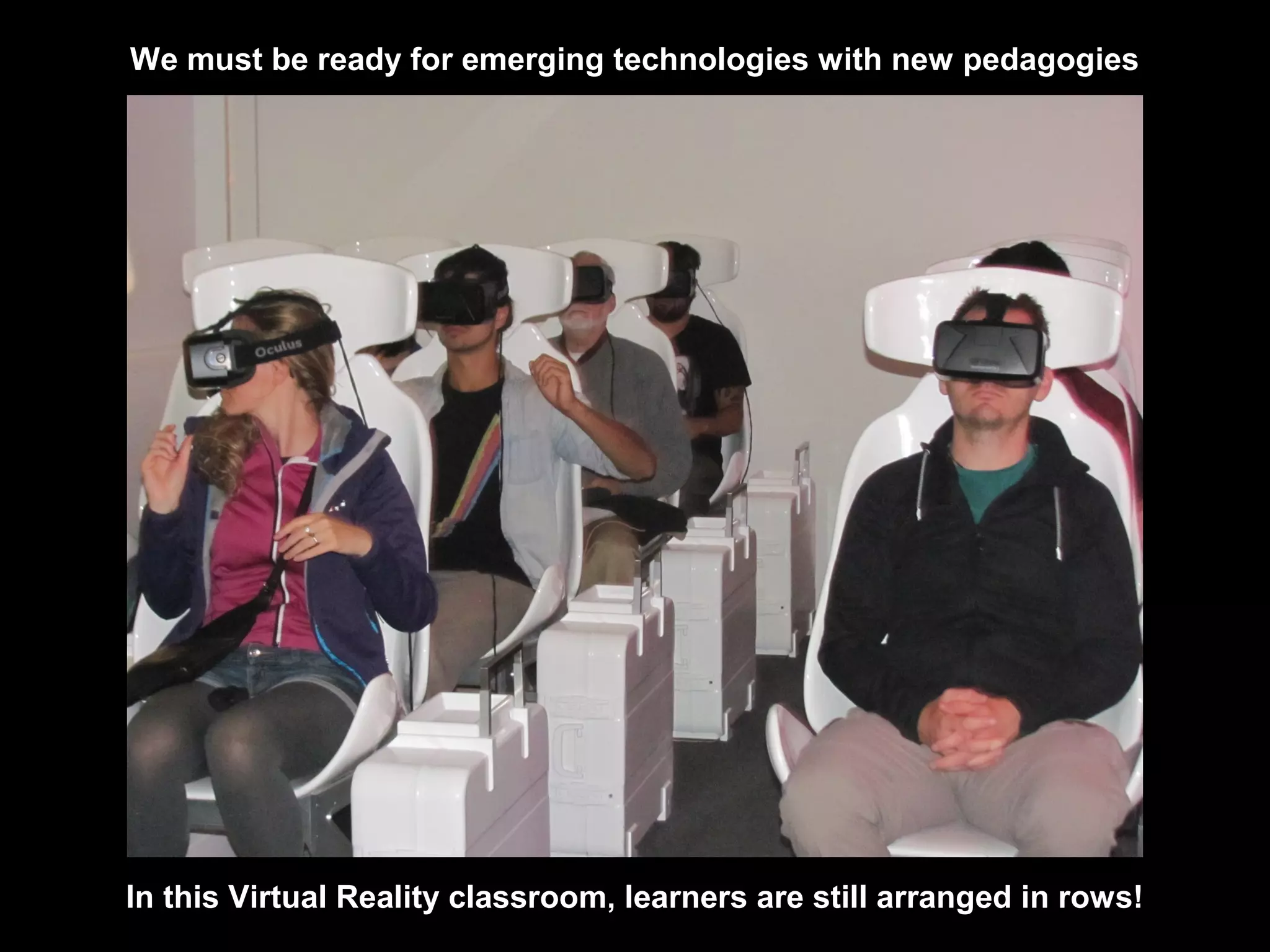
We must be ready for emerging technologies with new pedagogies
In this Virtual Reality classroom, learners are still arranged in rows!
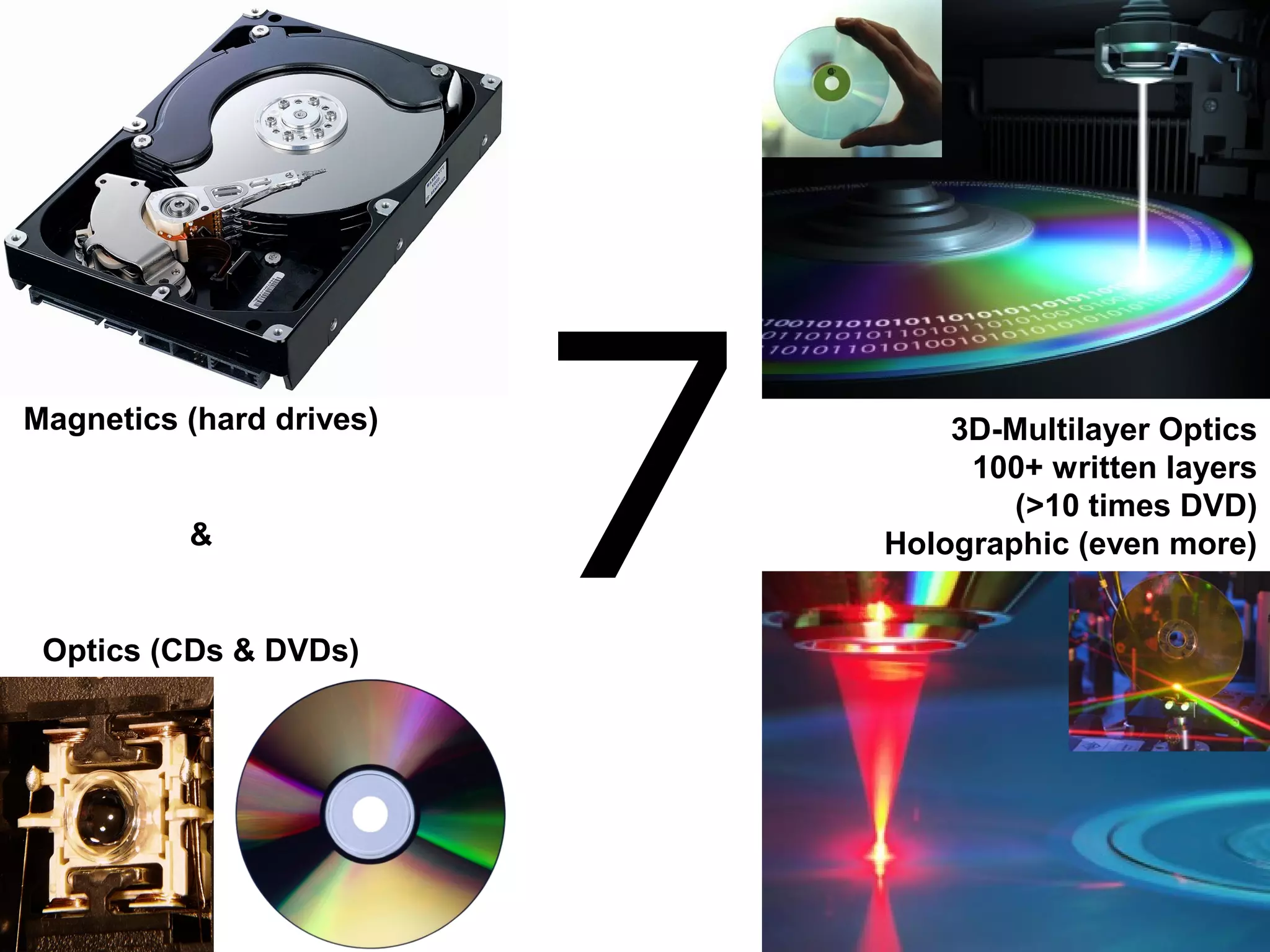
7Magnetics (hard drives)
&
Optics (CDs & DVDs)
3D-Multilayer Optics
100+ written layers
(>10 times DVD)
Holographic (even more)
VIDEO of Experimental Atomic Data Storage
SEE VIDEO ON
NEXT PAGE
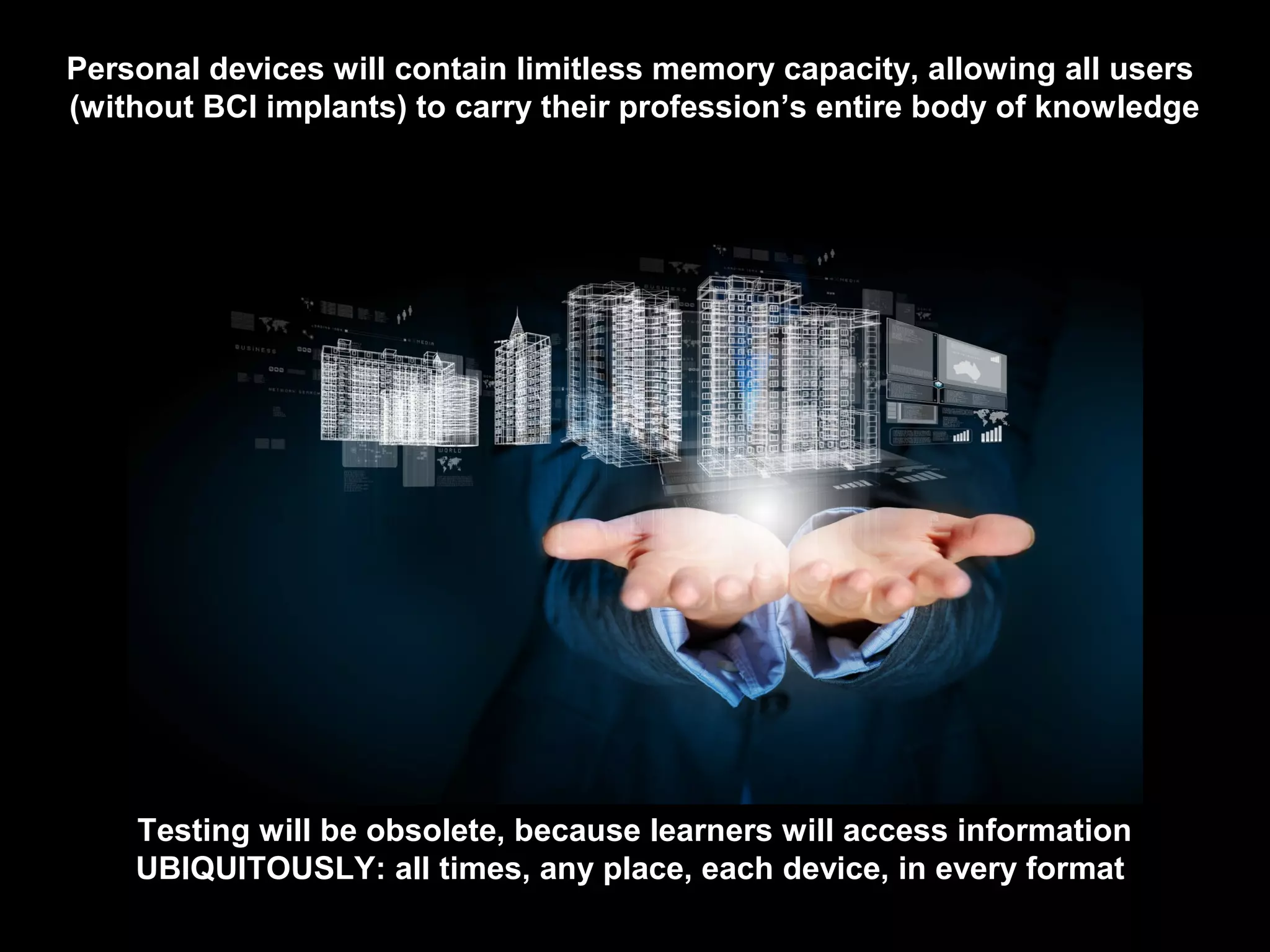
Personal devices will contain limitless memory capacity, allowing all users
(without BCI implants) to carry their profession’s entire body of knowledge
Testing will be obsolete, because learners will access information
UBIQUITOUSLY: all times, any place, each device, in every format
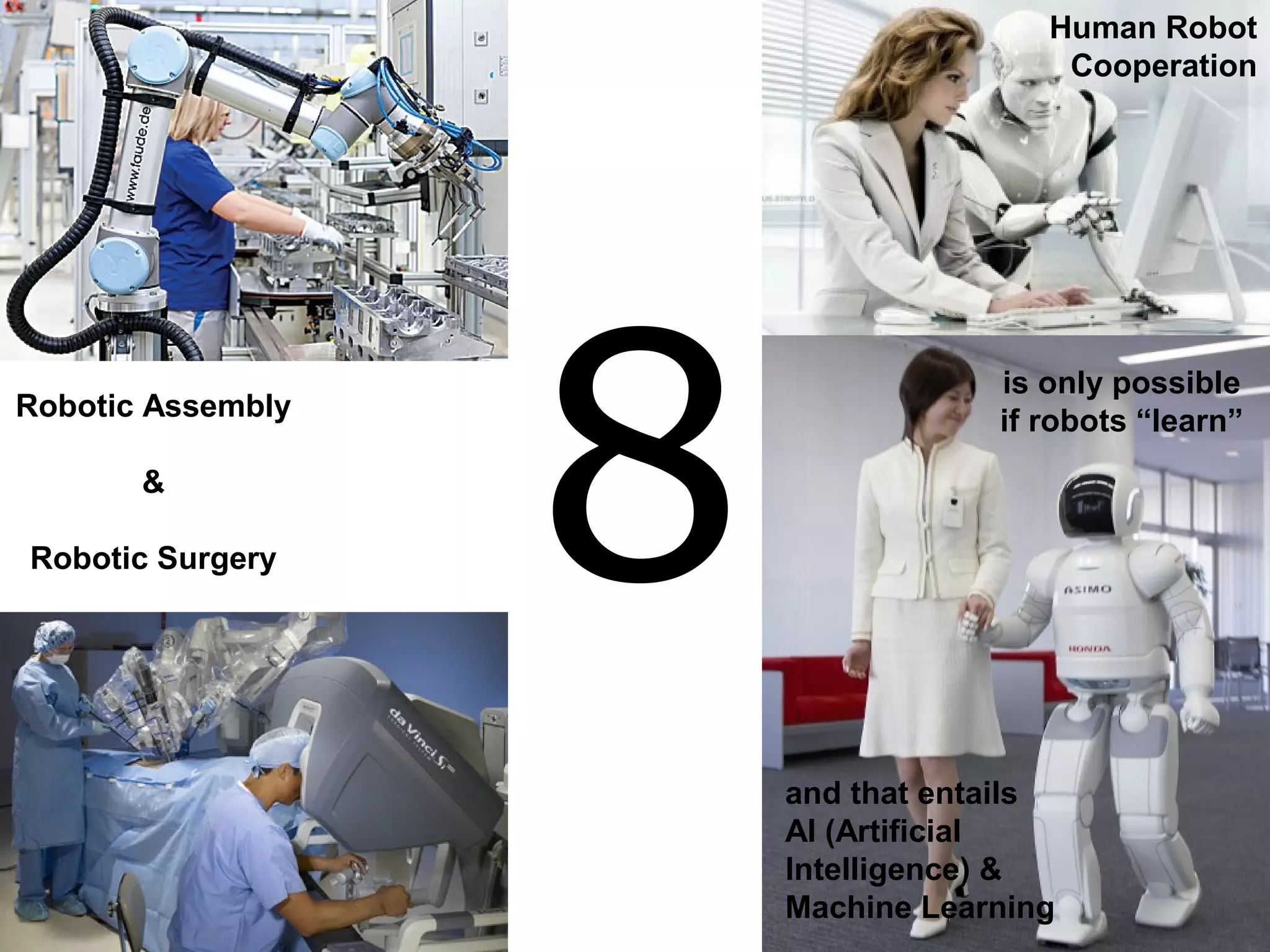
8Robotic Assembly
&
Robotic Surgery
Human Robot
Cooperation
is only possible
if robots “learn”
and that entails
AI (Artificial
Intelligence) &
Machine Learning
VIDEO of Top Ten Robotic Applications
SEE VIDEO ON
NEXT PAGE
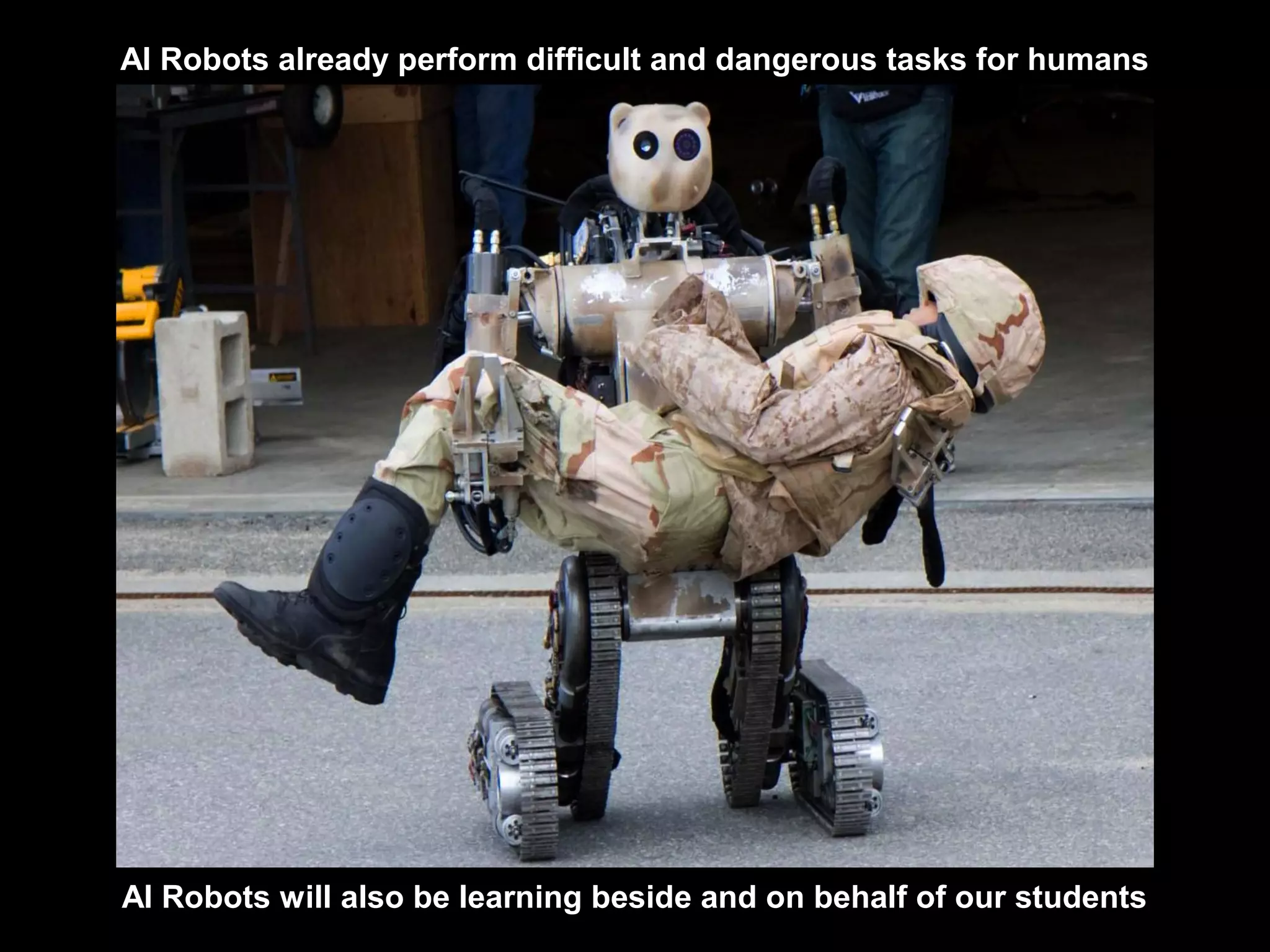
AI Robots already perform difficult and dangerous tasks for humans
AI Robots will also be learning beside and on behalf of our students
9
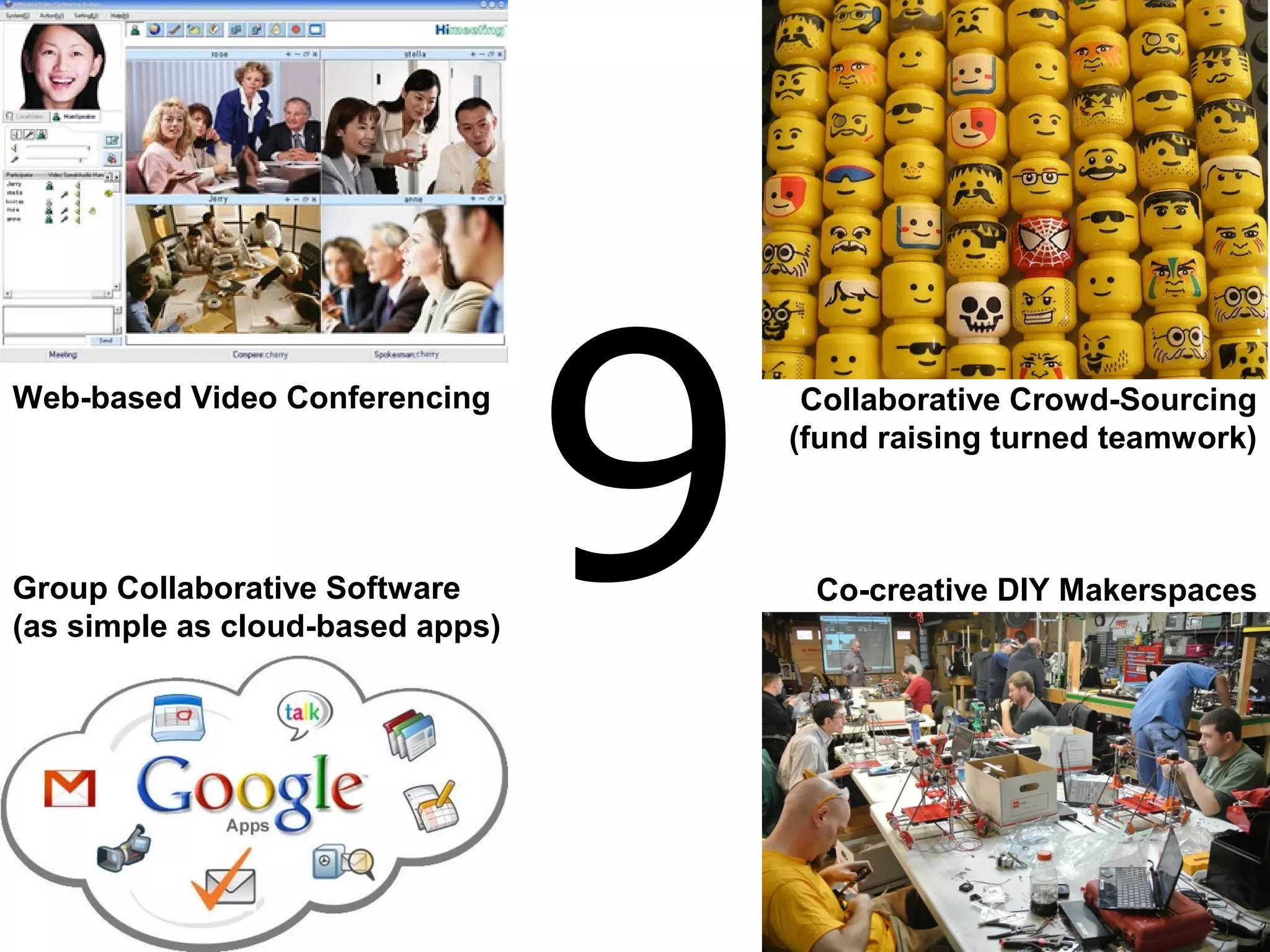
Web-based Video Conferencing
Group Collaborative Software
(as simple as cloud-based apps)
Collaborative Crowd-Sourcing
(fund raising turned teamwork)
Co-creative DIY Makerspaces
VIDEO of Collaboration in MakerSpaces
SEE VIDEO ON
NEXT PAGE
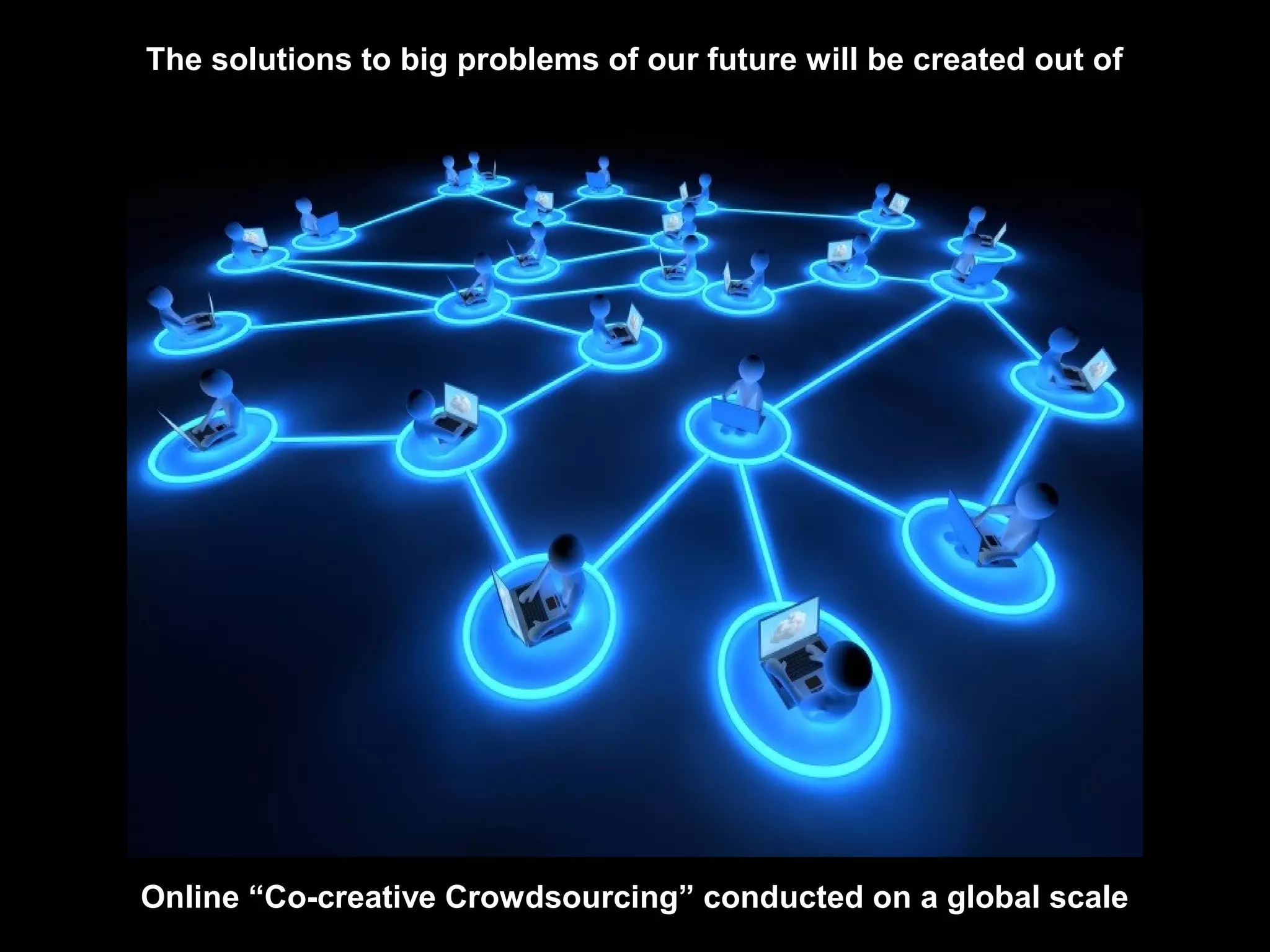
The solutions to big problems of our future will be created out of
Online “Co-creative Crowdsourcing” conducted on a global scale
1
0
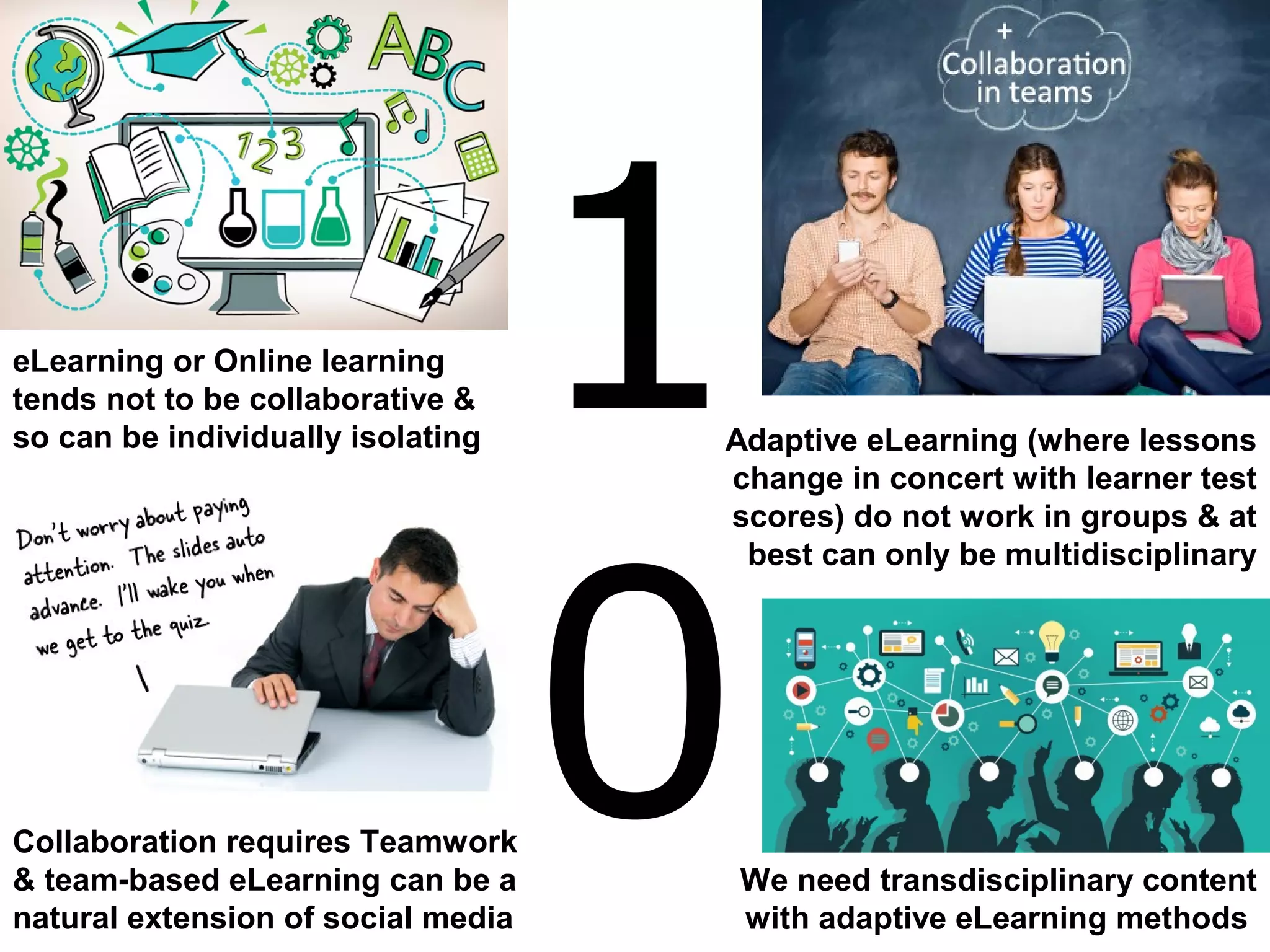
eLearning or Online learning
tends not to be collaborative &
so can be individually isolating Adaptive eLearning (where lessons
change in concert with learner test
scores) do not work in groups & at
best can only be multidisciplinary
Collaboration requires Teamwork
& team-based eLearning can be a
natural extension of social media
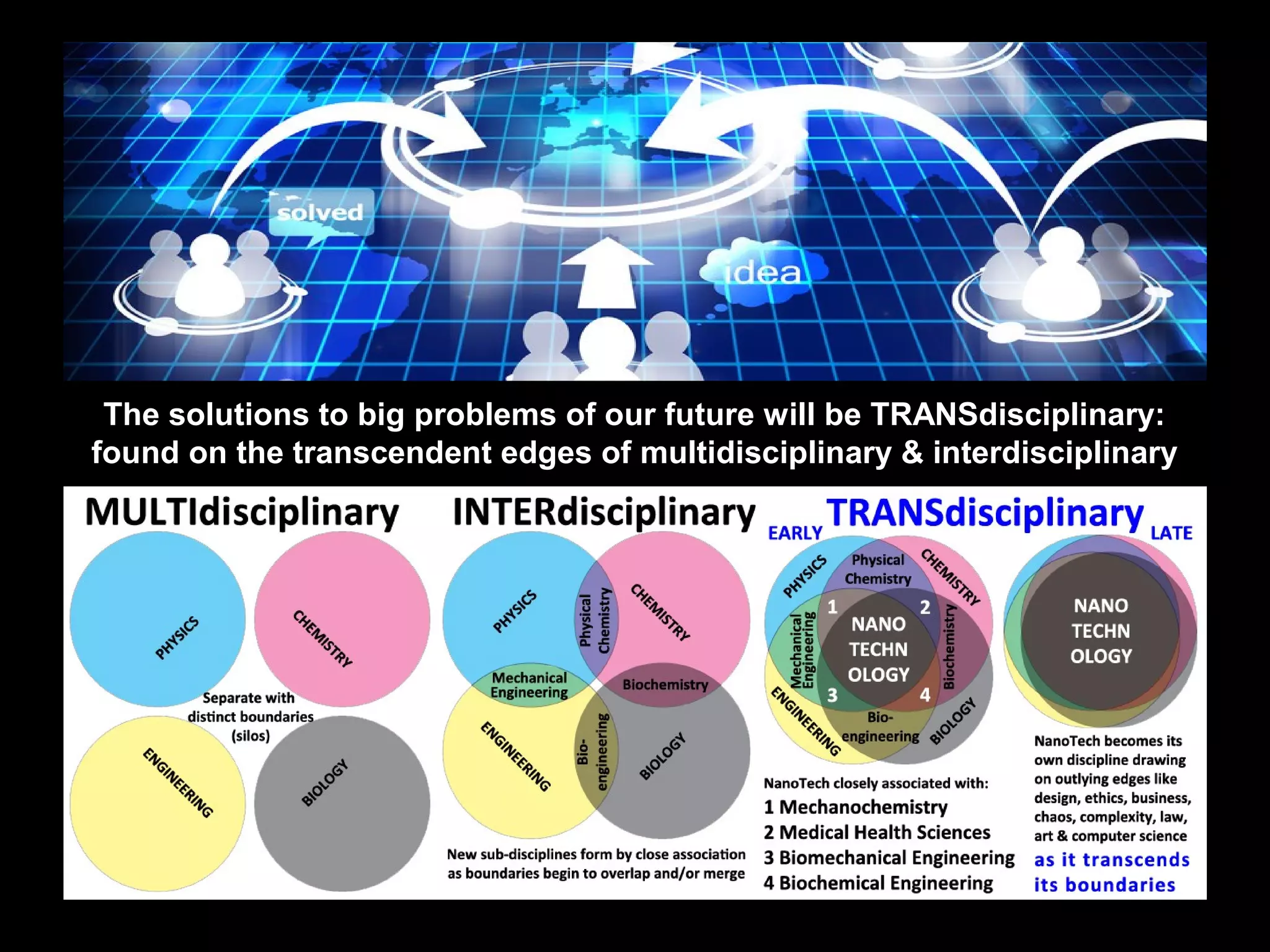
We need transdisciplinary content
with adaptive eLearning methods
VIDEO of Adaptive Learning (not transdisciplinary)
SEE VIDEO ON
NEXT PAGE
The solutions to big problems of our future will be TRANSdisciplinary:
found on the transcendent edges of multidisciplinary & interdisciplinary
GLOBAL ONLINE
C S
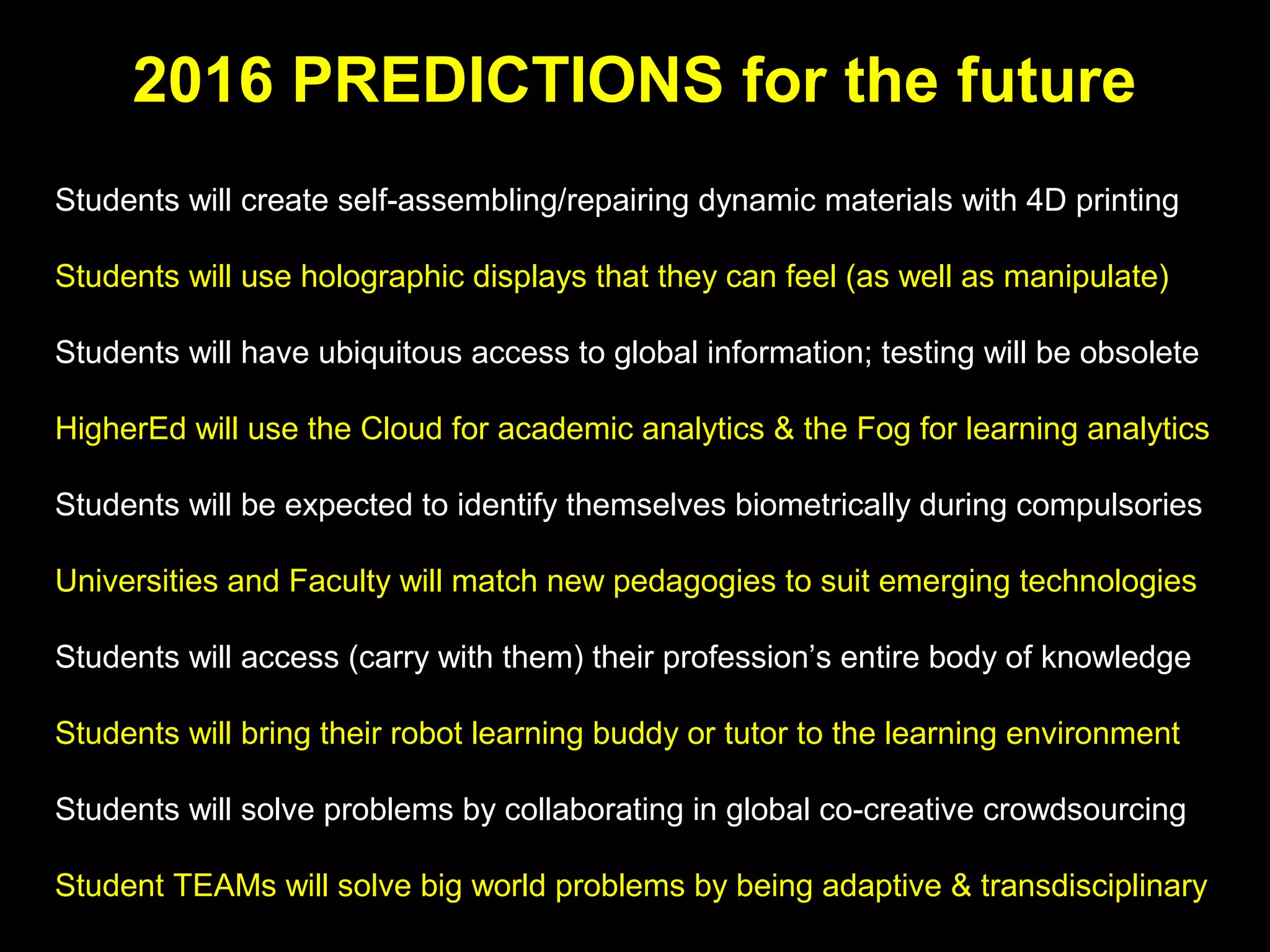
2016 PREDICTIONS for the future
Students will create self-assembling/repairing dynamic materials with 4D printing
Students will use holographic displays that they can see, manipulate, touch & feel
Students will have ubiquitous access to information; memory testing will be archaic
HigherEd will use the Cloud for academic analytics & the Fog for learning analytics
Students will be expected to identify themselves biometrically during compulsories
Universities and Faculty will match new pedagogies to suit emerging technologies
Students will carry with them & access their profession’s entire body of knowledge
Students will bring their robot learning buddy or tutor to the learning environment
Students will solve problems by collaborating in global co-creative crowdsourcing
Student TEAMs will solve big world problems by being adaptive & transdisciplinary
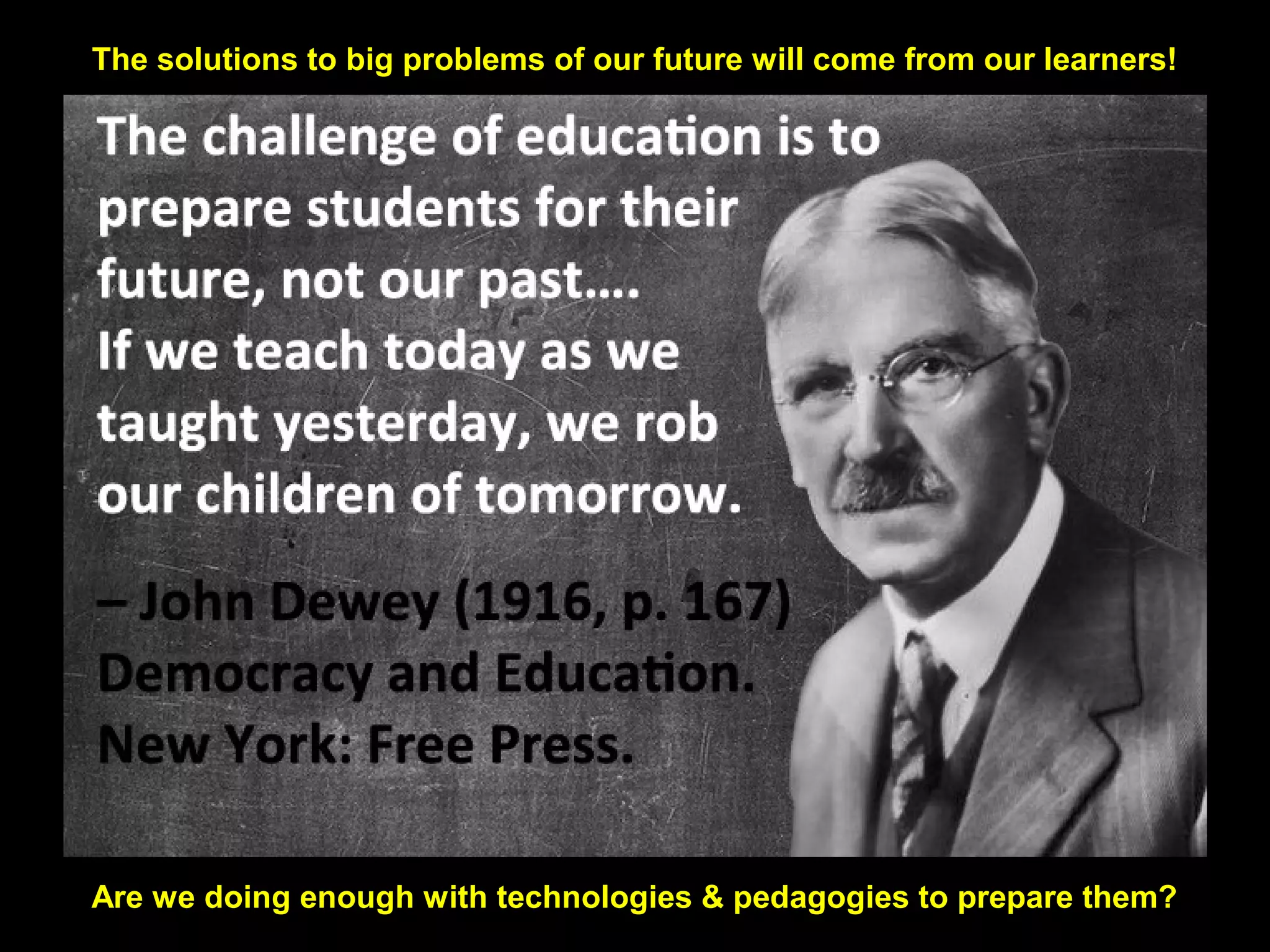
The solutions to big problems of our future will come from our learners!
Are we doing enough with technologies & pedagogies to prepare them?

Emerging Technologies for Higher Education

  • 1.
  • 3.
    The IoT or“INTERNET OF THINGS” (IoT 2015 = 20 billion devices, 8 ZBs* data) means by 2020 (in 5 years): MORE DEVICES (50+ billion), increasingly larger BIG DATA (50+ ZBs*), and newly EMERGING TECHNOLOGIES 1,180,591,620,717,411,303,424 bytes (where 1 Byte = 8 bits, each bit is either 1 or 0) 1 billion billion KBs 1 trillion GBs 1 ZettaByte 1 ZB 2020 2009 1992 50 Billion 5 Billion 1 Million 201520 Billion DEVICES YEAR *
  • 5.
    10 Emerging Tech2016 Future Printing Output 3D & Bio-printing 4D (just add water, etc.) Display Output Flat Screen & 3D Monitors Holographic & Flexible Interface Brain-Computer (BC Interface) Headsets & Implants (BCI) Shared Storage Cloud (many large systems network) Fog (multiple small devices network) Protection Biometrics (fingerprint & retina) DNA & Behaviometrics (gait) Device / Tech Tablets & Smart Phones Augmented & Virtual Reality Data Devices Magnetic (HDD) & Optic (CD) 3D (Multilayer, Holographic & Atomic) Robotics as Tools (for Assembly & Surgery) Cooperation (AI & Machine Learning) Collaboration Video / Web Conferencing Crowdsource / Makerspace Learning Mode Online & eLearning Adaptive & Transdisciplinary
  • 6.
  • 7.
    13D Printing withinjected plastics “ADDITIVE MANUFACTURING” Bio Printing of tissues & organs 4D Printing: product changes and assembles itself with an environmental shift (electricity, light, temperature, moisture) over time (the fourth dimension) 3D applied to footwear design
  • 8.
    VIDEO of 4DPrinting in Fashion: Dress, Jewelry, etc. SEE VIDEO ON NEXT PAGE
  • 9.
    One of theearly experiments with 4D printing had a practical application 4D printed material formed a cube in water and enveloped a water sample Our future learners may design pipelines that change diameter in response to pressure fluctuations and self-repair all damage due to temperature extremes
  • 10.
    2 Flat Screen Monitors &3D Modeling Holographic & Flexible Screens
  • 11.
    VIDEO of HolographicHuman Anatomy SEE VIDEO ON NEXT PAGE
  • 12.
    Practice performed ona 3D model prevents great wear and tear on originals Savings from buying fewer originals easily pays for 3D model development Imagine what could be done with holography and holograms that feel real
  • 13.
    3 A network ofneural sensors replaces the mouse, keyboard and other input devices Brain-Computer Interfaces (BCIs) are currently used for helping people with disabilities The next few steps will be to develop headsets as wearable technology and to commonly implant micro-BCIs in the brain
  • 14.
    VIDEO of BrainComputer Interface by Neuro-Headset SEE VIDEO ON NEXT PAGE
  • 15.
    Whether an implantedcore processor or a carried personal device, our learners will have unprecedented access to global information We must find ways to teach and assess, other than telling & testing They have the answers and we are no longer the information source
  • 16.
  • 17.
    VIDEO of LocalGrid Fog Computing Application SEE VIDEO ON NEXT PAGE
  • 18.
    The “Cloud” alreadyhandles the BIG DATA needs for ACADEMIC Analytics Fog computing is used when real-time speed, privacy & control are needed The “Fog” will provide real-time LEARNING analytics that faculty & students will use to drive quick decisions about their learning Big Data ACADEMIC ANALYTICS
  • 19.
    5 Palm / FingerPrint, “BIOMETRICS” Face, Retina / Iris Voice, Expression “BEHAVIOMETRICS” Gait, Typing Rhythm
  • 20.
    VIDEO of DNASequencing from Nanopore to Laptop SEE VIDEO ON NEXT PAGE
  • 21.
    For the occasionalexam, and other participation requirements, our learners will be expected to identify themselves biometrically
  • 22.
  • 23.
    VIDEO of AugmentedReality Headset SEE VIDEO ON NEXT PAGE
  • 24.
    We must beready for emerging technologies with new pedagogies In this Virtual Reality classroom, learners are still arranged in rows!
  • 25.
    7Magnetics (hard drives) & Optics(CDs & DVDs) 3D-Multilayer Optics 100+ written layers (>10 times DVD) Holographic (even more)
  • 26.
    VIDEO of ExperimentalAtomic Data Storage SEE VIDEO ON NEXT PAGE
  • 27.
    Personal devices willcontain limitless memory capacity, allowing all users (without BCI implants) to carry their profession’s entire body of knowledge Testing will be obsolete, because learners will access information UBIQUITOUSLY: all times, any place, each device, in every format
  • 28.
    8Robotic Assembly & Robotic Surgery HumanRobot Cooperation is only possible if robots “learn” and that entails AI (Artificial Intelligence) & Machine Learning
  • 29.
    VIDEO of TopTen Robotic Applications SEE VIDEO ON NEXT PAGE
  • 30.
    AI Robots alreadyperform difficult and dangerous tasks for humans AI Robots will also be learning beside and on behalf of our students
  • 31.
    9 Web-based Video Conferencing GroupCollaborative Software (as simple as cloud-based apps) Collaborative Crowd-Sourcing (fund raising turned teamwork) Co-creative DIY Makerspaces
  • 32.
    VIDEO of Collaborationin MakerSpaces SEE VIDEO ON NEXT PAGE
  • 33.
    The solutions tobig problems of our future will be created out of Online “Co-creative Crowdsourcing” conducted on a global scale
  • 34.
    1 0 eLearning or Onlinelearning tends not to be collaborative & so can be individually isolating Adaptive eLearning (where lessons change in concert with learner test scores) do not work in groups & at best can only be multidisciplinary Collaboration requires Teamwork & team-based eLearning can be a natural extension of social media We need transdisciplinary content with adaptive eLearning methods
  • 35.
    VIDEO of AdaptiveLearning (not transdisciplinary) SEE VIDEO ON NEXT PAGE
  • 36.
    The solutions tobig problems of our future will be TRANSdisciplinary: found on the transcendent edges of multidisciplinary & interdisciplinary
  • 37.
  • 38.
    2016 PREDICTIONS forthe future Students will create self-assembling/repairing dynamic materials with 4D printing Students will use holographic displays that they can see, manipulate, touch & feel Students will have ubiquitous access to information; memory testing will be archaic HigherEd will use the Cloud for academic analytics & the Fog for learning analytics Students will be expected to identify themselves biometrically during compulsories Universities and Faculty will match new pedagogies to suit emerging technologies Students will carry with them & access their profession’s entire body of knowledge Students will bring their robot learning buddy or tutor to the learning environment Students will solve problems by collaborating in global co-creative crowdsourcing Student TEAMs will solve big world problems by being adaptive & transdisciplinary
  • 39.
    The solutions tobig problems of our future will come from our learners! Are we doing enough with technologies & pedagogies to prepare them?