



@CathDigLearn
http://goo.gl/mW7Pi2
http://www.digitallearningcewa.com
digitallearning@cathednet.wa.edu.au
Learning Intention
To provide a practical overview of the Digital Technologies
Curriculum that demystifies the content and empowers
teachers
Activity Time
https://goo.gl/LoZXpC
Go to link below and
respond to the question on
the Padlet Wall
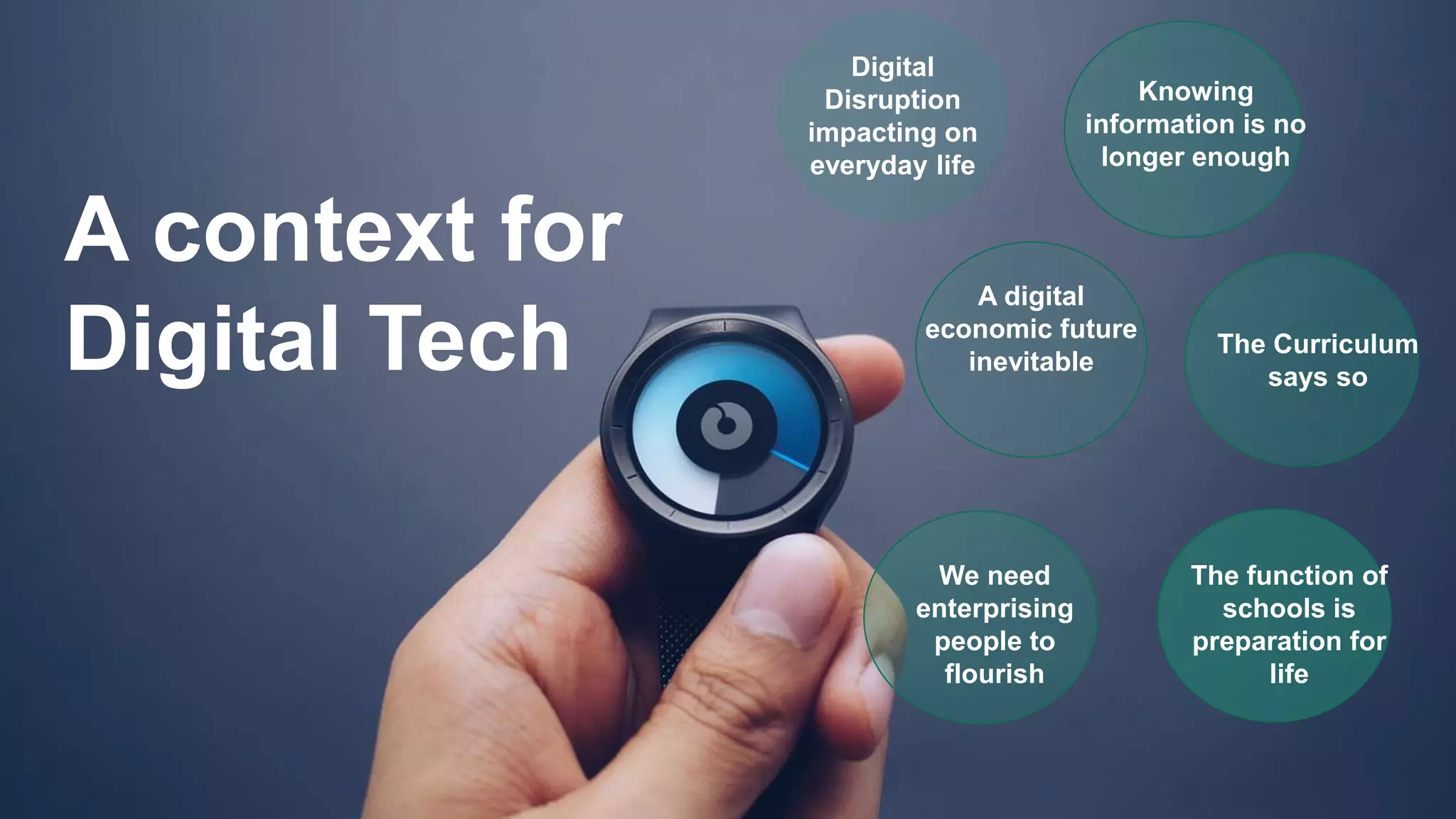
A context for
Digital Tech
A digital
economic future
inevitable
Knowing
information is no
longer enough
Digital
Disruption
impacting on
everyday life
The function of
schools is
preparation for
life
The Curriculum
says so
We need
enterprising
people to
flourish
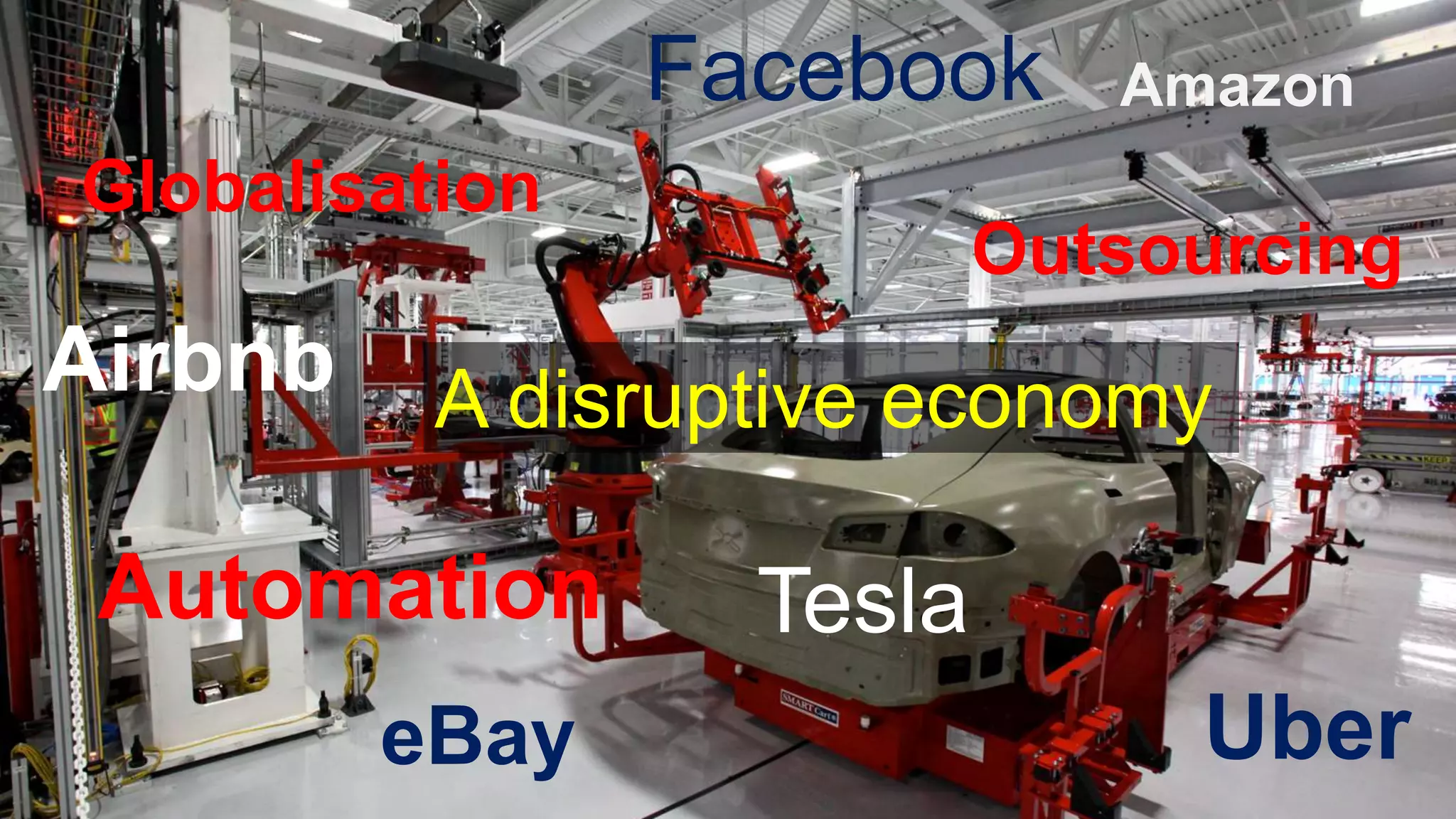
Uber
Airbnb
Tesla
Outsourcing
Facebook
Automation
Globalisation
eBay
Amazon
A disruptive economy
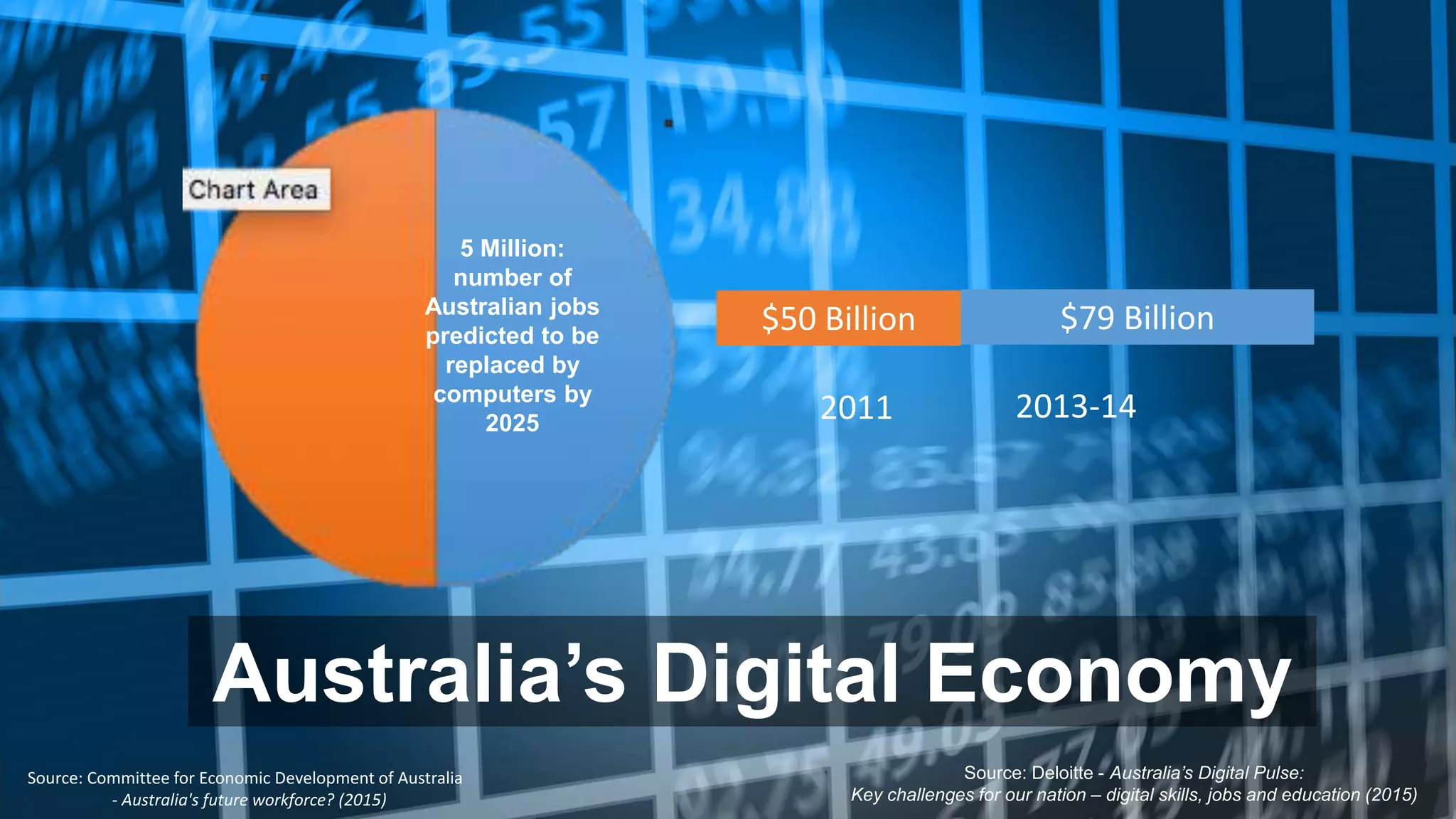
$50 Billion $79 Billion
Source: Deloitte - Australia’s Digital Pulse:
Key challenges for our nation – digital skills, jobs and education (2015)
2013-142011
5 Million:
number of
Australian jobs
predicted to be
replaced by
computers by
2025
Source: Committee for Economic Development of Australia
- Australia's future workforce? (2015)
Australia’s Digital Economy
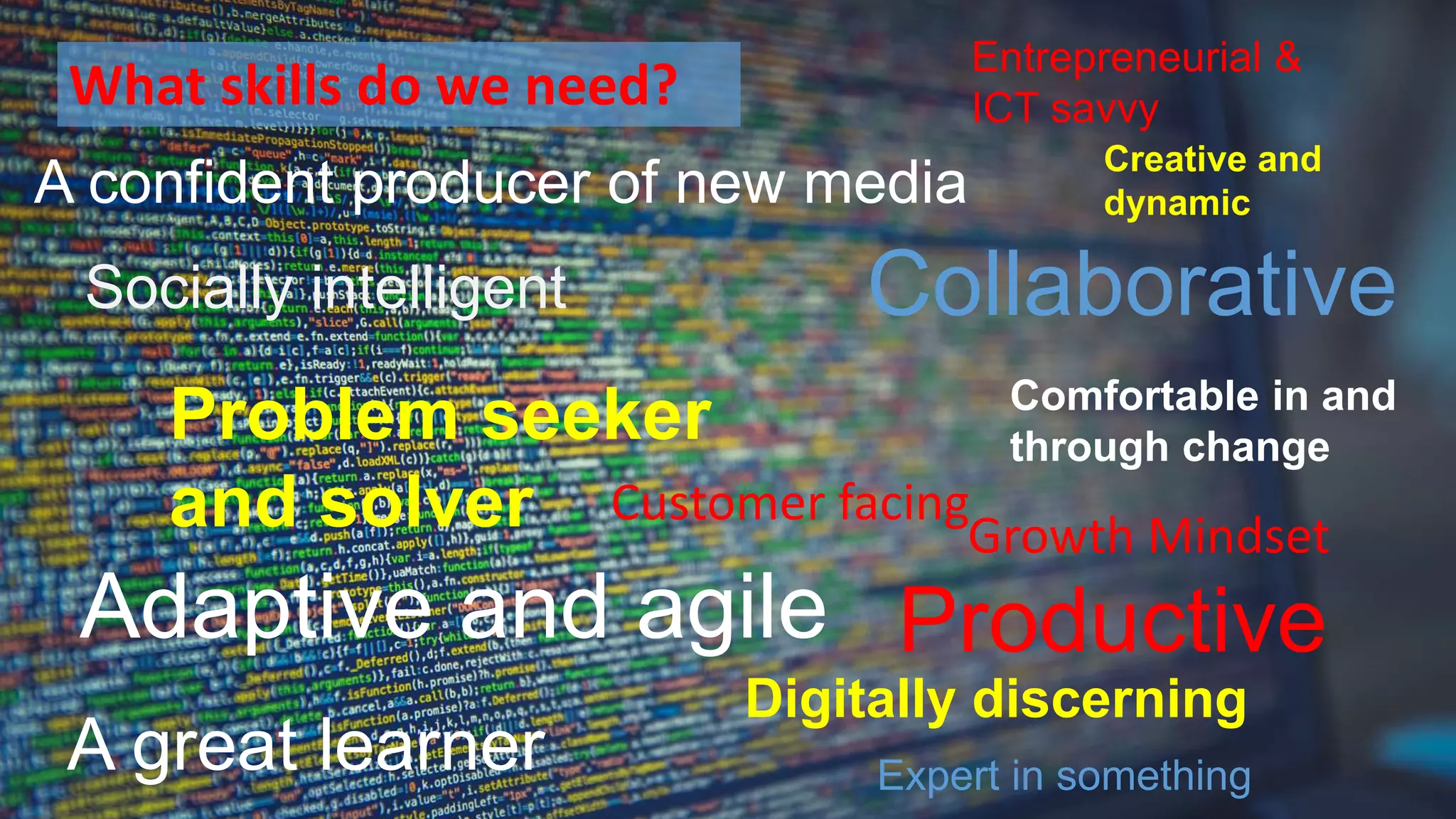
Entrepreneurial &
ICT savvy
Comfortable in and
through change
Adaptive and agile
Digitally discerning
Productive
Collaborative
A great learner
A confident producer of new media
Socially intelligent
Growth Mindset
Creative and
dynamic
Customer facing
Problem seeker
and solver
Expert in something
What skills do we need?
Numeracy
Critical &
Creative
Thinking
Ethical
Behaviour
Personal
& social
capability
Investigating
Literacy
Intercultural
understanding
Communicating
Creating
Applying social &
ethical protocols
Managing and
operating ICT
ICT
Capability
English Health/PE HASS Sciences
The ArtsLanguages Maths Technologies
CurriculumTODAY’S
Values (RE)
Repairing our relationship
with Aboriginal Australia
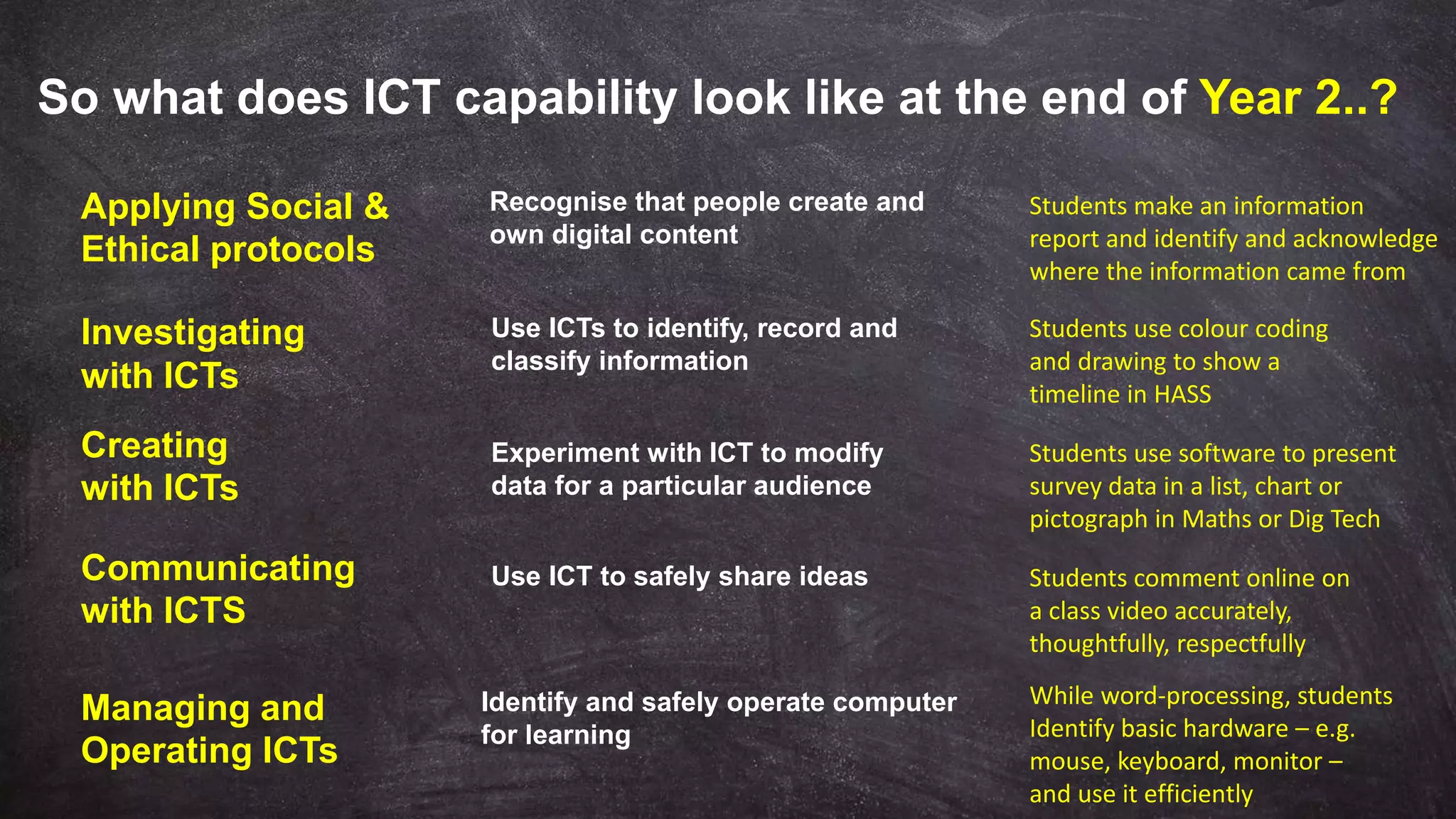
So what does ICT capability look like at the end of Year 2..?
Applying Social &
Ethical protocols
Students comment online on
a class video accurately,
thoughtfully, respectfully
Use ICT to safely share ideas
Identify and safely operate computer
for learning
Investigating
with ICTs
Communicating
with ICTS
Creating
with ICTs
Recognise that people create and
own digital content
Students use software to present
survey data in a list, chart or
pictograph in Maths or Dig Tech
Students use colour coding
and drawing to show a
timeline in HASS
Managing and
Operating ICTs
Students make an information
report and identify and acknowledge
where the information came from
Experiment with ICT to modify
data for a particular audience
Use ICTs to identify, record and
classify information
While word-processing, students
Identify basic hardware – e.g.
mouse, keyboard, monitor –
and use it efficiently
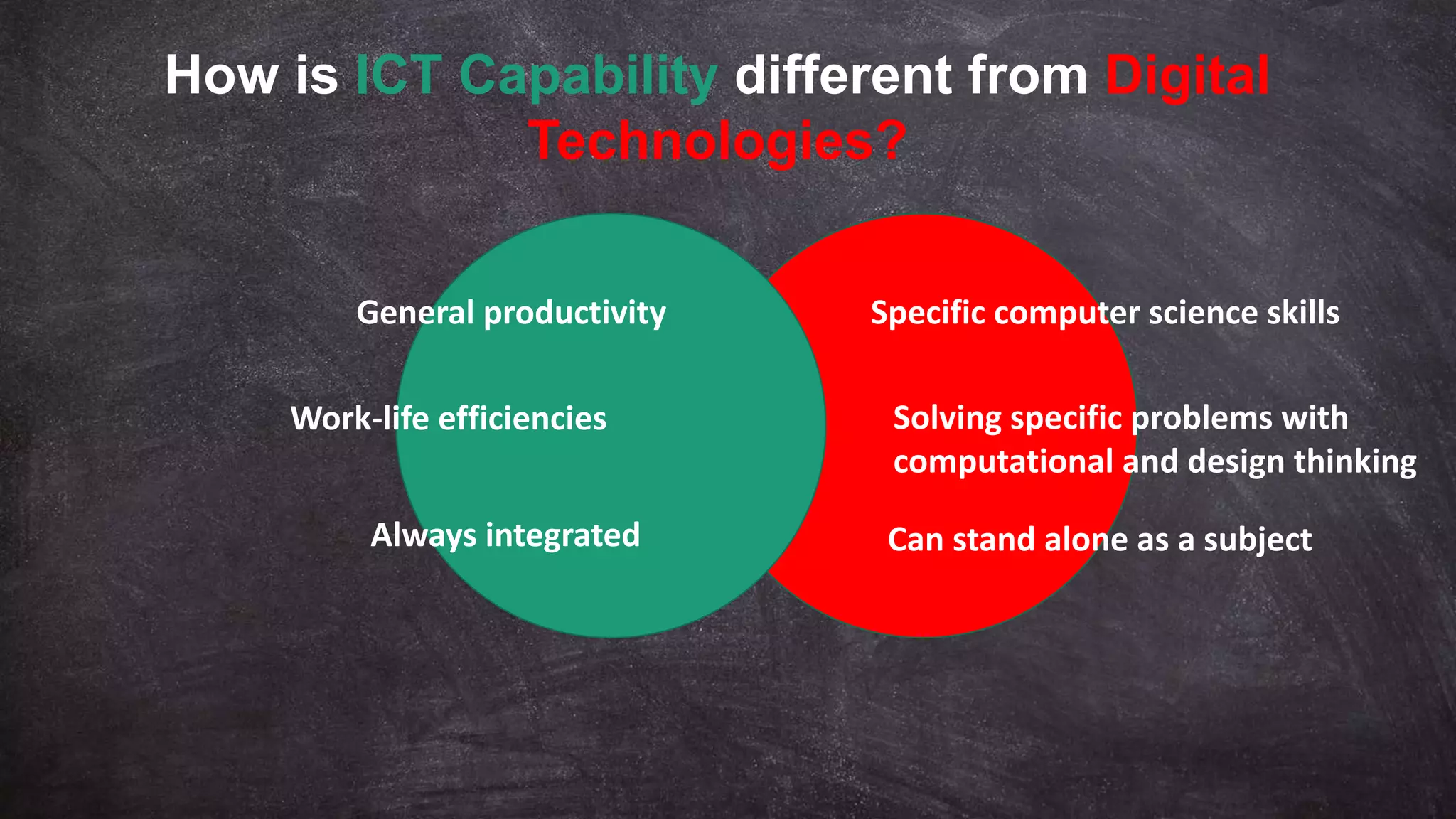
How is ICT Capability different from Digital
Technologies?
Specific computer science skills
Work-life efficiencies
General productivity
Always integrated Can stand alone as a subject
Solving specific problems with
computational and design thinking
Designing
Producing and
Implementing
Evaluating
Collaborating and managing
Investigating and
defining
The process of
implementing
digital solutions
investigating
and defining
The nature and
properties of data,
how they are
collected and
interpreted
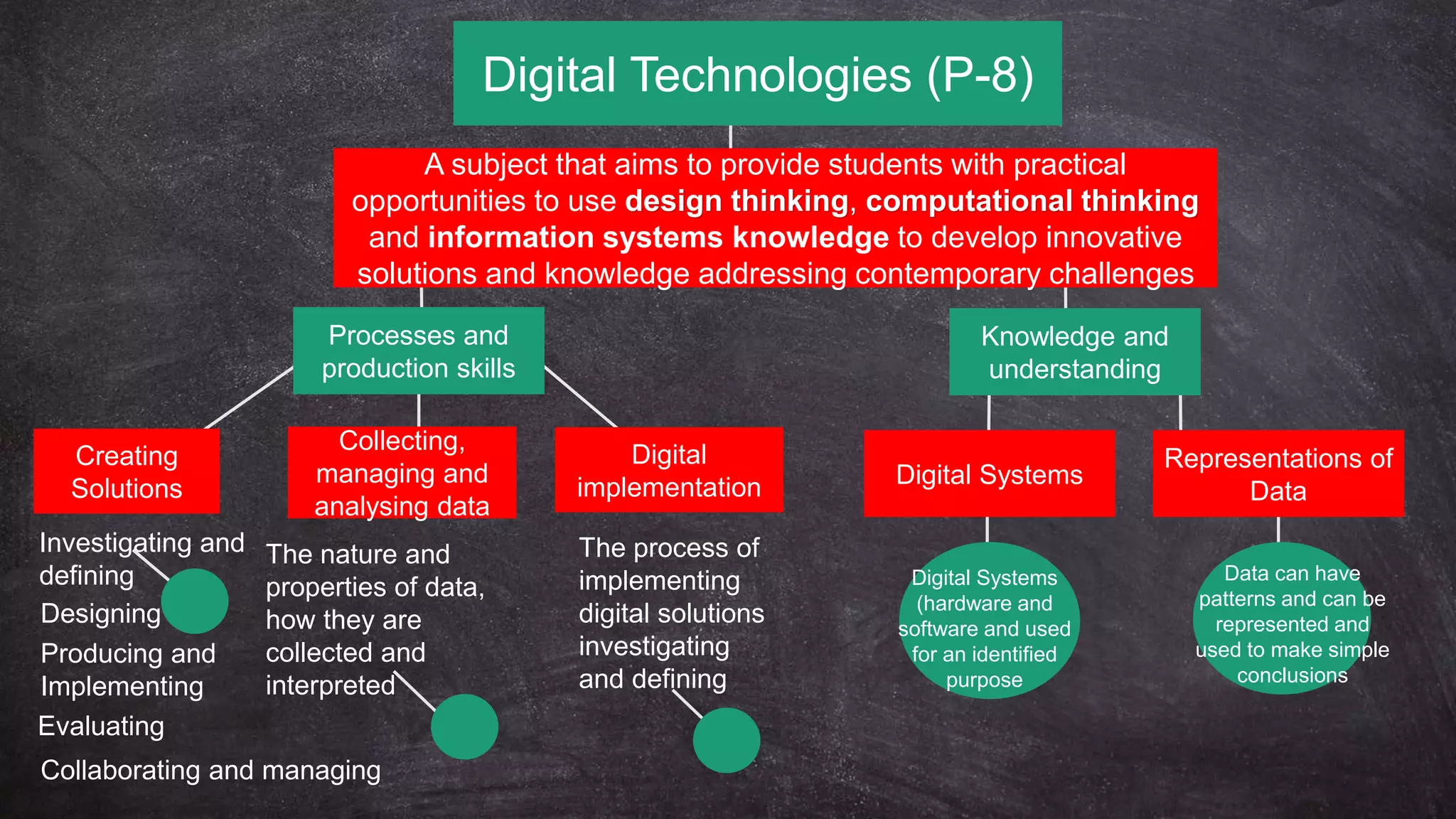
Digital Technologies (P-8)
A subject that aims to provide students with practical
opportunities to use design thinking, computational thinking
and information systems knowledge to develop innovative
solutions and knowledge addressing contemporary challenges
Knowledge and
understanding
Digital Systems
Representations of
Data
Digital
implementation
Collecting,
managing and
analysing data
Creating
Solutions
Processes and
production skills
Digital Systems
(hardware and
software and used
for an identified
purpose
Data can have
patterns and can be
represented and
used to make simple
conclusions
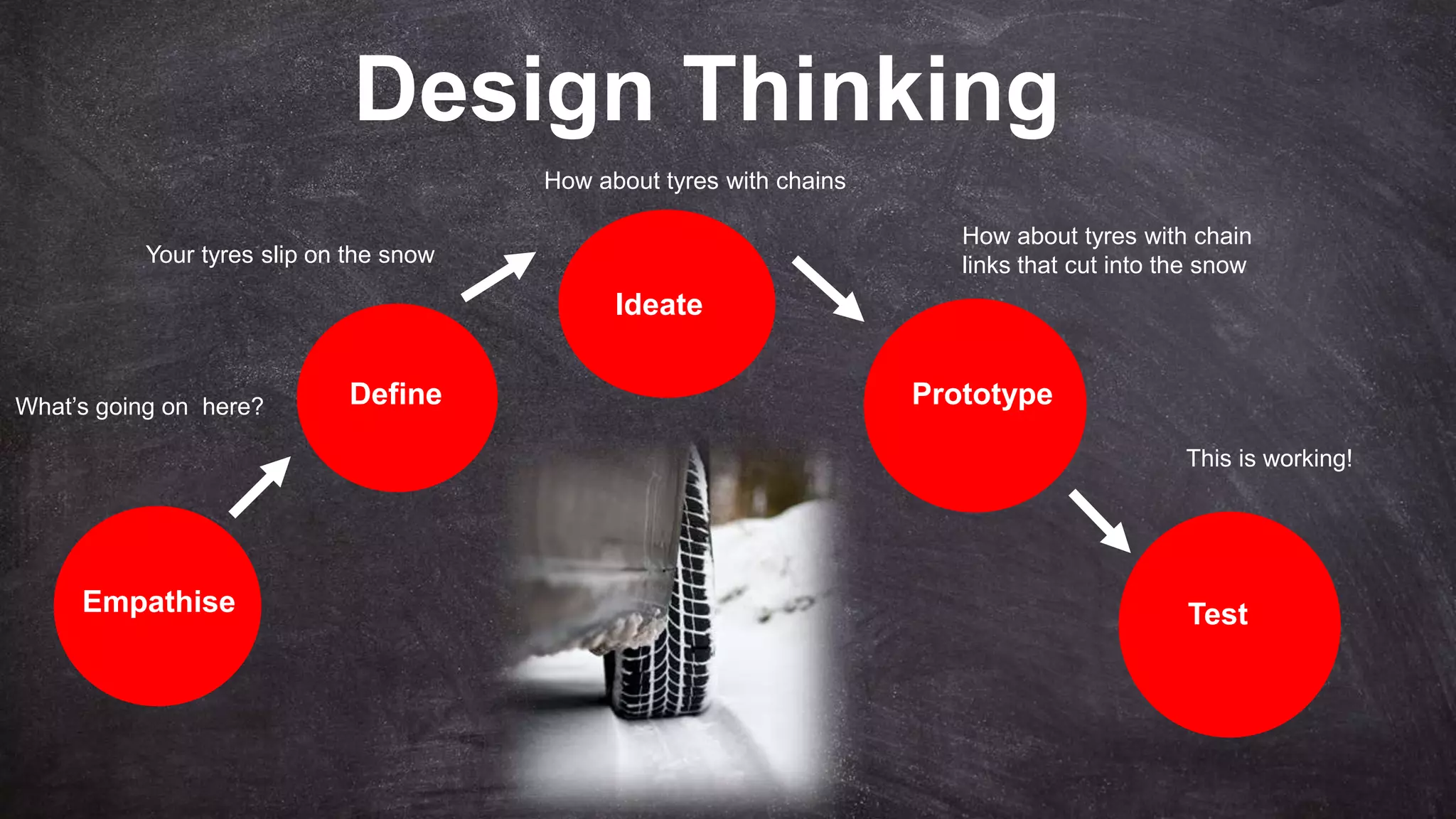
Design Thinking
Empathise
Define
Ideate
Prototype
Test
What’s going on here?
How about tyres with chains
Your tyres slip on the snow
How about tyres with chain
links that cut into the snow
This is working!
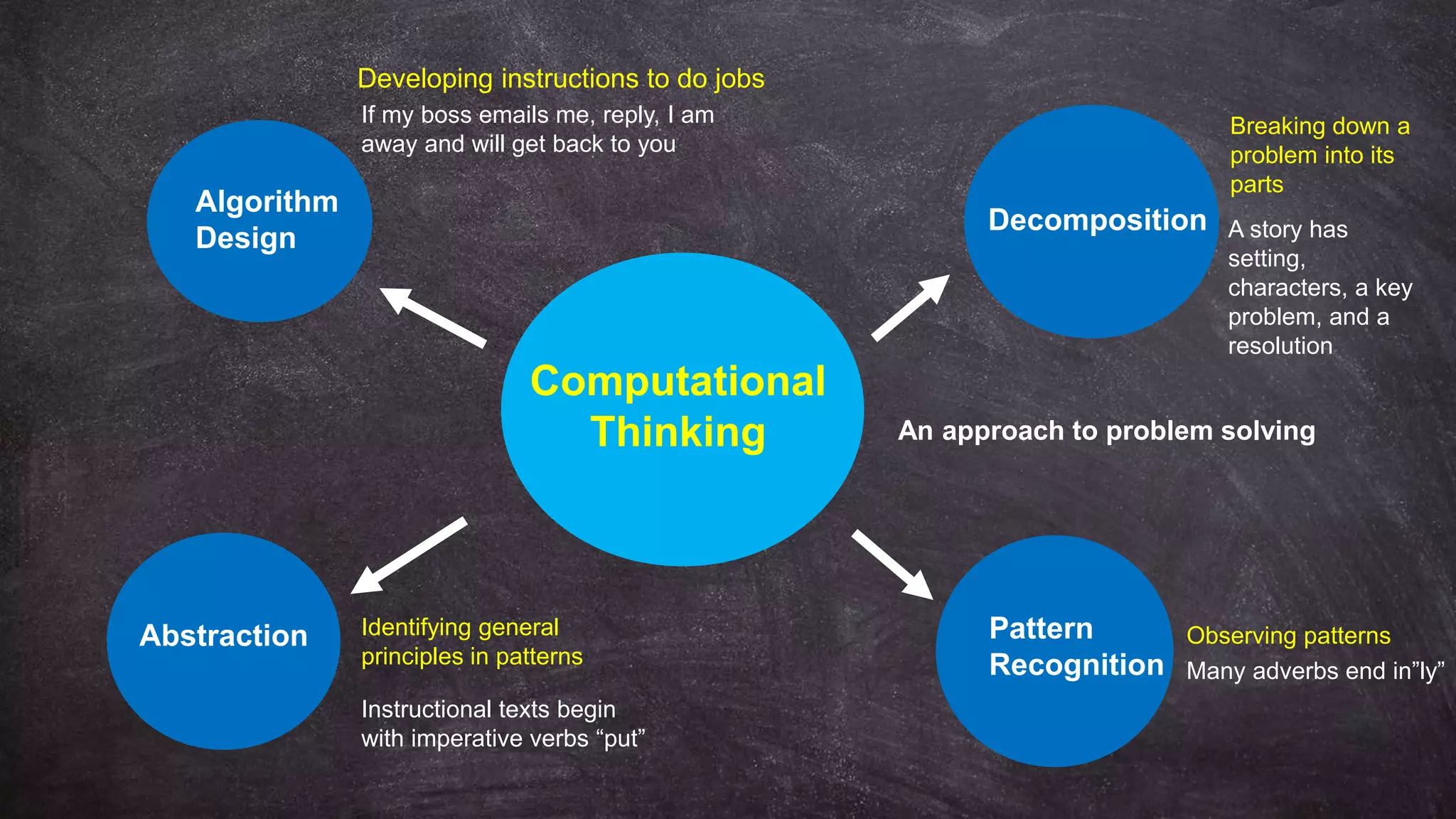
Abstraction
Algorithm
Design
Computational
Thinking
Decomposition
Pattern
Recognition Many adverbs end in”ly”
Instructional texts begin
with imperative verbs “put”
If my boss emails me, reply, I am
away and will get back to you
A story has
setting,
characters, a key
problem, and a
resolution
Breaking down a
problem into its
parts
Observing patterns
Developing instructions to do jobs
Identifying general
principles in patterns
An approach to problem solving
The Website
http://www.digitallearningcewa.com/
Explore preprimary lesson plan
Activity Time
Checking in
In general, what is the focus of Digital Technologies?
How is Digital Technologies different from the ICT
capability?
Out of 10, how confident would be teaching and assessing
Digital Technologies in 2018?
digitallearning@cathednet.wa.edu.au
@cathDigLearn
Thanking you
Additional Notes
TBA
Activity Time

The Digital Technologies Curriculum

  • 1.
  • 2.
    Learning Intention To providea practical overview of the Digital Technologies Curriculum that demystifies the content and empowers teachers
  • 3.
    Activity Time https://goo.gl/LoZXpC Go tolink below and respond to the question on the Padlet Wall
  • 4.
    A context for DigitalTech A digital economic future inevitable Knowing information is no longer enough Digital Disruption impacting on everyday life The function of schools is preparation for life The Curriculum says so We need enterprising people to flourish
  • 5.
  • 6.
    $50 Billion $79Billion Source: Deloitte - Australia’s Digital Pulse: Key challenges for our nation – digital skills, jobs and education (2015) 2013-142011 5 Million: number of Australian jobs predicted to be replaced by computers by 2025 Source: Committee for Economic Development of Australia - Australia's future workforce? (2015) Australia’s Digital Economy
  • 7.
    Entrepreneurial & ICT savvy Comfortablein and through change Adaptive and agile Digitally discerning Productive Collaborative A great learner A confident producer of new media Socially intelligent Growth Mindset Creative and dynamic Customer facing Problem seeker and solver Expert in something What skills do we need?
  • 8.
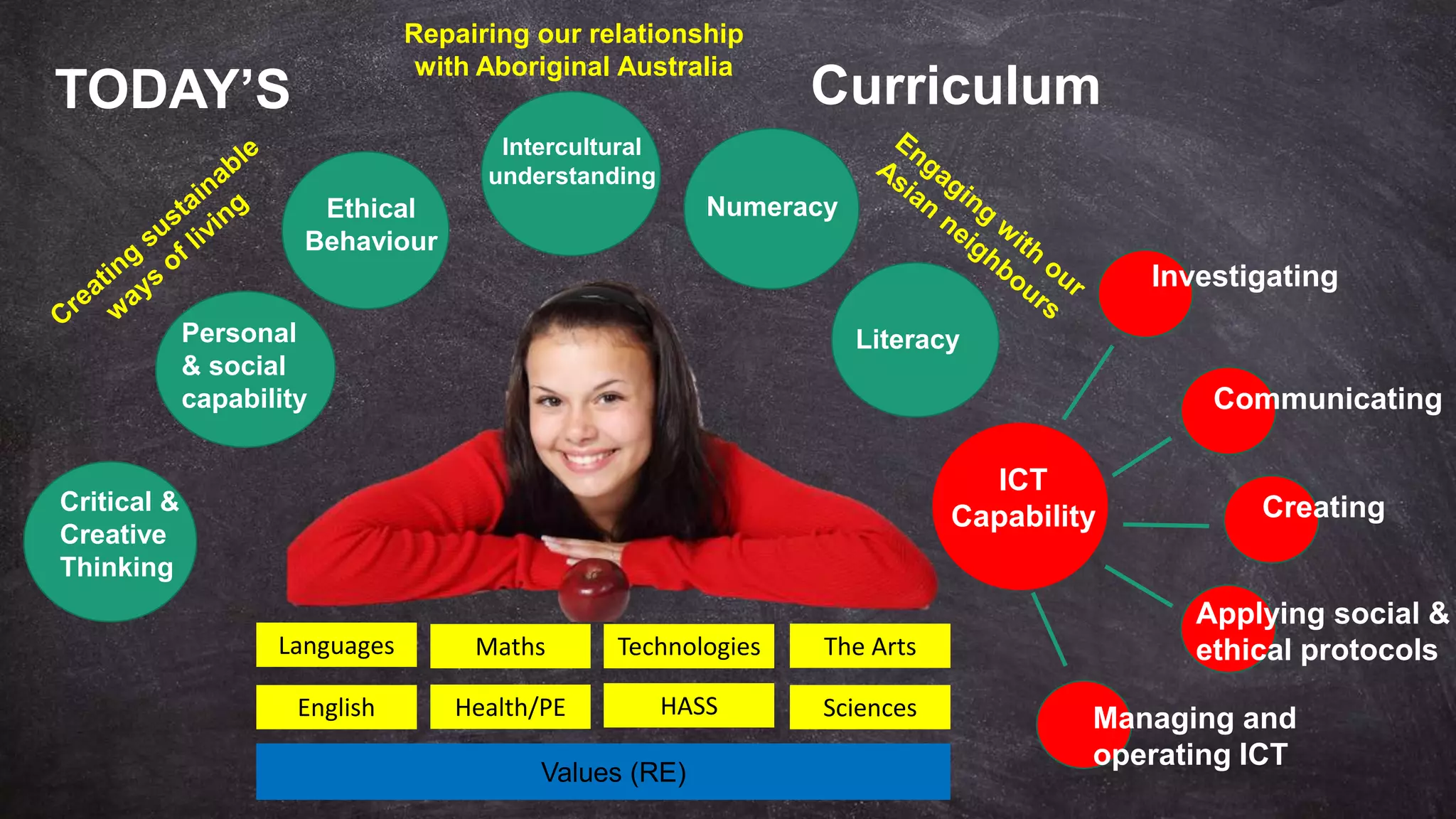
    Numeracy Critical & Creative Thinking Ethical Behaviour Personal & social capability Investigating Literacy Intercultural understanding Communicating Creating Applyingsocial & ethical protocols Managing and operating ICT ICT Capability English Health/PE HASS Sciences The ArtsLanguages Maths Technologies CurriculumTODAY’S Values (RE) Repairing our relationship with Aboriginal Australia
  • 9.
    So what doesICT capability look like at the end of Year 2..? Applying Social & Ethical protocols Students comment online on a class video accurately, thoughtfully, respectfully Use ICT to safely share ideas Identify and safely operate computer for learning Investigating with ICTs Communicating with ICTS Creating with ICTs Recognise that people create and own digital content Students use software to present survey data in a list, chart or pictograph in Maths or Dig Tech Students use colour coding and drawing to show a timeline in HASS Managing and Operating ICTs Students make an information report and identify and acknowledge where the information came from Experiment with ICT to modify data for a particular audience Use ICTs to identify, record and classify information While word-processing, students Identify basic hardware – e.g. mouse, keyboard, monitor – and use it efficiently
  • 10.
    How is ICTCapability different from Digital Technologies? Specific computer science skills Work-life efficiencies General productivity Always integrated Can stand alone as a subject Solving specific problems with computational and design thinking
  • 11.
    Designing Producing and Implementing Evaluating Collaborating andmanaging Investigating and defining The process of implementing digital solutions investigating and defining The nature and properties of data, how they are collected and interpreted Digital Technologies (P-8) A subject that aims to provide students with practical opportunities to use design thinking, computational thinking and information systems knowledge to develop innovative solutions and knowledge addressing contemporary challenges Knowledge and understanding Digital Systems Representations of Data Digital implementation Collecting, managing and analysing data Creating Solutions Processes and production skills Digital Systems (hardware and software and used for an identified purpose Data can have patterns and can be represented and used to make simple conclusions
  • 12.
    Design Thinking Empathise Define Ideate Prototype Test What’s goingon here? How about tyres with chains Your tyres slip on the snow How about tyres with chain links that cut into the snow This is working!
  • 13.
    Abstraction Algorithm Design Computational Thinking Decomposition Pattern Recognition Many adverbsend in”ly” Instructional texts begin with imperative verbs “put” If my boss emails me, reply, I am away and will get back to you A story has setting, characters, a key problem, and a resolution Breaking down a problem into its parts Observing patterns Developing instructions to do jobs Identifying general principles in patterns An approach to problem solving
  • 14.
  • 15.
  • 16.
    Checking in In general,what is the focus of Digital Technologies? How is Digital Technologies different from the ICT capability? Out of 10, how confident would be teaching and assessing Digital Technologies in 2018?
  • 17.
  • 18.
  • 19.

Editor's Notes

  • #6 The impact of these technologies on everyday life is massive. Ideas that “creatives” had in a flat in Silicon Valley, San Fran Cisco, have gone on to really shake up the world.
  • #7 The Digital Economy is massive and something that we have to take seriously as educators of the next generation  
  • #8 The desirable skills for workers of the tech age are different from workers over the past century. The skills one must have are those that can’t be duplicated by computers or lower paid workers.
  • #9 Let’s explore what the ICT capability is and where it fits.
  • #10 In practice, it might look like this. Is this a reasonable set of expectations for Seven and Eight year olds?
  • #11 The Technologies curriculum may confuse some teachers but what is actually different about it?