Digital Story Is the digital age really here? NETS-S, NETS-T and the NETS-A: Are they connected? Kris Kelly NETS Leadership academy ISTE: 2011
All kids are technology gurus- right? They all come to us with the appropriate knowledge and skills necessary for future success.  Or do they…. Technology indicators= success students teachers
If we run fast enough the digital age will never catch up! We really don’t need technology…….. Can the NETS-S and NETS-T create technology rich learning environments that will inspire these students?
NETS-T and NETS-A How can the use of the NETS-T and NETS-A support students in their journey through the NETS-S?  NETS-S NETS-T and NETS-A Let’s take a journey through the NETS
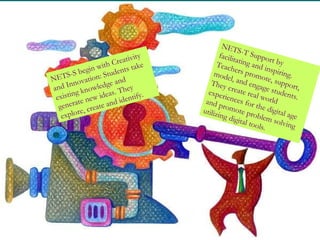
NETS-S begin with Creativity and Innovation: Students take existing knowledge and generate new ideas. They explore, create and identify. NETS-T Support by facilitating and inspiring.  Teachers promote, support, model, and engage students. They create real world experiences for the digital age and promote problem solving utilizing digital tools.
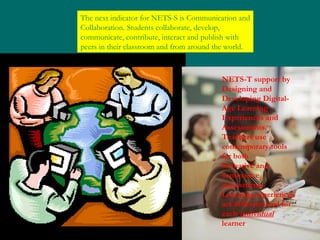
The next indicator for NETS-S is Communication and Collaboration. Students collaborate, develop, communicate, contribute, interact and publish with peers in their classroom and from around the world.   NETS-T support by Designing and  Developing Digital-Age Learning Experiences and Assessments.  Teachers use contemporary tools for both formative and summative assessments.  Learning experiences are differentiated for  each  individual  learner .
Next in NETS-S: Research and Information Fluency. Students gather, apply, evaluate, locate, select, organize and use information from a variety of sources.  NETS-T: Teachers create learning experiences that are rich in technology and allow students to explore individual interests.
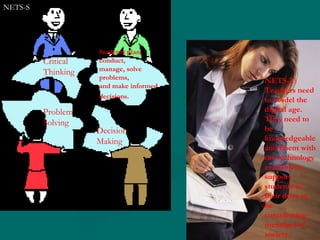
Critical  Thinking Problem Solving Decision Making Students plan,  conduct,  manage, solve problems, and make informed  decisions.   NETS-S NETS-T: Teachers need to model the digital age. They need to be knowledgeable and fluent with the technology available to support students in their drive to be contributing members of society.
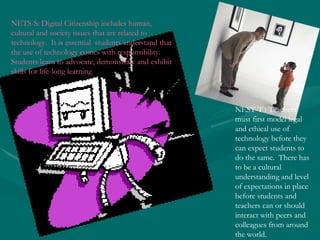
NETS-S: Digital Citizenship includes human, cultural and society issues that are related to technology.  It is essential  students understand that the use of technology comes with responsibility. Students learn to advocate, demonstrate and exhibit skills for life-long learning.   NEST-T : Teachers must first model legal and ethical use of technology before they can expect students to do the same.  There has to be a cultural understanding and level of expectations in place before students and teachers can or should interact with peers and colleagues from around the world.
Technology applications and concepts  are the last indicator included  in the NETS-S. Students learn how to troubleshoot problems and select  and use applications effectively.  They will also be able to take the current knowledge learned and transfer it to new technology as it is introduced.  NETS-T: For teachers to be competent in the understanding and use of technology it is necessary to engage in continuous professional growth. Some examples of professional growth are: web based classes, online collaboration with colleagues, college courses, PLC’s and reviewing the latest research.
The growth of technology based on the NETS-S and the NETS-T is made possible  because of the support from the NETS-A.  Administrators are charged with the responsibility of providing the strong base that  both the teachers and students can rely on.  Visionary Leadership, Digital Age Culture, Excellence in Professional Practice,  Systematic Improvement and Digital Citizenship are the keys behind the driving force which is taking us through this fast paced digital movement.  NETS-S NETS-A NETS-T
This journey through the  indicators for the NETS-S and the NETS-T has included connections between the two and shows how easily they can go  hand and hand in the classroom while being supported by the NETS-A.  The Essential Conditions would be the foundation needed to see these three pieces work together effectively…. But the question remains:  Can the NETS-S, NETS-T and NETS-A create technology rich learning  environments that will inspire  students? YOU BE THE JUDGE
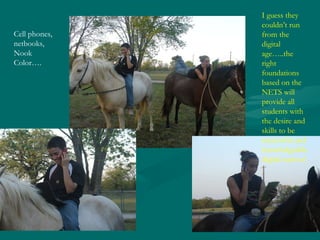
Cell phones, netbooks, Nook Color…. I guess they couldn’t run from the digital age…..the right foundations based on the NETS will provide all students with the desire and skills to be successful and knowledgeable digital natives!
References Iste.nets- NETS-S, NETS-T, NETS-A Microsoft images Personal photos

Kelly digital story

  • 1.
    Digital Story Isthe digital age really here? NETS-S, NETS-T and the NETS-A: Are they connected? Kris Kelly NETS Leadership academy ISTE: 2011
  • 2.
    All kids aretechnology gurus- right? They all come to us with the appropriate knowledge and skills necessary for future success. Or do they…. Technology indicators= success students teachers
  • 3.
    If we runfast enough the digital age will never catch up! We really don’t need technology…….. Can the NETS-S and NETS-T create technology rich learning environments that will inspire these students?
  • 4.
    NETS-T and NETS-AHow can the use of the NETS-T and NETS-A support students in their journey through the NETS-S? NETS-S NETS-T and NETS-A Let’s take a journey through the NETS
  • 5.
    NETS-S begin withCreativity and Innovation: Students take existing knowledge and generate new ideas. They explore, create and identify. NETS-T Support by facilitating and inspiring. Teachers promote, support, model, and engage students. They create real world experiences for the digital age and promote problem solving utilizing digital tools.
  • 6.
    The next indicatorfor NETS-S is Communication and Collaboration. Students collaborate, develop, communicate, contribute, interact and publish with peers in their classroom and from around the world. NETS-T support by Designing and Developing Digital-Age Learning Experiences and Assessments. Teachers use contemporary tools for both formative and summative assessments. Learning experiences are differentiated for each individual learner .
  • 7.
    Next in NETS-S:Research and Information Fluency. Students gather, apply, evaluate, locate, select, organize and use information from a variety of sources. NETS-T: Teachers create learning experiences that are rich in technology and allow students to explore individual interests.
  • 8.
    Critical ThinkingProblem Solving Decision Making Students plan, conduct, manage, solve problems, and make informed decisions. NETS-S NETS-T: Teachers need to model the digital age. They need to be knowledgeable and fluent with the technology available to support students in their drive to be contributing members of society.
  • 9.
    NETS-S: Digital Citizenshipincludes human, cultural and society issues that are related to technology. It is essential students understand that the use of technology comes with responsibility. Students learn to advocate, demonstrate and exhibit skills for life-long learning. NEST-T : Teachers must first model legal and ethical use of technology before they can expect students to do the same. There has to be a cultural understanding and level of expectations in place before students and teachers can or should interact with peers and colleagues from around the world.
  • 10.
    Technology applications andconcepts are the last indicator included in the NETS-S. Students learn how to troubleshoot problems and select and use applications effectively. They will also be able to take the current knowledge learned and transfer it to new technology as it is introduced. NETS-T: For teachers to be competent in the understanding and use of technology it is necessary to engage in continuous professional growth. Some examples of professional growth are: web based classes, online collaboration with colleagues, college courses, PLC’s and reviewing the latest research.
  • 11.
    The growth oftechnology based on the NETS-S and the NETS-T is made possible because of the support from the NETS-A. Administrators are charged with the responsibility of providing the strong base that both the teachers and students can rely on. Visionary Leadership, Digital Age Culture, Excellence in Professional Practice, Systematic Improvement and Digital Citizenship are the keys behind the driving force which is taking us through this fast paced digital movement. NETS-S NETS-A NETS-T
  • 12.
    This journey throughthe indicators for the NETS-S and the NETS-T has included connections between the two and shows how easily they can go hand and hand in the classroom while being supported by the NETS-A. The Essential Conditions would be the foundation needed to see these three pieces work together effectively…. But the question remains: Can the NETS-S, NETS-T and NETS-A create technology rich learning environments that will inspire students? YOU BE THE JUDGE
  • 13.
    Cell phones, netbooks,Nook Color…. I guess they couldn’t run from the digital age…..the right foundations based on the NETS will provide all students with the desire and skills to be successful and knowledgeable digital natives!
  • 14.
    References Iste.nets- NETS-S,NETS-T, NETS-A Microsoft images Personal photos