FORMATION OF
HIMALAYAS

K.SUGUNA.R
PGT GEO
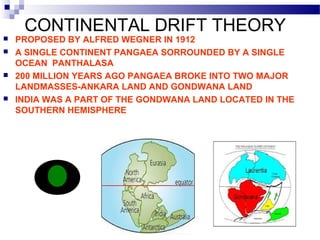
CONTINENTAL DRIFT THEORY








PROPOSED BY ALFRED WEGNER IN 1912
A SINGLE CONTINENT PANGAEA SORROUNDED BY A SINGLE
OCEAN PANTHALASA
200 MILLION YEARS AGO PANGAEA BROKE INTO TWO MAJOR
LANDMASSES-ANKARA LAND AND GONDWANA LAND
INDIA WAS A PART OF THE GONDWANA LAND LOCATED IN THE
SOUTHERN HEMISPHERE
MOVEMENT OF CONTINENTS



CONTINENTS STARTED MOVING IN DIFFERENT DIRECTIONS
FORCE-TIDAL FORCE POLAR FLEEING FORCE
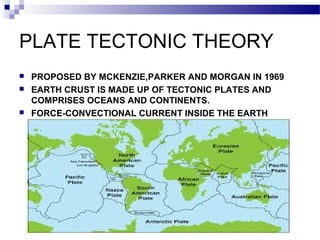
PLATE TECTONIC THEORY





PROPOSED BY MCKENZIE,PARKER AND MORGAN IN 1969
EARTH CRUST IS MADE UP OF TECTONIC PLATES AND
COMPRISES OCEANS AND CONTINENTS.
FORCE-CONVECTIONAL CURRENT INSIDE THE EARTH
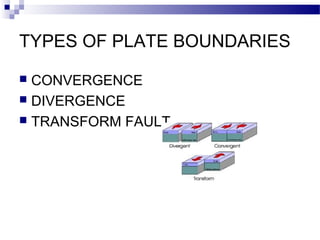
TYPES OF PLATE BOUNDARIES
CONVERGENCE
 DIVERGENCE
 TRANSFORM FAULT

CONVERGENCE





In plate tectonics, a convergent boundary, also
known as a destructive plate boundary
An actively deforming region where two (or
more) tectonic plates of lithosphere move toward
one another and collide.
As a result of pressure, friction, and plate
material melting in the mantle, earthquakes and
volcanoes are common near convergent
boundaries.
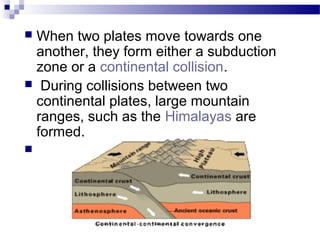
When two plates move towards one
another, they form either a subduction
zone or a continental collision.
 During collisions between two
continental plates, large mountain
ranges, such as the Himalayas are
formed.



DIVERGENCE
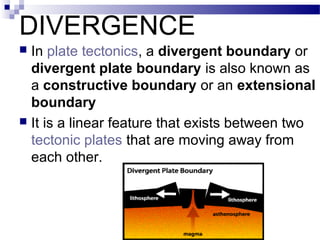
In plate tectonics, a divergent boundary or
divergent plate boundary is also known as
a constructive boundary or an extensional
boundary
 It is a linear feature that exists between two
tectonic plates that are moving away from
each other.






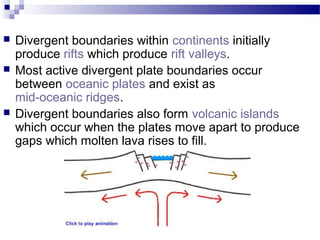
Divergent boundaries within continents initially
produce rifts which produce rift valleys.
Most active divergent plate boundaries occur
between oceanic plates and exist as
mid-oceanic ridges.
Divergent boundaries also form volcanic islands
which occur when the plates move apart to produce
gaps which molten lava rises to fill.
TRANSFORM FAULT





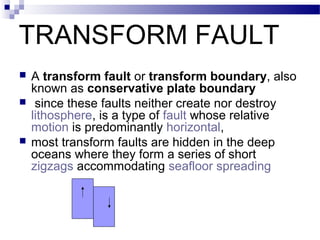
A transform fault or transform boundary, also
known as conservative plate boundary
since these faults neither create nor destroy
lithosphere, is a type of fault whose relative
motion is predominantly horizontal,
most transform faults are hidden in the deep
oceans where they form a series of short
zigzags accommodating seafloor spreading
FOLDING


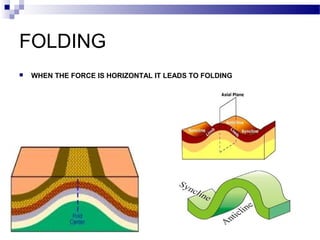
WHEN THE FORCE IS HORIZONTAL IT LEADS TO FOLDING
FAULTING


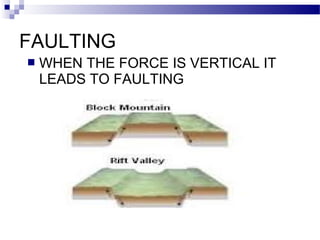
WHEN THE FORCE IS VERTICAL IT
LEADS TO FAULTING
Rift Valley






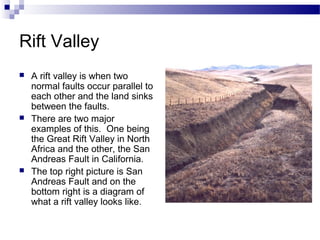
A rift valley is when two
normal faults occur parallel to
each other and the land sinks
between the faults.
There are two major
examples of this. One being
the Great Rift Valley in North
Africa and the other, the San
Andreas Fault in California.
The top right picture is San
Andreas Fault and on the
bottom right is a diagram of
what a rift valley looks like.
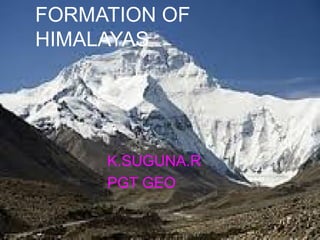
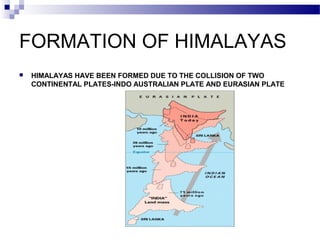
FORMATION OF HIMALAYAS


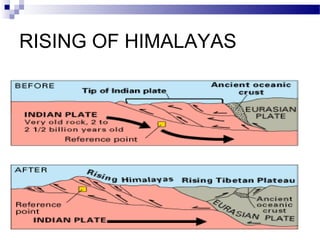
HIMALAYAS HAVE BEEN FORMED DUE TO THE COLLISION OF TWO
CONTINENTAL PLATES-INDO AUSTRALIAN PLATE AND EURASIAN PLATE
RISING OF HIMALAYAS
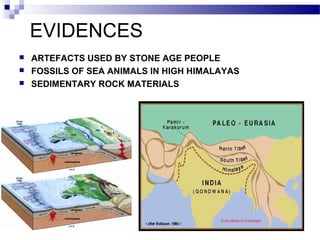
EVIDENCES




ARTEFACTS USED BY STONE AGE PEOPLE
FOSSILS OF SEA ANIMALS IN HIGH HIMALAYAS
SEDIMENTARY ROCK MATERIALS

Himalayas

  • 1.
  • 2.
    CONTINENTAL DRIFT THEORY     PROPOSEDBY ALFRED WEGNER IN 1912 A SINGLE CONTINENT PANGAEA SORROUNDED BY A SINGLE OCEAN PANTHALASA 200 MILLION YEARS AGO PANGAEA BROKE INTO TWO MAJOR LANDMASSES-ANKARA LAND AND GONDWANA LAND INDIA WAS A PART OF THE GONDWANA LAND LOCATED IN THE SOUTHERN HEMISPHERE
  • 3.
    MOVEMENT OF CONTINENTS   CONTINENTSSTARTED MOVING IN DIFFERENT DIRECTIONS FORCE-TIDAL FORCE POLAR FLEEING FORCE
  • 4.
    PLATE TECTONIC THEORY    PROPOSEDBY MCKENZIE,PARKER AND MORGAN IN 1969 EARTH CRUST IS MADE UP OF TECTONIC PLATES AND COMPRISES OCEANS AND CONTINENTS. FORCE-CONVECTIONAL CURRENT INSIDE THE EARTH
  • 5.
    TYPES OF PLATEBOUNDARIES CONVERGENCE  DIVERGENCE  TRANSFORM FAULT 
  • 6.
    CONVERGENCE    In plate tectonics,a convergent boundary, also known as a destructive plate boundary An actively deforming region where two (or more) tectonic plates of lithosphere move toward one another and collide. As a result of pressure, friction, and plate material melting in the mantle, earthquakes and volcanoes are common near convergent boundaries.
  • 7.
    When two platesmove towards one another, they form either a subduction zone or a continental collision.  During collisions between two continental plates, large mountain ranges, such as the Himalayas are formed.  
  • 8.
    DIVERGENCE In plate tectonics,a divergent boundary or divergent plate boundary is also known as a constructive boundary or an extensional boundary  It is a linear feature that exists between two tectonic plates that are moving away from each other. 
  • 9.
       Divergent boundaries withincontinents initially produce rifts which produce rift valleys. Most active divergent plate boundaries occur between oceanic plates and exist as mid-oceanic ridges. Divergent boundaries also form volcanic islands which occur when the plates move apart to produce gaps which molten lava rises to fill.
  • 10.
    TRANSFORM FAULT    A transformfault or transform boundary, also known as conservative plate boundary since these faults neither create nor destroy lithosphere, is a type of fault whose relative motion is predominantly horizontal, most transform faults are hidden in the deep oceans where they form a series of short zigzags accommodating seafloor spreading
  • 11.
    FOLDING  WHEN THE FORCEIS HORIZONTAL IT LEADS TO FOLDING
  • 12.
    FAULTING  WHEN THE FORCEIS VERTICAL IT LEADS TO FAULTING
  • 13.
    Rift Valley    A riftvalley is when two normal faults occur parallel to each other and the land sinks between the faults. There are two major examples of this. One being the Great Rift Valley in North Africa and the other, the San Andreas Fault in California. The top right picture is San Andreas Fault and on the bottom right is a diagram of what a rift valley looks like.
  • 14.
    FORMATION OF HIMALAYAS  HIMALAYASHAVE BEEN FORMED DUE TO THE COLLISION OF TWO CONTINENTAL PLATES-INDO AUSTRALIAN PLATE AND EURASIAN PLATE
  • 15.
  • 16.
    EVIDENCES    ARTEFACTS USED BYSTONE AGE PEOPLE FOSSILS OF SEA ANIMALS IN HIGH HIMALAYAS SEDIMENTARY ROCK MATERIALS