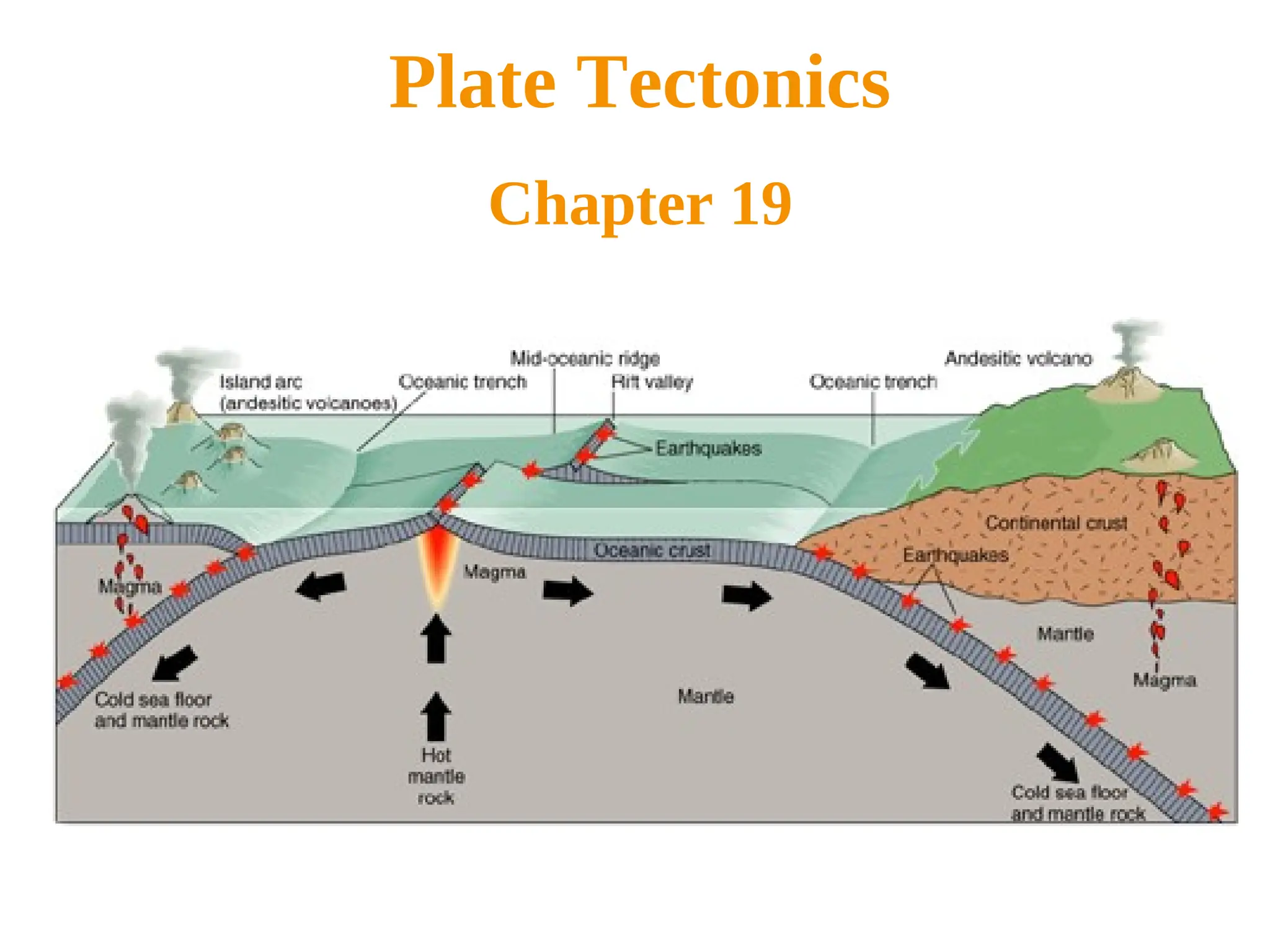
Plate Tectonics
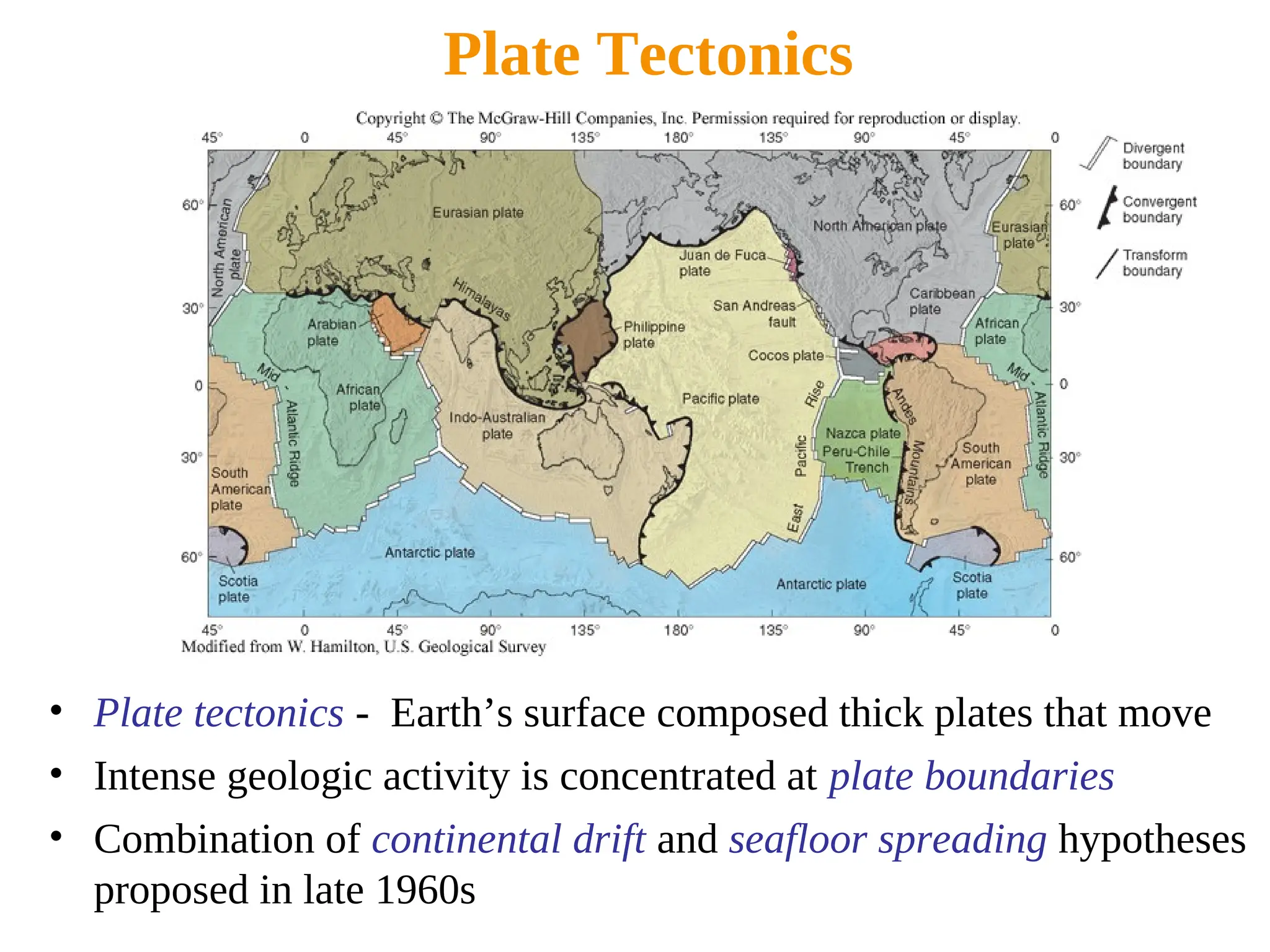
• Platetectonics - Earth’s surface composed thick plates that move
• Intense geologic activity is concentrated at plate boundaries
• Combination of continental drift and seafloor spreading hypotheses
proposed in late 1960s
3.
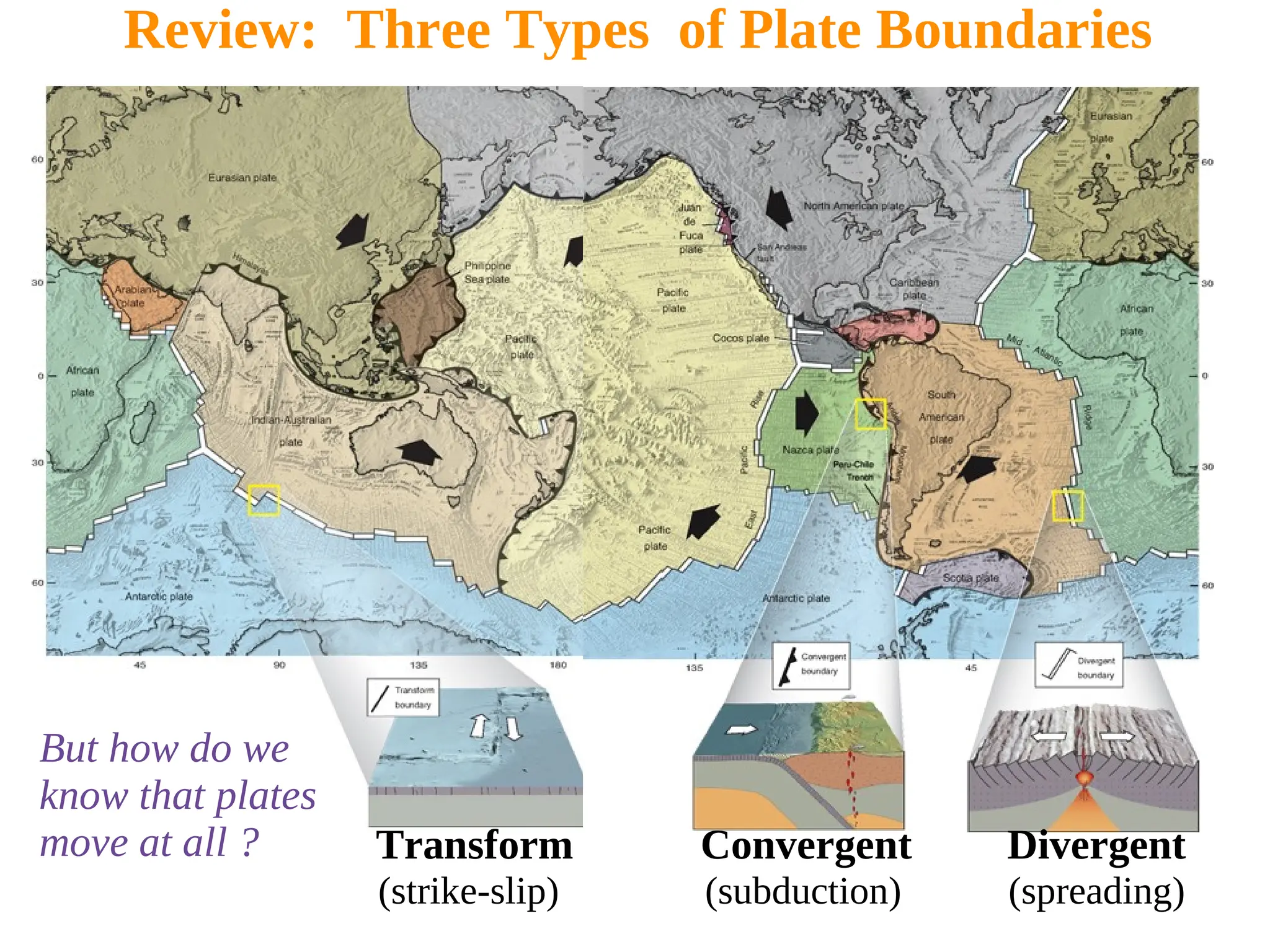
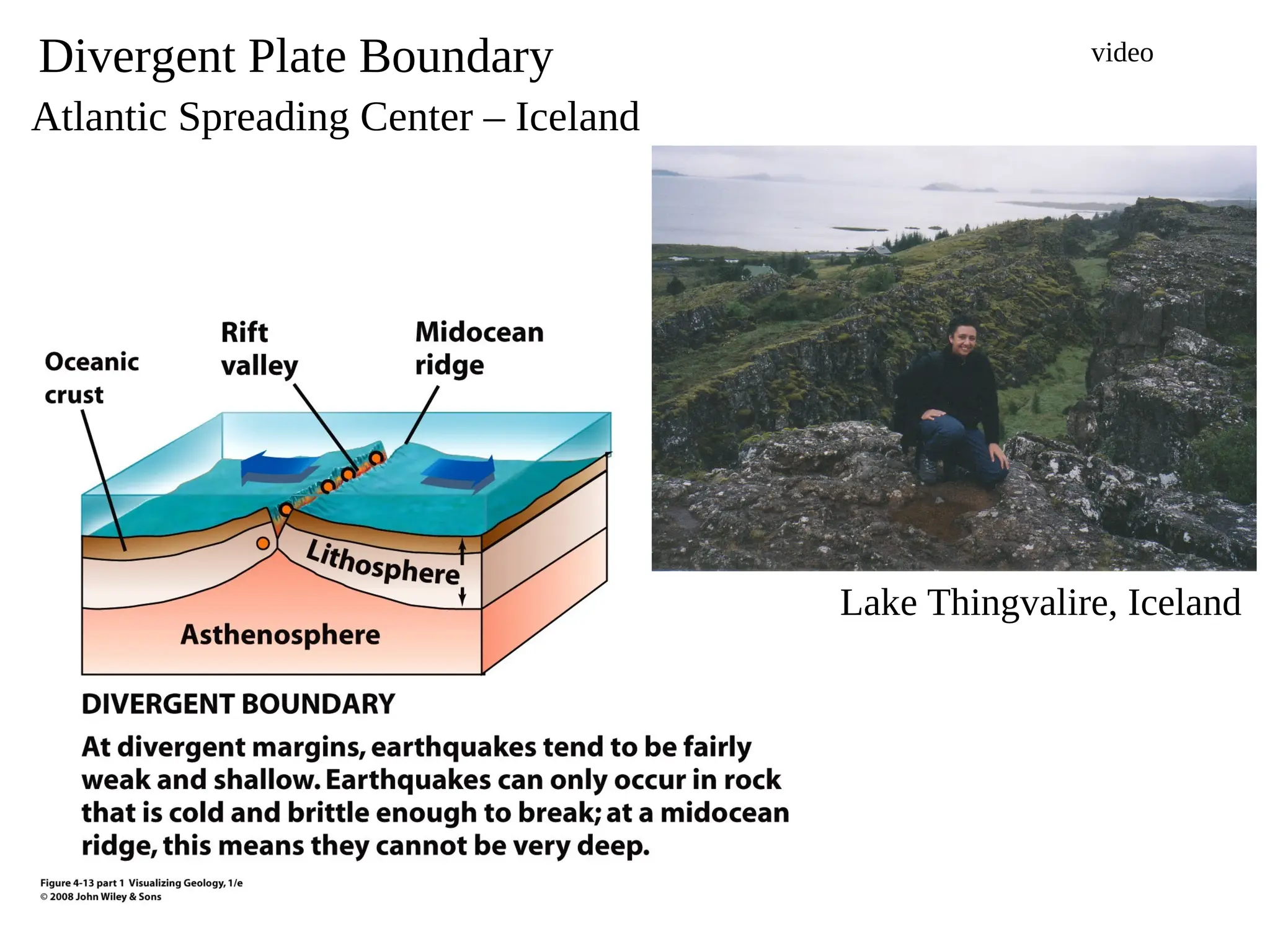
Review: Three Typesof Plate Boundaries
Transform Convergent Divergent
(strike-slip) (subduction) (spreading)
But how do we
know that plates
move at all ?
4.
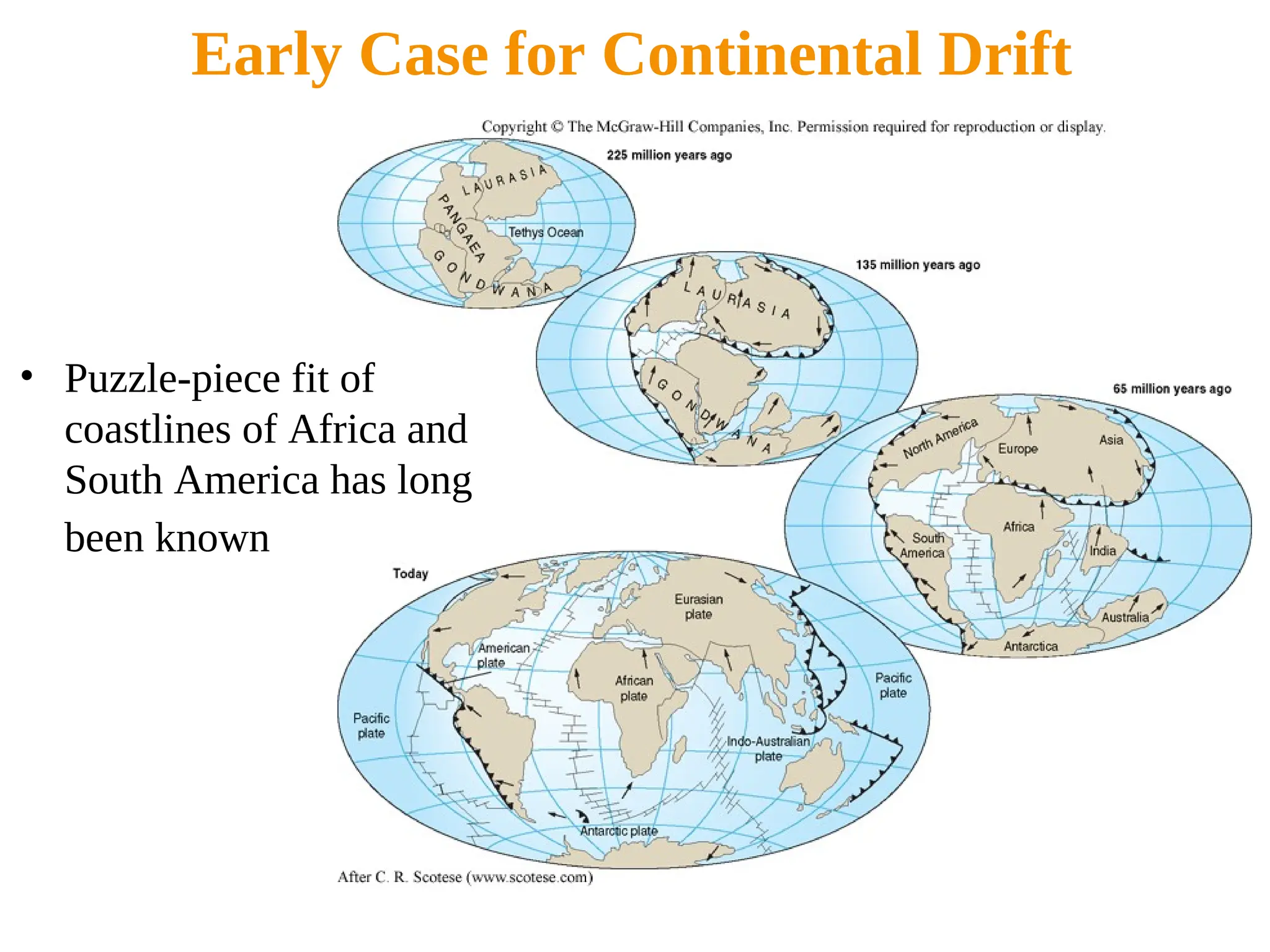
Early Case forContinental Drift
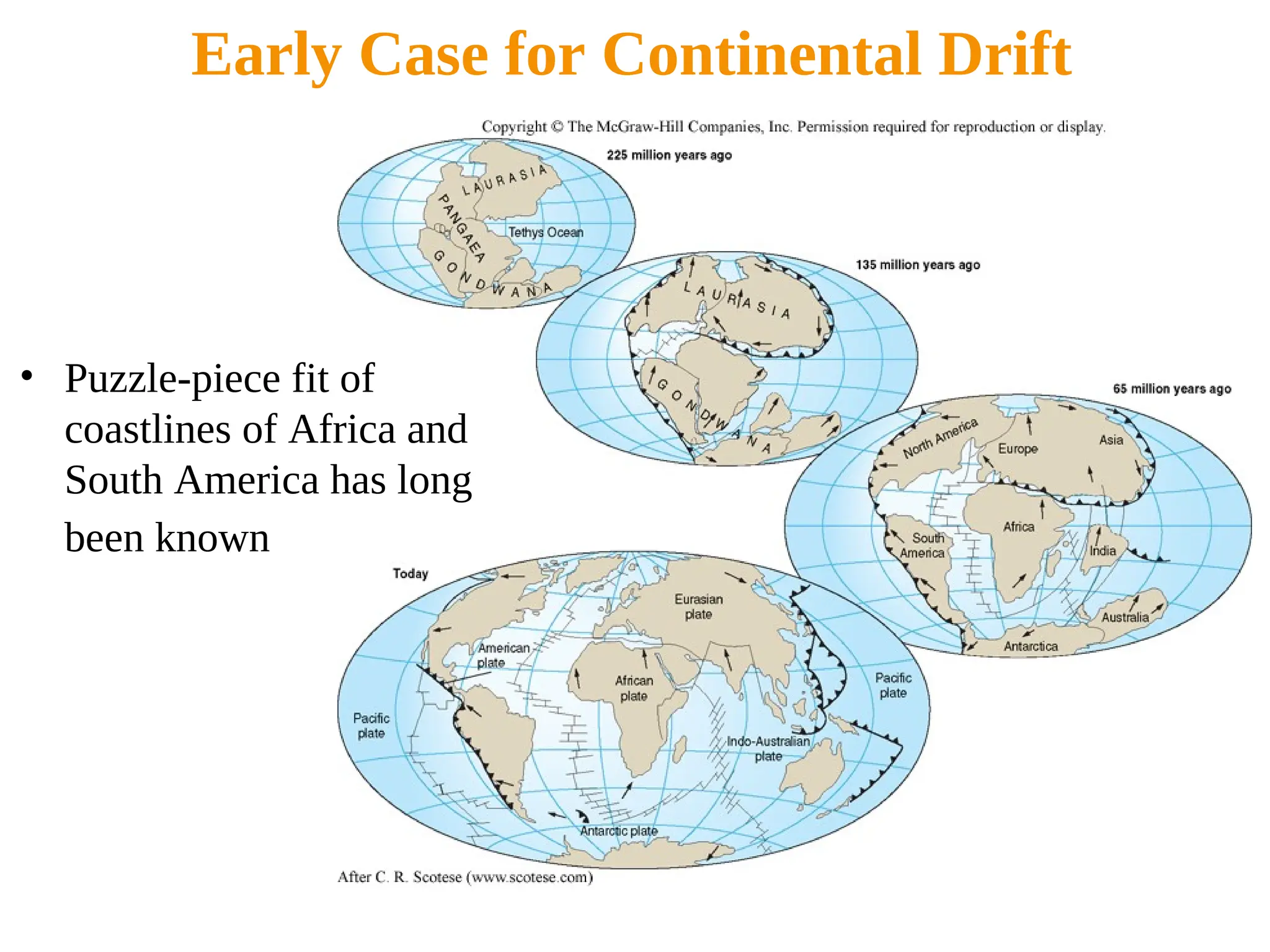
• Puzzle-piece fit of
coastlines of Africa and
South America has long
been known
5.
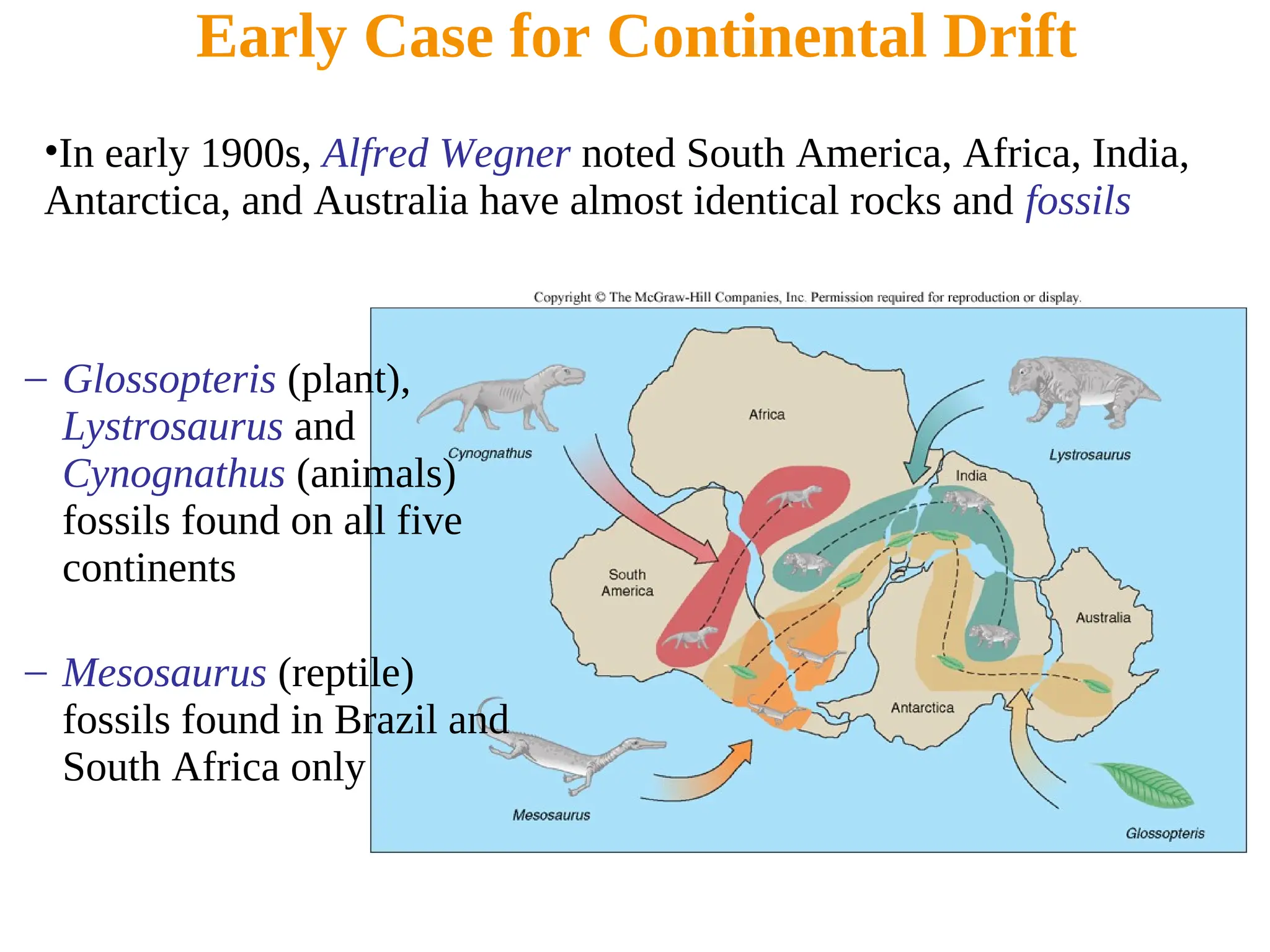
•In early 1900s,Alfred Wegner noted South America, Africa, India,
Antarctica, and Australia have almost identical rocks and fossils
Early Case for Continental Drift
– Glossopteris (plant),
Lystrosaurus and
Cynognathus (animals)
fossils found on all five
continents
– Mesosaurus (reptile)
fossils found in Brazil and
South Africa only
6.
Glaciers
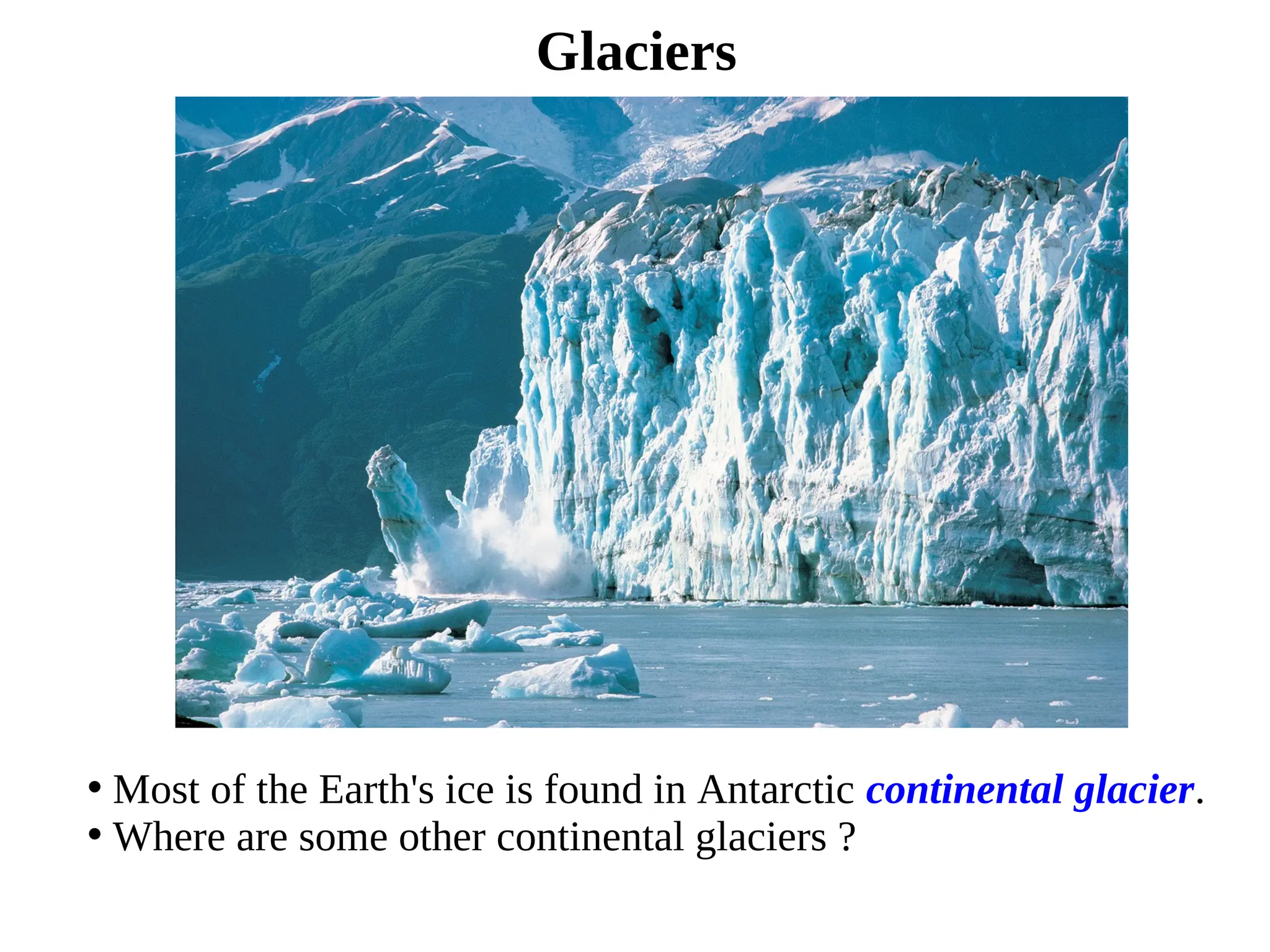
• Most ofthe Earth's ice is found in Antarctic continental glacier.
• Where are some other continental glaciers ?
7.
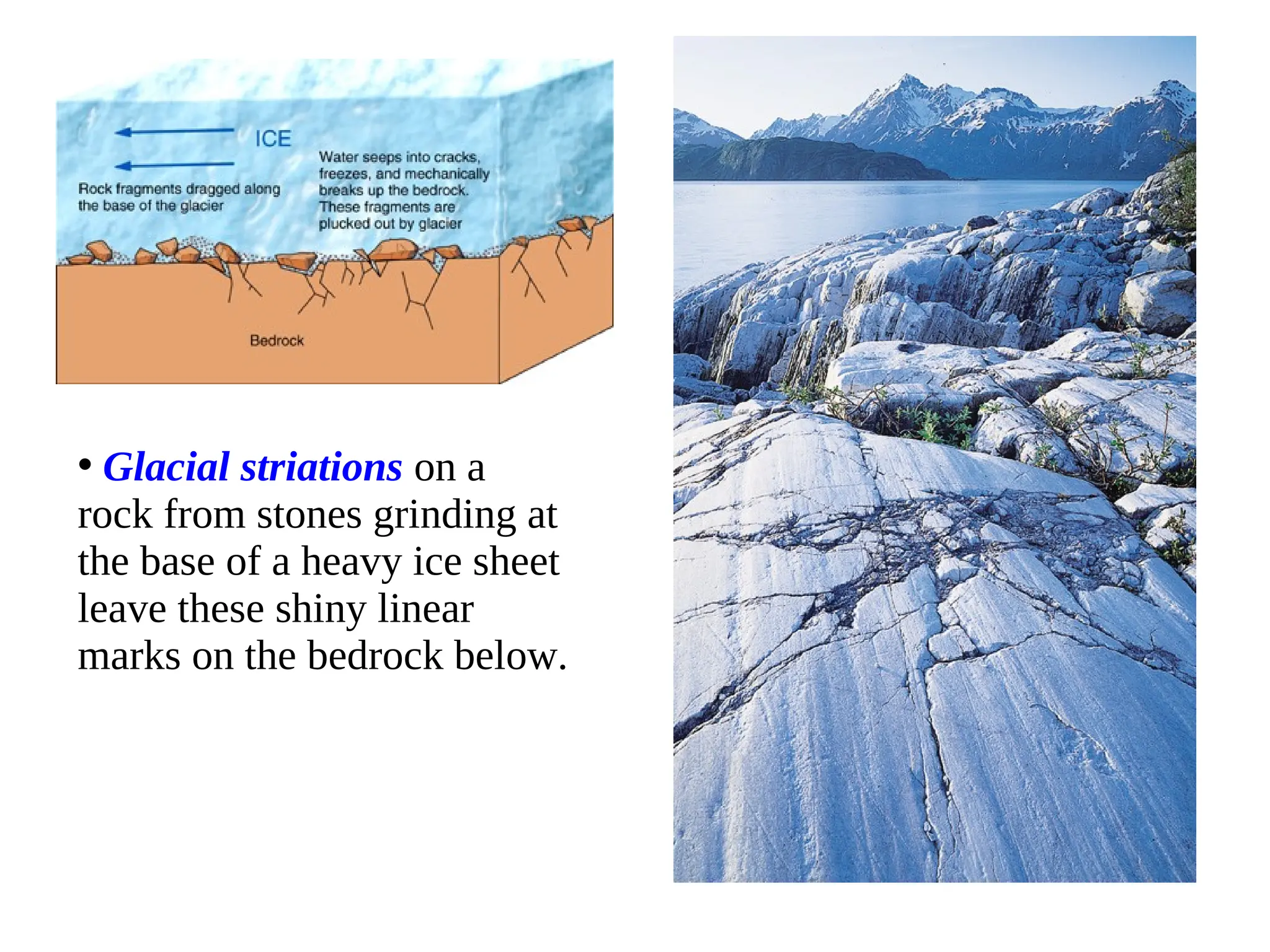
• Glacial striationson a
rock from stones grinding at
the base of a heavy ice sheet
leave these shiny linear
marks on the bedrock below.
8.
Glacial Characteristics
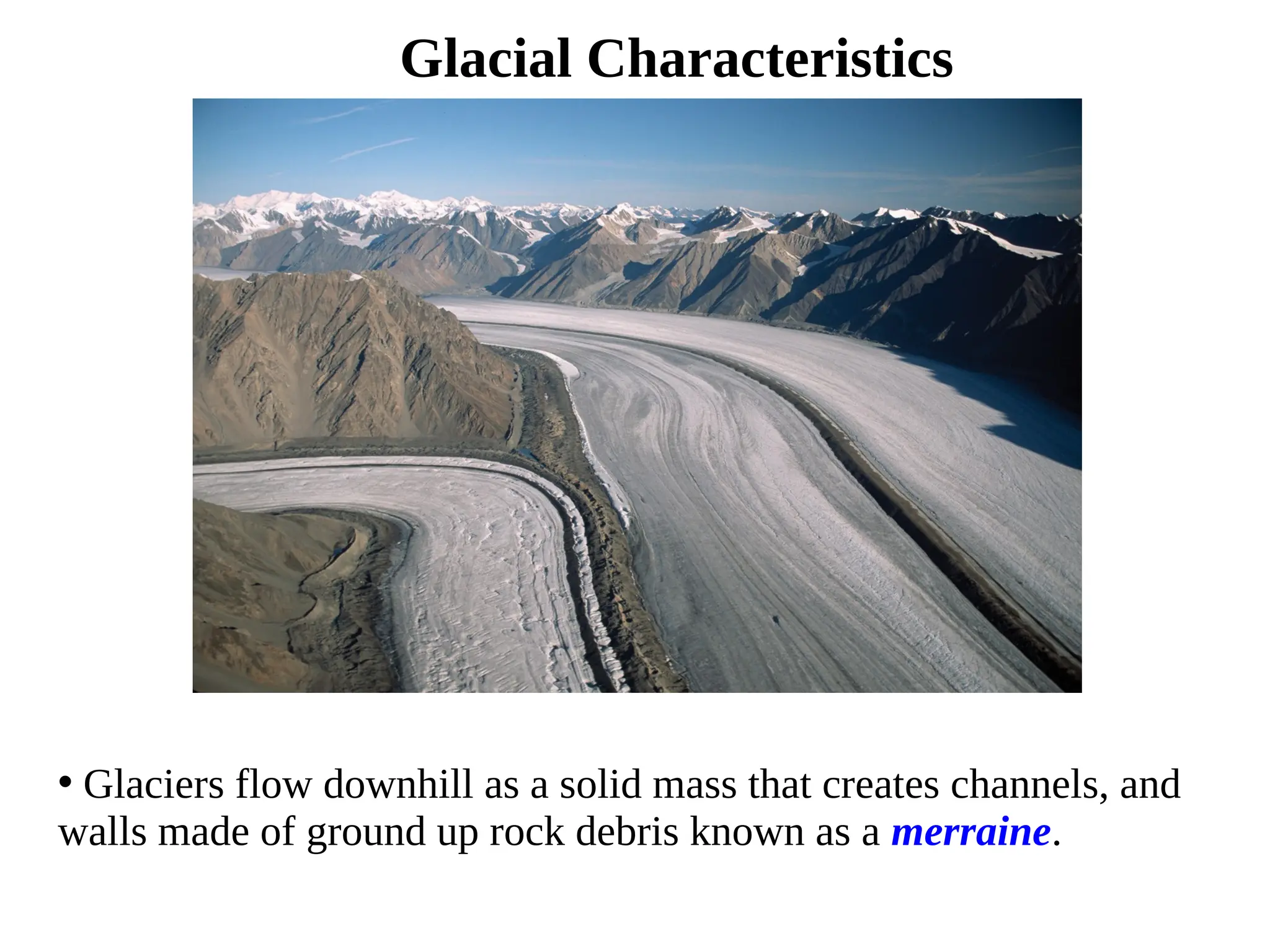
• Glaciersflow downhill as a solid mass that creates channels, and
walls made of ground up rock debris known as a merraine.
9.
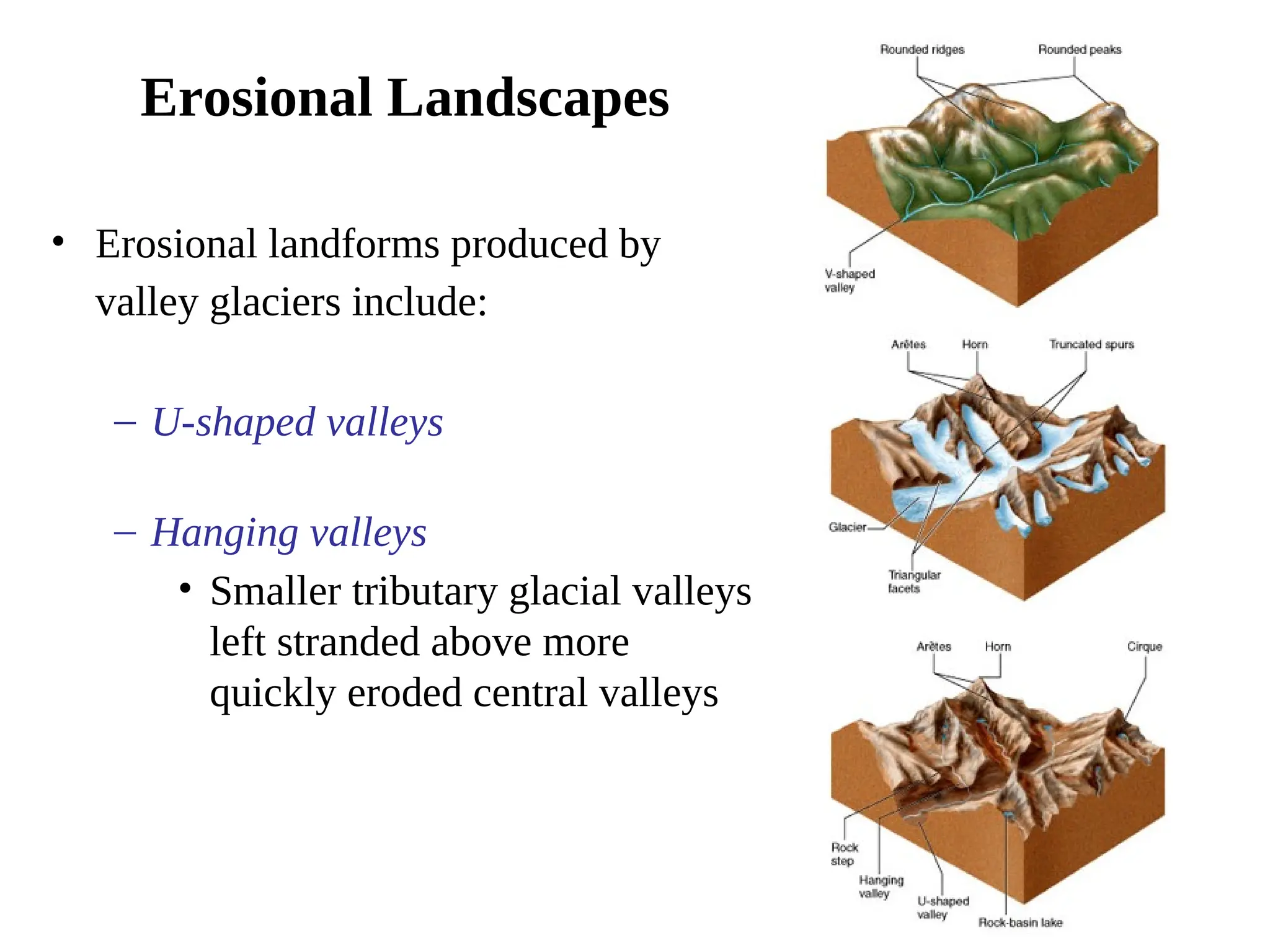
Erosional Landscapes
• Erosionallandforms produced by
valley glaciers include:
– U-shaped valleys
– Hanging valleys
• Smaller tributary glacial valleys
left stranded above more
quickly eroded central valleys
10.
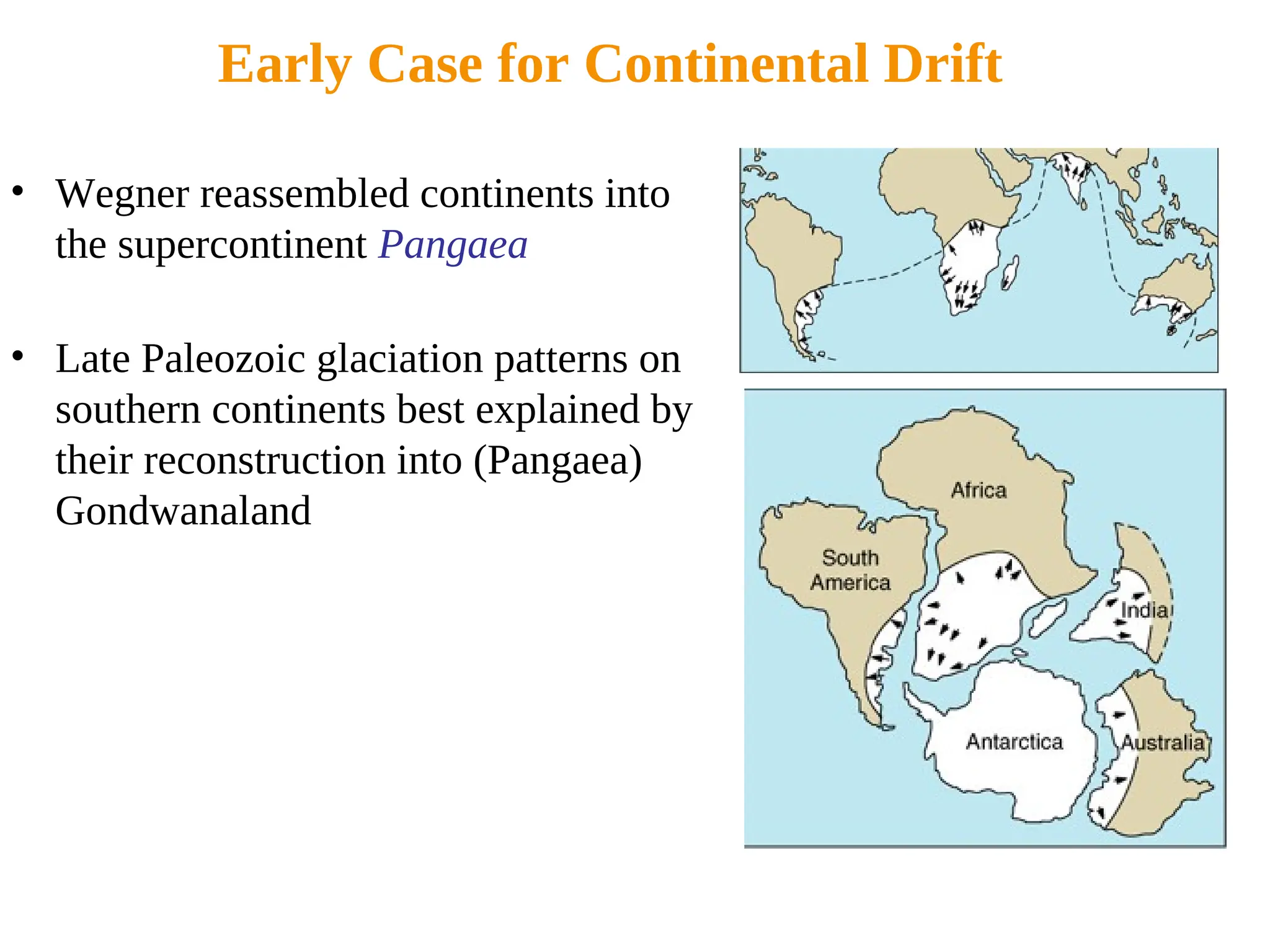
Early Case forContinental Drift
• Wegner reassembled continents into
the supercontinent Pangaea
• Late Paleozoic glaciation patterns on
southern continents best explained by
their reconstruction into (Pangaea)
Gondwanaland
11.
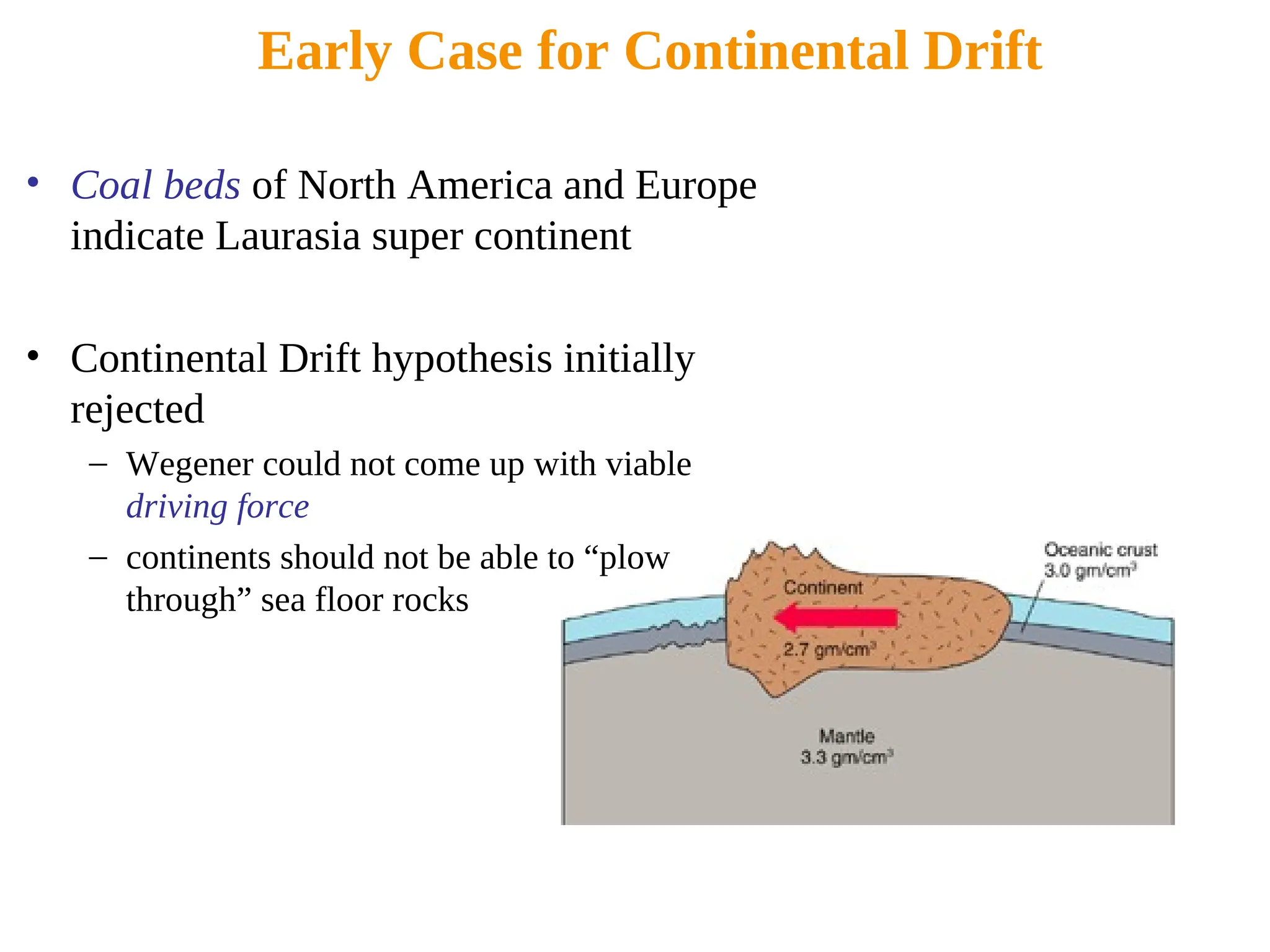
Early Case forContinental Drift
• Coal beds of North America and Europe
indicate Laurasia super continent
• Continental Drift hypothesis initially
rejected
– Wegener could not come up with viable
driving force
– continents should not be able to “plow
through” sea floor rocks
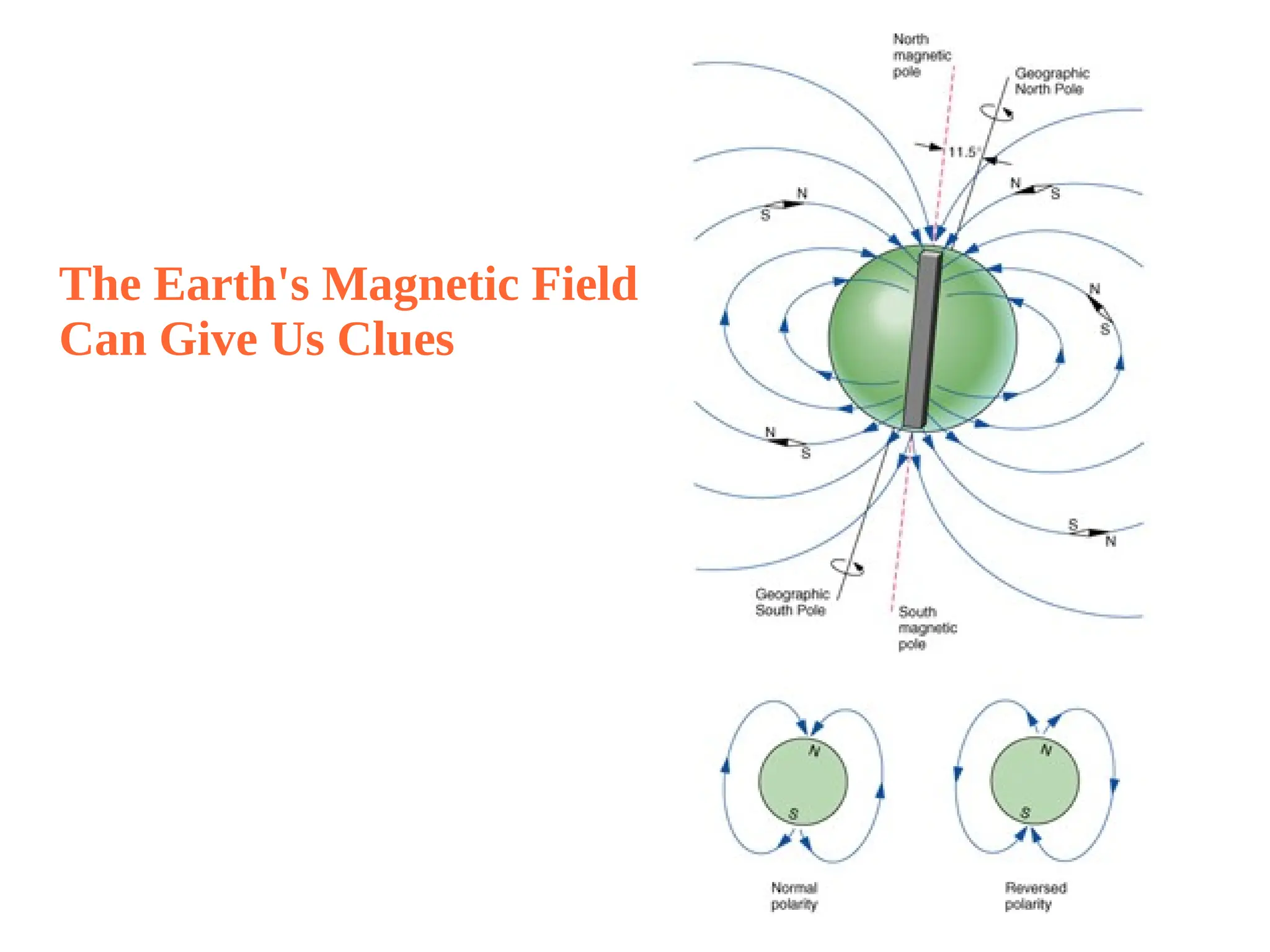
Paleomagnetism and ContinentalDrift Revived
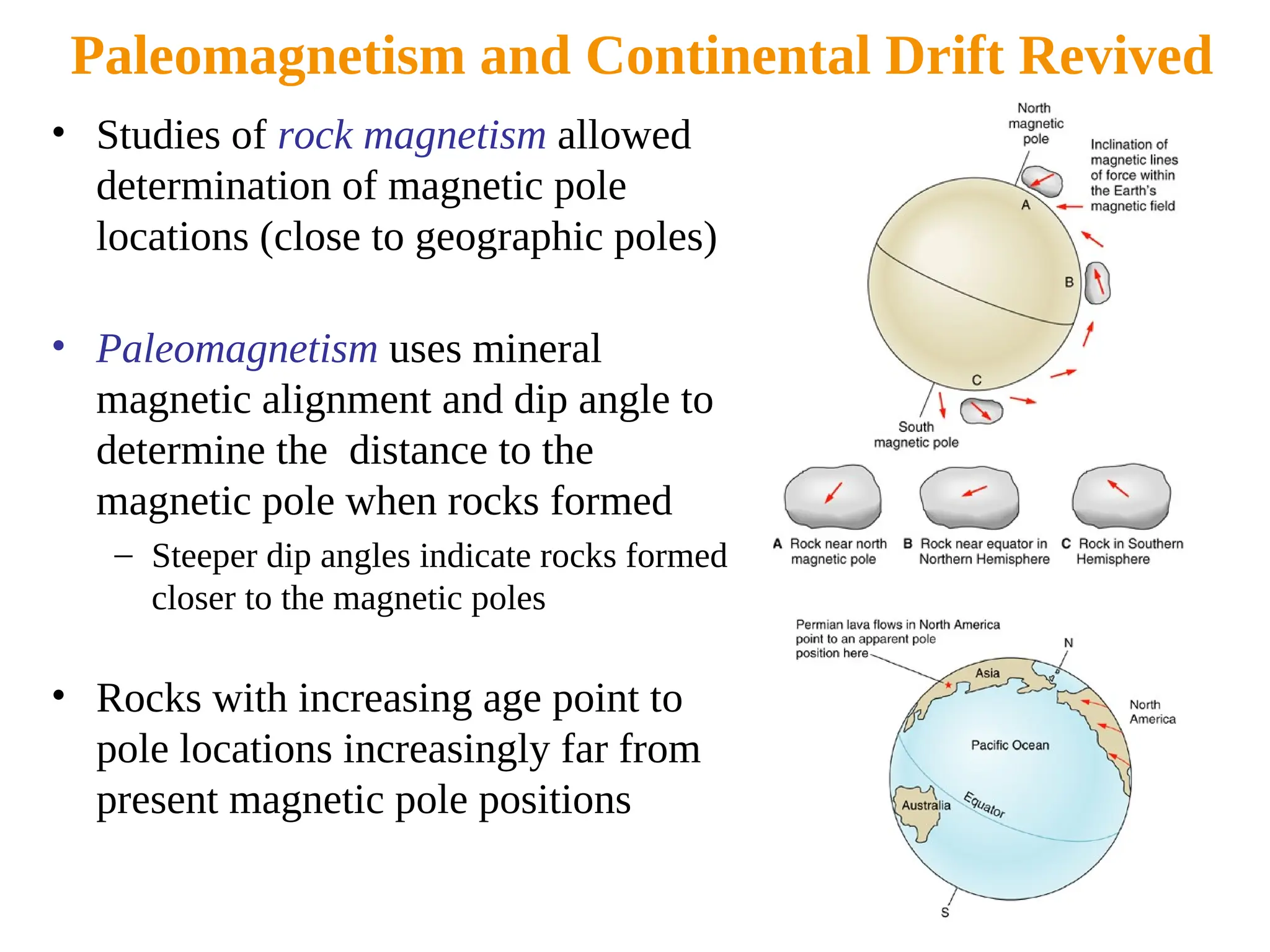
• Studies of rock magnetism allowed
determination of magnetic pole
locations (close to geographic poles)
• Paleomagnetism uses mineral
magnetic alignment and dip angle to
determine the distance to the
magnetic pole when rocks formed
– Steeper dip angles indicate rocks formed
closer to the magnetic poles
• Rocks with increasing age point to
pole locations increasingly far from
present magnetic pole positions
14.
Paleomagnetism and
Continental DriftRevived
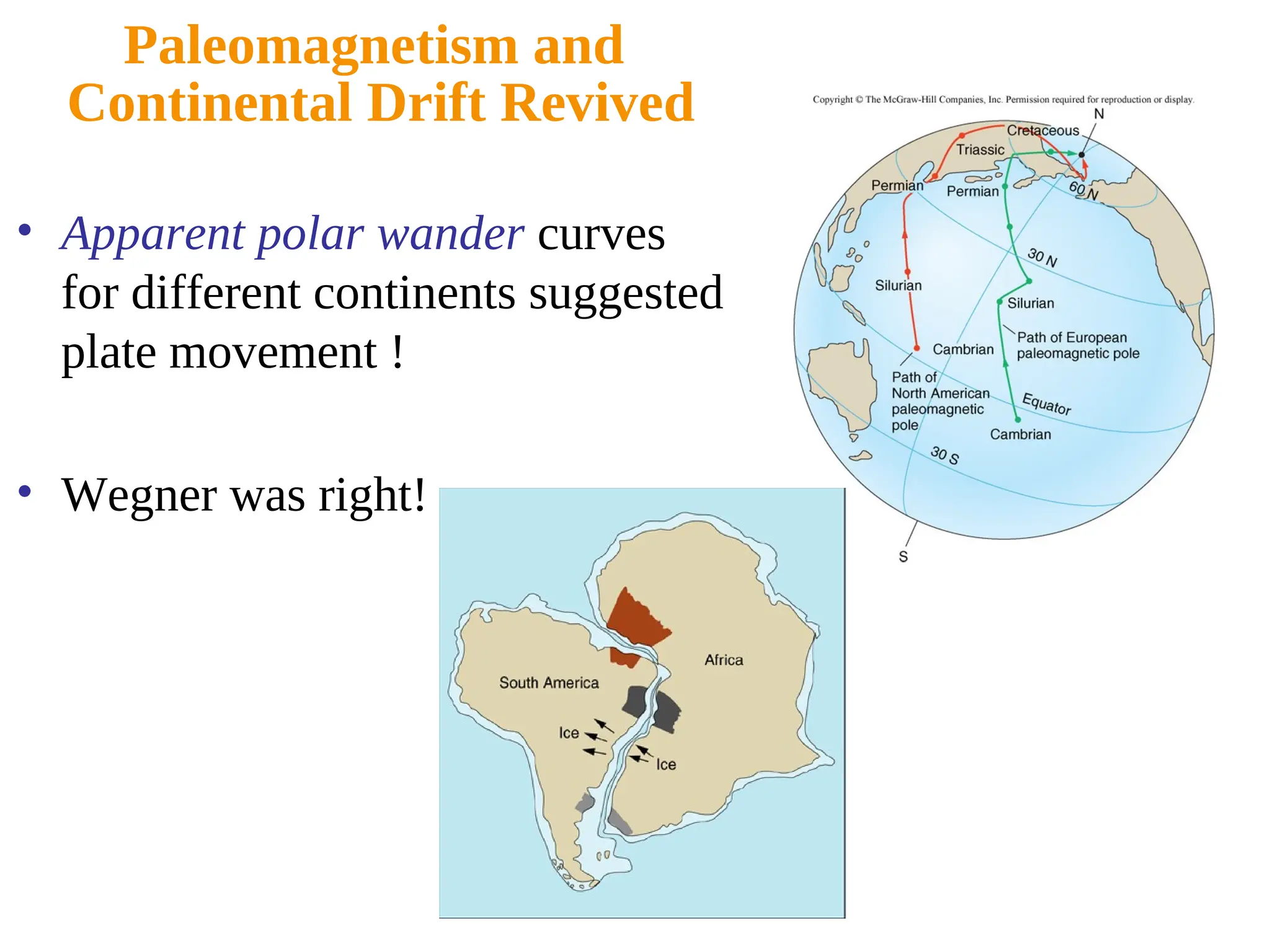
• Apparent polar wander curves
for different continents suggested
plate movement !
• Wegner was right!
15.
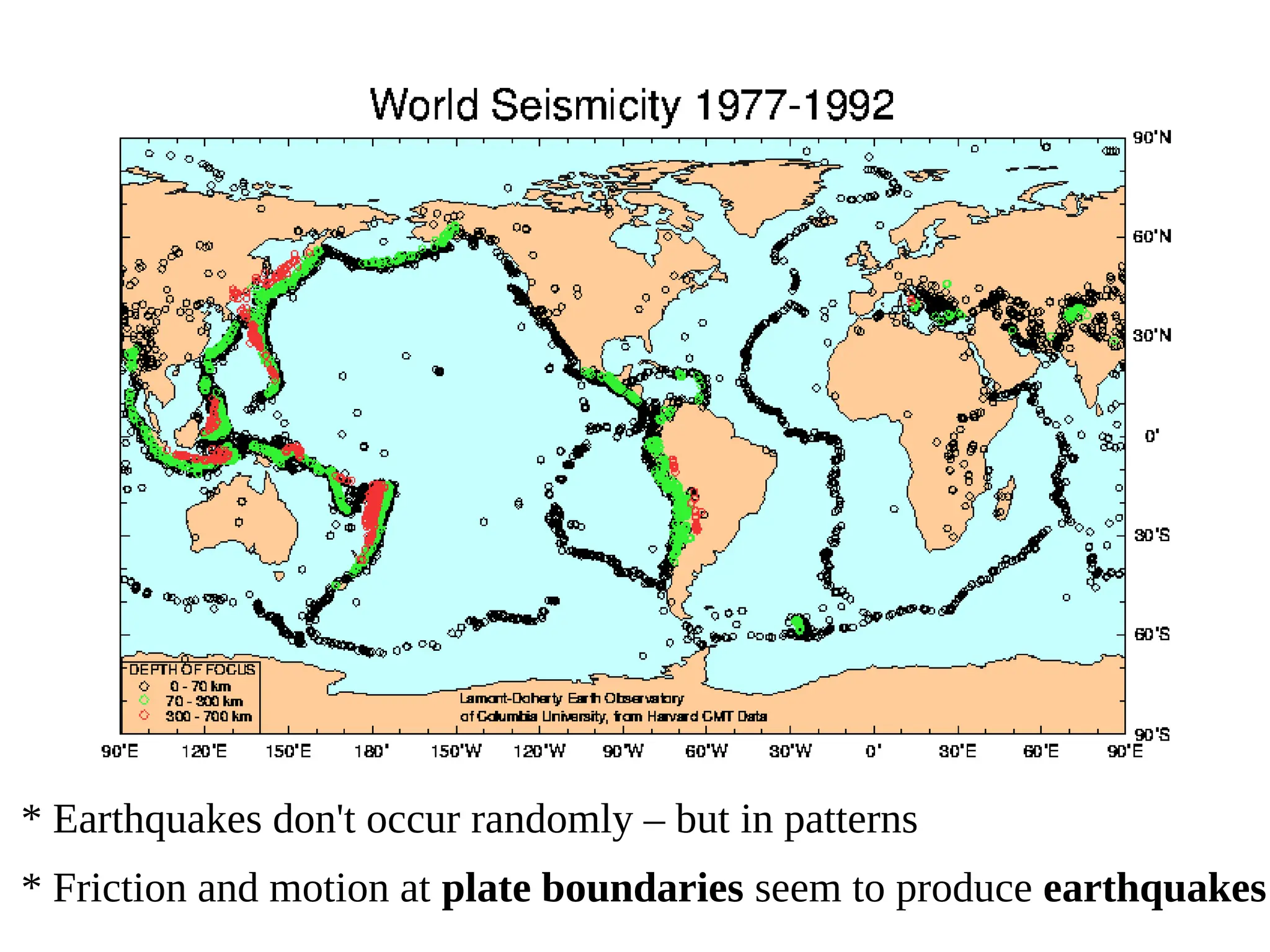
* Earthquakes don'toccur randomly – but in patterns
* Friction and motion at plate boundaries seem to produce earthquakes
16.
Early Case forContinental Drift
• Puzzle-piece fit of
coastlines of Africa and
South America has long
been known
17.
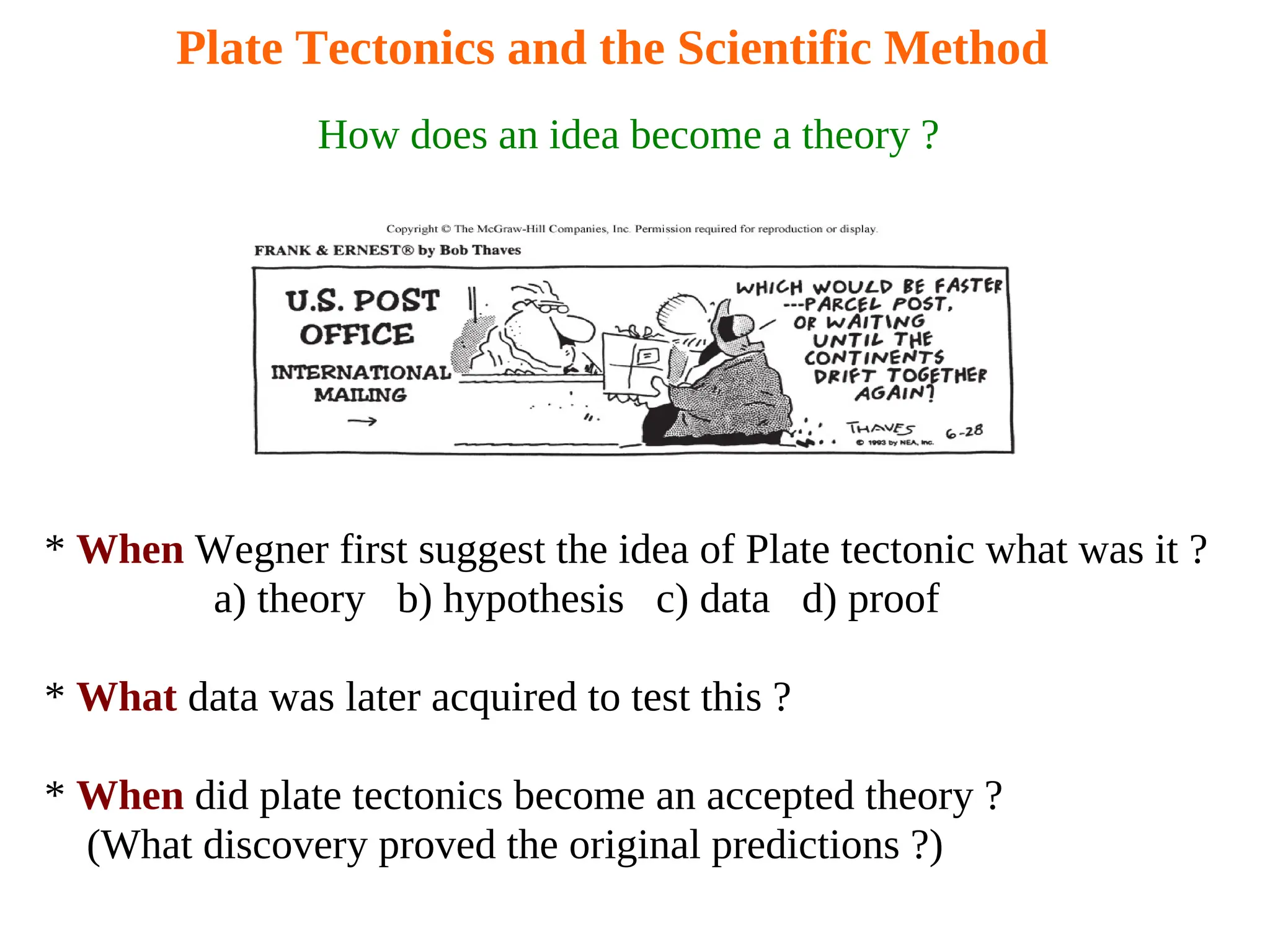
Plate Tectonics andthe Scientific Method
How does an idea become a theory ?
* When Wegner first suggest the idea of Plate tectonic what was it ?
a) theory b) hypothesis c) data d) proof
* What data was later acquired to test this ?
* When did plate tectonics become an accepted theory ?
(What discovery proved the original predictions ?)
18.
The Scientific Method
Step1: A question is asked
Step 2: Gather data
Step 3: Use data to propose a hypothesis
(Has this hypothesis been tested yet ? NO!
Step 4: Make a prediction (based on hypothesis)
Step 5: Test prediction (with new data)
Step 6: Hypothesis becomes a theory ! Yeah!
(if predictions and tests are good)
19.
Let's Use theScientific Method !
You are Captain Kirk on the USS
Enterprise. You have traveled
unexpectedly to a parallel universe. You
come upon a planet that looks like
Earth.
Use the Scientific Method to:
1) Make a hypothesis about your
discovery
2) Design a way to testing your
hypothesis
3) Determine whether your hypothesis is
correct and whether it can be
transformed into a theory.
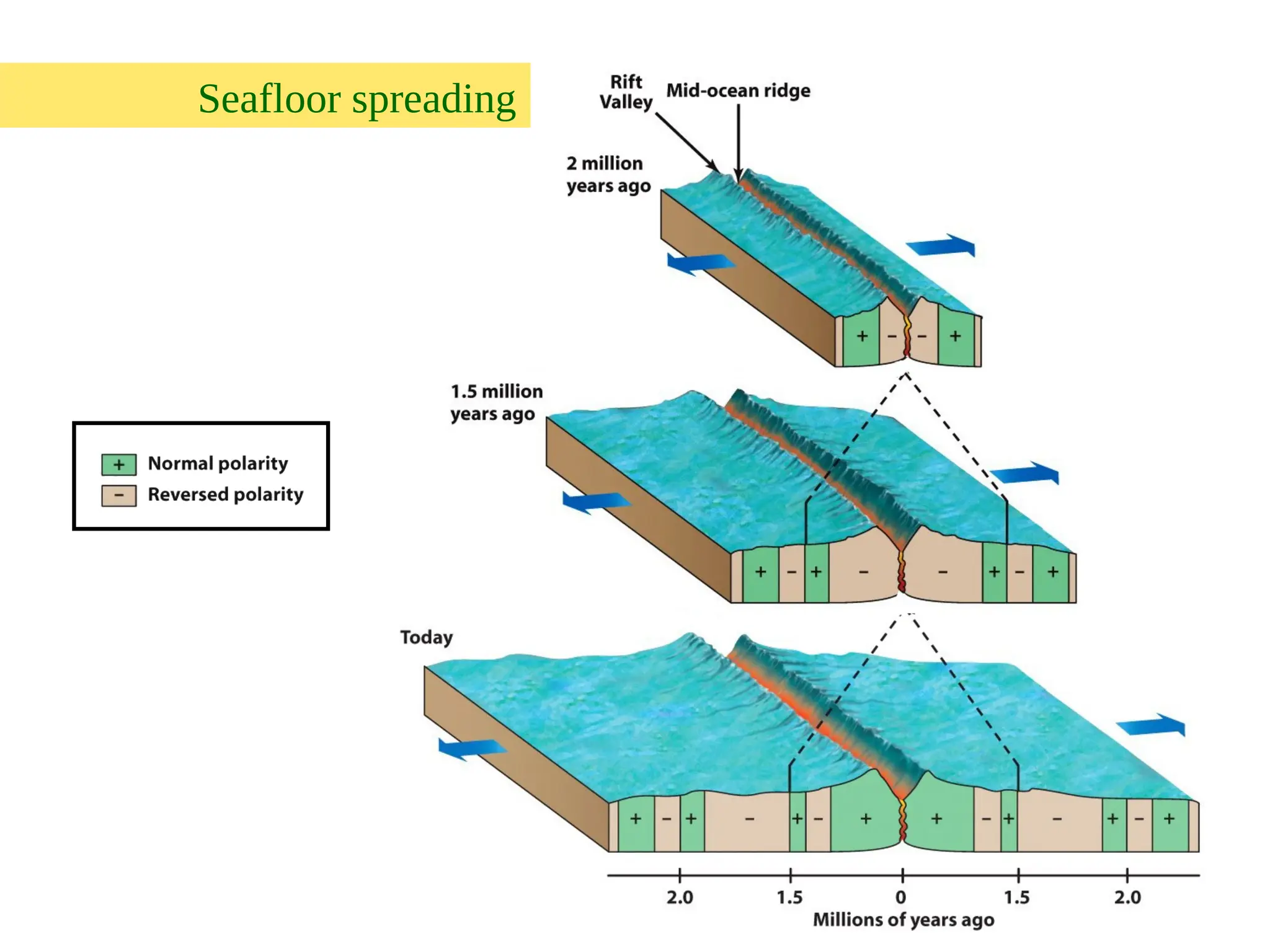
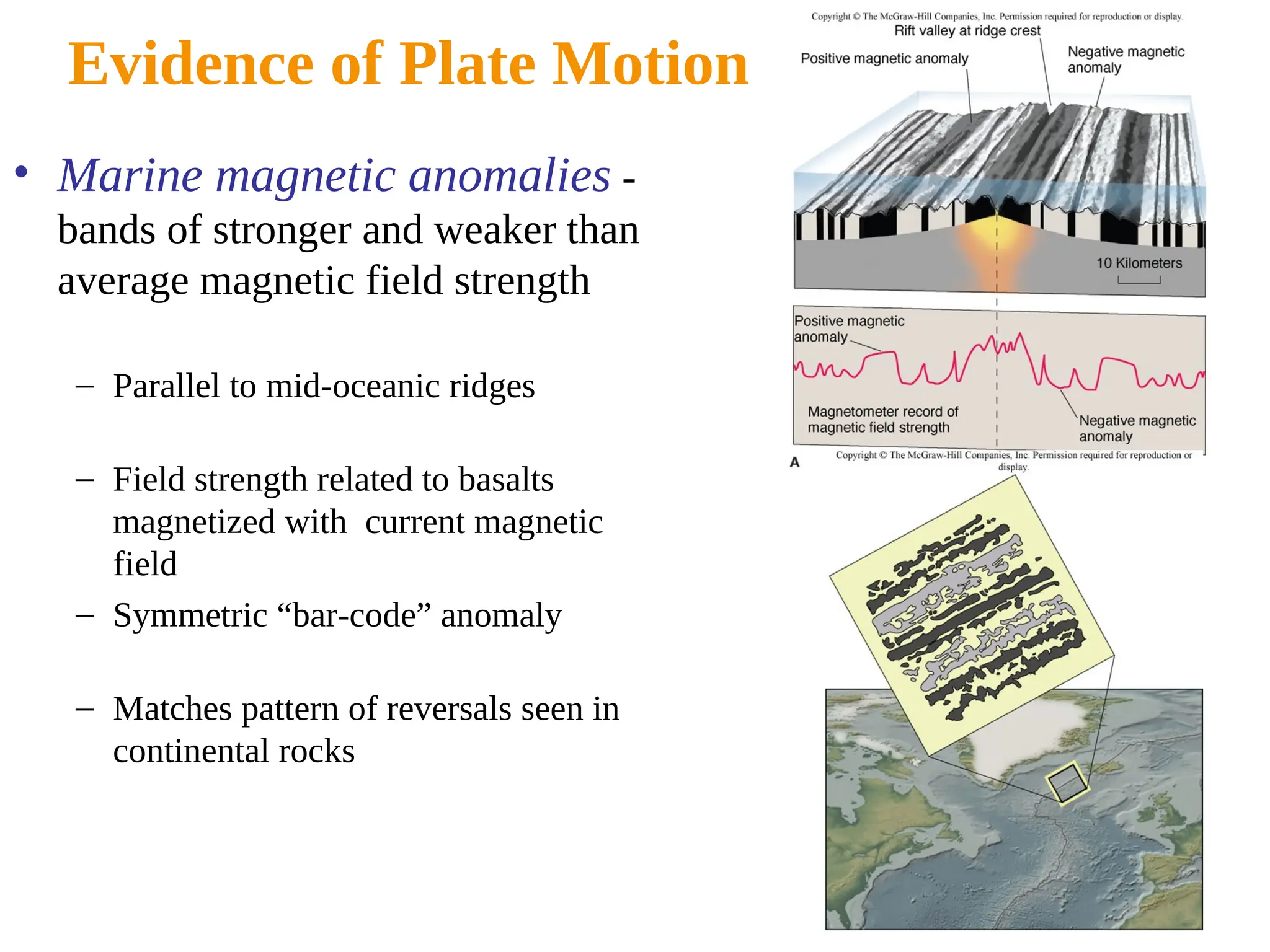
Evidence of PlateMotion
• Marine magnetic anomalies -
bands of stronger and weaker than
average magnetic field strength
– Parallel to mid-oceanic ridges
– Field strength related to basalts
magnetized with current magnetic
field
– Symmetric “bar-code” anomaly
– Matches pattern of reversals seen in
continental rocks
23.
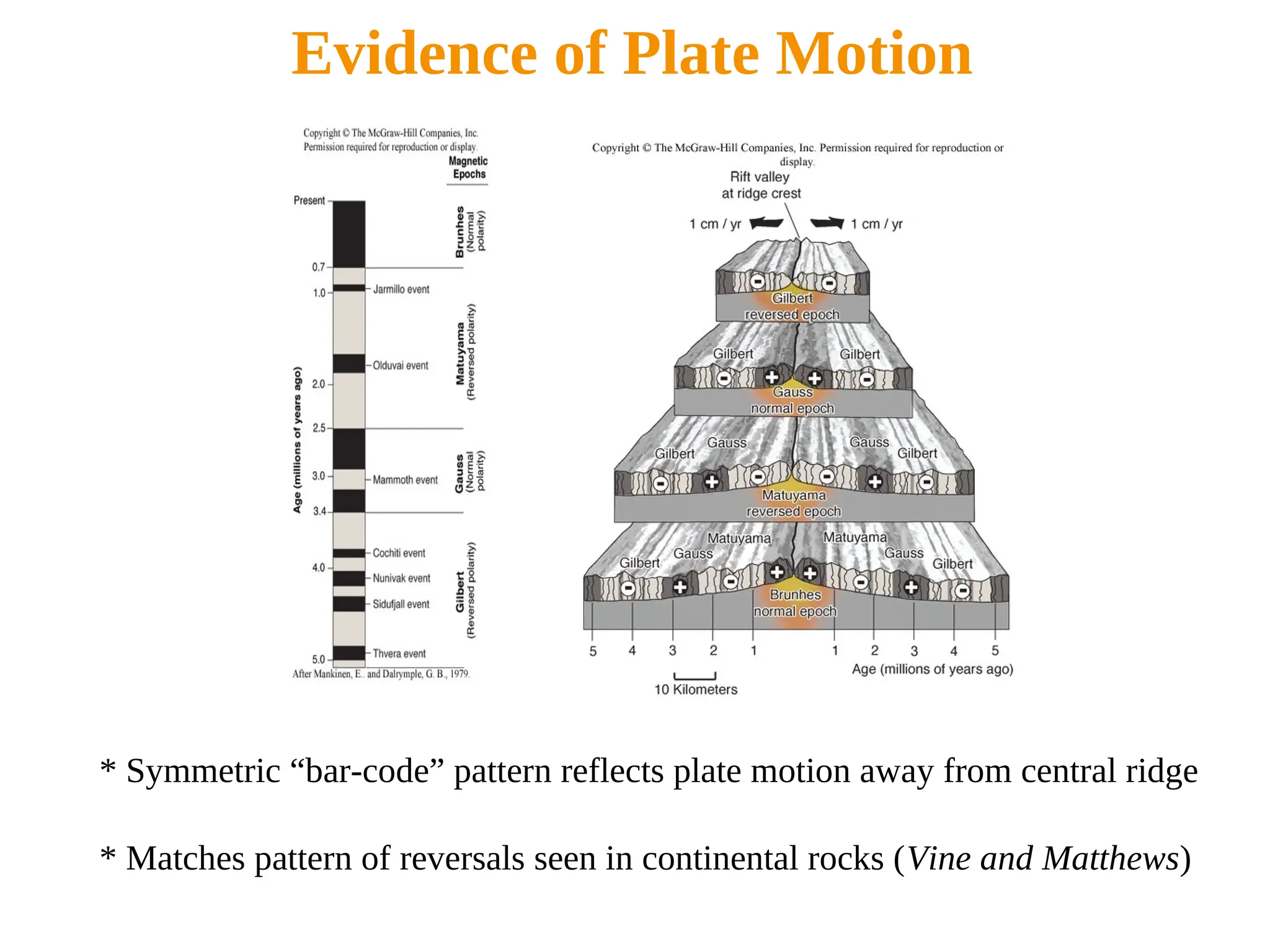
* Symmetric “bar-code”pattern reflects plate motion away from central ridge
* Matches pattern of reversals seen in continental rocks (Vine and Matthews)
Evidence of Plate Motion
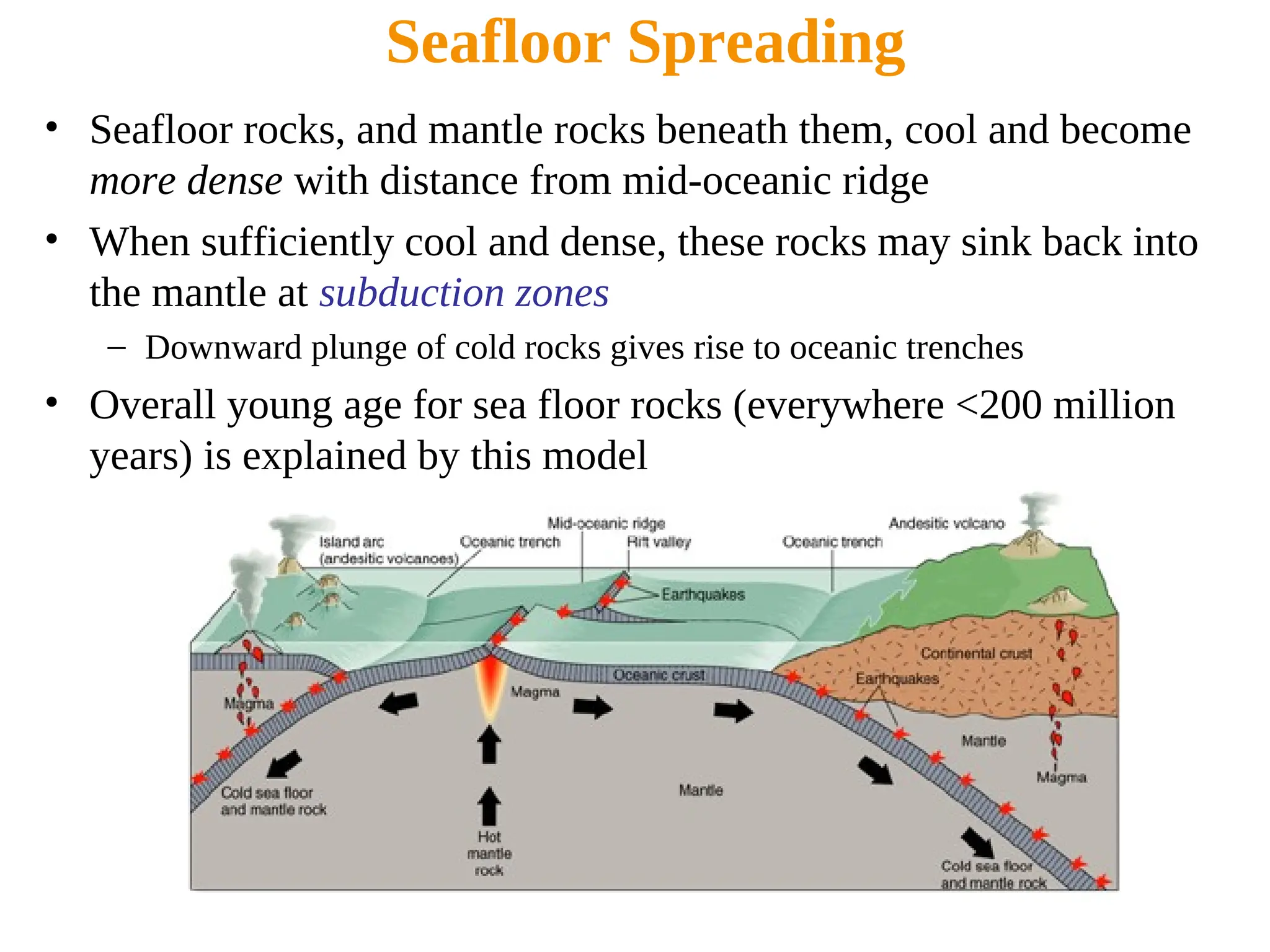
Seafloor Spreading
• Seafloorrocks, and mantle rocks beneath them, cool and become
more dense with distance from mid-oceanic ridge
• When sufficiently cool and dense, these rocks may sink back into
the mantle at subduction zones
– Downward plunge of cold rocks gives rise to oceanic trenches
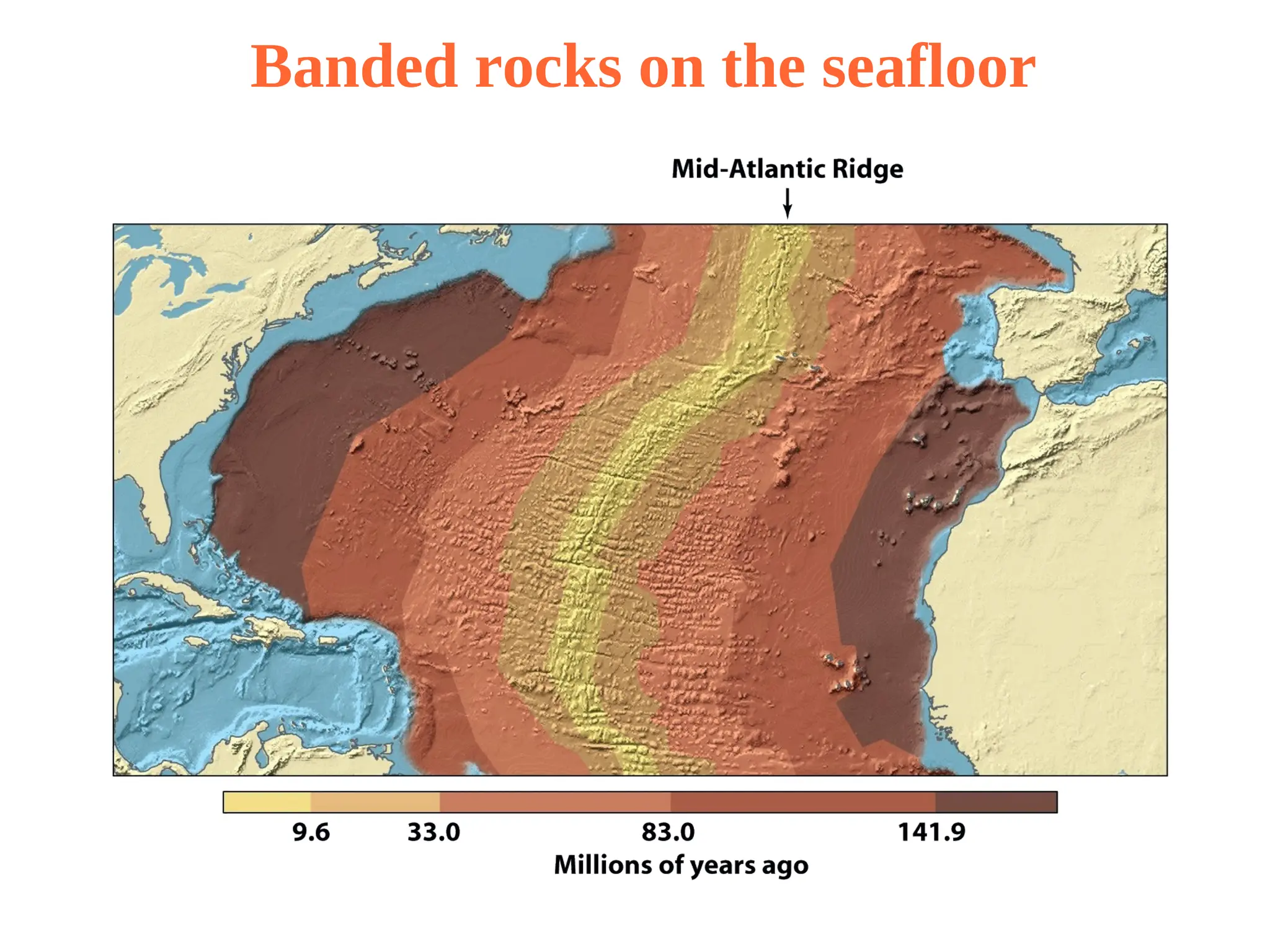
• Overall young age for sea floor rocks (everywhere <200 million
years) is explained by this model
28.
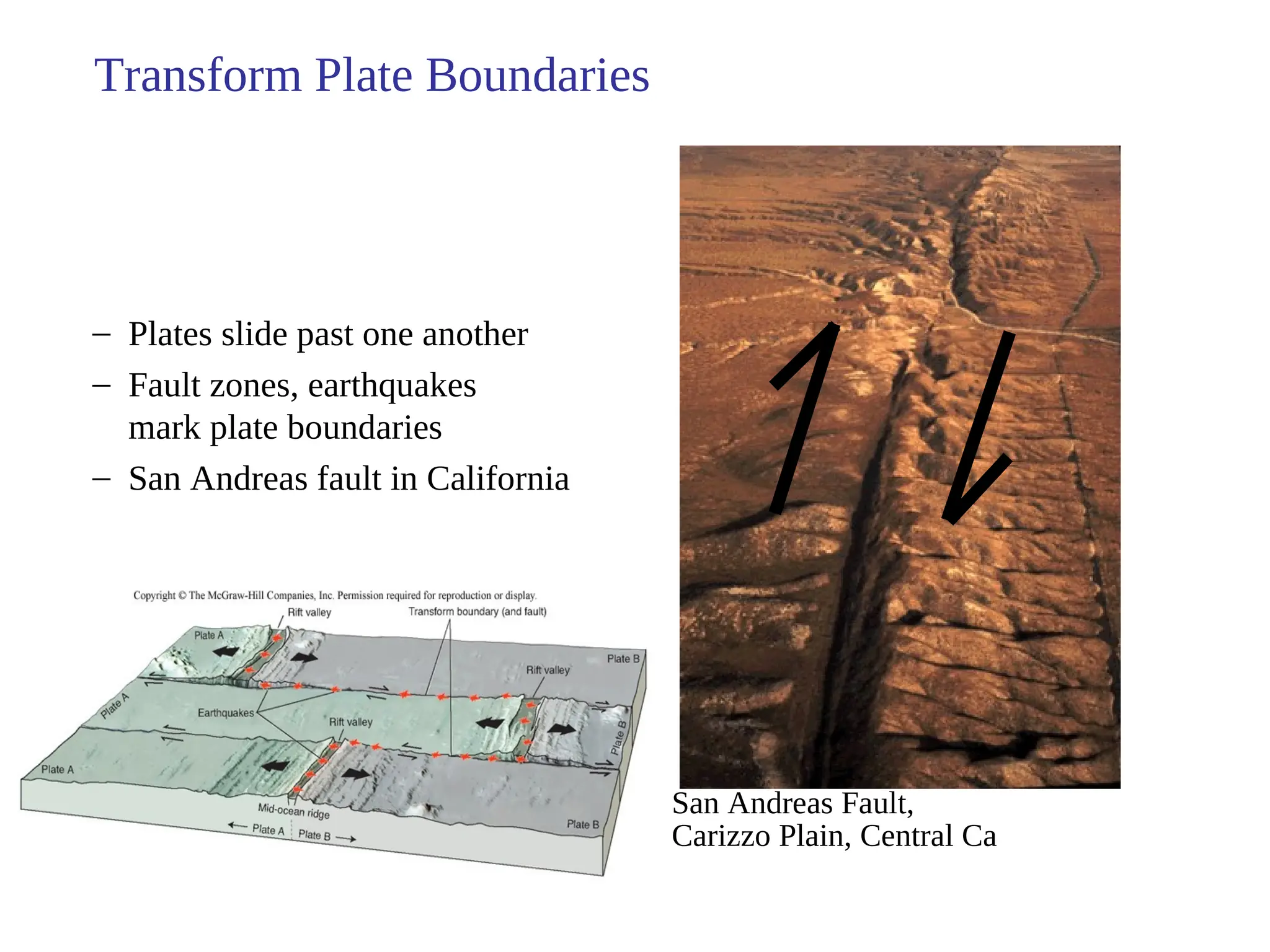
Transform Plate Boundaries
–Plates slide past one another
– Fault zones, earthquakes
mark plate boundaries
– San Andreas fault in California
San Andreas Fault,
Carizzo Plain, Central Ca
29.
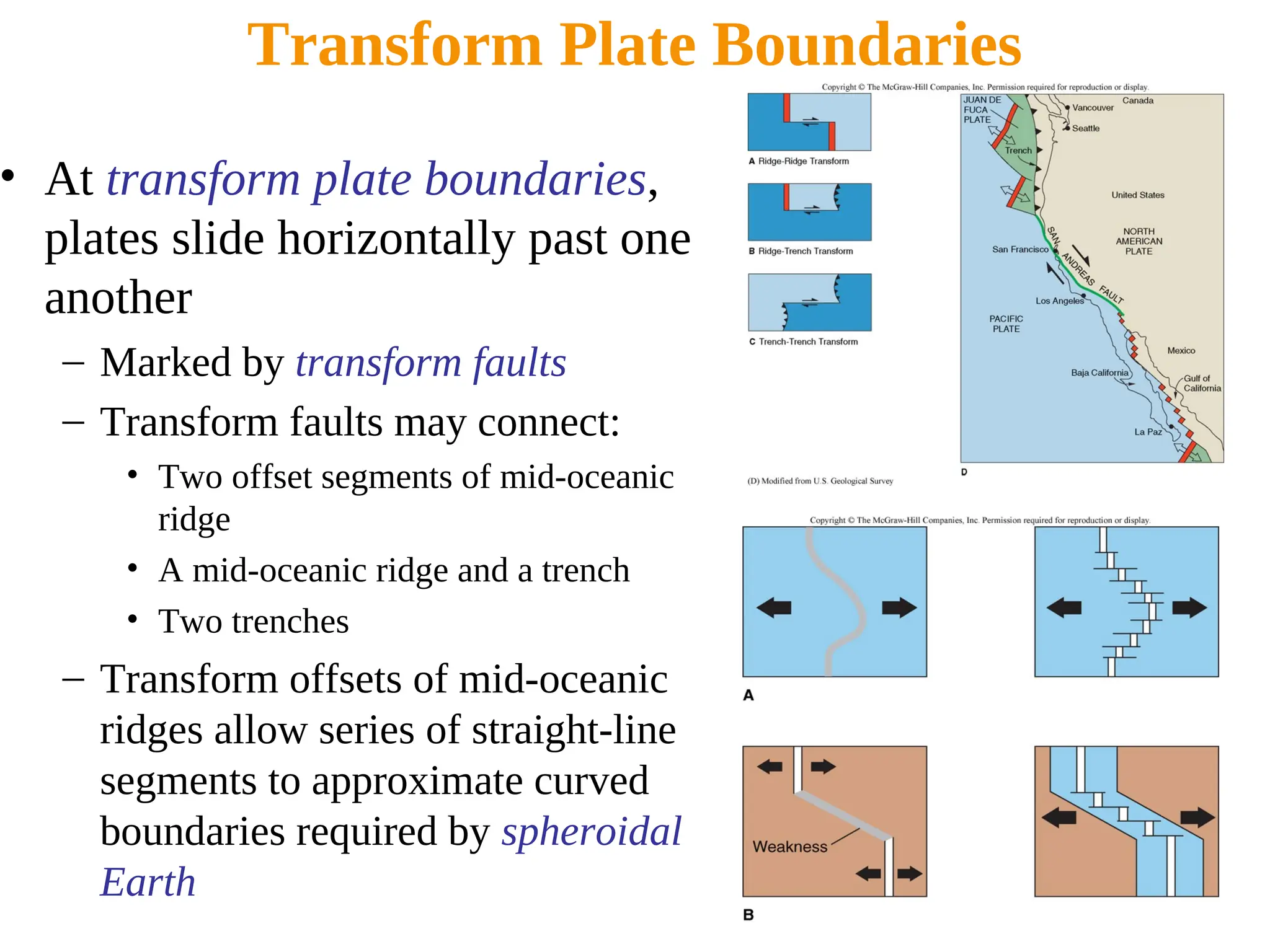
Transform Plate Boundaries
•At transform plate boundaries,
plates slide horizontally past one
another
– Marked by transform faults
– Transform faults may connect:
• Two offset segments of mid-oceanic
ridge
• A mid-oceanic ridge and a trench
• Two trenches
– Transform offsets of mid-oceanic
ridges allow series of straight-line
segments to approximate curved
boundaries required by spheroidal
Earth
30.
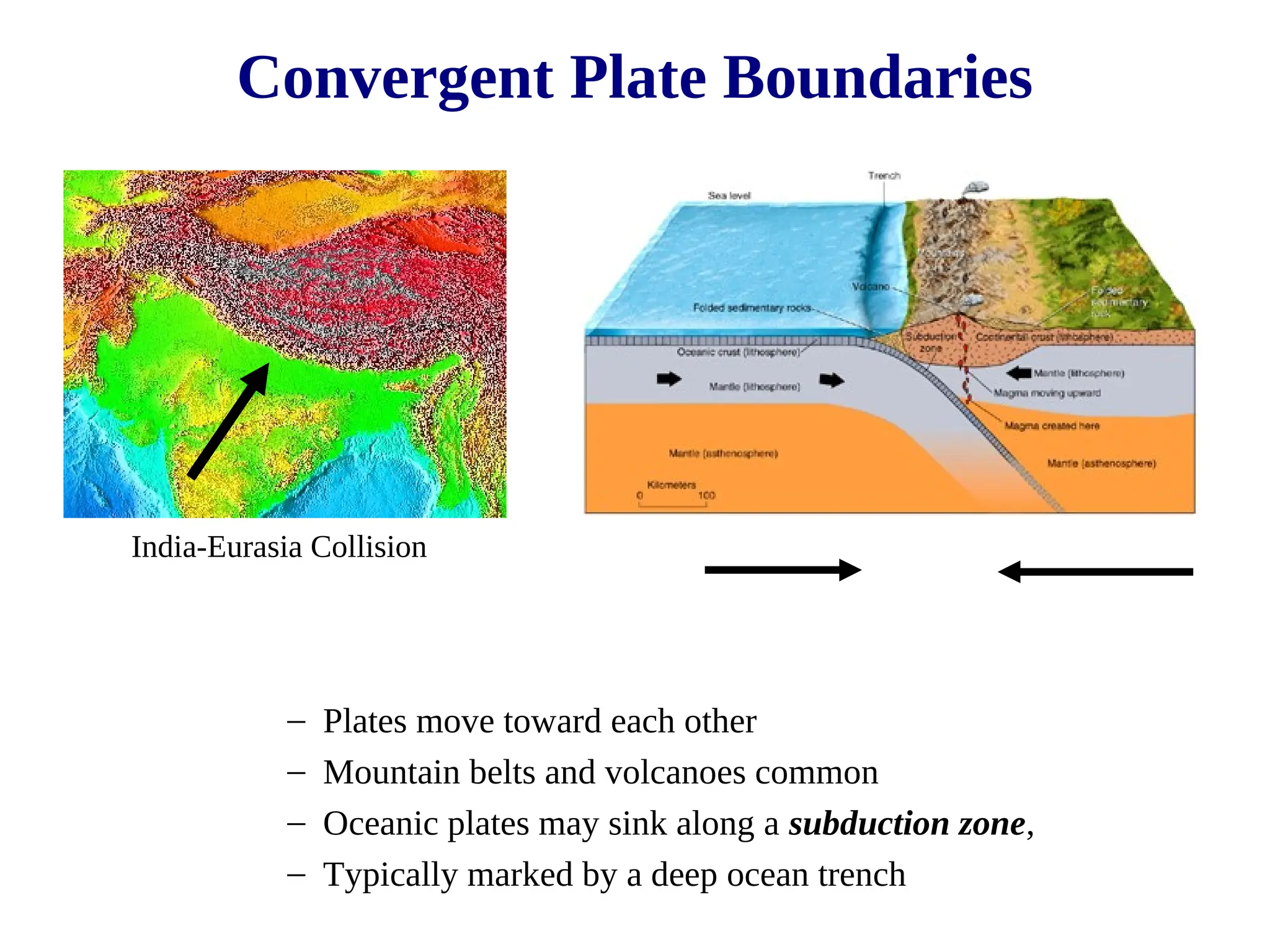
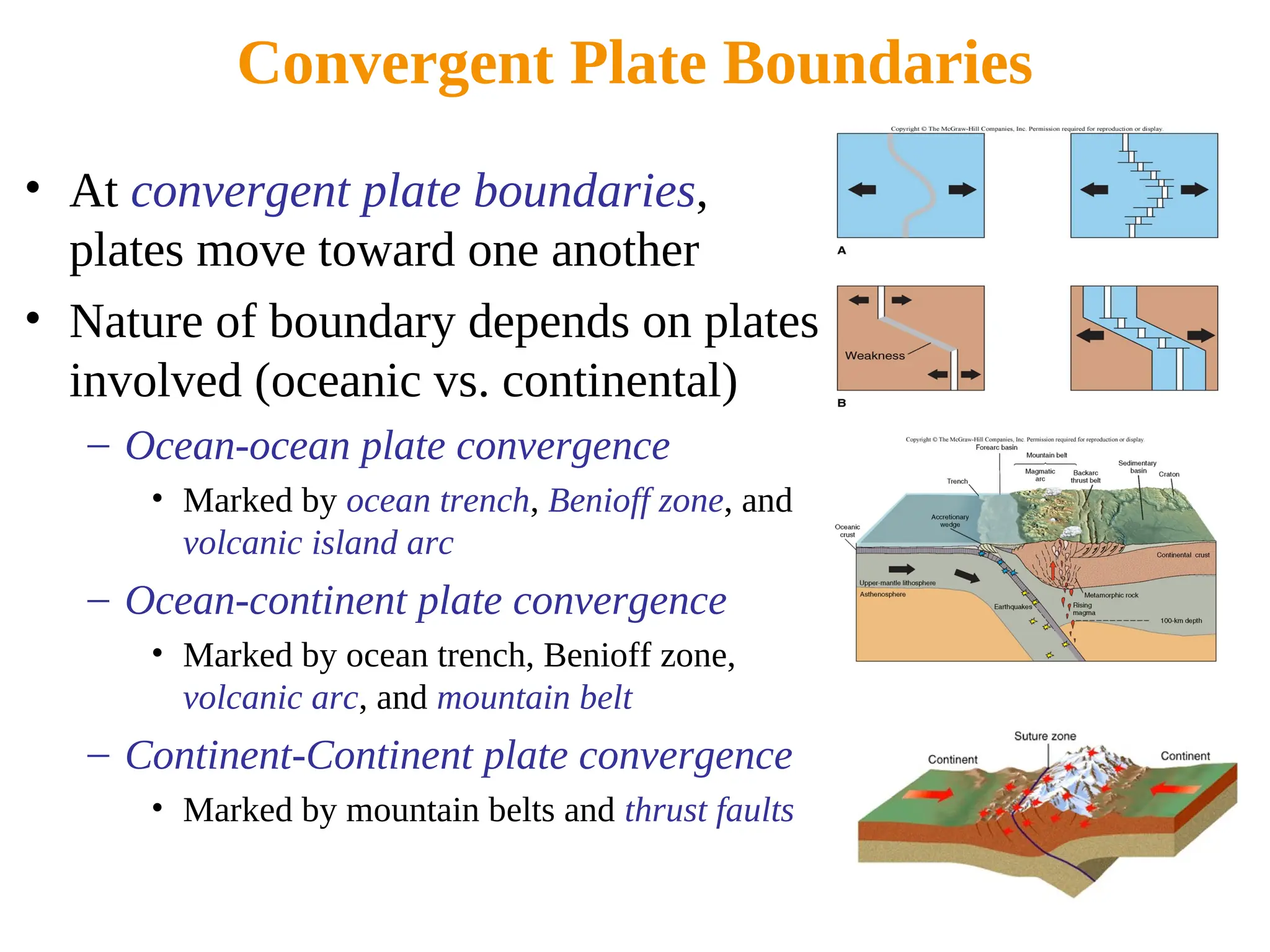
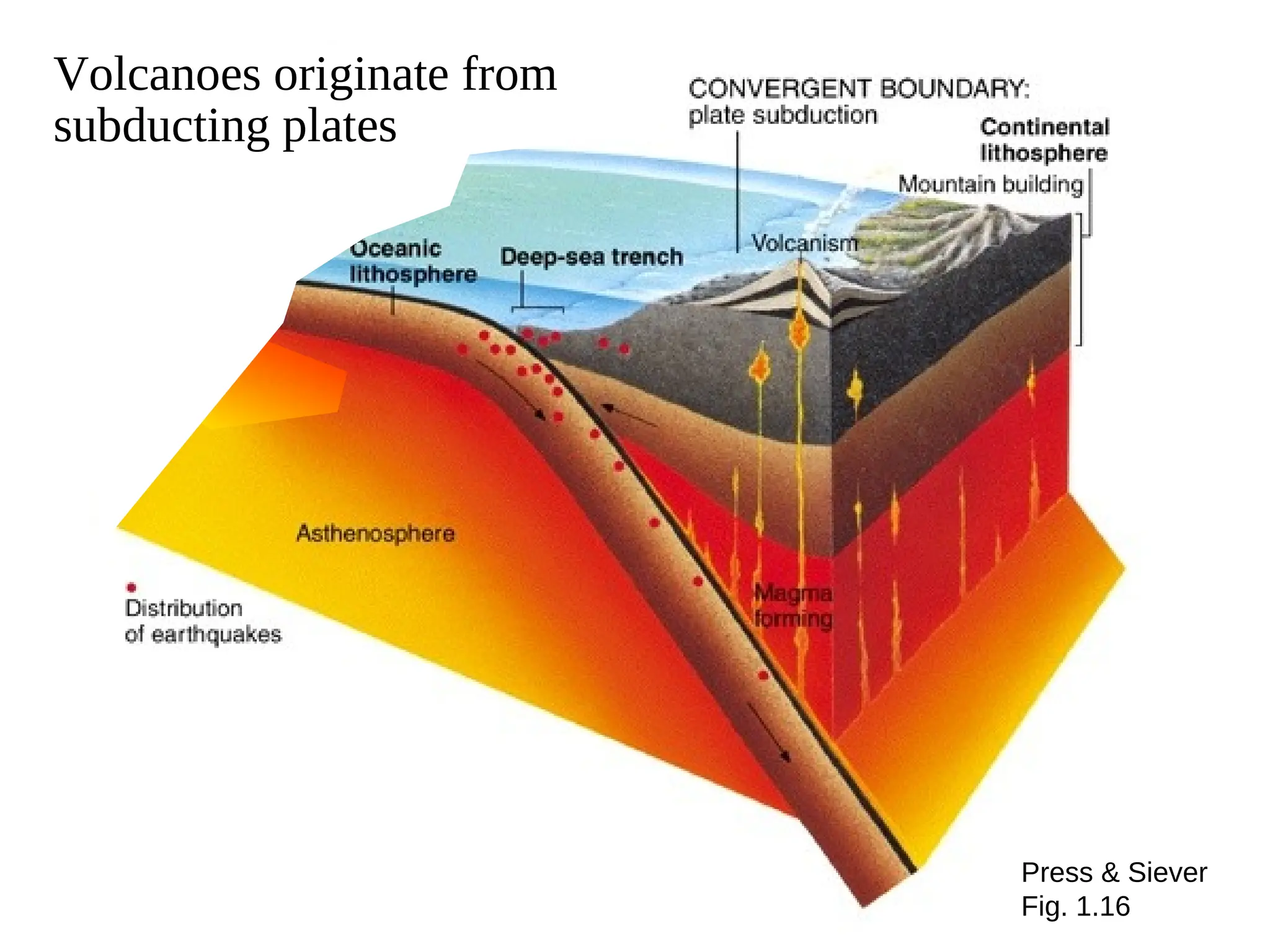
Convergent Plate Boundaries
–Plates move toward each other
– Mountain belts and volcanoes common
– Oceanic plates may sink along a subduction zone,
– Typically marked by a deep ocean trench
India-Eurasia Collision
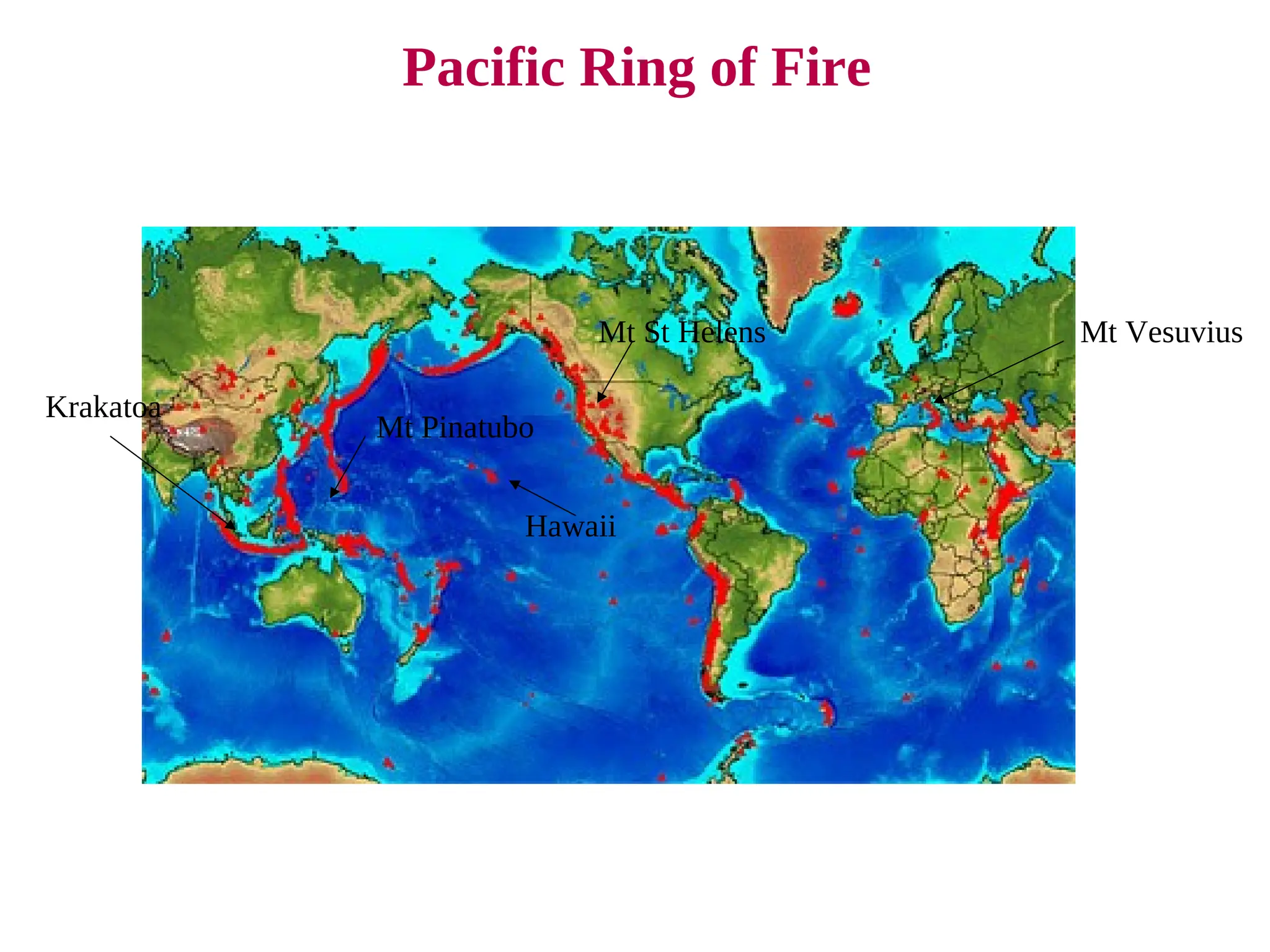
Pacific Ring ofFire
Mt Vesuvius
Mt Pinatubo
Krakatoa
Hawaii
Mt St Helens
36.
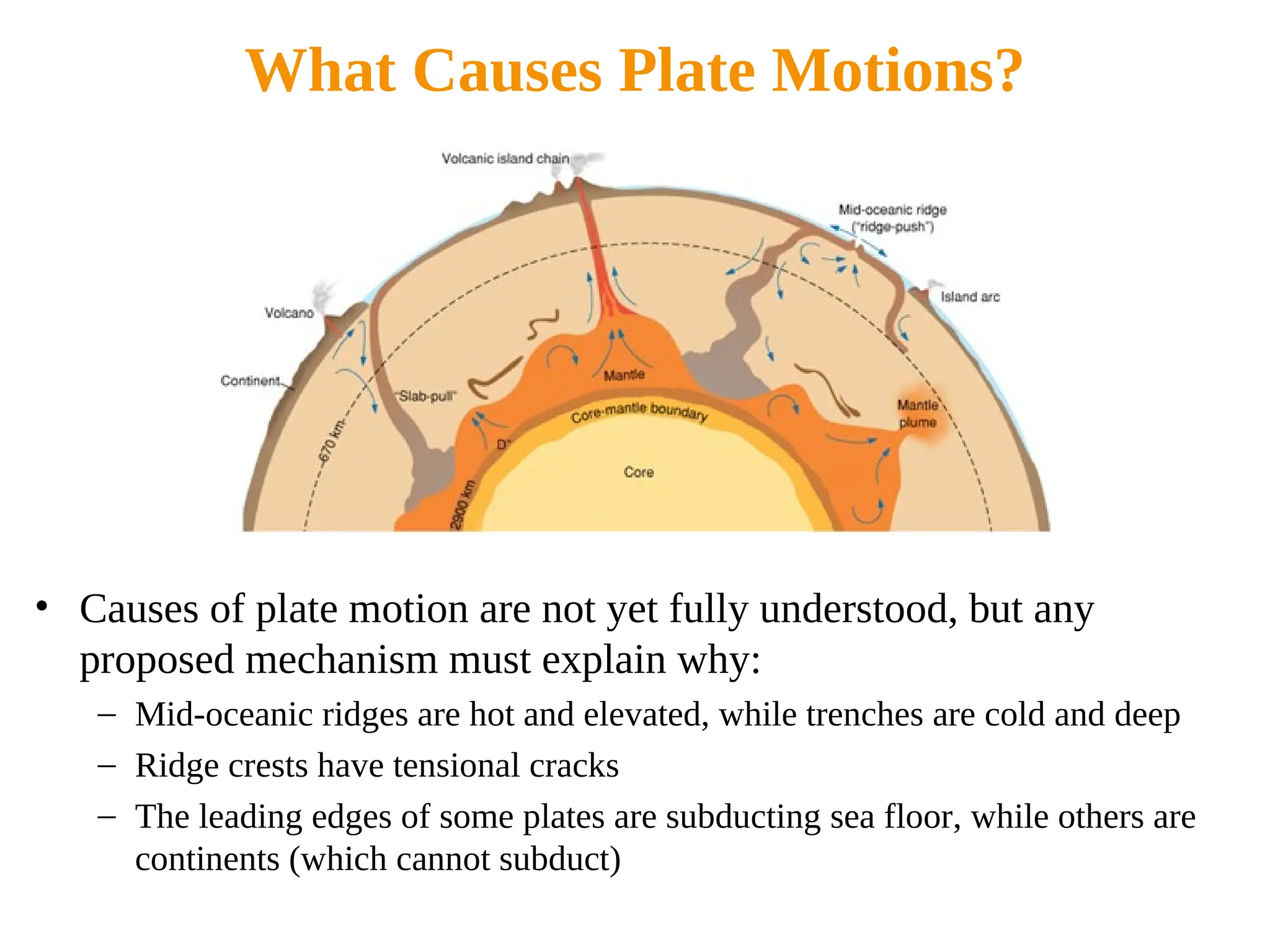
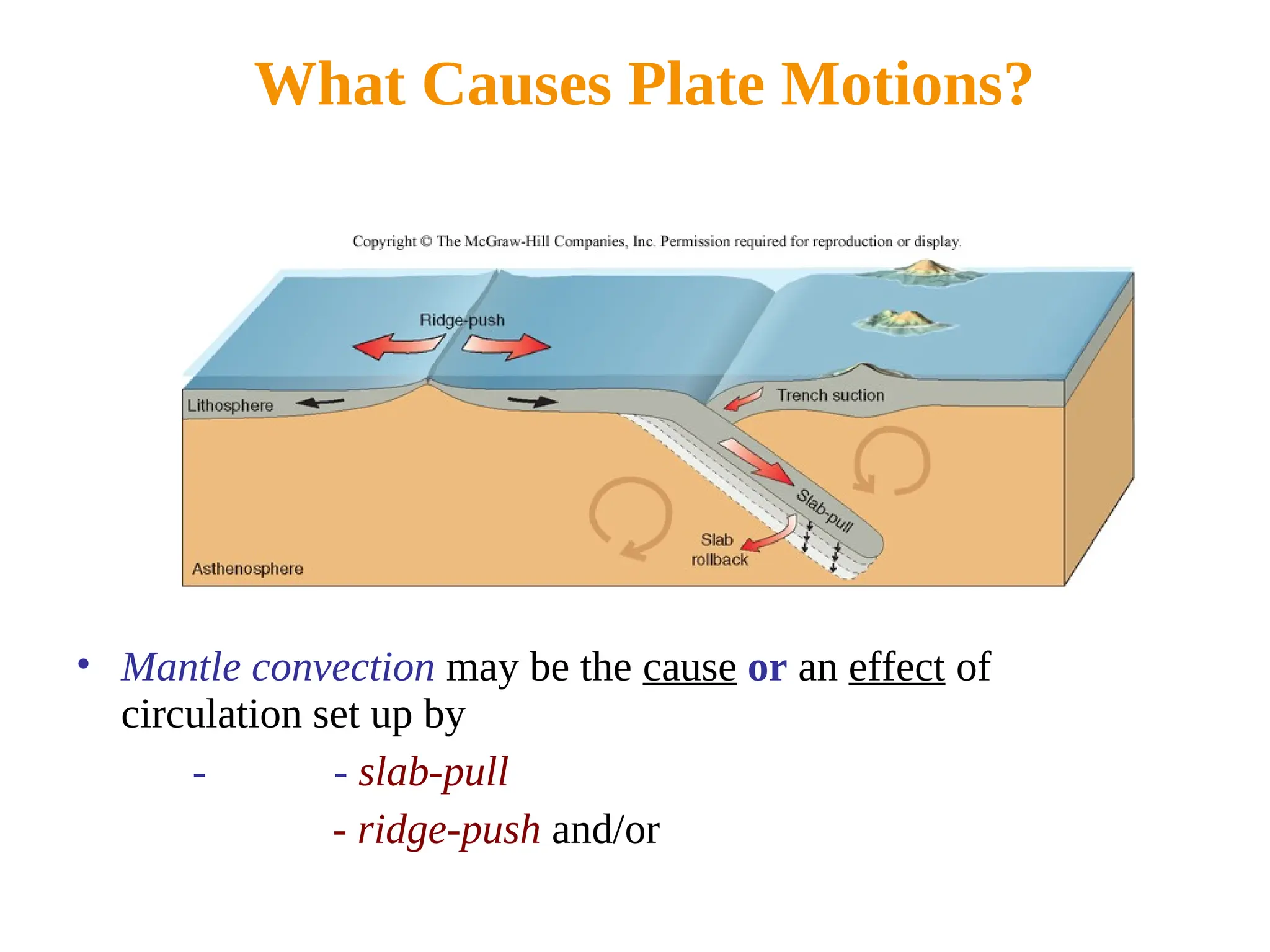
What Causes PlateMotions?
• Causes of plate motion are not yet fully understood, but any
proposed mechanism must explain why:
– Mid-oceanic ridges are hot and elevated, while trenches are cold and deep
– Ridge crests have tensional cracks
– The leading edges of some plates are subducting sea floor, while others are
continents (which cannot subduct)
37.
• Mantle convectionmay be the cause or an effect of
circulation set up by
- - slab-pull
- ridge-push and/or
What Causes Plate Motions?
38.
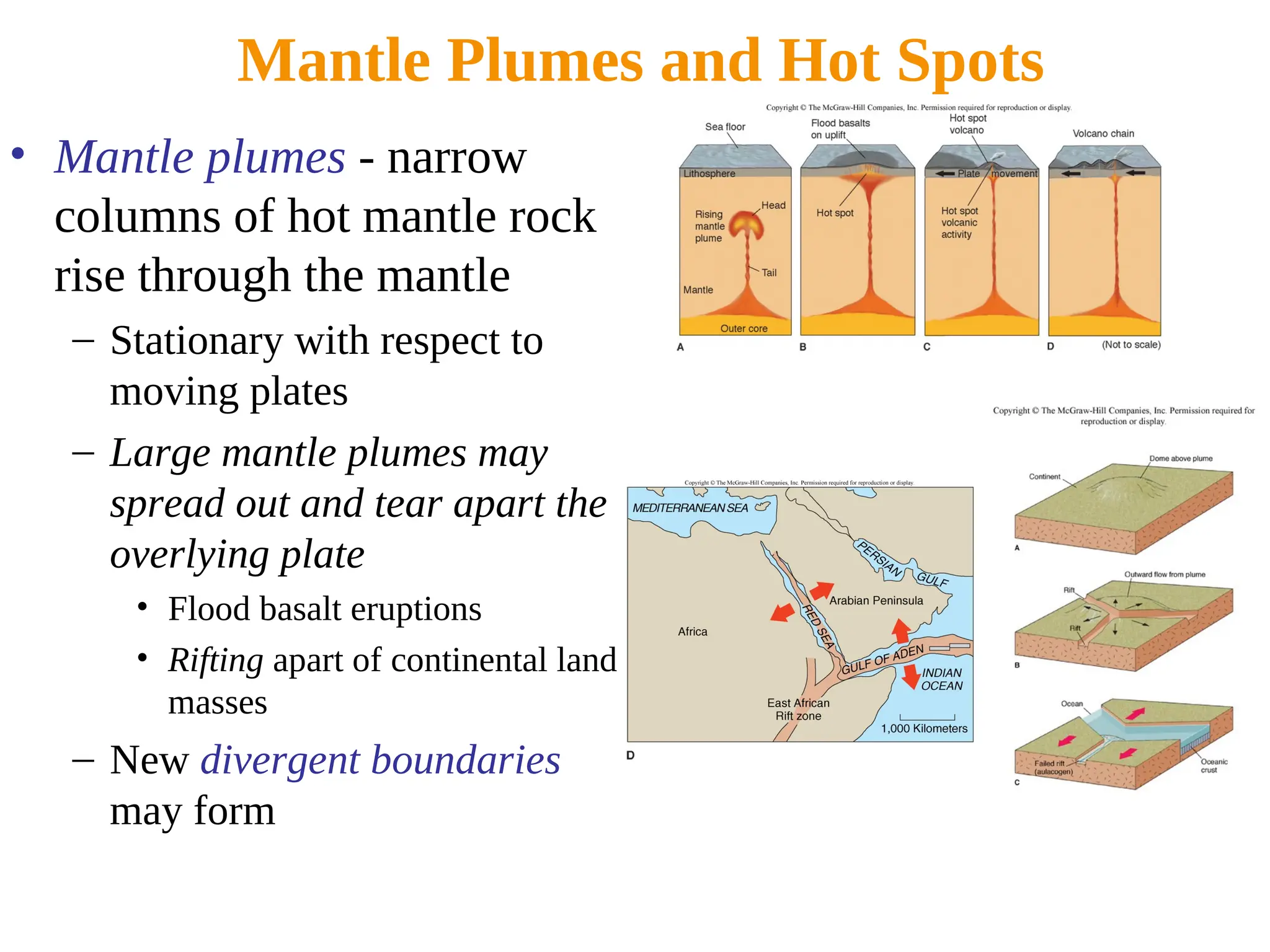
Mantle Plumes andHot Spots
• Mantle plumes - narrow
columns of hot mantle rock
rise through the mantle
– Stationary with respect to
moving plates
– Large mantle plumes may
spread out and tear apart the
overlying plate
• Flood basalt eruptions
• Rifting apart of continental land
masses
– New divergent boundaries
may form
39.
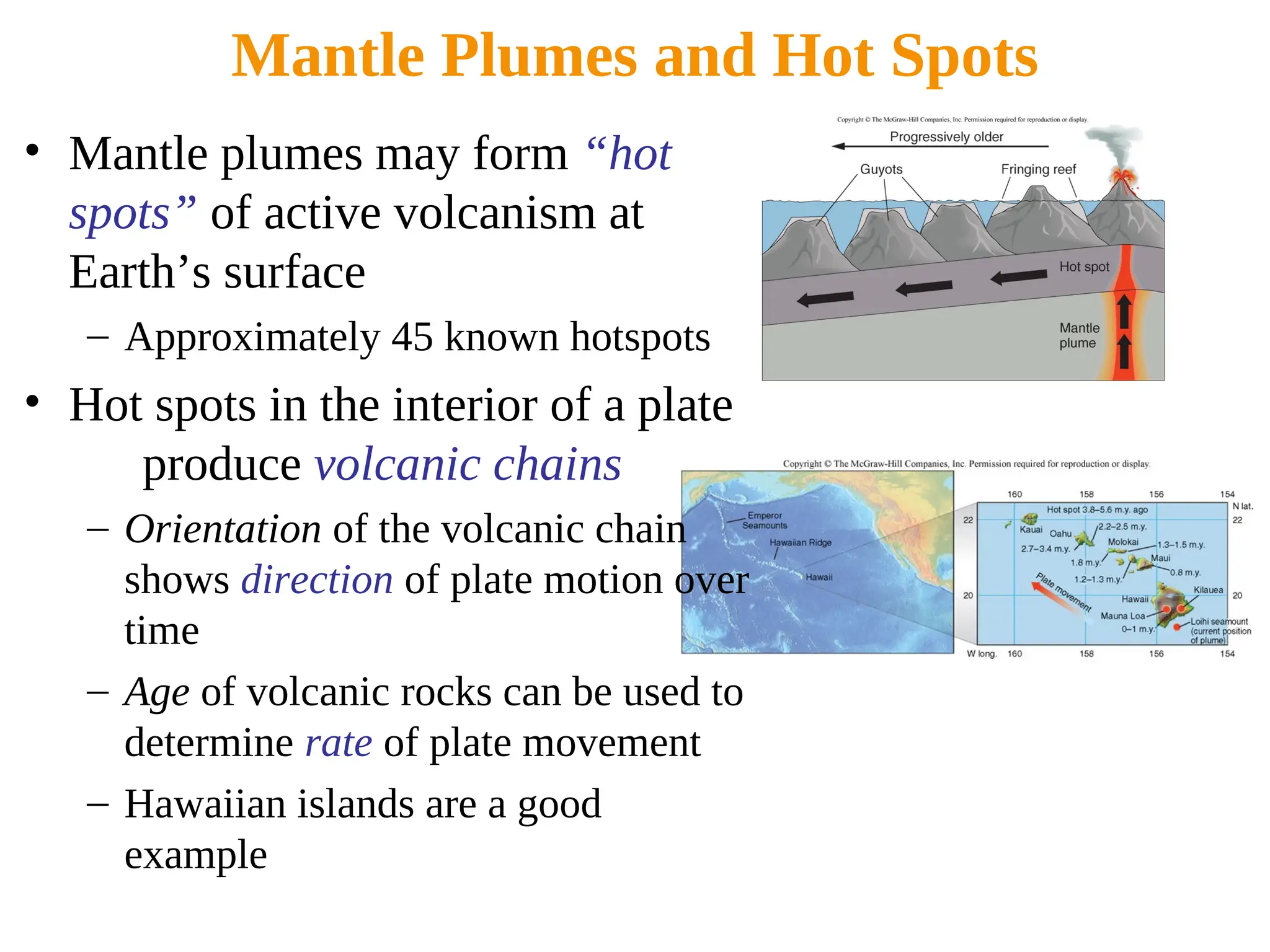
Mantle Plumes andHot Spots
• Mantle plumes may form “hot
spots” of active volcanism at
Earth’s surface
– Approximately 45 known hotspots
• Hot spots in the interior of a plate
produce volcanic chains
– Orientation of the volcanic chain
shows direction of plate motion over
time
– Age of volcanic rocks can be used to
determine rate of plate movement
– Hawaiian islands are a good
example
40.
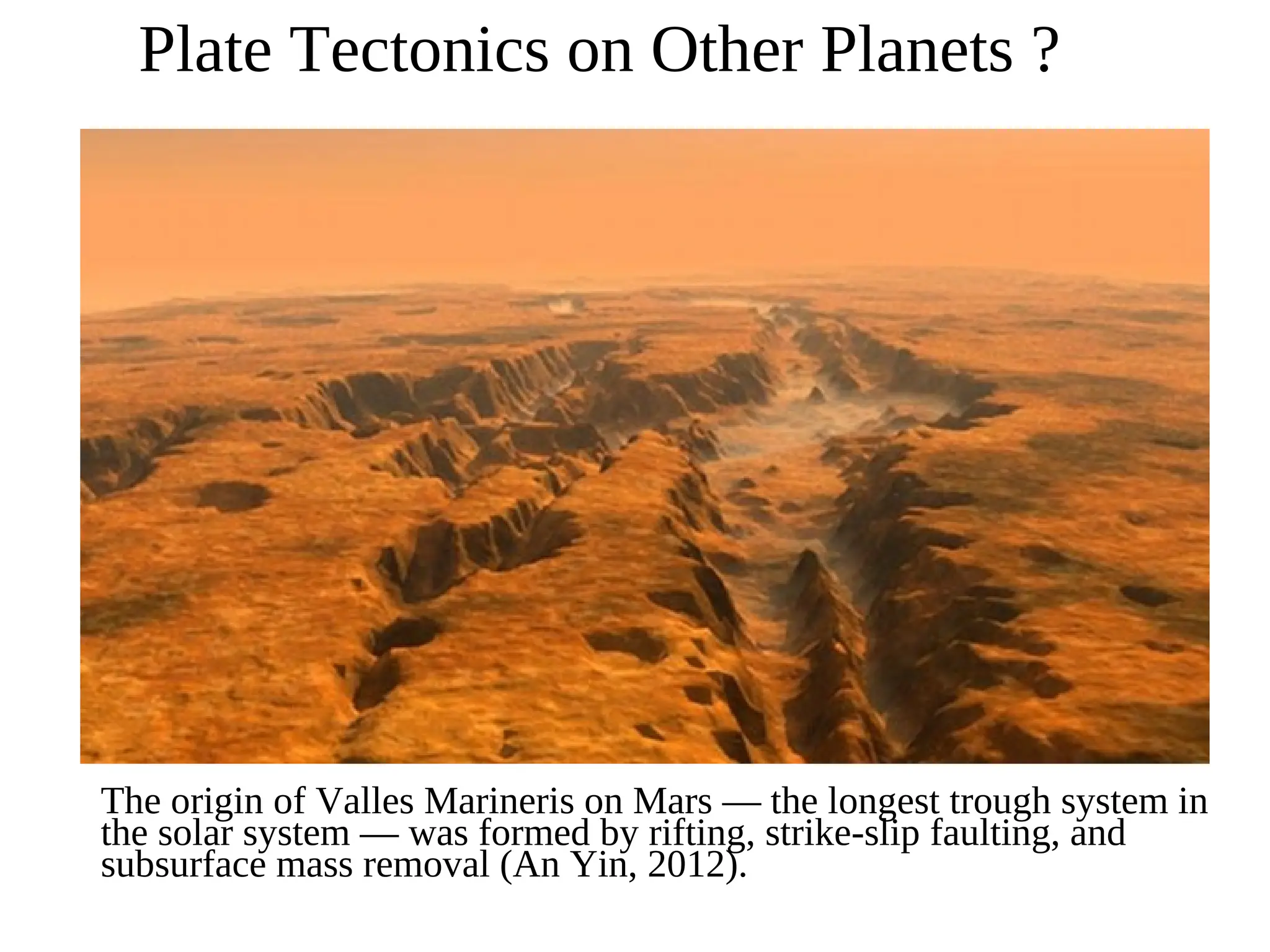
Plate Tectonics onOther Planets ?
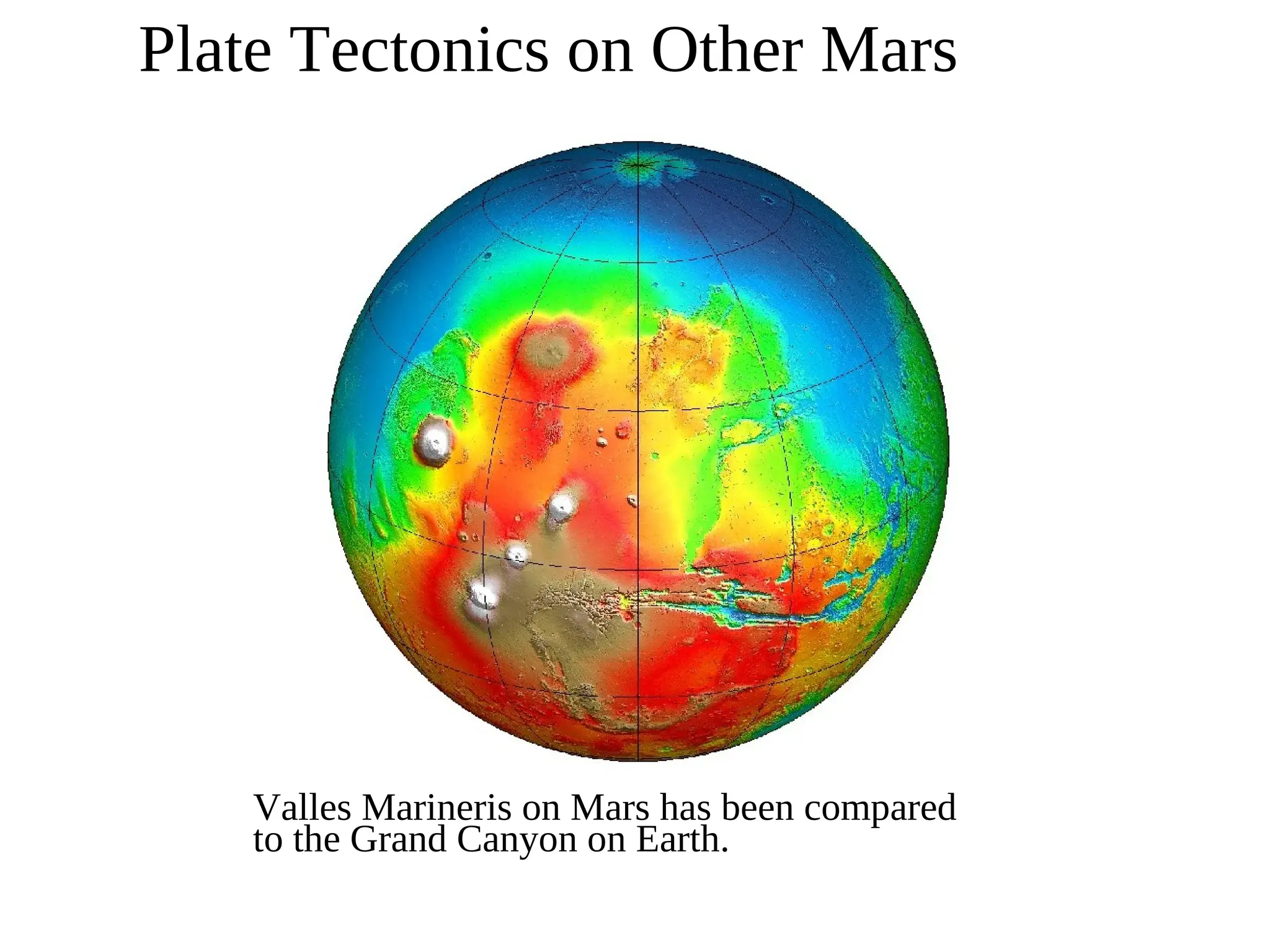
The origin of Valles Marineris on Mars — the longest trough system in
the solar system — was formed by rifting, strike-slip faulting, and
subsurface mass removal (An Yin, 2012).
41.
Plate Tectonics onOther Mars
Valles Marineris on Mars has been compared
to the Grand Canyon on Earth.
42.
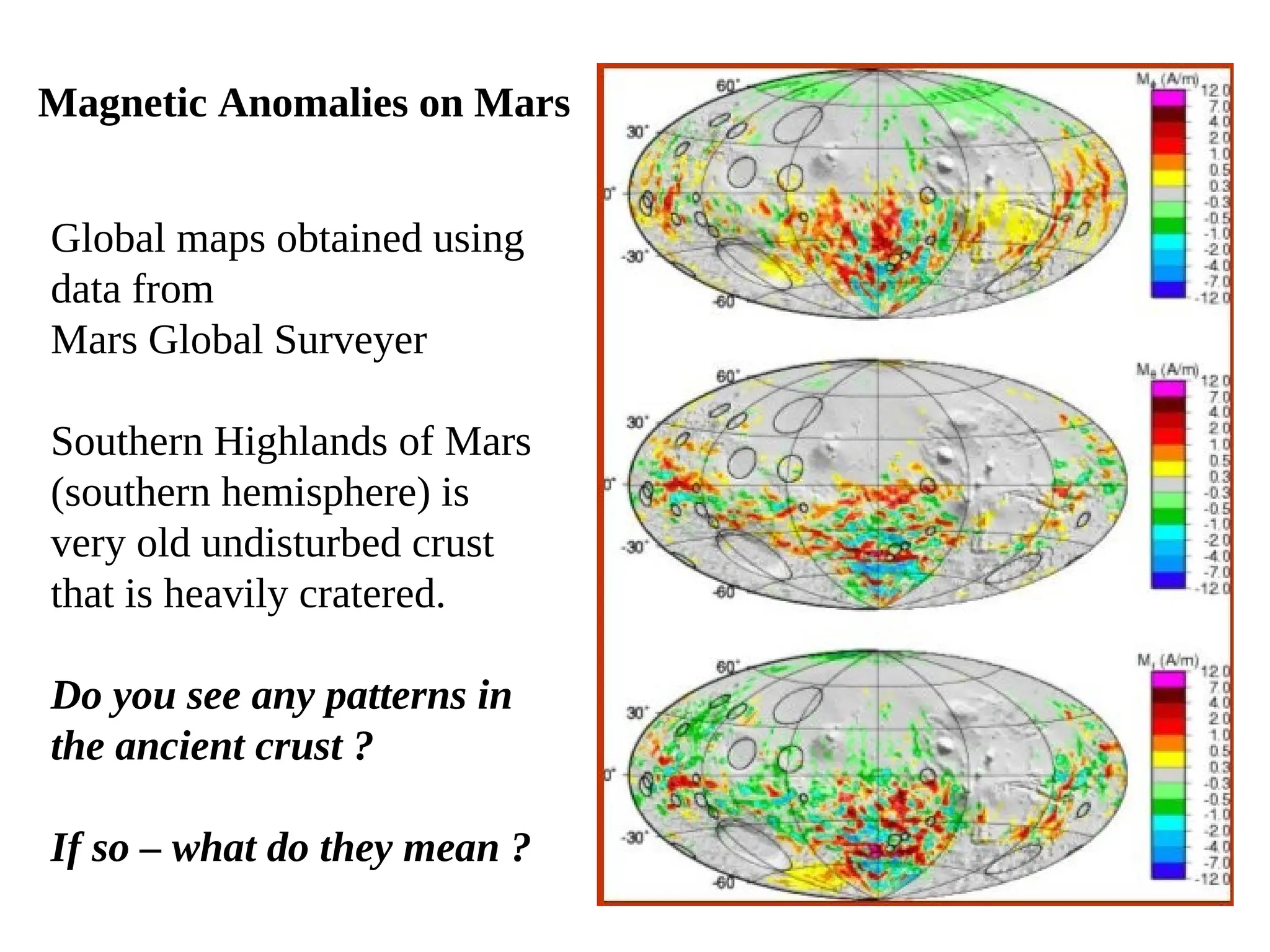
Magnetic Anomalies onMars
Global maps obtained using
data from
Mars Global Surveyer
Southern Highlands of Mars
(southern hemisphere) is
very old undisturbed crust
that is heavily cratered.
Do you see any patterns in
the ancient crust ?
If so – what do they mean ?
43.
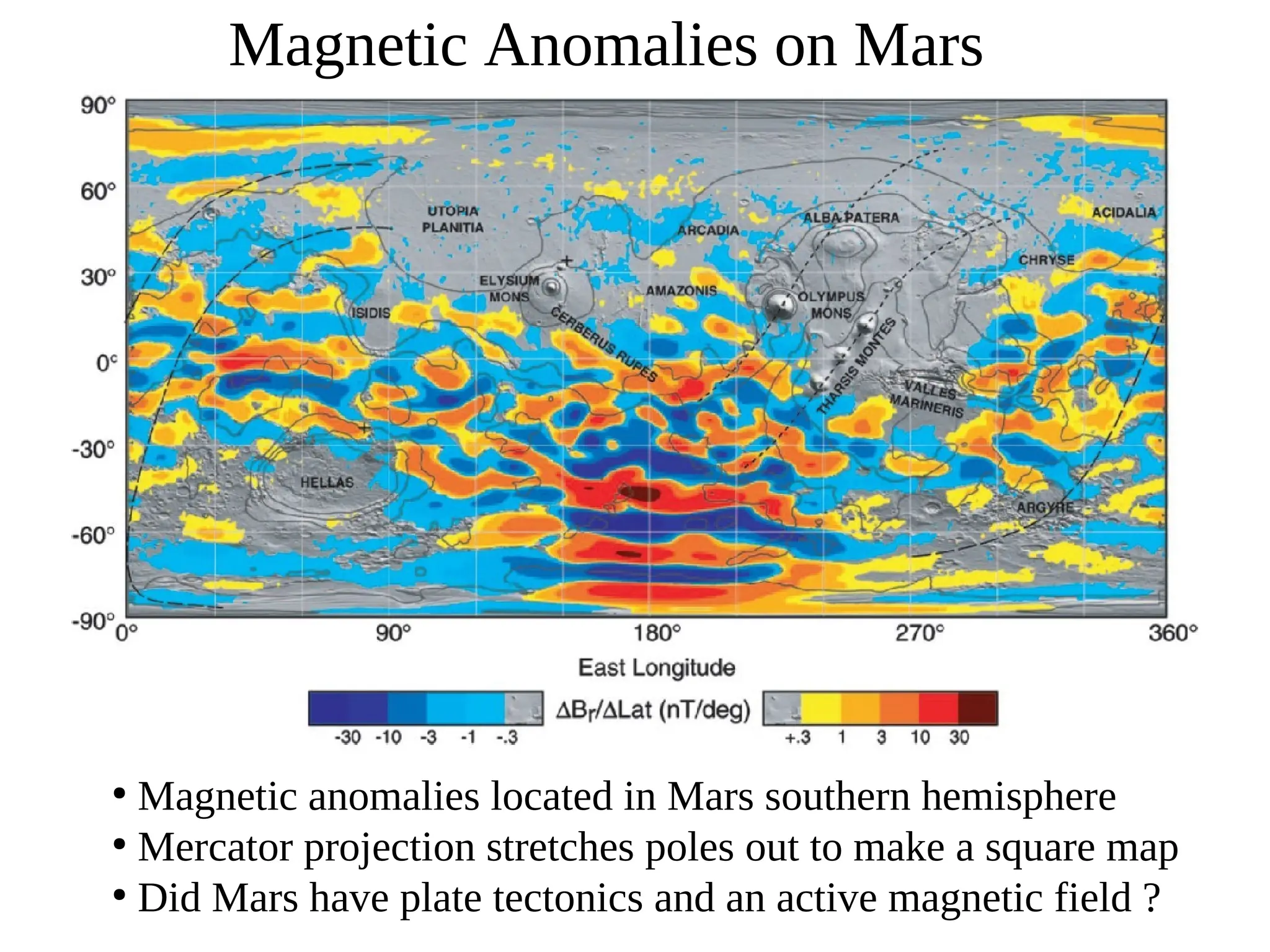
Magnetic Anomalies onMars
●
Magnetic anomalies located in Mars southern hemisphere
●
Mercator projection stretches poles out to make a square map
●
Did Mars have plate tectonics and an active magnetic field ?
44.
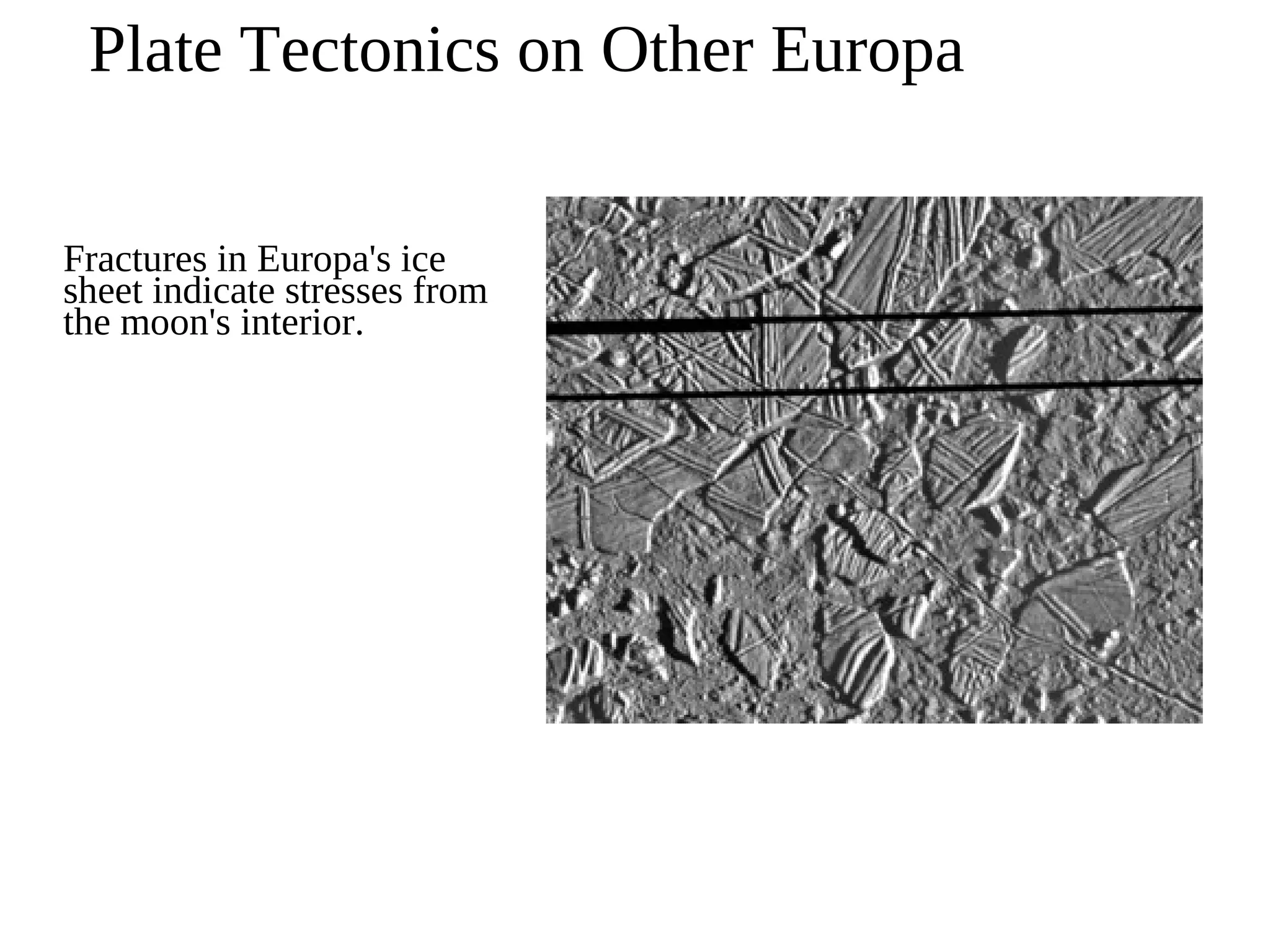
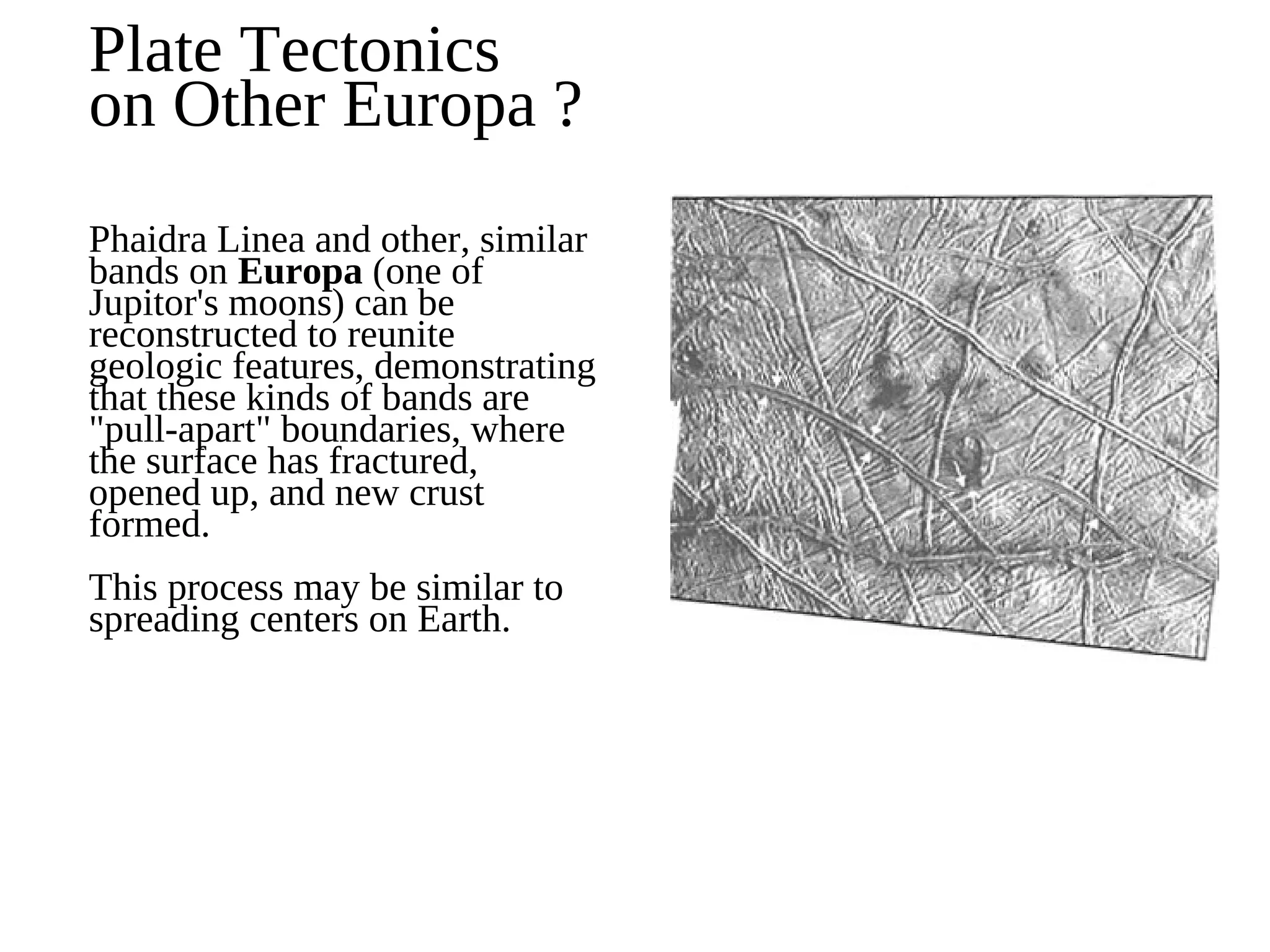
Plate Tectonics onOther Europa
Fractures in Europa's ice
sheet indicate stresses from
the moon's interior.
45.
Plate Tectonics
on OtherEuropa ?
Phaidra Linea and other, similar
bands on Europa (one of
Jupitor's moons) can be
reconstructed to reunite
geologic features, demonstrating
that these kinds of bands are
"pull-apart" boundaries, where
the surface has fractured,
opened up, and new crust
formed.
This process may be similar to
spreading centers on Earth.
46.
Mountain Belts andEarth’s Systems
Chapter 20
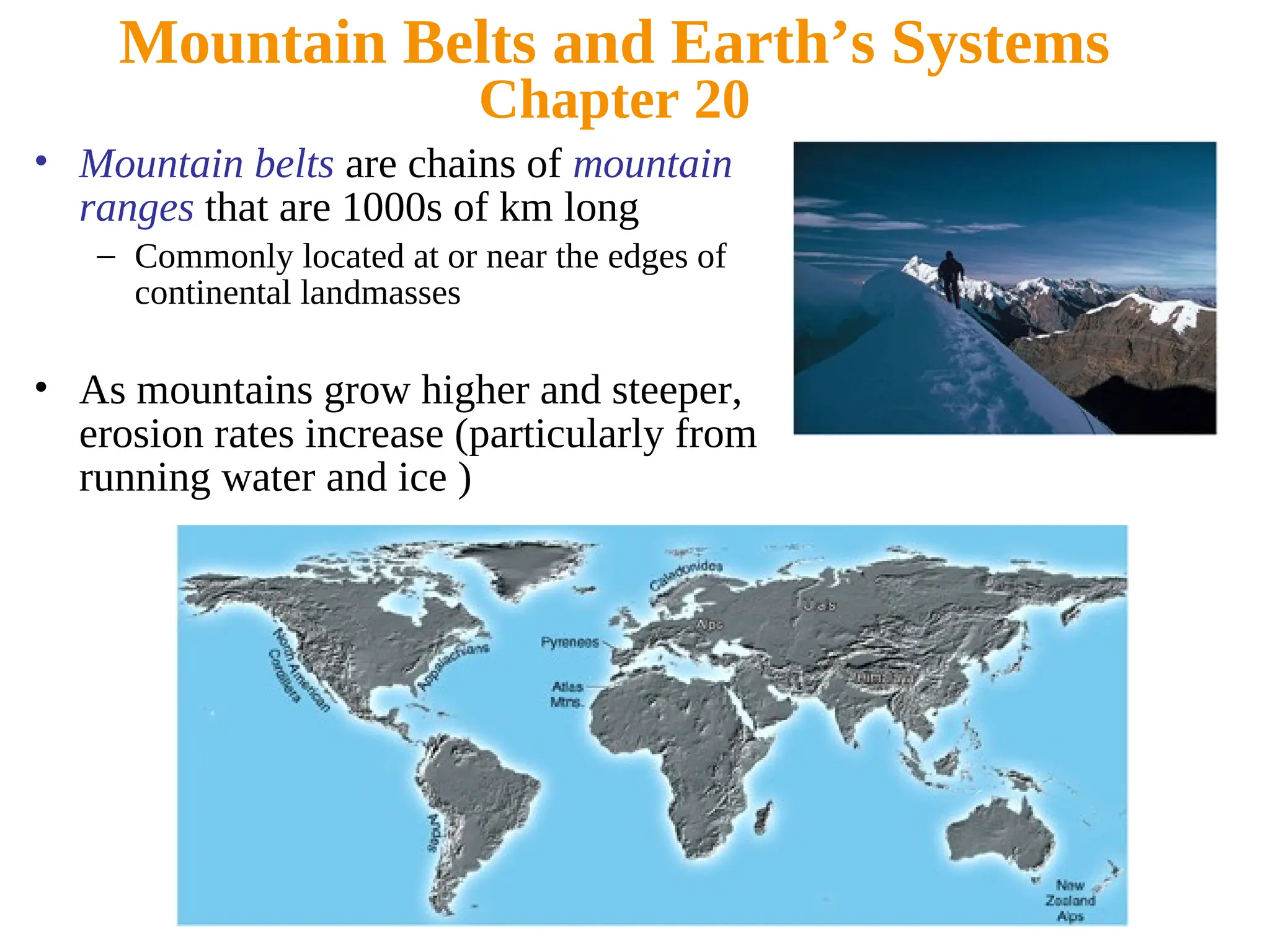
• Mountain belts are chains of mountain
ranges that are 1000s of km long
– Commonly located at or near the edges of
continental landmasses
• As mountains grow higher and steeper,
erosion rates increase (particularly from
running water and ice )
47.
Characteristics of MountainBelts
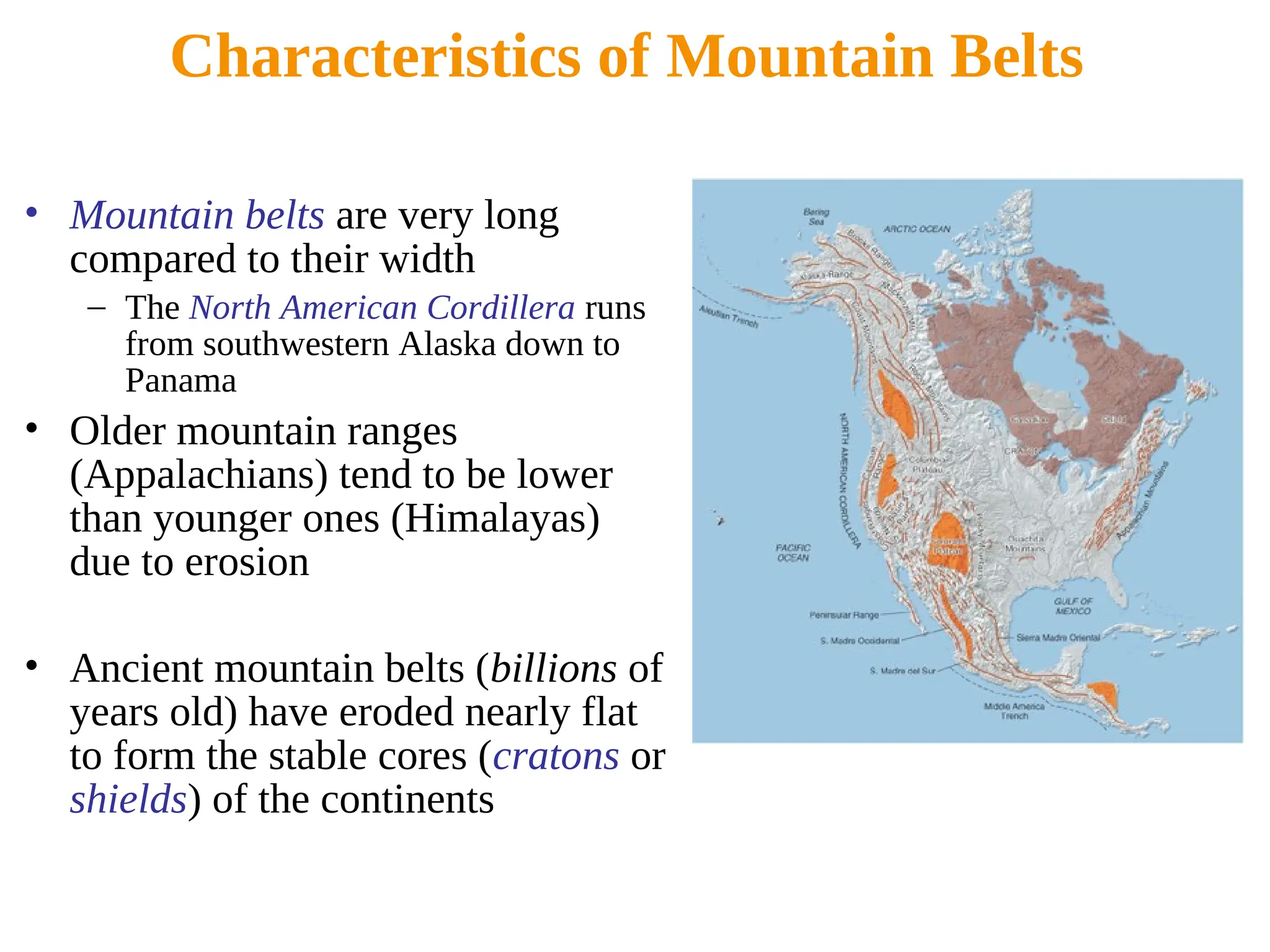
• Mountain belts are very long
compared to their width
– The North American Cordillera runs
from southwestern Alaska down to
Panama
• Older mountain ranges
(Appalachians) tend to be lower
than younger ones (Himalayas)
due to erosion
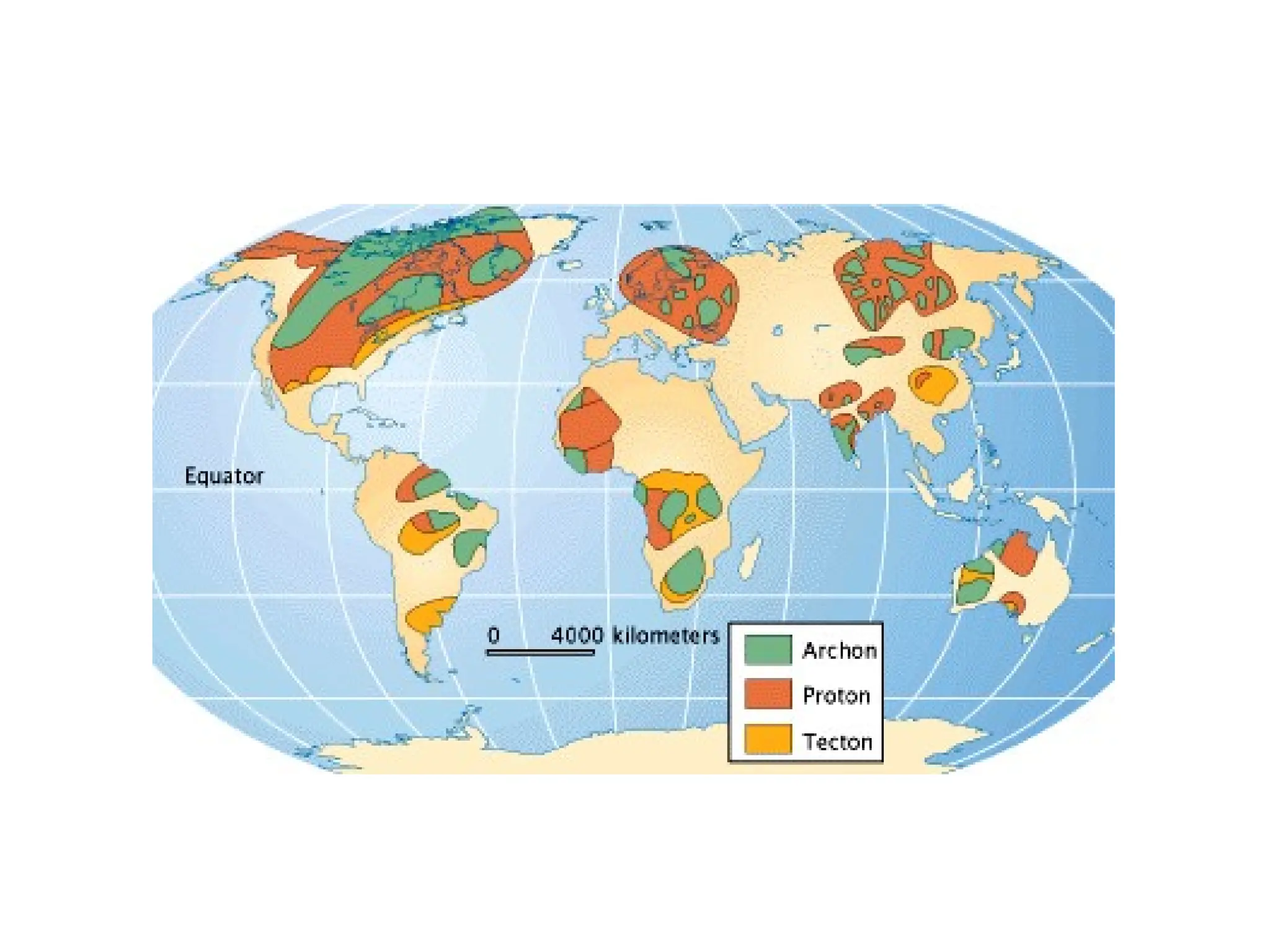
• Ancient mountain belts (billions of
years old) have eroded nearly flat
to form the stable cores (cratons or
shields) of the continents
49.
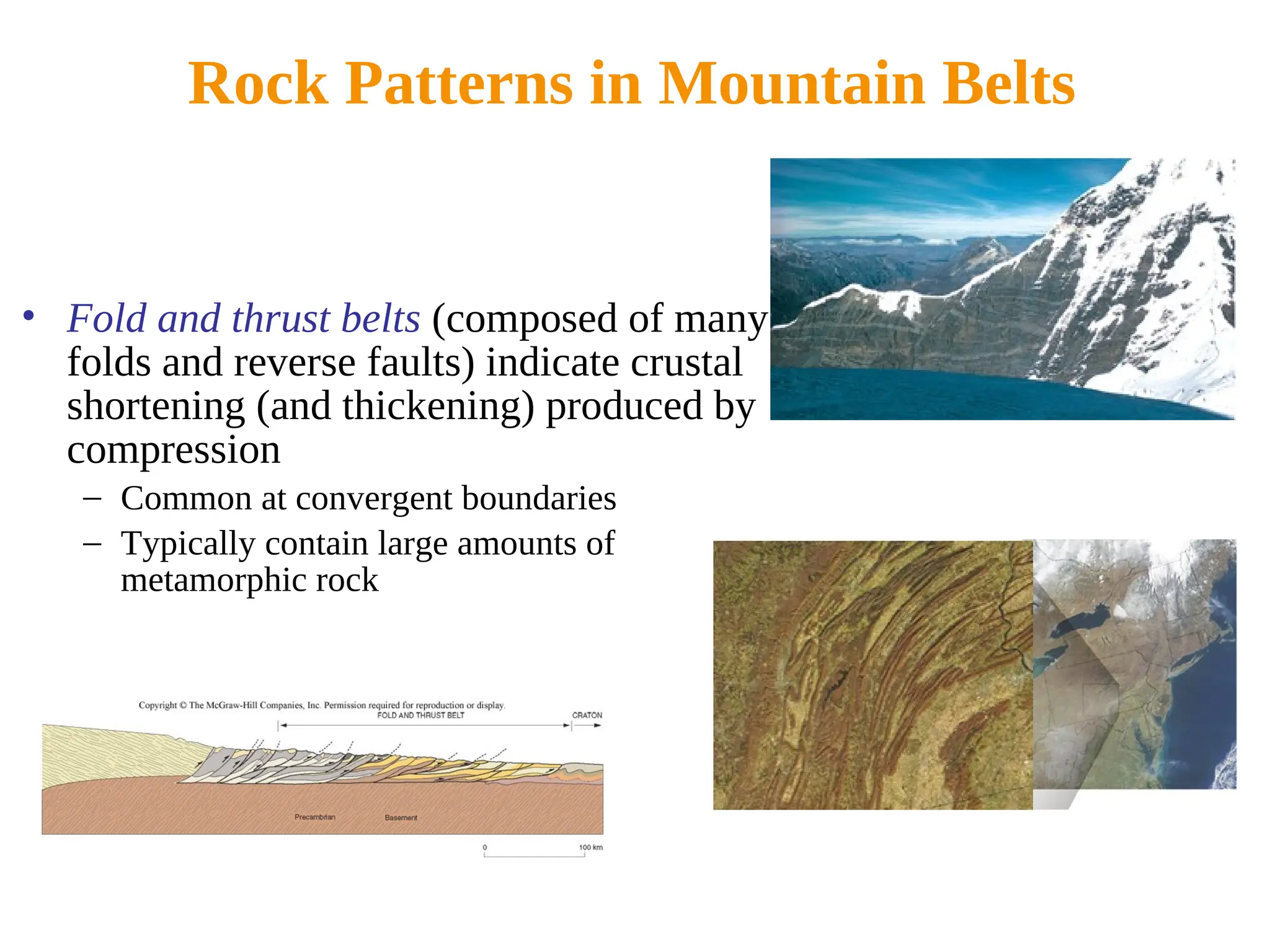
Rock Patterns inMountain Belts
• Fold and thrust belts (composed of many
folds and reverse faults) indicate crustal
shortening (and thickening) produced by
compression
– Common at convergent boundaries
– Typically contain large amounts of
metamorphic rock
50.
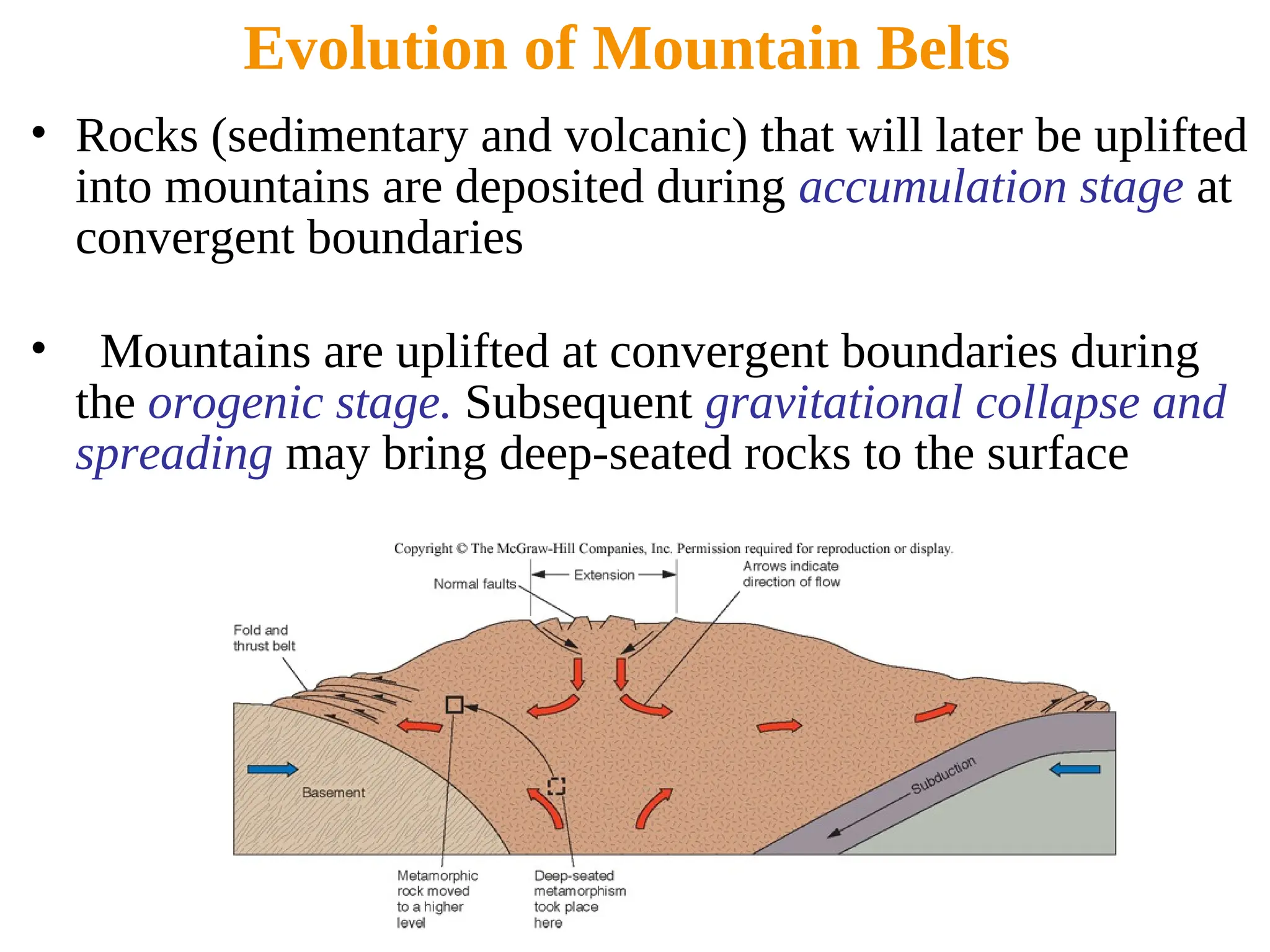
Evolution of MountainBelts
• Rocks (sedimentary and volcanic) that will later be uplifted
into mountains are deposited during accumulation stage at
convergent boundaries
• Mountains are uplifted at convergent boundaries during
the orogenic stage. Subsequent gravitational collapse and
spreading may bring deep-seated rocks to the surface
51.
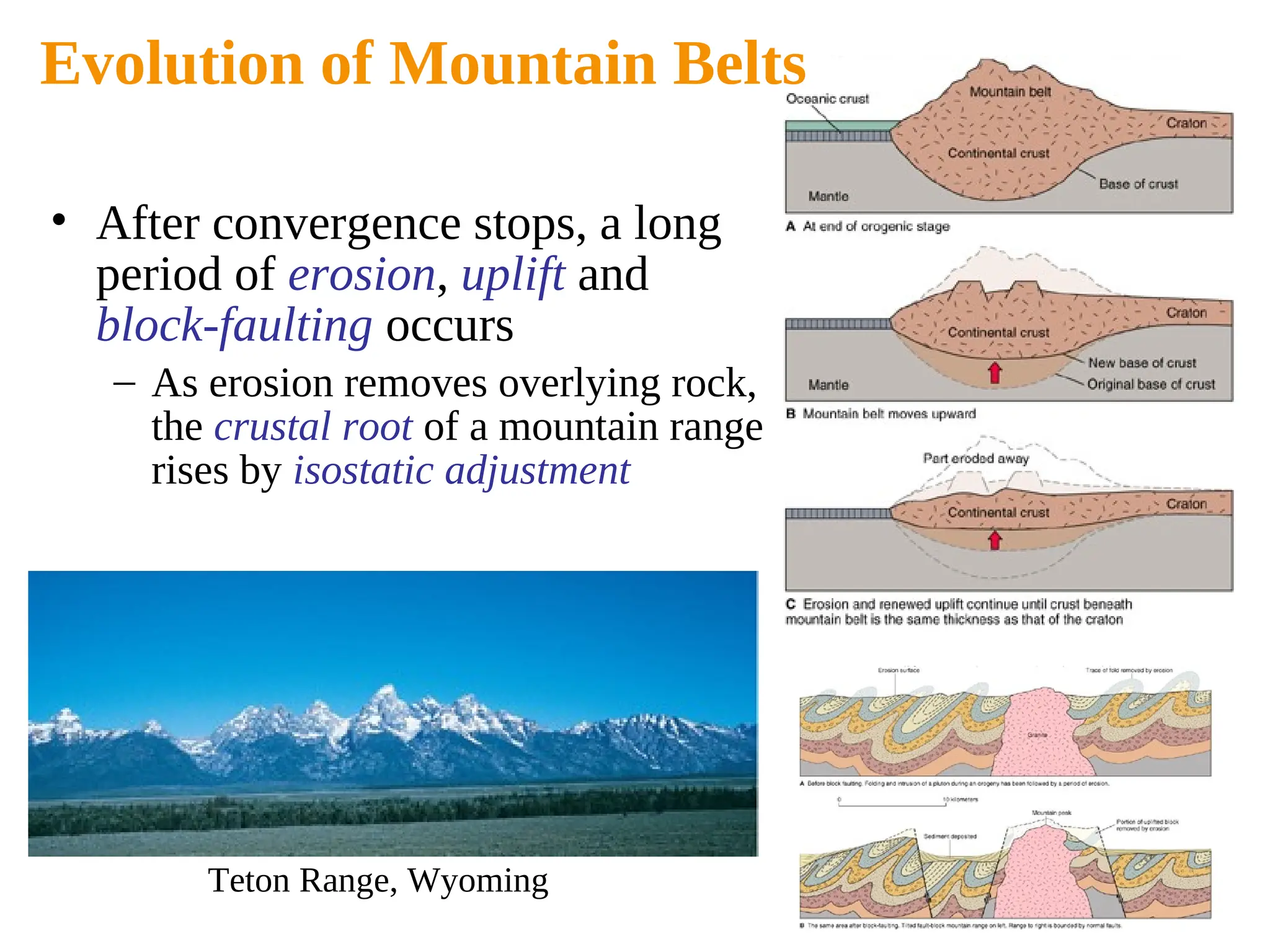
• After convergencestops, a long
period of erosion, uplift and
block-faulting occurs
– As erosion removes overlying rock,
the crustal root of a mountain range
rises by isostatic adjustment
Evolution of Mountain Belts
Teton Range, Wyoming
52.
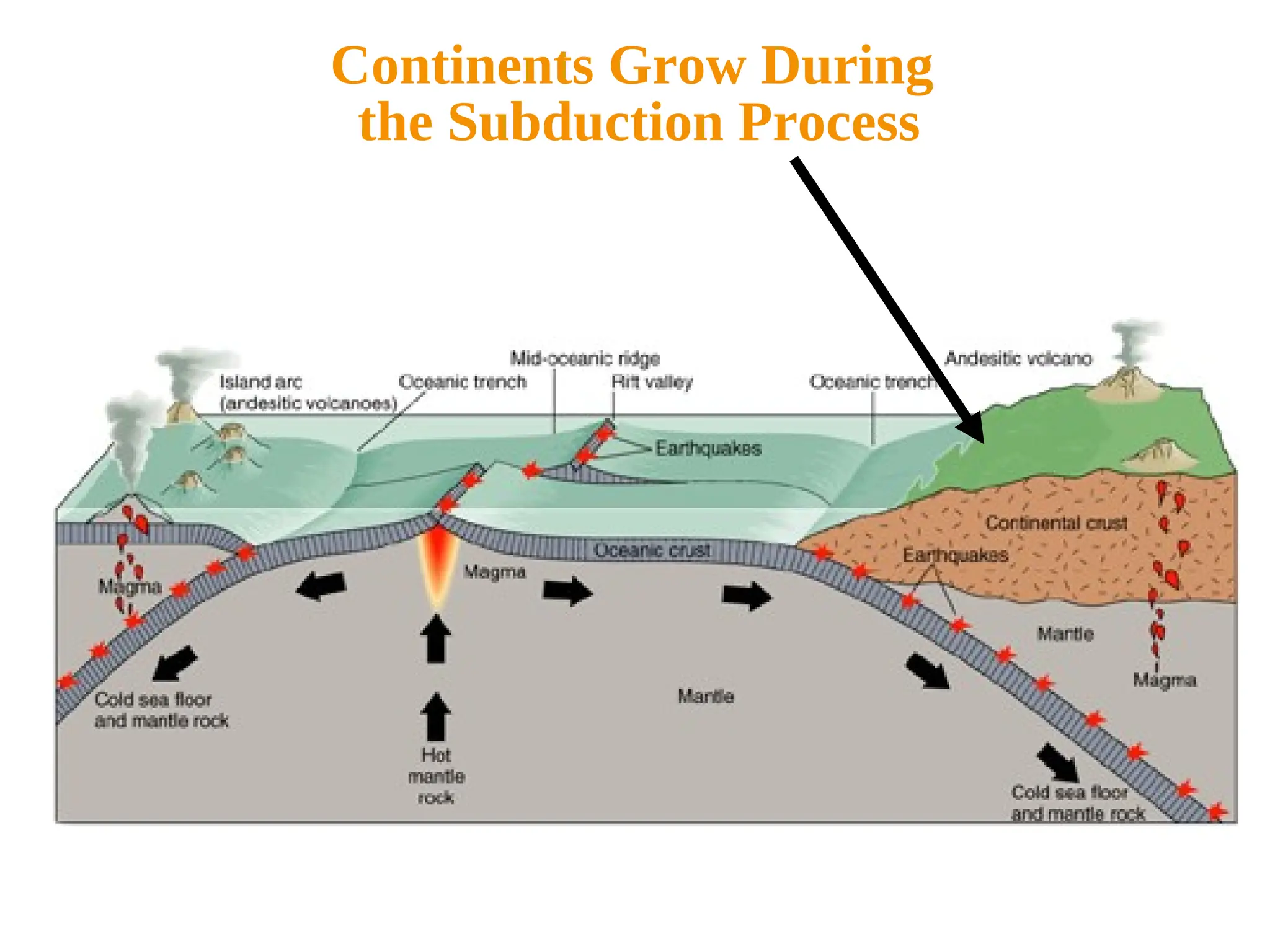
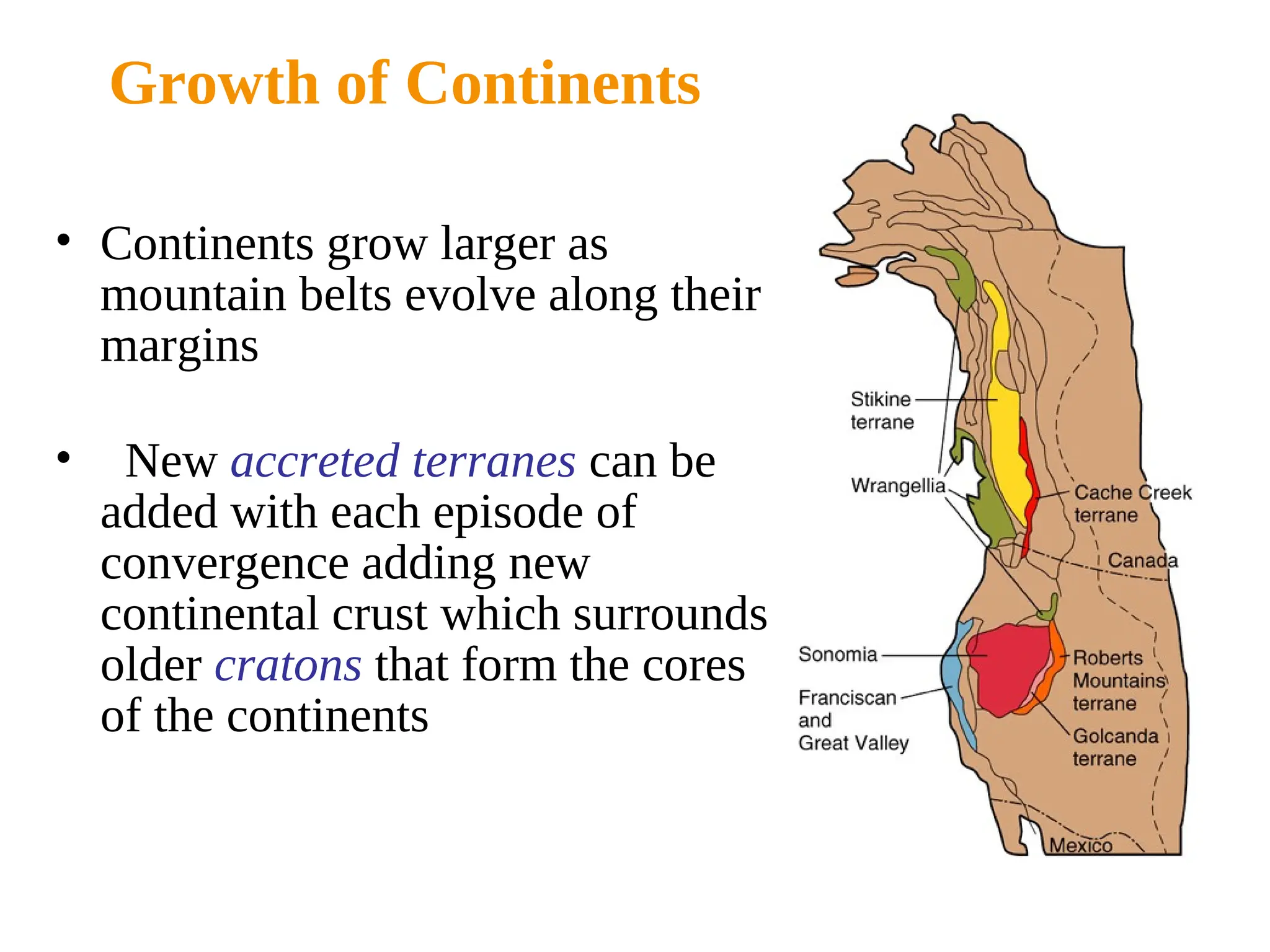
Growth of Continents
•Continents grow larger as
mountain belts evolve along their
margins
• New accreted terranes can be
added with each episode of
convergence adding new
continental crust which surrounds
older cratons that form the cores
of the continents
53.
“ Nothing hurriesgeology”
- Mark Twain
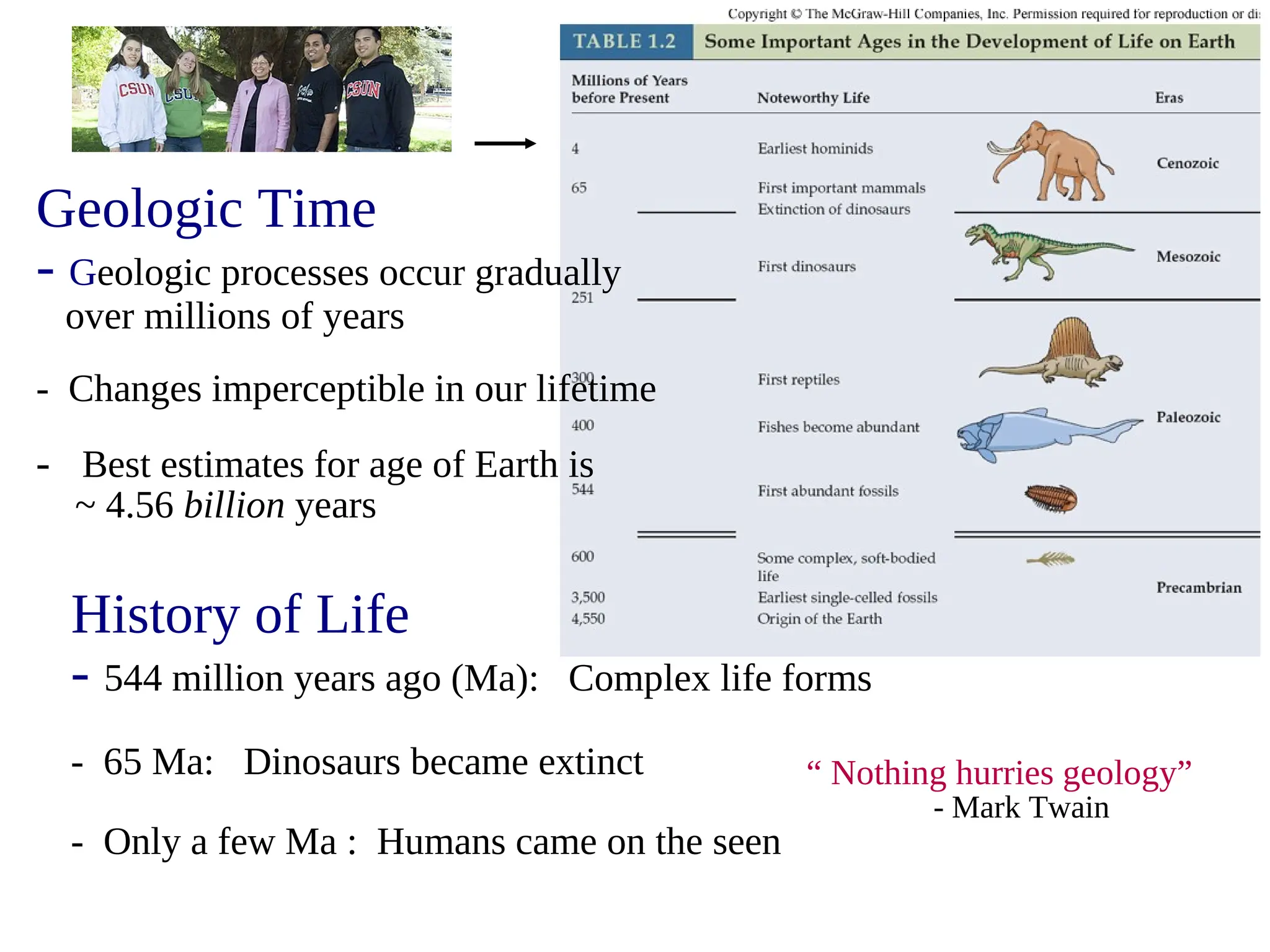
Geologic Time
- Geologic processes occur gradually
over millions of years
- Changes imperceptible in our lifetime
- Best estimates for age of Earth is
~ 4.56 billion years
History of Life
- 544 million years ago (Ma): Complex life forms
- 65 Ma: Dinosaurs became extinct
- Only a few Ma : Humans came on the seen


![Conservation of Mech Energy [Autosaved].ppt](https://cdn.slidesharecdn.com/ss_thumbnails/conservationofmechenergyautosaved-251110121538-36a25d24-thumbnail.jpg?width=640&height=640&fit=bounds)


