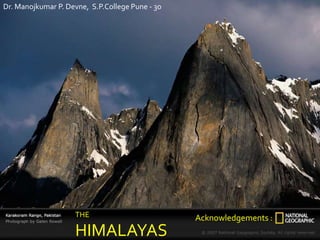
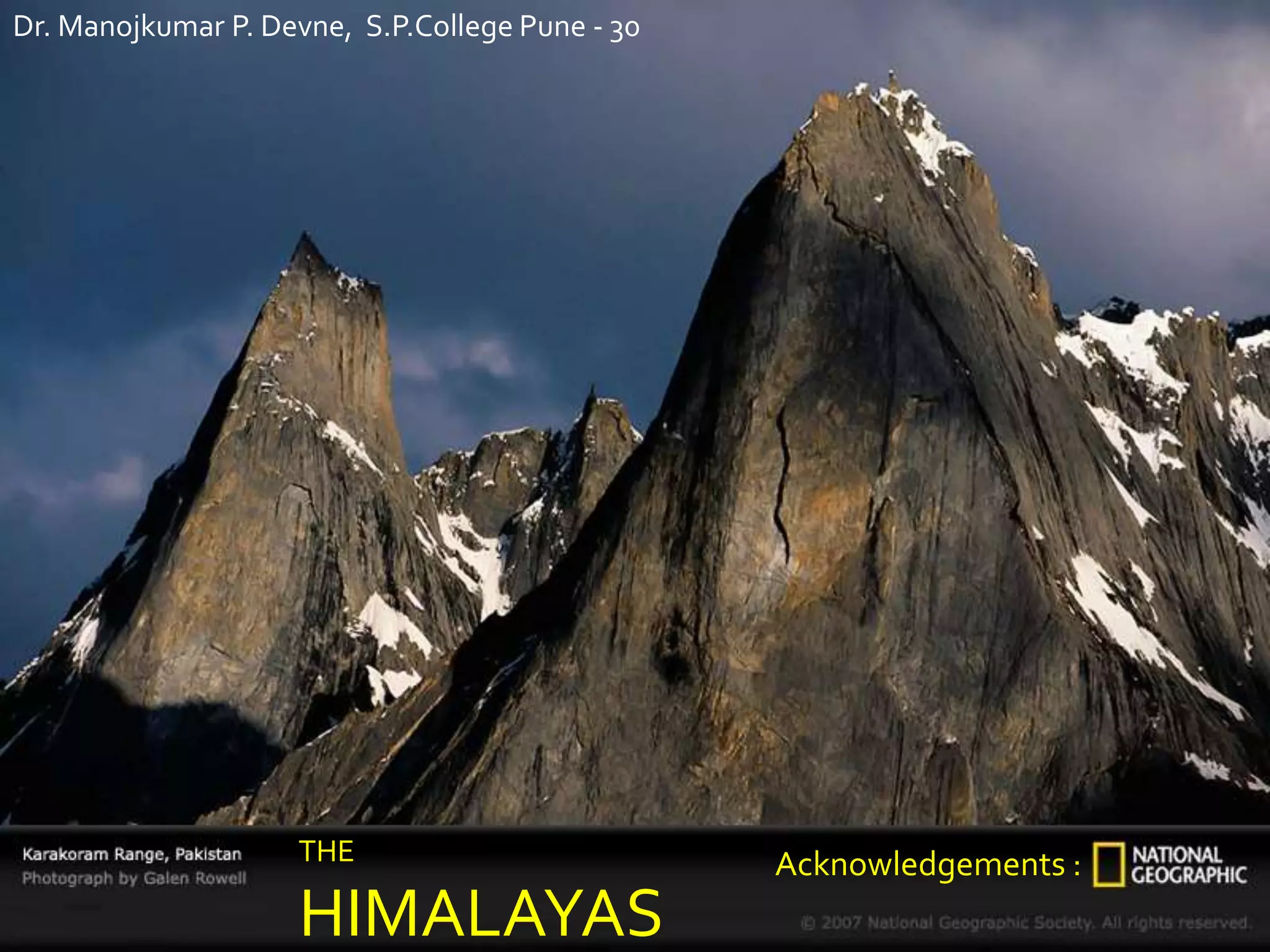
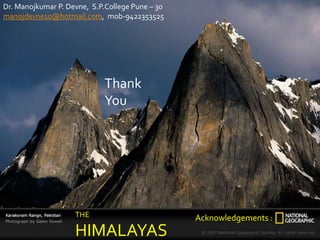
THE
HIMALAYAS
Acknowledgements :
Dr. Manojkumar P. Devne, S.P.College Pune - 30
The Himalayas : Basic Facts
 Called Himadri, Himvan, Himanchal
 Central Axial Range : 22 degrees of Longitude.
 Total Distance : 2400 Km
 Total Area : 5 lakh sq km
 Central Pivot : Pamir Plateau
 Southern Boundary : 300 m contour
 Northern Boundary : Obscure & merges with
edge ofTibetean Plateau
 Peaks : 8000(14), 7500(20), 7300(94) 6000(NC)
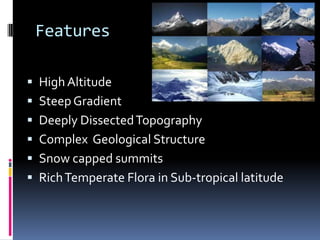
Features
 High Altitude
 SteepGradient
 Deeply DissectedTopography
 Complex Geological Structure
 Snow capped summits
 RichTemperate Flora in Sub-tropical latitude
topography
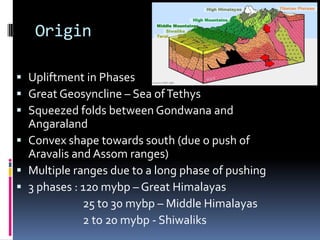
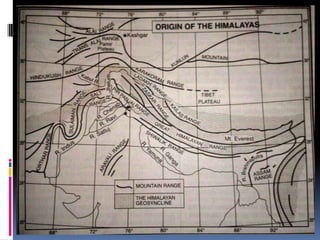
Origin
 Upliftment in Phases
 Great Geosyncline – Sea ofTethys
 Squeezed folds between Gondwana and
Angaraland
 Convex shape towards south (due o push of
Aravalis and Assom ranges)
 Multiple ranges due to a long phase of pushing
 3 phases : 120 mybp – Great Himalayas
25 to 30 mybp – Middle Himalayas
2 to 20 mybp - Shiwaliks
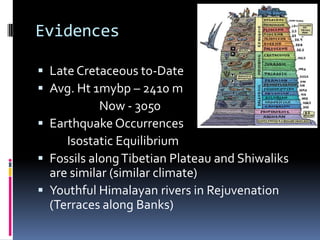
Evidences
 Late Cretaceous to-Date
 Avg. Ht 1mybp – 2410 m
Now - 3050
 Earthquake Occurrences
Isostatic Equilibrium
 Fossils alongTibetian Plateau and Shiwaliks
are similar (similar climate)
 Youthful Himalayan rivers in Rejuvenation
(Terraces along Banks)
Building
Process
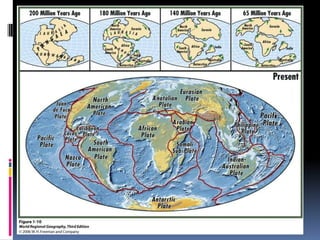
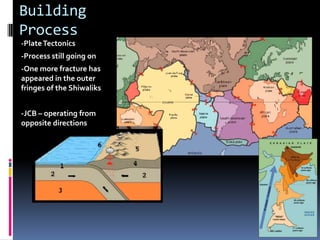
-PlateTectonics
-Process still going on
-One more fracture has
appeared in the outer
fringes of the Shiwaliks
-JCB – operating from
opposite directions
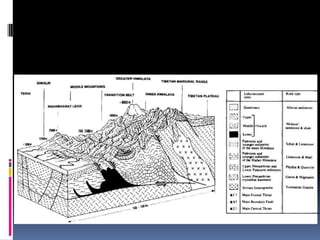
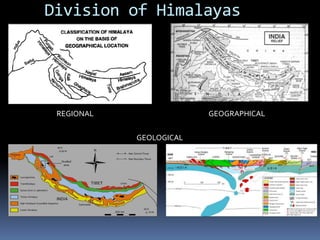
Division of Himalayas
REGIONAL GEOGRAPHICAL
GEOLOGICAL
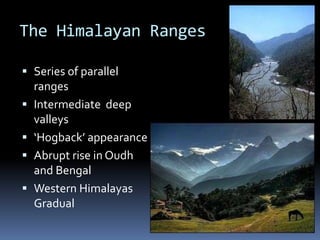
The Himalayan Ranges
 Series of parallel
ranges
 Intermediate deep
valleys
 ‘Hogback’ appearance
 Abrupt rise in Oudh
and Bengal
 Western Himalayas
Gradual
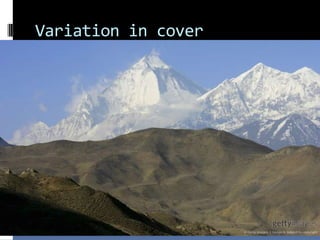
Variation in cover
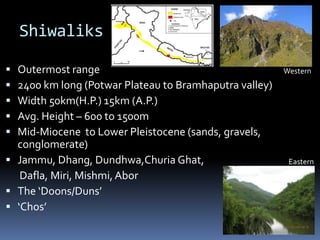
Shiwaliks
 Outermost range
 2400 km long (Potwar Plateau to Bramhaputra valley)
 Width 50km(H.P.) 15km (A.P.)
 Avg. Height – 600 to 1500m
 Mid-Miocene to Lower Pleistocene (sands, gravels,
conglomerate)
 Jammu, Dhang, Dundhwa,Churia Ghat,
Dafla, Miri, Mishmi, Abor
 The ‘Doons/Duns’
 ‘Chos’
Western
Eastern
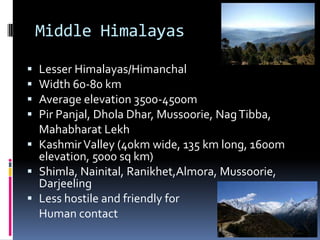
Middle Himalayas
 Lesser Himalayas/Himanchal
 Width 60-80 km
 Average elevation 3500-4500m
 Pir Panjal, Dhola Dhar, Mussoorie, NagTibba,
Mahabharat Lekh
 KashmirValley (40km wide, 135 km long, 1600m
elevation, 5000 sq km)
 Shimla, Nainital, Ranikhet,Almora, Mussoorie,
Darjeeling
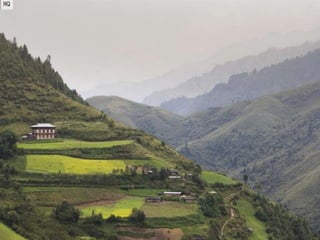
 Less hostile and friendly for
Human contact
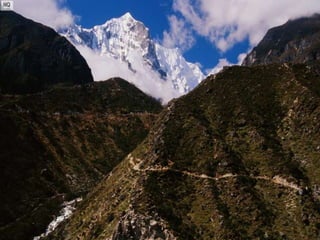
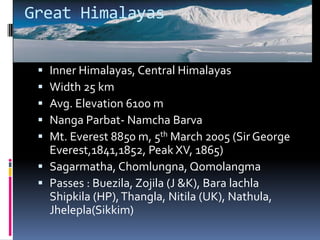
Great Himalayas
 Inner Himalayas, Central Himalayas
 Width 25 km
 Avg. Elevation 6100 m
 Nanga Parbat- Namcha Barva
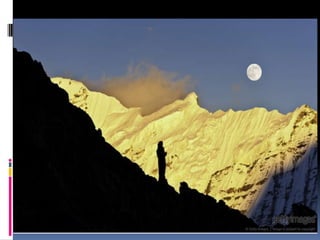
 Mt. Everest 8850 m, 5th March 2005 (Sir George
Everest,1841,1852, Peak XV, 1865)
 Sagarmatha, Chomlungna, Qomolangma
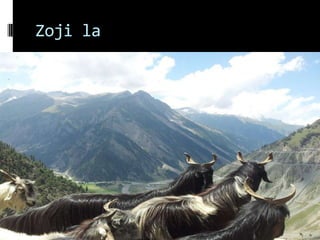
 Passes : Buezila, Zojila (J &K), Bara lachla
Shipkila (HP),Thangla, Nitila (UK), Nathula,
Jhelepla(Sikkim)
Zoji la
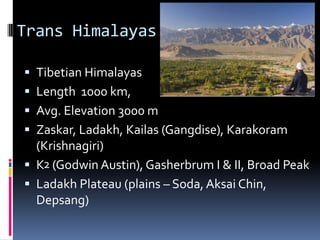
Trans Himalayas -
 Tibetian Himalayas
 Length 1000 km,
 Avg. Elevation 3000 m
 Zaskar, Ladakh, Kailas (Gangdise), Karakoram
(Krishnagiri)
 K (Godwin Austin), Gasherbrum I & II, Broad Peak
 Ladakh Plateau (plains – Soda, Aksai Chin,
Depsang)
2
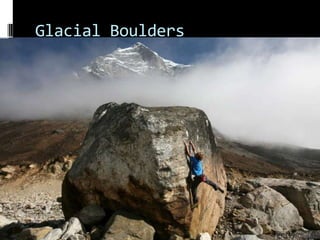
Glacial Boulders
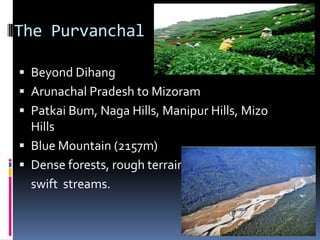
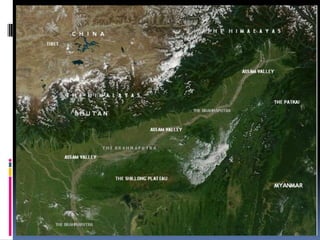
The Purvanchal
 Beyond Dihang
 Arunachal Pradesh to Mizoram
 Patkai Bum, Naga Hills, Manipur Hills, Mizo
Hills
 Blue Mountain (2157m)
 Dense forests, rough terrain,
swift streams.
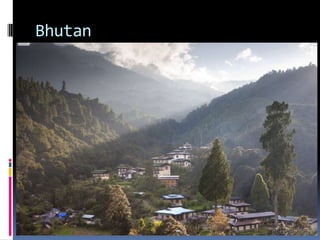
Bhutan
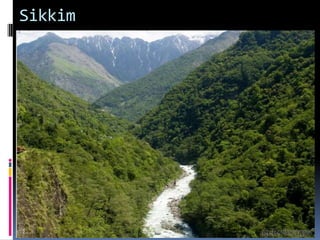
Sikkim
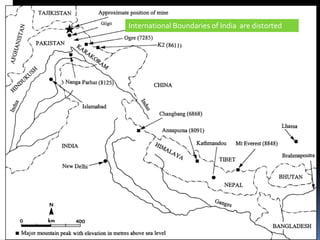
International Boundaries of India are distorted
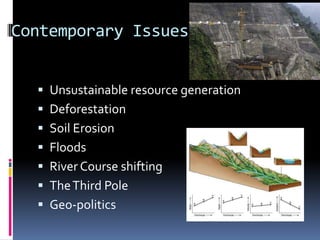
Contemporary Issues
 Unsustainable resource generation
 Deforestation
 Soil Erosion
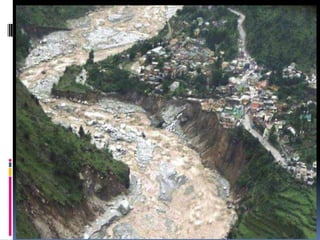
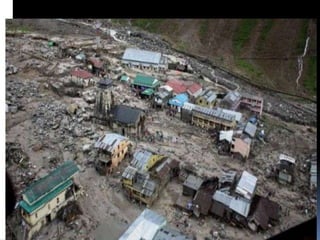
 Floods
 River Course shifting
 TheThird Pole
 Geo-politics
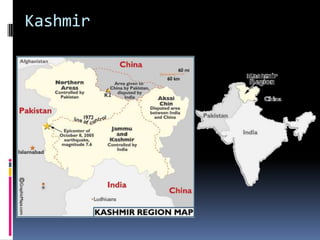
Kashmir
THE
HIMALAYAS
Acknowledgements :
Dr. Manojkumar P. Devne, S.P.College Pune – 30
manojdevne10@hotmail.com, mob-9422353525
Thank
You

Himalayas Quick Review - A brief but comprehensive presentation

  • 1.
    THE HIMALAYAS Acknowledgements : Dr. ManojkumarP. Devne, S.P.College Pune - 30
  • 2.
    The Himalayas :Basic Facts  Called Himadri, Himvan, Himanchal  Central Axial Range : 22 degrees of Longitude.  Total Distance : 2400 Km  Total Area : 5 lakh sq km  Central Pivot : Pamir Plateau  Southern Boundary : 300 m contour  Northern Boundary : Obscure & merges with edge ofTibetean Plateau  Peaks : 8000(14), 7500(20), 7300(94) 6000(NC)
  • 4.
    Features  High Altitude SteepGradient  Deeply DissectedTopography  Complex Geological Structure  Snow capped summits  RichTemperate Flora in Sub-tropical latitude
  • 5.
  • 6.
    Origin  Upliftment inPhases  Great Geosyncline – Sea ofTethys  Squeezed folds between Gondwana and Angaraland  Convex shape towards south (due o push of Aravalis and Assom ranges)  Multiple ranges due to a long phase of pushing  3 phases : 120 mybp – Great Himalayas 25 to 30 mybp – Middle Himalayas 2 to 20 mybp - Shiwaliks
  • 8.
    Evidences  Late Cretaceousto-Date  Avg. Ht 1mybp – 2410 m Now - 3050  Earthquake Occurrences Isostatic Equilibrium  Fossils alongTibetian Plateau and Shiwaliks are similar (similar climate)  Youthful Himalayan rivers in Rejuvenation (Terraces along Banks)
  • 10.
    Building Process -PlateTectonics -Process still goingon -One more fracture has appeared in the outer fringes of the Shiwaliks -JCB – operating from opposite directions
  • 12.
    Division of Himalayas REGIONALGEOGRAPHICAL GEOLOGICAL
  • 13.
    The Himalayan Ranges Series of parallel ranges  Intermediate deep valleys  ‘Hogback’ appearance  Abrupt rise in Oudh and Bengal  Western Himalayas Gradual
  • 14.
  • 15.
    Shiwaliks  Outermost range 2400 km long (Potwar Plateau to Bramhaputra valley)  Width 50km(H.P.) 15km (A.P.)  Avg. Height – 600 to 1500m  Mid-Miocene to Lower Pleistocene (sands, gravels, conglomerate)  Jammu, Dhang, Dundhwa,Churia Ghat, Dafla, Miri, Mishmi, Abor  The ‘Doons/Duns’  ‘Chos’ Western Eastern
  • 17.
    Middle Himalayas  LesserHimalayas/Himanchal  Width 60-80 km  Average elevation 3500-4500m  Pir Panjal, Dhola Dhar, Mussoorie, NagTibba, Mahabharat Lekh  KashmirValley (40km wide, 135 km long, 1600m elevation, 5000 sq km)  Shimla, Nainital, Ranikhet,Almora, Mussoorie, Darjeeling  Less hostile and friendly for Human contact
  • 20.
    Great Himalayas  InnerHimalayas, Central Himalayas  Width 25 km  Avg. Elevation 6100 m  Nanga Parbat- Namcha Barva  Mt. Everest 8850 m, 5th March 2005 (Sir George Everest,1841,1852, Peak XV, 1865)  Sagarmatha, Chomlungna, Qomolangma  Passes : Buezila, Zojila (J &K), Bara lachla Shipkila (HP),Thangla, Nitila (UK), Nathula, Jhelepla(Sikkim)
  • 21.
  • 23.
    Trans Himalayas - Tibetian Himalayas  Length 1000 km,  Avg. Elevation 3000 m  Zaskar, Ladakh, Kailas (Gangdise), Karakoram (Krishnagiri)  K (Godwin Austin), Gasherbrum I & II, Broad Peak  Ladakh Plateau (plains – Soda, Aksai Chin, Depsang) 2
  • 24.
  • 28.
    The Purvanchal  BeyondDihang  Arunachal Pradesh to Mizoram  Patkai Bum, Naga Hills, Manipur Hills, Mizo Hills  Blue Mountain (2157m)  Dense forests, rough terrain, swift streams.
  • 30.
  • 31.
  • 32.
    International Boundaries ofIndia are distorted
  • 33.
    Contemporary Issues  Unsustainableresource generation  Deforestation  Soil Erosion  Floods  River Course shifting  TheThird Pole  Geo-politics
  • 37.
  • 39.
    THE HIMALAYAS Acknowledgements : Dr. ManojkumarP. Devne, S.P.College Pune – 30 manojdevne10@hotmail.com, mob-9422353525 Thank You