Neonatal hypoxic-ischemic encephalopathy (HIE) Xin Yue PEDIATRIC DPT. GENERAL HOSPITAL  TIANJIN MEDICAL UNIVERSITY
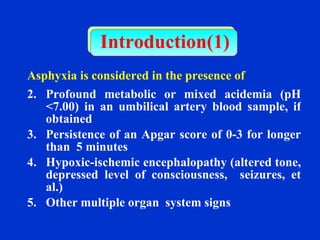
Introduction(1) Asphyxia is considered in the presence of   Profound metabolic or mixed acidemia (pH <7.00) in an umbilical artery blood sample, if obtained Persistence of an Apgar score of 0-3 for longer than  5 minutes Hypoxic-ischemic encephalopathy (altered tone, depressed level of consciousness,  seizures, et al.)  Other multiple organ  system signs
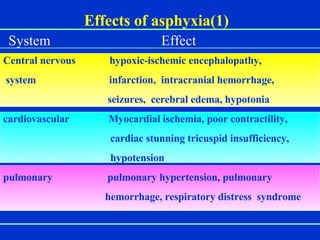
Effects of asphyxia(1) System  Effect Central nervous  hypoxic-ischemic encephalopathy, system  infarction,  intracranial hemorrhage,  seizures,  cerebral edema, hypotonia cardiovascular  Myocardial ischemia, poor contractility, cardiac stunning tricuspid insufficiency, hypotension pulmonary  pulmonary hypertension, pulmonary  hemorrhage, respiratory distress  syndrome
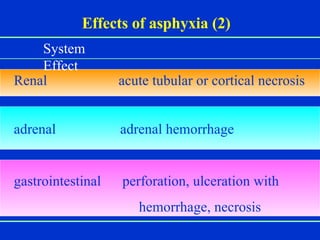
Effects of asphyxia (2) System  Effect necrosis Renal  acute tubular or cortical necrosis adrenal  adrenal hemorrhage gastrointestinal  perforation, ulceration with  hemorrhage, necrosis
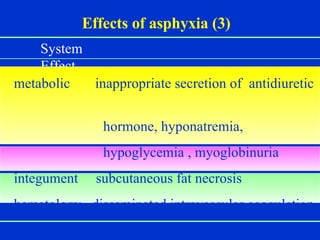
Effects of asphyxia (3) System  Effect metabolic  inappropriate secretion of  antidiuretic  hormone, hyponatremia, hypoglycemia , myoglobinuria integument  subcutaneous fat necrosis hematology  disseminated intravascular coagulation
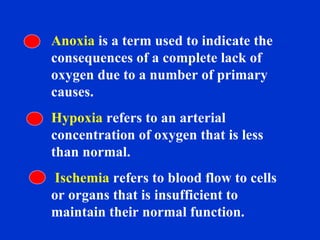
Anoxia  is a term used to indicate the consequences of a complete lack of oxygen due to a number of primary causes. Hypoxia  refers to an arterial concentration of oxygen that is less than normal. Ischemia  refers to blood flow to cells or organs that is insufficient to maintain their normal function.
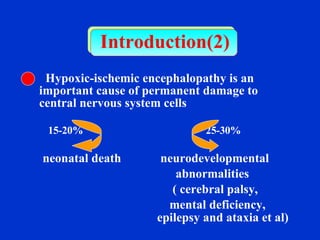
Introduction(2) Hypoxic-ischemic encephalopathy is an important cause of permanent damage to central nervous system cells 15-20%  25-30% neonatal death   neurodevelopmental  abnormalities  ( cerebral palsy,  mental deficiency,  epilepsy and ataxia et al)
Cerebral palsy and ataxia images
 
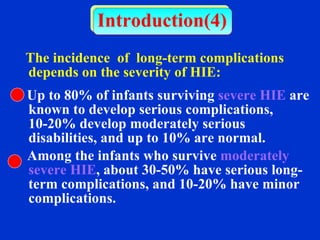
Introduction(4) The incidence  of  long-term complications depends on the severity of HIE: Up to 80% of infants surviving  severe HIE  are known to develop serious complications, 10-20% develop moderately serious disabilities, and up to 10% are normal.  Among the infants who survive  moderately severe HIE , about 30-50% have serious long-term complications, and 10-20% have minor complications.
Infants with  mild HIE  tend to be free from serious CNS complications.  Even in the absence of obvious neurologic deficits in the newborn period, there may be long-term functional impairments. Of school-aged children with a history of moderately severe HIE, 15-20% had significant learning difficulties, even in the absence of obvious signs of brain injury.
Introduction(5) Death and disability may sometime be prevented through symptomatic treatment with oxygen or artificial respiration and the correction of associated multiorgan system dysfunction .
Inadequate oxygenation of maternal blood as a result of hypoventilation:   anesthesia, cyanotic heart disease, respiratory failure, carbon monoxide poisoning Low maternal blood pressure:   a complication from spinal anesthesia, compression of the vena cava and aorta by  gravid uterus Inadequate relaxation of the uterus to permit placental filling as a result of uterine tetany:   excessive administration of oxytocin Etiology(1) Fetal hypoxia
Premature separation of the placenta Impedance to the circulation of blood through the umbilical cord:  compression or knotting of the cord Uterine vasoconstriction:  cocaine Placental insufficiency :   toxemia, postmaturity
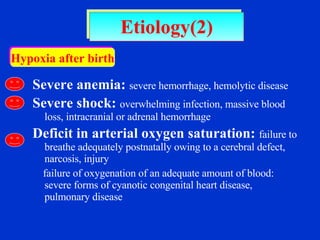
Severe anemia:   severe hemorrhage, hemolytic disease Severe shock:   overwhelming infection, massive blood loss, intracranial or adrenal hemorrhage Deficit in arterial oxygen saturation:   failure to breathe adequately postnatally owing to a cerebral defect, narcosis, injury  failure of oxygenation of an adequate amount of blood: severe forms of cyanotic congenital heart disease, pulmonary disease Etiology(2) Hypoxia after birth
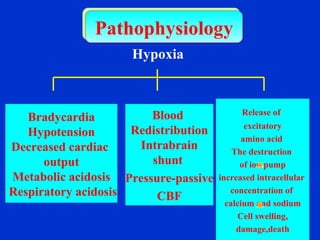
Hypoxia Fig. Bradycardia Hypotension Decreased cardiac  output Metabolic acidosis Respiratory acidosis Release of   excitatory amino acid  The destruction  of ion pump increased intracellular  concentration of  calcium and sodium Cell swelling, damage,death Pathophysiology Blood  Redistribution Intrabrain shunt  Pressure-passive CBF
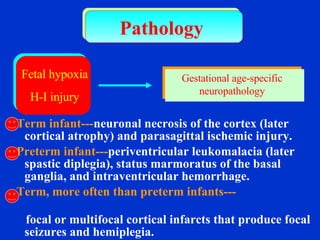
Term infant--- neuronal necrosis of the cortex (later cortical atrophy) and parasagittal ischemic injury. Preterm infant--- periventricular leukomalacia (later spastic diplegia), status marmoratus of the basal ganglia, and intraventricular hemorrhage. Term, more often than preterm infants---   focal or multifocal cortical infarcts that produce focal seizures and hemiplegia. Fig. Pathology  Fetal hypoxia H-I injury Gestational age-specific neuropathology
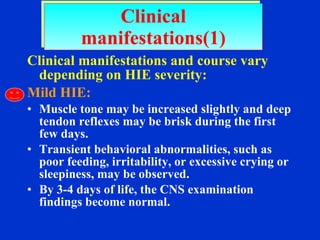
Clinical manifestations and course vary depending on HIE severity: Mild HIE: Muscle tone may be increased slightly and deep tendon reflexes may be brisk during the first few days. Transient behavioral abnormalities, such as poor feeding, irritability, or excessive crying or sleepiness, may be observed. By 3-4 days of life, the CNS examination findings become normal. Clinical manifestations(1)
Moderately severe HIE: The infant is lethargic, with significant hypotonia and diminished deep tendon reflexes.  The grasping, moro, and sucking reflexes may be sluggish or absent.  The infant may experience occasional periods of apnea. Seizures may occur within the first 24 hours of life Full recovery within 1-2 weeks is possible and is associated with a better long-term outcome. Clinical manifestations(2)
An initial period of well-being may be followed by sudden deterioration, suggesting reperfusion injury; during this period, seizure intensity might increase. Severe HIE: Stupor or coma is typical. The infant may not respond to any physical stimulus.  Breathing may be irregular, and the infant often requires ventilatory support. Clinical manifestations(3)
Generalized hypotonia and depressed deep tendon reflexes are common.  Neonatal reflexes (eg, sucking, swallowing, grasping, moro) are absent.  Disturbances of ocular motion, such as a skewed deviation of the eyes, nystagmus, bobbing may be revealed by cranial nerve examination. Pupils may be dilated, fixed, or poorly reactive to light. Clinical manifestations(4)
Seizures occur early and often and may be  initially resistant to conventional treatments. The seizures are usually generalized, and their frequency may increase during the 2-3 days after onset, correlating with the phase of reperfusion injury.  As the injury progresses, seizures subside and the EEG becomes isoelectric or shows a burst suppression pattern. At that time, wakefulness may deteriorate further, and the fontanelle may bulge, suggesting increasing cerebral edema. Clinical manifestations(5)
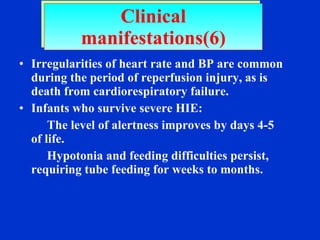
Irregularities of heart rate and BP are common during the period of reperfusion injury, as is death from cardiorespiratory failure. Infants who survive severe HIE: The level of alertness improves by days 4-5 of life.  Hypotonia and feeding difficulties persist, requiring tube feeding for weeks to months. Clinical manifestations(6)
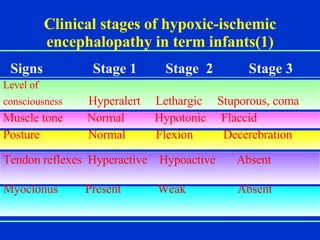
Clinical stages of hypoxic-ischemic encephalopathy in term infants(1) Signs  Stage 1  Stage  2  Stage 3 Level of consciousness  Hyperalert  Lethargic  Stuporous, coma Muscle tone  Normal  Hypotonic  Flaccid  Posture  Normal  Flexion  Decerebration Tendon reflexes  Hyperactive  Hypoactive  Absent Myoclonus  Present  Weak  Absent
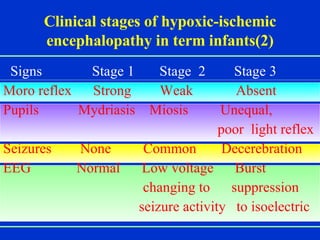
Clinical stages of hypoxic-ischemic encephalopathy in term infants(2) Signs  Stage 1  Stage  2  Stage 3 Moro reflex  Strong  Weak  Absent Pupils  Mydriasis  Miosis  Unequal,  poor  light reflex Seizures  None  Common  Decerebration EEG   Normal  Low voltage  Burst changing to  suppression seizure activity  to isoelectric
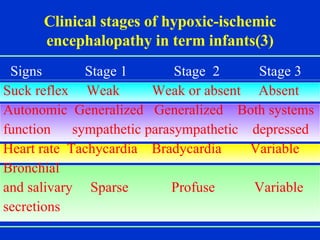
Clinical stages of hypoxic-ischemic encephalopathy in term infants(3) Signs  Stage 1  Stage  2  Stage 3 Suck reflex  Weak  Weak or absent  Absent Autonomic  Generalized  Generalized  Both systems function  sympathetic parasympathetic  depressed  Heart rate   Tachycardia  Bradycardia  Variable Bronchial  and salivary  Sparse  Profuse  Variable secretions  poor  light reflex Seizures  None  Common  Decerebration EEG   Normal  Low voltage  Burst changing to  suppression seizure activity  to isoelectric
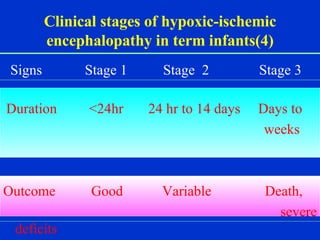
Clinical stages of hypoxic-ischemic encephalopathy in term infants(4) Signs  Stage 1  Stage  2  Stage 3 Duration  <24hr  24 hr to 14 days  Days to  weeks Outcome  Good  Variable  Death,  severe deficits
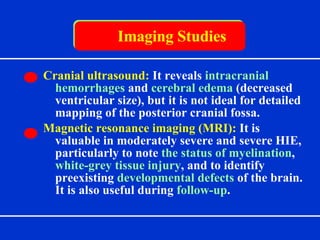
Imaging Studies Cranial ultrasound:  It reveals  intracranial hemorrhages  and  cerebral edema  (decreased ventricular size), but it is not ideal for detailed mapping of the posterior cranial fossa. Magnetic resonance imaging (MRI):  It  is valuable in moderately severe and severe HIE, particularly to note  the status of myelination ,  white-grey tissue injury , and to identify preexisting  developmental defects  of the brain. It is also useful during  follow-up .
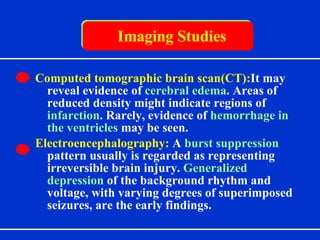
Imaging Studies Computed tomographic brain scan(CT): It  may reveal evidence of  cerebral edema . Areas of reduced density might indicate regions of  infarction . Rarely, evidence of  hemorrhage in the ventricles  may be seen. Electroencephalography:   A  burst suppression  pattern usually is regarded as representing irreversible brain injury.  Generalized depression  of the background rhythm and voltage, with varying degrees of superimposed seizures, are the early findings.
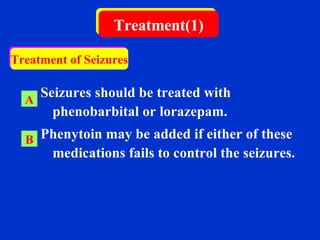
  Seizures should be treated with phenobarbital or lorazepam. Phenytoin may be added if either of these medications fails to control the seizures.   Treatment(1) A B Treatment of Seizures
  The elements of supportive care are as follows:   Supply adequate delivery of oxygen: maintain  PaO 2  , 80-100 mmHg; PaCO 2 , 35-40 mm Hg; and pH, 7.35-7.45. Maintain the mean BP above 35 mm Hg (for term infants).  Dopamine or dobutamine can be used to maintain adequate cardiac output.  Treatment(2) A B Supportive care
  Glucose should be administered to maintain a normal serum glucose, and  hyperglycemia should be avoided also. Correct respiratory and metabolic acidosis.  Modest fluid restriction should be maintained to avoid exacerbating cerebral edema. C D E Supportive care
  If clinical signs of increased intracranial pressure develop, mannitol should be used. Whether dexamethasone should be used is still controversial. Treatment(3) A B Treatment of Cerebral Edema Other New Therapies Oxygen free radical inhibitors and scavengers,  excitatory amino acid antagonists, and calcium channel blockers are currently under investigation.
  the following pointers may be useful: Lack of spontaneous respiratory effort within 20-30 minutes of birth is associated with almost uniform mortality. The presence of seizures is an ominous sign. The risk of poor neurological outcome is distinctly greater in such infants, particularly if seizures occur frequently and are difficult to control. Prognosis(1) A B prediction of long-term complications
  Abnormal clinical neurological findings persisting beyond the first 7-10 days of life usually indicate poor prognosis. Among these, abnormalities of muscle tone and posture (hypotonia, rigidity, weakness) should be carefully noted. Persistent feeding difficulties, which generally are due to abnormal tone of the muscles of sucking and swallowing, also suggest significant CNS damage. Prognosis(2) C D prediction of long-term complications
  Poor head growth during the postnatal period and the first year of life is a sensitive finding predicting higher frequency of neurological deficits. Others: A low Apgar score at 20 min, a marked decrease of cortical attenuation on CT, absent oculocephalic reflexes, et al are also associated with a poor prognosis. Prognosis(3) E prediction of long-term complications F
  Brain death following neonatal HIE is diagnosed by  the clinical findings of  coma  that is unresponsive to pain, auditory, or visual stimulation; apnea  with PCO 2  rising from 40 to over 60 mmHg; and absent  brain stem reflexes : pupil, oculocephalic, oculovestibular, corneal, sucking et al. These must occur in the absence of hypothermia, hypotension, and elevated levels of depressant drugs. Persistence of the clinical criteria for 2 days in term and 3 days in preterm infants predicts brain death in most asphyxiated newborns. Prognosis(4) A B C Brain death
  Consideration of withdrawal of life support should include discussions with the family, the health care team, and if there is disagreement, an ethics committee. The best interest of the infant involves judgments about the benefits and harm of continuing therapy and of avoiding continuing futile therapy Prognosis(5) Brain death
Keys to be remembered Asphyxia is considered in the presence of  The table about effects of asphyxia  The definition of anoxia, hypoxia and ischemia The table about the clinical stages of hypoxic-ischemic encephalopathy in term infants Imaging studies and Treatment
Thank  You  ! 5th Mar, 2009

Hie

  • 1.
    Neonatal hypoxic-ischemic encephalopathy(HIE) Xin Yue PEDIATRIC DPT. GENERAL HOSPITAL TIANJIN MEDICAL UNIVERSITY
  • 2.
    Introduction(1) Asphyxia isconsidered in the presence of Profound metabolic or mixed acidemia (pH <7.00) in an umbilical artery blood sample, if obtained Persistence of an Apgar score of 0-3 for longer than 5 minutes Hypoxic-ischemic encephalopathy (altered tone, depressed level of consciousness, seizures, et al.) Other multiple organ system signs
  • 3.
    Effects of asphyxia(1)System Effect Central nervous hypoxic-ischemic encephalopathy, system infarction, intracranial hemorrhage, seizures, cerebral edema, hypotonia cardiovascular Myocardial ischemia, poor contractility, cardiac stunning tricuspid insufficiency, hypotension pulmonary pulmonary hypertension, pulmonary hemorrhage, respiratory distress syndrome
  • 4.
    Effects of asphyxia(2) System Effect necrosis Renal acute tubular or cortical necrosis adrenal adrenal hemorrhage gastrointestinal perforation, ulceration with hemorrhage, necrosis
  • 5.
    Effects of asphyxia(3) System Effect metabolic inappropriate secretion of antidiuretic hormone, hyponatremia, hypoglycemia , myoglobinuria integument subcutaneous fat necrosis hematology disseminated intravascular coagulation
  • 6.
    Anoxia isa term used to indicate the consequences of a complete lack of oxygen due to a number of primary causes. Hypoxia refers to an arterial concentration of oxygen that is less than normal. Ischemia refers to blood flow to cells or organs that is insufficient to maintain their normal function.
  • 7.
    Introduction(2) Hypoxic-ischemic encephalopathyis an important cause of permanent damage to central nervous system cells 15-20% 25-30% neonatal death neurodevelopmental abnormalities ( cerebral palsy, mental deficiency, epilepsy and ataxia et al)
  • 8.
    Cerebral palsy andataxia images
  • 9.
  • 10.
    Introduction(4) The incidence of long-term complications depends on the severity of HIE: Up to 80% of infants surviving severe HIE are known to develop serious complications, 10-20% develop moderately serious disabilities, and up to 10% are normal. Among the infants who survive moderately severe HIE , about 30-50% have serious long-term complications, and 10-20% have minor complications.
  • 11.
    Infants with mild HIE tend to be free from serious CNS complications. Even in the absence of obvious neurologic deficits in the newborn period, there may be long-term functional impairments. Of school-aged children with a history of moderately severe HIE, 15-20% had significant learning difficulties, even in the absence of obvious signs of brain injury.
  • 12.
    Introduction(5) Death anddisability may sometime be prevented through symptomatic treatment with oxygen or artificial respiration and the correction of associated multiorgan system dysfunction .
  • 13.
    Inadequate oxygenation ofmaternal blood as a result of hypoventilation: anesthesia, cyanotic heart disease, respiratory failure, carbon monoxide poisoning Low maternal blood pressure: a complication from spinal anesthesia, compression of the vena cava and aorta by gravid uterus Inadequate relaxation of the uterus to permit placental filling as a result of uterine tetany: excessive administration of oxytocin Etiology(1) Fetal hypoxia
  • 14.
    Premature separation ofthe placenta Impedance to the circulation of blood through the umbilical cord: compression or knotting of the cord Uterine vasoconstriction: cocaine Placental insufficiency : toxemia, postmaturity
  • 15.
    Severe anemia: severe hemorrhage, hemolytic disease Severe shock: overwhelming infection, massive blood loss, intracranial or adrenal hemorrhage Deficit in arterial oxygen saturation: failure to breathe adequately postnatally owing to a cerebral defect, narcosis, injury failure of oxygenation of an adequate amount of blood: severe forms of cyanotic congenital heart disease, pulmonary disease Etiology(2) Hypoxia after birth
  • 16.
    Hypoxia Fig. BradycardiaHypotension Decreased cardiac output Metabolic acidosis Respiratory acidosis Release of excitatory amino acid The destruction of ion pump increased intracellular concentration of calcium and sodium Cell swelling, damage,death Pathophysiology Blood Redistribution Intrabrain shunt Pressure-passive CBF
  • 17.
    Term infant--- neuronalnecrosis of the cortex (later cortical atrophy) and parasagittal ischemic injury. Preterm infant--- periventricular leukomalacia (later spastic diplegia), status marmoratus of the basal ganglia, and intraventricular hemorrhage. Term, more often than preterm infants--- focal or multifocal cortical infarcts that produce focal seizures and hemiplegia. Fig. Pathology Fetal hypoxia H-I injury Gestational age-specific neuropathology
  • 18.
    Clinical manifestations andcourse vary depending on HIE severity: Mild HIE: Muscle tone may be increased slightly and deep tendon reflexes may be brisk during the first few days. Transient behavioral abnormalities, such as poor feeding, irritability, or excessive crying or sleepiness, may be observed. By 3-4 days of life, the CNS examination findings become normal. Clinical manifestations(1)
  • 19.
    Moderately severe HIE:The infant is lethargic, with significant hypotonia and diminished deep tendon reflexes. The grasping, moro, and sucking reflexes may be sluggish or absent. The infant may experience occasional periods of apnea. Seizures may occur within the first 24 hours of life Full recovery within 1-2 weeks is possible and is associated with a better long-term outcome. Clinical manifestations(2)
  • 20.
    An initial periodof well-being may be followed by sudden deterioration, suggesting reperfusion injury; during this period, seizure intensity might increase. Severe HIE: Stupor or coma is typical. The infant may not respond to any physical stimulus. Breathing may be irregular, and the infant often requires ventilatory support. Clinical manifestations(3)
  • 21.
    Generalized hypotonia anddepressed deep tendon reflexes are common. Neonatal reflexes (eg, sucking, swallowing, grasping, moro) are absent. Disturbances of ocular motion, such as a skewed deviation of the eyes, nystagmus, bobbing may be revealed by cranial nerve examination. Pupils may be dilated, fixed, or poorly reactive to light. Clinical manifestations(4)
  • 22.
    Seizures occur earlyand often and may be initially resistant to conventional treatments. The seizures are usually generalized, and their frequency may increase during the 2-3 days after onset, correlating with the phase of reperfusion injury. As the injury progresses, seizures subside and the EEG becomes isoelectric or shows a burst suppression pattern. At that time, wakefulness may deteriorate further, and the fontanelle may bulge, suggesting increasing cerebral edema. Clinical manifestations(5)
  • 23.
    Irregularities of heartrate and BP are common during the period of reperfusion injury, as is death from cardiorespiratory failure. Infants who survive severe HIE: The level of alertness improves by days 4-5 of life. Hypotonia and feeding difficulties persist, requiring tube feeding for weeks to months. Clinical manifestations(6)
  • 24.
    Clinical stages ofhypoxic-ischemic encephalopathy in term infants(1) Signs Stage 1 Stage 2 Stage 3 Level of consciousness Hyperalert Lethargic Stuporous, coma Muscle tone Normal Hypotonic Flaccid Posture Normal Flexion Decerebration Tendon reflexes Hyperactive Hypoactive Absent Myoclonus Present Weak Absent
  • 25.
    Clinical stages ofhypoxic-ischemic encephalopathy in term infants(2) Signs Stage 1 Stage 2 Stage 3 Moro reflex Strong Weak Absent Pupils Mydriasis Miosis Unequal, poor light reflex Seizures None Common Decerebration EEG Normal Low voltage Burst changing to suppression seizure activity to isoelectric
  • 26.
    Clinical stages ofhypoxic-ischemic encephalopathy in term infants(3) Signs Stage 1 Stage 2 Stage 3 Suck reflex Weak Weak or absent Absent Autonomic Generalized Generalized Both systems function sympathetic parasympathetic depressed Heart rate Tachycardia Bradycardia Variable Bronchial and salivary Sparse Profuse Variable secretions poor light reflex Seizures None Common Decerebration EEG Normal Low voltage Burst changing to suppression seizure activity to isoelectric
  • 27.
    Clinical stages ofhypoxic-ischemic encephalopathy in term infants(4) Signs Stage 1 Stage 2 Stage 3 Duration <24hr 24 hr to 14 days Days to weeks Outcome Good Variable Death, severe deficits
  • 28.
    Imaging Studies Cranialultrasound: It reveals intracranial hemorrhages and cerebral edema (decreased ventricular size), but it is not ideal for detailed mapping of the posterior cranial fossa. Magnetic resonance imaging (MRI): It is valuable in moderately severe and severe HIE, particularly to note the status of myelination , white-grey tissue injury , and to identify preexisting developmental defects of the brain. It is also useful during follow-up .
  • 29.
    Imaging Studies Computedtomographic brain scan(CT): It may reveal evidence of cerebral edema . Areas of reduced density might indicate regions of infarction . Rarely, evidence of hemorrhage in the ventricles may be seen. Electroencephalography: A burst suppression pattern usually is regarded as representing irreversible brain injury. Generalized depression of the background rhythm and voltage, with varying degrees of superimposed seizures, are the early findings.
  • 30.
    Seizuresshould be treated with phenobarbital or lorazepam. Phenytoin may be added if either of these medications fails to control the seizures. Treatment(1) A B Treatment of Seizures
  • 31.
    Theelements of supportive care are as follows: Supply adequate delivery of oxygen: maintain PaO 2 , 80-100 mmHg; PaCO 2 , 35-40 mm Hg; and pH, 7.35-7.45. Maintain the mean BP above 35 mm Hg (for term infants). Dopamine or dobutamine can be used to maintain adequate cardiac output. Treatment(2) A B Supportive care
  • 32.
    Glucoseshould be administered to maintain a normal serum glucose, and hyperglycemia should be avoided also. Correct respiratory and metabolic acidosis. Modest fluid restriction should be maintained to avoid exacerbating cerebral edema. C D E Supportive care
  • 33.
    Ifclinical signs of increased intracranial pressure develop, mannitol should be used. Whether dexamethasone should be used is still controversial. Treatment(3) A B Treatment of Cerebral Edema Other New Therapies Oxygen free radical inhibitors and scavengers, excitatory amino acid antagonists, and calcium channel blockers are currently under investigation.
  • 34.
    thefollowing pointers may be useful: Lack of spontaneous respiratory effort within 20-30 minutes of birth is associated with almost uniform mortality. The presence of seizures is an ominous sign. The risk of poor neurological outcome is distinctly greater in such infants, particularly if seizures occur frequently and are difficult to control. Prognosis(1) A B prediction of long-term complications
  • 35.
    Abnormalclinical neurological findings persisting beyond the first 7-10 days of life usually indicate poor prognosis. Among these, abnormalities of muscle tone and posture (hypotonia, rigidity, weakness) should be carefully noted. Persistent feeding difficulties, which generally are due to abnormal tone of the muscles of sucking and swallowing, also suggest significant CNS damage. Prognosis(2) C D prediction of long-term complications
  • 36.
    Poorhead growth during the postnatal period and the first year of life is a sensitive finding predicting higher frequency of neurological deficits. Others: A low Apgar score at 20 min, a marked decrease of cortical attenuation on CT, absent oculocephalic reflexes, et al are also associated with a poor prognosis. Prognosis(3) E prediction of long-term complications F
  • 37.
    Braindeath following neonatal HIE is diagnosed by the clinical findings of coma that is unresponsive to pain, auditory, or visual stimulation; apnea with PCO 2 rising from 40 to over 60 mmHg; and absent brain stem reflexes : pupil, oculocephalic, oculovestibular, corneal, sucking et al. These must occur in the absence of hypothermia, hypotension, and elevated levels of depressant drugs. Persistence of the clinical criteria for 2 days in term and 3 days in preterm infants predicts brain death in most asphyxiated newborns. Prognosis(4) A B C Brain death
  • 38.
    Considerationof withdrawal of life support should include discussions with the family, the health care team, and if there is disagreement, an ethics committee. The best interest of the infant involves judgments about the benefits and harm of continuing therapy and of avoiding continuing futile therapy Prognosis(5) Brain death
  • 39.
    Keys to beremembered Asphyxia is considered in the presence of The table about effects of asphyxia The definition of anoxia, hypoxia and ischemia The table about the clinical stages of hypoxic-ischemic encephalopathy in term infants Imaging studies and Treatment
  • 40.
    Thank You ! 5th Mar, 2009