D R S U J I T S H R E S T H A
M D P E D I A T R I C S ( I O M )
N E O N A T O L O G Y ( G R I P M E R , I N D I A )
L E C T U R E R - D E P A R T M E N T O F P E D I A T R I C S
Hypoxic Ischemic Encephalopathy
(CNS manifestation of Birth Asphyxia)
Definition: Birth asphyxia
Birth asphyxia is defined as a reduction of
oxygen delivery and an accumulation of carbon
dioxide owing to cessation of blood supply to the
fetus around the time of birth.
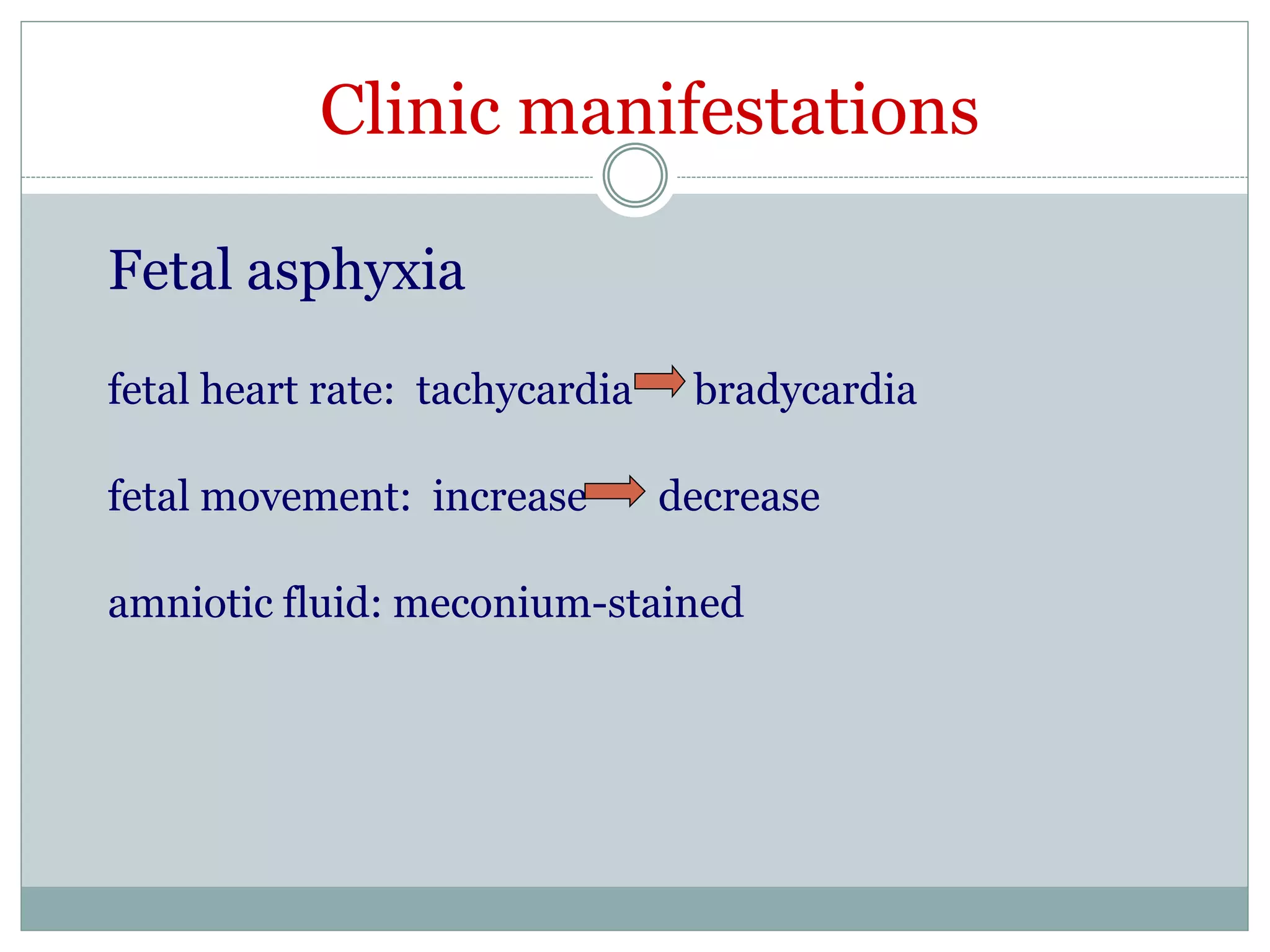
Clinic manifestations
Fetal asphyxia
fetal heart rate: tachycardia bradycardia
fetal movement: increase decrease
amniotic fluid: meconium-stained
APGAR score
Score 0 1 2
Heart rate none <100 > 100
Respiration none irregular regular
Muscle tone limp reduced normal
Response to none grimaced cough
stimulation
Color of trunk white blue pink
5 min APGAR
Degree of asphyxia:
Apgar score 8~10: no asphyxia
Apgar score 4~8: mild
Apgar score 0~3: severe
Clinic manifestations
Complications:
CNS: HIE, ICH
RS: MAS, RDS, pulmonary hemorrhage
CVS: heart failure, cardiogenic shock
GI: NEC, stress gastric ulcer
Others: hypoglycemia, hypocalcemia,
hyponatremia
Diagnosis of HIE
1/ Evidence of fetal distress
2/ Fetal metabolic acidosis
3/ Abnormal neurological state
4/ Multiorgan involvement
HIE Definition
 Refers to CNS dysfunction or encephalopathy
associated with Perinatal asphyxia.
 Potential to cause mortality and long term sequele
like disabilities and cerebral palsy.
Etiology
 Pathologically, any factors which interfere with
the circulation between maternal and fetal blood
exchange.
 maternal factor, delivery factor and fetal factor.
Etiology—High Risk Factors
 Maternal factor:
hypoxia, anemia, diabetes, hypertension, smoking,
nephritis, heart disease, too old or too young,etc
 Delivery condition:
Abruption of placenta, placenta previa, prolapsed
cord, premature rupture of membranes,etc
 Fetal factor:
Multiple birth, congenital or malformed fetus,etc
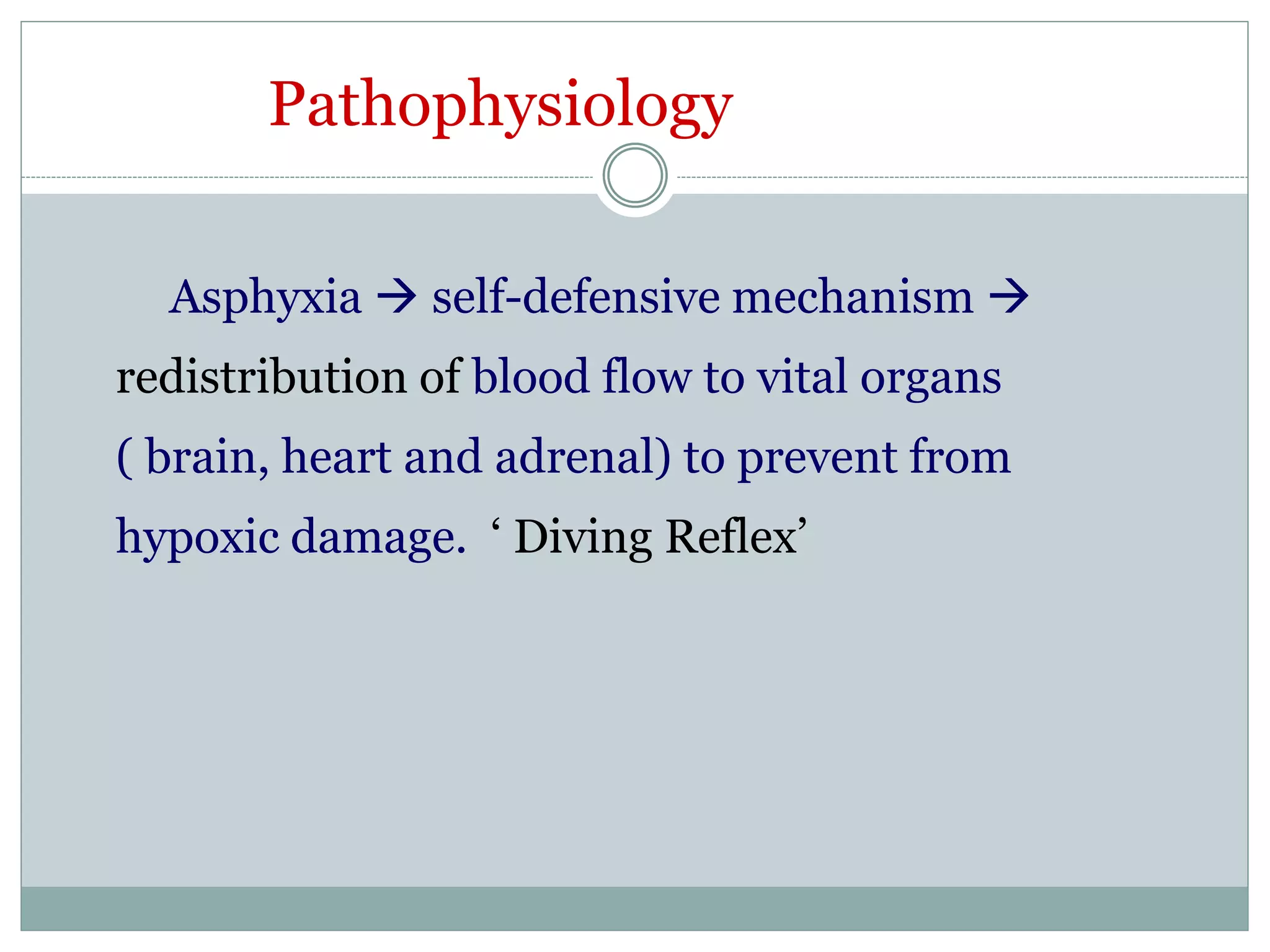
Pathophysiology
Asphyxia  self-defensive mechanism 
redistribution of blood flow to vital organs
( brain, heart and adrenal) to prevent from
hypoxic damage. ‘ Diving Reflex’
Pathophysiology
Hypoxic cellular damages:
a. Reversible damage(early stage):
Hypoxia may decrease the production of ATP,
and result in the cellular dysfunctions . But these
change can be reversible if hypoxia is reversed in
short time.
b. Irreversible damage:
Longer hypoxia irreversible cellular damage
Pathophysiology
 Cerebral blood flow
Early stage: normal (intraorgans shunt)
then slow down (selective vulnerability)
finally ischemia – Watershed regions
 Cerebral metabolism – altered
 Cellular electrolyte alteration- Na, Ca
Neuropathological lesions in HIE
 Term infant
 Parasagittal injury, Selective neuronal necrosis,
focal/multifocal ischemia, status marmoratus
 Proximal spastic quardiparesis. Spastic CP, Spastic
hemiparesis, Cognitive defects, Seizures, EP cerebral palsy.
 Preterm infant
 Periventricular leukomalacia, IVH
 Spastic diplegia, visual impairment.
 Status Marmoratus: basal ganglia lesion resulting from
asphyxia. The lesions have a marbled appearance caused by
neuronal loss and an overgrowth of myelin in the putamen,
caudate, and thalamus.
 Selective vulnerability - The hippocampal pyramidal
cells of CA1, pyramidal neocortical neurons (layers 3, 5, and
6), Purkinje cells, and striatal neurons have the highest
vulnerability.
Clinically, more term babies suffered
from this disease than premature
babies.
Pathologically, more premature
babies suffered from this disease
than term babies.
Clinic Manifestation
The clinic features of HIE are
mainly symptoms of consciousness in
two types-
Excitation: hyperalert , irritable, hypertonia,
tachycardia, tachypnea, seizure, etc
Depressing: coma, hypotonia, bradycardia,
bradypnea, unresponsibility, etc
Classification—Clinical
 Mild(stage I): hyperalert, irritable, normal muscular
tone & reflex, no seizure, normal EEG
 Moderate(stage II): lethargy, hypotonia, weak sucking
& Moro response, often seizure, EEG+
 Severe(stage III): coma, absent muscular tone & reflex,
persistent seizure, EEG++
HIE: Classification
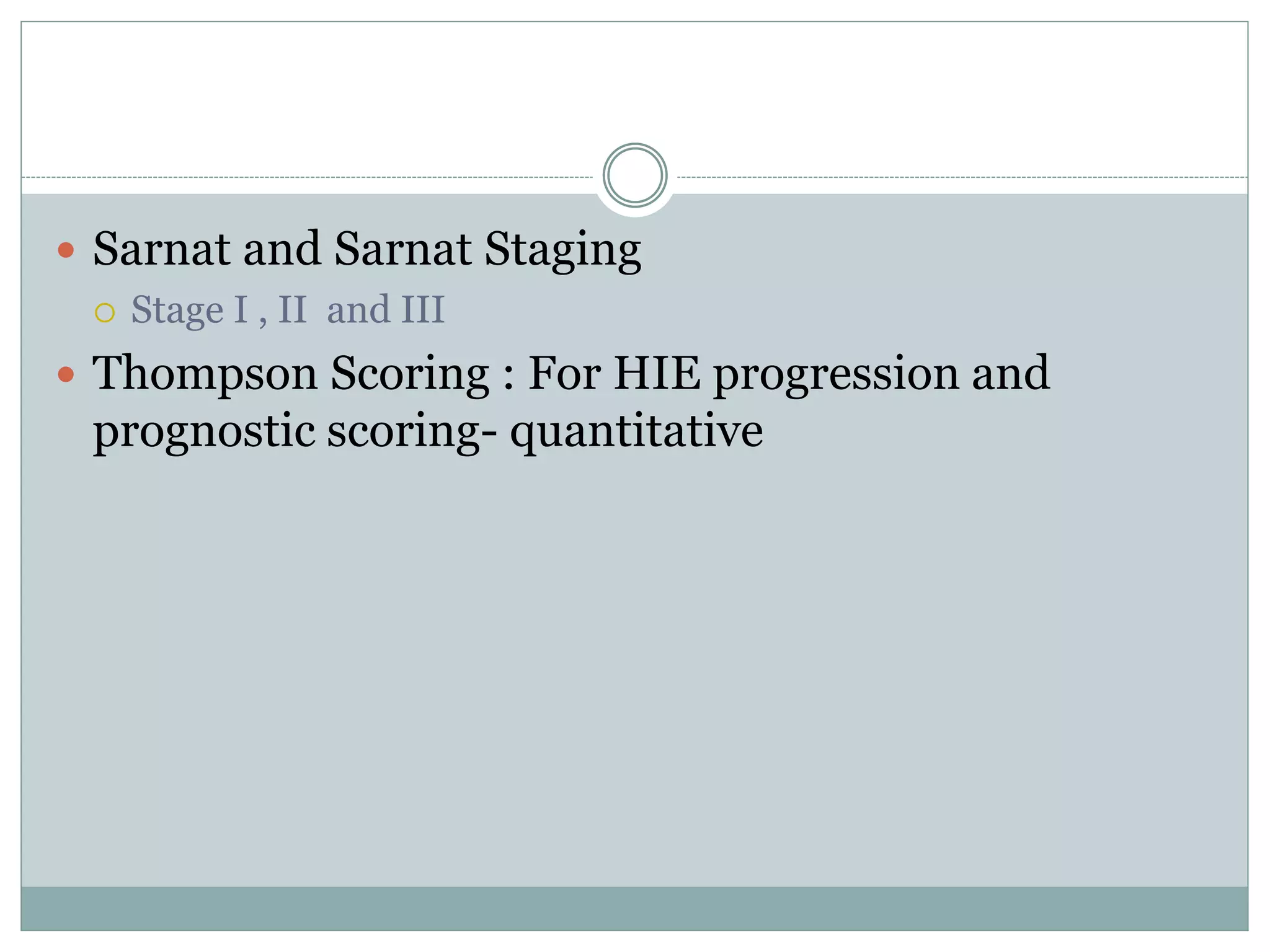
 Sarnat and Sarnat Staging
 Stage I , II and III
 Thompson Scoring : For HIE progression and
prognostic scoring- quantitative
Sarnat And Sarnat Staging
Management
 Monitoring
 Vitals
 Urine output
 Blood sugar monitoring
 Hematocrit /PCV
 Electrolytes
 Assessment of Neurological status- 6 hourly
 Tone: Hypotonia
 Seizure – may be subtle to frank
Management
Generalized treatment:
 Ventilation: CPAP, CMV, HFOV
 Perfusion/Circulation: Dopamine/Dobutamine
 Energy: normal glucose level maintained ( 50-
110mg/dl) : Hypo and hyperglycemia avoided
 Fluid: 60-80ml/kg/d - restriction if SIADH
 Electrolytes- Na and Calcium should be monitored.
 Avoid Polycythemia: If Hct>65-70 , partial exchange
transfusion is done to bring Hct level to 55.
Control of seizures: HIE seizures are difficult to
control
 Phenobarbital
loading dose 15-20mg/kg, iv
maintenance dose 3-5mg/kg, iv
 Phenytoin
loading dose 15-20mg/kg, iv
maintenance dose 5mg/kg, iv
 Midazolam: 0.1-0.3mg/kg, iv
 Leveracetam, Topiramate
Special Investigations
 EEG
 Routine EEG does not help
 Continous aEEG- Amplified EEG used for cerebral function
monitoring
 Detects voltage pattern- burst, low voltage, isoelectric
 Detects electrical seizure activity
 Cranial Ultrasound:
 Not good modality
 Preterm – IVH, Periventricular leukomalacia
 Severe cases- hypoechoic areas.
CFM - aEEG
 CT scan: only indicated in emergency
 Generalized low attenuation of brain parenchyma in acute
stage.
 local or patchy hypodensity, extensive & generalized hypodensity,
usually combined with brain hemorrhage
 MRI
 Time consuming
 DWI ( Diffusion weighted imaging) is helpful in early stage.
 Within hours shows restricted diffusion to hypoxic areas.
Recent advances in Management
 Cerebral Hypothermia
 Selective head cooling ( CoolCap trial ) vs Whole body cooling
 Decreases brain metabolism and injury.
 >=36 weeks and >=2000gm
 Cooling upto 33-34 C.
 Provided for 72 hours
 Seen to have better outcomes specially for moderate HIE
cases.
Drugs under trial
 Allopurinol
 blocks free radical generation
 Scavenging free radicals
 Superoxide dismutase, N acetyl cysteine, alpfa tocopherol
 NMDA receptor blocker
 Mg, MK80
 Calcium channel blockers
 Nimodipine, Flunarizine
 Prophylactic phenobarbitone?
Prognosis
Depend on the severity of brain damage & medical
treatment, usually:
Mild or moderate cases could be cured completely, but
severe cases represent poor prognosis with high mortality
or cerebral complications such as mental retardation &
cerebral palsy.
 Overall mortality – 20%
 Overall incidence of sequele - 30%
 Mild : 100% good prognosis
 Mod : 80% normal
 Severe : 50% death, 50% sequele
 Presence of seizure increases chance of Cerebral
palsy by 50-70 times.
Prevention
 Better Obstetric care
 Skilled resuscitation teams and
neonatal fascilities.
The END

HIE Birth asphyxia in Neonates

  • 1.
    D R SU J I T S H R E S T H A M D P E D I A T R I C S ( I O M ) N E O N A T O L O G Y ( G R I P M E R , I N D I A ) L E C T U R E R - D E P A R T M E N T O F P E D I A T R I C S Hypoxic Ischemic Encephalopathy (CNS manifestation of Birth Asphyxia)
  • 2.
    Definition: Birth asphyxia Birthasphyxia is defined as a reduction of oxygen delivery and an accumulation of carbon dioxide owing to cessation of blood supply to the fetus around the time of birth.
  • 3.
    Clinic manifestations Fetal asphyxia fetalheart rate: tachycardia bradycardia fetal movement: increase decrease amniotic fluid: meconium-stained
  • 4.
    APGAR score Score 01 2 Heart rate none <100 > 100 Respiration none irregular regular Muscle tone limp reduced normal Response to none grimaced cough stimulation Color of trunk white blue pink
  • 5.
    5 min APGAR Degreeof asphyxia: Apgar score 8~10: no asphyxia Apgar score 4~8: mild Apgar score 0~3: severe
  • 6.
    Clinic manifestations Complications: CNS: HIE,ICH RS: MAS, RDS, pulmonary hemorrhage CVS: heart failure, cardiogenic shock GI: NEC, stress gastric ulcer Others: hypoglycemia, hypocalcemia, hyponatremia
  • 7.
    Diagnosis of HIE 1/Evidence of fetal distress 2/ Fetal metabolic acidosis 3/ Abnormal neurological state 4/ Multiorgan involvement
  • 8.
    HIE Definition  Refersto CNS dysfunction or encephalopathy associated with Perinatal asphyxia.  Potential to cause mortality and long term sequele like disabilities and cerebral palsy.
  • 9.
    Etiology  Pathologically, anyfactors which interfere with the circulation between maternal and fetal blood exchange.  maternal factor, delivery factor and fetal factor.
  • 10.
    Etiology—High Risk Factors Maternal factor: hypoxia, anemia, diabetes, hypertension, smoking, nephritis, heart disease, too old or too young,etc  Delivery condition: Abruption of placenta, placenta previa, prolapsed cord, premature rupture of membranes,etc  Fetal factor: Multiple birth, congenital or malformed fetus,etc
  • 11.
    Pathophysiology Asphyxia  self-defensivemechanism  redistribution of blood flow to vital organs ( brain, heart and adrenal) to prevent from hypoxic damage. ‘ Diving Reflex’
  • 12.
    Pathophysiology Hypoxic cellular damages: a.Reversible damage(early stage): Hypoxia may decrease the production of ATP, and result in the cellular dysfunctions . But these change can be reversible if hypoxia is reversed in short time.
  • 13.
    b. Irreversible damage: Longerhypoxia irreversible cellular damage
  • 14.
    Pathophysiology  Cerebral bloodflow Early stage: normal (intraorgans shunt) then slow down (selective vulnerability) finally ischemia – Watershed regions  Cerebral metabolism – altered  Cellular electrolyte alteration- Na, Ca
  • 16.
    Neuropathological lesions inHIE  Term infant  Parasagittal injury, Selective neuronal necrosis, focal/multifocal ischemia, status marmoratus  Proximal spastic quardiparesis. Spastic CP, Spastic hemiparesis, Cognitive defects, Seizures, EP cerebral palsy.  Preterm infant  Periventricular leukomalacia, IVH  Spastic diplegia, visual impairment.
  • 17.
     Status Marmoratus:basal ganglia lesion resulting from asphyxia. The lesions have a marbled appearance caused by neuronal loss and an overgrowth of myelin in the putamen, caudate, and thalamus.  Selective vulnerability - The hippocampal pyramidal cells of CA1, pyramidal neocortical neurons (layers 3, 5, and 6), Purkinje cells, and striatal neurons have the highest vulnerability.
  • 18.
    Clinically, more termbabies suffered from this disease than premature babies. Pathologically, more premature babies suffered from this disease than term babies.
  • 19.
    Clinic Manifestation The clinicfeatures of HIE are mainly symptoms of consciousness in two types-
  • 20.
    Excitation: hyperalert ,irritable, hypertonia, tachycardia, tachypnea, seizure, etc Depressing: coma, hypotonia, bradycardia, bradypnea, unresponsibility, etc
  • 21.
    Classification—Clinical  Mild(stage I):hyperalert, irritable, normal muscular tone & reflex, no seizure, normal EEG  Moderate(stage II): lethargy, hypotonia, weak sucking & Moro response, often seizure, EEG+  Severe(stage III): coma, absent muscular tone & reflex, persistent seizure, EEG++
  • 22.
  • 23.
     Sarnat andSarnat Staging  Stage I , II and III  Thompson Scoring : For HIE progression and prognostic scoring- quantitative
  • 24.
  • 25.
    Management  Monitoring  Vitals Urine output  Blood sugar monitoring  Hematocrit /PCV  Electrolytes  Assessment of Neurological status- 6 hourly  Tone: Hypotonia  Seizure – may be subtle to frank
  • 26.
    Management Generalized treatment:  Ventilation:CPAP, CMV, HFOV  Perfusion/Circulation: Dopamine/Dobutamine  Energy: normal glucose level maintained ( 50- 110mg/dl) : Hypo and hyperglycemia avoided  Fluid: 60-80ml/kg/d - restriction if SIADH
  • 27.
     Electrolytes- Naand Calcium should be monitored.  Avoid Polycythemia: If Hct>65-70 , partial exchange transfusion is done to bring Hct level to 55.
  • 28.
    Control of seizures:HIE seizures are difficult to control  Phenobarbital loading dose 15-20mg/kg, iv maintenance dose 3-5mg/kg, iv  Phenytoin loading dose 15-20mg/kg, iv maintenance dose 5mg/kg, iv  Midazolam: 0.1-0.3mg/kg, iv  Leveracetam, Topiramate
  • 29.
    Special Investigations  EEG Routine EEG does not help  Continous aEEG- Amplified EEG used for cerebral function monitoring  Detects voltage pattern- burst, low voltage, isoelectric  Detects electrical seizure activity  Cranial Ultrasound:  Not good modality  Preterm – IVH, Periventricular leukomalacia  Severe cases- hypoechoic areas.
  • 30.
  • 31.
     CT scan:only indicated in emergency  Generalized low attenuation of brain parenchyma in acute stage.  local or patchy hypodensity, extensive & generalized hypodensity, usually combined with brain hemorrhage  MRI  Time consuming  DWI ( Diffusion weighted imaging) is helpful in early stage.  Within hours shows restricted diffusion to hypoxic areas.
  • 32.
    Recent advances inManagement  Cerebral Hypothermia  Selective head cooling ( CoolCap trial ) vs Whole body cooling  Decreases brain metabolism and injury.  >=36 weeks and >=2000gm  Cooling upto 33-34 C.  Provided for 72 hours  Seen to have better outcomes specially for moderate HIE cases.
  • 33.
    Drugs under trial Allopurinol  blocks free radical generation  Scavenging free radicals  Superoxide dismutase, N acetyl cysteine, alpfa tocopherol  NMDA receptor blocker  Mg, MK80  Calcium channel blockers  Nimodipine, Flunarizine  Prophylactic phenobarbitone?
  • 34.
    Prognosis Depend on theseverity of brain damage & medical treatment, usually: Mild or moderate cases could be cured completely, but severe cases represent poor prognosis with high mortality or cerebral complications such as mental retardation & cerebral palsy.
  • 35.
     Overall mortality– 20%  Overall incidence of sequele - 30%  Mild : 100% good prognosis  Mod : 80% normal  Severe : 50% death, 50% sequele  Presence of seizure increases chance of Cerebral palsy by 50-70 times.
  • 36.
    Prevention  Better Obstetriccare  Skilled resuscitation teams and neonatal fascilities.
  • 37.