Downloaded 93 times
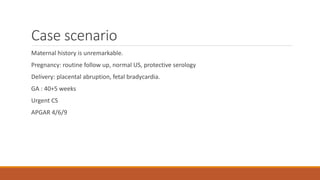
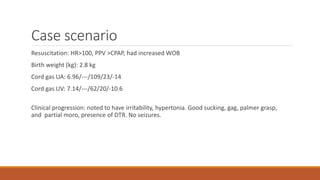

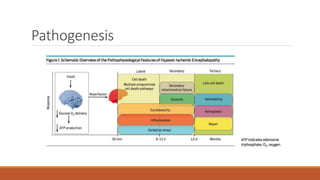
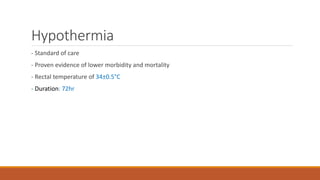
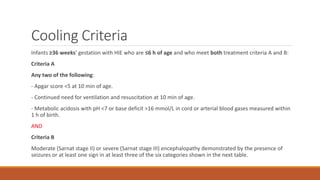
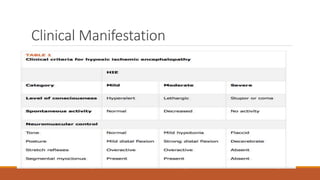
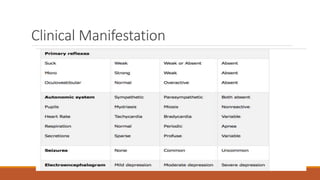
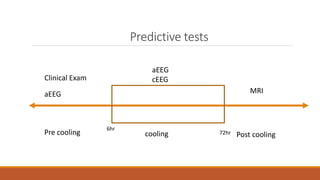
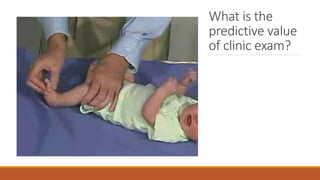
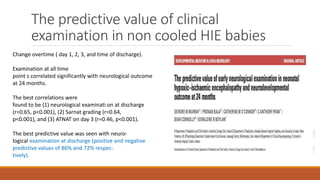
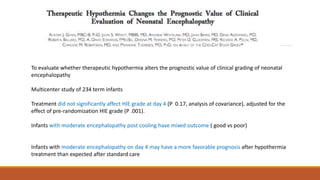
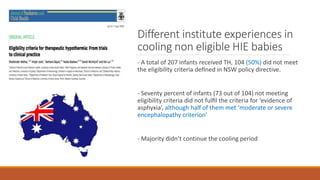
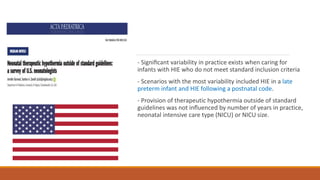

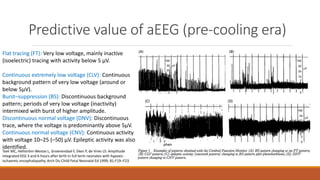
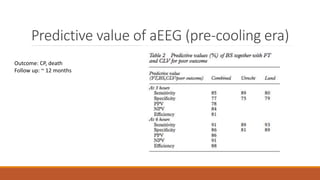
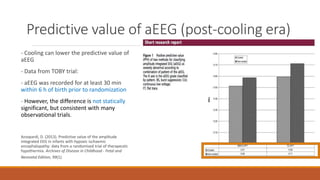
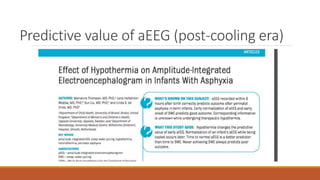

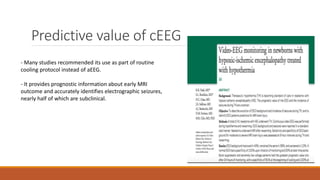
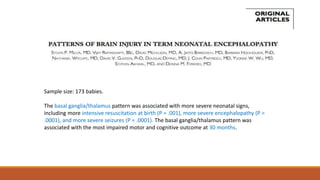
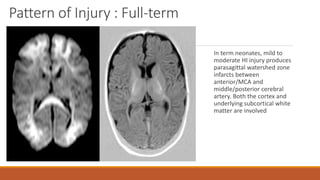
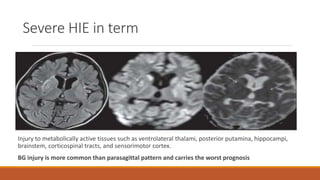
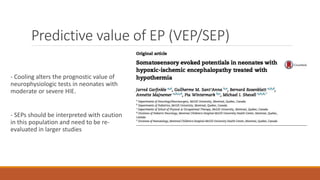


This document discusses hypoxic ischemic encephalopathy (HIE), including its pathophysiology, management, and prognostic factors. HIE is caused by inadequate oxygen and blood flow to the brain, commonly due to perinatal asphyxia. Standard management includes therapeutic hypothermia to reduce brain injury. Predictors of outcome include clinical exam findings, amplitude integrated EEG patterns within 72 hours, and MRI findings such as basal ganglia injury. New treatments under investigation include xenon gas, erythropiotine, and melatonin for their neuroprotective properties, as well as stem cell transplantation. Prognosis depends on injury severity and gestational age, with term infants generally having a better outlook than preterm infants.


