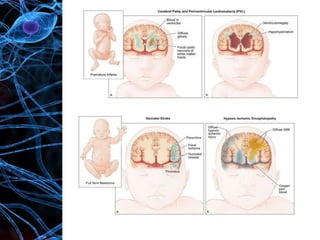
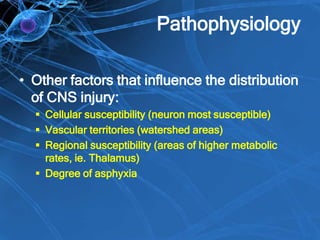
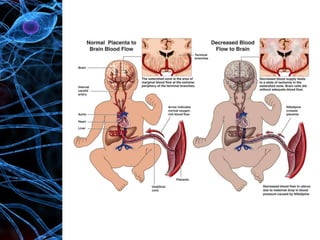
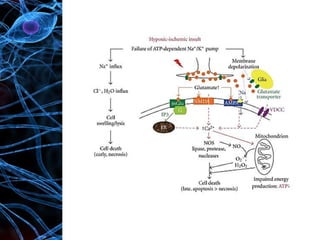
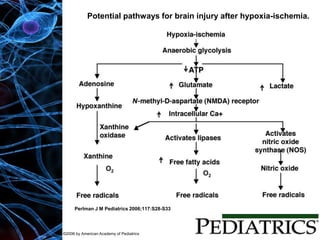
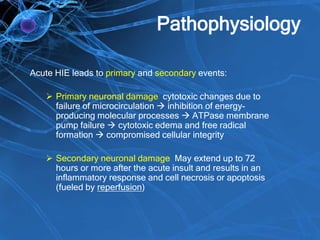
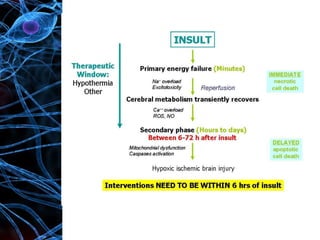
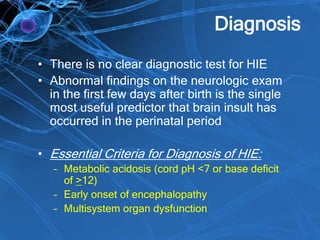
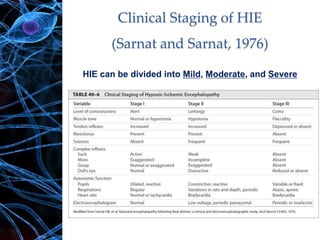
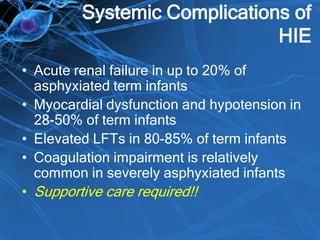
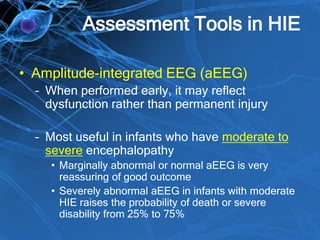
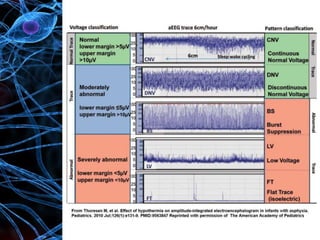
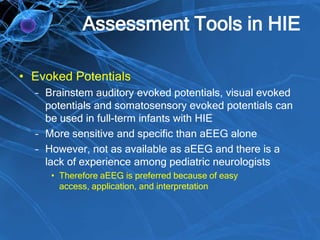
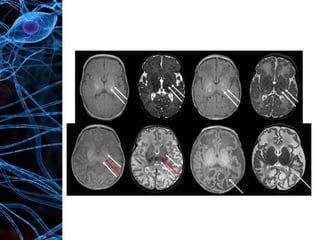
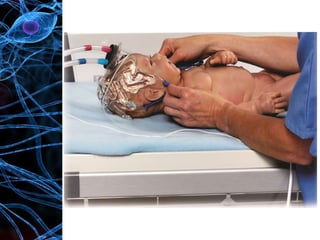
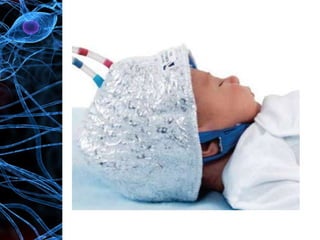
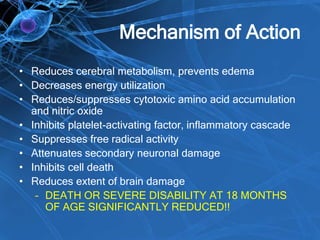
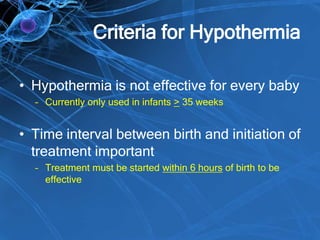
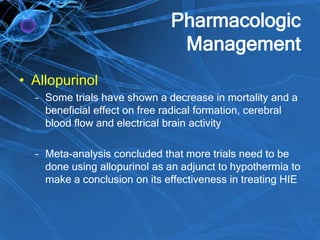

This document provides an overview of hypoxic-ischemic encephalopathy (HIE) in neonates. It defines HIE and discusses its etiology, pathophysiology, diagnosis, clinical staging, assessment tools, and management including hypothermia therapy. HIE results from a hypoxic or ischemic insult to the fetal or neonatal brain. The pathophysiology involves both primary neuronal damage during the insult and secondary damage over subsequent hours and days. Diagnosis is based on evidence of metabolic acidosis during birth and early onset of neurological abnormalities. Hypothermia therapy, involving whole body cooling to 33-35°C for 72 hours, is now standard treatment and reduces mortality and disability by attenuating secondary brain injury.


