PERINATAL ASPHYXIA
(HYPOXIC ISCHEMIC
(ENCEPHALOPATHY
DR. TAI AL AKAWY
Perinatal asphyxia
 Perinatal asphyxia, more appropriately known
as hypoxic-ischemic encephalopathy, is
characterized by clinical and laboratory
evidence of acute or subacute brain injury due
to asphyxia.
 The primary causes of this condition are
systemic hypoxemia and/or reduced cerebral
blood flow (CBF).
 Birth asphyxia causes 23% of all neonatal
deaths worldwide.
 Severe hypoxia results in anaerobic glycolysis
and lactic acid production first in the peripheral
tissues (muscle and heart) and then in the
brain.
 Ischemia (lack of sufficient blood flow to all or
part of an organ) is both a cause and a result
of hypoxia.
 Hypoxia and acidosis can depress myocardial
function, leading to hypotension and ischemia.
 Ischemia can impair oxygen delivery, causing
further compromise, as well as disrupt delivery
of substrate and removal of metabolic and
respiratory by-products (eg, lactic acid, carbon
dioxide).
TIMING OF INJURY
 Asphyxia can occur before, during, or after
birth. Based on a review of multiple studies
that have examined the temporal relationship
of obstetric events and neonatal outcomes,
predominantly HIE in term infants, the
proportion of conditions that occurs in each
time period can be estimated
 Antepartum events, such as maternal
hypotension or trauma, account for 4 to 20
percent of cases.
 Intrapartum events, such as placental
abruption or umbilical cord prolapse, are seen
in 56 to 80 percent.
 In approximately 10 percent of cases, a
postnatal insult occurs, usually caused by
severe cardiopulmonary abnormalities or
associated with prematurity.
 However, the timing of injury often is difficult to
establish for an individual infant
 Neonatal encephalopathy is a heterogeneous
syndrome characterized by signs of central
nervous system dysfunction in newborn
infants
 Clinical suspicion of neonatal encephalopathy
should be considered in any newborn
exhibiting an abnormal level of consciousness,
seizures, tone and reflex abnormalities,
apnea, aspiration and feeding difficulties
 "Neonatal encephalopathy" has emerged as
the preferred term to describe central nervous
system dysfunction in the newborn period
 The terminology does not imply a specific
underlying pathophysiology since the nature of
brain injury causing neurologic impairment in a
newborn is poorly understood.
 While neonatal encephalopathy was once
automatically ascribed to hypoxia-ischemia
 It is now known that hypoxia-ischemia is only
one of many possible contributors to neonatal
encephalopathy.
 Whether a particular newborn's
encephalopathy can be attributed to hypoxic-
ischemic brain injury is often unclear.
 Some investigators require stringent criteria
for using the term neonatal encephalopathy,
such as two or more symptoms of
encephalopathy lasting over 24 hours ,while
others require no more than a low five minute
Apgar score
 However, the use of Apgar scores alone is
problematic, as Apgar scores may be low due
to maternal analgesia or prematurity, or can
be normal in the presence of acute hypoxia-
ischemic injury.
 Given that the underlying nature of brain injury
causing neurologic impairment in a newborn is
often poorly understood, "neonatal
encephalopathy" has emerged as the
preferred terminology to describe central
nervous system dysfunction in the newborn
period, as it does not imply a specific
underlying pathophysiology
 The incidence of neonatal encephalopathy
depends on how the syndrome is defined, but
varies between two to nine per 1000 term
births
 As the term “neonatal encephalopathy” has
become increasingly favored, it has been
shown that the diagnosis of "birth asphyxia"
has declined over the past decade
 Despite major advances in monitoring
technology and knowledge of fetal and
neonatal pathologies, perinatal asphyxia or,
more appropriately, hypoxic-ischemic
encephalopathy (HIE), remains a serious
condition that causes significant mortality and
long-term morbidity.
Pathophysiology
 Brain hypoxia and ischemia due to systemic
hypoxemia, reduced cerebral blood flow
(CBF), or both are the primary physiological
processes that lead to hypoxic-ischemic
encephalopathy
 The initial compensatory adjustment to an
asphyxial event is an increase in CBF due to
hypoxia and hypercapnia.
 This is accompanied by a redistribution of
cardiac output to essential organs, including
the brain, heart, and adrenal glands.
 A blood pressure (BP) increase due to
increased release of epinephrine further
enhances this compensatory response.
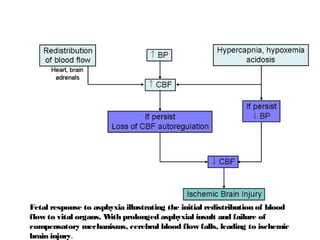
Fetal response to asphyxia illustrating the initial redistribution of blood
flow to vital organs. With prolonged asphyxial insult and failure of
compensatory mechanisms, cerebral blood flow falls, leading to ischemic
brain injury.
 In adults, CBF is maintained at a constant
level despite a wide range in systemic BP.
 This phenomenon is known as the cerebral
autoregulation, which helps maintain cerebral
perfusion
 In human adults, the BP range at which CBF is
maintained is 60-100 mm Hg.
 Limited data in the human fetus and the
newborn infant suggest that CBF is stable
over much narrower range of BPs
 Some experts have postulated that, in the
healthy term newborn, the BP range at which
the CBF autoregulation is maintained may be
only between 10-20 mm Hg (compared with
the 40 mm Hg range in adults)
 In addition, the autoregulatory zone may also
be set at a lower level, about the midpoint of
the normal BP range for the fetus and
newborn.
 However, the precise upper and lower limits of
the BP values above and below which the
CBF autoregulation is lost remain unknown for
the human newborn.
 In the fetus and newborn suffering from acute
asphyxia, after the early compensatory
adjustments fail, the CBF can become
pressure-passive, at which time brain
perfusion depends on systemic BP
 As BP falls, CBF falls below critical levels, and
the brain injury secondary to diminished blood
supply and a lack of sufficient oxygen occurs.
 This leads to intracellular energy failure.
 During the early phases of brain injury, brain
temperature drops, and local release of
neurotransmitters, such as gamma-
aminobutyric acid transaminase (GABA),
increase.
 These changes reduce cerebral oxygen
demand, transiently minimizing the impact of
asphyxia.
 At the cellular level, neuronal injury in hypoxic-
ischemic encephalopathy is an evolving
process.
 The magnitude of the final neuronal damage
depends on duration and severity of the initial
insult combined to the effects of reperfusion
injury, and apoptosis.
At the biochemical level
 Excitatory amino acid (EAA) receptor
overactivation plays a critical role in the
pathogenesis of neonatal hypoxia-ischemia.
 During cerebral hypoxia-ischemia, the uptake
of glutamate (the major excitatory
neurotransmitter of the mammalian brain) is
impaired.
 This results in high synaptic levels of
glutamate and EAA receptor overactivation,
including N-methyl-D-aspartate (NMDA),
amino-3-hydroxy-5-methyl-4 isoxazole
propionate (AMPA), and kainate receptors.
 NMDA receptors are permeable to Ca++
and
Na+
, whereas AMPA and kainate receptors are
permeable to Na+
 Accumulation of Na+
coupled with the failure of
energy dependent enzymes such as Na+/
K+
-ATPase leads to rapid cytotoxic edema and
necrotic cell death.
 Activation of NMDA receptor leads to
intracellular Ca++
accumulation and further
pathologic cascades activation.
 EAAs accumulation also contributes to
increasing the pace and extent of programmed
cell death through secondary Ca++
intake into
the nucleus.
 Finally, developing oligo/dendroglia is uniquely
susceptible to hypoxia-ischemia, specifically
excito-toxicity and free radical damage.
 This white matter injury may be the basis for
the disruption of long-term learning and
memory abilities in infants with hypoxic-
ischemic encephalopathy.
 During the reperfusion period, free radical
production increases due to activation of
enzymes such as cyclooxygenase, xanthine
oxidase, and lipoxygenase.
 Free radical damage is further exacerbated in
the neonate because of immature antioxidant
defenses..
 Free radicals can lead to lipid peroxidation as
well as DNA and protein damage and can
trigger apoptosis.
 Finally, free radicals can combine with nitric
oxide (NO) to form peroxynitrite a highly toxic
oxidant
 This excessive NO production plays an
important role in the pathophysiology of
perinatal hypoxic-ischemic brain injury.
 Inflammatory mediators (cytokines and
chemokines) have been implicated in the
pathogenesis of HIE and may represent a final
common pathway of brain injury.
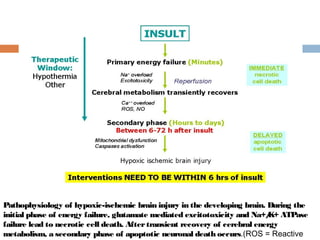
 Following the initial phase of energy failure
from the asphyxial injury, cerebral metabolism
may recover following reperfusion, only to
deteriorate in a secondary energy failure
phase.
 This new phase of neuronal damage, starting
at about 6-24 hours after the initial injury, is
characterized by mitochondrial dysfunction,
and initiation of the apoptotic cascade.
 This phase has been called the "delayed
phase of neuronal injury."
 The duration of the delayed phase is not
precisely known in the human fetus and
newborn but appears to increase over the first
24-48 hours and then start to resolve
thereafter.
 In the human infant, the duration of this phase
is correlated with adverse neurodevelopmental
outcomes at 1 year and 4 years after insult.
Pathophysiology of hypoxic-ischemic brain injury in the developing brain. During the
initial phase of energy failure, glutamate mediated excitotoxicity and Na+/K+ ATPase
failure lead to necrotic cell death. Aftertransient recovery of cerebral energy
metabolism, a secondary phase of apoptotic neuronal death occurs.(ROS = Reactive
Frequency
 In the United States and in most advanced
countries, the incidence of hypoxic-ischemic
encephalopathy is 1-8 cases per 1000 births.
 The incidence of HIE is reportedly high in
countries with limited resources; however,
precise figures are not available.
 Birth asphyxia is the cause of 23% of all
neonatal deaths worldwide.
Mortality/Morbidity
 In severe hypoxic-ischemic encephalopathy,
the mortality rate is reportedly 25-50%. Most
deaths occur in the first week of life due to
multiple organ failure.
 Some infants with severe neurologic
disabilities die in their infancy from aspiration
pneumonia or systemic infections.
 80% of infants who survive severe hypoxic-
ischemic encephalopathy develop serious
complications,
 10-20% develop moderately serious
disabilities, and
 as many as 10% are healthy.
History
 The 1996 guidelines from the AAP and ACOG for
(HIE) indicate that all of the following must be present
for the designation of perinatal asphyxia severe
enough to result in acute neurological injury:
 Profound metabolic or mixed acidemia (pH < 7) in an
umbilical artery blood sample, if obtained
 Persistence of an Apgar score of 0-3 for longer than 5
minutes
 Neonatal neurologic sequelae (eg, seizures, coma,
hypotonia)
 Multiple organ involvement (eg, kidney, lungs, liver,
heart, intestines)
CNS Manifestations
Mild hypoxic-ischemic encephalopathy
 Muscle tone may be slightly increased and
deep tendon reflexes may be brisk during the
first few days.
 Transient behavioral abnormalities, such as
poor feeding, irritability, or excessive crying or
sleepiness, may be observed.
 The neurologic examination findings normalize
by 3-4 days of life.
Moderately severe hypoxic-
ischemic encephalopathy
 The infant is lethargic, with significant
hypotonia and diminished deep tendon
reflexes.
 The grasping, Moro, and sucking reflexes may
be sluggish or absent.
 Occasional periods of apnea.
 Seizures may occur within the first 24 hours of
life.
 Full recovery within 1-2 weeks is possible and
is associated with a better long-term outcome.
 An initial period of well-being or mild hypoxic-
ischemic encephalopathy may be followed by
sudden deterioration, suggesting ongoing
brain cell dysfunction, injury, and death;
seizure intensity might increase.
Severe hypoxic-ischemic
encephalopathy
 Stupor or coma is typical. The infant may not
respond to any physical stimulus.
 Breathing may be irregular, and the infant
often requires ventilatory support.
 Generalized hypotonia and depressed deep
tendon reflexes are common.
 Neonatal reflexes (eg, sucking, swallowing,
grasping, Moro) are absent.
 Disturbances of ocular motion. The pupils may
be dilated, fixed, or poorly reactive to light
 Seizures occur early and often and may be
initially resistant to conventional treatments.
 The seizures are usually generalized, and
their frequency may increase during the 24-48
hours after onset, correlating with the phase of
reperfusion injury
 As the injury progresses, seizures subside and
the EEG becomes isoelectric or shows a burst
suppression pattern.
 At that time, wakefulness may deteriorate
further, and the fontanelle may bulge,
suggesting increasing cerebral edema.
 Irregularities of heart rate and blood pressure
(BP) are common , as is death from
cardiorespiratory failure.
Infants who survive severe
hypoxic-ischemic encephalopathy
 The level of alertness improves by days 4-5 of
life.
 Hypotonia and feeding difficulties persist,
requiring tube feeding for weeks to months.
Multiorgan Dysfunction
 Multiorgan systems involvement is a hallmark
of hypoxic-ischemic encephalopathy.
 Heart (43-78%)
May present as reduced myocardial
contractility, severe hypotension, passive
cardiac dilatation, and tricuspid regurgitation.
 Lungs (71-86%)
Patients may have severe pulmonary
hypertension requiring assisted ventilation.
 Renal (46-72%)
Renal failure presents as oliguria, leading to
significant water and electrolyte imbalances.
 Liver(80-85%)
Elevated liver function test results,
hyperammonemia, and coagulopathy can be
seen.
Necrotizing enterocolitis is rare
 Hematologic (32-54%)
Disturbances include increased nucleated
RBCs, neutropenia or neutrophilia,
thrombocytopenia, and coagulopathy.
Neurologic Findings
Cranial nerves
 Lack of reflex activity mediated by the cranial
nerves can indicate brainstem dysfunction.
 Neurologic examination may be difficult in the
small premature infant, but weakness of the
lower extremities sometimes reflects the
neuropathologic substrate of periventricular
leukomalacia
 The pupil starts reacting to light around 30
weeks, but the light reflex is not consistently
assessable until the gestational age of 32-35
weeks. Pupillary reflexes are reliably present
at term.
 Patients with mild HIE often have mydriasis.
Progression of the disease may produce
miosis responsive to light, and in severe cases
(stage 3 of Sarnat classification), the pupils
are small or midpositioned and poorly reactive
to light, reflecting sympathetic or
parasympathetic dysfunction.
 The lack of pupillary, eye movement, corneal,
gag, and cough reflexes may reflect damage
to the brainstem, where the cranial-nerve
nuclei are located.
 Decreased respiratory drive or apnea can be
from lesions of the respiratory center or
medullary reticular formation.
 Ventilatory disturbances in HIE may manifest
as periodic breathing apnea or just decreased
respiratory drive.
Motorfunction
 Begin the motor examination of an infant with
suspected HIE by qualitatively and
quantitatively observing his posture and
spontaneous movements.
 Specific patterns of motor weakness indicate
cerebral injury patterns
Se iz ure s
 HIE is often reported to be the most frequent
cause of neonatal seizures
 They usually occur 12-24 hours after birth and
are difficult to control with anticonvulsants.
 Tonic, unilateral, or focal seizures consistently
have an EEG signature.
 Subtle seizures may be a part of the HIE
picture
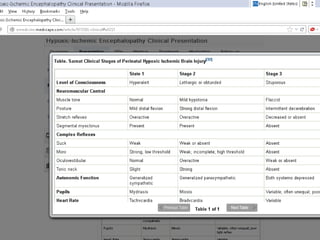
Sarnat Staging System
 The staging system proposed by Sarnat in
1976 is often useful in classifying the degree
of encephalopathy.
 Stages I, II, and III correlate with the
descriptions of mild, moderate, and severe
encephalopathy
Causes
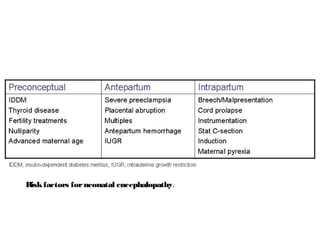
 Badawi et al investigated risk factors of neonatal
encephalopathy in the Western Australian case
control study.
 Of the 164 infants with moderate-to-severe
neonatal encephalopathy, preconceptual and
antepartum risk factors were identified in 69% of
cases;
 24% of infants had a combination of antepartum
and intrapartum risk factors,
 whereas only 5% of infants had only intrapartum
risk factors.
 In this study, 5% had no identifiable risk factors.
Riskfactors forneonatal encephalopathy.
Laboratory Studies
 There are nor specific tests to confirm or
exclude a diagnosis of hypoxic-ischemic
encephalopathy (HIE) because the diagnosis
is made based on the history, physical and
neurological examinations, and laboratory
evidence
 As always, the results of the tests should be
interpreted in conjunction with the clinical
history and the findings from physical
examination.
 Serum electrolyte levels
 In severe cases, daily assessment of serum
electrolytes are valuable until the infant's
status improves.
 Markedly low serum sodium, potassium, and
chloride levels in the presence of reduced
urine flow and excessive weight gain may
indicate acute tubular damage or syndrome of
inappropriate antidiuretic hormone (SIADH)
secretion, particularly during the initial 2-3
days of life.
 Renal function studies
Serum creatinine levels, creatinine clearance,
and BUN levels suffice in most cases.
 Cardiac and liverenzymes
These values are an adjunct to assess the
degree of hypoxic-ischemic injury to these
other organs.
 Coagulation system evaluation
This includes prothrombin time, partial
thromboplastin time, and fibrinogen levels.
 ABG
Blood gas monitoring is used to assess acid-
base status and to avoid hyperoxia and
hypoxia as well as hypercapnia and
hypocapnia.
Medical Care
 Following initial resuscitation and stabilization,
treatment of (HIE) is largely supportive and
should focus on adequate ventilation and
perfusion,
 careful fluid management,
 avoidance of hypoglycemia and
hyperglycemia and
 treatment of seizures. Intervention strategies
aim to avoid any further brain injury in these
infants.
Supportive Care in Patients with
Hypoxic-ischemic Encephalopathy
 Most infants with severe hypoxic-ischemic
encephalopathy need ventilatory support
during first days of life.
 Hypocapnia in particular may lead to severe
brain hypoperfusion and cellular alkalosis and
has been associated with worse
neurodevelopmental outcomes.
 Of note, recent evidence indicates that
increased FiO2 in the first 6 hours of life is a
significant risk factor for adverse outcomes
 Infants with hypoxic-ischemic encephalopathy
are also at risk for pulmonary hypertension
and should be monitored.
Perfusion and Blood Pressure
Management
 Studies indicate that a mean blood pressure
(BP) above 35-40 mm Hg is necessary to
avoid decreased cerebral perfusion.
 Hypotension is common in infants with severe
HIE and is due to myocardial dysfunction,
capillary leak syndrome, and hypovolemia;
hypotension should be promptly treated.
 Dopamine or dobutamine can be used to
achieve adequate cardiac output
Fluid and Electrolytes
Management
 Because of the concern for acute tubular
necrosis (ATN) and syndrome of inappropriate
antidiuretic hormone (SIADH) secretion, fluid
restriction is typically recommended for these
infants until renal function and urine output
can be evaluated.
 However, fluid and electrolyte management
must be individualized on the basis of clinical
course, changes in weight, urine output, and
the results of serum electrolyte and renal
function studies.
 The role of prophylactic theophylline, given
early after birth, in reducing renal dysfunction
after HIE has been evaluated in 3 small
randomized controlled trials
 A single dose of theophylline (5-8 mg/kg)
given within 1 hour of birth resulted in (1)
decreased severe renal dysfunction (2)
increased creatine clearance; (3) increased
glomerular filtration rate (GFR); and (4)
decreased b2 microglobulin excretion.
 Fluid and glucose homeostasis should be
achieved.
 Avoid hypoglycemia and hyperglycemia
because both may accentuate brain damage
 Hyperthermia management :
Hyperthermia has been shown to be
associated with increased risk of adverse
outcomes in neonates with moderate-to-
severe HIE
Treatment of Seizures
 Hypoxic-ischemic encephalopathy is the most
common cause of seizures in the neonatal
period.
 Seizures are generally self-limited to the first
days of life
 Current therapies include phenobarbital,
phenytoin, and benzodiazepines
Hypothermia Therapy
 Extensive experimental data suggest that mild
hypothermia (3-4°C below baseline
temperature) applied within a few hours (no
later than 6 h) of injury is neuroprotective
 The neuroprotective mechanisms are not
completely understood.
 Possible mechanisms include
(1) reduced metabolic rate and energy
depletion;
(2) decreased excitatory transmitter release;
(3) reduced alterations in ion flux;
(4) reduced apoptosis due to HIE; and
(5) reduced vascular permeability, edema, and
disruptions of blood-brain barrier functions
 The clinical efficacy of therapeutic
hypothermia in neonates with moderate-to-
severe hypoxic-ischemic encephalopathy has
been evaluated in 7 randomized controlled
trials
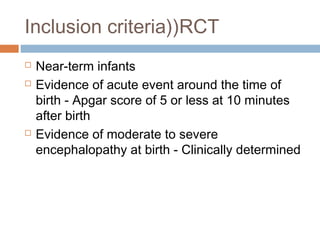
Inclusion criteria))RCT
 Near-term infants
 Evidence of acute event around the time of
birth - Apgar score of 5 or less at 10 minutes
after birth
 Evidence of moderate to severe
encephalopathy at birth - Clinically determined
at least 2 of the following:
lethargy, stupor, or coma;
abnormal tone or posture;
abnormal reflexes [suck, grasp, Moro, gag,
stretch reflexes];
decreased or absent spontaneous activity;
autonomic dysfunction [including bradycardia,
abnormal pupils, apneas];
and clinical evidence of seizures, moderately or
severely abnormal amplitude (aEEG)
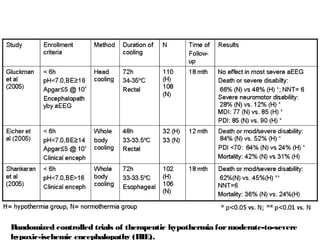
Randomized controlled trials of therapeutic hypothermia formoderate-to-severe
hypoxic-ischemic encephalopathy (HIE).
the results of the trials
 No difference in composite outcome of death
or severe disability were noted between the
groups.
 However, the study found that moderate
hypothermia for 72 hours improved neurologic
outcomes in survivors.
 Surviving infants who were cooled were more
likely to be free of neurologic abnormalities
 These clinical studies have been reassuring
regarding safety and applicability of
hypothermia therapy
 Therapeutic hypothermia when applied within
6 hours of birth and maintained for 48-72
hours is a promising therapy for mild-to-
moderate cases of HIE
hypothermia and its side effects
 include coagulation defects,
 leukocyte malfunctions,
 pulmonary hypertension,
 worsening of metabolic acidosis, and
 abnormalities of cardiac rhythm, especially
during rewarming.
What is the optimal timing of
initiation of hypothermia therapy?
 Cooling must begin early, within 6 hours of
injury. However (the earlier the better )
 Simplified method using widely available
icepacks is an effective way to provide
hypothermia therapy in referring centers while
awaiting transfer to a tertiary NICU
6hr???!!!>
 On the other hand, a favorable outcome may
be possible if the cooling begins beyond 6
hours after injury.
 A current National Institute of Child Health
and Human Development (NICHD) study is
evaluating the efficacy of delayed hypothermia
therapy for infants presenting at referral
centers beyond 6 hours of life or with evolving
encephalopathy.
What is the optimal duration of
hypothermia therapy?
 The greater the severity of the initial injury, the
longer the duration of hypothermia needed for
optimal neuroprotection.
 The optimal duration of brain cooling in the
human newborn has not been established
What is the best method?
 Two methods have been used in clinical trials:
selective head cooling and whole body
cooling.
selective head cooling
 In selective head cooling, a cap (CoolCap)
with channels for circulating cold water is
placed over the infant's head, and a pumping
device facilitates continuous circulation of cold
water.
 Rectal temperature is then maintained at 34-
35°C for 72 hour
whole body hypothermia
 In whole body hypothermia, the infant is
placed on a commercially available cooling
blanket, through which circulating cold water
flows, so that the desired level of hypothermia
is reached quickly and maintained for 72
hours.
What is the optimal rewarming
method?
 Rewarming is a critical period.
 In clinical trials, rewarming was carried out
gradually, over 6-8 hours.
Does hypothermia therapy result in
long-termbenefits?
 Several meta-analysis have been conducted
and indicate that therapeutic hypothermia is
beneficial to term newborns with hypoxic-
ischemic encephalopathy
In a Cochrane review, Jacobs et al found that
therapeutic hypothermia results in significant
reduction in the following:
 Combined outcome of mortality or major
neurodevelopmental disability at age 18
months
 Mortality
 Neurodevelopmental disability in survivors
 They also found a significant increase in
thrombocytopenia, although it was not
clinically significant.
 Benign sinus bradycardia
 Hypothermia therapy should be conducted
under strict protocols and reserved to regional
referral centers offering comprehensive
multidisciplinary care and planning to conduct
long-term neurodevelopmental follow-up.
NEUROPROTECTIVE
STRATEGIES
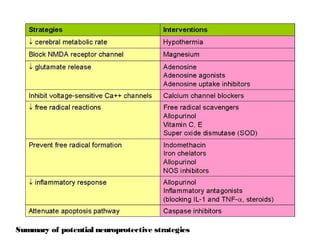
Summary of potential neuroprotective strategies
Promising avenues include the
following:
 Prophylactic barbiturates: high-dose
phenobarbital (40 mg/kg) was given over 1
hour to infants with severe hypoxic-ischemic
encephalopathy.
 Treated infants had fewer seizures
 Treated infants also had fewer neurological
deficits at age 3 years
 Erythropoietin: In a recent study, low-dose
erythropoietin (300-500 U/kg) administered for
2 weeks starting in the first 48 hours of life
decreased the incidence of death or moderate
and severe disability at age 18 months
 Subgroup analysis indicated that only infants
with moderate disability benefited from this
therapy.
 Allopurinol: Slight improvements in survival
and cerebral blood flow (CBF) were noted in a
small group of infants tested with this free-
radical scavenger in one clinical trial.
 Excitatory amino acid (EAA) antagonists: (MK-
801, an EAA antagonist), has shown
promising results in experimental animals and
in a limited number of adult trials.
 However, this drug has serious cardiovascular
adverse effects
Medication Summary
 Providing standard intensive care support,
correcting metabolic acidosis, close monitoring
of the fluid status, and seizure control are the
main elements of treatment in patients with
(HIE).
 Anticonvulsants are the only specific drugs
used often in this condition.
FurtherInpatient Care
 Close physical therapy and developmental
evaluations are needed prior to discharge in
patients with (HIE).
References
 Ferriero DM. Neonatal brain injury. NEng lJ Me d. Nov 4 2004;351(19):1985-95. [Medline].
 Perlman JM. Brain injury in the term infant. Se m in Pe rinato l. Dec 2004;28(6):415-24. [Medline].
 Grow J, Barks JD. Pathogenesis of hypoxic-ischemic cerebral injury in the term infant: current
concepts.Clin Pe rinato l. Dec 2002;29(4):585-602, v. [Medline].
 Srinivasakumar P, Zempel J, Wallendorf M, Lawrence R, Inder T, Mathur A. Therapeutic
hypothermia in neonatal hypoxic ischemic encephalopathy: electrographic seizures and
magnetic resonance imaging evidence of injury. JPe diatr. Aug 2013;163(2):465-70. [Medline].
 Shankaran S. The postnatal management of the asphyxiated term infant. Clin Pe rinato l. Dec
2002;29(4):675-92. [Medline].
 Stola A, Perlman J. Post-resuscitation strategies to avoid ongoing injury following intrapartum
hypoxia-ischemia. Se m in Fe talNe o natalMe d. Dec 2008;13(6):424-31. [Medline].
 Laptook A, Tyson J, Shankaran S, et al. Elevated temperature after hypoxic-ischemic
encephalopathy: risk factor for adverse outcomes. Pe diatrics . Sep 2008;122(3):491-
9. [Medline]. [Full Text].
 [Guideline] American Academy of Pediatrics. Relation between perinatal factors and neurological
outcome. In: Guidelines for Perinatal Care. 3rd ed. Elk Grove Village, Ill: American Academy of
Pediatrics; 1992:221-234.
 [Guideline] Committee on fetus and newborn, American Academy of Pediatrics and Committee
on obstetric practice, American College of Obstetrics and Gynecology. Use and abuse of the
APGAR score.Pe diatr. 1996;98:141-142. [Medline].
References
 Papile LA, Rudolph AM, Heymann MA. Autoregulation of cerebral blood flow in the preterm fetal lamb.Pe dia tr
Re s. Feb 1985;19(2):159-61. [Medline].
 Rosenkrantz TS, Diana D, Munson J. Regulation of cerebral blood flow velocity in nonasphyxiated, very low birth
weight infants with hyaline membrane disease. JPe rinato l. 1988;8(4):303-8. [Medline].
 Pacher P, Beckman JS, Liaudet L. Nitric oxide and peroxynitrite in health and disease. Physio lRe v. Jan
2007;87(1):315-424. [Medline].
 Roth SC, Baudin J, Cady E, Johal K, Townsend JP, Wyatt JS. Relation of deranged neonatal cerebral oxidative
metabolism with neurodevelopmental outcome and head circumference at 4 years. De v Me d Child Ne uro l. Nov
1997;39(11):718-25. [Medline].
 Berger R, Garnier Y. Pathophysiology of perinatal brain damage. Brain Re s Brain Re s Re v. Aug 1999;30(2):107-
34. [Medline].
 Rivkin MJ. Hypoxic-ischemic brain injury in the term newborn. Neuropathology, clinical aspects, and
neuroimaging. Clin Pe rinato l. Sep 1997;24(3):607-25. [Medline].
 Vannucci RC. Mechanisms of perinatal hypoxic-ischemic brain damage. Se m in Pe rinato l. Oct 1993;17(5):330-
7. [Medline].
 Vannucci RC, Yager JY, Vannucci SJ. Cerebral glucose and energy utilization during the evolution of hypoxic-
ischemic brain damage in the immature rat. JCe re b Blo o d Flo w Me tab. Mar 1994;14(2):279-88.[Medline].
 de Haan HH, Hasaart TH. Neuronal death after perinatal asphyxia. Eur JO bste t Gyne co lRe pro d Bio l. Aug
1995;61(2):123-7. [Medline].
 McLean C, Ferriero D. Mechanisms of hypoxic-ischemic injury in the term infant. Se m in Pe rinato l. Dec
2004;28(6):425-32. [Medline].
 Bryce J, Boschi-Pinto C, Shibuya K, Black RE. WHO estimates of the causes of death in children. Lance t. Mar
26-Apr 1 2005;365(9465):1147-
THANK YOU
Case presentation
 A male , post term (42)W , NVD, AGA , BW
3.625, admitted to our NICU at 12:15 am with
a diagnosis of HIE.
 The mother is a 34yr old multipara G3 P2
A1,low socioeonomic status and suferred from
raised blood pressure and UTI during the last
trimester for which she received oral therapy .
 Iron deficieny anaemia started during 2nd
trimester and 3rd
for which she received oral
iron tab
Natal History
 Spontaneous vaginal delivery , spont. Rupture
of memb.,clear amnion , vertex presentation ,
fetal monitoring : absent +ve data.
 APGAR score 1st
min is 1 and immediat
resuscitation started in the delivery room ,
drying ,warming , positioning and AMBU bag
vetilation .
 5 min and 10 min apgar was 5 , intubation
and transfere to NICU
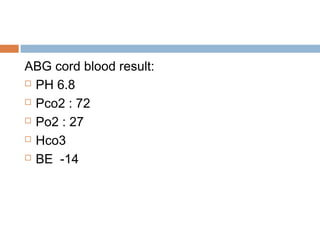
ABG cord blood result:
 PH 6.8
 Pco2 : 72
 Po2 : 27
 Hco3
 BE -14
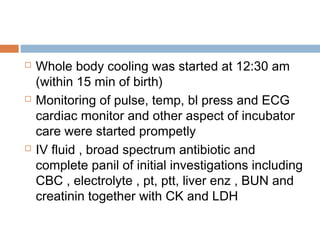
 Whole body cooling was started at 12:30 am
(within 15 min of birth)
 Monitoring of pulse, temp, bl press and ECG
cardiac monitor and other aspect of incubator
care were started prompetly
 IV fluid , broad spectrum antibiotic and
complete panil of initial investigations including
CBC , electrolyte , pt, ptt, liver enz , BUN and
creatinin together with CK and LDH
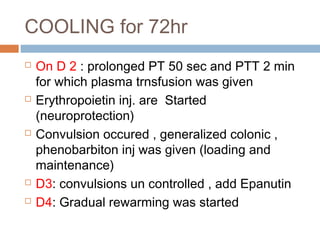
COOLING for 72hr
 On D 2 : prolonged PT 50 sec and PTT 2 min
for which plasma trnsfusion was given
 Erythropoietin inj. are Started
(neuroprotection)
 Convulsion occured , generalized colonic ,
phenobarbiton inj was given (loading and
maintenance)
 D3: convulsions un controlled , add Epanutin
 D4: Gradual rewarming was started
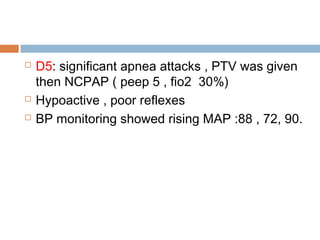
 D5: significant apnea attacks , PTV was given
then NCPAP ( peep 5 , fio2 30%)
 Hypoactive , poor reflexes
 BP monitoring showed rising MAP :88 , 72, 90.
 D7: nasal pronge ( stop NCPAP)
 Full fontanelle: CSF analysis (bloody tap)
 Cr U/S : free
 MRI : pic. Of cerebral oedema and hypoxic
changes
 Reduced total fluid intake with gradual
introduction of NG feeding
 D8: ECG monitor multiple premature
ventricular contractions associated with
generalized tonic convulsions treated with IV
lidocaine
 D11 : Off o2
 D24: stable , transfered to bed , nasogastric
full feeding , stop IV fluid and antibiotics
 Convulsions controlled , maintenance
sominaletta and epanutin orally
 Oral Topiramate
Discharge plan:
 Educate the parent about NG feeding with
gradual stimulation of oral suckling ( pacifiers)
 Follow up at Neonatal outpt clinic and blood
pressure management
 Gradual withdrawal of anti convulsant under
supervision of ped. Neurology clinic
 F/u of MRI after 3 month of discharge
 Cont. care and support in pediat outpt clinic
 Fundus exam and hearing assessment to
exclude potential handicap
 Follow up of developmental mile stones

Perinatal asphyxia

  • 1.
  • 2.
    Perinatal asphyxia  Perinatalasphyxia, more appropriately known as hypoxic-ischemic encephalopathy, is characterized by clinical and laboratory evidence of acute or subacute brain injury due to asphyxia.  The primary causes of this condition are systemic hypoxemia and/or reduced cerebral blood flow (CBF).  Birth asphyxia causes 23% of all neonatal deaths worldwide.
  • 3.
     Severe hypoxiaresults in anaerobic glycolysis and lactic acid production first in the peripheral tissues (muscle and heart) and then in the brain.  Ischemia (lack of sufficient blood flow to all or part of an organ) is both a cause and a result of hypoxia.
  • 4.
     Hypoxia andacidosis can depress myocardial function, leading to hypotension and ischemia.  Ischemia can impair oxygen delivery, causing further compromise, as well as disrupt delivery of substrate and removal of metabolic and respiratory by-products (eg, lactic acid, carbon dioxide).
  • 5.
    TIMING OF INJURY Asphyxia can occur before, during, or after birth. Based on a review of multiple studies that have examined the temporal relationship of obstetric events and neonatal outcomes, predominantly HIE in term infants, the proportion of conditions that occurs in each time period can be estimated
  • 6.
     Antepartum events,such as maternal hypotension or trauma, account for 4 to 20 percent of cases.  Intrapartum events, such as placental abruption or umbilical cord prolapse, are seen in 56 to 80 percent.
  • 7.
     In approximately10 percent of cases, a postnatal insult occurs, usually caused by severe cardiopulmonary abnormalities or associated with prematurity.  However, the timing of injury often is difficult to establish for an individual infant
  • 8.
     Neonatal encephalopathyis a heterogeneous syndrome characterized by signs of central nervous system dysfunction in newborn infants
  • 9.
     Clinical suspicionof neonatal encephalopathy should be considered in any newborn exhibiting an abnormal level of consciousness, seizures, tone and reflex abnormalities, apnea, aspiration and feeding difficulties
  • 10.
     "Neonatal encephalopathy"has emerged as the preferred term to describe central nervous system dysfunction in the newborn period  The terminology does not imply a specific underlying pathophysiology since the nature of brain injury causing neurologic impairment in a newborn is poorly understood.
  • 11.
     While neonatalencephalopathy was once automatically ascribed to hypoxia-ischemia  It is now known that hypoxia-ischemia is only one of many possible contributors to neonatal encephalopathy.  Whether a particular newborn's encephalopathy can be attributed to hypoxic- ischemic brain injury is often unclear.
  • 12.
     Some investigatorsrequire stringent criteria for using the term neonatal encephalopathy, such as two or more symptoms of encephalopathy lasting over 24 hours ,while others require no more than a low five minute Apgar score
  • 13.
     However, theuse of Apgar scores alone is problematic, as Apgar scores may be low due to maternal analgesia or prematurity, or can be normal in the presence of acute hypoxia- ischemic injury.
  • 14.
     Given thatthe underlying nature of brain injury causing neurologic impairment in a newborn is often poorly understood, "neonatal encephalopathy" has emerged as the preferred terminology to describe central nervous system dysfunction in the newborn period, as it does not imply a specific underlying pathophysiology
  • 15.
     The incidenceof neonatal encephalopathy depends on how the syndrome is defined, but varies between two to nine per 1000 term births  As the term “neonatal encephalopathy” has become increasingly favored, it has been shown that the diagnosis of "birth asphyxia" has declined over the past decade
  • 16.
     Despite majoradvances in monitoring technology and knowledge of fetal and neonatal pathologies, perinatal asphyxia or, more appropriately, hypoxic-ischemic encephalopathy (HIE), remains a serious condition that causes significant mortality and long-term morbidity.
  • 17.
    Pathophysiology  Brain hypoxiaand ischemia due to systemic hypoxemia, reduced cerebral blood flow (CBF), or both are the primary physiological processes that lead to hypoxic-ischemic encephalopathy
  • 18.
     The initialcompensatory adjustment to an asphyxial event is an increase in CBF due to hypoxia and hypercapnia.  This is accompanied by a redistribution of cardiac output to essential organs, including the brain, heart, and adrenal glands.
  • 19.
     A bloodpressure (BP) increase due to increased release of epinephrine further enhances this compensatory response.
  • 20.
    Fetal response toasphyxia illustrating the initial redistribution of blood flow to vital organs. With prolonged asphyxial insult and failure of compensatory mechanisms, cerebral blood flow falls, leading to ischemic brain injury.
  • 21.
     In adults,CBF is maintained at a constant level despite a wide range in systemic BP.  This phenomenon is known as the cerebral autoregulation, which helps maintain cerebral perfusion  In human adults, the BP range at which CBF is maintained is 60-100 mm Hg.
  • 22.
     Limited datain the human fetus and the newborn infant suggest that CBF is stable over much narrower range of BPs  Some experts have postulated that, in the healthy term newborn, the BP range at which the CBF autoregulation is maintained may be only between 10-20 mm Hg (compared with the 40 mm Hg range in adults)
  • 23.
     In addition,the autoregulatory zone may also be set at a lower level, about the midpoint of the normal BP range for the fetus and newborn.  However, the precise upper and lower limits of the BP values above and below which the CBF autoregulation is lost remain unknown for the human newborn.
  • 24.
     In thefetus and newborn suffering from acute asphyxia, after the early compensatory adjustments fail, the CBF can become pressure-passive, at which time brain perfusion depends on systemic BP
  • 25.
     As BPfalls, CBF falls below critical levels, and the brain injury secondary to diminished blood supply and a lack of sufficient oxygen occurs.  This leads to intracellular energy failure.
  • 26.
     During theearly phases of brain injury, brain temperature drops, and local release of neurotransmitters, such as gamma- aminobutyric acid transaminase (GABA), increase.  These changes reduce cerebral oxygen demand, transiently minimizing the impact of asphyxia.
  • 27.
     At thecellular level, neuronal injury in hypoxic- ischemic encephalopathy is an evolving process.  The magnitude of the final neuronal damage depends on duration and severity of the initial insult combined to the effects of reperfusion injury, and apoptosis.
  • 28.
    At the biochemicallevel  Excitatory amino acid (EAA) receptor overactivation plays a critical role in the pathogenesis of neonatal hypoxia-ischemia.  During cerebral hypoxia-ischemia, the uptake of glutamate (the major excitatory neurotransmitter of the mammalian brain) is impaired.
  • 29.
     This resultsin high synaptic levels of glutamate and EAA receptor overactivation, including N-methyl-D-aspartate (NMDA), amino-3-hydroxy-5-methyl-4 isoxazole propionate (AMPA), and kainate receptors.  NMDA receptors are permeable to Ca++ and Na+ , whereas AMPA and kainate receptors are permeable to Na+
  • 30.
     Accumulation ofNa+ coupled with the failure of energy dependent enzymes such as Na+/ K+ -ATPase leads to rapid cytotoxic edema and necrotic cell death.  Activation of NMDA receptor leads to intracellular Ca++ accumulation and further pathologic cascades activation.
  • 31.
     EAAs accumulationalso contributes to increasing the pace and extent of programmed cell death through secondary Ca++ intake into the nucleus.
  • 32.
     Finally, developingoligo/dendroglia is uniquely susceptible to hypoxia-ischemia, specifically excito-toxicity and free radical damage.  This white matter injury may be the basis for the disruption of long-term learning and memory abilities in infants with hypoxic- ischemic encephalopathy.
  • 33.
     During thereperfusion period, free radical production increases due to activation of enzymes such as cyclooxygenase, xanthine oxidase, and lipoxygenase.  Free radical damage is further exacerbated in the neonate because of immature antioxidant defenses..
  • 34.
     Free radicalscan lead to lipid peroxidation as well as DNA and protein damage and can trigger apoptosis.  Finally, free radicals can combine with nitric oxide (NO) to form peroxynitrite a highly toxic oxidant
  • 35.
     This excessiveNO production plays an important role in the pathophysiology of perinatal hypoxic-ischemic brain injury.  Inflammatory mediators (cytokines and chemokines) have been implicated in the pathogenesis of HIE and may represent a final common pathway of brain injury.
  • 36.
     Following theinitial phase of energy failure from the asphyxial injury, cerebral metabolism may recover following reperfusion, only to deteriorate in a secondary energy failure phase.
  • 37.
     This newphase of neuronal damage, starting at about 6-24 hours after the initial injury, is characterized by mitochondrial dysfunction, and initiation of the apoptotic cascade.  This phase has been called the "delayed phase of neuronal injury."
  • 38.
     The durationof the delayed phase is not precisely known in the human fetus and newborn but appears to increase over the first 24-48 hours and then start to resolve thereafter.  In the human infant, the duration of this phase is correlated with adverse neurodevelopmental outcomes at 1 year and 4 years after insult.
  • 39.
    Pathophysiology of hypoxic-ischemicbrain injury in the developing brain. During the initial phase of energy failure, glutamate mediated excitotoxicity and Na+/K+ ATPase failure lead to necrotic cell death. Aftertransient recovery of cerebral energy metabolism, a secondary phase of apoptotic neuronal death occurs.(ROS = Reactive
  • 40.
    Frequency  In theUnited States and in most advanced countries, the incidence of hypoxic-ischemic encephalopathy is 1-8 cases per 1000 births.  The incidence of HIE is reportedly high in countries with limited resources; however, precise figures are not available.  Birth asphyxia is the cause of 23% of all neonatal deaths worldwide.
  • 41.
    Mortality/Morbidity  In severehypoxic-ischemic encephalopathy, the mortality rate is reportedly 25-50%. Most deaths occur in the first week of life due to multiple organ failure.  Some infants with severe neurologic disabilities die in their infancy from aspiration pneumonia or systemic infections.
  • 42.
     80% ofinfants who survive severe hypoxic- ischemic encephalopathy develop serious complications,  10-20% develop moderately serious disabilities, and  as many as 10% are healthy.
  • 43.
    History  The 1996guidelines from the AAP and ACOG for (HIE) indicate that all of the following must be present for the designation of perinatal asphyxia severe enough to result in acute neurological injury:  Profound metabolic or mixed acidemia (pH < 7) in an umbilical artery blood sample, if obtained  Persistence of an Apgar score of 0-3 for longer than 5 minutes  Neonatal neurologic sequelae (eg, seizures, coma, hypotonia)  Multiple organ involvement (eg, kidney, lungs, liver, heart, intestines)
  • 44.
    CNS Manifestations Mild hypoxic-ischemicencephalopathy  Muscle tone may be slightly increased and deep tendon reflexes may be brisk during the first few days.  Transient behavioral abnormalities, such as poor feeding, irritability, or excessive crying or sleepiness, may be observed.  The neurologic examination findings normalize by 3-4 days of life.
  • 45.
    Moderately severe hypoxic- ischemicencephalopathy  The infant is lethargic, with significant hypotonia and diminished deep tendon reflexes.  The grasping, Moro, and sucking reflexes may be sluggish or absent.  Occasional periods of apnea.  Seizures may occur within the first 24 hours of life.  Full recovery within 1-2 weeks is possible and is associated with a better long-term outcome.
  • 46.
     An initialperiod of well-being or mild hypoxic- ischemic encephalopathy may be followed by sudden deterioration, suggesting ongoing brain cell dysfunction, injury, and death; seizure intensity might increase.
  • 47.
    Severe hypoxic-ischemic encephalopathy  Stuporor coma is typical. The infant may not respond to any physical stimulus.  Breathing may be irregular, and the infant often requires ventilatory support.  Generalized hypotonia and depressed deep tendon reflexes are common.  Neonatal reflexes (eg, sucking, swallowing, grasping, Moro) are absent.
  • 48.
     Disturbances ofocular motion. The pupils may be dilated, fixed, or poorly reactive to light  Seizures occur early and often and may be initially resistant to conventional treatments.  The seizures are usually generalized, and their frequency may increase during the 24-48 hours after onset, correlating with the phase of reperfusion injury
  • 49.
     As theinjury progresses, seizures subside and the EEG becomes isoelectric or shows a burst suppression pattern.  At that time, wakefulness may deteriorate further, and the fontanelle may bulge, suggesting increasing cerebral edema.  Irregularities of heart rate and blood pressure (BP) are common , as is death from cardiorespiratory failure.
  • 50.
    Infants who survivesevere hypoxic-ischemic encephalopathy  The level of alertness improves by days 4-5 of life.  Hypotonia and feeding difficulties persist, requiring tube feeding for weeks to months.
  • 51.
    Multiorgan Dysfunction  Multiorgansystems involvement is a hallmark of hypoxic-ischemic encephalopathy.  Heart (43-78%) May present as reduced myocardial contractility, severe hypotension, passive cardiac dilatation, and tricuspid regurgitation.  Lungs (71-86%) Patients may have severe pulmonary hypertension requiring assisted ventilation.
  • 52.
     Renal (46-72%) Renalfailure presents as oliguria, leading to significant water and electrolyte imbalances.  Liver(80-85%) Elevated liver function test results, hyperammonemia, and coagulopathy can be seen. Necrotizing enterocolitis is rare
  • 53.
     Hematologic (32-54%) Disturbancesinclude increased nucleated RBCs, neutropenia or neutrophilia, thrombocytopenia, and coagulopathy.
  • 54.
    Neurologic Findings Cranial nerves Lack of reflex activity mediated by the cranial nerves can indicate brainstem dysfunction.  Neurologic examination may be difficult in the small premature infant, but weakness of the lower extremities sometimes reflects the neuropathologic substrate of periventricular leukomalacia
  • 55.
     The pupilstarts reacting to light around 30 weeks, but the light reflex is not consistently assessable until the gestational age of 32-35 weeks. Pupillary reflexes are reliably present at term.
  • 56.
     Patients withmild HIE often have mydriasis. Progression of the disease may produce miosis responsive to light, and in severe cases (stage 3 of Sarnat classification), the pupils are small or midpositioned and poorly reactive to light, reflecting sympathetic or parasympathetic dysfunction.
  • 57.
     The lackof pupillary, eye movement, corneal, gag, and cough reflexes may reflect damage to the brainstem, where the cranial-nerve nuclei are located.  Decreased respiratory drive or apnea can be from lesions of the respiratory center or medullary reticular formation.  Ventilatory disturbances in HIE may manifest as periodic breathing apnea or just decreased respiratory drive.
  • 58.
    Motorfunction  Begin themotor examination of an infant with suspected HIE by qualitatively and quantitatively observing his posture and spontaneous movements.  Specific patterns of motor weakness indicate cerebral injury patterns
  • 59.
    Se iz ures  HIE is often reported to be the most frequent cause of neonatal seizures  They usually occur 12-24 hours after birth and are difficult to control with anticonvulsants.  Tonic, unilateral, or focal seizures consistently have an EEG signature.  Subtle seizures may be a part of the HIE picture
  • 60.
    Sarnat Staging System The staging system proposed by Sarnat in 1976 is often useful in classifying the degree of encephalopathy.  Stages I, II, and III correlate with the descriptions of mild, moderate, and severe encephalopathy
  • 62.
    Causes  Badawi etal investigated risk factors of neonatal encephalopathy in the Western Australian case control study.  Of the 164 infants with moderate-to-severe neonatal encephalopathy, preconceptual and antepartum risk factors were identified in 69% of cases;  24% of infants had a combination of antepartum and intrapartum risk factors,  whereas only 5% of infants had only intrapartum risk factors.  In this study, 5% had no identifiable risk factors.
  • 63.
  • 64.
    Laboratory Studies  Thereare nor specific tests to confirm or exclude a diagnosis of hypoxic-ischemic encephalopathy (HIE) because the diagnosis is made based on the history, physical and neurological examinations, and laboratory evidence  As always, the results of the tests should be interpreted in conjunction with the clinical history and the findings from physical examination.
  • 65.
     Serum electrolytelevels  In severe cases, daily assessment of serum electrolytes are valuable until the infant's status improves.  Markedly low serum sodium, potassium, and chloride levels in the presence of reduced urine flow and excessive weight gain may indicate acute tubular damage or syndrome of inappropriate antidiuretic hormone (SIADH) secretion, particularly during the initial 2-3 days of life.
  • 66.
     Renal functionstudies Serum creatinine levels, creatinine clearance, and BUN levels suffice in most cases.  Cardiac and liverenzymes These values are an adjunct to assess the degree of hypoxic-ischemic injury to these other organs.
  • 67.
     Coagulation systemevaluation This includes prothrombin time, partial thromboplastin time, and fibrinogen levels.  ABG Blood gas monitoring is used to assess acid- base status and to avoid hyperoxia and hypoxia as well as hypercapnia and hypocapnia.
  • 68.
    Medical Care  Followinginitial resuscitation and stabilization, treatment of (HIE) is largely supportive and should focus on adequate ventilation and perfusion,  careful fluid management,  avoidance of hypoglycemia and hyperglycemia and  treatment of seizures. Intervention strategies aim to avoid any further brain injury in these infants.
  • 69.
    Supportive Care inPatients with Hypoxic-ischemic Encephalopathy  Most infants with severe hypoxic-ischemic encephalopathy need ventilatory support during first days of life.  Hypocapnia in particular may lead to severe brain hypoperfusion and cellular alkalosis and has been associated with worse neurodevelopmental outcomes.
  • 70.
     Of note,recent evidence indicates that increased FiO2 in the first 6 hours of life is a significant risk factor for adverse outcomes  Infants with hypoxic-ischemic encephalopathy are also at risk for pulmonary hypertension and should be monitored.
  • 71.
    Perfusion and BloodPressure Management  Studies indicate that a mean blood pressure (BP) above 35-40 mm Hg is necessary to avoid decreased cerebral perfusion.  Hypotension is common in infants with severe HIE and is due to myocardial dysfunction, capillary leak syndrome, and hypovolemia; hypotension should be promptly treated.  Dopamine or dobutamine can be used to achieve adequate cardiac output
  • 72.
    Fluid and Electrolytes Management Because of the concern for acute tubular necrosis (ATN) and syndrome of inappropriate antidiuretic hormone (SIADH) secretion, fluid restriction is typically recommended for these infants until renal function and urine output can be evaluated.
  • 73.
     However, fluidand electrolyte management must be individualized on the basis of clinical course, changes in weight, urine output, and the results of serum electrolyte and renal function studies.
  • 74.
     The roleof prophylactic theophylline, given early after birth, in reducing renal dysfunction after HIE has been evaluated in 3 small randomized controlled trials  A single dose of theophylline (5-8 mg/kg) given within 1 hour of birth resulted in (1) decreased severe renal dysfunction (2) increased creatine clearance; (3) increased glomerular filtration rate (GFR); and (4) decreased b2 microglobulin excretion.
  • 75.
     Fluid andglucose homeostasis should be achieved.  Avoid hypoglycemia and hyperglycemia because both may accentuate brain damage  Hyperthermia management : Hyperthermia has been shown to be associated with increased risk of adverse outcomes in neonates with moderate-to- severe HIE
  • 76.
    Treatment of Seizures Hypoxic-ischemic encephalopathy is the most common cause of seizures in the neonatal period.  Seizures are generally self-limited to the first days of life  Current therapies include phenobarbital, phenytoin, and benzodiazepines
  • 77.
    Hypothermia Therapy  Extensiveexperimental data suggest that mild hypothermia (3-4°C below baseline temperature) applied within a few hours (no later than 6 h) of injury is neuroprotective  The neuroprotective mechanisms are not completely understood.
  • 78.
     Possible mechanismsinclude (1) reduced metabolic rate and energy depletion; (2) decreased excitatory transmitter release; (3) reduced alterations in ion flux; (4) reduced apoptosis due to HIE; and (5) reduced vascular permeability, edema, and disruptions of blood-brain barrier functions
  • 79.
     The clinicalefficacy of therapeutic hypothermia in neonates with moderate-to- severe hypoxic-ischemic encephalopathy has been evaluated in 7 randomized controlled trials
  • 80.
    Inclusion criteria))RCT  Near-terminfants  Evidence of acute event around the time of birth - Apgar score of 5 or less at 10 minutes after birth  Evidence of moderate to severe encephalopathy at birth - Clinically determined
  • 81.
    at least 2of the following: lethargy, stupor, or coma; abnormal tone or posture; abnormal reflexes [suck, grasp, Moro, gag, stretch reflexes]; decreased or absent spontaneous activity; autonomic dysfunction [including bradycardia, abnormal pupils, apneas]; and clinical evidence of seizures, moderately or severely abnormal amplitude (aEEG)
  • 82.
    Randomized controlled trialsof therapeutic hypothermia formoderate-to-severe hypoxic-ischemic encephalopathy (HIE).
  • 83.
    the results ofthe trials  No difference in composite outcome of death or severe disability were noted between the groups.  However, the study found that moderate hypothermia for 72 hours improved neurologic outcomes in survivors.  Surviving infants who were cooled were more likely to be free of neurologic abnormalities
  • 84.
     These clinicalstudies have been reassuring regarding safety and applicability of hypothermia therapy  Therapeutic hypothermia when applied within 6 hours of birth and maintained for 48-72 hours is a promising therapy for mild-to- moderate cases of HIE
  • 85.
    hypothermia and itsside effects  include coagulation defects,  leukocyte malfunctions,  pulmonary hypertension,  worsening of metabolic acidosis, and  abnormalities of cardiac rhythm, especially during rewarming.
  • 86.
    What is theoptimal timing of initiation of hypothermia therapy?  Cooling must begin early, within 6 hours of injury. However (the earlier the better )  Simplified method using widely available icepacks is an effective way to provide hypothermia therapy in referring centers while awaiting transfer to a tertiary NICU
  • 87.
    6hr???!!!>  On theother hand, a favorable outcome may be possible if the cooling begins beyond 6 hours after injury.  A current National Institute of Child Health and Human Development (NICHD) study is evaluating the efficacy of delayed hypothermia therapy for infants presenting at referral centers beyond 6 hours of life or with evolving encephalopathy.
  • 88.
    What is theoptimal duration of hypothermia therapy?  The greater the severity of the initial injury, the longer the duration of hypothermia needed for optimal neuroprotection.  The optimal duration of brain cooling in the human newborn has not been established
  • 89.
    What is thebest method?  Two methods have been used in clinical trials: selective head cooling and whole body cooling.
  • 90.
    selective head cooling In selective head cooling, a cap (CoolCap) with channels for circulating cold water is placed over the infant's head, and a pumping device facilitates continuous circulation of cold water.  Rectal temperature is then maintained at 34- 35°C for 72 hour
  • 91.
    whole body hypothermia In whole body hypothermia, the infant is placed on a commercially available cooling blanket, through which circulating cold water flows, so that the desired level of hypothermia is reached quickly and maintained for 72 hours.
  • 92.
    What is theoptimal rewarming method?  Rewarming is a critical period.  In clinical trials, rewarming was carried out gradually, over 6-8 hours.
  • 93.
    Does hypothermia therapyresult in long-termbenefits?  Several meta-analysis have been conducted and indicate that therapeutic hypothermia is beneficial to term newborns with hypoxic- ischemic encephalopathy
  • 94.
    In a Cochranereview, Jacobs et al found that therapeutic hypothermia results in significant reduction in the following:  Combined outcome of mortality or major neurodevelopmental disability at age 18 months  Mortality  Neurodevelopmental disability in survivors
  • 95.
     They alsofound a significant increase in thrombocytopenia, although it was not clinically significant.  Benign sinus bradycardia
  • 96.
     Hypothermia therapyshould be conducted under strict protocols and reserved to regional referral centers offering comprehensive multidisciplinary care and planning to conduct long-term neurodevelopmental follow-up.
  • 97.
  • 98.
    Summary of potentialneuroprotective strategies
  • 99.
    Promising avenues includethe following:  Prophylactic barbiturates: high-dose phenobarbital (40 mg/kg) was given over 1 hour to infants with severe hypoxic-ischemic encephalopathy.  Treated infants had fewer seizures  Treated infants also had fewer neurological deficits at age 3 years
  • 100.
     Erythropoietin: Ina recent study, low-dose erythropoietin (300-500 U/kg) administered for 2 weeks starting in the first 48 hours of life decreased the incidence of death or moderate and severe disability at age 18 months  Subgroup analysis indicated that only infants with moderate disability benefited from this therapy.
  • 101.
     Allopurinol: Slightimprovements in survival and cerebral blood flow (CBF) were noted in a small group of infants tested with this free- radical scavenger in one clinical trial.
  • 102.
     Excitatory aminoacid (EAA) antagonists: (MK- 801, an EAA antagonist), has shown promising results in experimental animals and in a limited number of adult trials.  However, this drug has serious cardiovascular adverse effects
  • 103.
    Medication Summary  Providingstandard intensive care support, correcting metabolic acidosis, close monitoring of the fluid status, and seizure control are the main elements of treatment in patients with (HIE).  Anticonvulsants are the only specific drugs used often in this condition.
  • 104.
    FurtherInpatient Care  Closephysical therapy and developmental evaluations are needed prior to discharge in patients with (HIE).
  • 105.
    References  Ferriero DM.Neonatal brain injury. NEng lJ Me d. Nov 4 2004;351(19):1985-95. [Medline].  Perlman JM. Brain injury in the term infant. Se m in Pe rinato l. Dec 2004;28(6):415-24. [Medline].  Grow J, Barks JD. Pathogenesis of hypoxic-ischemic cerebral injury in the term infant: current concepts.Clin Pe rinato l. Dec 2002;29(4):585-602, v. [Medline].  Srinivasakumar P, Zempel J, Wallendorf M, Lawrence R, Inder T, Mathur A. Therapeutic hypothermia in neonatal hypoxic ischemic encephalopathy: electrographic seizures and magnetic resonance imaging evidence of injury. JPe diatr. Aug 2013;163(2):465-70. [Medline].  Shankaran S. The postnatal management of the asphyxiated term infant. Clin Pe rinato l. Dec 2002;29(4):675-92. [Medline].  Stola A, Perlman J. Post-resuscitation strategies to avoid ongoing injury following intrapartum hypoxia-ischemia. Se m in Fe talNe o natalMe d. Dec 2008;13(6):424-31. [Medline].  Laptook A, Tyson J, Shankaran S, et al. Elevated temperature after hypoxic-ischemic encephalopathy: risk factor for adverse outcomes. Pe diatrics . Sep 2008;122(3):491- 9. [Medline]. [Full Text].  [Guideline] American Academy of Pediatrics. Relation between perinatal factors and neurological outcome. In: Guidelines for Perinatal Care. 3rd ed. Elk Grove Village, Ill: American Academy of Pediatrics; 1992:221-234.  [Guideline] Committee on fetus and newborn, American Academy of Pediatrics and Committee on obstetric practice, American College of Obstetrics and Gynecology. Use and abuse of the APGAR score.Pe diatr. 1996;98:141-142. [Medline].
  • 106.
    References  Papile LA,Rudolph AM, Heymann MA. Autoregulation of cerebral blood flow in the preterm fetal lamb.Pe dia tr Re s. Feb 1985;19(2):159-61. [Medline].  Rosenkrantz TS, Diana D, Munson J. Regulation of cerebral blood flow velocity in nonasphyxiated, very low birth weight infants with hyaline membrane disease. JPe rinato l. 1988;8(4):303-8. [Medline].  Pacher P, Beckman JS, Liaudet L. Nitric oxide and peroxynitrite in health and disease. Physio lRe v. Jan 2007;87(1):315-424. [Medline].  Roth SC, Baudin J, Cady E, Johal K, Townsend JP, Wyatt JS. Relation of deranged neonatal cerebral oxidative metabolism with neurodevelopmental outcome and head circumference at 4 years. De v Me d Child Ne uro l. Nov 1997;39(11):718-25. [Medline].  Berger R, Garnier Y. Pathophysiology of perinatal brain damage. Brain Re s Brain Re s Re v. Aug 1999;30(2):107- 34. [Medline].  Rivkin MJ. Hypoxic-ischemic brain injury in the term newborn. Neuropathology, clinical aspects, and neuroimaging. Clin Pe rinato l. Sep 1997;24(3):607-25. [Medline].  Vannucci RC. Mechanisms of perinatal hypoxic-ischemic brain damage. Se m in Pe rinato l. Oct 1993;17(5):330- 7. [Medline].  Vannucci RC, Yager JY, Vannucci SJ. Cerebral glucose and energy utilization during the evolution of hypoxic- ischemic brain damage in the immature rat. JCe re b Blo o d Flo w Me tab. Mar 1994;14(2):279-88.[Medline].  de Haan HH, Hasaart TH. Neuronal death after perinatal asphyxia. Eur JO bste t Gyne co lRe pro d Bio l. Aug 1995;61(2):123-7. [Medline].  McLean C, Ferriero D. Mechanisms of hypoxic-ischemic injury in the term infant. Se m in Pe rinato l. Dec 2004;28(6):425-32. [Medline].  Bryce J, Boschi-Pinto C, Shibuya K, Black RE. WHO estimates of the causes of death in children. Lance t. Mar 26-Apr 1 2005;365(9465):1147-
  • 107.
  • 108.
    Case presentation  Amale , post term (42)W , NVD, AGA , BW 3.625, admitted to our NICU at 12:15 am with a diagnosis of HIE.  The mother is a 34yr old multipara G3 P2 A1,low socioeonomic status and suferred from raised blood pressure and UTI during the last trimester for which she received oral therapy .  Iron deficieny anaemia started during 2nd trimester and 3rd for which she received oral iron tab
  • 109.
    Natal History  Spontaneousvaginal delivery , spont. Rupture of memb.,clear amnion , vertex presentation , fetal monitoring : absent +ve data.  APGAR score 1st min is 1 and immediat resuscitation started in the delivery room , drying ,warming , positioning and AMBU bag vetilation .  5 min and 10 min apgar was 5 , intubation and transfere to NICU
  • 110.
    ABG cord bloodresult:  PH 6.8  Pco2 : 72  Po2 : 27  Hco3  BE -14
  • 111.
     Whole bodycooling was started at 12:30 am (within 15 min of birth)  Monitoring of pulse, temp, bl press and ECG cardiac monitor and other aspect of incubator care were started prompetly  IV fluid , broad spectrum antibiotic and complete panil of initial investigations including CBC , electrolyte , pt, ptt, liver enz , BUN and creatinin together with CK and LDH
  • 112.
    COOLING for 72hr On D 2 : prolonged PT 50 sec and PTT 2 min for which plasma trnsfusion was given  Erythropoietin inj. are Started (neuroprotection)  Convulsion occured , generalized colonic , phenobarbiton inj was given (loading and maintenance)  D3: convulsions un controlled , add Epanutin  D4: Gradual rewarming was started
  • 113.
     D5: significantapnea attacks , PTV was given then NCPAP ( peep 5 , fio2 30%)  Hypoactive , poor reflexes  BP monitoring showed rising MAP :88 , 72, 90.
  • 114.
     D7: nasalpronge ( stop NCPAP)  Full fontanelle: CSF analysis (bloody tap)  Cr U/S : free  MRI : pic. Of cerebral oedema and hypoxic changes  Reduced total fluid intake with gradual introduction of NG feeding
  • 115.
     D8: ECGmonitor multiple premature ventricular contractions associated with generalized tonic convulsions treated with IV lidocaine  D11 : Off o2  D24: stable , transfered to bed , nasogastric full feeding , stop IV fluid and antibiotics  Convulsions controlled , maintenance sominaletta and epanutin orally  Oral Topiramate
  • 116.
    Discharge plan:  Educatethe parent about NG feeding with gradual stimulation of oral suckling ( pacifiers)  Follow up at Neonatal outpt clinic and blood pressure management  Gradual withdrawal of anti convulsant under supervision of ped. Neurology clinic  F/u of MRI after 3 month of discharge  Cont. care and support in pediat outpt clinic
  • 117.
     Fundus examand hearing assessment to exclude potential handicap  Follow up of developmental mile stones