New B.Ed College Nellimoodu 
Name : Aneeja.S.Das 
Subject : Natural Science 
Candidate code : 181/13376002
The Cardiovascular System 
Structure & Function
Organs of the Cardiovascular System 
 Heart 
 Blood vessels 
 Arteries 
 Arterioles 
 Capillaries 
Veins 
 Venules
The Heart 
 Muscular organ the size of 
a fist 
 Four chambers – L/R 
Ventricles L/R Atria 
 Endocardium- lines the 
heart chambers 
 Myocardium- muscle layer 
 Pericardium- membranous 
outer covering
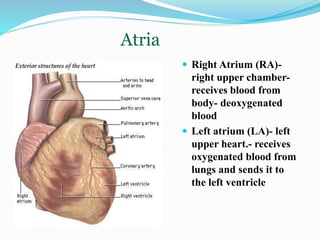
Atria 
 Right Atrium (RA)- 
right upper chamber-receives 
blood from 
body- deoxygenated 
blood 
 Left atrium (LA)- left 
upper heart.- receives 
oxygenated blood from 
lungs and sends it to 
the left ventricle
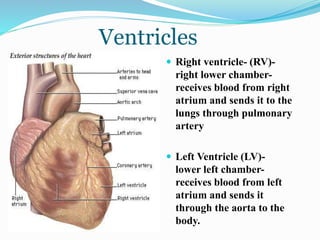
Ventricles 
 Right ventricle- (RV)- 
right lower chamber-receives 
blood from right 
atrium and sends it to the 
lungs through pulmonary 
artery 
 Left Ventricle (LV)- 
lower left chamber-receives 
blood from left 
atrium and sends it 
through the aorta to the 
body.
 Aorta: The main trunk of 
the systemic arteries, 
carrying blood from the 
left side of the heart to the 
arteries of all limbs and 
organs. 
 Pulmonary Artery carries 
blood to lungs 
Right 
Atrium 
Right 
Ventricle 
Left 
Atrium 
Left 
Ventricle 
Aorta 
pulmonary artery
 Pulmonary valve 
controls blood 
movement from right 
ventricle into pulmonary 
artery 
 The aortic valve 
controls blood flow from 
the left ventricle to the 
aorta 
Pulmonary 
valve 
Right 
Atrium 
Right 
Ventricle 
Left 
Atrium 
Left 
Ventricle 
Tricuspid 
Valve 
Mitral Valve 
Aortic valve
 Tricuspid valve 
controls blood flow 
between the right 
atrium and ventricle 
 Mitral valve controls 
blood movement 
between the left 
atrium and ventricle 
Right 
Atrium 
Right 
Ventricle 
Left 
Atrium 
Left 
Ventricle 
Tricuspid 
Valve 
Mitral Valve
Arteries 
 Arteries- tubes that 
carry blood away from 
the heart. 
 Muscular elastic walls 
 Form arterioles which 
form capillaries 
 Carry blood and 
oxygen to the body 
cells
Veins 
 Veins- tubes that carry 
blood toward the heart 
 Thinner muscular 
walls 
 Carry blood back to 
heart 
 Cuplike valves to help 
move blood
Capillaries 
 Capillaries- tubes that 
connect arteries and 
veins 
Walls only one cell 
thick 
 Site for exchange of 
nutrients and oxygen 
from blood cells and 
carbon dioxide and 
wastes to the blood
CONCLUSION 
 The chambers on the right side contain impure blood 
& those on the left side contain pure blood. 
 The right & left atria get filled with blood they 
contract together & the blood goes to the ventricles. 
 The ventricular contraction blood from the left 
ventricle enters the aorta & the blood from the right 
ventricle enters the pulmonary artery
Heart Powerpoint Presentation

Heart Powerpoint Presentation

  • 2.
    New B.Ed CollegeNellimoodu Name : Aneeja.S.Das Subject : Natural Science Candidate code : 181/13376002
  • 3.
    The Cardiovascular System Structure & Function
  • 4.
    Organs of theCardiovascular System  Heart  Blood vessels  Arteries  Arterioles  Capillaries Veins  Venules
  • 5.
    The Heart Muscular organ the size of a fist  Four chambers – L/R Ventricles L/R Atria  Endocardium- lines the heart chambers  Myocardium- muscle layer  Pericardium- membranous outer covering
  • 6.
    Atria  RightAtrium (RA)- right upper chamber-receives blood from body- deoxygenated blood  Left atrium (LA)- left upper heart.- receives oxygenated blood from lungs and sends it to the left ventricle
  • 7.
    Ventricles  Rightventricle- (RV)- right lower chamber-receives blood from right atrium and sends it to the lungs through pulmonary artery  Left Ventricle (LV)- lower left chamber-receives blood from left atrium and sends it through the aorta to the body.
  • 8.
     Aorta: Themain trunk of the systemic arteries, carrying blood from the left side of the heart to the arteries of all limbs and organs.  Pulmonary Artery carries blood to lungs Right Atrium Right Ventricle Left Atrium Left Ventricle Aorta pulmonary artery
  • 9.
     Pulmonary valve controls blood movement from right ventricle into pulmonary artery  The aortic valve controls blood flow from the left ventricle to the aorta Pulmonary valve Right Atrium Right Ventricle Left Atrium Left Ventricle Tricuspid Valve Mitral Valve Aortic valve
  • 10.
     Tricuspid valve controls blood flow between the right atrium and ventricle  Mitral valve controls blood movement between the left atrium and ventricle Right Atrium Right Ventricle Left Atrium Left Ventricle Tricuspid Valve Mitral Valve
  • 11.
    Arteries  Arteries-tubes that carry blood away from the heart.  Muscular elastic walls  Form arterioles which form capillaries  Carry blood and oxygen to the body cells
  • 12.
    Veins  Veins-tubes that carry blood toward the heart  Thinner muscular walls  Carry blood back to heart  Cuplike valves to help move blood
  • 13.
    Capillaries  Capillaries-tubes that connect arteries and veins Walls only one cell thick  Site for exchange of nutrients and oxygen from blood cells and carbon dioxide and wastes to the blood
  • 15.
    CONCLUSION  Thechambers on the right side contain impure blood & those on the left side contain pure blood.  The right & left atria get filled with blood they contract together & the blood goes to the ventricles.  The ventricular contraction blood from the left ventricle enters the aorta & the blood from the right ventricle enters the pulmonary artery