Innovative Lesson template 
Name of the Teacher : Madhusha M.L. 
Name of the School : 
Name of the Subject : 
Unit : Circulatory pathway 
Topic : Double circulation 
Date: 
Class: IX 
Division: 
Strength: 
Duration 45 Minutes. 
Curricular Statement 
Through observation, communication and discussion the child learns about double circulation 
Terms: 
Facts : 
Content analyisis 
Double circulation, pulmonary circulation, systemic circulation, pulmonary artery, aorta 
 Blood reaches every part of the body through double circulation. 
 Blood enters into the arteries through the contraction of ventricles. 
 Blood from the right ventricle enters into the lungs through pulmonary artery. 
 The excess carbon dioxide in the blood is replaced by oxygen in the lungs. Thus the blood get oxygenated. 
 There are two pulmonary veins from each lung which empty into the left atrium. This is pulmonary circulation. 
 During the next atrial contraction the blood is passed into the left ventricle from which blood is pumped into the aorta 
 The blood reaching the left ventricle by pulmonary circulation enters into systemic circulation through the aorta.
Concept: 
Learning outcomes in terms of specification 
 Through aorta blood goes to different parts of the body. 
 Blood then reaches back to right atrium of heart. This is systemic circulation. 
 When one blood circulation completes, fixed quantity of blood passes through the heart twicely. This is double circulation. 
 Simple factors reach every organ of the body through blood 
 Through blood circulation blood reaches every part of the body. 
Enables the pupil to develop 
 Factual knowledge about double circulation. 
i) Recalling new terms such as double circulation, pulmonary circulation, systematic circulation, pulmonary atery, aorta etc. Terms and facts are indicated in the content analysis. 
 Conceptual knowledge about double circulation. 
i) Recalling the functions of double circulation 
ii) Recognising the importance of double circulation 
iii) Explaining the importance and function of double circulation. 
 Procedural knowledge about double circulation 
i) Categorizing the blood circulations such as systemic circulation and pulmonary circulation.
Pre-requisite: Teaching Learning resources: 
 Meta cognition knowledge about double circulation 
i) Recognising the importance of double circulation in day to day life. 
ii) Predicting the importance of the function of blood circulation. 
 Scientific attitude towards double circulation 
i) Curiosity in knowledge the important role of double circulation in our day to day life. 
ii) Showing interest to collect more information about double circulation. 
 Process skills on double circulation 
i) Categorizing the blood circulations such as systemic circulation and pulmonary circulation. 
ii) Finding the function of blood circulation. 
iii) Explaining double circulation with evidence from medias and publications. 
Simple factors reach every part of the body through blood. 
 Image and Animation showing details of pulmonary circulation. 
 Image and Animation showing details of systemic circulation
Classroom interaction procedure 
Pupil response 
Introduction 
What is the organ when it stops its function results in the end of our lives ? 
Is blood always flow through this much important heart ? 
Is simple factors reach every part of the body through blood ? 
How many times fixed quantity of blood passes through our heart when one blood circulation completes in our body? 
What is called for this type of blood circulation ? 
Teacher succeeded in knowing the previous Knowledge. 
Double circulation (B.B) 
Presentation 
Activity –I 
Teacher shows the students the animation showing details of pulmonary circulation and ask the students to answer the given indicators in their science diary.
Indicators 
1. How blood enters into the arteries ? 
2. How blood reaches the lungs ? 
3. Where goes the pure blood from lungs ? What is called for this blood circulation ? 
Group discussion lead by teacher. 
Blood reaches every part of the body through double circulation. Blood enters into the arteries through the contraction of ventricles. Blood from the right ventricle enters into the lungs through pulmonary artery. From the lungs the blood then reaches into the left auricle of heart. In short we can say that the course of blood from the right ventricle through the lungs to the left atrium is called pumonary
circulation. 
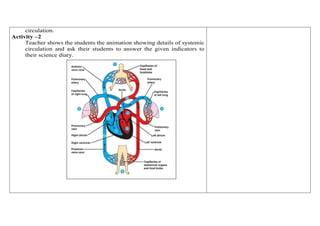
Activity –2 
Teacher shows the students the animation showing details of systemic circulation and ask their students to answer the given indicators to their science diary.
Indicators 
1. From which chamber of heart blood flows to different parts of the body ? 
2. Which type of blood reaches in the right atrium ? 
3. What is called double circulation ? 
Group discussion lead by teacher. 
Through aorta blood goes to different parts of the body from the left ventricle. Blood then reaches back to right atrium of heart. The blood that reaches to the right atrium is impure blood. In short we can say that the course of blood from the left ventricle through the different parts of the body into the right atrium is called systemic circulation. When one blood circulation completes, fixed quantity of blood passes through heart twicely. 
This is double circulation
Review 
1. What is double circulation ? 
2. How blood reaches the lungs ? 
3. Which type of blood reaches in the right atrium ? 
Follow up activity 
Prepare a flow chart of double circulation in your science diar 
Black Board Summary 
Date Class: 
Division: 
Strength: 
Biology 
Circulatory Pathway 
Double circulation 
Pulmonary Circulation 
Systemic Circulation 
Pulmonary artery 
Aorta
Madhusha B Ed

Madhusha B Ed

  • 1.
    Innovative Lesson template Name of the Teacher : Madhusha M.L. Name of the School : Name of the Subject : Unit : Circulatory pathway Topic : Double circulation Date: Class: IX Division: Strength: Duration 45 Minutes. Curricular Statement Through observation, communication and discussion the child learns about double circulation Terms: Facts : Content analyisis Double circulation, pulmonary circulation, systemic circulation, pulmonary artery, aorta  Blood reaches every part of the body through double circulation.  Blood enters into the arteries through the contraction of ventricles.  Blood from the right ventricle enters into the lungs through pulmonary artery.  The excess carbon dioxide in the blood is replaced by oxygen in the lungs. Thus the blood get oxygenated.  There are two pulmonary veins from each lung which empty into the left atrium. This is pulmonary circulation.  During the next atrial contraction the blood is passed into the left ventricle from which blood is pumped into the aorta  The blood reaching the left ventricle by pulmonary circulation enters into systemic circulation through the aorta.
  • 2.
    Concept: Learning outcomesin terms of specification  Through aorta blood goes to different parts of the body.  Blood then reaches back to right atrium of heart. This is systemic circulation.  When one blood circulation completes, fixed quantity of blood passes through the heart twicely. This is double circulation.  Simple factors reach every organ of the body through blood  Through blood circulation blood reaches every part of the body. Enables the pupil to develop  Factual knowledge about double circulation. i) Recalling new terms such as double circulation, pulmonary circulation, systematic circulation, pulmonary atery, aorta etc. Terms and facts are indicated in the content analysis.  Conceptual knowledge about double circulation. i) Recalling the functions of double circulation ii) Recognising the importance of double circulation iii) Explaining the importance and function of double circulation.  Procedural knowledge about double circulation i) Categorizing the blood circulations such as systemic circulation and pulmonary circulation.
  • 3.
    Pre-requisite: Teaching Learningresources:  Meta cognition knowledge about double circulation i) Recognising the importance of double circulation in day to day life. ii) Predicting the importance of the function of blood circulation.  Scientific attitude towards double circulation i) Curiosity in knowledge the important role of double circulation in our day to day life. ii) Showing interest to collect more information about double circulation.  Process skills on double circulation i) Categorizing the blood circulations such as systemic circulation and pulmonary circulation. ii) Finding the function of blood circulation. iii) Explaining double circulation with evidence from medias and publications. Simple factors reach every part of the body through blood.  Image and Animation showing details of pulmonary circulation.  Image and Animation showing details of systemic circulation
  • 4.
    Classroom interaction procedure Pupil response Introduction What is the organ when it stops its function results in the end of our lives ? Is blood always flow through this much important heart ? Is simple factors reach every part of the body through blood ? How many times fixed quantity of blood passes through our heart when one blood circulation completes in our body? What is called for this type of blood circulation ? Teacher succeeded in knowing the previous Knowledge. Double circulation (B.B) Presentation Activity –I Teacher shows the students the animation showing details of pulmonary circulation and ask the students to answer the given indicators in their science diary.
  • 5.
    Indicators 1. Howblood enters into the arteries ? 2. How blood reaches the lungs ? 3. Where goes the pure blood from lungs ? What is called for this blood circulation ? Group discussion lead by teacher. Blood reaches every part of the body through double circulation. Blood enters into the arteries through the contraction of ventricles. Blood from the right ventricle enters into the lungs through pulmonary artery. From the lungs the blood then reaches into the left auricle of heart. In short we can say that the course of blood from the right ventricle through the lungs to the left atrium is called pumonary
  • 6.
    circulation. Activity –2 Teacher shows the students the animation showing details of systemic circulation and ask their students to answer the given indicators to their science diary.
  • 7.
    Indicators 1. Fromwhich chamber of heart blood flows to different parts of the body ? 2. Which type of blood reaches in the right atrium ? 3. What is called double circulation ? Group discussion lead by teacher. Through aorta blood goes to different parts of the body from the left ventricle. Blood then reaches back to right atrium of heart. The blood that reaches to the right atrium is impure blood. In short we can say that the course of blood from the left ventricle through the different parts of the body into the right atrium is called systemic circulation. When one blood circulation completes, fixed quantity of blood passes through heart twicely. This is double circulation
  • 8.
    Review 1. Whatis double circulation ? 2. How blood reaches the lungs ? 3. Which type of blood reaches in the right atrium ? Follow up activity Prepare a flow chart of double circulation in your science diar Black Board Summary Date Class: Division: Strength: Biology Circulatory Pathway Double circulation Pulmonary Circulation Systemic Circulation Pulmonary artery Aorta