Hardness of Water
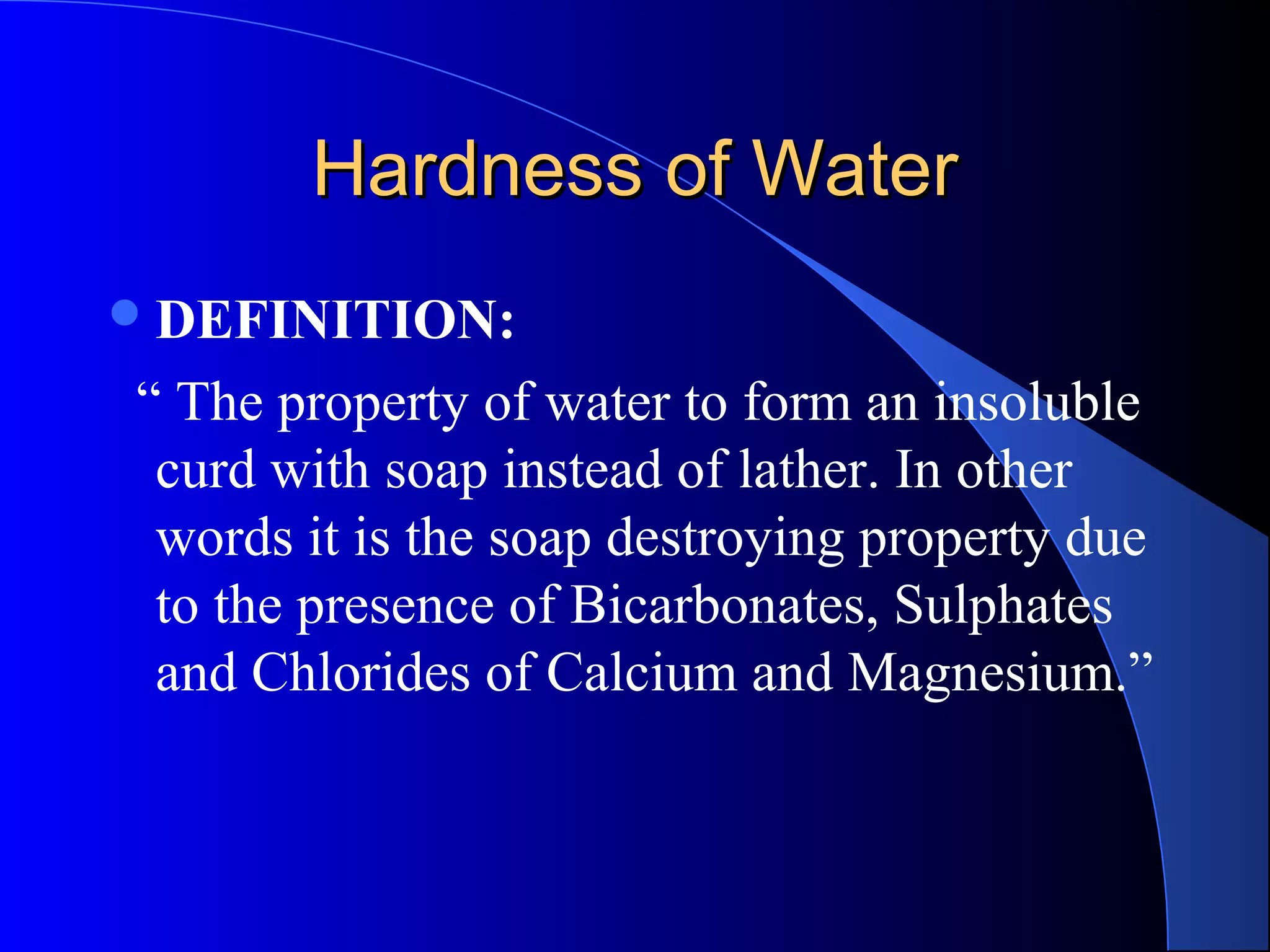
 DEFINITION:

“ The property of water to form an insoluble
 curd with soap instead of lather. In other
 words it is the soap destroying property due
 to the presence of Bicarbonates, Sulphates
 and Chlorides of Calcium and Magnesium.”
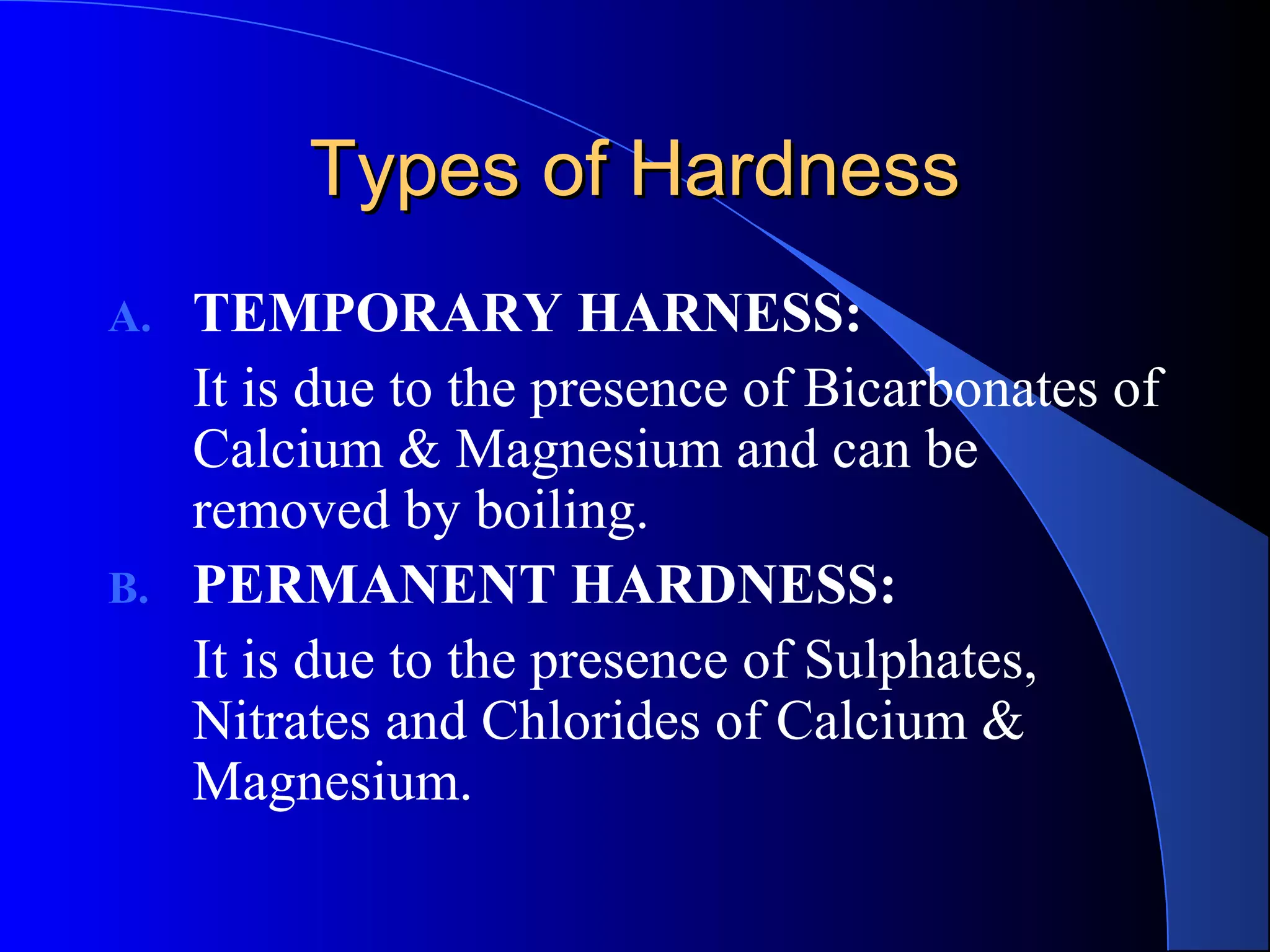
Types of Hardness
A. TEMPORARY HARNESS:
   It is due to the presence of Bicarbonates of
   Calcium & Magnesium and can be
   removed by boiling.
B. PERMANENT HARDNESS:
   It is due to the presence of Sulphates,
   Nitrates and Chlorides of Calcium &
   Magnesium.
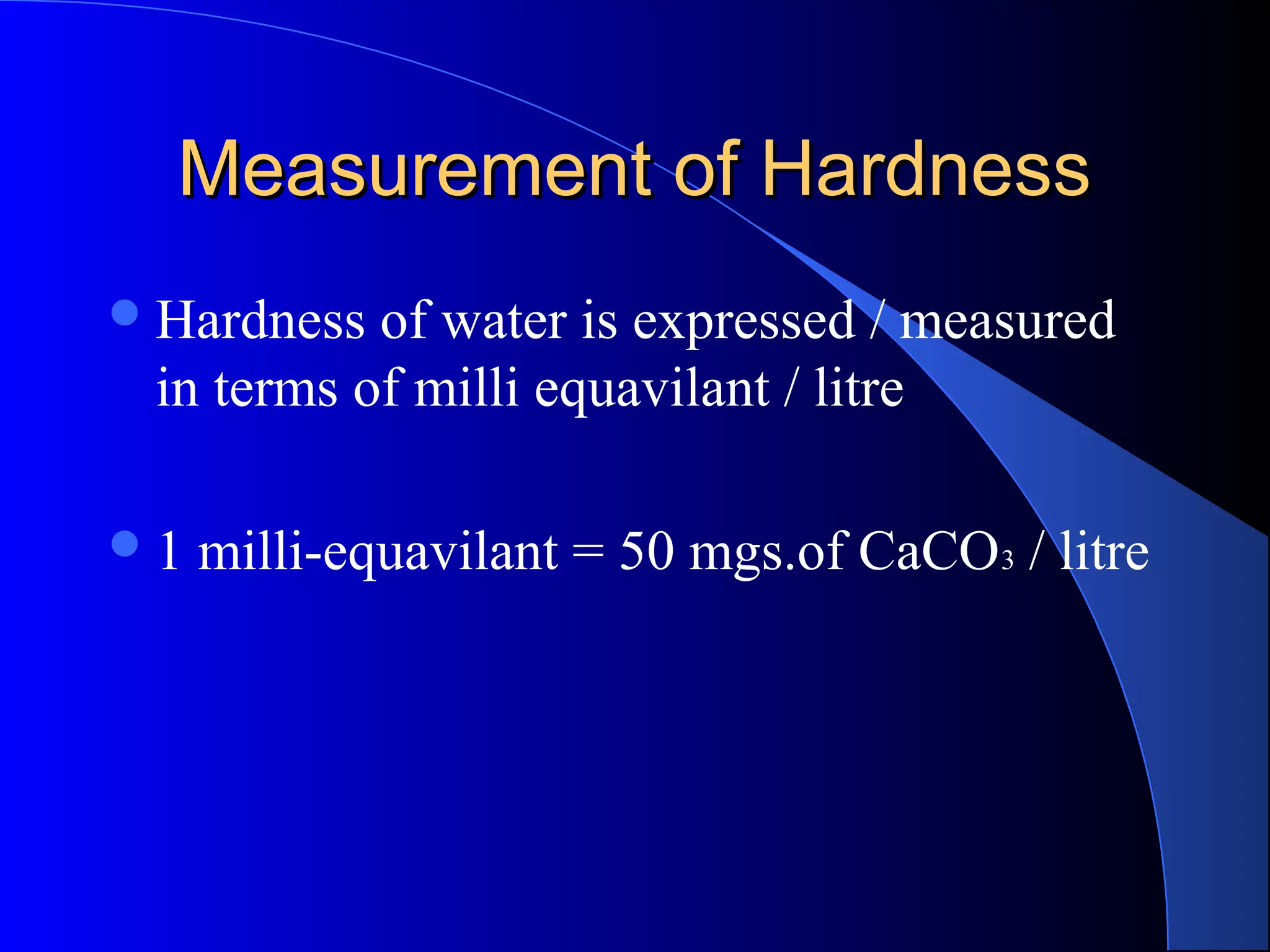
Measurement of Hardness
 Hardness of water is expressed / measured
 in terms of milli equavilant / litre

1   milli-equavilant = 50 mgs.of CaCO3 / litre
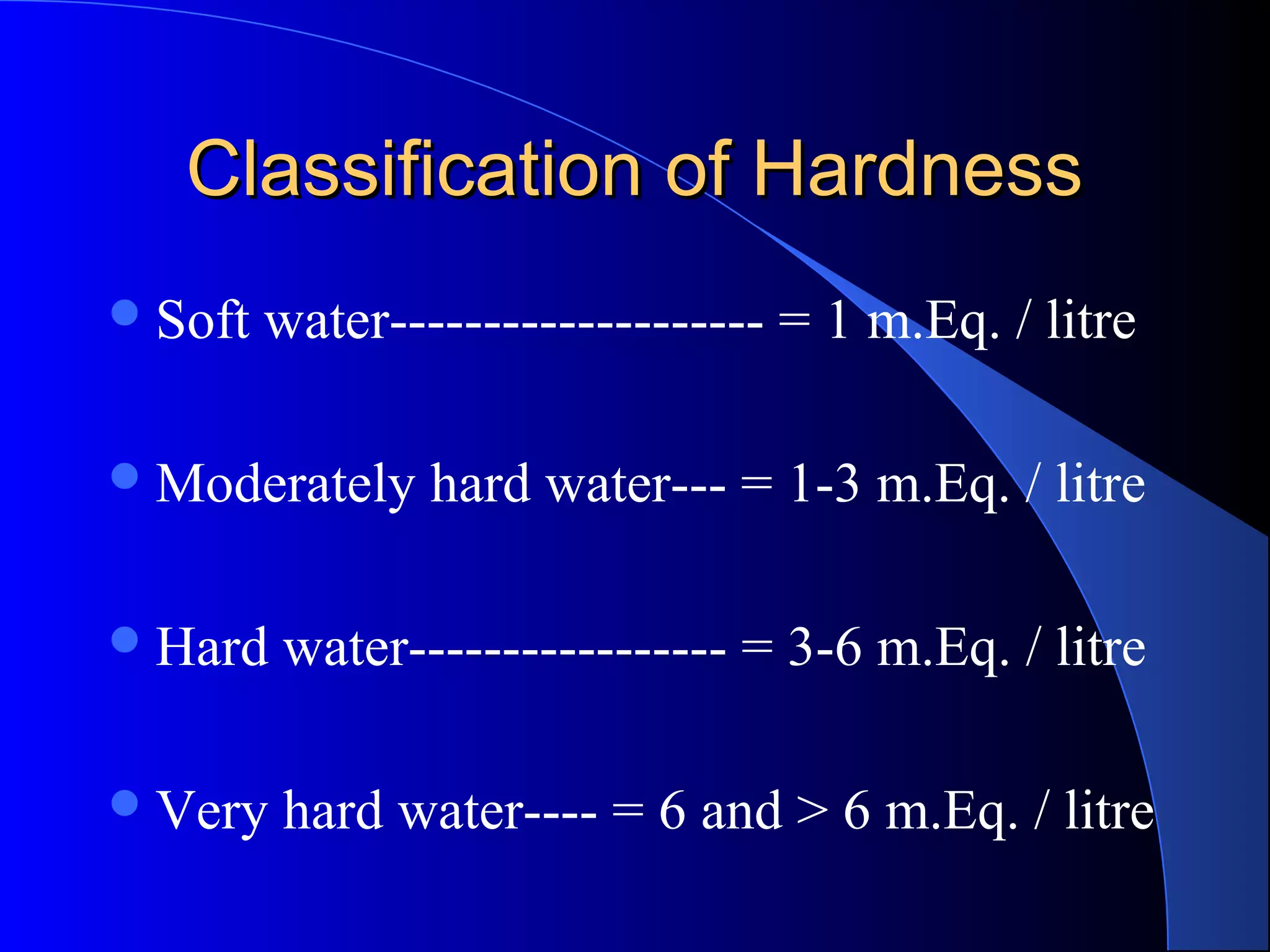
Classification of Hardness
 Soft   water-------------------- = 1 m.Eq. / litre

 Moderately     hard water--- = 1-3 m.Eq. / litre

 Hard   water----------------- = 3-6 m.Eq. / litre

 Very   hard water---- = 6 and > 6 m.Eq. / litre
Advantages of Hardness
    Reduced prevalence of,
    1.Arteriosclerotic heart disease
    2. Degenerative heart disease
    3. Sudden death due to Cardiac arrest
    4. Hypertension and
     5. Tetny
Disadvantages
    Are in the form of economic loss of a
     community and a country at large such as:
1.   More consumption of soap & detergents
2.   More consumption of fuel due to scaling
     formation in the boilers in industries
3.   Discoloration of foods
4.   Short life of clothes due to deposition of salts in
     fabrics
5.   Disturbance of dyeing process
6.   High prices of products
7.   Decreased life of cisterns and Pipes
Removal of Hardness
A. FOR TEMPORARY HARDNESS:
1. Boiling
2. Addition of Lime
B. FOR PERMANENT HARDNESS:
1. Addition of Lime
2. Addition of Sodium Carbonate
3. Base Exchange method / Permutit Process

Hardness of water

  • 1.
    Hardness of Water DEFINITION: “ The property of water to form an insoluble curd with soap instead of lather. In other words it is the soap destroying property due to the presence of Bicarbonates, Sulphates and Chlorides of Calcium and Magnesium.”
  • 2.
    Types of Hardness A.TEMPORARY HARNESS: It is due to the presence of Bicarbonates of Calcium & Magnesium and can be removed by boiling. B. PERMANENT HARDNESS: It is due to the presence of Sulphates, Nitrates and Chlorides of Calcium & Magnesium.
  • 3.
    Measurement of Hardness Hardness of water is expressed / measured in terms of milli equavilant / litre 1 milli-equavilant = 50 mgs.of CaCO3 / litre
  • 4.
    Classification of Hardness Soft water-------------------- = 1 m.Eq. / litre  Moderately hard water--- = 1-3 m.Eq. / litre  Hard water----------------- = 3-6 m.Eq. / litre  Very hard water---- = 6 and > 6 m.Eq. / litre
  • 5.
    Advantages of Hardness  Reduced prevalence of, 1.Arteriosclerotic heart disease 2. Degenerative heart disease 3. Sudden death due to Cardiac arrest 4. Hypertension and 5. Tetny
  • 6.
    Disadvantages  Are in the form of economic loss of a community and a country at large such as: 1. More consumption of soap & detergents 2. More consumption of fuel due to scaling formation in the boilers in industries 3. Discoloration of foods 4. Short life of clothes due to deposition of salts in fabrics 5. Disturbance of dyeing process 6. High prices of products 7. Decreased life of cisterns and Pipes
  • 7.
    Removal of Hardness A.FOR TEMPORARY HARDNESS: 1. Boiling 2. Addition of Lime B. FOR PERMANENT HARDNESS: 1. Addition of Lime 2. Addition of Sodium Carbonate 3. Base Exchange method / Permutit Process