GRAPHIC AIDS
CLASSIFICATION OF AUDIO-VISUAL AIDS
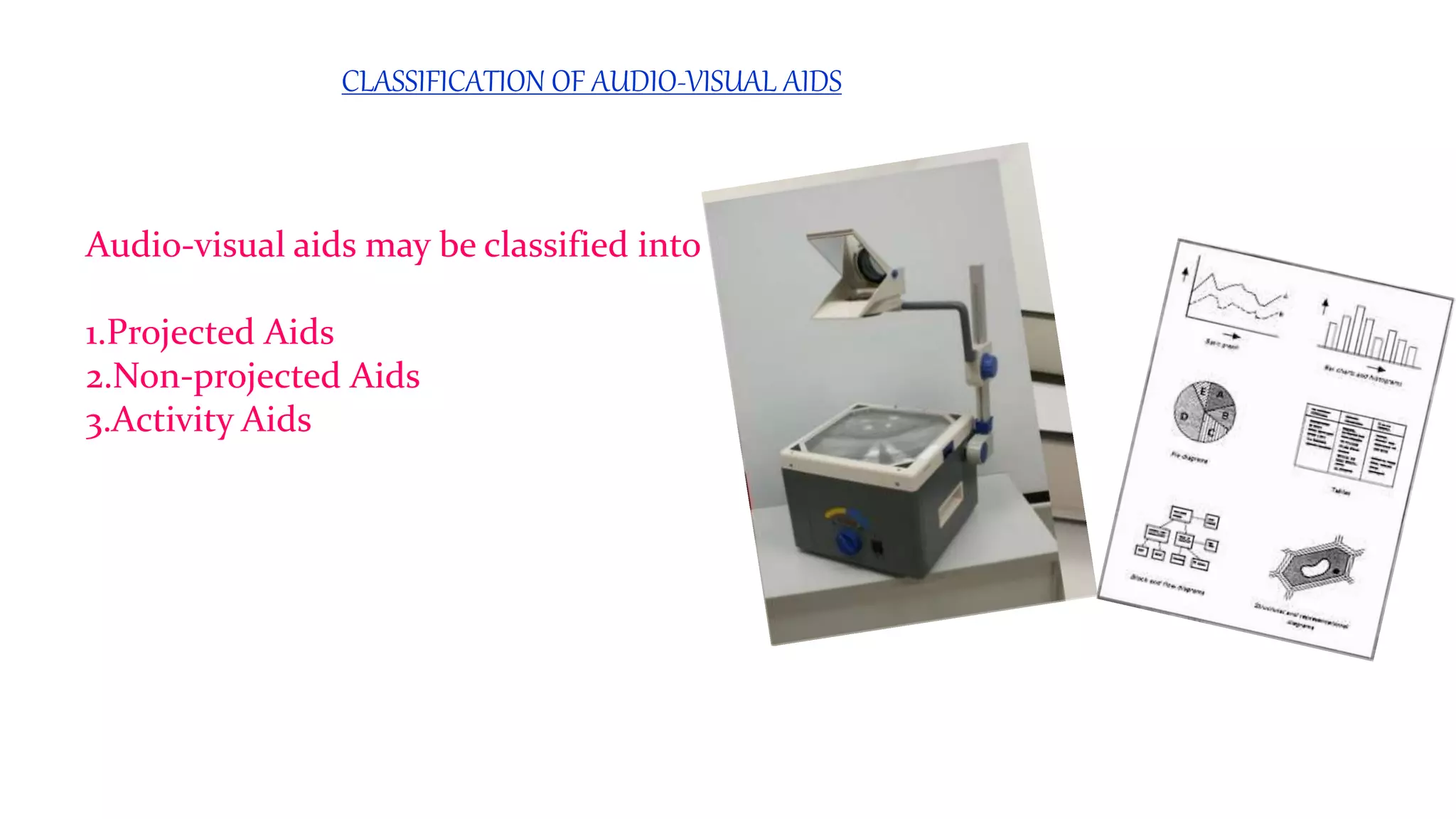
Audio-visual aids may be classified into
1.Projected Aids
2.Non-projected Aids
3.Activity Aids
NON-PROJECTED AIDS
Non projected visuals are those aids which are used without any projection. So they
translate abstract ideas into a more realistic format. They allow instruction to move from
verbal representation to a more concrete level.
ADVANTAGES OF NON PROJECTED VISUALS
 Abundant and are easily obtainable.
 Requires no electricity
 Appropriate for low budget
 Not much artistic ability is required in the use of these visual aids.
 Can be used in many ways at all levels of instruction and discipline
CLASSIFICATION OF NON-PROJECTED AIDS
Graphic
aids
Display
boards
Three
dimensional
aids
Audio
aids
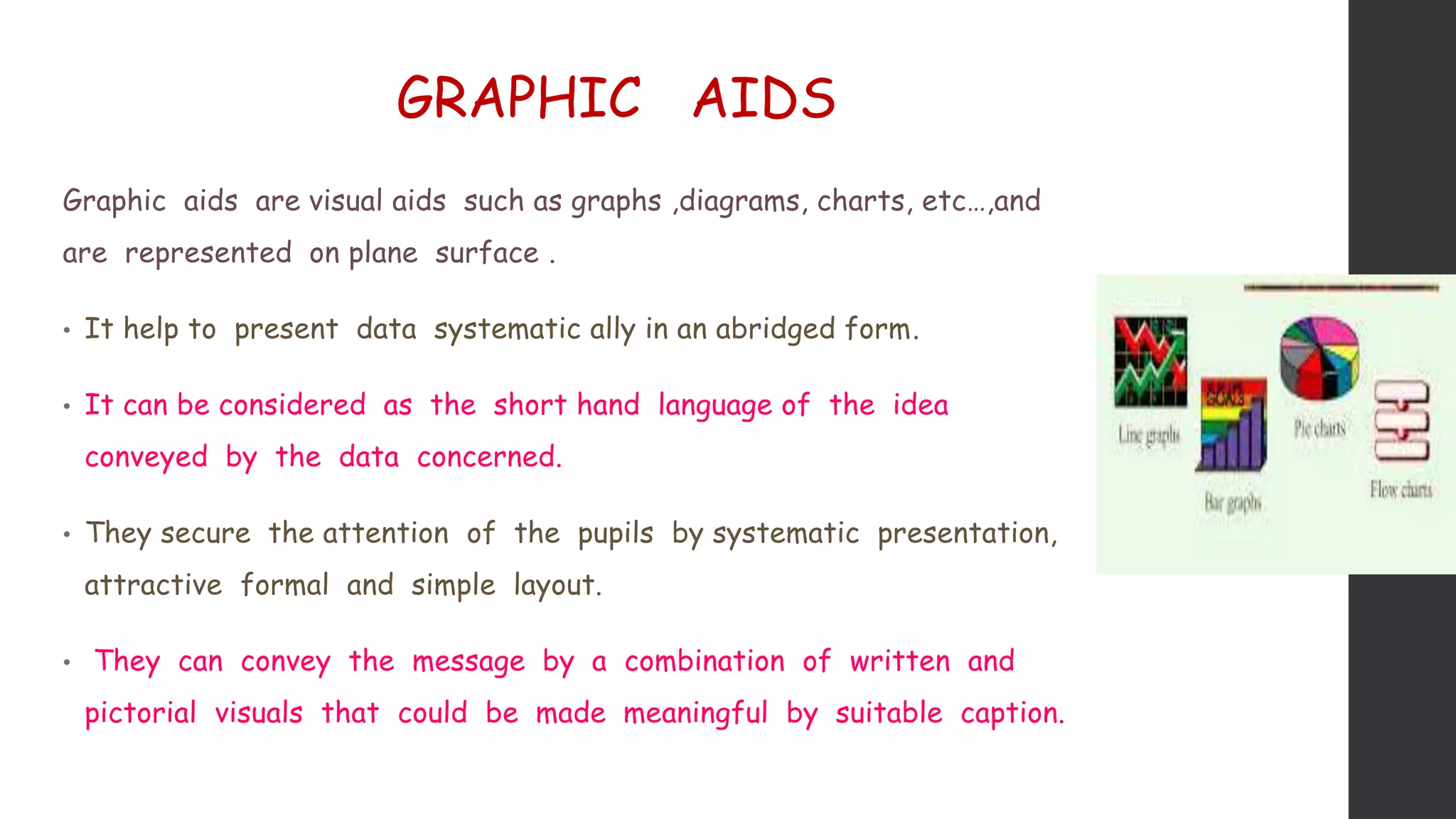
Graphic aids are visual aids such as graphs ,diagrams, charts, etc…,and
are represented on plane surface .
• It help to present data systematic ally in an abridged form.
• It can be considered as the short hand language of the idea
conveyed by the data concerned.
• They secure the attention of the pupils by systematic presentation,
attractive formal and simple layout.
• They can convey the message by a combination of written and
pictorial visuals that could be made meaningful by suitable caption.
GRAPHIC AIDS
Graphic aids
graphs
diagrams
posters
mapscartoons
comics
Flash cards
Pictures and photographs
charts
i) GRAPHS
• The nature of the relation of two dependent
variables could be very easily presented by
graphical representation.
• Graphs could be interpreted and inferences
drawn easily.
• Line graph, bar graph, pie graph, etc are
different types of graphs.
ii) DIAGRAMS
 Diagrams could be used to easily explain
many facts at the same time, by using a
variety of symbols and labels.
 Diagrams can explain fact more vividly
than charts.
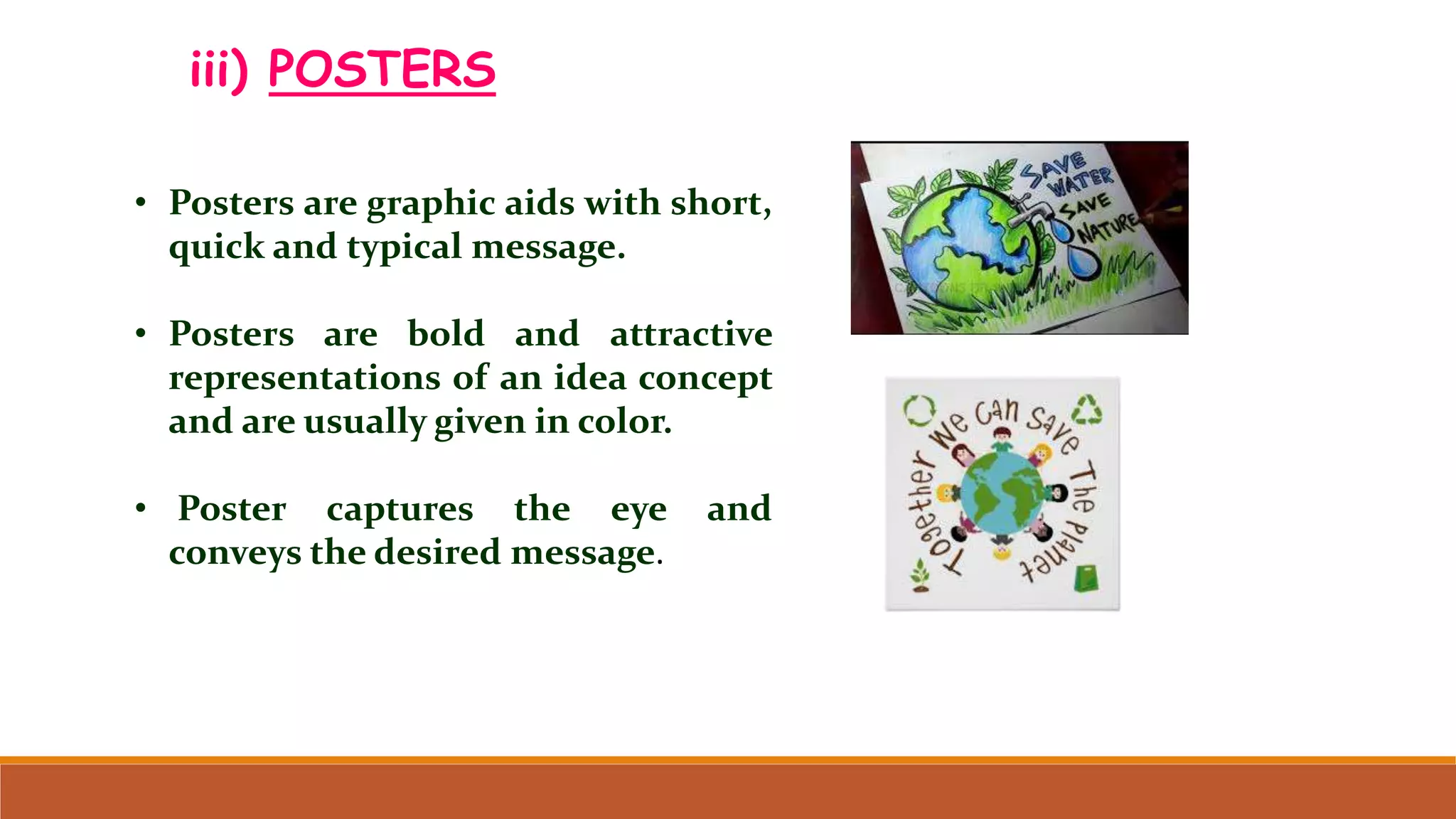
iii) POSTERS
• Posters are graphic aids with short,
quick and typical message.
• Posters are bold and attractive
representations of an idea concept
and are usually given in color.
• Poster captures the eye and
conveys the desired message.
iv) MAPS
A map is a accurate representation of the
boundaries and other details of the
continents, countries, etc. on a plane
surface, in the form of a diagram drawn
to scale.
A variety of geographical details like
location of mountains and rivers,
altitudes of places, contours of the earth
surface, important cities and other places
etc can be represented accurately with
reference to a convenient scale &
following a suitable color scheme.
v) CARTOONS
 A cartoon is a metaphorical, humorous &
exaggerated caricature of a person or a
situation, in the form of a picture or a sketch.
 By the humorous or satirical presentation, it
attracts the attention of viewers.
vi) COMICS
 A comic strip is a form of cartoon
depicting a story in sequence.
 The events are arranged in the
proper order in an attractive
pictorial form that is normally
appealing to lower age groups.
vii) FLASH-CARDS
• Flash card is an aid liberally used in language lessons,
especially in the lower classes.
• They are a set of pictured cards of varying sizes.
• They are flashed one by one in an order hence, the name
flash card.
• This facilitates immediate feedback of comprehension and
skill in silent reading;
vii) PICTURES AND PHOTOGRAPHS
• Pictures & photographs play a
significant role in making ideas clear &
comprehensive.
• They cultivate the power of observation
and judgement.
ix) CHARTS
• A chart may be defined as a combination of
graphic & pictorial media designed for the
orderly & logically visualizing of
relationship between key facts & ideas.
• The most used charts are flip charts, flow
charts, display charts, tabular charts, tree
charts & time chart.
REFERENCES
• Edutechnofriend.blogspot.com
• Visualaidsinfomax.wordpress.com
Graphic aids

Graphic aids

  • 1.
  • 2.
    CLASSIFICATION OF AUDIO-VISUALAIDS Audio-visual aids may be classified into 1.Projected Aids 2.Non-projected Aids 3.Activity Aids
  • 3.
    NON-PROJECTED AIDS Non projectedvisuals are those aids which are used without any projection. So they translate abstract ideas into a more realistic format. They allow instruction to move from verbal representation to a more concrete level. ADVANTAGES OF NON PROJECTED VISUALS  Abundant and are easily obtainable.  Requires no electricity  Appropriate for low budget  Not much artistic ability is required in the use of these visual aids.  Can be used in many ways at all levels of instruction and discipline
  • 4.
    CLASSIFICATION OF NON-PROJECTEDAIDS Graphic aids Display boards Three dimensional aids Audio aids
  • 5.
    Graphic aids arevisual aids such as graphs ,diagrams, charts, etc…,and are represented on plane surface . • It help to present data systematic ally in an abridged form. • It can be considered as the short hand language of the idea conveyed by the data concerned. • They secure the attention of the pupils by systematic presentation, attractive formal and simple layout. • They can convey the message by a combination of written and pictorial visuals that could be made meaningful by suitable caption. GRAPHIC AIDS
  • 7.
  • 8.
    i) GRAPHS • Thenature of the relation of two dependent variables could be very easily presented by graphical representation. • Graphs could be interpreted and inferences drawn easily. • Line graph, bar graph, pie graph, etc are different types of graphs.
  • 9.
    ii) DIAGRAMS  Diagramscould be used to easily explain many facts at the same time, by using a variety of symbols and labels.  Diagrams can explain fact more vividly than charts.
  • 10.
    iii) POSTERS • Postersare graphic aids with short, quick and typical message. • Posters are bold and attractive representations of an idea concept and are usually given in color. • Poster captures the eye and conveys the desired message.
  • 11.
    iv) MAPS A mapis a accurate representation of the boundaries and other details of the continents, countries, etc. on a plane surface, in the form of a diagram drawn to scale. A variety of geographical details like location of mountains and rivers, altitudes of places, contours of the earth surface, important cities and other places etc can be represented accurately with reference to a convenient scale & following a suitable color scheme.
  • 12.
    v) CARTOONS  Acartoon is a metaphorical, humorous & exaggerated caricature of a person or a situation, in the form of a picture or a sketch.  By the humorous or satirical presentation, it attracts the attention of viewers.
  • 13.
    vi) COMICS  Acomic strip is a form of cartoon depicting a story in sequence.  The events are arranged in the proper order in an attractive pictorial form that is normally appealing to lower age groups.
  • 14.
    vii) FLASH-CARDS • Flashcard is an aid liberally used in language lessons, especially in the lower classes. • They are a set of pictured cards of varying sizes. • They are flashed one by one in an order hence, the name flash card. • This facilitates immediate feedback of comprehension and skill in silent reading;
  • 15.
    vii) PICTURES ANDPHOTOGRAPHS • Pictures & photographs play a significant role in making ideas clear & comprehensive. • They cultivate the power of observation and judgement.
  • 16.
    ix) CHARTS • Achart may be defined as a combination of graphic & pictorial media designed for the orderly & logically visualizing of relationship between key facts & ideas. • The most used charts are flip charts, flow charts, display charts, tabular charts, tree charts & time chart.
  • 17.