Grammar Book

 By : Amata Leno
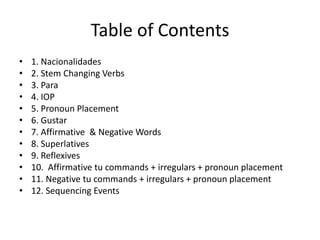
Table of Contents
•   1. Nacionalidades
•   2. Stem Changing Verbs
•   3. Para
•   4. IOP
•   5. Pronoun Placement
•   6. Gustar
•   7. Affirmative & Negative Words
•   8. Superlatives
•   9. Reflexives
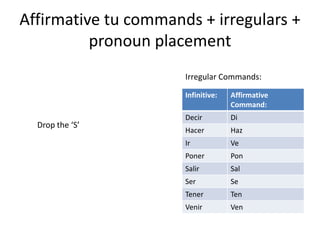
•   10. Affirmative tu commands + irregulars + pronoun placement
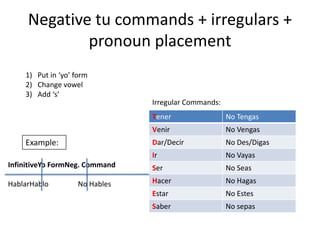
•   11. Negative tu commands + irregulars + pronoun placement
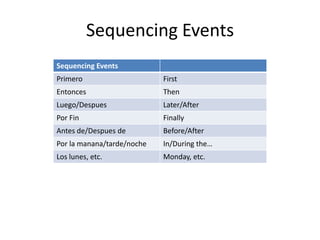
•   12. Sequencing Events
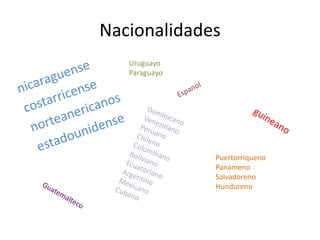
Nacionalidades
   Uruguayo
   Paraguayo


               Puertorriqueno
               Panameno
               Salvadoreno
               Hundureno
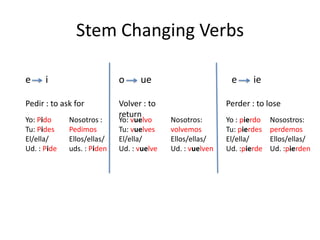
Stem Changing Verbs

e     i                     o     ue                        e      ie

Pedir : to ask for          Volver : to                    Perder : to lose
                            return
Yo: Pido     Nosotros :     Yo: vuelvo     Nosotros:       Yo : pierdo   Nosostros:
Tu: Pides    Pedimos        Tu: vuelves    volvemos        Tu: pierdes   perdemos
El/ella/     Ellos/ellas/   El/ella/       Ellos/ellas/    El/ella/      Ellos/ellas/
Ud. : Pide   uds. : Piden   Ud. : vuelve   Ud. : vuelven   Ud. :pierde   Ud. :pierden
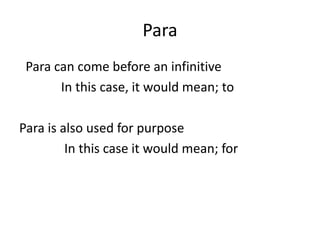
Para
 Para can come before an infinitive
       In this case, it would mean; to

Para is also used for purpose
         In this case it would mean; for
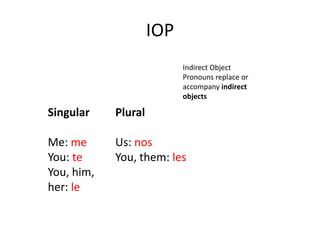
IOP
                           Indirect Object
                           Pronouns replace or
                           accompany indirect
                           objects

Singular    Plural

Me: me      Us: nos
You: te     You, them: les
You, him,
her: le
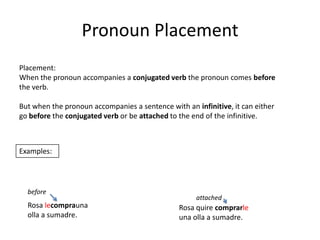
Pronoun Placement
Placement:
When the pronoun accompanies a conjugated verb the pronoun comes before
the verb.

But when the pronoun accompanies a sentence with an infinitive, it can either
go before the conjugated verb or be attached to the end of the infinitive.


Examples:


  before
                                                     attached
  Rosa lecomprauna                              Rosa quire comprarle
  olla a sumadre.                               una olla a sumadre.
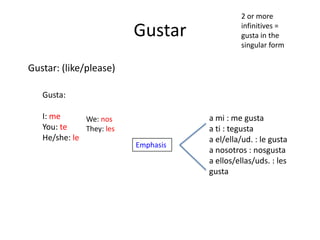
2 or more

                          Gustar              infinitives =
                                              gusta in the
                                              singular form

Gustar: (like/please)

   Gusta:

   I: me      We: nos                a mi : me gusta
   You: te    They: les              a ti : tegusta
   He/she: le                        a el/ella/ud. : le gusta
                          Emphasis
                                     a nosotros : nosgusta
                                     a ellos/ellas/uds. : les
                                     gusta
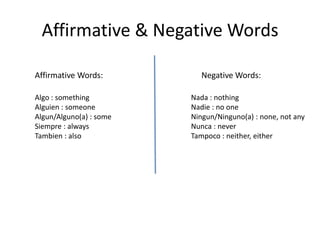
Affirmative & Negative Words

Affirmative Words:          Negative Words:

Algo : something         Nada : nothing
Alguien : someone        Nadie : no one
Algun/Alguno(a) : some   Ningun/Ninguno(a) : none, not any
Siempre : always         Nunca : never
Tambien : also           Tampoco : neither, either
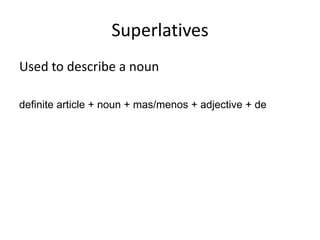
Superlatives
Used to describe a noun

definite article + noun + mas/menos + adjective + de
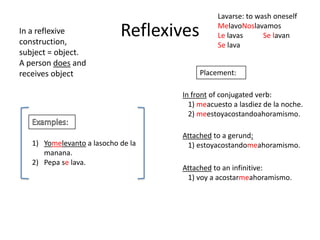
Lavarse: to wash oneself
In a reflexive
construction,
                            Reflexives        MelavoNoslavamos
                                              Le lavas      Se lavan
                                              Se lava
subject = object.
A person does and
receives object                          Placement:

                                    In front of conjugated verb:
                                      1) meacuesto a lasdiez de la noche.
                                      2) meestoyacostandoahoramismo.
            :
                                    Attached to a gerund:
   1) Yomelevanto a lasocho de la    1) estoyacostandomeahoramismo.
      manana.
   2) Pepa se lava.
                                    Attached to an infinitive:
                                     1) voy a acostarmeahoramismo.
Affirmative tu commands + irregulars +
          pronoun placement
                      Irregular Commands:

                      Infinitive:   Affirmative
                                    Command:
                      Decir         Di
  Drop the ‘S’
                      Hacer         Haz
                      Ir            Ve
                      Poner         Pon
                      Salir         Sal
                      Ser           Se
                      Tener         Ten
                      Venir         Ven
Negative tu commands + irregulars +
             pronoun placement
    1) Put in ‘yo’ form
    2) Change vowel
    3) Add ‘s’
                                Irregular Commands:
                                Tener                 No Tengas
                                Venir                 No Vengas
    Example:                    Dar/Decir             No Des/Digas
                                Ir                    No Vayas
InfinitiveYo FormNeg. Command   Ser                   No Seas

HablarHablo         No Hables   Hacer                 No Hagas
                                Estar                 No Estes
                                Saber                 No sepas
Sequencing Events
Sequencing Events
Primero                     First
Entonces                    Then
Luego/Despues               Later/After
Por Fin                     Finally
Antes de/Despues de         Before/After
Por la manana/tarde/noche   In/During the…
Los lunes, etc.             Monday, etc.

S2 h grammar book amata

  • 1.
    Grammar Book By: Amata Leno
  • 2.
    Table of Contents • 1. Nacionalidades • 2. Stem Changing Verbs • 3. Para • 4. IOP • 5. Pronoun Placement • 6. Gustar • 7. Affirmative & Negative Words • 8. Superlatives • 9. Reflexives • 10. Affirmative tu commands + irregulars + pronoun placement • 11. Negative tu commands + irregulars + pronoun placement • 12. Sequencing Events
  • 3.
    Nacionalidades Uruguayo Paraguayo Puertorriqueno Panameno Salvadoreno Hundureno
  • 4.
    Stem Changing Verbs e i o ue e ie Pedir : to ask for Volver : to Perder : to lose return Yo: Pido Nosotros : Yo: vuelvo Nosotros: Yo : pierdo Nosostros: Tu: Pides Pedimos Tu: vuelves volvemos Tu: pierdes perdemos El/ella/ Ellos/ellas/ El/ella/ Ellos/ellas/ El/ella/ Ellos/ellas/ Ud. : Pide uds. : Piden Ud. : vuelve Ud. : vuelven Ud. :pierde Ud. :pierden
  • 5.
    Para Para cancome before an infinitive In this case, it would mean; to Para is also used for purpose In this case it would mean; for
  • 6.
    IOP Indirect Object Pronouns replace or accompany indirect objects Singular Plural Me: me Us: nos You: te You, them: les You, him, her: le
  • 7.
    Pronoun Placement Placement: When thepronoun accompanies a conjugated verb the pronoun comes before the verb. But when the pronoun accompanies a sentence with an infinitive, it can either go before the conjugated verb or be attached to the end of the infinitive. Examples: before attached Rosa lecomprauna Rosa quire comprarle olla a sumadre. una olla a sumadre.
  • 8.
    2 or more Gustar infinitives = gusta in the singular form Gustar: (like/please) Gusta: I: me We: nos a mi : me gusta You: te They: les a ti : tegusta He/she: le a el/ella/ud. : le gusta Emphasis a nosotros : nosgusta a ellos/ellas/uds. : les gusta
  • 9.
    Affirmative & NegativeWords Affirmative Words: Negative Words: Algo : something Nada : nothing Alguien : someone Nadie : no one Algun/Alguno(a) : some Ningun/Ninguno(a) : none, not any Siempre : always Nunca : never Tambien : also Tampoco : neither, either
  • 10.
    Superlatives Used to describea noun definite article + noun + mas/menos + adjective + de
  • 11.
    Lavarse: to washoneself In a reflexive construction, Reflexives MelavoNoslavamos Le lavas Se lavan Se lava subject = object. A person does and receives object Placement: In front of conjugated verb: 1) meacuesto a lasdiez de la noche. 2) meestoyacostandoahoramismo. : Attached to a gerund: 1) Yomelevanto a lasocho de la 1) estoyacostandomeahoramismo. manana. 2) Pepa se lava. Attached to an infinitive: 1) voy a acostarmeahoramismo.
  • 12.
    Affirmative tu commands+ irregulars + pronoun placement Irregular Commands: Infinitive: Affirmative Command: Decir Di Drop the ‘S’ Hacer Haz Ir Ve Poner Pon Salir Sal Ser Se Tener Ten Venir Ven
  • 13.
    Negative tu commands+ irregulars + pronoun placement 1) Put in ‘yo’ form 2) Change vowel 3) Add ‘s’ Irregular Commands: Tener No Tengas Venir No Vengas Example: Dar/Decir No Des/Digas Ir No Vayas InfinitiveYo FormNeg. Command Ser No Seas HablarHablo No Hables Hacer No Hagas Estar No Estes Saber No sepas
  • 14.
    Sequencing Events Sequencing Events Primero First Entonces Then Luego/Despues Later/After Por Fin Finally Antes de/Despues de Before/After Por la manana/tarde/noche In/During the… Los lunes, etc. Monday, etc.