Took place in Europe (between the 12th and 16th Century).
Mostly influenced ARCHITECTURE,
but also brought significant changes to SCULPTURE and
PAINTING.
Quickly became dominant in Europe and remained
popular until the Renaissance.
ARCHITECTURE: Was seen mostly in Cathedrals
Its style was typified by constitutional devices like:
flying buttresses
ribbed vaults
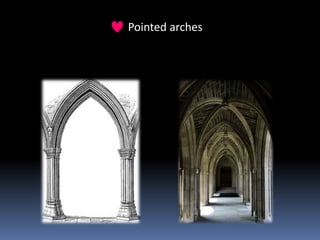
pointed arches
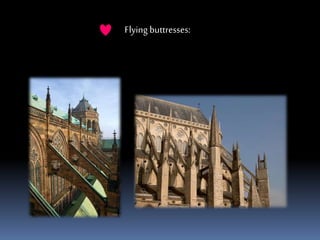
Flying buttresses:
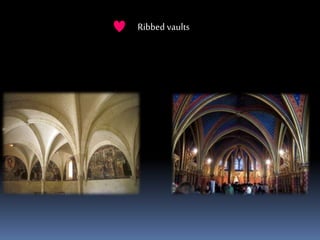
Ribbed vaults
Pointed arches
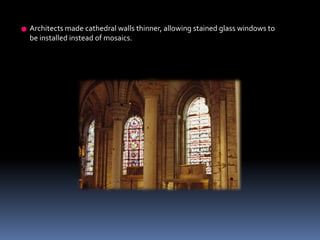
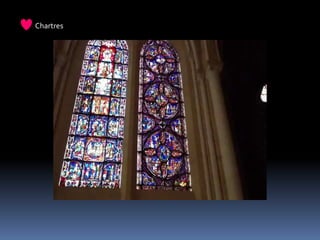
Architects made cathedral walls thinner, allowing stained glass windows to
be installed instead of mosaics.
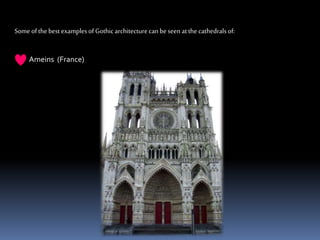
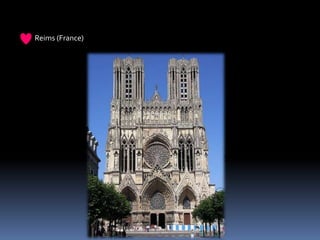
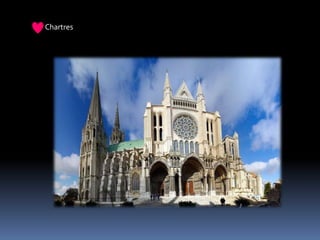
Some ofthebest examplesof Gothicarchitecturecanbeseen atthe cathedralsof:
Ameins (France)
Reims (France)
Chartres
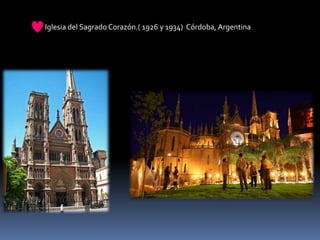
Iglesia del Sagrado Corazón.( 1926 y 1934) Córdoba, Argentina
Chartres
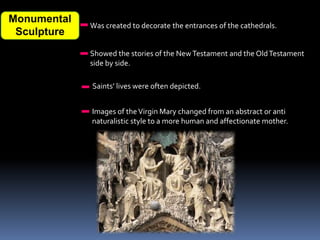
Monumental
Sculpture
Was created to decorate the entrances of the cathedrals.
Showed the stories of the NewTestament and the OldTestament
side by side.
Saints’ lives were often depicted.
Images of theVirgin Mary changed from an abstract or anti
naturalistic style to a more human and affectionate mother.
GOTHIC
PAINTING
Its style was dominated by dark oil paintings that represented a shift from the
dark ages into a more prosperous and civilized society.
Its style was a combination of frontal simplicity, truth to nature, harmonious
unity together with precision in details.
At this time, Christianity was entering a new predominant phase, which
encouraged artists and architects to apply the style to large cathedrals and
churches.
Costly materials
used
Such as gold, precious stones and ivory
indicates the degree of wealth that was
common during this period and attests the
sophistication of the Gothic culture.
GOTHIC
PAINTING
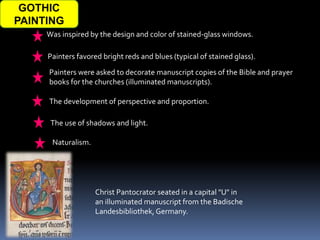
Was inspired by the design and color of stained-glass windows.
Painters favored bright reds and blues (typical of stained glass).
Painters were asked to decorate manuscript copies of the Bible and prayer
books for the churches (illuminated manuscripts).
Christ Pantocrator seated in a capital "U" in
an illuminated manuscript from the Badische
Landesbibliothek, Germany.
The development of perspective and proportion.
The use of shadows and light.
Naturalism.
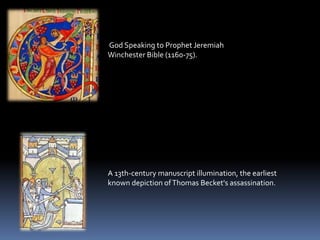
God Speaking to Prophet Jeremiah
Winchester Bible (1160-75).
A 13th-century manuscript illumination, the earliest
known depiction ofThomas Becket's assassination.
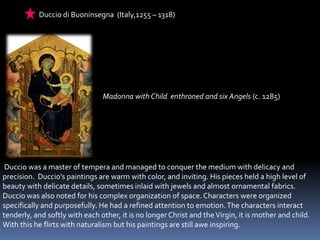
Duccio di Buoninsegna (Italy,1255 – 1318)
Madonna with Child enthroned and six Angels (c. 1285)
Duccio was a master of tempera and managed to conquer the medium with delicacy and
precision. Duccio’s paintings are warm with color, and inviting. His pieces held a high level of
beauty with delicate details, sometimes inlaid with jewels and almost ornamental fabrics.
Duccio was also noted for his complex organization of space. Characters were organized
specifically and purposefully. He had a refined attention to emotion.The characters interact
tenderly, and softly with each other, it is no longer Christ and theVirgin, it is mother and child.
With this he flirts with naturalism but his paintings are still awe inspiring.
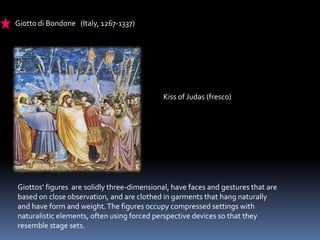
Giotto di Bondone (Italy, 1267-1337)
Kiss of Judas (fresco)
Giottos’ figures are solidly three-dimensional, have faces and gestures that are
based on close observation, and are clothed in garments that hang naturally
and have form and weight.The figures occupy compressed settings with
naturalistic elements, often using forced perspective devices so that they
resemble stage sets.
Gothic art

Gothic art

  • 2.
    Took place inEurope (between the 12th and 16th Century). Mostly influenced ARCHITECTURE, but also brought significant changes to SCULPTURE and PAINTING. Quickly became dominant in Europe and remained popular until the Renaissance.
  • 3.
    ARCHITECTURE: Was seenmostly in Cathedrals Its style was typified by constitutional devices like: flying buttresses ribbed vaults pointed arches
  • 4.
  • 5.
  • 6.
  • 7.
    Architects made cathedralwalls thinner, allowing stained glass windows to be installed instead of mosaics.
  • 8.
    Some ofthebest examplesofGothicarchitecturecanbeseen atthe cathedralsof: Ameins (France)
  • 9.
  • 10.
  • 11.
    Iglesia del SagradoCorazón.( 1926 y 1934) Córdoba, Argentina
  • 12.
  • 13.
    Monumental Sculpture Was created todecorate the entrances of the cathedrals. Showed the stories of the NewTestament and the OldTestament side by side. Saints’ lives were often depicted. Images of theVirgin Mary changed from an abstract or anti naturalistic style to a more human and affectionate mother.
  • 14.
    GOTHIC PAINTING Its style wasdominated by dark oil paintings that represented a shift from the dark ages into a more prosperous and civilized society. Its style was a combination of frontal simplicity, truth to nature, harmonious unity together with precision in details. At this time, Christianity was entering a new predominant phase, which encouraged artists and architects to apply the style to large cathedrals and churches. Costly materials used Such as gold, precious stones and ivory indicates the degree of wealth that was common during this period and attests the sophistication of the Gothic culture.
  • 15.
    GOTHIC PAINTING Was inspired bythe design and color of stained-glass windows. Painters favored bright reds and blues (typical of stained glass). Painters were asked to decorate manuscript copies of the Bible and prayer books for the churches (illuminated manuscripts). Christ Pantocrator seated in a capital "U" in an illuminated manuscript from the Badische Landesbibliothek, Germany. The development of perspective and proportion. The use of shadows and light. Naturalism.
  • 16.
    God Speaking toProphet Jeremiah Winchester Bible (1160-75). A 13th-century manuscript illumination, the earliest known depiction ofThomas Becket's assassination.
  • 17.
    Duccio di Buoninsegna(Italy,1255 – 1318) Madonna with Child enthroned and six Angels (c. 1285) Duccio was a master of tempera and managed to conquer the medium with delicacy and precision. Duccio’s paintings are warm with color, and inviting. His pieces held a high level of beauty with delicate details, sometimes inlaid with jewels and almost ornamental fabrics. Duccio was also noted for his complex organization of space. Characters were organized specifically and purposefully. He had a refined attention to emotion.The characters interact tenderly, and softly with each other, it is no longer Christ and theVirgin, it is mother and child. With this he flirts with naturalism but his paintings are still awe inspiring.
  • 18.
    Giotto di Bondone(Italy, 1267-1337) Kiss of Judas (fresco) Giottos’ figures are solidly three-dimensional, have faces and gestures that are based on close observation, and are clothed in garments that hang naturally and have form and weight.The figures occupy compressed settings with naturalistic elements, often using forced perspective devices so that they resemble stage sets.