Downloaded 44 times


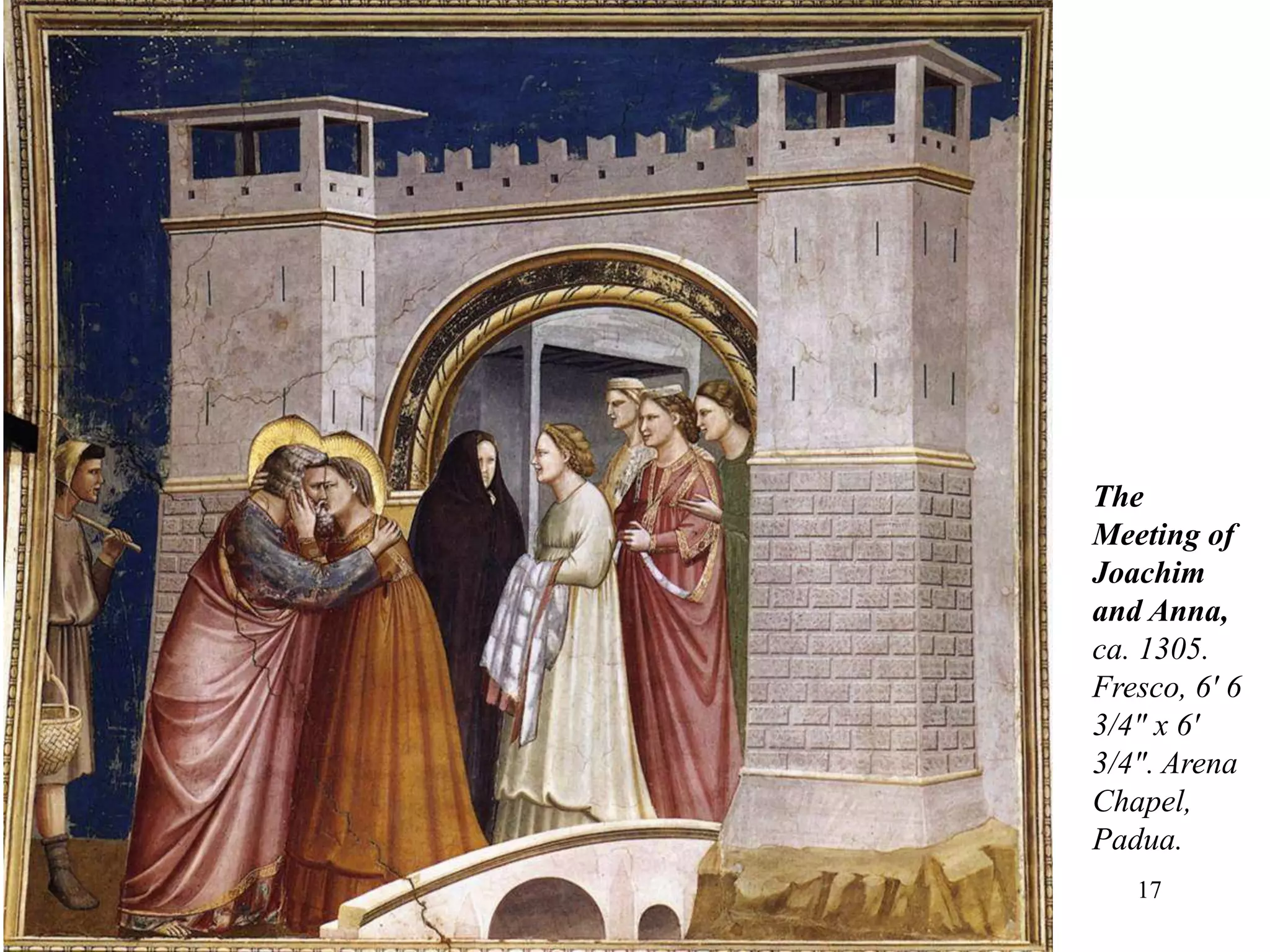


The 14th century in Italy saw the beginnings of major changes that would define the Renaissance period. In cities like Florence and Siena, there was a shift away from Byzantine styles towards more naturalistic and observation-based representations influenced by classical examples. Artists like Cimabue and Giotto led this movement with more three-dimensional figural styles. In Siena, painters such as Duccio and Lorenzetti also advanced realism through emotional expression and convincing spatial illusions in their works. This period established many principles that would underpin Renaissance humanism, education, and the study of antiquity.


![5. Renaissance (Eearly Renaissance [Autosaved].pptx](https://cdn.slidesharecdn.com/ss_thumbnails/5-220423071042-thumbnail.jpg?width=640&height=640&fit=bounds)


