Trait Theory
Personality
Theories
K.THIYAGU,
Assistant Professor,
Department of Education,
Central University of Kerala, Kasaragod
Gordon Allport (1897–1967)
Types Vs Traits
Personality type
refers to the
psychological
classification of
different types of
people
Personality trait
refers to
psychological
classification of
different levels or
degrees
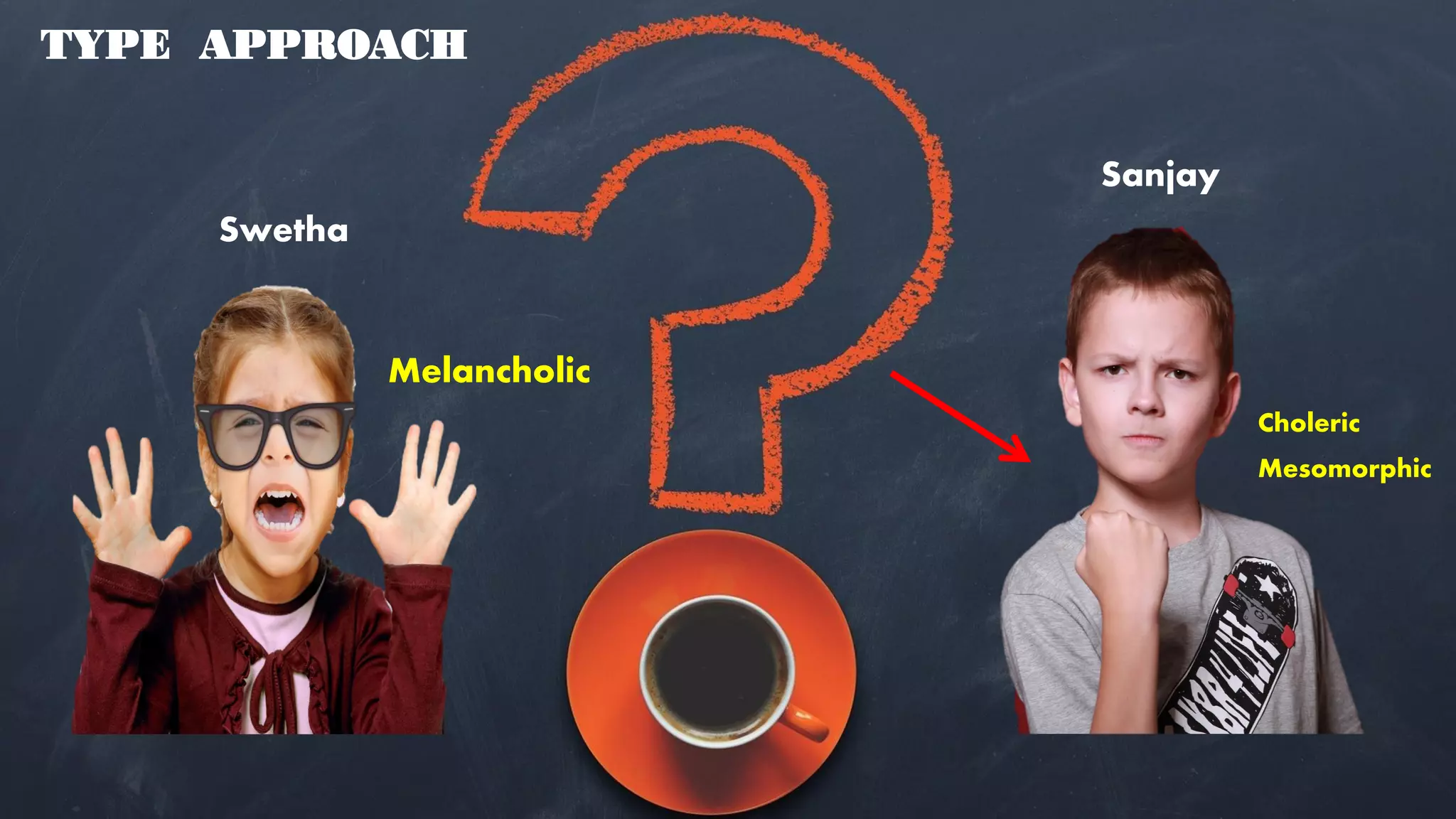
For example, according to type theories, there are two types of people, introverts
and extroverts. According to trait theories, introversion and extroversion are part
of a continuous dimension, with many people in the middle.
Sanjay
Swetha
Choleric
Mesomorphic
TYPE APPROACH
Melancholic
Sanjay
Swetha
TRAIT APPROACH
Aggressive
Hot Tempered
Undisciplined
Personality traits are
"enduring patterns of
perceiving, relating to, and
thinking about the
environment and oneself that
are exhibited in a wide range
of social and personal
contexts."
A trait is what we call a
characteristic way in which an
individual perceives, feels,
believes, or acts.
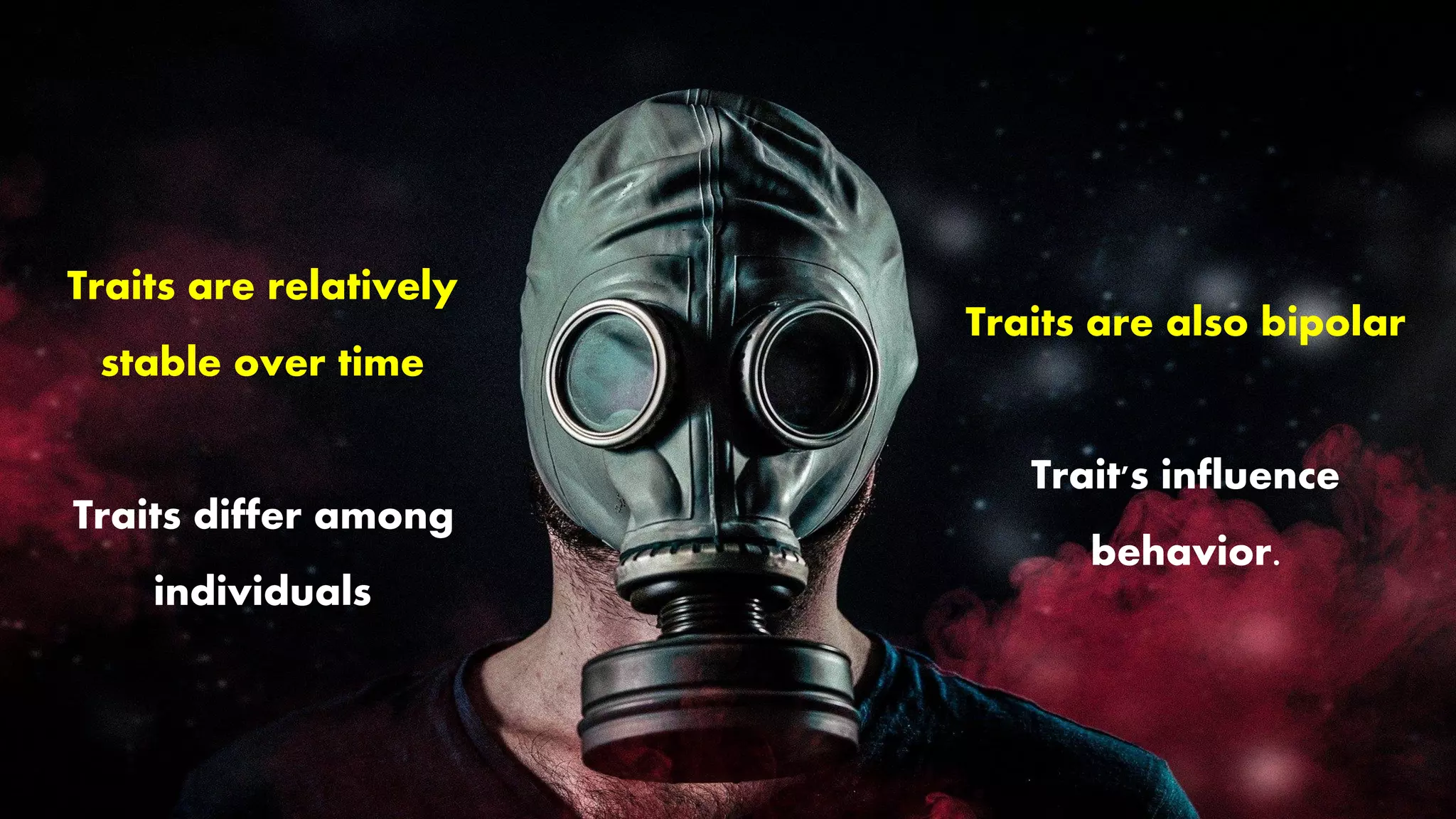
Traits are relatively
stable over time
Traits differ among
individuals
Traits are also bipolar
Trait's influence
behavior.
In 1936, psychologist Gordon Allport found that one
English-language dictionary alone contained more than
4,000 words describing different personality traits.
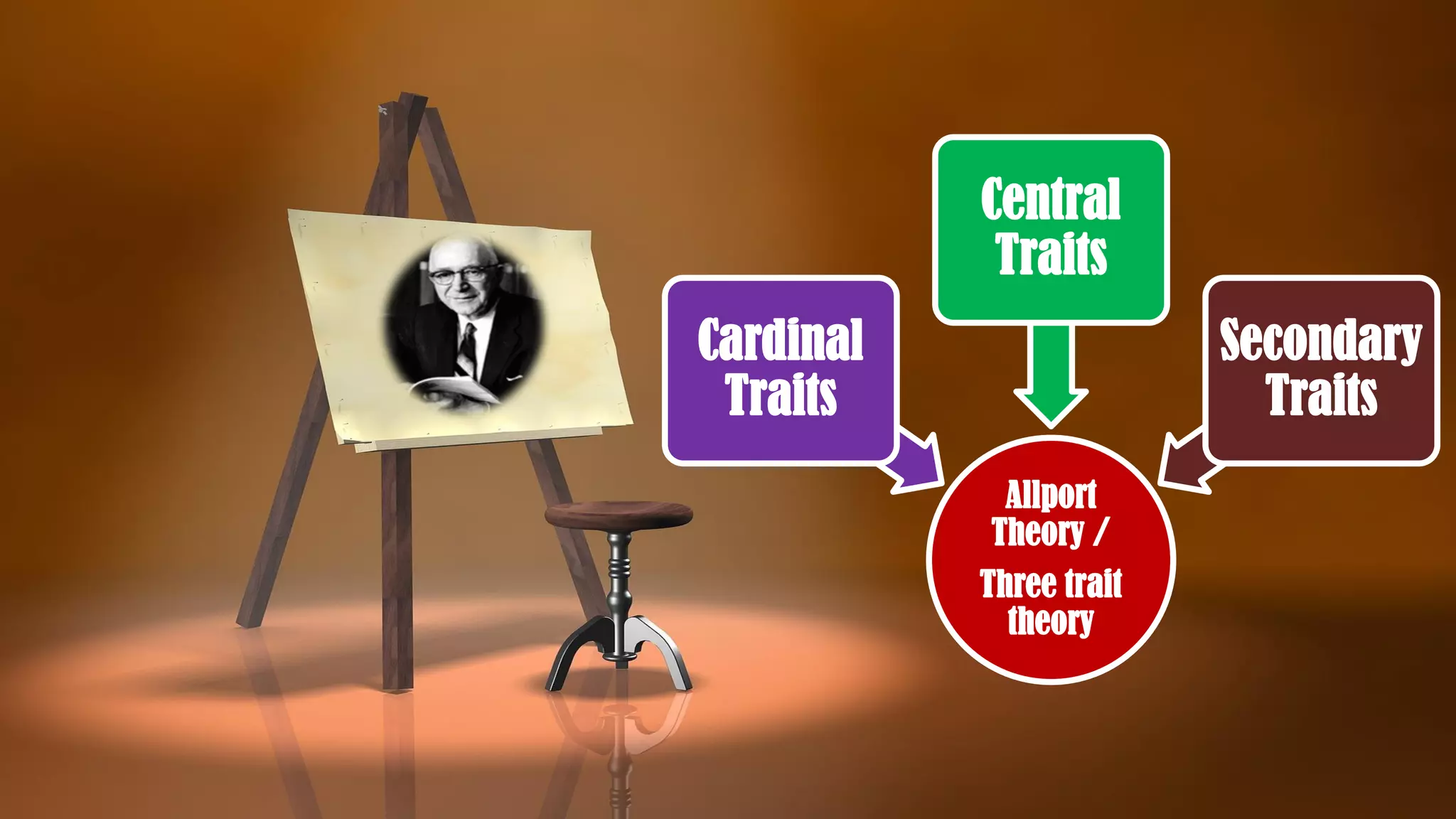
He categorized these traits into three levels.
Born November 11, 1897
Died October 9, 1967
Nationality United States
Fields Psychology
Alma mater Harvard
Gordon Allport (1897–1967)
Allport
Theory /
Three trait
theory
Cardinal
Traits
Central
Traits
Secondary
Traits
Cardinal Traits
The traits that dominate and shapes a person’s behaviour.
One or two traits only (limited)
Dominate an individual’s whole life
Eg: if a person is humorous in nature.
Abraham Lincoln (Honest)
Mother Teresa (Religion's service, Peace)
Central Traits
General characteristics that form the basic foundations of personality.
General characteristic found in some degree in every person
Five to ten central traits in an individual's personality
People come to expect from you daily.
Eg: Terms such as cordial relation, intelligent, honest, shy and anxious are considered
central traits.
Secondary Traits
Preferences, attitudes, situations traits are all secondary traits.
often appear only in certain situations or under specific circumstances.
Secondary traits are seen only in specific situations.
Eg:
Stage fear before speaking at public.
impatient while waiting in line.
Thank You

Gordon Allport (1897–1967) Trait Theory