EFFECTS OF CHANGING ATMOSPHERIC
CO2 CONCENTRATION
Prepared By ASAD
Student of 6th semester
BS Botany
What is Carbon Dioxide
• Is a colorless, odorless gas vital to life on
earth.
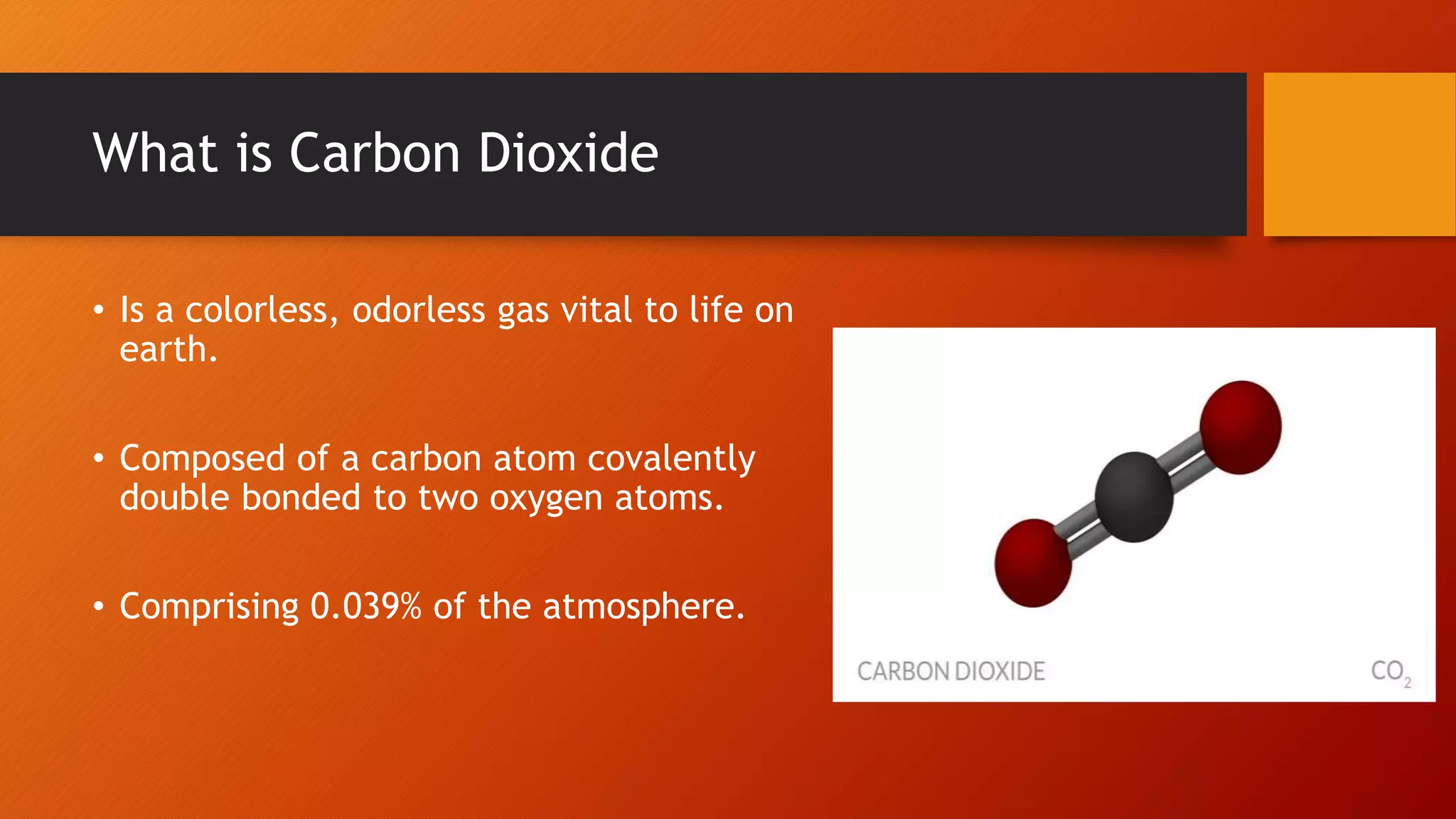
• Composed of a carbon atom covalently
double bonded to two oxygen atoms.
• Comprising 0.039% of the atmosphere.
EFFECTS ON ENVIRONMENT
How does CO2 affect the Ocean?
• Our oceans absorb almost half of
all CO2 emissions and the
abnormal man-made emissions
are causing high levels of acidity
making it hard for marine life.
• Slowed growth of plankton,
corals, and other invertebrates
Green house gases
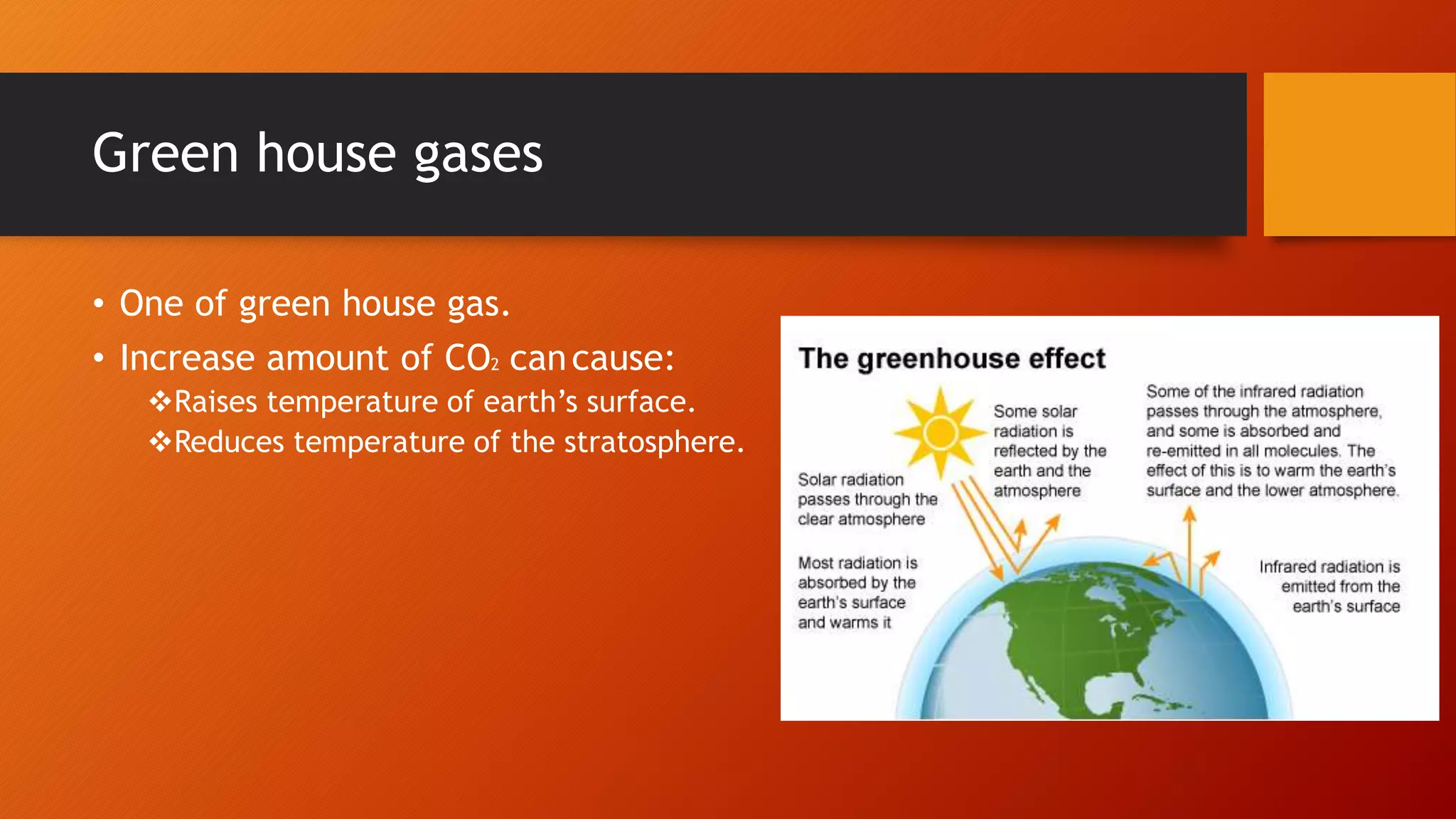
• One of green house gas.
• Increase amount of CO2 cancause:
Raises temperature of earth’s surface.
Reduces temperature of the stratosphere.
EFFECT OF INCREASED CO2 ON PLANTS
Effect of increased co2 on crops
• Carbon dioxide is essential to plant growth. Rising CO2 concentration in the atmosphere can
have both positive and negative consequences.
• Increased co2 is expected to have positive physiological effects by increasing the rate of
photosynthesis.
• Plant physiological and biochemical responses to increased CO2, effect have been studied
in plants with different photosynthetic pathways, mostly in C3 species, but also in C4.
• Increase CO2 concentration directly effects the growth, physiology, and chemistry of
plants.
PHYSIOLOGICAL EFFECTS OF PLANT DUE TO
INCREASED CO2 CONCENTRATION
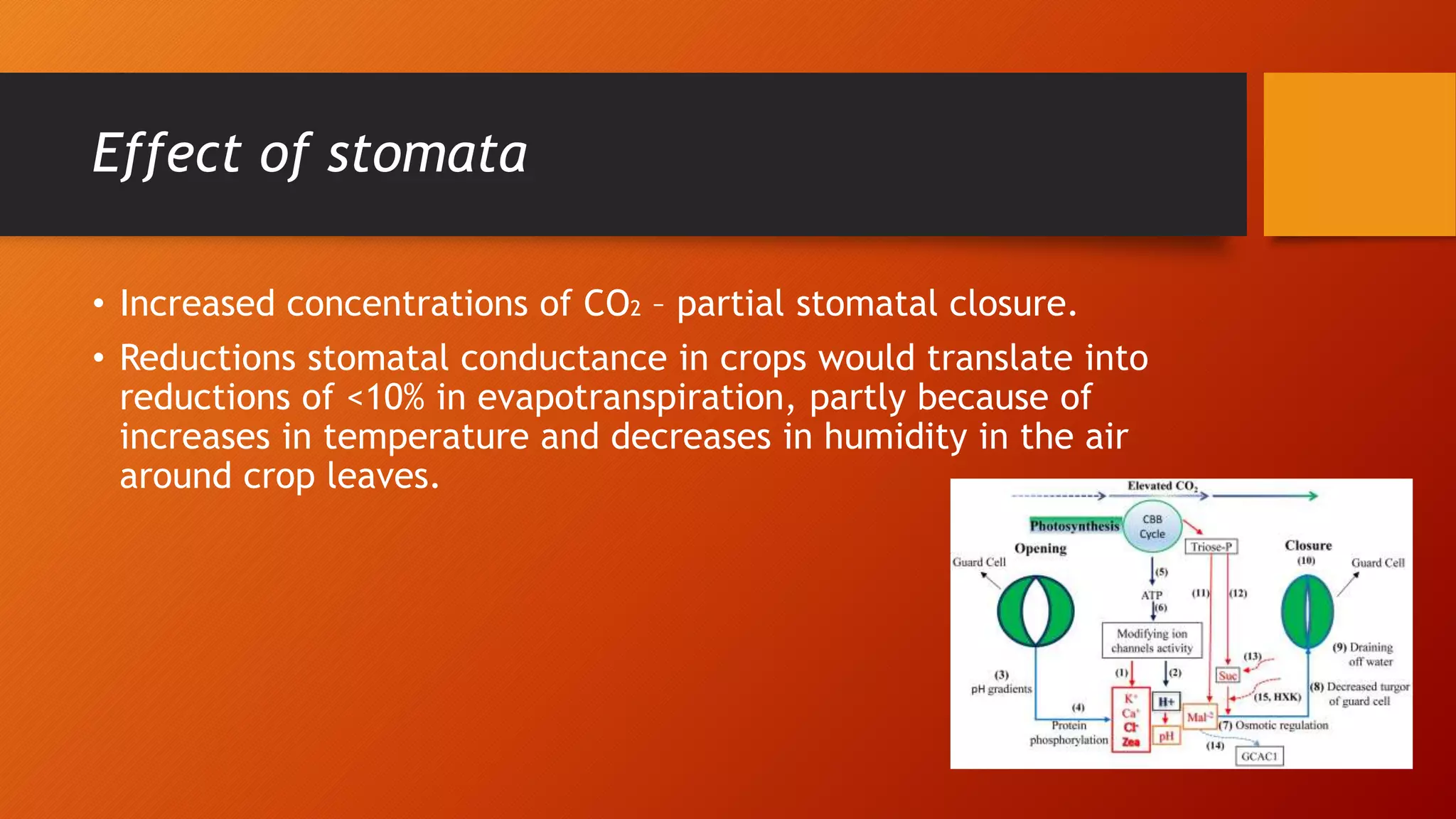
Effect of stomata
• Increased concentrations of CO2 – partial stomatal closure.
• Reductions stomatal conductance in crops would translate into
reductions of <10% in evapotranspiration, partly because of
increases in temperature and decreases in humidity in the air
around crop leaves.
Effects on the leaf
• Growing plants at increased
concentration leads to increased leaf
area, leaf area index , leaf area
duration and leaf thickness.
• Increased CO2 causes plants to produce
more number of mesophyll cells and
chloroplasts
Effects on photosynthesis & photorespiration
• Photosynthetic capacity per unit leaf area is
increased under CO2 enrichment.
• The increased CO2 concentration effect begins
with enhanced photosynthetic CO2 fixation.
• Non-structural carbohydrates tend to accumulate
in leaves and other plant organs as starch,
soluble carbohydrates.
Water-use efficiency: effects of CO2
• Stomatal conductance decreases with
increasing CO2 concentration which can cause
a reduction of both leaf and whole canopy
transpiration.
• Water-Use Efficiency increased with increasing
CO2 conc.
CO2 effect on Nitrogen content
• Plants with nitrogen-fixing symbionts (e.g., peas, beans), under
favorable environmental conditions for both symbiont and plant, tend to
benefit more.
• For most plants, growth under increased CO2 can alter the internal
balance between carbon and nitrogen.
• The content of nonstructural carbohydrates generally increases under
high CO2, while the concentrations of mineral nutrients and proteins are
reduced
Changes in rooting pattern
• High carbon gain might increase root length, diameter and
number.
• Stimulate lateral root production in plants grown under High CO2.
Decrease in crop duration
• Duration of crop growth cycles are above all, related to
temperature. An increase in temperature will speed up
development.
• And temperature increase due to high CO2 conc.
Germination
• Increased CO2 concentration will decrease the rate of germination.
Reference
• https://en.wikipedia.org/wiki/Carbon_dioxide
• https://www.slideshare.net/Vijz1/increased-co2-effect-on-crop-
production-tam-201325
• https://www.slideshare.net/junostaro/co2-power-point
THE END
THANK YOU

Ecophysiological Effects of Changing Atmospheric Carbon Dioxide Concentration

  • 2.
    EFFECTS OF CHANGINGATMOSPHERIC CO2 CONCENTRATION Prepared By ASAD Student of 6th semester BS Botany
  • 3.
    What is CarbonDioxide • Is a colorless, odorless gas vital to life on earth. • Composed of a carbon atom covalently double bonded to two oxygen atoms. • Comprising 0.039% of the atmosphere.
  • 4.
  • 5.
    How does CO2affect the Ocean? • Our oceans absorb almost half of all CO2 emissions and the abnormal man-made emissions are causing high levels of acidity making it hard for marine life. • Slowed growth of plankton, corals, and other invertebrates
  • 6.
    Green house gases •One of green house gas. • Increase amount of CO2 cancause: Raises temperature of earth’s surface. Reduces temperature of the stratosphere.
  • 7.
    EFFECT OF INCREASEDCO2 ON PLANTS
  • 8.
    Effect of increasedco2 on crops • Carbon dioxide is essential to plant growth. Rising CO2 concentration in the atmosphere can have both positive and negative consequences. • Increased co2 is expected to have positive physiological effects by increasing the rate of photosynthesis. • Plant physiological and biochemical responses to increased CO2, effect have been studied in plants with different photosynthetic pathways, mostly in C3 species, but also in C4. • Increase CO2 concentration directly effects the growth, physiology, and chemistry of plants.
  • 9.
    PHYSIOLOGICAL EFFECTS OFPLANT DUE TO INCREASED CO2 CONCENTRATION
  • 10.
    Effect of stomata •Increased concentrations of CO2 – partial stomatal closure. • Reductions stomatal conductance in crops would translate into reductions of <10% in evapotranspiration, partly because of increases in temperature and decreases in humidity in the air around crop leaves.
  • 11.
    Effects on theleaf • Growing plants at increased concentration leads to increased leaf area, leaf area index , leaf area duration and leaf thickness. • Increased CO2 causes plants to produce more number of mesophyll cells and chloroplasts
  • 12.
    Effects on photosynthesis& photorespiration • Photosynthetic capacity per unit leaf area is increased under CO2 enrichment. • The increased CO2 concentration effect begins with enhanced photosynthetic CO2 fixation. • Non-structural carbohydrates tend to accumulate in leaves and other plant organs as starch, soluble carbohydrates.
  • 13.
    Water-use efficiency: effectsof CO2 • Stomatal conductance decreases with increasing CO2 concentration which can cause a reduction of both leaf and whole canopy transpiration. • Water-Use Efficiency increased with increasing CO2 conc.
  • 14.
    CO2 effect onNitrogen content • Plants with nitrogen-fixing symbionts (e.g., peas, beans), under favorable environmental conditions for both symbiont and plant, tend to benefit more. • For most plants, growth under increased CO2 can alter the internal balance between carbon and nitrogen. • The content of nonstructural carbohydrates generally increases under high CO2, while the concentrations of mineral nutrients and proteins are reduced
  • 15.
    Changes in rootingpattern • High carbon gain might increase root length, diameter and number. • Stimulate lateral root production in plants grown under High CO2.
  • 16.
    Decrease in cropduration • Duration of crop growth cycles are above all, related to temperature. An increase in temperature will speed up development. • And temperature increase due to high CO2 conc.
  • 17.
    Germination • Increased CO2concentration will decrease the rate of germination.
  • 18.
  • 19.
  • 20.