Plant cell apparatus and
organelles (Plasmodesmata,
Vacuole, Plastids)
Dr. MohammedAzim Bagban
Plasmodesmata
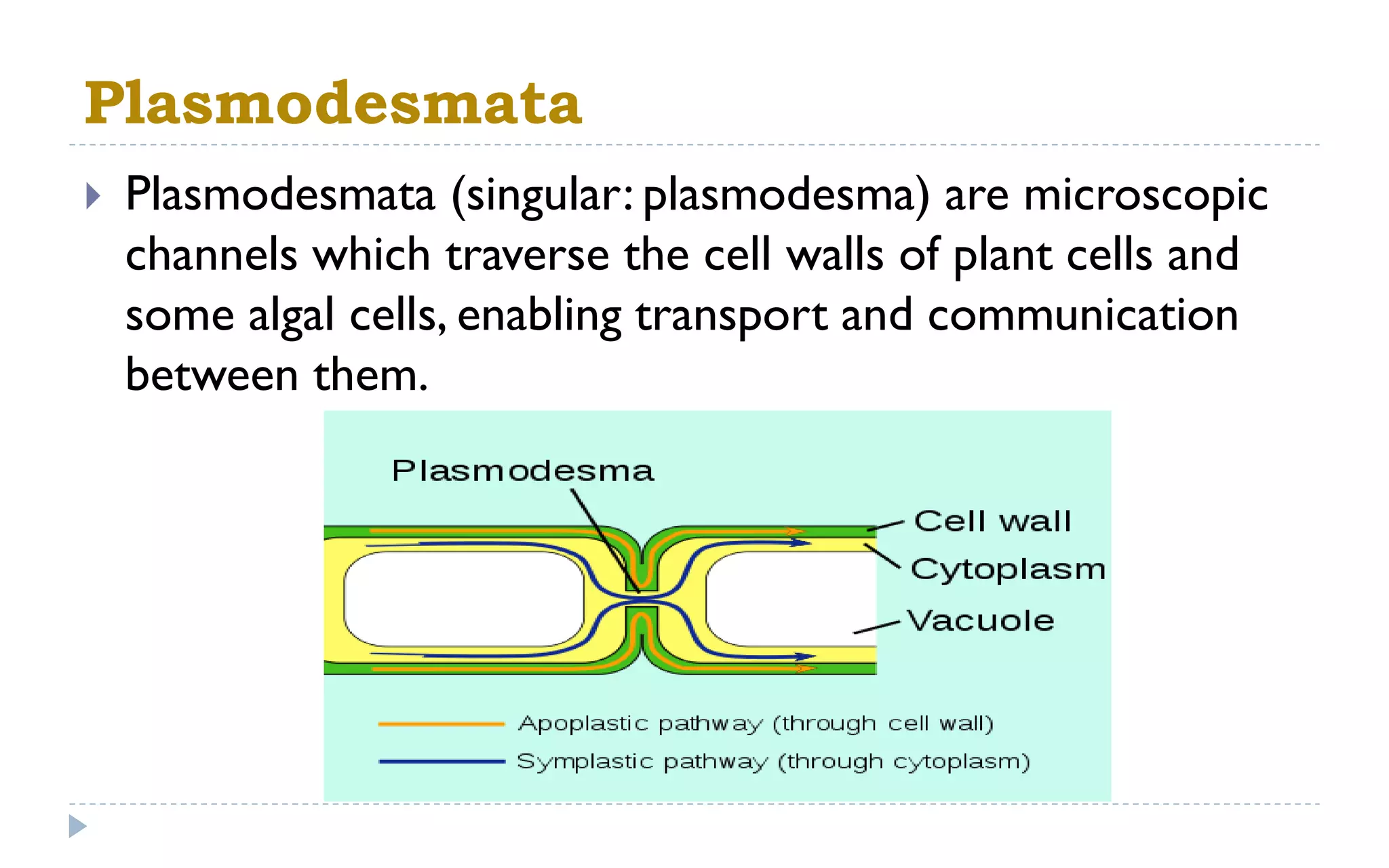
 Plasmodesmata (singular: plasmodesma) are microscopic
channels which traverse the cell walls of plant cells and
some algal cells, enabling transport and communication
between them.
 Plasmodesma is thin irregular cylinder of cytoplasm lined
by plasmalemma, passing through fine pores in the cell
walls, thus forming a connection between the cytoplasm
of adjacent cells.
 Found in higher plants and fluctuate widely in abundance
and distribution.
 They may be scattered over the entire wall or occur in
groups when they are concentrated on primary fields.
 In a meristematic cell, the number of plasmodesma ranges
from 1000 to 10,000 and their distribution may not be
uniform.
 The frequency of distribution may vary even in different
walls of a single cell.
 Plasmodesmata, at the intercellular canal between the
common walls of living cells, are encircled by
plasmalemma, which is continuous with that of the
adjacent cells.
 At the center of plasmodesma, there occurs a tube of
membrane, termed desmotubule. The desmotubule is
composed of protein sub-units and contains an axial central
rod.
 Diameter of the lumen of plasmodesma is very narrow, 30 nm
to 60 nm in diameter through which the cell organelles cannot
move to the adjacent cells. The diameter of desmotubule
ranges from 16 nm to 20 nm.
 A space is present in between the plasmalemma and
desmotubule termed cytoplasmic annulus (Cytoplasmic
sleeve).
 1. Diagrammatic representation of a plasmodesma between adjoining
cell wall.
 2. Cross sectional view of the plasmodesma at different levels.
 3. Diagram showing plasmodesmata.
 Plasmodesma originates during cytokinesis when cell plate is
formed. It is formed at those regions of the cell plate where
the endoplasmic reticulum (ER) is present and prevents the
fusion of vesicles.
 At this region, the cellulose microfibrils and pectic substances
are not accumulated. As a result intercellular canal is formed. It
is observed that the desmotubules are continuous with the ER
of adjoining cells through the intercellular canals.
 Therefore, it is regarded that the desmotubules are derived
from ER.
 Plasmodesmata exist in thick cell wall also, e.g. endosperm
of the seeds of Phoenix dactylifera, Coffea arabica etc. They
can be easily observed in the endosperm of seeds of
Aesculus (soapberry and lychee family), Diospyros (date
plum) etc.
 It is best studied in plasmolysed cells where the
protoplast shrinks from all the regions of cell wall, except
the places where plasmodesmata occur.
Formation
 Primary plasmodesmata are formed when fractions of the
endoplasmic reticulum are trapped across the middle lamella
as new cell wall are synthesized between two newly divided
plant cells.
 These eventually become the cytoplasmic connections
between cells. At the formation site, the wall is not thickened
further, and depressions or thin areas known as pits are
formed in the walls.
 Pits normally pair up between adjacent cells. Plasmodesmata
can also be inserted into existing cell walls between non-
dividing cells (secondary plasmodesmata).
Primary plasmodesmata
 The formation of primary plasmodesmata occurs during the
part of the cellular division process where the endoplasmic
reticulum and the new plate are fused together, this process
results in the formation of a cytoplasmic pore (or cytoplasmic
sleeve).
 The desmotubule, also known as the appressed ER, forms
alongside the cortical ER. Both the appressed ER and the
cortical ER are packed tightly together, thus leaving no room
for any luminal space.
 It is proposed that the appressed ER acts as a membrane
transportation route in the plasmodesmata. When filaments of
the cortical ER are entangled in the formation of a new cell
plate
 It is hypothesized that the appressed ER forms due to a
combination of pressure from a growing cell wall and
interaction from ER and PM proteins.
 Primary plasmodesmata are often present in areas where the
cell walls appear to be thinner. This is due to the fact that as a
cell wall expands, the abundance of the primary
plasmodesmata decreases. In order to further expand
plasmodesmal density during cell wall growth secondary
plasmodesmata are produced.
 The process of secondary plasmodesmata formation is still to
be fully understood, however various degrading enzymes and
ER proteins are said to stimulate the process.
Cytoplasmic sleeve
 The cytoplasmic sleeve is a fluid-filled space enclosed by
the plasmalemma and is a continuous extension of the
cytosol.
 Trafficking of molecules and ions through plasmodesmata
occurs through this space.
 Smaller molecules (e.g. sugars and amino acids) and ions
can easily pass through plasmodesmata by diffusion
without the need for additional chemical energy.
 Larger molecules, including proteins and RNA, can also
pass through the cytoplasmic sleeve diffusively.
Cytoplasmic sleeve
 Plasmodesmatal transport of some larger molecules is
facilitated by mechanisms that are currently unknown.
 One mechanism of regulation of the permeability of
plasmodesmata is the accumulation of the polysaccharide
callose around the neck region to form a collar, thereby
reducing the diameter of the pore available for transport
of substances.
 Through dilation, active gating or structural remodeling
the permeability of the plasmodesmata is increased.
Desmotubule
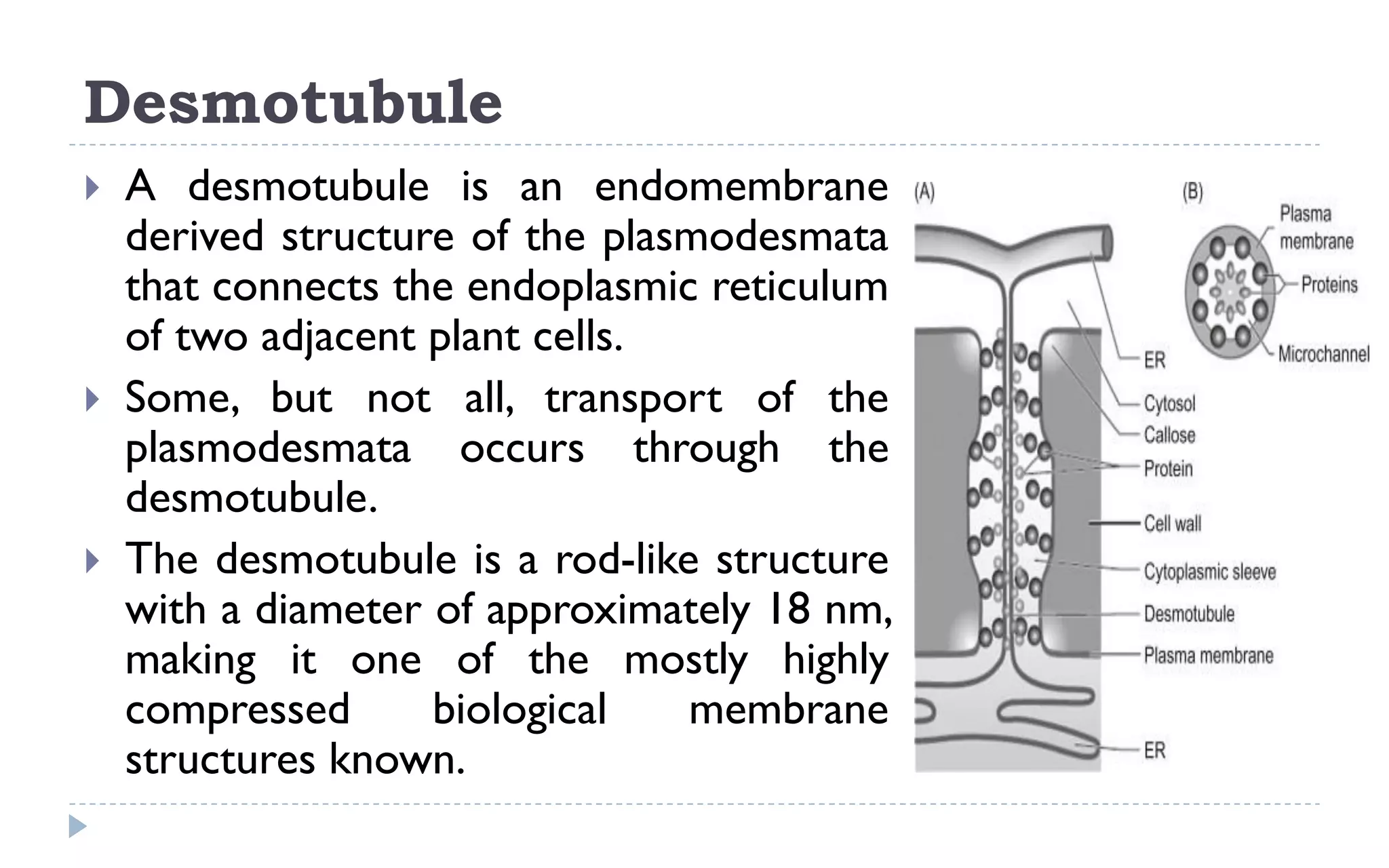
 A desmotubule is an endomembrane
derived structure of the plasmodesmata
that connects the endoplasmic reticulum
of two adjacent plant cells.
 Some, but not all, transport of the
plasmodesmata occurs through the
desmotubule.
 The desmotubule is a rod-like structure
with a diameter of approximately 18 nm,
making it one of the mostly highly
compressed biological membrane
structures known.
Desmotubule
 The desmotubule is involved in the lateral transfer of lipid
molecules from one cell’s ER to another.
 These lipids are used in cell signaling pathways as a form of
intracellular communication.
 There are three ways in which the desmotubule can facilitate
the transfer of molecules:
1. allowing them to flow through its internal lumen;
2. letting them diffuse along its membrane, or attaching
molecules on its cytoplasmic side;
3. actively transporting them through the cytoplasmic sleeve of
the plasmodesmata.
Desmotubule
 Actin and myosin molecules attach at
the cytoplasmic end of the
desmotubule and can provide
contractile force that closes its
opening and regulates the movement
of molecules through the pore. In
addition, the proteins of the
desmotubule help to provide structural
support to the plasmodesmata.
Function of Plasmodesmata
 It helps in the short distance transport of materials;
 The relay of stimulus occurs through it;
 Viruses can pass through plasmodesmata;
 Plant hormones move through plasmodesma;
 The movement through plasmodesma is bi-directional. It
is suggested that the desmotubules act as a valve and
regulate the direction of flow; and
 Small molecules and ions pass readily through
plasmodesma.
Transport
 Plasmodesmata have been shown to transport proteins
(including transcription factors), short interfering RNA,
messenger RNA, viroids, and viral genomes from cell to cell.
 One example of a viral movement proteins is the tobacco
mosaic virus MP-30. MP-30 is thought to bind to the virus's
own genome and shuttle it from infected cells to uninfected
cells through plasmodesmata.
 Plasmodesmata are also used by cells in phloem, and
symplastic transport is used to regulate the sieve-tube cells by
the companion cells.
Transport
 The size of molecules that can pass through plasmodesmata is
determined by the size exclusion limit. This limit is highly
variable and is subject to active modification.
 For example, MP-30 is able to increase the size exclusion limit
from 700 Daltons to 9400 Daltons thereby aiding its
movement through a plant.
 Also, increasing calcium concentrations in the cytoplasm, either
by injection or by cold-induction, has been shown to constrict
the opening of surrounding plasmodesmata and limit
transport.
Cytoskeletal components of Plasmodesmata
 Cytoskeletal components such as actin microfilaments,
microtubules, and myosin proteins are related to cell to cell
transport.
 Actin microfilaments are linked to the transport of viral
movement proteins to plasmodesmata which allow for cell to
cell transport.
 When actin polymerization was blocked it caused a decrease
in plasmodesmata targeting of the movement proteins. E.g.
TMV protiens.
 Myosin proteins are involved in directing viral cargoes to
plasmodesmata.
Viruses
 Viruses break down actin filaments within the
plasmodesmata channel in order to move within the plant.
For example, when the cucumber mosaic virus (CMV)
gets into plants it is able to travel through almost every
cell through utilization of viral movement proteins to
transport themselves through the plasmodesmata.
 When tobacco leaves are treated with a drug that
stabilizes actin filaments, phalloidin, the cucumber mosaic
virus movement proteins are unable to increase the
plasmodesmata size exclusion limit (SEL).
Microtubules
 Microtubules are also are also an important role in cell to cell
transport of viral RNA..
 Viruses use many different methods of transporting
themselves from cell to cell, and one of those methods
associating the N-terminal domain of its RNA to localize to
plasmodesmata through microtubules.
 Tobacco plants injected with tobacco movement viruses that
were kept in high temperatures there was a strong correlation
between TMV movement proteins that were attached to GFP
with microtubules. This led to an increase in the spread of viral
RNA through the tobacco.
Plasmodesmata and Callose
 Plasmodesmata regulation and structure are regulated by
a beta 1,3-glucan polymer known as callose.
 In order to regulate what is transported in the
plasmodesmata, callose must be present. Callose provides
the mechanism in which plasmodesmata permeability is
regulated. In order to control what is transported
between different tissues, the plasmodesmata undergo
several specialized conformational changes.
Plant vacuole
Discovery
 Contractile vacuoles ("stars") were first observed by
Spallanzani (1776) in protozoa, although mistaken for
respiratory organs.
 Dujardin (1841) named these "stars" as vacuoles.
 In 1842, Schleiden applied the term for plant cells, to
distinguish the structure with cell sap from the rest of the
protoplasm.
 In 1885, Hugo Marie de Vries named the vacuoule
membrane as tonoplast.
Structure and Function
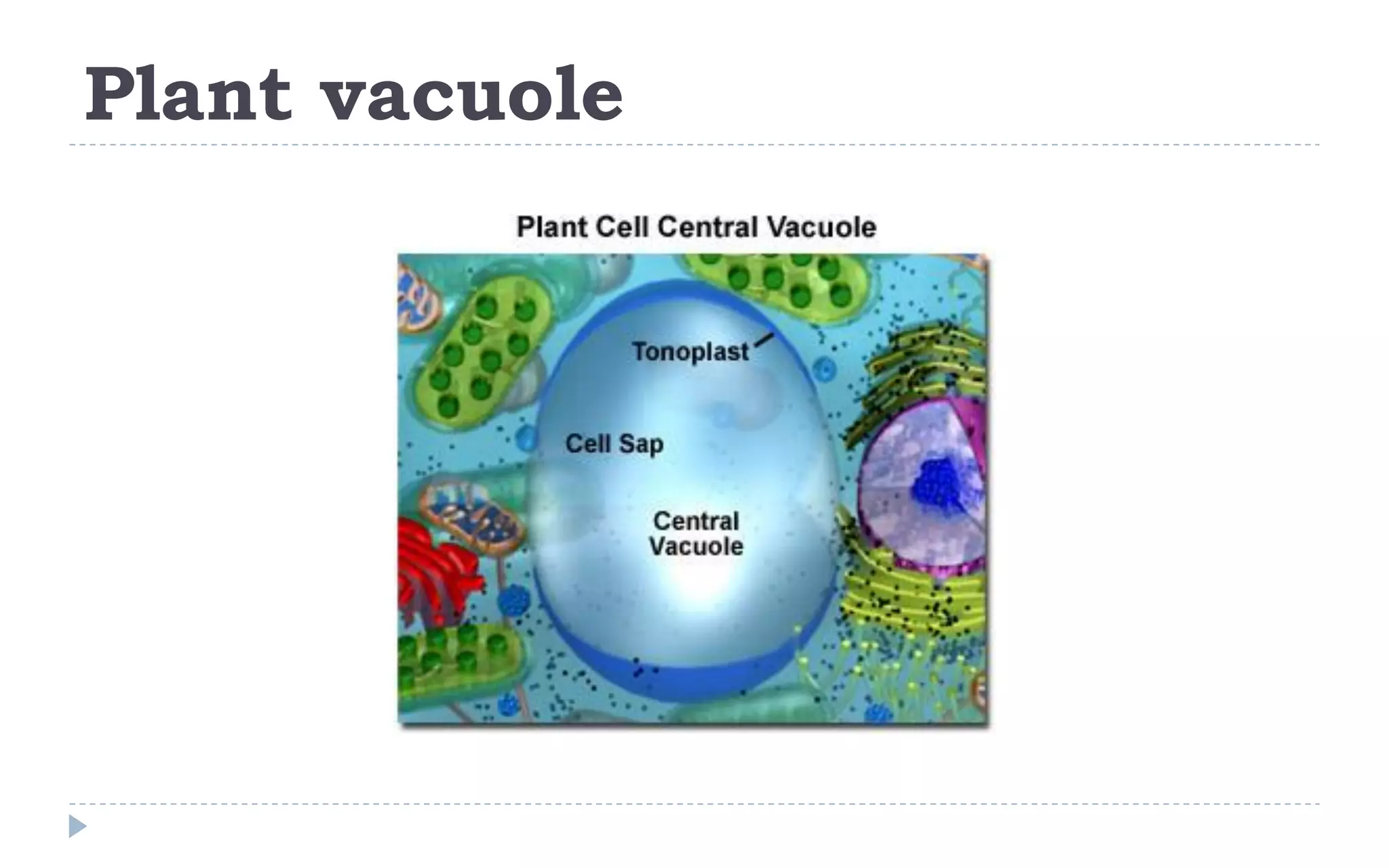
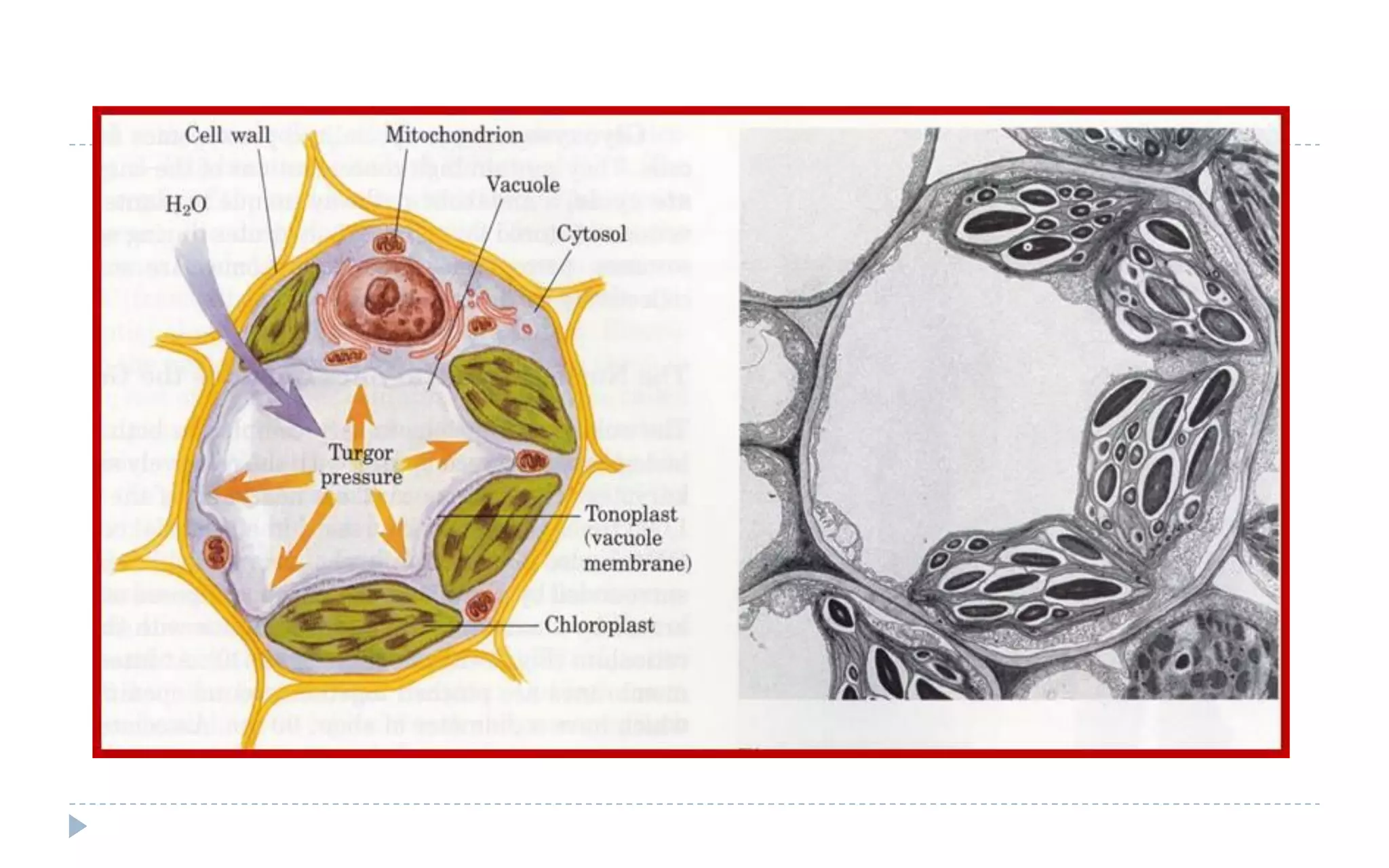
 Vacuoles (means “empty space”) are cavities in the
cytoplasm (especially in plant cells) surrounded by a
cytoplasmic membrane, the tonoplast, and filled with a
watery fluid called the cell sap containing water and
various substances in solution or suspended state.
 Plants cells have very large distinct vacuoles while in
animals, vacuoles are smaller in size.
 The Plant vacuoles tend to be so large that they push all
other organelles against the cell wall.
 In plant cells vacuoles may occupy 80% or more of the
volume of the cell.A cell may have one or two, small or
large vacuoles.
 The presence of the vacuole is a very conspicuous feature
of mature plant cells.
 They occur in cytoplasmic matrix of the cell starting off
as a few small vacuoles in young plant cells. & grow and
merge as the cell matures.
 Vacuole is membrane-bound organelle with little or no
internal structure but they serve several functions.
 Plant cells use their vacuoles for transport and storing
nutrients, metabolites, and waste products.
 The membrane surrounding the plant cell vacuole,
tonoplast, is a very active and dynamic membrane. As a
membrane, it mainly involved in regulating the movements
of ions around the cell, and isolating materials that might
be harmful or a threat to the cell.
 plants contain at least two types of vacuoles, storage and
lytic
 classified according to their soluble proteins, and by the
class of aquaporins .
 tonoplast of storage vacuoles contains δ-TIP (tonoplast
intrinsic protein), while the tonoplast of protein storage
vacuoles containing seed-type storage proteins are
marked by α-TIP and δ-TIP.
 Vacuoles marked only with γ-TIP have the characteristics
of lytic vacuoles.
Functions
 Isolating materials that might be harmful or a threat to
the cell
 Containing waste products
 Containing water in plant cells
 Maintaining internal hydrostatic pressure or turgor within
the cell
 Maintaining an acidic internal pH
 Containing small molecules
 Exporting unwanted substances from the cell.
Tonoplast Membrane
 Salt and drought tolerance:
 In tonoplast, Na /H antiporters (NHX proteins) bring excess
Na into the vacuole; they are important salt-tolerant
determinants. four major types of plant NHX have been
identified.
 In the plasma membrane, the SOS1-like (salt overly sensitive 1
type) NHX protein may play an important role in long-
distance Na transport in plants.
 NHX proteins also play crucial roles in pH status and K
homeostasis.
 It is suggested that the AtNHX5 gene could enhance the
resistance of plants to abiotic stresses.
Salt and drought tolerance:
 The Arabidopsis genome encodes eight NHX homologs
that have been grouped based on sequence similarity and
function into three distinct classes: plasma membrane
(NHX7/SOS1 and NHX8), endosomal/vesicular (NHX5,
NHX6), as well as four that are vacuolar (NHX1, NHX2,
NHX3, NHX4).
 Na+,K+/H+ antiporters (NHX antiporters) are H+-coupled
co-transporters that transfer the Na+ or K+ across a
membrane in exchange for protons (H+).
Generation of pmf at the tonoplast
 The proton pumps at the tonoplast regulate the turgor
pressure in cooperation with secondary active
transporters, so water influx into the vacuole is
controlled by a coordinated action of different
transporters.
 Proton pumps also energize secondary active transport
to enable storage of proteins, metabolites, and deposition
of cytotoxic compounds such as complex-bound heavy
metals.
 Initially, it had been thought that only the tonoplast
residing V-ATPase contributes to the pmf at the tonoplast
directly. But it has been
shown recently that V-ATPase activity at the TGN/EE
(trans-Golgi network/ early endosome) contributes to
the vacuolar acidification as well.
 The energization of the tonoplast is more efficient in
small vacuoles because of the higher surface-to volume
ratio.
Plant Responses to Drought and Salinity
Stress
 Efficient ion compartmentalisation relies not only on
transport across the tonoplast, but also on retention of
ions within vacuoles.
 Indeed, given the four- to fivefold concentration gradient
between the vacuole and the cytosol, Na may easily leak
back, unless some efficient mechanisms are in place to
prevent this process.
 The termination of Ca+2
signaling is another
important function of the
tonoplast transporters that
partially requires
energization by vacuolar
proton pumps to drive
uptake by Ca+2 /H+
antiporters.
 ABA  Ca+2  Stomata
closure
Mechanisms of sulfate transport across
tonoplast
 Vacuoles serve as storage compartments of sulfate. At the
tonoplast membranes, proton-ATPase and proton-
pyrophosphatase continuously pump up protons from
cytoplasm to vacuolar lumen, providing inside positive
electrical potentials.
 Under such circumstances, sulfate can be transported
into vacuoles considerably through a tonoplast-localized
ion channel or carrier as the electrical gradient is
favorable for the incorporation of negatively charged ions.
Multiple functions of Vacuole
 An important function of the vacuole is to maintain cell turgor.
For this purpose, salts, mainly from inorganic and organic acids,
are accumulated in the vacuole.
 The accumulation of these osmotically active substances draws
water into the vacuole, which in turn causes the tonoplast to
press the protoplasm of the cell against the surrounding cell
wall.
 Plant turgor is responsible for the rigidity of nonwoody plant
parts. The plant wilts when the turgor decreases due to lack of
water.
Multiple functions of Vacuole
 Vacuoles have an important function in recycling those
cellular constituents that are defective or no longer
required.
 Vacuoles contain hydrolytic enzymes for degrading
various macromolecules such as proteins, nucleic acids,
and many polysaccharides. Structures, such as
mitochondria, can be transferred by endocytosis to the
vacuole and are digested there.
 For this reason one speaks of lytic vacuoles.
Multiple functions of Vacuole
 In addition, vacuoles also have a storage function. Many plants
use the vacuole to store reserves of nitrate and phosphate.
Some plants store malic acid temporarily in the vacuoles in a
diurnal cycle.
 Vacuoles of storage tissues contain carbohydrates and storage
proteins.
 Last, but not least, vacuoles also function as waste deposits.
With the exception of gaseous substances, leaves are unable to
rid themselves of waste products or xenobiotics such as
herbicides.These are ultimately deposited in the vacuole.
Plastids
Introduction
 Plastids are double membrane bounded cytoplasmic
organelles found in all plant cells and in euglenoides.
 They are easily observed under light microscope. E.
Haeckel (1866) introduced the term plasmid.
 On the basis of types of pigments they contain,
Schimper (1883) classified them in three types:
 (i) Leucoplasts- Colourless plastids
 (ii) Chromoplasts – Coloured plastids (other than green)
 (iii) Chloroplasts- Green plastids
 All the three types of
plastids can change
one form into
another. Further, all
plastids have a
common precursor
called pro-plastid. The
pro-plastids are
colourless
undifferentiated
plastids found in
meristematic cells.
Leucoplasts
 These are colourless, non-photosynthetic plastids found in
those cells of plants which are not exposed to sunlight. They
possess membranous lamellae that do not form thylakoids.
They are the storage organelles and on the basis of stored
food they are of three types.
1. Amyloplasts. They store starch, and found in underground
stems (e.g. potato), cereals (e.g. rice, wheat) etc.
2. Elaioplasts (Lipidoplasts or oleoplasts). They store oils and
found in the seeds of castor, mustard, coconut etc.
3. Aleuroplasts (Proteoplasts or proteinoplasts). They store
proteins and found in seeds (maize)
Chromoplasts
 These are coloured plastids other than green. They are
non-photosynthetic which synthesize and store
carotenoid pigments.
 They provide colour to various parts of the plants which
attract insects for pollination & dispersal of seeds. They
also synthesize membrane lipids. During ripening of
tomato and chili chloroplasts transformed into
chromoplasts.
Chloroplasts (Green plastids)
 They are greenish plastids which possess photosynthetic
pigments, chlorophylls and carotenoids, and take part in
the synthesis of food from inorganic raw materials in the
presence of radiation energy. Chloroplasts of algae other
than green ones are called chromatophores (e.g.
rhodoplasts of red algae, phaeoplasts of brown algae).
 A leaf mesophyll cell may contain 40-50 chloroplasts; a
square millimeter of leaf contains some 500,000. The
number of chloroplasts per cell in algae is usually fixed for
a species.
 The minimum number of one chloroplast per cell is found
in green alga Ulotlirix arid several species of
Chlamydomonas. However, different species of a genus
may have different number of chloroplasts, for example-
one in Spirogyra indica. 16 in Spirogyra rectospora. The inter-
nodal cell of the green alga Chara possesses several
hundred chloroplasts.
Chloroplasts
 Shape & Size:
 The shape of a chloroplast varies from
species to species. It may be cup-shaped (e.g.,
Chlamydomonas), (e.g., Vaucheria), Girdle
(e.g., Ulothrix), Stellate or Star-shaped (e.g.,
Zygnema), Reticulate or net-like (e.g.,
Cladophora, Oedogonium) etc.
 The chloroplasts are usually found with their
broad surfaces parallel to the cell wall. They
can reorient in the cell under the influence
of light.
 They are generally 4-10/µm in length and 2-4
nm in width.
Chloroplast Ultrastructure
Ultrastructure
 The outer membrane is freely permeable due to the
presence of porin proteins, while the inner membrane is
semipermeable. Sometimes extensions of outer
membrane called stromules found to connect adjacent
chloroplasts. The membranes of all plastids including
chloroplast consists of entirely glycosylglycericles
(=galactolipids and sulfolipids) rather than phospholipids.
Ultrastructure
 The inner membrane encloses a fluid-filled space called
stroma, which is analogous to the mitochondrial matrix.
The stroma contains: thylakoids, various enzymes, protein
synthetic machinery (i.e. 2-6 copies of circular DNAs,
RNAs & 70S ribosomes), plastoglobuli, certain metallic
ions (Fe, Mn, and Mg) starch grains etc.
 The stroma contains a membrane system which consists
of many flattened, fluid-filled sacs called thylakoids or
lamellae.
Ultrastructure
 The thylakoid membrane system carry four protein
assemblies i.e. Photosystem I (PS-I) Photosystem II (PS-
ID), electrone transport system (ETS) consisting of
cytochromes b and f & CF0-CF1 particles (ATP
syntetase).
C3 & C4 Plants
Chloroplast Genome
 The chloroplast genome consists of
homogeneous circular DNA
molecules. To date, the entire
nucleotide sequences (120-190 kbp)
of chloroplast genomes have been
determined from few plant species.
 Often abbreviated as cpDNA.
 It is also known as the plastome
when referring to genomes of other
plastids.
 Its existence was first proven in
1962.
Molecular Structure
 The chloroplast genomes of land
plants and green algae contain
about 110 different genes, which
can be classified into two main
groups: genes involved in gene
expression and those related to
photosynthesis.
 The red alga Porphyra
chloroplast genome has 70
additional genes, one-third of
which are related to
biosynthesis of amino acids and
other low molecular mass
compounds.
Inverted Repeats
 Many chloroplast DNAs contain two inverted repeats, which
separate a long single copy section (LSC) from a short single
copy section (SSC).
 The inverted repeats vary wildly in length, ranging from 4,000
to 25,000 base pairs long each.
 The inverted repeat regions usually contain three ribosomal
RNA and two tRNA genes, but they can be expanded or
reduced to contain as few as four or as many as over 150
genes.
 The inverted repeat regions are highly conserved among land
plants, and accumulate few mutations.
Nucleoids
 Each chloroplast contains around 100 copies of its DNA
in young leaves, declining to 15–20 copies in older leaves.
 They are usually packed into nucleoids which can contain
several identical chloroplast DNA rings. Many nucleoids
can be found in each chloroplast.
 Though chloroplast DNA is not associated with true
histones, in red algae, a histone-like chloroplast protein
(HC) coded by the chloroplast DNA that tightly packs
each chloroplast DNA ring into a nucleoid has been
found.
Leading model of cpDNA replication
 The mechanism for chloroplast
DNA (cpDNA) replication has
not been conclusively
determined, but two main
models have been proposed.
 The results of the microscopy
experiments led to the idea that
chloroplast DNA replicates
using a double displacement
loop (D-loop).
 Multiple replication forks open
up, allowing replication
machinery to replicate the
DNA.
 In addition to the early
microscopy experiments, this
model is also supported by
the amounts of deamination
seen in cpDNA.
 Deamination occurs when an
amino group is lost and is a
mutation that often results in
base changes. When adenine is
deaminated, it becomes
hypoxanthine.
Alternative model of replication
 One of the main competing models for cpDNA asserts that
most cpDNA is linear and participates in homologous
recombination and replication structures similar to
bacteriophage T4.
 It has been established that some plants have linear cpDNA,
such as maize, and that more still contain complex structures
that scientists do not yet understand.
 When the original experiments on cpDNA were performed,
scientists did notice linear structures; however, they attributed
these linear forms to broken circles.
Gene content and protein synthesis
 The chloroplast genome most commonly includes around 100 genes
which code for a variety of things, mostly to do with the protein
pipeline and photosynthesis.
 As in prokaryotes, genes in chloroplast DNA are organized into
operons. Introns are common in chloroplast DNA molecules, while
they are rare in prokaryotic DNA molecules.
 They code for four ribosomal RNAs, 30–31 tRNAs, 21 ribosomal
proteins, and four RNA polymerase subunits involved in protein
synthesis.
 For photosynthesis, the chloroplast DNA includes genes for 28
thylakoid proteins and the large Rubisco subunit.
 In addition, its genes encode eleven subunits of a protein complex
which mediates redox reactions to recycle electrons.
Proteins encoded by the chloroplast
 Of the approximately three-thousand proteins found in
chloroplasts, some 95% of them are encoded by nuclear genes.
 Many of the chloroplast's protein complexes consist of
subunits from both the chloroplast genome and the host's
nuclear genome.
 As a result, protein synthesis must be coordinated between
the chloroplast and the nucleus. The chloroplast is mostly
under nuclear control, though chloroplasts can also give out
signals regulating gene expression in the nucleus, called
retrograde signaling.
Other functions
 Protein synthesis like RNA polymerase.
 RNA editing in plastids.
 Protein targeting and import
 Cytoplasmic translation and N-terminal transit sequences.
 Phosphorylation, chaperones, and transport.
 The translocon on the outer chloroplast membrane
(TOC).
 The translocon on the inner chloroplast membrane (TIC)
References
 Maule, Andrew (December 2008). "Plasmodesmata: structure, function and biogenesis". Current Opinion in Plant Biology. 11 (6): 680–686.
doi:10.1016/j.pbi.2008.08.002.
 Oparka, K. J. (2005). Plasmodesmata. Blackwell Pub Professional. ISBN 978-1-4051-2554-3.
 Zoë A. Popper; Gurvan Michel; Cécile Hervé; David S. Domozych; William G.T. Willats; Maria G. Tuohy; Bernard Kloareg; Dagmar B. Stengel (2011).
"Evolution and Diversity of Plant Cell Walls: From Algae to Flowering Plants" (PDF). Annual Review of Plant Biology. 62: 567–590.
doi:10.1146/annurev-arplant-042110-103809.
 Bruce Alberts (2002). Molecular Biology of the Cell (4th ed.). New York: Garland Science. ISBN 978-0-8153-3218-3.
 Lucas, W.; Ding, B.; Van der Schoot, C. (1993). "Tansley Review No.58 Plasmodesmata and the supracellular nature of plants". New Phytologist. 125
(3): 435–476. doi:10.1111/j.1469-8137.1993.tb03897.x. JSTOR 2558257.
 Sager, Ross (June 7, 2018). "Plasmodesmata at a Glance". Journal of Cell Science. 131 (11): jcs209346. doi:10.1242/jcs.209346.
 Robards, AW (1975). "Plasmodesmata". Annual Review of Plant Physiology. 26: 13–29. doi:10.1146/annurev.pp.26.060175.000305
 Tonoplast - ScienceDirect.comwww.sciencedirect.com › biochemistry-genetics-and-molecular-biology
 Eukaryotic Transmembrane Solute Transport Systems Milton H. SaierJr., in International Review of Cytology, 1999
 Membrane Transport in Plants, Baptiste Pierman, ... François Lefèvre, in Advances in Botanical Research, 2018.
 A leaf cell consists of several metabolic compartments, Hans-Walter Heldt, Birgit Piechulla, in Plant Biochemistry (Fourth Edition), 2011.
 International Review of Cell and Molecular Biology, Hideki Takahashi, in International Review of Cell and Molecular Biology, 2010.
 Tonoplast - an overview | ScienceDirect Topics
 Role of Trace Elements in Alleviating Environmental Stress Ghader Habibi, in Emerging Technologies and Management of Crop Stress Tolerance,
Volume 1, 2014.
 https://www.sciencedirect.com/topics/agricultural-and-biological-sciences/chloroplast-genome.
 de Vries J, Archibald JM (April 2018). "Plastid genomes". Current Biology. 28 (8): R336–R337.
 C.Michael Hogan. 2010. Deoxyribonucleic acid. Encyclopedia of Earth. National Council for Science and the Environment. eds. S.Draggan and
C.Cleveland. Washington DC.
 Sakamoto W, Takami T (June 2018). "Chloroplast DNA Dynamics: Copy Number, Quality Control and Degradation". Plant & Cell Physiology. 59 (6):
1120–1127. doi:10.1093/pcp/pcy084.
 Sandelius AS (2009). The Chloroplast: Interactions with the Environment. Springer. p. 18. ISBN 978-3-540-68696-5.
 Clegg MT, Gaut BS, Learn GH, Morton BR (July 1994). "Rates and patterns of chloroplast DNA evolution". Proceedings of the National Academy of
Sciences of the United States of America. 91 (15): 6795–801.
 Shaw J, Lickey EB, Schilling EE, Small RL (March 2007). "Comparison of whole chloroplast genome sequences to choose noncoding regions for
phylogenetic studies in angiosperms: the tortoise and the hare III". American Journal of Botany. 94 (3): 275–88. doi:10.3732/ajb.94.3.275.
 Burgess J (1989). An introduction to plant cell development. Cambridge: Cambridge university press. p. 62. ISBN 978-0-521-31611-8.
 Kolodner R, Tewari KK (January 1979). "Inverted repeats in chloroplast DNA from higher plants". Proceedings of the National Academy of Sciences
of the United States of America. 76 (1): 41–5. Bibcode:1979PNAS...76...41K. doi:10.1073/pnas.76.1.41
 Palmer JD, Thompson WF (June 1982). "Chloroplast DNA rearrangements are more frequent when a large inverted repeat sequence is lost". Cell. 29
(2): 537–50. doi:10.1016/0092-8674(82)90170-2.
 Plant Biochemistry (3rd ed.). Academic Press. 2005. p. 517. ISBN 9780120883912. number of copies of ctDNA per chloroplast.
 Biology 8th Edition Campbell & Reece. Benjamin Cummings (Pearson). 2009. p. 516.
 Sato N (2006). "Origin and Evolution of Plastids: Genomic View on the Unification and Diversity of Plastids". In Wise RR, Hoober JK (eds.). The
Structure and Function of Plastids. Advances in Photosynthesis and Respiration. 23. Springer Netherlands. pp. 75–102. doi:10.1007/978-1-4020-4061-
0_4
 Wise, Robert R. (2006). "1. The Diversity of Plastid Form and Function". Advances in Photosynthesis and Respiration. 23. Springer. pp. 3–26.
doi:10.1007/978-1-4020-4061-0_1
 "Plants Without Plastid Genomes". The Scientist. Retrieved 2015-09-26.
ThankYou…..

Plant organelles (Plasmodesmata, Vacuole, Plastids)

  • 1.
    Plant cell apparatusand organelles (Plasmodesmata, Vacuole, Plastids) Dr. MohammedAzim Bagban
  • 2.
    Plasmodesmata  Plasmodesmata (singular:plasmodesma) are microscopic channels which traverse the cell walls of plant cells and some algal cells, enabling transport and communication between them.
  • 3.
     Plasmodesma isthin irregular cylinder of cytoplasm lined by plasmalemma, passing through fine pores in the cell walls, thus forming a connection between the cytoplasm of adjacent cells.  Found in higher plants and fluctuate widely in abundance and distribution.  They may be scattered over the entire wall or occur in groups when they are concentrated on primary fields.
  • 5.
     In ameristematic cell, the number of plasmodesma ranges from 1000 to 10,000 and their distribution may not be uniform.  The frequency of distribution may vary even in different walls of a single cell.  Plasmodesmata, at the intercellular canal between the common walls of living cells, are encircled by plasmalemma, which is continuous with that of the adjacent cells.
  • 7.
     At thecenter of plasmodesma, there occurs a tube of membrane, termed desmotubule. The desmotubule is composed of protein sub-units and contains an axial central rod.  Diameter of the lumen of plasmodesma is very narrow, 30 nm to 60 nm in diameter through which the cell organelles cannot move to the adjacent cells. The diameter of desmotubule ranges from 16 nm to 20 nm.  A space is present in between the plasmalemma and desmotubule termed cytoplasmic annulus (Cytoplasmic sleeve).
  • 8.
     1. Diagrammaticrepresentation of a plasmodesma between adjoining cell wall.  2. Cross sectional view of the plasmodesma at different levels.  3. Diagram showing plasmodesmata.
  • 9.
     Plasmodesma originatesduring cytokinesis when cell plate is formed. It is formed at those regions of the cell plate where the endoplasmic reticulum (ER) is present and prevents the fusion of vesicles.  At this region, the cellulose microfibrils and pectic substances are not accumulated. As a result intercellular canal is formed. It is observed that the desmotubules are continuous with the ER of adjoining cells through the intercellular canals.  Therefore, it is regarded that the desmotubules are derived from ER.
  • 10.
     Plasmodesmata existin thick cell wall also, e.g. endosperm of the seeds of Phoenix dactylifera, Coffea arabica etc. They can be easily observed in the endosperm of seeds of Aesculus (soapberry and lychee family), Diospyros (date plum) etc.  It is best studied in plasmolysed cells where the protoplast shrinks from all the regions of cell wall, except the places where plasmodesmata occur.
  • 11.
    Formation  Primary plasmodesmataare formed when fractions of the endoplasmic reticulum are trapped across the middle lamella as new cell wall are synthesized between two newly divided plant cells.  These eventually become the cytoplasmic connections between cells. At the formation site, the wall is not thickened further, and depressions or thin areas known as pits are formed in the walls.  Pits normally pair up between adjacent cells. Plasmodesmata can also be inserted into existing cell walls between non- dividing cells (secondary plasmodesmata).
  • 12.
    Primary plasmodesmata  Theformation of primary plasmodesmata occurs during the part of the cellular division process where the endoplasmic reticulum and the new plate are fused together, this process results in the formation of a cytoplasmic pore (or cytoplasmic sleeve).  The desmotubule, also known as the appressed ER, forms alongside the cortical ER. Both the appressed ER and the cortical ER are packed tightly together, thus leaving no room for any luminal space.  It is proposed that the appressed ER acts as a membrane transportation route in the plasmodesmata. When filaments of the cortical ER are entangled in the formation of a new cell plate
  • 13.
     It ishypothesized that the appressed ER forms due to a combination of pressure from a growing cell wall and interaction from ER and PM proteins.  Primary plasmodesmata are often present in areas where the cell walls appear to be thinner. This is due to the fact that as a cell wall expands, the abundance of the primary plasmodesmata decreases. In order to further expand plasmodesmal density during cell wall growth secondary plasmodesmata are produced.  The process of secondary plasmodesmata formation is still to be fully understood, however various degrading enzymes and ER proteins are said to stimulate the process.
  • 14.
    Cytoplasmic sleeve  Thecytoplasmic sleeve is a fluid-filled space enclosed by the plasmalemma and is a continuous extension of the cytosol.  Trafficking of molecules and ions through plasmodesmata occurs through this space.  Smaller molecules (e.g. sugars and amino acids) and ions can easily pass through plasmodesmata by diffusion without the need for additional chemical energy.  Larger molecules, including proteins and RNA, can also pass through the cytoplasmic sleeve diffusively.
  • 15.
    Cytoplasmic sleeve  Plasmodesmataltransport of some larger molecules is facilitated by mechanisms that are currently unknown.  One mechanism of regulation of the permeability of plasmodesmata is the accumulation of the polysaccharide callose around the neck region to form a collar, thereby reducing the diameter of the pore available for transport of substances.  Through dilation, active gating or structural remodeling the permeability of the plasmodesmata is increased.
  • 16.
    Desmotubule  A desmotubuleis an endomembrane derived structure of the plasmodesmata that connects the endoplasmic reticulum of two adjacent plant cells.  Some, but not all, transport of the plasmodesmata occurs through the desmotubule.  The desmotubule is a rod-like structure with a diameter of approximately 18 nm, making it one of the mostly highly compressed biological membrane structures known.
  • 17.
    Desmotubule  The desmotubuleis involved in the lateral transfer of lipid molecules from one cell’s ER to another.  These lipids are used in cell signaling pathways as a form of intracellular communication.  There are three ways in which the desmotubule can facilitate the transfer of molecules: 1. allowing them to flow through its internal lumen; 2. letting them diffuse along its membrane, or attaching molecules on its cytoplasmic side; 3. actively transporting them through the cytoplasmic sleeve of the plasmodesmata.
  • 18.
    Desmotubule  Actin andmyosin molecules attach at the cytoplasmic end of the desmotubule and can provide contractile force that closes its opening and regulates the movement of molecules through the pore. In addition, the proteins of the desmotubule help to provide structural support to the plasmodesmata.
  • 19.
    Function of Plasmodesmata It helps in the short distance transport of materials;  The relay of stimulus occurs through it;  Viruses can pass through plasmodesmata;  Plant hormones move through plasmodesma;  The movement through plasmodesma is bi-directional. It is suggested that the desmotubules act as a valve and regulate the direction of flow; and  Small molecules and ions pass readily through plasmodesma.
  • 20.
    Transport  Plasmodesmata havebeen shown to transport proteins (including transcription factors), short interfering RNA, messenger RNA, viroids, and viral genomes from cell to cell.  One example of a viral movement proteins is the tobacco mosaic virus MP-30. MP-30 is thought to bind to the virus's own genome and shuttle it from infected cells to uninfected cells through plasmodesmata.  Plasmodesmata are also used by cells in phloem, and symplastic transport is used to regulate the sieve-tube cells by the companion cells.
  • 21.
    Transport  The sizeof molecules that can pass through plasmodesmata is determined by the size exclusion limit. This limit is highly variable and is subject to active modification.  For example, MP-30 is able to increase the size exclusion limit from 700 Daltons to 9400 Daltons thereby aiding its movement through a plant.  Also, increasing calcium concentrations in the cytoplasm, either by injection or by cold-induction, has been shown to constrict the opening of surrounding plasmodesmata and limit transport.
  • 22.
    Cytoskeletal components ofPlasmodesmata  Cytoskeletal components such as actin microfilaments, microtubules, and myosin proteins are related to cell to cell transport.  Actin microfilaments are linked to the transport of viral movement proteins to plasmodesmata which allow for cell to cell transport.  When actin polymerization was blocked it caused a decrease in plasmodesmata targeting of the movement proteins. E.g. TMV protiens.  Myosin proteins are involved in directing viral cargoes to plasmodesmata.
  • 23.
    Viruses  Viruses breakdown actin filaments within the plasmodesmata channel in order to move within the plant. For example, when the cucumber mosaic virus (CMV) gets into plants it is able to travel through almost every cell through utilization of viral movement proteins to transport themselves through the plasmodesmata.  When tobacco leaves are treated with a drug that stabilizes actin filaments, phalloidin, the cucumber mosaic virus movement proteins are unable to increase the plasmodesmata size exclusion limit (SEL).
  • 24.
    Microtubules  Microtubules arealso are also an important role in cell to cell transport of viral RNA..  Viruses use many different methods of transporting themselves from cell to cell, and one of those methods associating the N-terminal domain of its RNA to localize to plasmodesmata through microtubules.  Tobacco plants injected with tobacco movement viruses that were kept in high temperatures there was a strong correlation between TMV movement proteins that were attached to GFP with microtubules. This led to an increase in the spread of viral RNA through the tobacco.
  • 25.
    Plasmodesmata and Callose Plasmodesmata regulation and structure are regulated by a beta 1,3-glucan polymer known as callose.  In order to regulate what is transported in the plasmodesmata, callose must be present. Callose provides the mechanism in which plasmodesmata permeability is regulated. In order to control what is transported between different tissues, the plasmodesmata undergo several specialized conformational changes.
  • 26.
  • 27.
    Discovery  Contractile vacuoles("stars") were first observed by Spallanzani (1776) in protozoa, although mistaken for respiratory organs.  Dujardin (1841) named these "stars" as vacuoles.  In 1842, Schleiden applied the term for plant cells, to distinguish the structure with cell sap from the rest of the protoplasm.  In 1885, Hugo Marie de Vries named the vacuoule membrane as tonoplast.
  • 28.
    Structure and Function Vacuoles (means “empty space”) are cavities in the cytoplasm (especially in plant cells) surrounded by a cytoplasmic membrane, the tonoplast, and filled with a watery fluid called the cell sap containing water and various substances in solution or suspended state.  Plants cells have very large distinct vacuoles while in animals, vacuoles are smaller in size.  The Plant vacuoles tend to be so large that they push all other organelles against the cell wall.
  • 29.
     In plantcells vacuoles may occupy 80% or more of the volume of the cell.A cell may have one or two, small or large vacuoles.  The presence of the vacuole is a very conspicuous feature of mature plant cells.  They occur in cytoplasmic matrix of the cell starting off as a few small vacuoles in young plant cells. & grow and merge as the cell matures.
  • 30.
     Vacuole ismembrane-bound organelle with little or no internal structure but they serve several functions.  Plant cells use their vacuoles for transport and storing nutrients, metabolites, and waste products.  The membrane surrounding the plant cell vacuole, tonoplast, is a very active and dynamic membrane. As a membrane, it mainly involved in regulating the movements of ions around the cell, and isolating materials that might be harmful or a threat to the cell.
  • 31.
     plants containat least two types of vacuoles, storage and lytic  classified according to their soluble proteins, and by the class of aquaporins .  tonoplast of storage vacuoles contains δ-TIP (tonoplast intrinsic protein), while the tonoplast of protein storage vacuoles containing seed-type storage proteins are marked by α-TIP and δ-TIP.  Vacuoles marked only with γ-TIP have the characteristics of lytic vacuoles.
  • 32.
    Functions  Isolating materialsthat might be harmful or a threat to the cell  Containing waste products  Containing water in plant cells  Maintaining internal hydrostatic pressure or turgor within the cell  Maintaining an acidic internal pH  Containing small molecules  Exporting unwanted substances from the cell.
  • 34.
    Tonoplast Membrane  Saltand drought tolerance:  In tonoplast, Na /H antiporters (NHX proteins) bring excess Na into the vacuole; they are important salt-tolerant determinants. four major types of plant NHX have been identified.  In the plasma membrane, the SOS1-like (salt overly sensitive 1 type) NHX protein may play an important role in long- distance Na transport in plants.  NHX proteins also play crucial roles in pH status and K homeostasis.  It is suggested that the AtNHX5 gene could enhance the resistance of plants to abiotic stresses.
  • 37.
    Salt and droughttolerance:  The Arabidopsis genome encodes eight NHX homologs that have been grouped based on sequence similarity and function into three distinct classes: plasma membrane (NHX7/SOS1 and NHX8), endosomal/vesicular (NHX5, NHX6), as well as four that are vacuolar (NHX1, NHX2, NHX3, NHX4).  Na+,K+/H+ antiporters (NHX antiporters) are H+-coupled co-transporters that transfer the Na+ or K+ across a membrane in exchange for protons (H+).
  • 38.
    Generation of pmfat the tonoplast  The proton pumps at the tonoplast regulate the turgor pressure in cooperation with secondary active transporters, so water influx into the vacuole is controlled by a coordinated action of different transporters.  Proton pumps also energize secondary active transport to enable storage of proteins, metabolites, and deposition of cytotoxic compounds such as complex-bound heavy metals.
  • 39.
     Initially, ithad been thought that only the tonoplast residing V-ATPase contributes to the pmf at the tonoplast directly. But it has been shown recently that V-ATPase activity at the TGN/EE (trans-Golgi network/ early endosome) contributes to the vacuolar acidification as well.  The energization of the tonoplast is more efficient in small vacuoles because of the higher surface-to volume ratio.
  • 40.
    Plant Responses toDrought and Salinity Stress  Efficient ion compartmentalisation relies not only on transport across the tonoplast, but also on retention of ions within vacuoles.  Indeed, given the four- to fivefold concentration gradient between the vacuole and the cytosol, Na may easily leak back, unless some efficient mechanisms are in place to prevent this process.
  • 41.
     The terminationof Ca+2 signaling is another important function of the tonoplast transporters that partially requires energization by vacuolar proton pumps to drive uptake by Ca+2 /H+ antiporters.  ABA  Ca+2  Stomata closure
  • 42.
    Mechanisms of sulfatetransport across tonoplast  Vacuoles serve as storage compartments of sulfate. At the tonoplast membranes, proton-ATPase and proton- pyrophosphatase continuously pump up protons from cytoplasm to vacuolar lumen, providing inside positive electrical potentials.  Under such circumstances, sulfate can be transported into vacuoles considerably through a tonoplast-localized ion channel or carrier as the electrical gradient is favorable for the incorporation of negatively charged ions.
  • 44.
    Multiple functions ofVacuole  An important function of the vacuole is to maintain cell turgor. For this purpose, salts, mainly from inorganic and organic acids, are accumulated in the vacuole.  The accumulation of these osmotically active substances draws water into the vacuole, which in turn causes the tonoplast to press the protoplasm of the cell against the surrounding cell wall.  Plant turgor is responsible for the rigidity of nonwoody plant parts. The plant wilts when the turgor decreases due to lack of water.
  • 45.
    Multiple functions ofVacuole  Vacuoles have an important function in recycling those cellular constituents that are defective or no longer required.  Vacuoles contain hydrolytic enzymes for degrading various macromolecules such as proteins, nucleic acids, and many polysaccharides. Structures, such as mitochondria, can be transferred by endocytosis to the vacuole and are digested there.  For this reason one speaks of lytic vacuoles.
  • 46.
    Multiple functions ofVacuole  In addition, vacuoles also have a storage function. Many plants use the vacuole to store reserves of nitrate and phosphate. Some plants store malic acid temporarily in the vacuoles in a diurnal cycle.  Vacuoles of storage tissues contain carbohydrates and storage proteins.  Last, but not least, vacuoles also function as waste deposits. With the exception of gaseous substances, leaves are unable to rid themselves of waste products or xenobiotics such as herbicides.These are ultimately deposited in the vacuole.
  • 47.
  • 48.
    Introduction  Plastids aredouble membrane bounded cytoplasmic organelles found in all plant cells and in euglenoides.  They are easily observed under light microscope. E. Haeckel (1866) introduced the term plasmid.  On the basis of types of pigments they contain, Schimper (1883) classified them in three types:  (i) Leucoplasts- Colourless plastids  (ii) Chromoplasts – Coloured plastids (other than green)  (iii) Chloroplasts- Green plastids
  • 49.
     All thethree types of plastids can change one form into another. Further, all plastids have a common precursor called pro-plastid. The pro-plastids are colourless undifferentiated plastids found in meristematic cells.
  • 50.
    Leucoplasts  These arecolourless, non-photosynthetic plastids found in those cells of plants which are not exposed to sunlight. They possess membranous lamellae that do not form thylakoids. They are the storage organelles and on the basis of stored food they are of three types. 1. Amyloplasts. They store starch, and found in underground stems (e.g. potato), cereals (e.g. rice, wheat) etc. 2. Elaioplasts (Lipidoplasts or oleoplasts). They store oils and found in the seeds of castor, mustard, coconut etc. 3. Aleuroplasts (Proteoplasts or proteinoplasts). They store proteins and found in seeds (maize)
  • 51.
    Chromoplasts  These arecoloured plastids other than green. They are non-photosynthetic which synthesize and store carotenoid pigments.  They provide colour to various parts of the plants which attract insects for pollination & dispersal of seeds. They also synthesize membrane lipids. During ripening of tomato and chili chloroplasts transformed into chromoplasts.
  • 52.
    Chloroplasts (Green plastids) They are greenish plastids which possess photosynthetic pigments, chlorophylls and carotenoids, and take part in the synthesis of food from inorganic raw materials in the presence of radiation energy. Chloroplasts of algae other than green ones are called chromatophores (e.g. rhodoplasts of red algae, phaeoplasts of brown algae).
  • 53.
     A leafmesophyll cell may contain 40-50 chloroplasts; a square millimeter of leaf contains some 500,000. The number of chloroplasts per cell in algae is usually fixed for a species.  The minimum number of one chloroplast per cell is found in green alga Ulotlirix arid several species of Chlamydomonas. However, different species of a genus may have different number of chloroplasts, for example- one in Spirogyra indica. 16 in Spirogyra rectospora. The inter- nodal cell of the green alga Chara possesses several hundred chloroplasts.
  • 54.
    Chloroplasts  Shape &Size:  The shape of a chloroplast varies from species to species. It may be cup-shaped (e.g., Chlamydomonas), (e.g., Vaucheria), Girdle (e.g., Ulothrix), Stellate or Star-shaped (e.g., Zygnema), Reticulate or net-like (e.g., Cladophora, Oedogonium) etc.  The chloroplasts are usually found with their broad surfaces parallel to the cell wall. They can reorient in the cell under the influence of light.  They are generally 4-10/µm in length and 2-4 nm in width.
  • 55.
  • 56.
    Ultrastructure  The outermembrane is freely permeable due to the presence of porin proteins, while the inner membrane is semipermeable. Sometimes extensions of outer membrane called stromules found to connect adjacent chloroplasts. The membranes of all plastids including chloroplast consists of entirely glycosylglycericles (=galactolipids and sulfolipids) rather than phospholipids.
  • 57.
    Ultrastructure  The innermembrane encloses a fluid-filled space called stroma, which is analogous to the mitochondrial matrix. The stroma contains: thylakoids, various enzymes, protein synthetic machinery (i.e. 2-6 copies of circular DNAs, RNAs & 70S ribosomes), plastoglobuli, certain metallic ions (Fe, Mn, and Mg) starch grains etc.  The stroma contains a membrane system which consists of many flattened, fluid-filled sacs called thylakoids or lamellae.
  • 58.
    Ultrastructure  The thylakoidmembrane system carry four protein assemblies i.e. Photosystem I (PS-I) Photosystem II (PS- ID), electrone transport system (ETS) consisting of cytochromes b and f & CF0-CF1 particles (ATP syntetase).
  • 59.
    C3 & C4Plants
  • 61.
    Chloroplast Genome  Thechloroplast genome consists of homogeneous circular DNA molecules. To date, the entire nucleotide sequences (120-190 kbp) of chloroplast genomes have been determined from few plant species.  Often abbreviated as cpDNA.  It is also known as the plastome when referring to genomes of other plastids.  Its existence was first proven in 1962.
  • 62.
    Molecular Structure  Thechloroplast genomes of land plants and green algae contain about 110 different genes, which can be classified into two main groups: genes involved in gene expression and those related to photosynthesis.  The red alga Porphyra chloroplast genome has 70 additional genes, one-third of which are related to biosynthesis of amino acids and other low molecular mass compounds.
  • 63.
    Inverted Repeats  Manychloroplast DNAs contain two inverted repeats, which separate a long single copy section (LSC) from a short single copy section (SSC).  The inverted repeats vary wildly in length, ranging from 4,000 to 25,000 base pairs long each.  The inverted repeat regions usually contain three ribosomal RNA and two tRNA genes, but they can be expanded or reduced to contain as few as four or as many as over 150 genes.  The inverted repeat regions are highly conserved among land plants, and accumulate few mutations.
  • 64.
    Nucleoids  Each chloroplastcontains around 100 copies of its DNA in young leaves, declining to 15–20 copies in older leaves.  They are usually packed into nucleoids which can contain several identical chloroplast DNA rings. Many nucleoids can be found in each chloroplast.  Though chloroplast DNA is not associated with true histones, in red algae, a histone-like chloroplast protein (HC) coded by the chloroplast DNA that tightly packs each chloroplast DNA ring into a nucleoid has been found.
  • 65.
    Leading model ofcpDNA replication  The mechanism for chloroplast DNA (cpDNA) replication has not been conclusively determined, but two main models have been proposed.  The results of the microscopy experiments led to the idea that chloroplast DNA replicates using a double displacement loop (D-loop).  Multiple replication forks open up, allowing replication machinery to replicate the DNA.
  • 66.
     In additionto the early microscopy experiments, this model is also supported by the amounts of deamination seen in cpDNA.  Deamination occurs when an amino group is lost and is a mutation that often results in base changes. When adenine is deaminated, it becomes hypoxanthine.
  • 67.
    Alternative model ofreplication  One of the main competing models for cpDNA asserts that most cpDNA is linear and participates in homologous recombination and replication structures similar to bacteriophage T4.  It has been established that some plants have linear cpDNA, such as maize, and that more still contain complex structures that scientists do not yet understand.  When the original experiments on cpDNA were performed, scientists did notice linear structures; however, they attributed these linear forms to broken circles.
  • 68.
    Gene content andprotein synthesis  The chloroplast genome most commonly includes around 100 genes which code for a variety of things, mostly to do with the protein pipeline and photosynthesis.  As in prokaryotes, genes in chloroplast DNA are organized into operons. Introns are common in chloroplast DNA molecules, while they are rare in prokaryotic DNA molecules.  They code for four ribosomal RNAs, 30–31 tRNAs, 21 ribosomal proteins, and four RNA polymerase subunits involved in protein synthesis.  For photosynthesis, the chloroplast DNA includes genes for 28 thylakoid proteins and the large Rubisco subunit.  In addition, its genes encode eleven subunits of a protein complex which mediates redox reactions to recycle electrons.
  • 69.
    Proteins encoded bythe chloroplast  Of the approximately three-thousand proteins found in chloroplasts, some 95% of them are encoded by nuclear genes.  Many of the chloroplast's protein complexes consist of subunits from both the chloroplast genome and the host's nuclear genome.  As a result, protein synthesis must be coordinated between the chloroplast and the nucleus. The chloroplast is mostly under nuclear control, though chloroplasts can also give out signals regulating gene expression in the nucleus, called retrograde signaling.
  • 70.
    Other functions  Proteinsynthesis like RNA polymerase.  RNA editing in plastids.  Protein targeting and import  Cytoplasmic translation and N-terminal transit sequences.  Phosphorylation, chaperones, and transport.  The translocon on the outer chloroplast membrane (TOC).  The translocon on the inner chloroplast membrane (TIC)
  • 71.
    References  Maule, Andrew(December 2008). "Plasmodesmata: structure, function and biogenesis". Current Opinion in Plant Biology. 11 (6): 680–686. doi:10.1016/j.pbi.2008.08.002.  Oparka, K. J. (2005). Plasmodesmata. Blackwell Pub Professional. ISBN 978-1-4051-2554-3.  Zoë A. Popper; Gurvan Michel; Cécile Hervé; David S. Domozych; William G.T. Willats; Maria G. Tuohy; Bernard Kloareg; Dagmar B. Stengel (2011). "Evolution and Diversity of Plant Cell Walls: From Algae to Flowering Plants" (PDF). Annual Review of Plant Biology. 62: 567–590. doi:10.1146/annurev-arplant-042110-103809.  Bruce Alberts (2002). Molecular Biology of the Cell (4th ed.). New York: Garland Science. ISBN 978-0-8153-3218-3.  Lucas, W.; Ding, B.; Van der Schoot, C. (1993). "Tansley Review No.58 Plasmodesmata and the supracellular nature of plants". New Phytologist. 125 (3): 435–476. doi:10.1111/j.1469-8137.1993.tb03897.x. JSTOR 2558257.  Sager, Ross (June 7, 2018). "Plasmodesmata at a Glance". Journal of Cell Science. 131 (11): jcs209346. doi:10.1242/jcs.209346.  Robards, AW (1975). "Plasmodesmata". Annual Review of Plant Physiology. 26: 13–29. doi:10.1146/annurev.pp.26.060175.000305  Tonoplast - ScienceDirect.comwww.sciencedirect.com › biochemistry-genetics-and-molecular-biology  Eukaryotic Transmembrane Solute Transport Systems Milton H. SaierJr., in International Review of Cytology, 1999  Membrane Transport in Plants, Baptiste Pierman, ... François Lefèvre, in Advances in Botanical Research, 2018.  A leaf cell consists of several metabolic compartments, Hans-Walter Heldt, Birgit Piechulla, in Plant Biochemistry (Fourth Edition), 2011.  International Review of Cell and Molecular Biology, Hideki Takahashi, in International Review of Cell and Molecular Biology, 2010.  Tonoplast - an overview | ScienceDirect Topics  Role of Trace Elements in Alleviating Environmental Stress Ghader Habibi, in Emerging Technologies and Management of Crop Stress Tolerance, Volume 1, 2014.
  • 72.
     https://www.sciencedirect.com/topics/agricultural-and-biological-sciences/chloroplast-genome.  deVries J, Archibald JM (April 2018). "Plastid genomes". Current Biology. 28 (8): R336–R337.  C.Michael Hogan. 2010. Deoxyribonucleic acid. Encyclopedia of Earth. National Council for Science and the Environment. eds. S.Draggan and C.Cleveland. Washington DC.  Sakamoto W, Takami T (June 2018). "Chloroplast DNA Dynamics: Copy Number, Quality Control and Degradation". Plant & Cell Physiology. 59 (6): 1120–1127. doi:10.1093/pcp/pcy084.  Sandelius AS (2009). The Chloroplast: Interactions with the Environment. Springer. p. 18. ISBN 978-3-540-68696-5.  Clegg MT, Gaut BS, Learn GH, Morton BR (July 1994). "Rates and patterns of chloroplast DNA evolution". Proceedings of the National Academy of Sciences of the United States of America. 91 (15): 6795–801.  Shaw J, Lickey EB, Schilling EE, Small RL (March 2007). "Comparison of whole chloroplast genome sequences to choose noncoding regions for phylogenetic studies in angiosperms: the tortoise and the hare III". American Journal of Botany. 94 (3): 275–88. doi:10.3732/ajb.94.3.275.  Burgess J (1989). An introduction to plant cell development. Cambridge: Cambridge university press. p. 62. ISBN 978-0-521-31611-8.  Kolodner R, Tewari KK (January 1979). "Inverted repeats in chloroplast DNA from higher plants". Proceedings of the National Academy of Sciences of the United States of America. 76 (1): 41–5. Bibcode:1979PNAS...76...41K. doi:10.1073/pnas.76.1.41  Palmer JD, Thompson WF (June 1982). "Chloroplast DNA rearrangements are more frequent when a large inverted repeat sequence is lost". Cell. 29 (2): 537–50. doi:10.1016/0092-8674(82)90170-2.  Plant Biochemistry (3rd ed.). Academic Press. 2005. p. 517. ISBN 9780120883912. number of copies of ctDNA per chloroplast.  Biology 8th Edition Campbell & Reece. Benjamin Cummings (Pearson). 2009. p. 516.  Sato N (2006). "Origin and Evolution of Plastids: Genomic View on the Unification and Diversity of Plastids". In Wise RR, Hoober JK (eds.). The Structure and Function of Plastids. Advances in Photosynthesis and Respiration. 23. Springer Netherlands. pp. 75–102. doi:10.1007/978-1-4020-4061- 0_4  Wise, Robert R. (2006). "1. The Diversity of Plastid Form and Function". Advances in Photosynthesis and Respiration. 23. Springer. pp. 3–26. doi:10.1007/978-1-4020-4061-0_1  "Plants Without Plastid Genomes". The Scientist. Retrieved 2015-09-26.
  • 73.