Generation of OS
BY :- SHUBHAM SINHA
Operating system
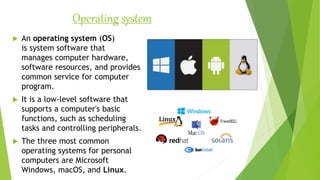
 An operating system (OS)
is system software that
manages computer hardware,
software resources, and provides
common service for computer
program.
 It is a low-level software that
supports a computer's basic
functions, such as scheduling
tasks and controlling peripherals.
 The three most common
operating systems for personal
computers are Microsoft
Windows, macOS, and Linux.
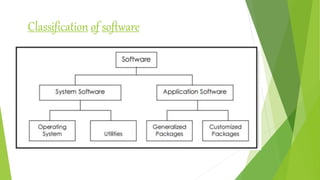
Classification of software
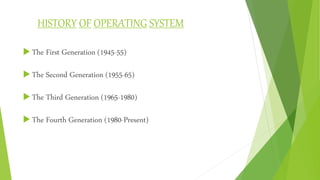
HISTORY OF OPERATING SYSTEM
 The First Generation (1945-55)
 The Second Generation (1955-65)
 The Third Generation (1965-1980)
 The Fourth Generation (1980-Present)
1.The First Generation (1945-55)
 Around the mid-1940s (about World War II), it is succeeded to build calculating
engines. The first ones used mechanical relays but were very slow, with cycle
times measured in seconds. Relays were later replaced by vacuum tubes.
 These machines were filling up entire rooms with tens of thousands of vacuum
tubes, but they were still millions of times slower than even the cheapest personal
computers available today.
 All programming was done in absolute machine language, often by wiring up
plugboards to control the machine’s basic functions.
 Programming languages were unknown (even assembly language was unknown).
 Operating systems also were unknown.
 By the early 1950s, punched cards are started to used. It was now possible to
write programs on cards and read them in cards instead of using plugboards.
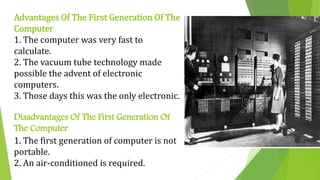
Advantages Of The First Generation Of The
Computer
1. The computer was very fast to
calculate.
2. The vacuum tube technology made
possible the advent of electronic
computers.
3. Those days this was the only electronic.
Disadvantages Of The First Generation Of
The Computer
1. The first generation of computer is not
portable.
2. An air-conditioned is required.
2. The Second Generation (1955-65)
 The transistors are started to use in the middle1950s. Machines are more
reliable.
 There was a clear separation between designers, builders, operators,
programmers, and maintenance personnel.
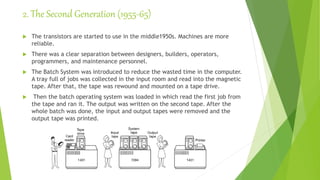
 The Batch System was introduced to reduce the wasted time in the computer.
A tray full of jobs was collected in the input room and read into the magnetic
tape. After that, the tape was rewound and mounted on a tape drive.
 Then the batch operating system was loaded in which read the first job from
the tape and ran it. The output was written on the second tape. After the
whole batch was done, the input and output tapes were removed and the
output tape was printed.
3. The Third Generation (1965-1980)
 Until the 1960’s, there were two types of computer systems
i.e the scientific and the commercial computers. These were
combined by IBM in the System/360.
 This used IC and provided a major price and performance
advantage over the second generation systems.
 The third generation operating systems also introduced
multiprogramming. This meant that the processor was not
idle while a job was completing its I/O operation.
 Another job was scheduled on the processor so that its time
would not be wasted.
Advantages Of The Third Generation Of The
Computer
More portable.
Consume less energy.
Maintenance cost is low
Disadvantages Of The Third Generation Of The
Computer
 IC chips are difficult to maintain.
4. The Fourth Generation (1980-Present)
 Personal Computers were easy to create with the development
of large-scale integrated circuits.
 These were chips containing thousands of transistors on a
square centimeter of silicon. Because of these,
microcomputers were much cheaper than minicomputers and
that made it possible for a single individual to own one of
them.
 The advent of personal computers also led to the growth of
networks. This created network operating systems and
distributed operating systems.
 The users were aware of a network while using a network
operating system and could log in to remote machines and copy
files from one machine to another.
Advantages Of The Fourth Generation Of The
Computer
 The air conditioner is not required.
 Totally used for general purposes.
 Small and compact in size.
 Heat generated is negligible which is good.
 Faster than its predecessor.
 Easily available in different sizes with unique and
different features.
THANK YOU
FOR YOUR ATTENTION

Generation of os

  • 1.
    Generation of OS BY:- SHUBHAM SINHA
  • 2.
    Operating system  Anoperating system (OS) is system software that manages computer hardware, software resources, and provides common service for computer program.  It is a low-level software that supports a computer's basic functions, such as scheduling tasks and controlling peripherals.  The three most common operating systems for personal computers are Microsoft Windows, macOS, and Linux.
  • 3.
  • 4.
    HISTORY OF OPERATINGSYSTEM  The First Generation (1945-55)  The Second Generation (1955-65)  The Third Generation (1965-1980)  The Fourth Generation (1980-Present)
  • 5.
    1.The First Generation(1945-55)  Around the mid-1940s (about World War II), it is succeeded to build calculating engines. The first ones used mechanical relays but were very slow, with cycle times measured in seconds. Relays were later replaced by vacuum tubes.  These machines were filling up entire rooms with tens of thousands of vacuum tubes, but they were still millions of times slower than even the cheapest personal computers available today.  All programming was done in absolute machine language, often by wiring up plugboards to control the machine’s basic functions.  Programming languages were unknown (even assembly language was unknown).  Operating systems also were unknown.  By the early 1950s, punched cards are started to used. It was now possible to write programs on cards and read them in cards instead of using plugboards.
  • 6.
    Advantages Of TheFirst Generation Of The Computer 1. The computer was very fast to calculate. 2. The vacuum tube technology made possible the advent of electronic computers. 3. Those days this was the only electronic. Disadvantages Of The First Generation Of The Computer 1. The first generation of computer is not portable. 2. An air-conditioned is required.
  • 7.
    2. The SecondGeneration (1955-65)  The transistors are started to use in the middle1950s. Machines are more reliable.  There was a clear separation between designers, builders, operators, programmers, and maintenance personnel.  The Batch System was introduced to reduce the wasted time in the computer. A tray full of jobs was collected in the input room and read into the magnetic tape. After that, the tape was rewound and mounted on a tape drive.  Then the batch operating system was loaded in which read the first job from the tape and ran it. The output was written on the second tape. After the whole batch was done, the input and output tapes were removed and the output tape was printed.
  • 8.
    3. The ThirdGeneration (1965-1980)  Until the 1960’s, there were two types of computer systems i.e the scientific and the commercial computers. These were combined by IBM in the System/360.  This used IC and provided a major price and performance advantage over the second generation systems.  The third generation operating systems also introduced multiprogramming. This meant that the processor was not idle while a job was completing its I/O operation.  Another job was scheduled on the processor so that its time would not be wasted.
  • 9.
    Advantages Of TheThird Generation Of The Computer More portable. Consume less energy. Maintenance cost is low Disadvantages Of The Third Generation Of The Computer  IC chips are difficult to maintain.
  • 10.
    4. The FourthGeneration (1980-Present)  Personal Computers were easy to create with the development of large-scale integrated circuits.  These were chips containing thousands of transistors on a square centimeter of silicon. Because of these, microcomputers were much cheaper than minicomputers and that made it possible for a single individual to own one of them.  The advent of personal computers also led to the growth of networks. This created network operating systems and distributed operating systems.  The users were aware of a network while using a network operating system and could log in to remote machines and copy files from one machine to another.
  • 11.
    Advantages Of TheFourth Generation Of The Computer  The air conditioner is not required.  Totally used for general purposes.  Small and compact in size.  Heat generated is negligible which is good.  Faster than its predecessor.  Easily available in different sizes with unique and different features.
  • 12.