History of Computers
Characteristics, Performance and the way they are changing
P.SENGA
Computer generation
• The computer was developed before the ninth century. It has seen a
lot of improvements in the century. This development can be
classified into generations where each generation brought an
improvement of the previous.
Computer generation
• First generation – 1946 - 1958
• Second generation – 1959 - 1964
• Third generation – 1965 - 1970
• Fourth generation – 1971 - today
• Fifth generation – Today to future
First generation computer 1946-1958
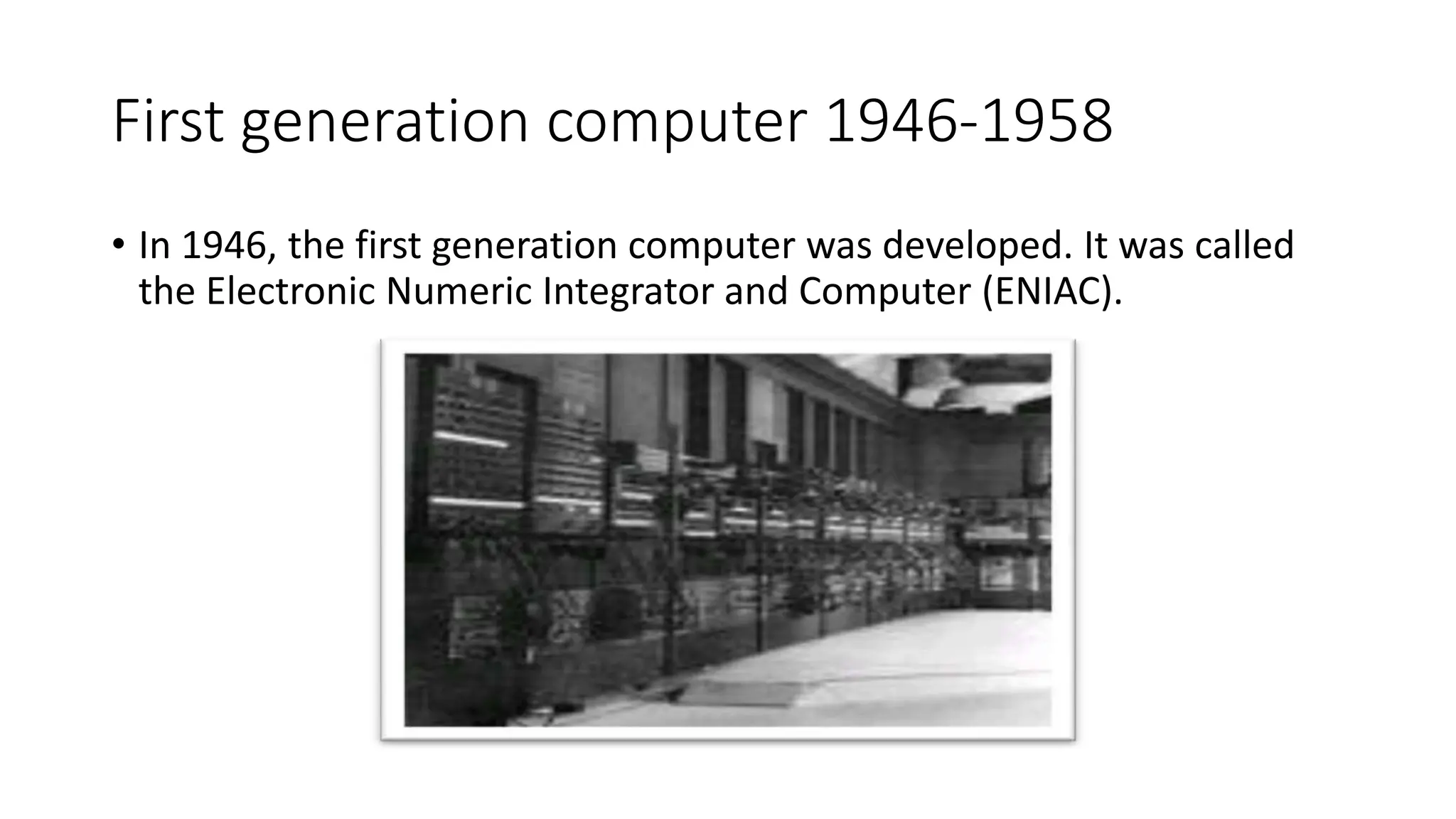
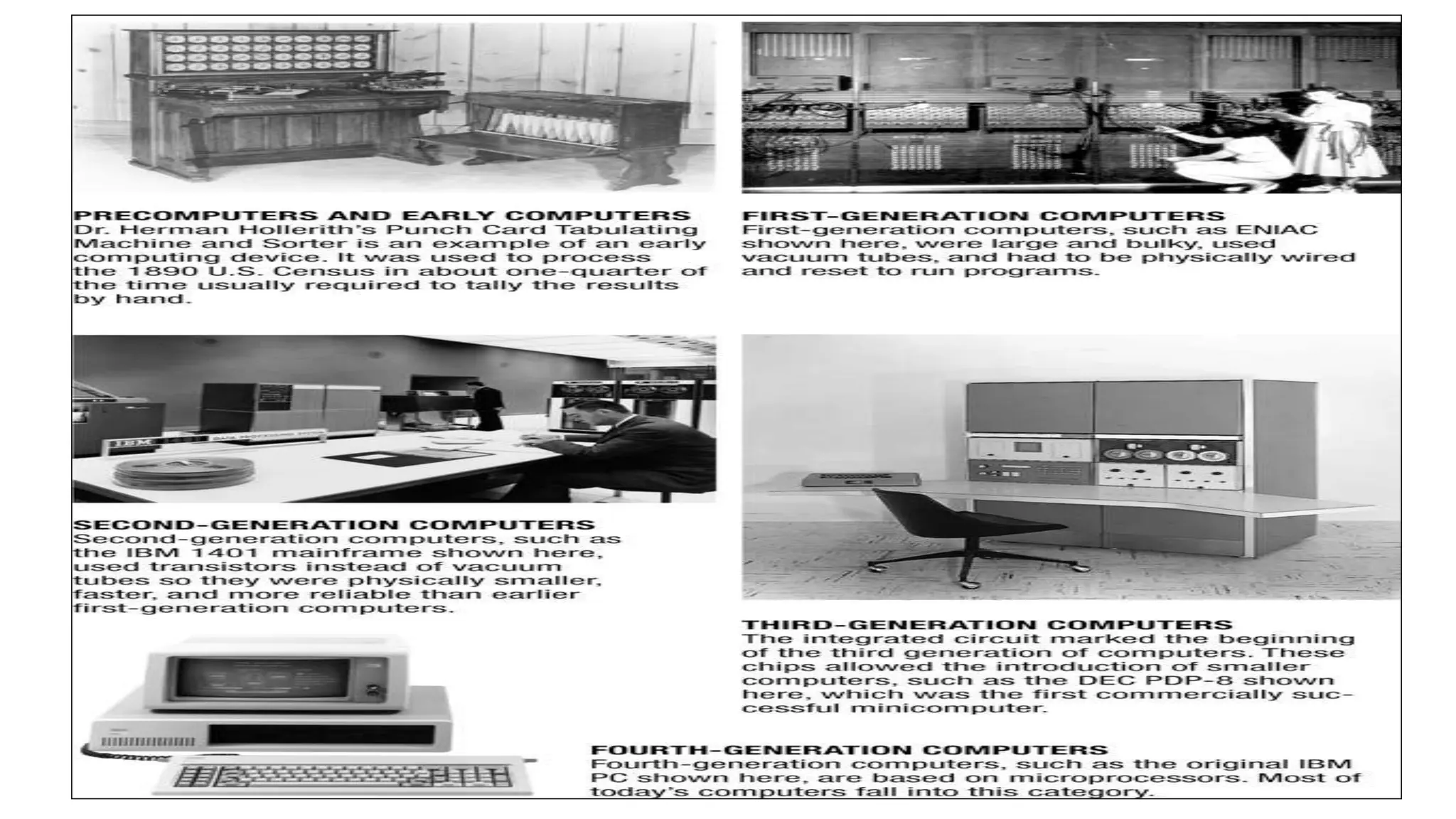
• In 1946, the first generation computer was developed. It was called
the Electronic Numeric Integrator and Computer (ENIAC).
First generation computer
• ENIAC was developed by John Presper Eckert and John W. Mauchl.
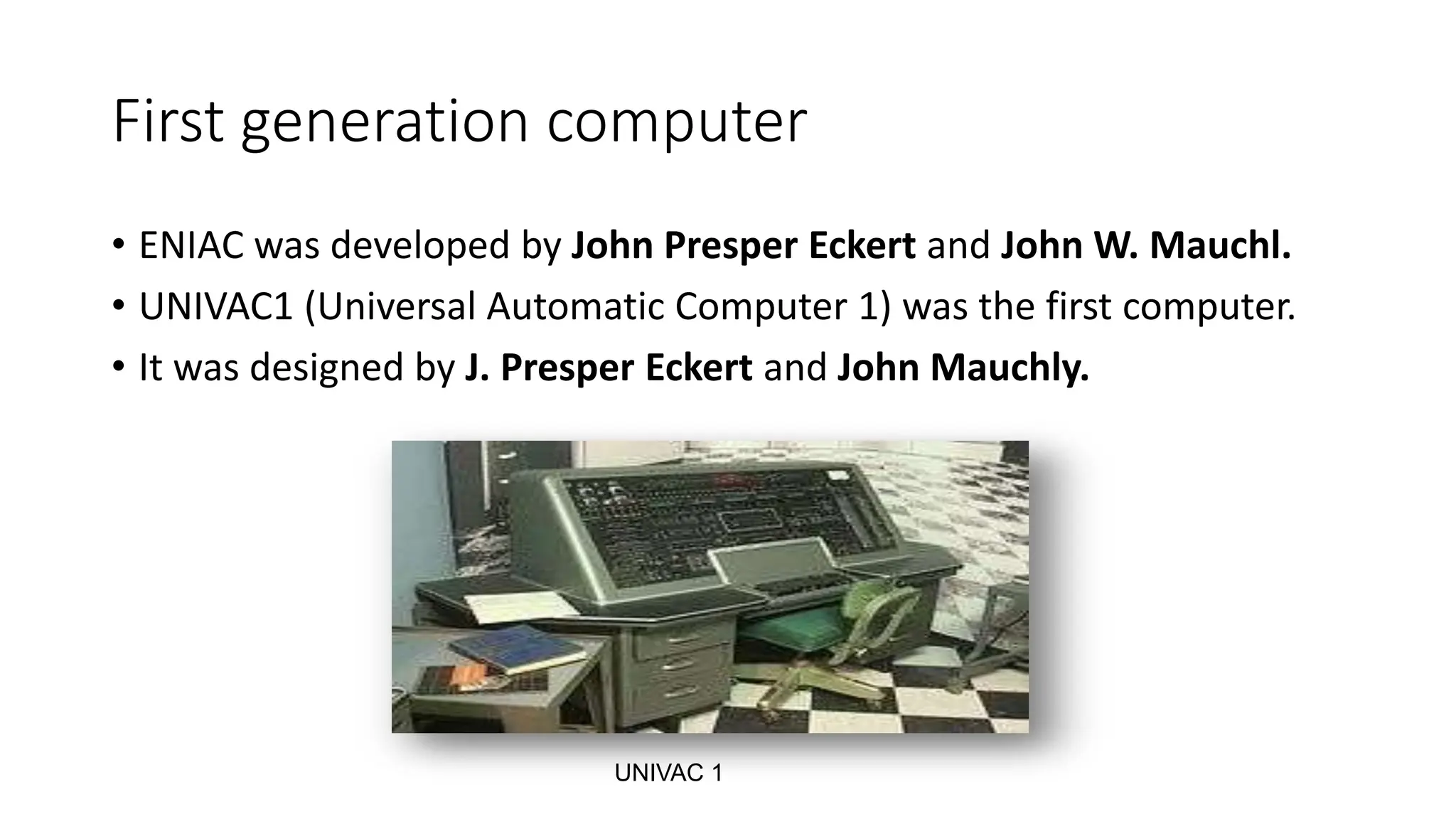
• UNIVAC1 (Universal Automatic Computer 1) was the first computer.
• It was designed by J. Presper Eckert and John Mauchly.
UNIVAC 1
First generation computer
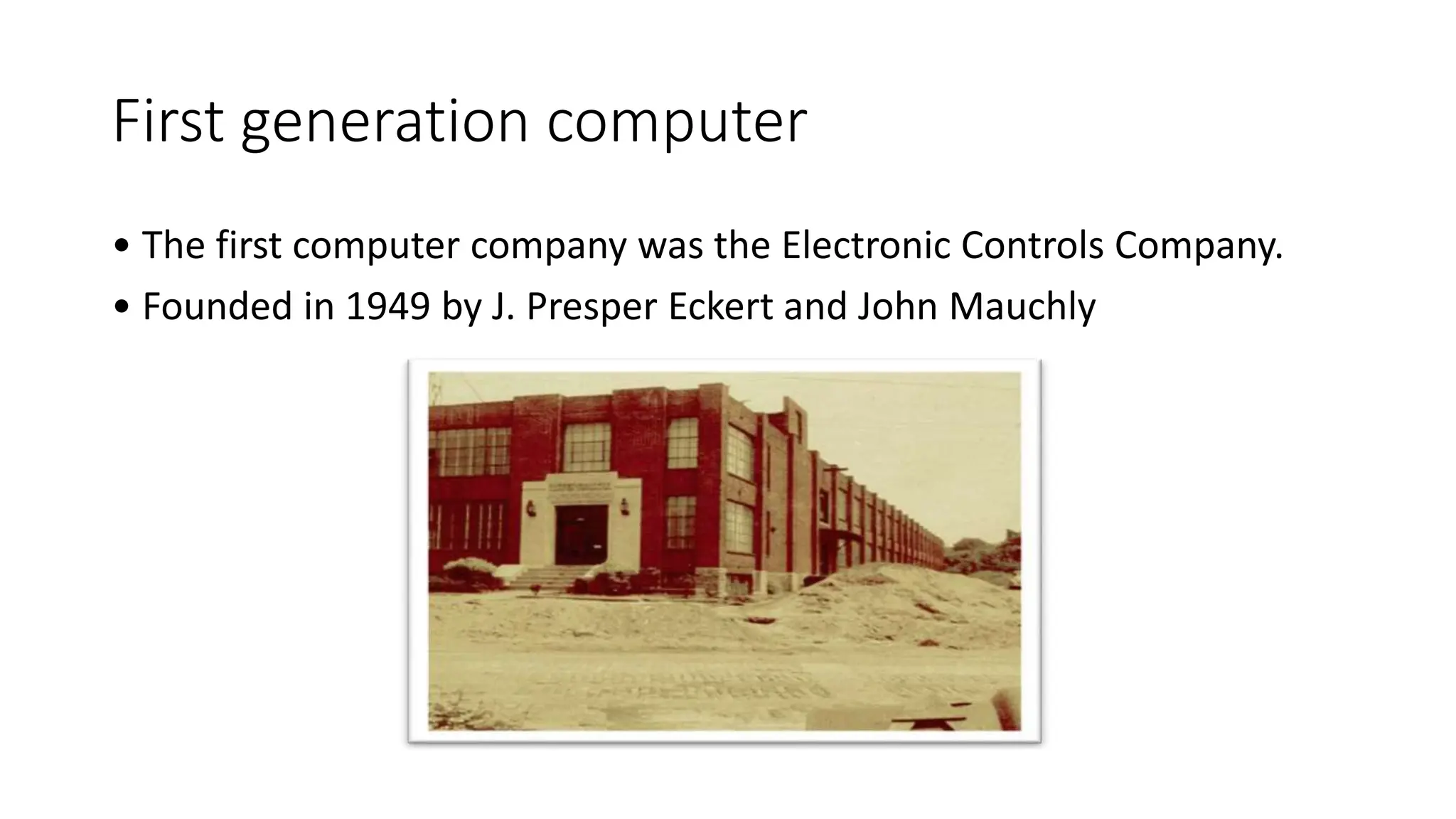
• The first computer company was the Electronic Controls Company.
• Founded in 1949 by J. Presper Eckert and John Mauchly
First generation computer
• EDVAC was the other computer to be developed in the first
generation.
• EDVAC stands for Electronic Discrete Variable Automatic
Computer.
•The First Stored Program Computer.
• it was designed by Von Neumann in 1952.
•It has a memory to hold both a stored program as well as data.
First generation computer
• EDVAC
First generation computer
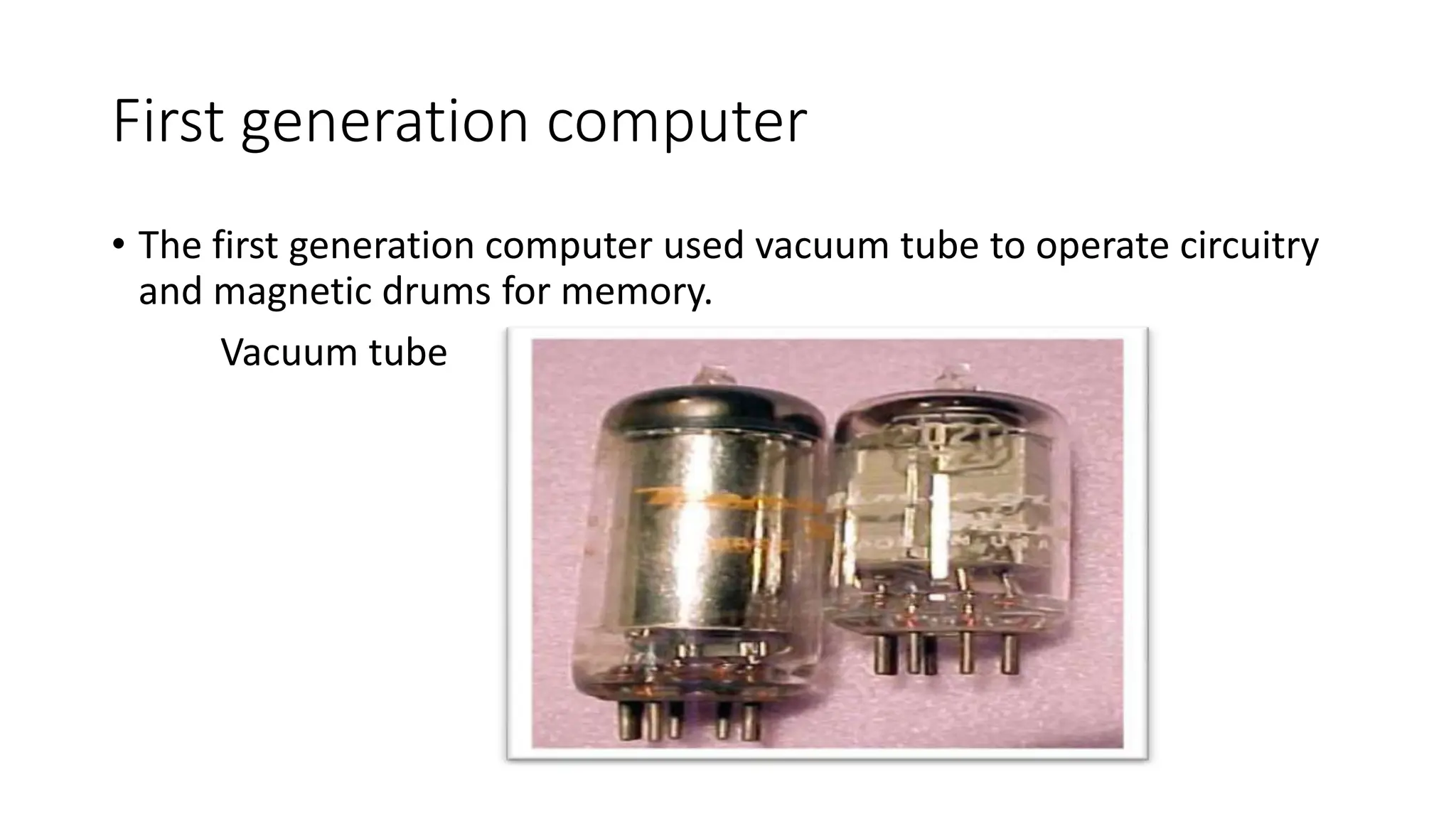
• The first generation computer used vacuum tube to operate circuitry
and magnetic drums for memory.
Vacuum tube
First generation computer
• These computers relied on machine language to perform operations.
• They could only perform one operation at a time.
• Input was based on punched cards and paper tape and output was
displayed on printouts.
• It used storage media such as tapes and printers for print out.
• The computers generated a lot of heat, had limited commential use,
and needed an air conditioner.
Second generation computer 1959-1964
• This generation used transistors instead of vacuum tubes.
• The transistors where more reliable than vacuum.
• One transistor replaced the equivalence of 40 vacuums.
• Computers became faster, cheaper, smaller, more energy efficient and
more reliable.
• The transistor still generated a lot of heat which could damage the
computer but it was lesser than the first generation.
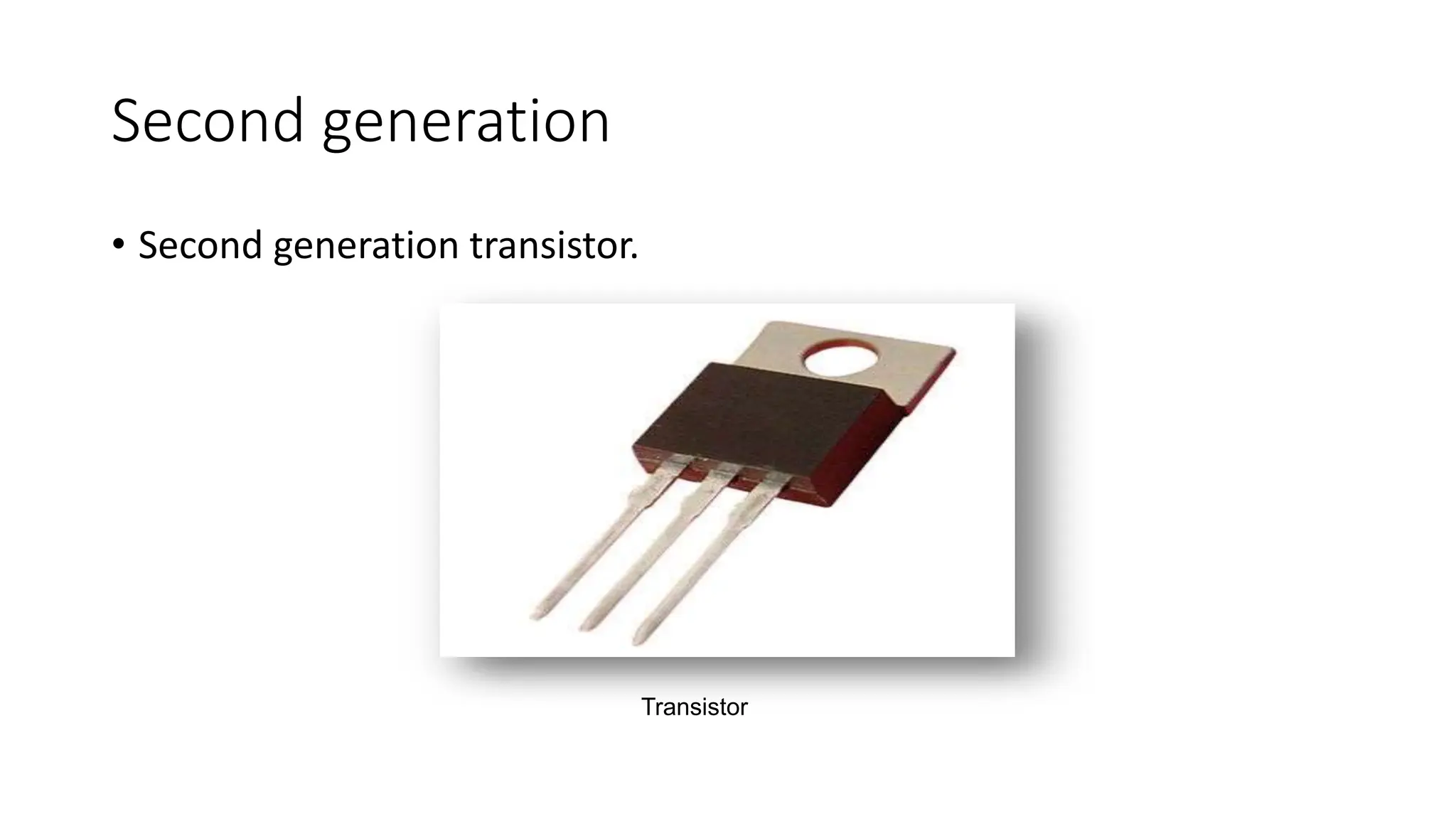
Second generation
• Second generation transistor.
Transistor
Second generation computer
• Second-generation computers moved from cryptic binary machine
language to symbolic languages, which allowed programmers to
specify instructions in words.
• They still relied on punched cards for input and printouts for output.
• These were also the first computers that stored their instructions in
their memory, which moved from a magnetic drum to magnetic core
technology.
Third generation computer 1965-1970
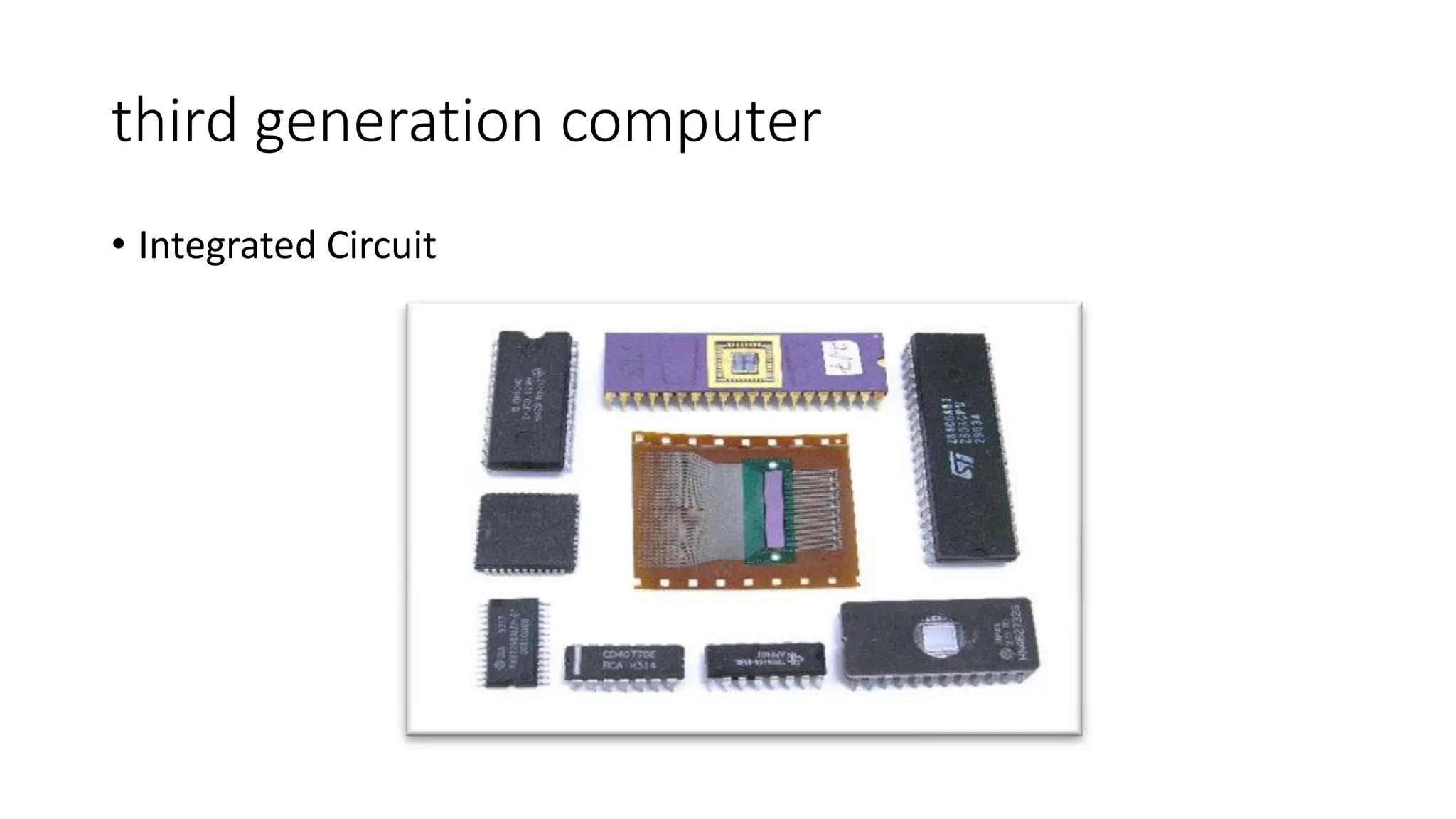
• The Integrated Circuit was invented.
• Transistors were miniaturized and placed on silicon chips, called
semiconductors, which drastically increased the speed and efficiency
of computers.
• With this invention computers became smaller, more powerful, more
reliable and they were able to run several programs at the same time.
third generation computer
• Integrated Circuit
Third generation computer
• It was smaller and cheaper compared to the second generation.
• It could carry out instructions in billionths of a second.
• Users interacted with third generation computers through keyboards
and monitors and interfaced with an operating system, which allowed
the device to run many different applications at one time with a
central program that monitored the memory.
• Computers for the first time became accessible to a mass audience
because they were smaller and cheaper than their predecessors.
Fourth generation computers 1970-Present
• The microprocessor brought the fourth generation of computers, as
thousands of integrated circuits were built onto a single silicon chip.
• As these small computers became more powerful, they could be
linked together to form networks, which eventually led to the
development of the Internet.
• Fourth generation computers also saw the development of GUIs, the
mouse and handheld devices.
• In 1980, Microsoft Disk Operation System was born (MS DOS).
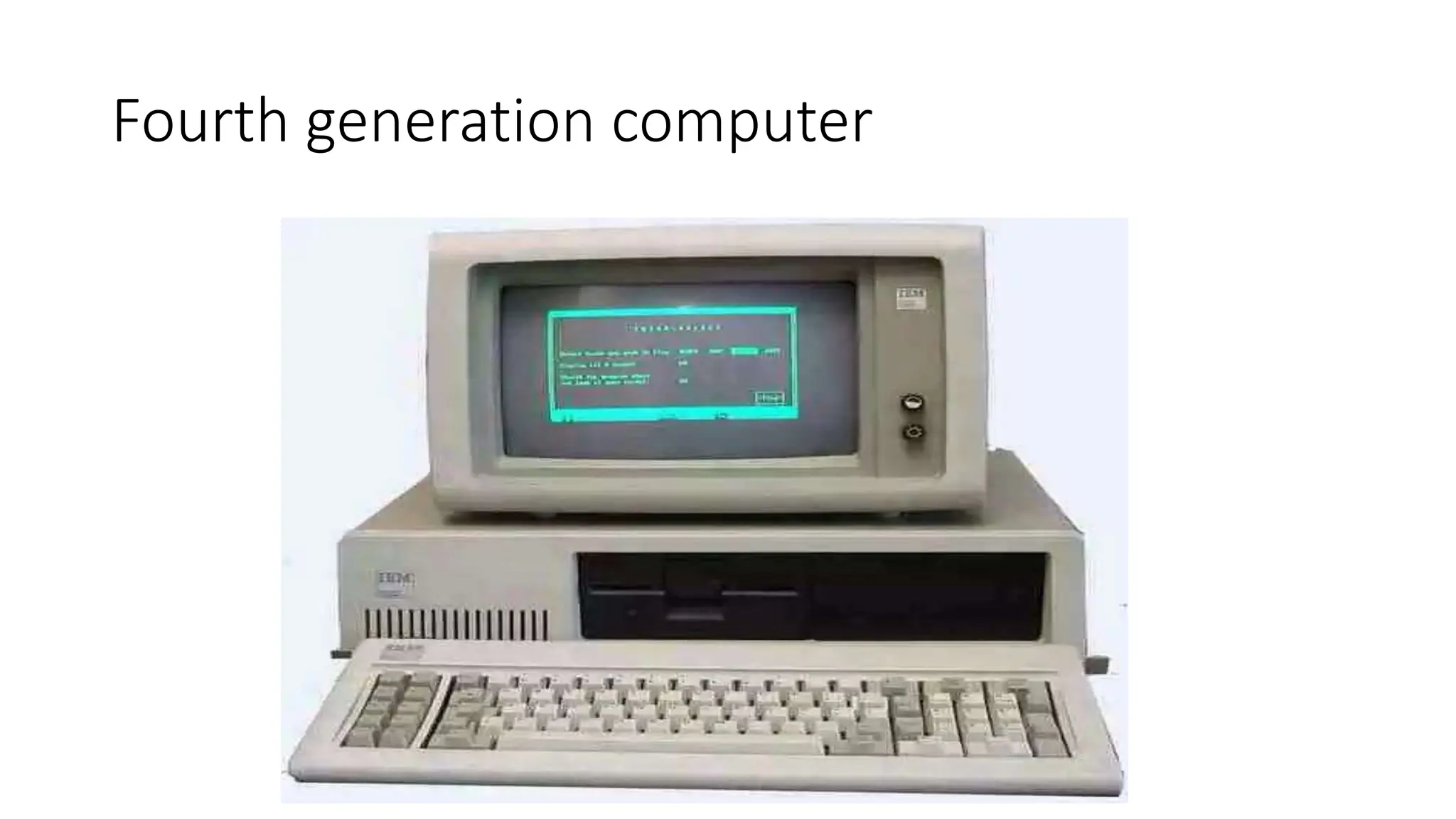
• In 1981, IBM introduced the personal computer for office and home.
Fourth generation computer
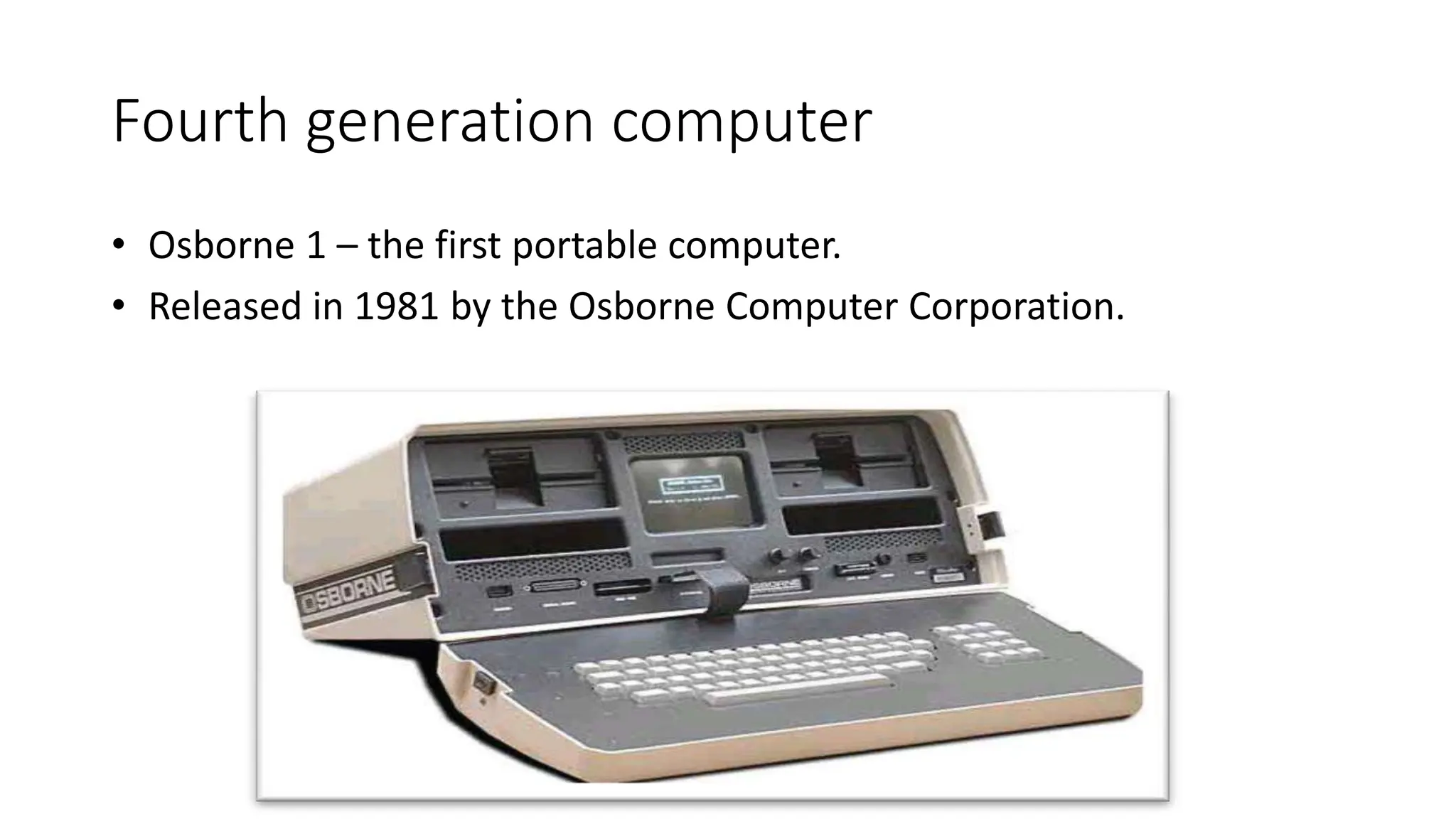
• Osborne 1 – the first portable computer.
• Released in 1981 by the Osborne Computer Corporation.
Fourth generation computer
• Three years later Apple invented the Macintosh with the icon driven
interface.
• The 1990 the windows operating system was introduced.
Fourth generation computer
Fifth generation of computers Present-future
• It is based on Artificial Intelligence (AI).
• It is still in development stage.
• The use of parallel processing and superconductors is helping to make
artificial intelligence a reality.
• The goal is to develop devices that respond to natural language input
and are capable of learning and self-organization.
• There are some applications, such as voice recognition, that are being
used today.
1.History of Computers. computer generationpptx

1.History of Computers. computer generationpptx

  • 1.
    History of Computers Characteristics,Performance and the way they are changing P.SENGA
  • 2.
    Computer generation • Thecomputer was developed before the ninth century. It has seen a lot of improvements in the century. This development can be classified into generations where each generation brought an improvement of the previous.
  • 3.
    Computer generation • Firstgeneration – 1946 - 1958 • Second generation – 1959 - 1964 • Third generation – 1965 - 1970 • Fourth generation – 1971 - today • Fifth generation – Today to future
  • 4.
    First generation computer1946-1958 • In 1946, the first generation computer was developed. It was called the Electronic Numeric Integrator and Computer (ENIAC).
  • 5.
    First generation computer •ENIAC was developed by John Presper Eckert and John W. Mauchl. • UNIVAC1 (Universal Automatic Computer 1) was the first computer. • It was designed by J. Presper Eckert and John Mauchly. UNIVAC 1
  • 6.
    First generation computer •The first computer company was the Electronic Controls Company. • Founded in 1949 by J. Presper Eckert and John Mauchly
  • 7.
    First generation computer •EDVAC was the other computer to be developed in the first generation. • EDVAC stands for Electronic Discrete Variable Automatic Computer. •The First Stored Program Computer. • it was designed by Von Neumann in 1952. •It has a memory to hold both a stored program as well as data.
  • 8.
  • 9.
    First generation computer •The first generation computer used vacuum tube to operate circuitry and magnetic drums for memory. Vacuum tube
  • 10.
    First generation computer •These computers relied on machine language to perform operations. • They could only perform one operation at a time. • Input was based on punched cards and paper tape and output was displayed on printouts. • It used storage media such as tapes and printers for print out. • The computers generated a lot of heat, had limited commential use, and needed an air conditioner.
  • 11.
    Second generation computer1959-1964 • This generation used transistors instead of vacuum tubes. • The transistors where more reliable than vacuum. • One transistor replaced the equivalence of 40 vacuums. • Computers became faster, cheaper, smaller, more energy efficient and more reliable. • The transistor still generated a lot of heat which could damage the computer but it was lesser than the first generation.
  • 12.
    Second generation • Secondgeneration transistor. Transistor
  • 13.
    Second generation computer •Second-generation computers moved from cryptic binary machine language to symbolic languages, which allowed programmers to specify instructions in words. • They still relied on punched cards for input and printouts for output. • These were also the first computers that stored their instructions in their memory, which moved from a magnetic drum to magnetic core technology.
  • 14.
    Third generation computer1965-1970 • The Integrated Circuit was invented. • Transistors were miniaturized and placed on silicon chips, called semiconductors, which drastically increased the speed and efficiency of computers. • With this invention computers became smaller, more powerful, more reliable and they were able to run several programs at the same time.
  • 15.
  • 16.
    Third generation computer •It was smaller and cheaper compared to the second generation. • It could carry out instructions in billionths of a second. • Users interacted with third generation computers through keyboards and monitors and interfaced with an operating system, which allowed the device to run many different applications at one time with a central program that monitored the memory. • Computers for the first time became accessible to a mass audience because they were smaller and cheaper than their predecessors.
  • 17.
    Fourth generation computers1970-Present • The microprocessor brought the fourth generation of computers, as thousands of integrated circuits were built onto a single silicon chip. • As these small computers became more powerful, they could be linked together to form networks, which eventually led to the development of the Internet. • Fourth generation computers also saw the development of GUIs, the mouse and handheld devices. • In 1980, Microsoft Disk Operation System was born (MS DOS). • In 1981, IBM introduced the personal computer for office and home.
  • 18.
    Fourth generation computer •Osborne 1 – the first portable computer. • Released in 1981 by the Osborne Computer Corporation.
  • 19.
    Fourth generation computer •Three years later Apple invented the Macintosh with the icon driven interface. • The 1990 the windows operating system was introduced.
  • 20.
  • 21.
    Fifth generation ofcomputers Present-future • It is based on Artificial Intelligence (AI). • It is still in development stage. • The use of parallel processing and superconductors is helping to make artificial intelligence a reality. • The goal is to develop devices that respond to natural language input and are capable of learning and self-organization. • There are some applications, such as voice recognition, that are being used today.