GENERATIONS OF
COMPUTERS
Computer Skills for Social Sciences
Your Date Here
A sneak peek into
the Computer
Computer is an electronic device which processes data, accept
and stores the input, and generates the output in desired
formats.
02
03
01
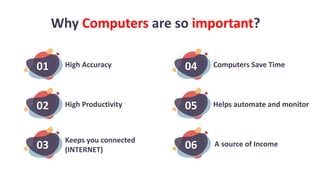
Why Computers are so important?
High Accuracy
High Productivity
Keeps you connected
(INTERNET)
Computers Save Time
Helps automate and monitor
A source of Income
05
06
04
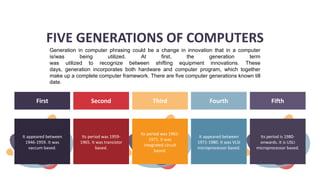
FIVE GENERATIONS OF COMPUTERS
It appeared between
1946-1959. It was
vaccum based.
Its period was 1959-
1965. It was transistor
based.
Its period was 1965-
1971. It was
integrated circuit
based.
It appeared between
1971-1980. It was VLSI
microprocessor based.
Its period is 1980-
onwards. It is USLI
microprocessor based.
First Fourth
Second Third Fifth
Generation in computer phrasing could be a change in innovation that in a computer
is/was being utilized. At first, the generation term
was utilized to recognize between shifting equipment innovations. These
days, generation incorporates both hardware and computer program, which together
make up a complete computer framework. There are five computer generations known till
date.
First Generation of the Computer (1946-1959)
Vaccum Tube Based
It had Batch Processing OS
Main memory is magnetic drums/tapes
It used Machine Language for programming
Input/Output devices were punched cards and paper
tape.
01
02
03
01
Pros And Cons
Consumed a lot of electricity
Generated a lot of heat
Very Large
Too Slow
Highly Expensive
Used Machine Language Only
05
06
04
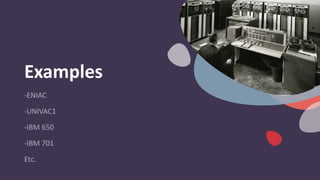
Examples
-ENIAC
-UNIVAC1
-IBM 650
-IBM 701
Etc.
Second Generation of the Computer (1959-1965)
Transistors Based
Magnetic Tape as secondary storage media
Assembly language was used for programming
Used magnetic random access memory as main memory
Input/Output devices were punched cards and paper
tape.
02
02
03
01
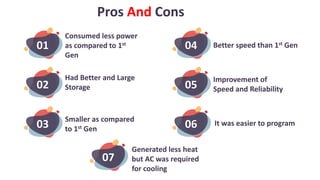
Pros And Cons
Consumed less power
as compared to 1st
Gen
Had Better and Large
Storage
Smaller as compared
to 1st Gen
Better speed than 1st Gen
Improvement of
Speed and Reliability
It was easier to program
05
06
04
Generated less heat
but AC was required
for cooling
07
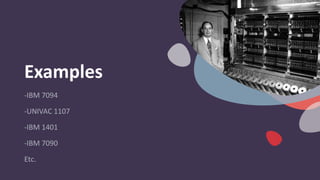
Examples
-IBM 7094
-UNIVAC 1107
-IBM 1401
-IBM 7090
Etc.
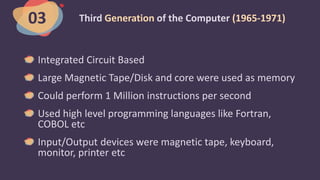
Third Generation of the Computer (1965-1971)
Integrated Circuit Based
Large Magnetic Tape/Disk and core were used as memory
Could perform 1 Million instructions per second
Used high level programming languages like Fortran,
COBOL etc
Input/Output devices were magnetic tape, keyboard,
monitor, printer etc
03
02
03
01
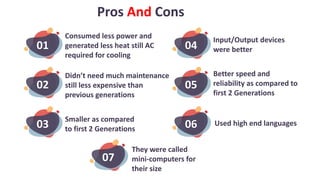
Pros And Cons
Consumed less power and
generated less heat still AC
required for cooling
Didn’t need much maintenance
still less expensive than
previous generations
Smaller as compared
to first 2 Generations
Input/Output devices
were better
Better speed and
reliability as compared to
first 2 Generations
Used high end languages
05
06
04
They were called
mini-computers for
their size
07
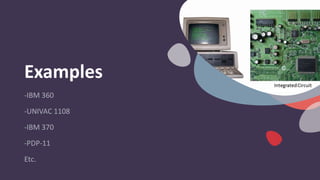
Examples
-IBM 360
-UNIVAC 1108
-IBM 370
-PDP-11
Etc.
Fourth Generation of the Computer (1971-1980)
LSI and VLSI based
Large Scale Integration was introduced
Used semi-conductor memory (RAM, ROM etc.)
High End Languages (Python, C#, Java, Rust, Kotlin
etc)
Input/Output devices were keyboard, pointing
devices, optical scanning, monitor, printer etc.
04
02
03
01
Pros And Cons
Consumed less power and
generated less heat and no
AC was required
INTERNET was introduced
Networks were improved
Input/Output devices
were better
Better speed and reliability
and portability yet very cost
effective
Used high end languages
like Java, Python etc
05
06
04
Pipeline Processing
07 PCs were introduced
08
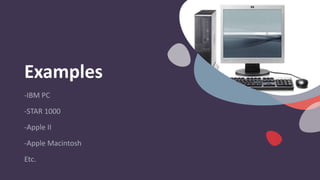
Examples
-IBM PC
-STAR 1000
-Apple II
-Apple Macintosh
Etc.
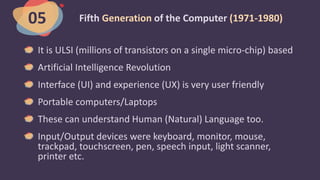
Fifth Generation of the Computer (1971-1980)
It is ULSI (millions of transistors on a single micro-chip) based
Artificial Intelligence Revolution
Interface (UI) and experience (UX) is very user friendly
Portable computers/Laptops
These can understand Human (Natural) Language too.
Input/Output devices were keyboard, monitor, mouse,
trackpad, touchscreen, pen, speech input, light scanner,
printer etc.
05
02
03
01
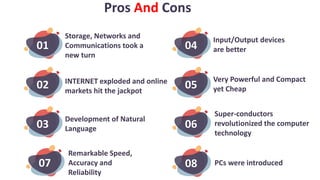
Pros And Cons
Storage, Networks and
Communications took a
new turn
INTERNET exploded and online
markets hit the jackpot
Development of Natural
Language
Input/Output devices
are better
Very Powerful and Compact
yet Cheap
Super-conductors
revolutionized the computer
technology
05
06
04
Remarkable Speed,
Accuracy and
Reliability
07 PCs were introduced
08
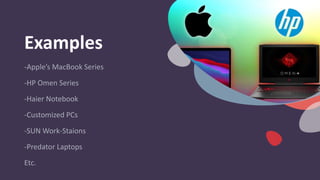
Examples
-Apple’s MacBook Series
-HP Omen Series
-Haier Notebook
-Customized PCs
-SUN Work-Staions
-Predator Laptops
Etc.
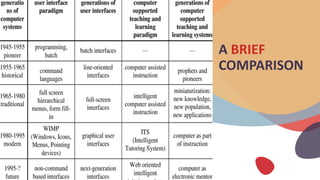
A BRIEF
COMPARISON
CREDITS
JIZZA BABAR
RAHEELA K. RAJA
AYESHA ARSHAD
MUHAMMAD JAFFAR JIBRAN
MUHAMMAD SAAD
Made with by
THANK YOU !
Hope you liked our Work.

Generations of Computer

  • 1.
    GENERATIONS OF COMPUTERS Computer Skillsfor Social Sciences Your Date Here
  • 2.
    A sneak peekinto the Computer Computer is an electronic device which processes data, accept and stores the input, and generates the output in desired formats.
  • 3.
    02 03 01 Why Computers areso important? High Accuracy High Productivity Keeps you connected (INTERNET) Computers Save Time Helps automate and monitor A source of Income 05 06 04
  • 4.
    FIVE GENERATIONS OFCOMPUTERS It appeared between 1946-1959. It was vaccum based. Its period was 1959- 1965. It was transistor based. Its period was 1965- 1971. It was integrated circuit based. It appeared between 1971-1980. It was VLSI microprocessor based. Its period is 1980- onwards. It is USLI microprocessor based. First Fourth Second Third Fifth Generation in computer phrasing could be a change in innovation that in a computer is/was being utilized. At first, the generation term was utilized to recognize between shifting equipment innovations. These days, generation incorporates both hardware and computer program, which together make up a complete computer framework. There are five computer generations known till date.
  • 5.
    First Generation ofthe Computer (1946-1959) Vaccum Tube Based It had Batch Processing OS Main memory is magnetic drums/tapes It used Machine Language for programming Input/Output devices were punched cards and paper tape. 01
  • 6.
    02 03 01 Pros And Cons Consumeda lot of electricity Generated a lot of heat Very Large Too Slow Highly Expensive Used Machine Language Only 05 06 04
  • 7.
  • 8.
    Second Generation ofthe Computer (1959-1965) Transistors Based Magnetic Tape as secondary storage media Assembly language was used for programming Used magnetic random access memory as main memory Input/Output devices were punched cards and paper tape. 02
  • 9.
    02 03 01 Pros And Cons Consumedless power as compared to 1st Gen Had Better and Large Storage Smaller as compared to 1st Gen Better speed than 1st Gen Improvement of Speed and Reliability It was easier to program 05 06 04 Generated less heat but AC was required for cooling 07
  • 10.
  • 11.
    Third Generation ofthe Computer (1965-1971) Integrated Circuit Based Large Magnetic Tape/Disk and core were used as memory Could perform 1 Million instructions per second Used high level programming languages like Fortran, COBOL etc Input/Output devices were magnetic tape, keyboard, monitor, printer etc 03
  • 12.
    02 03 01 Pros And Cons Consumedless power and generated less heat still AC required for cooling Didn’t need much maintenance still less expensive than previous generations Smaller as compared to first 2 Generations Input/Output devices were better Better speed and reliability as compared to first 2 Generations Used high end languages 05 06 04 They were called mini-computers for their size 07
  • 13.
  • 14.
    Fourth Generation ofthe Computer (1971-1980) LSI and VLSI based Large Scale Integration was introduced Used semi-conductor memory (RAM, ROM etc.) High End Languages (Python, C#, Java, Rust, Kotlin etc) Input/Output devices were keyboard, pointing devices, optical scanning, monitor, printer etc. 04
  • 15.
    02 03 01 Pros And Cons Consumedless power and generated less heat and no AC was required INTERNET was introduced Networks were improved Input/Output devices were better Better speed and reliability and portability yet very cost effective Used high end languages like Java, Python etc 05 06 04 Pipeline Processing 07 PCs were introduced 08
  • 16.
    Examples -IBM PC -STAR 1000 -AppleII -Apple Macintosh Etc.
  • 17.
    Fifth Generation ofthe Computer (1971-1980) It is ULSI (millions of transistors on a single micro-chip) based Artificial Intelligence Revolution Interface (UI) and experience (UX) is very user friendly Portable computers/Laptops These can understand Human (Natural) Language too. Input/Output devices were keyboard, monitor, mouse, trackpad, touchscreen, pen, speech input, light scanner, printer etc. 05
  • 18.
    02 03 01 Pros And Cons Storage,Networks and Communications took a new turn INTERNET exploded and online markets hit the jackpot Development of Natural Language Input/Output devices are better Very Powerful and Compact yet Cheap Super-conductors revolutionized the computer technology 05 06 04 Remarkable Speed, Accuracy and Reliability 07 PCs were introduced 08
  • 19.
    Examples -Apple’s MacBook Series -HPOmen Series -Haier Notebook -Customized PCs -SUN Work-Staions -Predator Laptops Etc.
  • 20.
  • 21.
    CREDITS JIZZA BABAR RAHEELA K.RAJA AYESHA ARSHAD MUHAMMAD JAFFAR JIBRAN MUHAMMAD SAAD
  • 22.
    Made with by THANKYOU ! Hope you liked our Work.