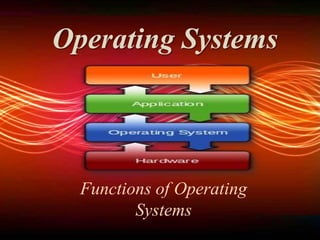
Operating Systems

Functions of Operating
Systems
Presented By:

Akshay Kurup

Nikhar Narula
Index

 Introduction
 What is Operating System ?
 Major Functions of Operating Systems
 Types of operating systems
 Different types of OS
Introduction
 The operating system is the core software component of
your computer. It performs many functions and is, in
very basic terms, an interface between your computer
and the outside world. In the section about hardware, a
computer is described as consisting of several
component
parts
including
your
monitor, keyboard, mouse, and other parts.
What is an Operating
System ?
The operating system is the most important program that runs on
a computer. Every general-purpose computer must have an operating

system to run other programs. Operating systems perform basic
tasks, such as recognizing input from the keyboard, sending output to
the display screen, keeping track of files and directories on
the disk, and controlling peripheral devices such as disk
drives and printers.
Major Functions of
Operating System
 Providing an interface to the user.

 Managing system resources.
 Managing security and access rights.
 Running applications
 Process Management
 Memory Management
 Extended Machine
 Mastermind
Functions of Operating System
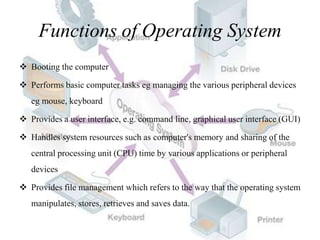
 Booting the computer

 Performs basic computer tasks eg managing the various peripheral devices
eg mouse, keyboard
 Provides a user interface, e.g. command line, graphical user interface (GUI)
 Handles system resources such as computer's memory and sharing of the
central processing unit (CPU) time by various applications or peripheral
devices
 Provides file management which refers to the way that the operating system
manipulates, stores, retrieves and saves data.
Types of Operating System
• Real-time operating system(RTOS) - Real-time operating systems are
used to control machinery, scientific instruments and industrial
systems.
• Single-user, single task - As the name implies, this operating system is
designed to manage the computer so that one user can effectively do
one thing at a time.
• Single-user, multi-tasking - This is the type of operating system most
people use on their desktop and laptop computers today.
• Multi-user - A multi-user operating system allows many different
users to take advantage of the computer's resources simultaneously.
• Distributed - A distributed operating system manages a group of
independent computers and makes them appear to be a single
computer.
• Embedded - Embedded operating systems are designed to be used
in embedded computer systems. They are designed to operate on
small machines like PDAs with less autonomy.
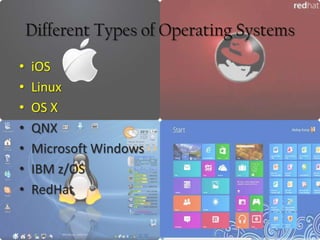
Different Types of Operating Systems
•
•
•
•
•
•
•

iOS
Linux
OS X
QNX
Microsoft Windows
IBM z/OS
RedHat
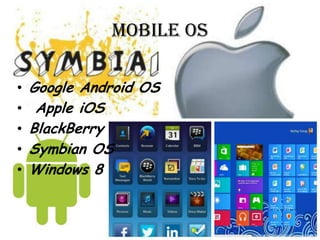
Mobile OS
•
•
•
•
•

Google Android OS
Apple iOS
BlackBerry
Symbian OS
Windows 8
Functions Of Operating Systems

Functions Of Operating Systems

  • 2.
  • 3.
  • 4.
    Index  Introduction  Whatis Operating System ?  Major Functions of Operating Systems  Types of operating systems  Different types of OS
  • 5.
    Introduction  The operatingsystem is the core software component of your computer. It performs many functions and is, in very basic terms, an interface between your computer and the outside world. In the section about hardware, a computer is described as consisting of several component parts including your monitor, keyboard, mouse, and other parts.
  • 6.
    What is anOperating System ? The operating system is the most important program that runs on a computer. Every general-purpose computer must have an operating system to run other programs. Operating systems perform basic tasks, such as recognizing input from the keyboard, sending output to the display screen, keeping track of files and directories on the disk, and controlling peripheral devices such as disk drives and printers.
  • 7.
    Major Functions of OperatingSystem  Providing an interface to the user.  Managing system resources.  Managing security and access rights.  Running applications  Process Management  Memory Management  Extended Machine  Mastermind
  • 8.
    Functions of OperatingSystem  Booting the computer  Performs basic computer tasks eg managing the various peripheral devices eg mouse, keyboard  Provides a user interface, e.g. command line, graphical user interface (GUI)  Handles system resources such as computer's memory and sharing of the central processing unit (CPU) time by various applications or peripheral devices  Provides file management which refers to the way that the operating system manipulates, stores, retrieves and saves data.
  • 9.
    Types of OperatingSystem • Real-time operating system(RTOS) - Real-time operating systems are used to control machinery, scientific instruments and industrial systems. • Single-user, single task - As the name implies, this operating system is designed to manage the computer so that one user can effectively do one thing at a time. • Single-user, multi-tasking - This is the type of operating system most people use on their desktop and laptop computers today. • Multi-user - A multi-user operating system allows many different users to take advantage of the computer's resources simultaneously. • Distributed - A distributed operating system manages a group of independent computers and makes them appear to be a single computer. • Embedded - Embedded operating systems are designed to be used in embedded computer systems. They are designed to operate on small machines like PDAs with less autonomy.
  • 10.
    Different Types ofOperating Systems • • • • • • • iOS Linux OS X QNX Microsoft Windows IBM z/OS RedHat
  • 11.
    Mobile OS • • • • • Google AndroidOS Apple iOS BlackBerry Symbian OS Windows 8