Generation Of Electricity
History Of Electricity
 Ancient Greeks
 2000 years ago they realized you could create a charge by rubbing tow
things together.
 Discovered electric charges
 Ben Franklin
 Kite experiment in 1752
 Electricity travels through conductors
 Alessandro Volta
 In 1800, produced the first electric battery & first man-made electric current
 He should(but doesn’t) get a lot of the credit for figuring it all out
 Faraday Discovers Electromagnetic Induction – early 1800’s
 Edison Invents the Light Bulb and Generating Stations in NYC – 1882
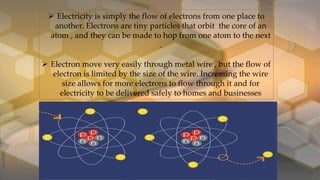
 Electricity is simply the flow of electrons from one place to
another. Electrons are tiny particles that orbit the core of an
atom , and they can be made to hop from one atom to the next
.
 Electron move very easily through metal wire , but the flow of
electron is limited by the size of the wire. Increasing the wire
size allows for more electrons to flow through it and for
electricity to be delivered safely to homes and businesses
How electricity is generated ?
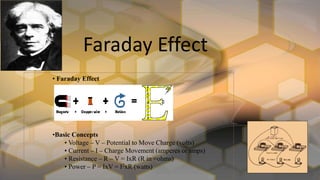
• Faraday Effect
•Basic Concepts
• Voltage – V – Potential to Move Charge (volts)
• Current – I – Charge Movement (amperes or amps)
• Resistance – R – V = IxR (R in =ohms)
• Power – P = IxV = I2xR (watts)
Faraday Effect
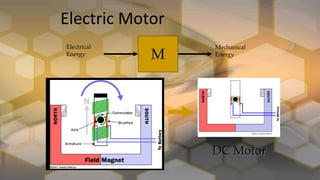
Electric Motor
M
Electrical
Energy
Mechanical
Energy
DC Motor
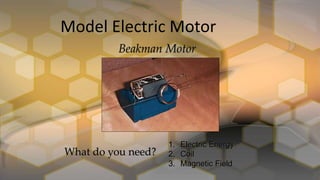
Model Electric Motor
Beakman Motor
What do you need?
1. Electric Energy
2. Coil
3. Magnetic Field
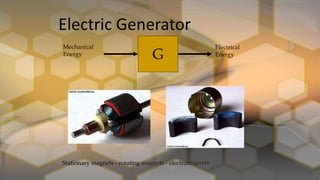
Electric Generator
G
Mechanical
Energy
Electrical
Energy
Stationary magnets - rotating magnets - electromagnets
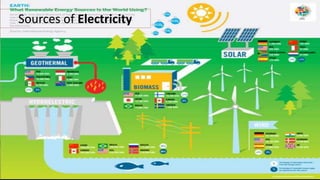
Sources of Electricity
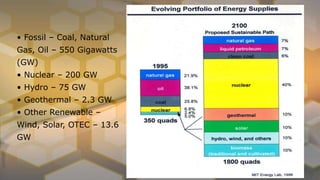
• Fossil – Coal, Natural
Gas, Oil – 550 Gigawatts
(GW)
• Nuclear – 200 GW
• Hydro – 75 GW
• Geothermal – 2.3 GW
• Other Renewable –
Wind, Solar, OTEC – 13.6
GW
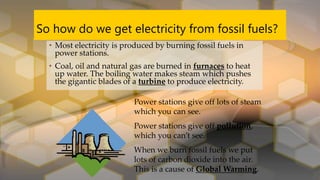
So how do we get electricity from fossil fuels?
• Most electricity is produced by burning fossil fuels in
power stations.
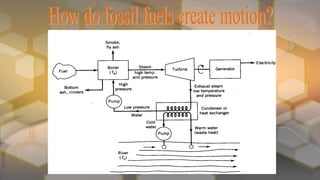
• Coal, oil and natural gas are burned in furnaces to heat
up water. The boiling water makes steam which pushes
the gigantic blades of a turbine to produce electricity.
Power stations give off lots of steam
which you can see.
Power stations give off pollution,
which you can’t see.
When we burn fossil fuels we put
lots of carbon dioxide into the air.
This is a cause of Global Warming.
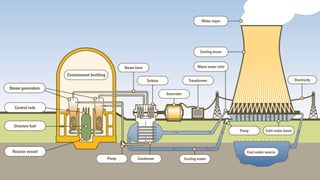
Some countries use nuclear power
Nuclear
power
plant
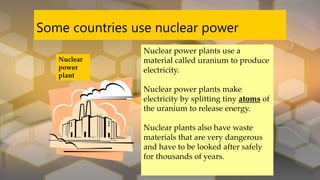
Nuclear power plants use a
material called uranium to produce
electricity.
Nuclear power plants make
electricity by splitting tiny atoms of
the uranium to release energy.
Nuclear plants also have waste
materials that are very dangerous
and have to be looked after safely
for thousands of years.
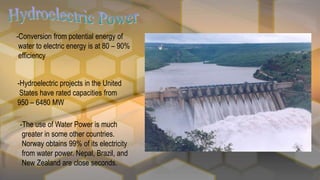
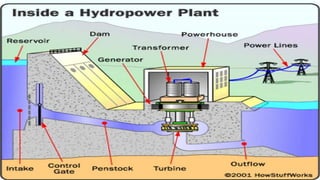
-Conversion from potential energy of
water to electric energy is at 80 – 90%
efficiency
-Hydroelectric projects in the United
States have rated capacities from
950 – 6480 MW
-The use of Water Power is much
greater in some other countries.
Norway obtains 99% of its electricity
from water power. Nepal, Brazil, and
New Zealand are close seconds.
Wind Energy
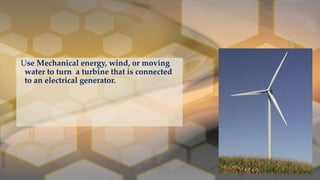
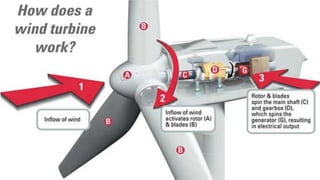
Use Mechanical energy, wind, or moving
water to turn a turbine that is connected
to an electrical generator.
-Solar Power – uses the sun energy to either boil water or directly converts
solar energy to electrical energy
-Ocean Thermal Energy Conversion – uses temperature differences
between different depths of ocean water to drive a heat engine. Working
fluid is ammonia which is gas at room temperature.
-Biomass Energy: Municipal Solid Waste – burning wastes to drive heat
engines
-Geothermal Energy – based on naturally occurring heat in the Earth in the
Earth due to radioactive decay
-Tidal Energy – uses the gravitational pull of the moon on our oceans to
drive turbines
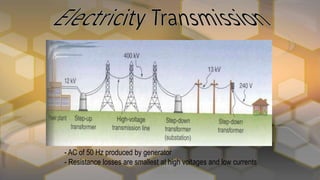
- AC of 50 Hz produced by generator
- Resistance losses are smallest at high voltages and low currents
Generation of electricity

Generation of electricity

  • 1.
  • 2.
    History Of Electricity Ancient Greeks  2000 years ago they realized you could create a charge by rubbing tow things together.  Discovered electric charges  Ben Franklin  Kite experiment in 1752  Electricity travels through conductors  Alessandro Volta  In 1800, produced the first electric battery & first man-made electric current  He should(but doesn’t) get a lot of the credit for figuring it all out  Faraday Discovers Electromagnetic Induction – early 1800’s  Edison Invents the Light Bulb and Generating Stations in NYC – 1882
  • 4.
     Electricity issimply the flow of electrons from one place to another. Electrons are tiny particles that orbit the core of an atom , and they can be made to hop from one atom to the next .  Electron move very easily through metal wire , but the flow of electron is limited by the size of the wire. Increasing the wire size allows for more electrons to flow through it and for electricity to be delivered safely to homes and businesses
  • 5.
    How electricity isgenerated ?
  • 6.
    • Faraday Effect •BasicConcepts • Voltage – V – Potential to Move Charge (volts) • Current – I – Charge Movement (amperes or amps) • Resistance – R – V = IxR (R in =ohms) • Power – P = IxV = I2xR (watts) Faraday Effect
  • 7.
  • 8.
    Model Electric Motor BeakmanMotor What do you need? 1. Electric Energy 2. Coil 3. Magnetic Field
  • 9.
  • 10.
  • 11.
    • Fossil –Coal, Natural Gas, Oil – 550 Gigawatts (GW) • Nuclear – 200 GW • Hydro – 75 GW • Geothermal – 2.3 GW • Other Renewable – Wind, Solar, OTEC – 13.6 GW
  • 13.
    So how dowe get electricity from fossil fuels? • Most electricity is produced by burning fossil fuels in power stations. • Coal, oil and natural gas are burned in furnaces to heat up water. The boiling water makes steam which pushes the gigantic blades of a turbine to produce electricity. Power stations give off lots of steam which you can see. Power stations give off pollution, which you can’t see. When we burn fossil fuels we put lots of carbon dioxide into the air. This is a cause of Global Warming.
  • 16.
    Some countries usenuclear power Nuclear power plant Nuclear power plants use a material called uranium to produce electricity. Nuclear power plants make electricity by splitting tiny atoms of the uranium to release energy. Nuclear plants also have waste materials that are very dangerous and have to be looked after safely for thousands of years.
  • 19.
    -Conversion from potentialenergy of water to electric energy is at 80 – 90% efficiency -Hydroelectric projects in the United States have rated capacities from 950 – 6480 MW -The use of Water Power is much greater in some other countries. Norway obtains 99% of its electricity from water power. Nepal, Brazil, and New Zealand are close seconds.
  • 21.
  • 22.
    Use Mechanical energy,wind, or moving water to turn a turbine that is connected to an electrical generator.
  • 24.
    -Solar Power –uses the sun energy to either boil water or directly converts solar energy to electrical energy -Ocean Thermal Energy Conversion – uses temperature differences between different depths of ocean water to drive a heat engine. Working fluid is ammonia which is gas at room temperature. -Biomass Energy: Municipal Solid Waste – burning wastes to drive heat engines -Geothermal Energy – based on naturally occurring heat in the Earth in the Earth due to radioactive decay -Tidal Energy – uses the gravitational pull of the moon on our oceans to drive turbines
  • 25.
    - AC of50 Hz produced by generator - Resistance losses are smallest at high voltages and low currents