Power
Generation
Course Details
 Course Title : Power generation Systems
 Course Code : ET-212
 Credit Hours : 2+0
 Quizzes : 2
 Assignments : 2
 Final Exam : 60
2
Objective
 To familiarize students with conventional and
non-conventional methods for Electrical Power
Generation
3
Recommended Books:
 Electric Power by S. L. Uppal
 A course in Electrical Power by Soni, Gupta
4
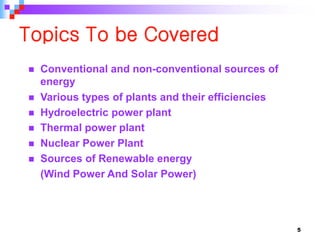
Topics To be Covered
 Conventional and non-conventional sources of
energy
 Various types of plants and their efficiencies
 Hydroelectric power plant
 Thermal power plant
 Nuclear Power Plant
 Sources of Renewable energy
(Wind Power And Solar Power)
5
So, What Exactly Is
Electricity?
6
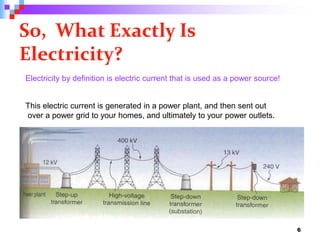
Electricity by definition is electric current that is used as a power source!
This electric current is generated in a power plant, and then sent out
over a power grid to your homes, and ultimately to your power outlets.
Faraday’s Law
7
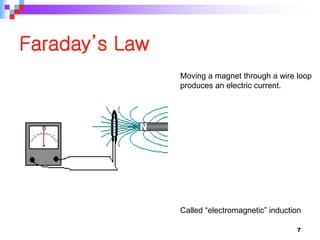
Moving a magnet through a wire loop
produces an electric current.
Called “electromagnetic” induction
8
The inventor of the generator
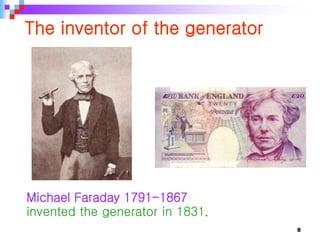
Michael Faraday 1791-1867
invented the generator in 1831.
9
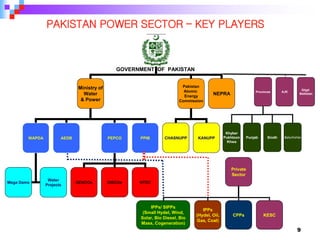
PAKISTAN POWER SECTOR – KEY PLAYERS
Private
Sector
IPPs
(Hydel, Oil,
Gas, Coal)
CPPs KESC
Provinces
Khyber
Pukhtoon
Khwa
Punjab Sindh Balochistan
AJK
Gilgit
Baltistan
IPPs/ SIPPs
(Small Hydel, Wind,
Solar, Bio Diesel, Bio
Mass, Cogeneration)
Ministry of
Water
& Power
Pakistan
Atomic
Energy
Commission
NEPRA
WAPDA AEDB PEPCO PPIB
Mega Dams
Water
Projects
GENCOs DISCOs NTDC
CHASNUPP KANUPP
GOVERNMENT OF PAKISTAN
10
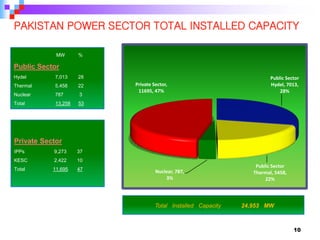
PAKISTAN POWER SECTOR TOTAL INSTALLED CAPACITY
Total Installed Capacity 24,953 MW
MW %
Public Sector
Hydel 7,013 28
Thermal 5,458 22
Nuclear 787 3
Total 13,258 53
Private Sector
IPPs 9,273 37
KESC 2,422 10
Total 11,695 47
Public Sector
Hydel, 7013,
28%
Public Sector
Thermal, 5458,
22%
Nuclear, 787,
3%
Private Sector,
11695, 47%
11
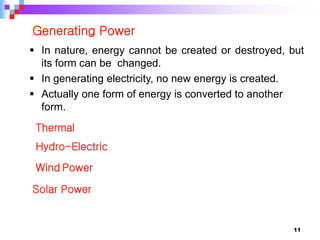
Generating Power
 In nature, energy cannot be created or destroyed, but
its form can be changed.
 In generating electricity, no new energy is created.
 Actually one form of energy is converted to another
form.
Thermal
Hydro-Electric
Wind Power
Solar Power
12
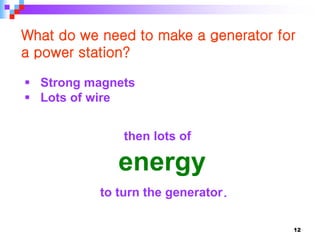
What do we need to make a generator for
a power station?
 Strong magnets
 Lots of wire
then lots of
energy
to turn the generator.
13
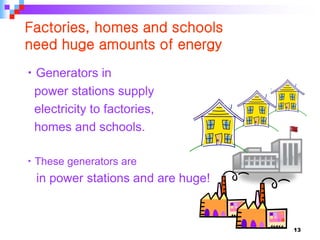
• Generators in
power stations supply
electricity to factories,
homes and schools.
• These generators are
in power stations and are huge!
Factories, homes and schools
need huge amounts of energy
14
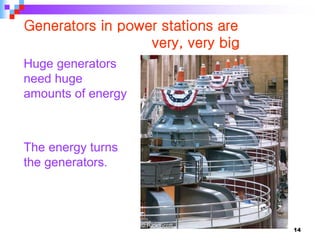
Generators in power stations are
very, very big
Huge generators
need huge
amounts of energy
The energy turns
the generators.
15
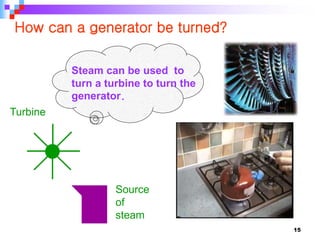
How can a generator be turned?
Source
of
steam
Turbine
Steam can be used to
turn a turbine to turn the
generator.
16
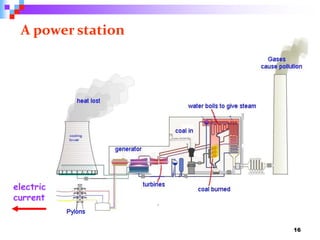
A power station
electric
current
17
How can water be heated to make steam?
Old way:
Burn coal
The smoke is dirty and pollutes the
atmosphere.
Also produces lots of carbon
dioxide which is a green house gas –
heats up the Earth.
Newer way:
Burn gas
Gas is cleaner than coal but still makes
lots of carbon dioxide
Eventually the world will run out of coal and gas.
18
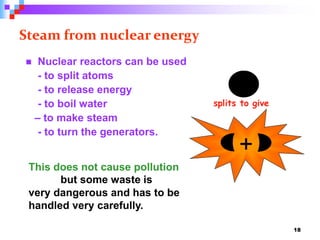
Steam from nuclear energy
 Nuclear reactors can be used
- to split atoms
- to release energy
- to boil water
– to make steam
- to turn the generators.
+
splits to give
This does not cause pollution
but some waste is
very dangerous and has to be
handled very carefully.
19
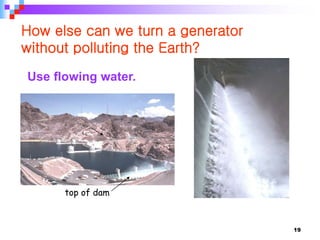
How else can we turn a generator
without polluting the Earth?
Use flowing water.
top of dam
20
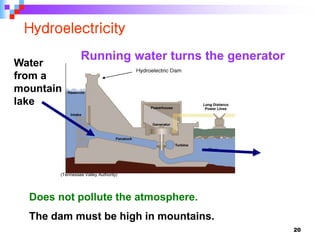
Hydroelectricity
Running water turns the generator
(Tennessee Valley Authority)
Water
from a
mountain
lake
Does not pollute the atmosphere.
The dam must be high in mountains.
21
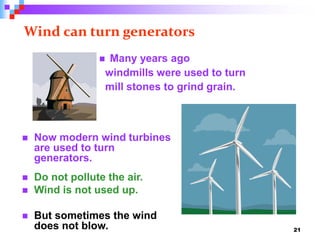
Wind can turn generators
 Now modern wind turbines
are used to turn
generators.
 Do not pollute the air.
 Wind is not used up.
 But sometimes the wind
does not blow.
 Many years ago
windmills were used to turn
mill stones to grind grain.
22
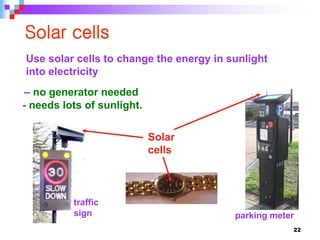
Solar cells
Use solar cells to change the energy in sunlight
into electricity
parking meter
Solar
cells
traffic
sign
– no generator needed
- needs lots of sunlight.
23
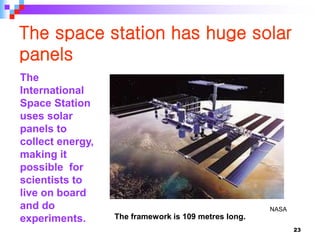
The space station has huge solar
panels
The framework is 109 metres long.
NASA
The
International
Space Station
uses solar
panels to
collect energy,
making it
possible for
scientists to
live on board
and do
experiments.
Comparison of Sources Of Power
Initial Cost
Investment or capital cost on construction
Running Cost
Operation cost, maintenance or repair cost
Limitation
Whether a particular sources is available
24
25
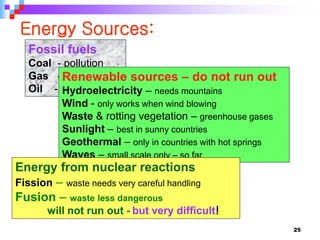
Fossil fuels
Coal - pollution
Gas - pollution
Oil - pollution
Renewable sources – do not run out
Hydroelectricity – needs mountains
Wind - only works when wind blowing
Waste & rotting vegetation – greenhouse gases
Sunlight – best in sunny countries
Geothermal – only in countries with hot springs
Waves – small scale only – so far
Energy from nuclear reactions
Fission – waste needs very careful handling
Fusion – waste less dangerous
will not run out - but very difficult!
Energy Sources:
26
Re-cap
• A generator generates an electric current
by moving magnets near a coil of wire.
• We need a source of energy to turn the
generator:
 Burn fossil fuels?
 Nuclear reactions?
 Renewable energy?
27
• You will have to choose!
That’s All For Today..

Gneration1.ppt

  • 1.
  • 2.
    Course Details  CourseTitle : Power generation Systems  Course Code : ET-212  Credit Hours : 2+0  Quizzes : 2  Assignments : 2  Final Exam : 60 2
  • 3.
    Objective  To familiarizestudents with conventional and non-conventional methods for Electrical Power Generation 3
  • 4.
    Recommended Books:  ElectricPower by S. L. Uppal  A course in Electrical Power by Soni, Gupta 4
  • 5.
    Topics To beCovered  Conventional and non-conventional sources of energy  Various types of plants and their efficiencies  Hydroelectric power plant  Thermal power plant  Nuclear Power Plant  Sources of Renewable energy (Wind Power And Solar Power) 5
  • 6.
    So, What ExactlyIs Electricity? 6 Electricity by definition is electric current that is used as a power source! This electric current is generated in a power plant, and then sent out over a power grid to your homes, and ultimately to your power outlets.
  • 7.
    Faraday’s Law 7 Moving amagnet through a wire loop produces an electric current. Called “electromagnetic” induction
  • 8.
    8 The inventor ofthe generator Michael Faraday 1791-1867 invented the generator in 1831.
  • 9.
    9 PAKISTAN POWER SECTOR– KEY PLAYERS Private Sector IPPs (Hydel, Oil, Gas, Coal) CPPs KESC Provinces Khyber Pukhtoon Khwa Punjab Sindh Balochistan AJK Gilgit Baltistan IPPs/ SIPPs (Small Hydel, Wind, Solar, Bio Diesel, Bio Mass, Cogeneration) Ministry of Water & Power Pakistan Atomic Energy Commission NEPRA WAPDA AEDB PEPCO PPIB Mega Dams Water Projects GENCOs DISCOs NTDC CHASNUPP KANUPP GOVERNMENT OF PAKISTAN
  • 10.
    10 PAKISTAN POWER SECTORTOTAL INSTALLED CAPACITY Total Installed Capacity 24,953 MW MW % Public Sector Hydel 7,013 28 Thermal 5,458 22 Nuclear 787 3 Total 13,258 53 Private Sector IPPs 9,273 37 KESC 2,422 10 Total 11,695 47 Public Sector Hydel, 7013, 28% Public Sector Thermal, 5458, 22% Nuclear, 787, 3% Private Sector, 11695, 47%
  • 11.
    11 Generating Power  Innature, energy cannot be created or destroyed, but its form can be changed.  In generating electricity, no new energy is created.  Actually one form of energy is converted to another form. Thermal Hydro-Electric Wind Power Solar Power
  • 12.
    12 What do weneed to make a generator for a power station?  Strong magnets  Lots of wire then lots of energy to turn the generator.
  • 13.
    13 • Generators in powerstations supply electricity to factories, homes and schools. • These generators are in power stations and are huge! Factories, homes and schools need huge amounts of energy
  • 14.
    14 Generators in powerstations are very, very big Huge generators need huge amounts of energy The energy turns the generators.
  • 15.
    15 How can agenerator be turned? Source of steam Turbine Steam can be used to turn a turbine to turn the generator.
  • 16.
  • 17.
    17 How can waterbe heated to make steam? Old way: Burn coal The smoke is dirty and pollutes the atmosphere. Also produces lots of carbon dioxide which is a green house gas – heats up the Earth. Newer way: Burn gas Gas is cleaner than coal but still makes lots of carbon dioxide Eventually the world will run out of coal and gas.
  • 18.
    18 Steam from nuclearenergy  Nuclear reactors can be used - to split atoms - to release energy - to boil water – to make steam - to turn the generators. + splits to give This does not cause pollution but some waste is very dangerous and has to be handled very carefully.
  • 19.
    19 How else canwe turn a generator without polluting the Earth? Use flowing water. top of dam
  • 20.
    20 Hydroelectricity Running water turnsthe generator (Tennessee Valley Authority) Water from a mountain lake Does not pollute the atmosphere. The dam must be high in mountains.
  • 21.
    21 Wind can turngenerators  Now modern wind turbines are used to turn generators.  Do not pollute the air.  Wind is not used up.  But sometimes the wind does not blow.  Many years ago windmills were used to turn mill stones to grind grain.
  • 22.
    22 Solar cells Use solarcells to change the energy in sunlight into electricity parking meter Solar cells traffic sign – no generator needed - needs lots of sunlight.
  • 23.
    23 The space stationhas huge solar panels The framework is 109 metres long. NASA The International Space Station uses solar panels to collect energy, making it possible for scientists to live on board and do experiments.
  • 24.
    Comparison of SourcesOf Power Initial Cost Investment or capital cost on construction Running Cost Operation cost, maintenance or repair cost Limitation Whether a particular sources is available 24
  • 25.
    25 Fossil fuels Coal -pollution Gas - pollution Oil - pollution Renewable sources – do not run out Hydroelectricity – needs mountains Wind - only works when wind blowing Waste & rotting vegetation – greenhouse gases Sunlight – best in sunny countries Geothermal – only in countries with hot springs Waves – small scale only – so far Energy from nuclear reactions Fission – waste needs very careful handling Fusion – waste less dangerous will not run out - but very difficult! Energy Sources:
  • 26.
    26 Re-cap • A generatorgenerates an electric current by moving magnets near a coil of wire. • We need a source of energy to turn the generator:  Burn fossil fuels?  Nuclear reactions?  Renewable energy?
  • 27.
    27 • You willhave to choose! That’s All For Today..