The English Language GCSE Exam


                                           Section A
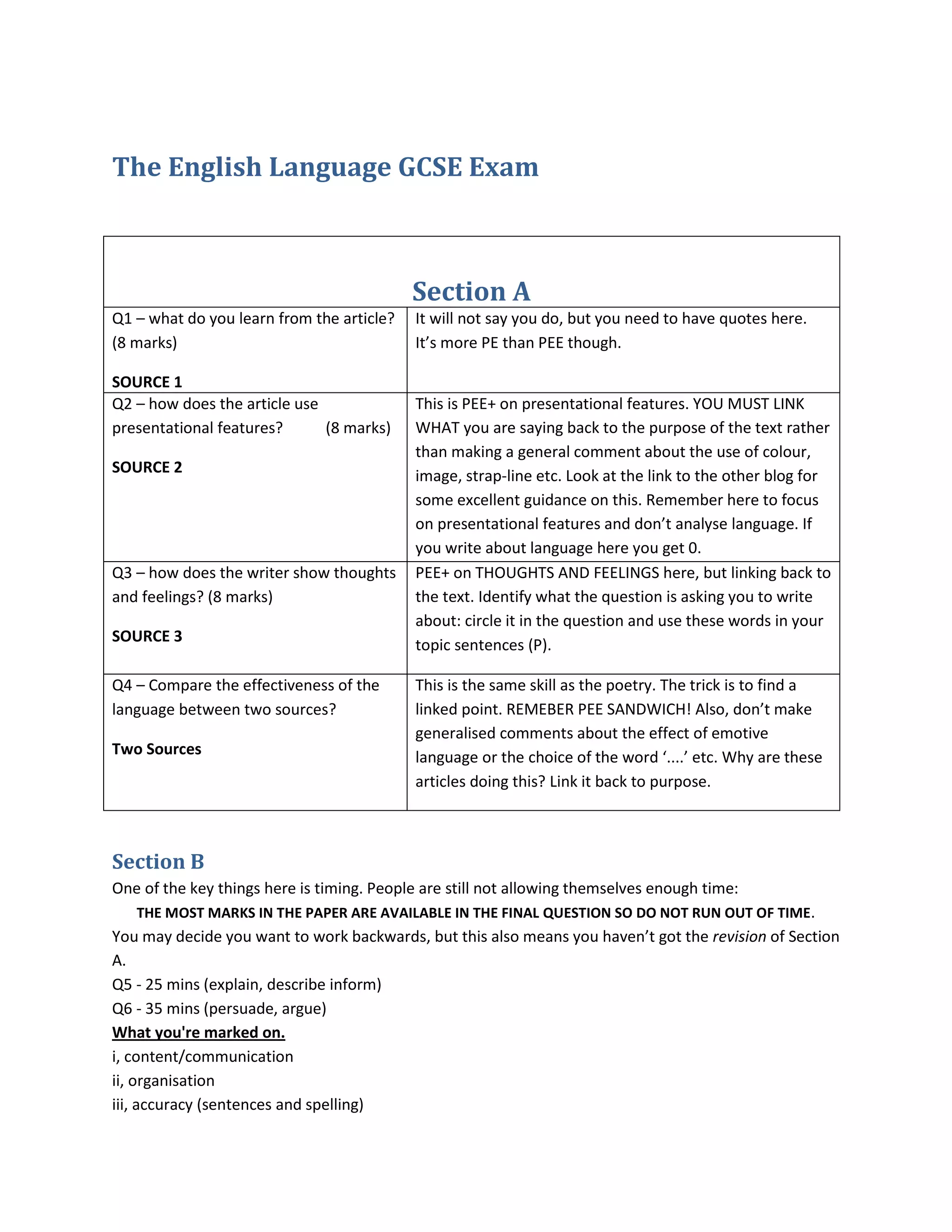
Q1 – what do you learn from the article?    It will not say you do, but you need to have quotes here.
(8 marks)                                   It’s more PE than PEE though.

SOURCE 1
Q2 – how does the article use               This is PEE+ on presentational features. YOU MUST LINK
presentational features?      (8 marks)     WHAT you are saying back to the purpose of the text rather
                                            than making a general comment about the use of colour,
SOURCE 2                                    image, strap-line etc. Look at the link to the other blog for
                                            some excellent guidance on this. Remember here to focus
                                            on presentational features and don’t analyse language. If
                                            you write about language here you get 0.
Q3 – how does the writer show thoughts      PEE+ on THOUGHTS AND FEELINGS here, but linking back to
and feelings? (8 marks)                     the text. Identify what the question is asking you to write
                                            about: circle it in the question and use these words in your
SOURCE 3
                                            topic sentences (P).

Q4 – Compare the effectiveness of the       This is the same skill as the poetry. The trick is to find a
language between two sources?               linked point. REMEBER PEE SANDWICH! Also, don’t make
                                            generalised comments about the effect of emotive
Two Sources                                 language or the choice of the word ‘....’ etc. Why are these
                                            articles doing this? Link it back to purpose.


Section B
One of the key things here is timing. People are still not allowing themselves enough time:
   THE MOST MARKS IN THE PAPER ARE AVAILABLE IN THE FINAL QUESTION SO DO NOT RUN OUT OF TIME.
You may decide you want to work backwards, but this also means you haven’t got the revision of Section
A.
Q5 - 25 mins (explain, describe inform)
Q6 - 35 mins (persuade, argue)
What you're marked on.
i, content/communication
ii, organisation
iii, accuracy (sentences and spelling)
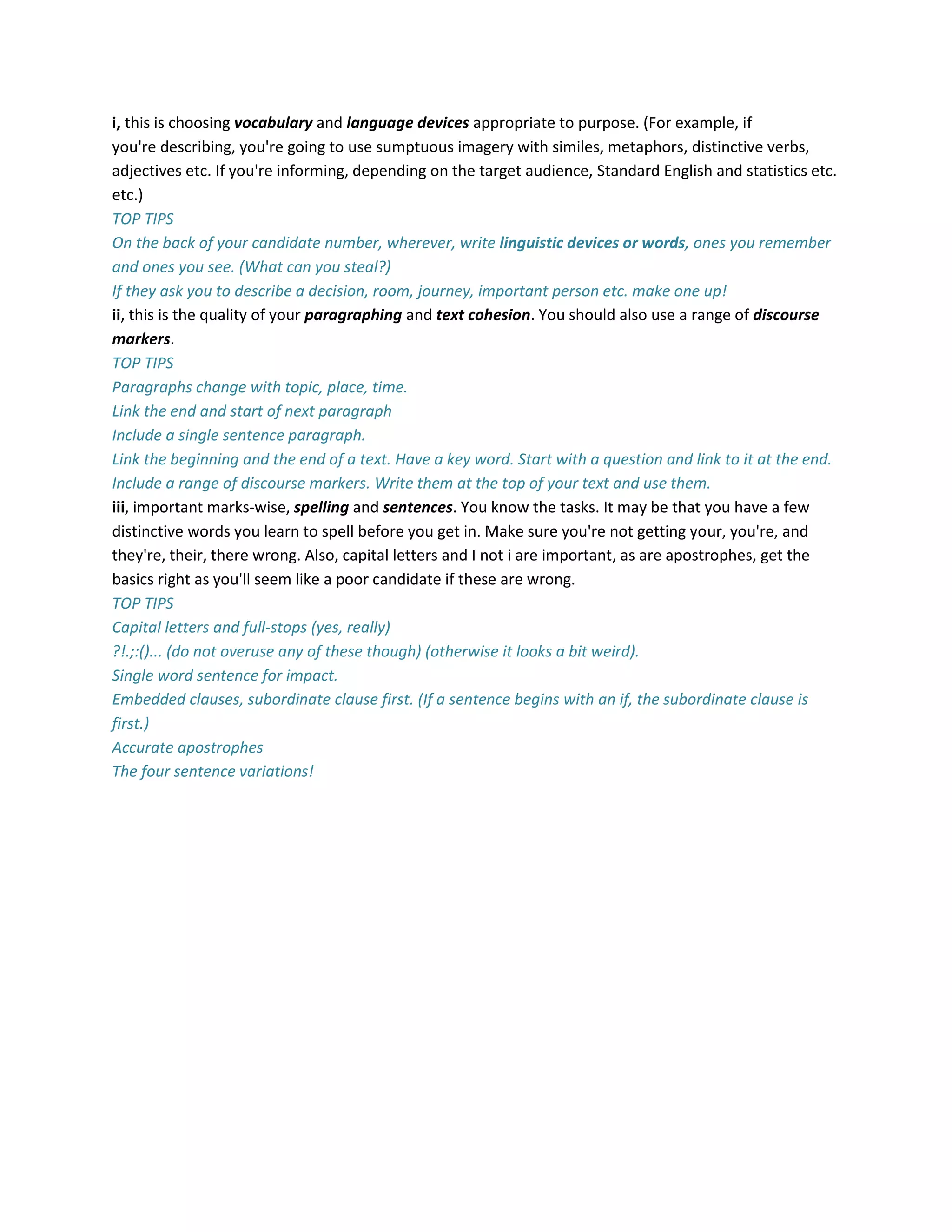
i, this is choosing vocabulary and language devices appropriate to purpose. (For example, if
you're describing, you're going to use sumptuous imagery with similes, metaphors, distinctive verbs,
adjectives etc. If you're informing, depending on the target audience, Standard English and statistics etc.
etc.)
TOP TIPS
On the back of your candidate number, wherever, write linguistic devices or words, ones you remember
and ones you see. (What can you steal?)
If they ask you to describe a decision, room, journey, important person etc. make one up!
ii, this is the quality of your paragraphing and text cohesion. You should also use a range of discourse
markers.
TOP TIPS
Paragraphs change with topic, place, time.
Link the end and start of next paragraph
Include a single sentence paragraph.
Link the beginning and the end of a text. Have a key word. Start with a question and link to it at the end.
Include a range of discourse markers. Write them at the top of your text and use them.
iii, important marks-wise, spelling and sentences. You know the tasks. It may be that you have a few
distinctive words you learn to spell before you get in. Make sure you're not getting your, you're, and
they're, their, there wrong. Also, capital letters and I not i are important, as are apostrophes, get the
basics right as you'll seem like a poor candidate if these are wrong.
TOP TIPS
Capital letters and full-stops (yes, really)
?!.;:()... (do not overuse any of these though) (otherwise it looks a bit weird).
Single word sentence for impact.
Embedded clauses, subordinate clause first. (If a sentence begins with an if, the subordinate clause is
first.)
Accurate apostrophes
The four sentence variations!
Section B
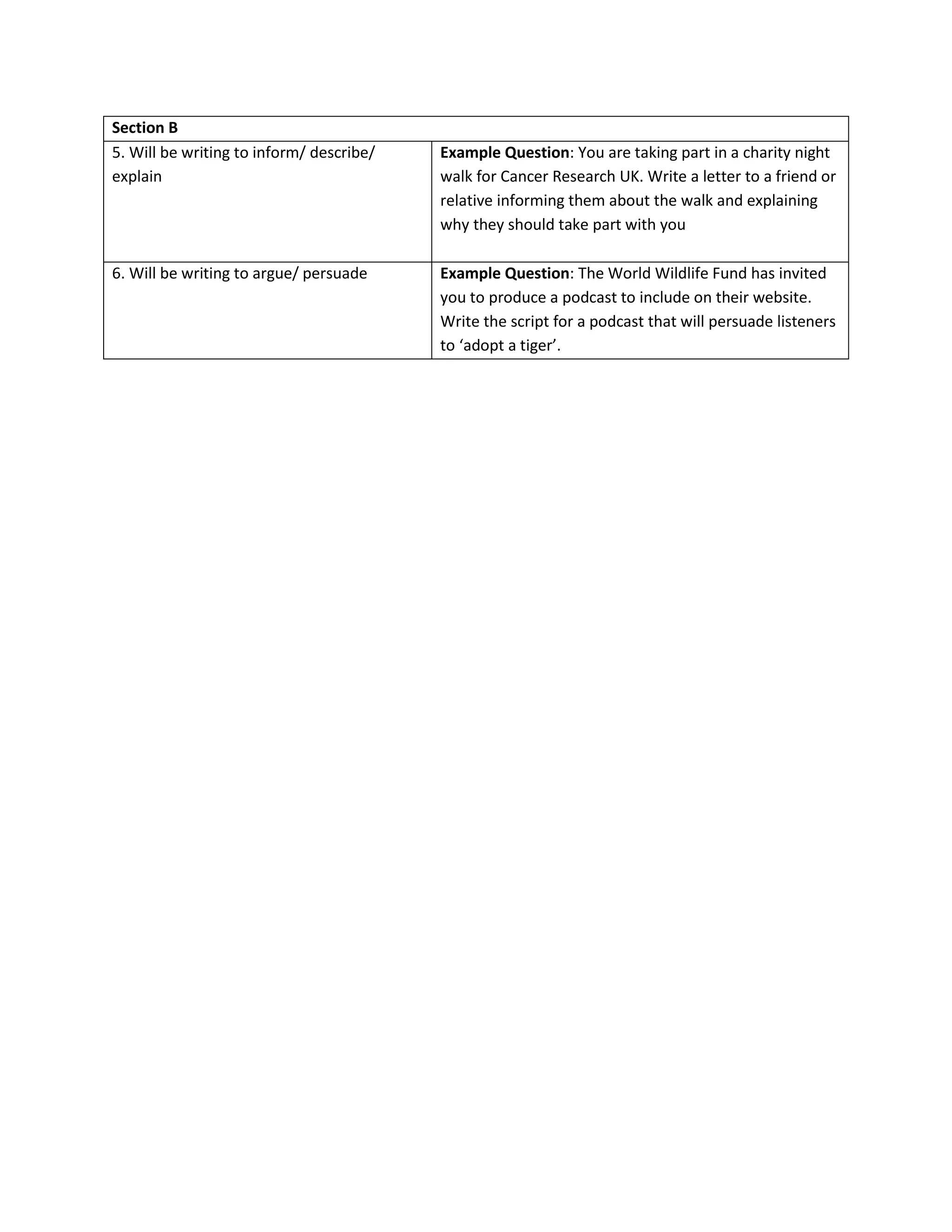
5. Will be writing to inform/ describe/   Example Question: You are taking part in a charity night
explain                                   walk for Cancer Research UK. Write a letter to a friend or
                                          relative informing them about the walk and explaining
                                          why they should take part with you

6. Will be writing to argue/ persuade     Example Question: The World Wildlife Fund has invited
                                          you to produce a podcast to include on their website.
                                          Write the script for a podcast that will persuade listeners
                                          to ‘adopt a tiger’.

GCSE Language Revision Super Doc

  • 1.
    The English LanguageGCSE Exam Section A Q1 – what do you learn from the article? It will not say you do, but you need to have quotes here. (8 marks) It’s more PE than PEE though. SOURCE 1 Q2 – how does the article use This is PEE+ on presentational features. YOU MUST LINK presentational features? (8 marks) WHAT you are saying back to the purpose of the text rather than making a general comment about the use of colour, SOURCE 2 image, strap-line etc. Look at the link to the other blog for some excellent guidance on this. Remember here to focus on presentational features and don’t analyse language. If you write about language here you get 0. Q3 – how does the writer show thoughts PEE+ on THOUGHTS AND FEELINGS here, but linking back to and feelings? (8 marks) the text. Identify what the question is asking you to write about: circle it in the question and use these words in your SOURCE 3 topic sentences (P). Q4 – Compare the effectiveness of the This is the same skill as the poetry. The trick is to find a language between two sources? linked point. REMEBER PEE SANDWICH! Also, don’t make generalised comments about the effect of emotive Two Sources language or the choice of the word ‘....’ etc. Why are these articles doing this? Link it back to purpose. Section B One of the key things here is timing. People are still not allowing themselves enough time: THE MOST MARKS IN THE PAPER ARE AVAILABLE IN THE FINAL QUESTION SO DO NOT RUN OUT OF TIME. You may decide you want to work backwards, but this also means you haven’t got the revision of Section A. Q5 - 25 mins (explain, describe inform) Q6 - 35 mins (persuade, argue) What you're marked on. i, content/communication ii, organisation iii, accuracy (sentences and spelling)
  • 2.
    i, this ischoosing vocabulary and language devices appropriate to purpose. (For example, if you're describing, you're going to use sumptuous imagery with similes, metaphors, distinctive verbs, adjectives etc. If you're informing, depending on the target audience, Standard English and statistics etc. etc.) TOP TIPS On the back of your candidate number, wherever, write linguistic devices or words, ones you remember and ones you see. (What can you steal?) If they ask you to describe a decision, room, journey, important person etc. make one up! ii, this is the quality of your paragraphing and text cohesion. You should also use a range of discourse markers. TOP TIPS Paragraphs change with topic, place, time. Link the end and start of next paragraph Include a single sentence paragraph. Link the beginning and the end of a text. Have a key word. Start with a question and link to it at the end. Include a range of discourse markers. Write them at the top of your text and use them. iii, important marks-wise, spelling and sentences. You know the tasks. It may be that you have a few distinctive words you learn to spell before you get in. Make sure you're not getting your, you're, and they're, their, there wrong. Also, capital letters and I not i are important, as are apostrophes, get the basics right as you'll seem like a poor candidate if these are wrong. TOP TIPS Capital letters and full-stops (yes, really) ?!.;:()... (do not overuse any of these though) (otherwise it looks a bit weird). Single word sentence for impact. Embedded clauses, subordinate clause first. (If a sentence begins with an if, the subordinate clause is first.) Accurate apostrophes The four sentence variations!
  • 3.
    Section B 5. Willbe writing to inform/ describe/ Example Question: You are taking part in a charity night explain walk for Cancer Research UK. Write a letter to a friend or relative informing them about the walk and explaining why they should take part with you 6. Will be writing to argue/ persuade Example Question: The World Wildlife Fund has invited you to produce a podcast to include on their website. Write the script for a podcast that will persuade listeners to ‘adopt a tiger’.